
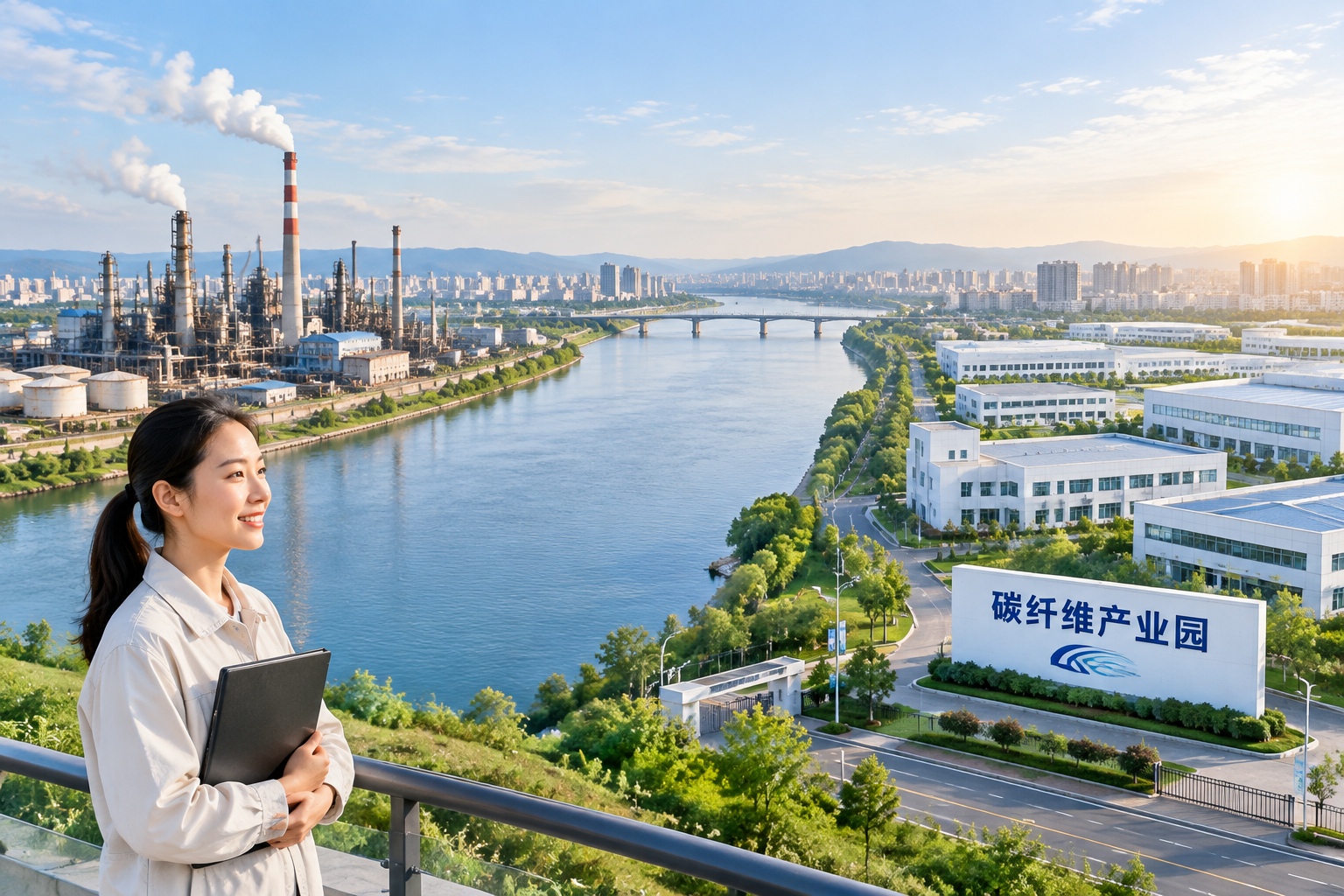

The quiet revolution at the old chemical town
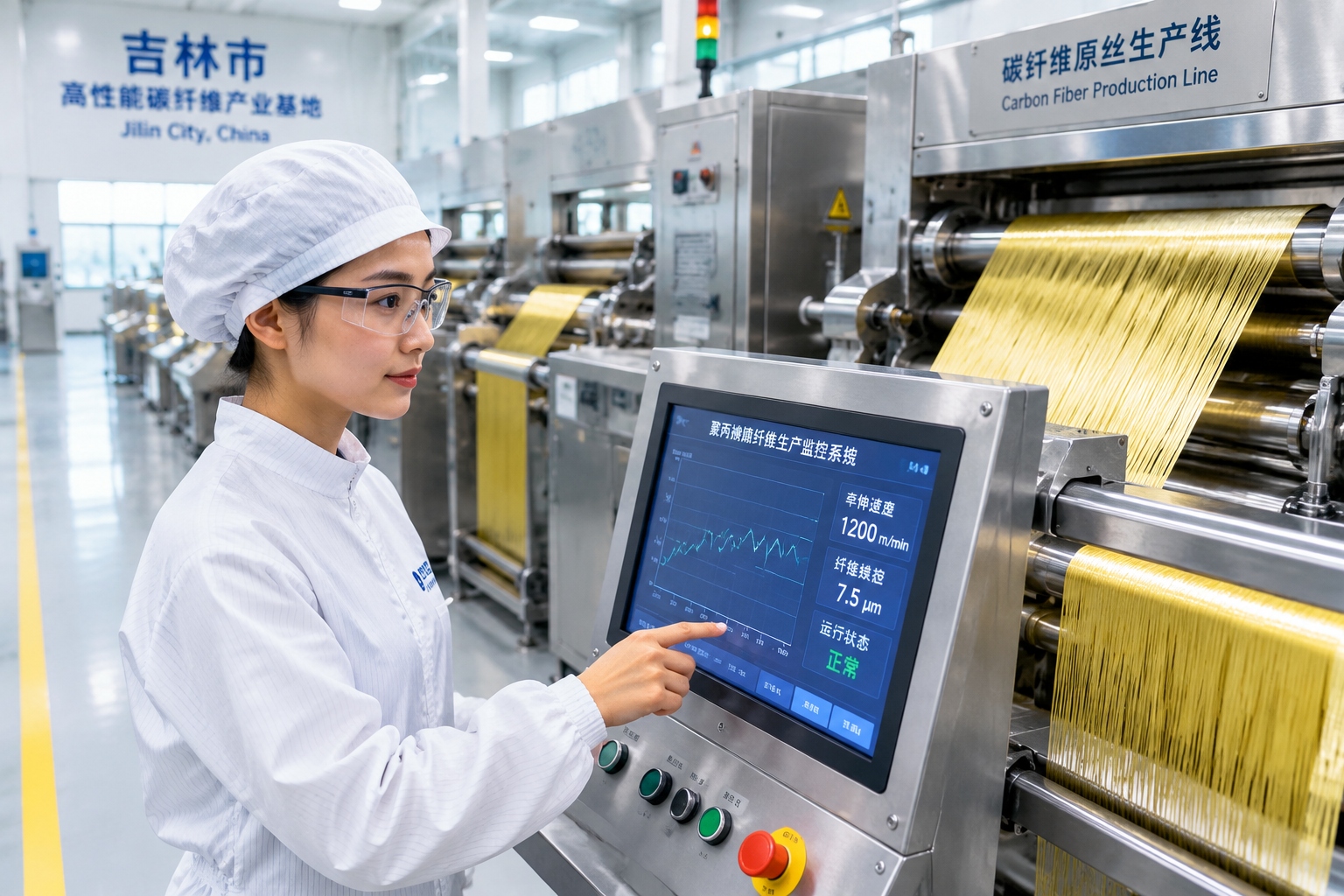
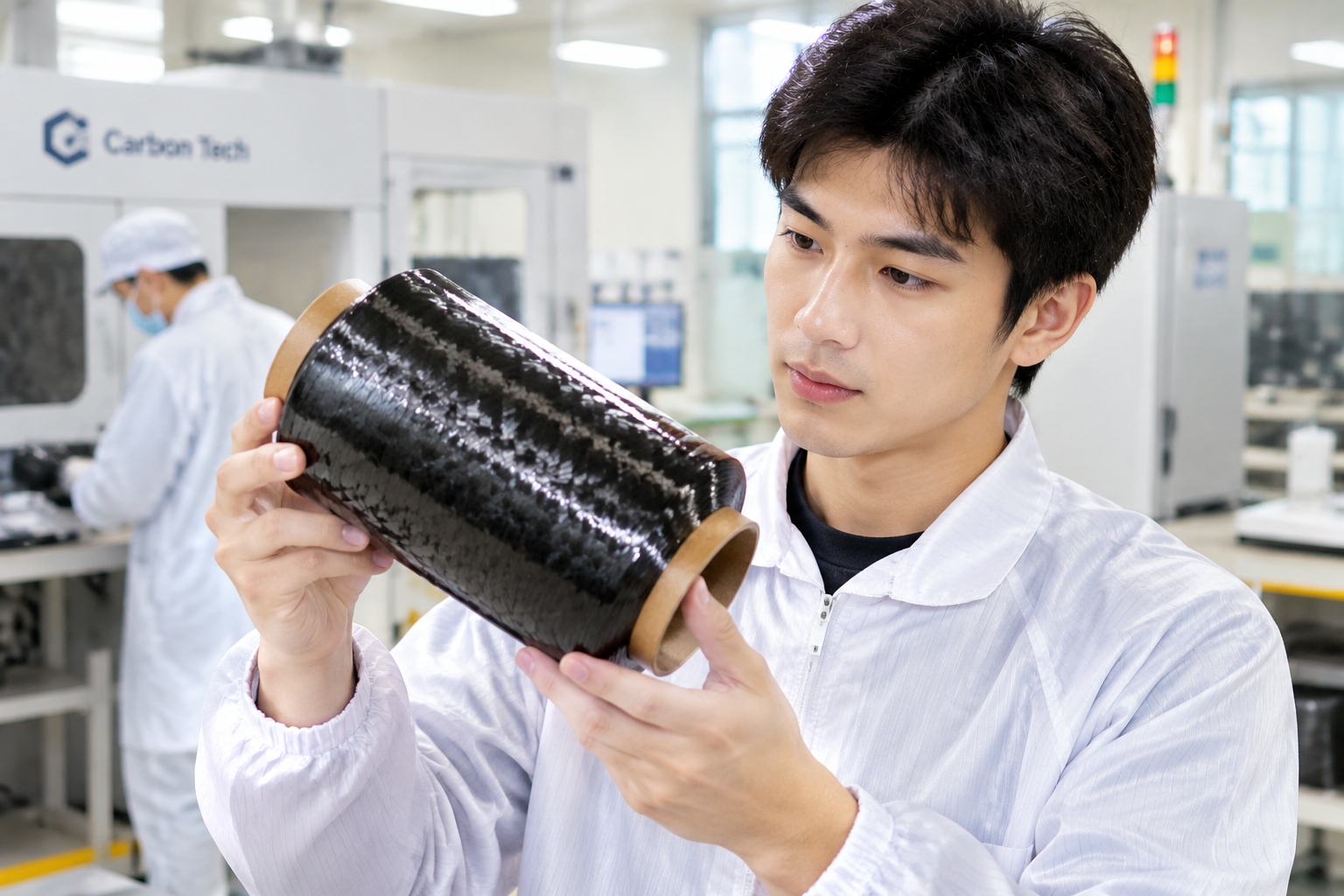
Standing inside a huge, bright workshop in Jilin City, Zhang Wei points to a single strand of glistening black wire no thicker than a human hair. “That strand can lift a small car,” says the 39-year-old production supervisor at a carbon fiber factory. Six years ago, Zhang worked on the maintenance crew of a chemical plant making synthetic rubber. Today he monitors computer-controlled furnaces that bake polyacrylonitrile (PAN) fibers into carbon fiber at temperatures close to 1,400 degrees Celsius.
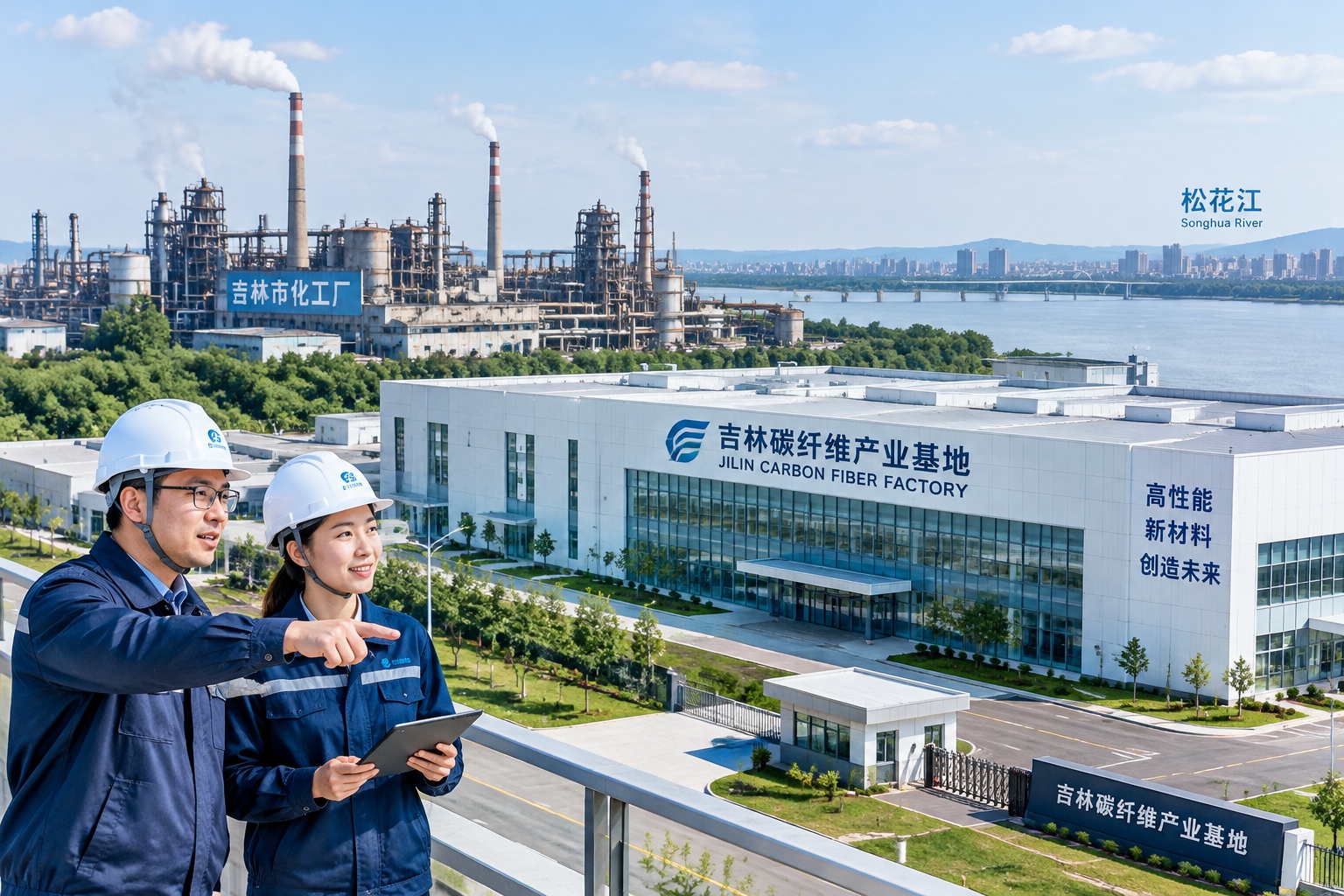
Jilin City, a municipality in China’s northeastern province of Jilin, has been known as the country’s “chemical city” since the mid-1950s. That was when the central government, with help from Soviet engineers, built Jilin Chemical Group (Jihua), a sprawling petrochemical complex along the banks of the Songhua River. For generations, a large share of China’s fertilizers, plastics, synthetic fibers and medicines came from this riverfront industrial belt.
But in recent years, Jilin City has started to answer a different name: “China’s Carbon Fiber Capital.” Local government data shows that carbon fiber production capacity in the city reached approximately 35,000 metric tons by 2023. That is around half of the country’s total capacity, according to trade media reports. The city is also home to the country’s first carbon fiber industrial park and a growing number of companies covering the entire production chain—from PAN precursor to final composite materials.
This is not a story of replacing the past, but of reinventing it. The chemical industry that once made Jilin City a key node in China’s planned economy now supplies the raw materials and skilled labor for its next act.
The chemical roots that feed the carbon fiber boom
Carbon fiber is not made in a lab from scratch. It starts with propylene—a petrochemical—which is processed into acrylonitrile and then polymerized into PAN fibers. That means the very businesses that made Jilin City famous for tar and detergent are now feeding the high-tech material industry.
Located in the city’s Longtan district, a new $730 million carbon fiber park sits less than 20 minutes from Jihua’s older installations. Trucks carry acrylonitrile liquid between the old plant and the new polymer lines every few hours. The proximity saves costs and creates a circular industrial loop that has attracted dozens of companies, including large state-owned producers like Jilin Chemical Fiber Group and newly arrived private startups.
One result is the rise of “large-tow” carbon fiber, a cheaper grade used in construction, wind turbine blades and electric vehicle parts. Jilin City companies are among the few in China that can mass-produce this type at scale. In 2022, a local enterprise launched a production line with annual capacity of 15,000 tons of large-tow carbon fiber, one of the largest in the world.
The local government has played a decisive role. It has provided land, tax breaks and research grants to anchor companies. It also set up a dedicated “carbon fiber exchange” that helps smaller suppliers connect with carmakers and aerospace firms from outside the province. According to a 2023 municipal report, the city’s carbon fiber and composite materials industry generated around 15 billion yuan (about $2.1 billion) in revenue, up from nearly zero a decade earlier. Much of that growth came from domestic demand for wind energy and hydrogen storage—two sectors where China leads the world in installed capacity.
How workers are coping with a changing workplace
For many employees, the transition to the new materials economy means learning an entirely different way of working. Li Ming, a 44-year-old technician who used to operate a crude oil furnace, now calibrates sensors in a carbonization plant. “The temperature has to be maintained within a width of a few degrees. It’s like moving from shoveling coal to surgery,” he says.
The city has tried to soften the learning curve. Jilin City’s vocational training center, partly funded by the provincial government, offers six-week courses for chemical workers moving into carbon fiber production. Trainees learn about oxidation ovens, graphite furnaces and quality-control software. The program has retrained more than 5,000 workers since 2020, according to the local human resources bureau.
Still, not everyone makes the leap. A union representative in the chemical district estimates that roughly one in five of his co-workers from the old generation left the industry before retirement age. Some moved to construction or logistics; others left the region for warmer cities in the south. “Older workers often see a computer screen and not a place they belong,” he says.
Lessons and limits of the new material turn
Jilin City’s transformation is not a one-way ticket to prosperity. The global carbon fiber market is heading toward a supply glut as manufacturers in China, Japan and the United States expand capacity. Prices for standard grades have fallen by 20% over the past two years, squeezing profit margins. To stay competitive, Jilin City firms are trying to move up the value chain, making finished products like pressure tanks and aircraft interiors rather than just fiber rolls.
There is also the challenge of China’s broader population decline. The city’s permanent population fell from about 4.5 million in 2010 to slightly above 4 million today, as many young adults left for megacities. While carbon fiber factories have created thousands of jobs, they cannot on their own reverse the demographic trend.
Environmental improvements are more tangible. The 2005 Songhua River pollution accident, caused by an explosion at a Jilin chemical plant, became a national wake-up call. Since then, the city has shut down many outdated chemical units, invested heavily in wastewater treatment, and relocated some plants away from the river. Air quality data from the Jilin municipal government shows that sulfur dioxide levels in 2023 were down nearly 80% from 2005.
What Jilin City means for China’s industrial transformation
Seen from the ground, Jilin City’s makeover is less about “post-industrial” escape than about industrial evolution. It is a city using its old steel-and-smoke assets to build a more sophisticated industrial base, one that is less environmentally destructive but still deeply rooted in manufacturing.
The experience matters far beyond Jilin. Many cities in China’s northeast, a region once known as the country’s “rust belt,” face similar problems: aging factories, shrinking populations and the need to find new economic footing. Jilin City’s path—building on the existing chemical base rather than abandoning it—offers a possible template.
For Zhang Wei, who once thought his career in the chemical city would last forever, the new black fiber represents not just a broader economic shift but a personal one. “When I first saw the finished carbon fiber, I couldn’t believe something so strong could be so light,” he says. “It felt like holding the future in my hand.”
Start the discussion at forum.chinacomes.com