


Picture settling into a window seat, placing a cup of water on the table and watching a station platform slide away. Once the train gathers speed, nearby poles flick past too quickly to follow; distant apartment blocks move more slowly. You listen for a louder hum and glance at the water. Would 400 km/h feel dramatically different from 350?
This is an imagined passenger scene, not a reported ride aboard a commercial CR450 service. It frames the question behind China’s next generation of high-speed trains: what does another 50 km/h actually give the person in the seat?
CR450 speed: 400 km/h in service, 450 km/h in testing
The CR450 prototypes unveiled in Beijing on December 29, 2024, were presented with a target commercial operating speed of 400 km/h, approximately 249 mph, and a test speed of 450 km/h, approximately 280 mph. Those figures describe different conditions. A test run validates performance under controlled arrangements; a commercial speed must support repeated journeys carrying passengers.
The distinction matters because the model name is easy to misread. CR450 does not mean passengers should expect a scheduled journey at 450 km/h. Nor does a prototype unveiling establish a passenger launch date, a bookable route or a ticket price.
China’s existing CR400 Fuxing trains operate at up to 350 km/h on suitable routes. “Fuxing,” usually translated as “rejuvenation,” is the name of a Chinese train family. CR450 extends that family’s ambitions. Its 400 km/h service target represents an increase of about 14.3 percent over 350 km/h.
The specifications here use the December 2024 unveiling as a dated factual baseline. They should not be read as confirmation of a current 400 km/h passenger timetable.
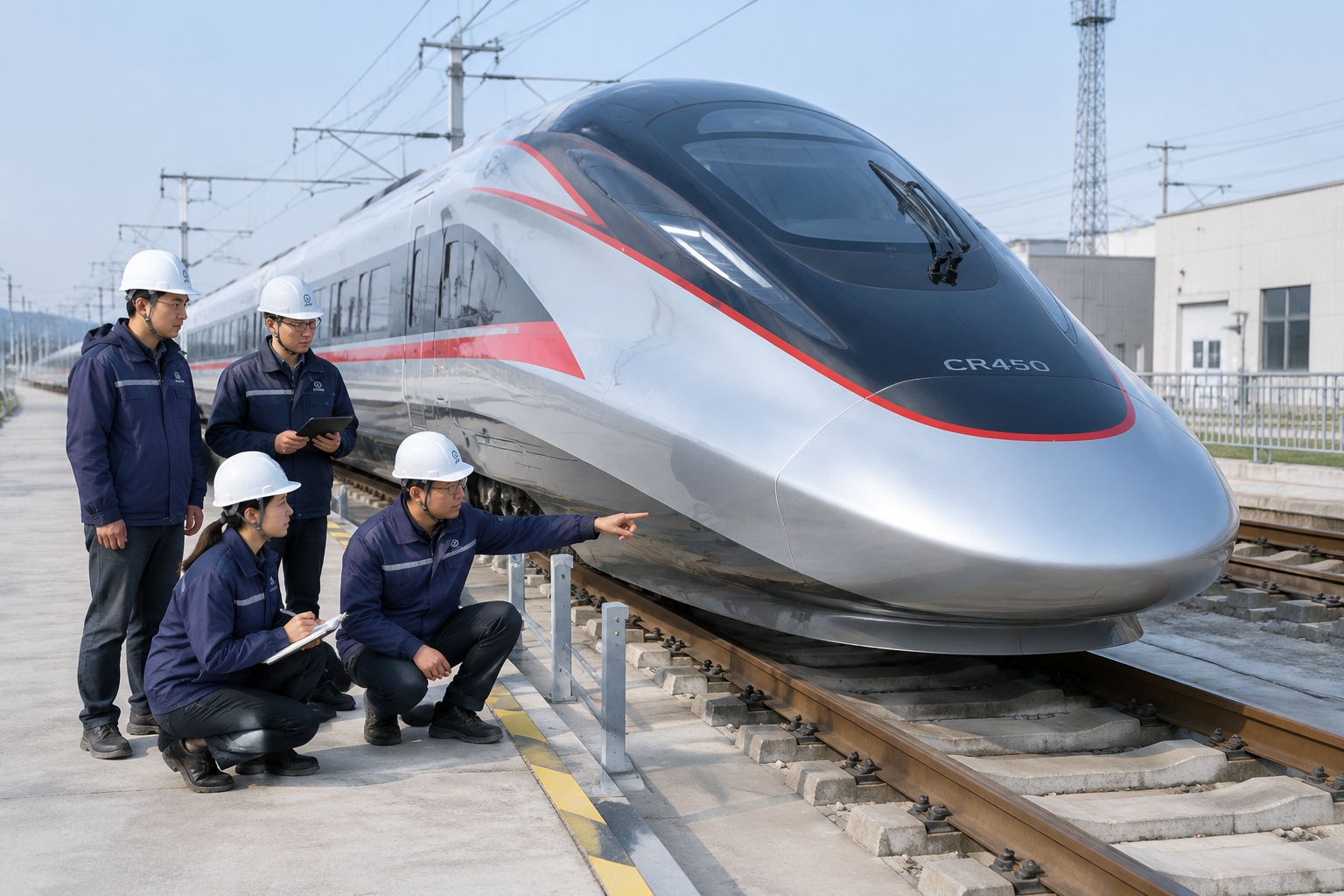
What would 400 km/h feel like inside the carriage?
Speed is surprisingly difficult to judge from a comfortable seat. On straight, smooth track, passengers mainly notice acceleration, vibration, sound and the movement outside. An aircraft cruising much faster offers a familiar comparison: steady velocity itself does not push you into the seat.
From a train window, distance changes the impression. A nearby signal flashes past; a village across the fields remains visible long enough to examine. At 400 km/h, the train covers roughly 111 metres each second, compared with 97 metres at 350 km/h. The difference is more obvious beside the track than on the horizon.
The cup is a useful image, but a poor measuring instrument. Ripples reflect track irregularities, suspension behaviour and acceleration, rather than speed alone. A quiet carriage also depends on wheel and rail condition, aerodynamic noise, insulation and maintenance. A convincing passenger assessment would need measurements and a real ride.
Tunnels add another test. Pressure changes can make ears feel blocked, even when the carriage seems steady. Better pressure sealing and ventilation control therefore belong in the same conversation as top speed. Passengers will judge whether they can talk, rest and work comfortably for hours.
Why a faster train needs more than stronger motors
Aerodynamics and weight
At these speeds, pushing air aside takes a substantial share of the train’s energy. The nose, underbody, gaps between carriages and equipment around the roof all affect drag and noise. A longer, carefully shaped nose also helps manage the pressure waves generated when a train enters a tunnel.
Launch reporting described the CR450 prototypes as reducing running resistance by 22 percent and weight by 10 percent relative to the comparison used by the developers. These are reported development figures, not a promise that every passenger journey will consume 22 percent less electricity. Route, speed, stops and occupancy all affect the result.
Lower weight helps acceleration and reduces some loads on the infrastructure. Engineers still have to preserve structural strength, crashworthiness and durability. The practical challenge is a train that can repeat its performance through years of weather, vibration and maintenance cycles.
Braking, track and the overhead wire
For the same mass, kinetic energy rises with the square of speed. Moving from 350 to 400 km/h means roughly 31 percent more kinetic energy to manage when slowing down. Braking therefore becomes a central design constraint, involving electrical braking, friction brakes, wheel adhesion and control systems.
The railway itself must support the increase. Curves, track alignment, bridges, tunnels and switches all matter. Above the train, the pantograph—the articulated device touching the overhead wire—must collect electricity reliably while both train and wire move and vibrate. More capable motors cannot compensate for an unsuitable route.
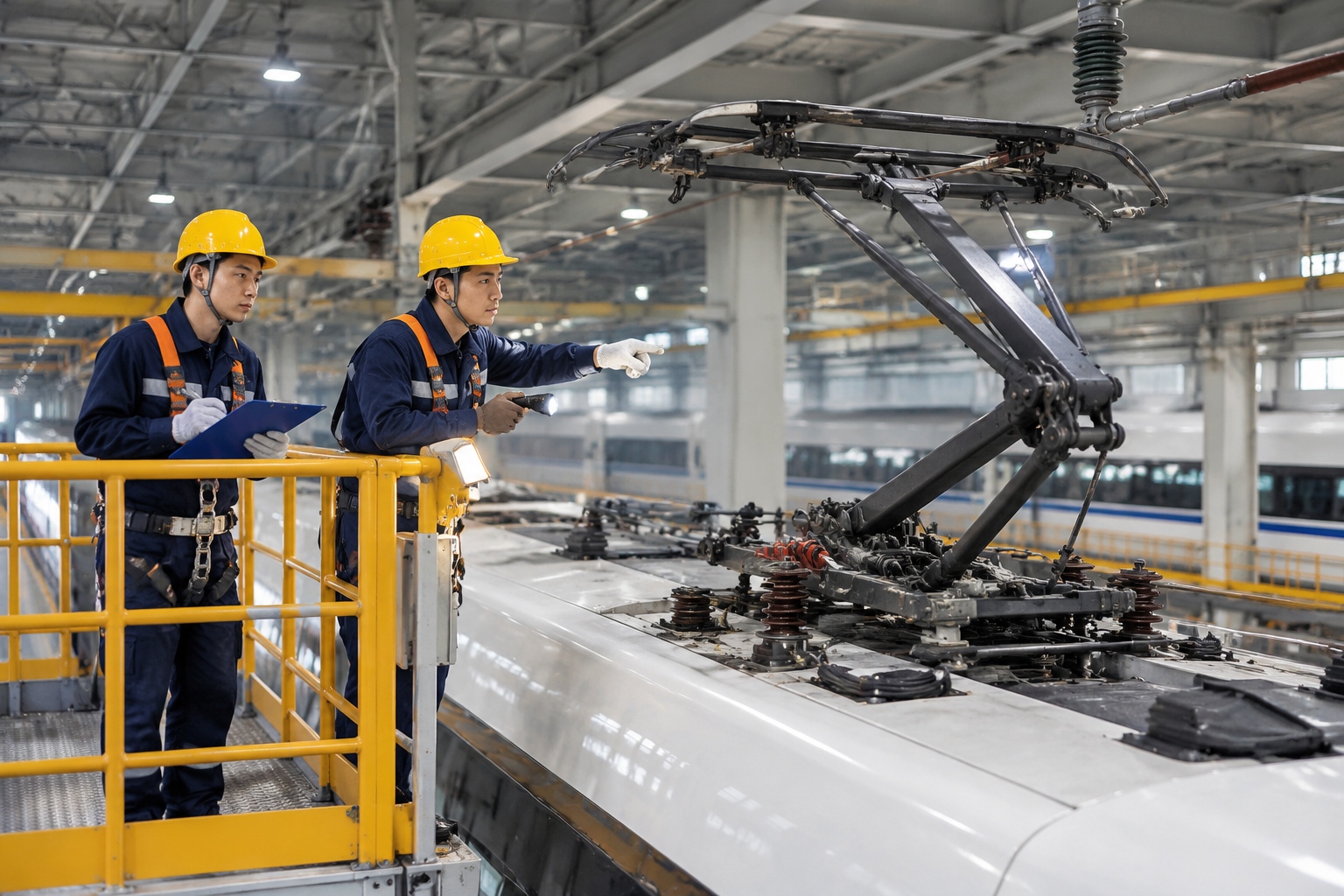
What faster trains could change for ordinary passengers
Consider a simplified 1,000-kilometre journey without stops or speed restrictions. At a constant 350 km/h it takes about two hours and 51 minutes; at 400 km/h, two hours and 30 minutes. That theoretical saving of roughly 21 minutes explains both the attraction and the limits of the headline figure.
Real trains accelerate, brake, stop and share railway capacity. A timetable includes operating margins. The actual saving would depend on how much of the route permits 400 km/h, and cannot be calculated simply by reducing today’s advertised journey time by 14 percent.
For someone making a return business trip, twenty minutes each way could mean more time with a client or an earlier evening at home. For a family visiting relatives, it may make a long journey less tiring. Those gains become meaningful through a timetable that fits people’s lives.
A wider commuting radius is possible, but conditional. Getting from home to the station, clearing security and reaching the workplace can absorb much of the time saved onboard. Many Chinese high-speed stations sit outside older urban centres. A frequent metro connection may matter as much as a faster intercity train.
Higher speed does not automatically produce more departures, either. Capacity depends on signalling, safe separation, station platforms, junctions and the mix of services. Trains travelling at similar speeds can be easier to schedule together; mixing fast and slower services creates additional constraints.
Energy use and fares: who benefits from the extra speed?
There is a physical cost to speed. In a simplified aerodynamic model, drag rises approximately with speed squared, while the power required to overcome it rises with speed cubed. Actual railway energy use is more complicated, but the basic pressure remains: going faster demands substantial engineering improvements to control consumption.
Passenger occupancy matters too. Electricity per passenger-kilometre depends on how many seats are occupied, alongside the train’s efficiency. Rail’s climate performance also reflects electricity generation, construction and whether passengers would otherwise drive or fly. A higher maximum speed alone cannot establish a greener journey.
Ticket prices require separate evidence. Development specifications do not establish a CR450 fare, and this article quotes no unverified price or route. Travellers should check China Railway’s official 12306 booking service for the date, train number, journey time and fare actually offered.
Affordability will shape the public benefit. A faster premium service might appeal to business travellers, while students and families may prioritise cheaper departures. The useful question is how the railway balances speed, frequency and price across its services.

Which lines could actually run at 400 km/h?
A compatible train is only one requirement. Commercial operation at 400 km/h needs an approved combination of rolling stock, infrastructure, signalling, power supply and operating procedures. A line described as being designed for 350 km/h should not be assumed ready for 400 without further assessment.
Safety margins are built through testing and validation: braking performance, crosswind stability, behaviour in tunnels, current collection and responses to equipment failures. The objective is reliable operation within defined limits, including adverse conditions—not simply reaching a number during a successful run.
Back at the imagined window seat, the most meaningful sign of progress may be ordinary: a conversation without raised voices, a usable table, an arrival time that holds. CR450’s promise will become tangible when an approved timetable turns its engineering targets into a journey people can book, afford and trust.
Source basis: Xinhua and China State Railway Group reporting on the CR450 prototype unveiling, December 29, 2024. Journey-time and kinetic-energy comparisons above are illustrative calculations, not published service commitments. Current passenger availability and fares require confirmation through China Railway 12306.
Start the discussion at forum.chinacomes.com