
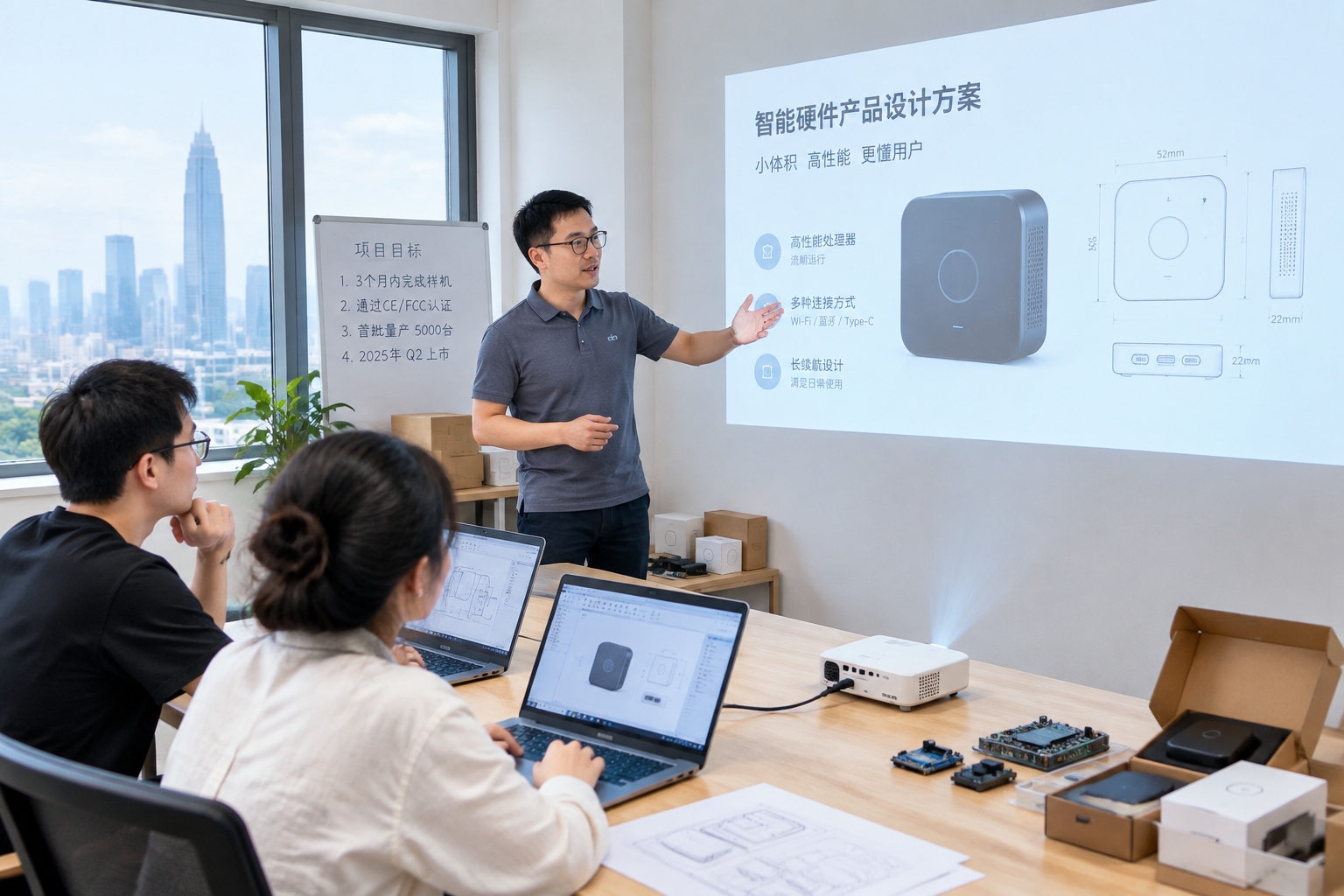

One afternoon in an old Shenzhen office
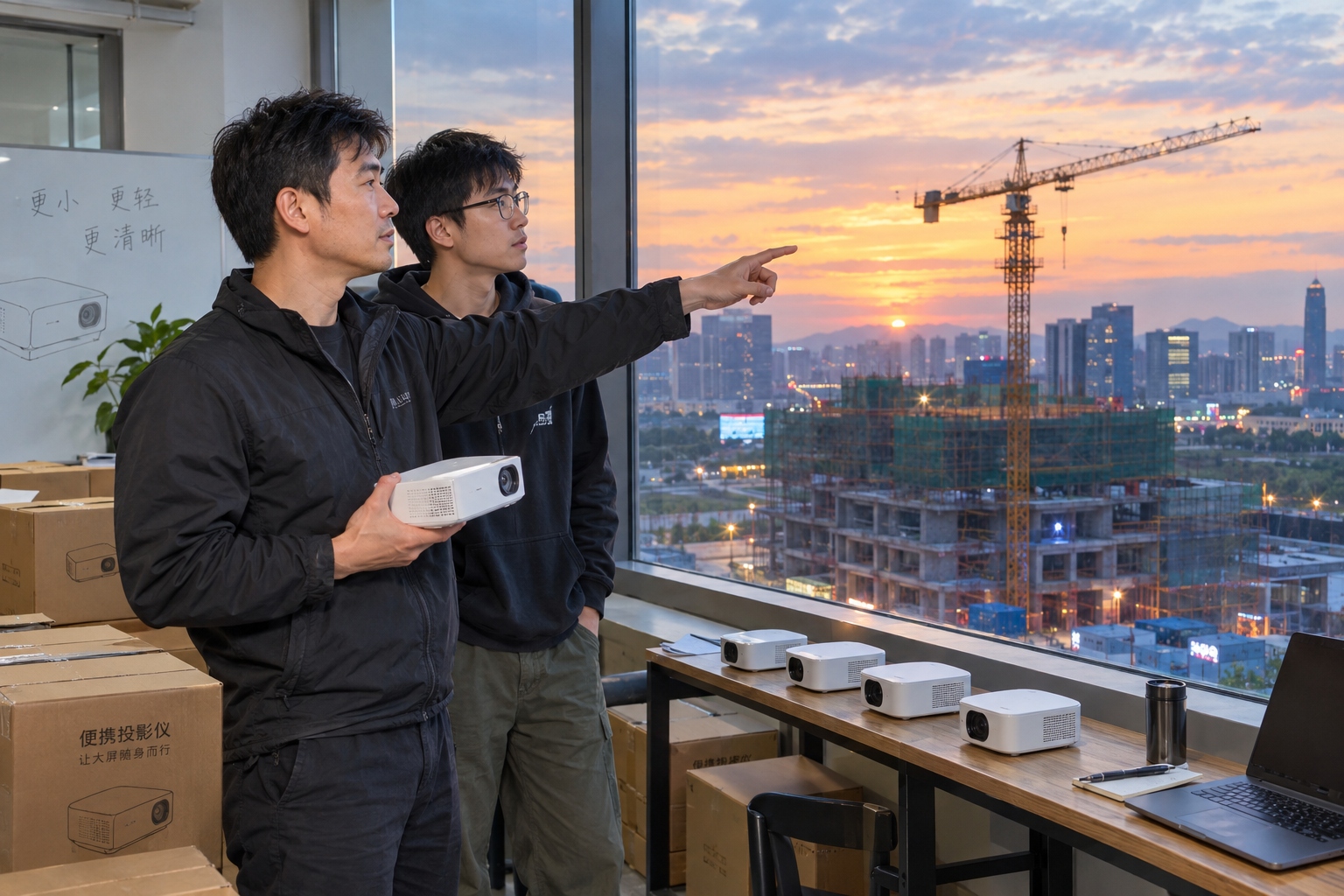
Inside a gray industrial building in Bao’an district, not far from Shenzhen Bao’an International Airport, a founder in his early 30s unzips a small bag and takes out a device about the size of a sandwich. He points it at the white wall, switches it on, and within seconds a 120-inch movie image glows across the wall. The ambient light in the room is still on, but the picture is bright enough to watch.
“Three years ago, we couldn’t even afford a proper conference room. Today, the company is worth around a billion dollars,” says Wu, who asked me not to use his real name or the company’s name. “We’re what people call a unicorn, but honestly, I still feel like an engineer who happens to build projectors.”
Wu founded his Shenzhen-based startup in 2016. It now sells smart projectors in more than forty countries, with strong demand from young renters in Europe, Japan, and North America. This is not a story about a lucky product. It’s a story about how Shenzhen’s hardware ecosystem makes it possible for a team of five people to take on a global market.
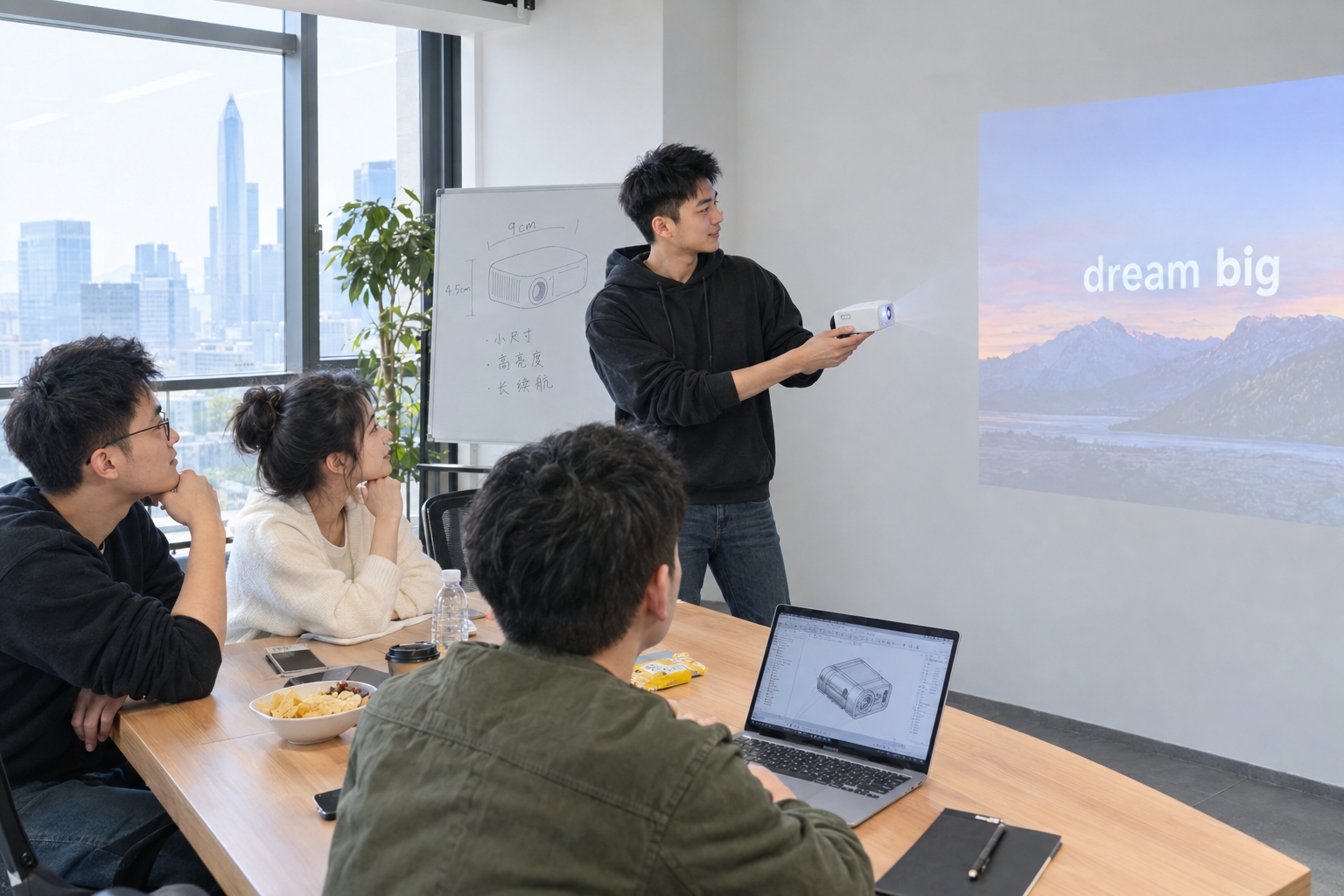
Why did the projection industry need to be disrupted?
Ask most people about projectors and they remember dusty ceiling units in conference rooms or classrooms, humming fans, a menu in five languages, and cables that never matched. The old projector was made for office presentations and movie theaters, not for everyday home viewing.
Wu thought about this problem as a consumer first. He and his wife loved watching films but shared a 28-square-meter rented apartment in Shenzhen. A 55-inch TV felt too big for the wall and not great for movie nights anyway. He bought a cheap projector from the electronics market and fired it up. “I saw a screen that looked foggy and orange. The image was blurry in the corners. The fan was louder than the film. It took me ten minutes to configure,” he says.
His background made him pay attention. Before founding the startup, Wu spent five years working as a product engineer for a Shenzhen mobile phone manufacturer. In that small company, he saw why Chinese hardware teams were winning: they could design, test, and launch products quickly if they knew the right suppliers. An idea formed: build a projector that behaves like a smart phone — small, silent, auto-focusing, connected to apps and with no complicated setup.
A hardware team that treats Shenzhen as their playground
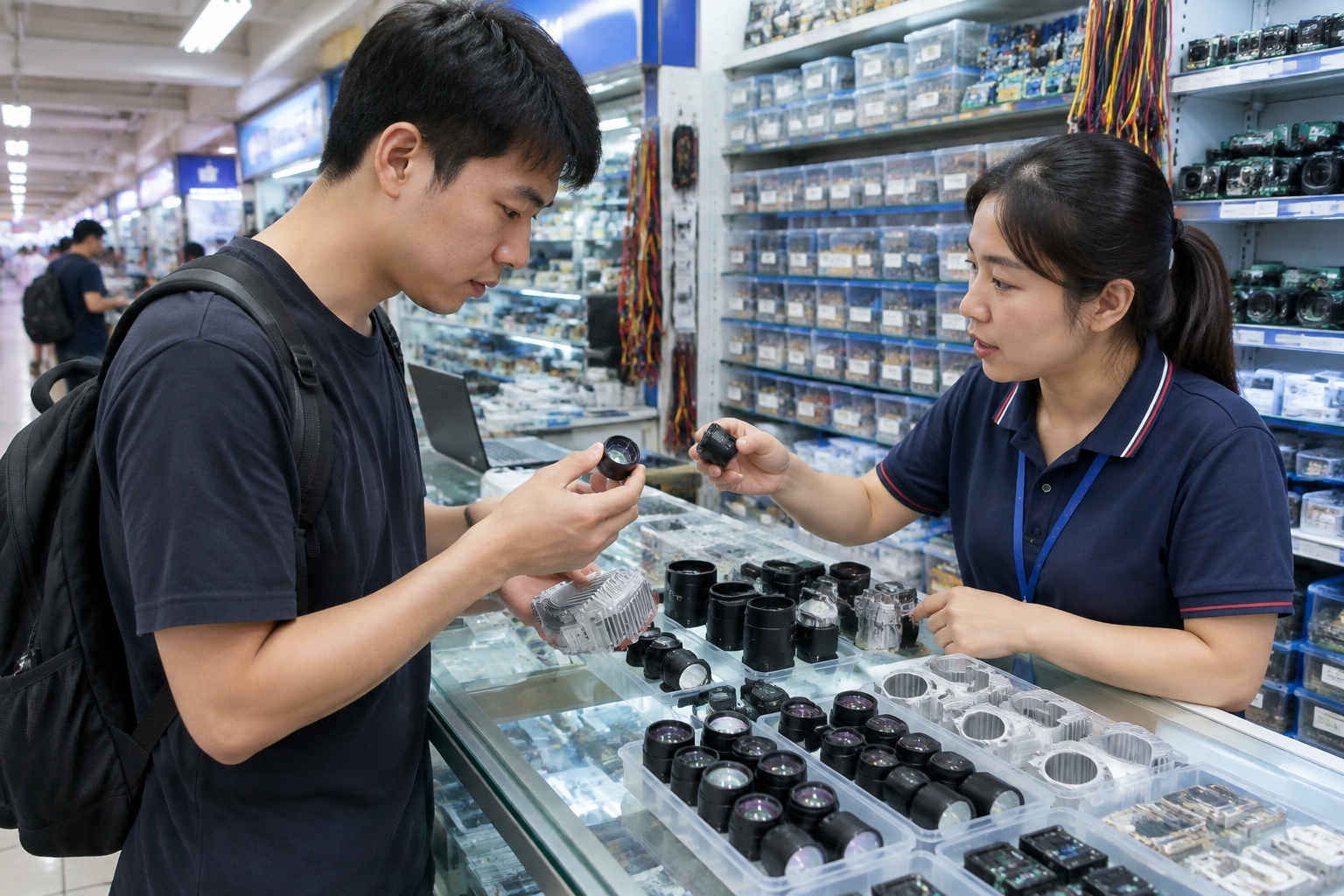
“In Shenzhen, the supply chain is not a chain. It’s a dense and crowded city that you can walk through,” Wu laughs. He explains that for older electronic categories like projectors, many components are manufactured in China anyway. The difference is locality. In Shenzhen, you can source a custom aluminum shell, a printed circuit board, a set of small lenses, and a fan within the same day. Need a new rubber cover for a button? You can find a supplier in Huaqiangbei, the sprawling electronics market in the city center, and another in Shajing, a manufacturing hub to the west.
That density allowed Wu’s team to prototype fast. Their first working model was assembled from off-the-shelf parts bought online and at Huaqiangbei counters. The next version included a made-to-order injection molding tool, costing less than what a factory in other countries would charge for a single quote. “Our first big design change from a square box to a round metal tube happened in nine days. The factory sent samples by courier, and we tested them in our office overnight. Next morning we sent back drawing corrections.”
Chasing the Chinese big-screen dream
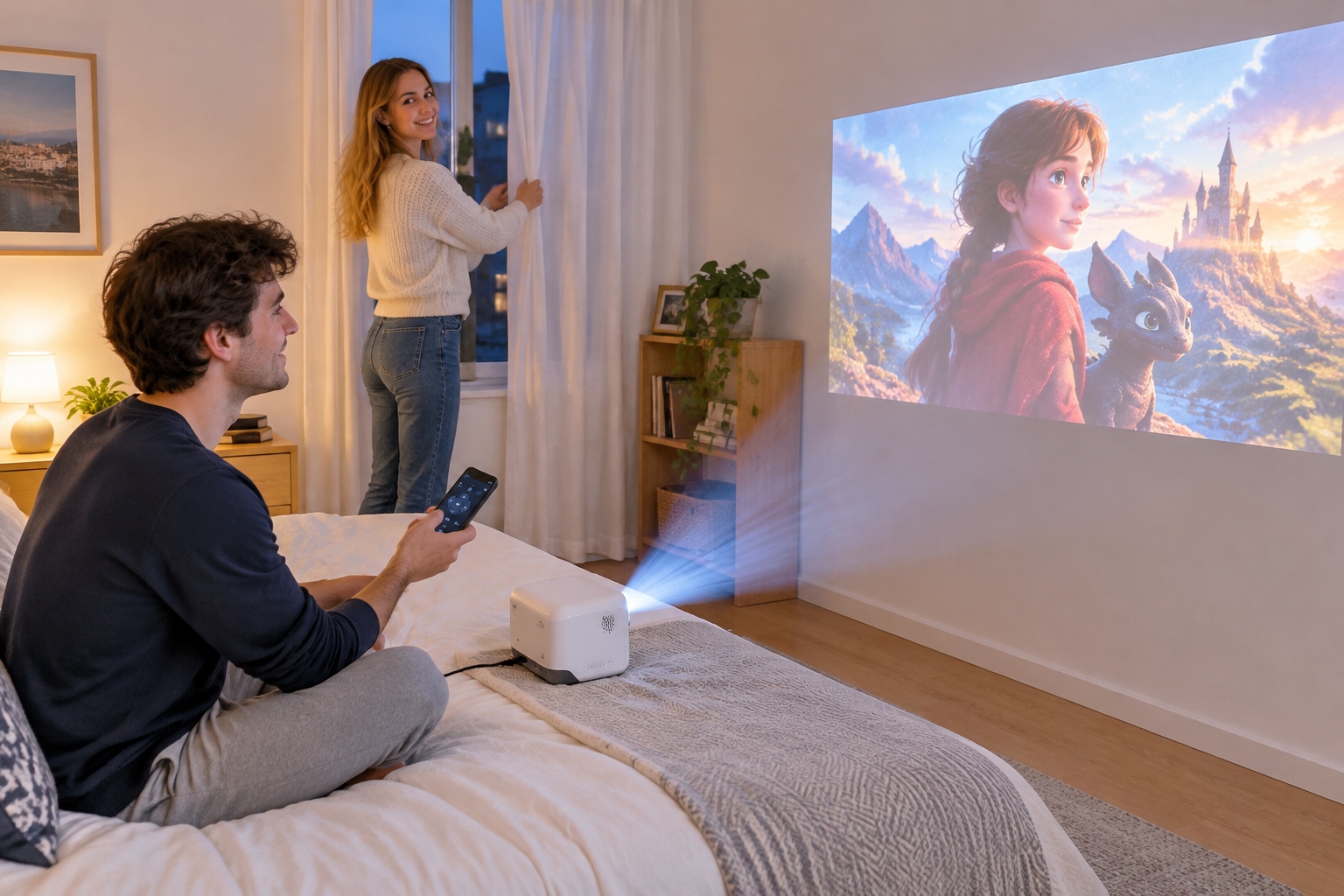
At the time, a “cinema at home” still felt like a luxury in China. Many apartments were small, and large TVs were either expensive or awkward to install. Young people streamed shows through their phones and laptops. Wu and his small team believed there was a huge group of users who wanted the comfort of a movie theater but had no space for a clunky projector and screen.
So they built their first smart projector. It ran on an Android-based system, so users could open Netflix or local video apps directly. It automatically focused when power was on, and it corrected image shape if you pointed it at an angle. The team even added Bluetooth speakers so people could use it without an extra sound system. “We did not think of it as a projector,” Wu says. “We thought of it as a big-screen entertainment device that you can hold in your hand.”
That product went through several failed prototypes. The first thermal test melted the casing. The second had a short battery life. The third had focus problems because the lens heated up and expanded. Instead of postponing, the team used their supplier network to test four different lens designs in one week. “In a traditional projector company, that would have taken a month and required a lab in another country,” Wu said.
How a crowdfunding campaign changed the global picture
For a young Chinese brand, breaking into overseas stores was hard. So Wu followed the playbook that many Shenzhen hardware startups had used: crowdfunding. In 2018, they launched on Kickstarter and Indiegogo with a prototype video. To his surprise, backers didn’t see it as an ordinary office projector. They saw it as a product for camping, backyard parties, and tiny apartments in Tokyo or Berlin.
“The first time we saw a backer send us a video of his trailer home, with the projector shining on a white sheet, we knew we were onto something,” Wu remembers. That campaign raised about $900,000 in two months. After that, Amazon sellers in the United States and Europe picked up the product. Retailer orders followed.
Today, more than 60% of Wu’s revenue comes from overseas. A big share arrives through cross-border e-commerce and specialized distributors. He says this market was opened not by advertising but by user clips and online reviews. “People film the moment their living room wall turns into a cinema. They put it on social media. That is our strongest ads.”
The near-death moment every startup knows
The growth story could have ended this way: In early 2020, the pandemic disrupted global supply chains, and Wu had just signed a large order with a European retailer. His main factory in Shenzhen shut down for two weeks. Parts were trapped at a neighboring city’s border. He had to choose between paying salaries or paying the factory to keep a production line reserved.
“We used almost all of our cash reserve. I did not tell my team, but I was one day away from asking my father for a loan. Then the government provided a special loan for export hardware firms, and that saved us,” he says. The experience changed how the company handles risk. They now use two separate assembly partners and keep more inventory than Western hardware firms would think sensible.
Becoming a ‘unicorn’ in the Chinese way
The company’s valuation reached about $1.2 billion in early 2024 after another financing round. But Wu is cautious about the label. “A lot of Chinese startups become unicorns because investors are chasing a trend. The real milestone is creating a product people love and that you can service for years.”
He also feels the pressure of being in a crowded field. Several Chinese brands now sell similar projectors at lower prices. Texas Instruments, the dominant supplier of projector imaging chips, has limited production capacity. That means the entire industry competes for chips. Wu responded by moving much of the software and user experience in-house, so it is harder for rivals to copy the complete product. He also works closely with upstream component makers to get priority supply.
Advice for hardware founders who dream of going global
When I ask Wu what he would tell a young founder in Shenzhen or anywhere else, he sums it up in a few lines. “First, do not start with technology. Start with one specific moment in a person’s home where the screen is not enough. Second, treat your supply chain as a partner. We visited our factories every week during scale-up, and that saved us from quality disasters. Third, respect your early community. A hardcore fan who posts a video in Kuala Lumpur can do more than a billboard in New York.”
He acknowledges the obstacles as well: “If a product like ours succeeds, you will draw legal threats, patent claims, and copycats. Get a good patent lawyer as early as you can.”
Where Shenzhen’s next unicorns come from
Walking out of Wu’s office, I notice a park crowded with young people flying drones. Wu points to a new subway line being built on the other side of the street. “Shenzhen is a city that literally builds on itself. The old office building where we made our first prototype is now a furniture showroom. That is okay. You don’t need landmarks. You need daily progress.”
For many Chinese tech entrepreneurs, the projector story is a reminder that global markets are not dominated by giants alone. A flexible startup in a basement or on a factory floor can outrun the old players if it moves fast, listens to users, and sticks to the details. As Wu puts it: “The projector market used to be boring. Now we made it feel like a movie.”
Start the discussion at forum.chinacomes.com