
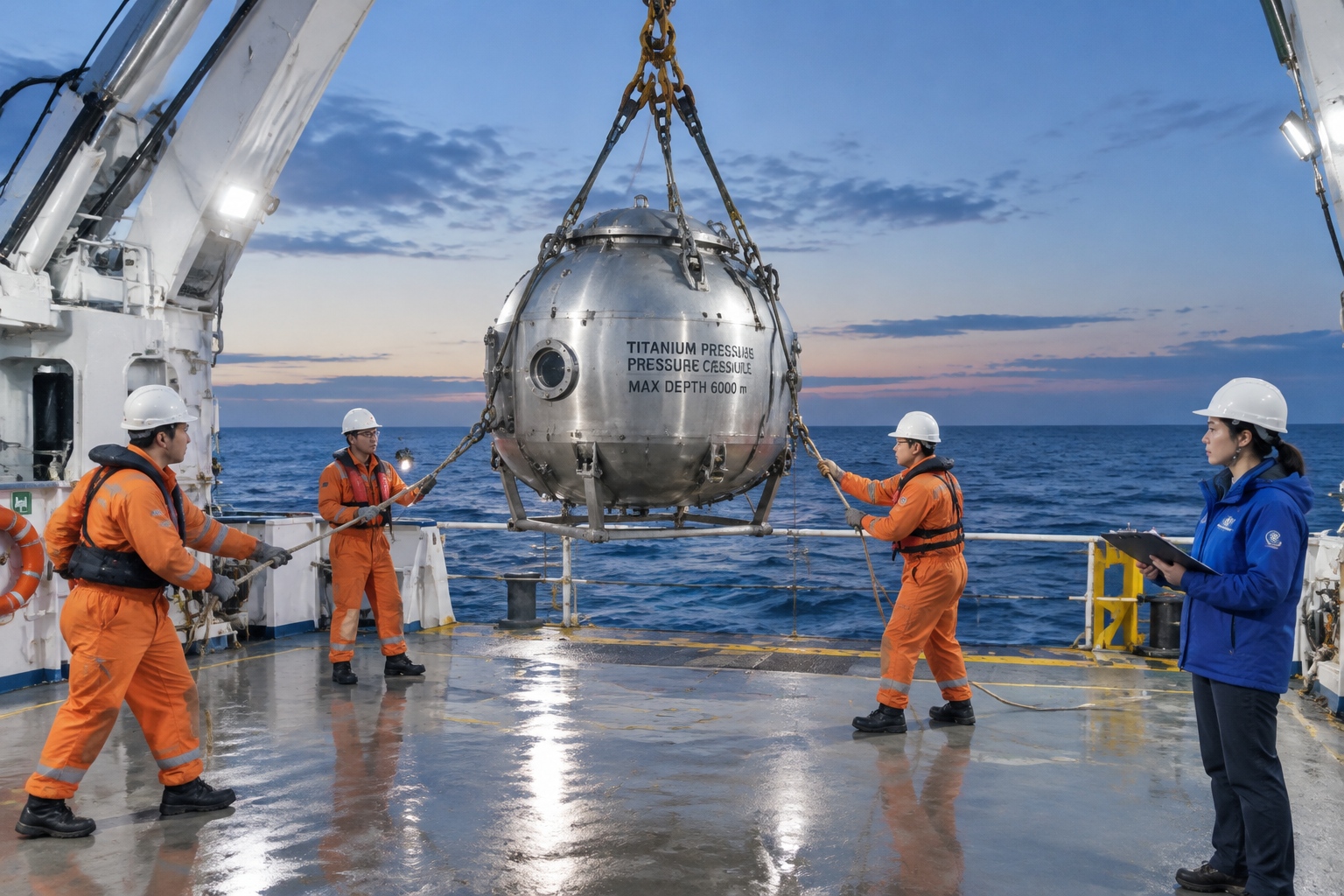

Two weeks in a windowless room, 2,000 meters down
At 2,000 meters below the surface, noon and midnight look identical: there is no light at all. Water temperature sits around 2–4°C, and pressure is roughly 200 times what you feel at sea level — about 200 kilograms pressing on every square centimeter, or close to 200 kilos on a thumbnail.
That is the environment Chinese researchers want to spend weeks in, not hours. In Chinese public descriptions, the project is a 2,000-meter-class crewed long-stay deep-sea laboratory — a platform built for people to live and work on the seafloor, rather than to visit briefly and return. Project teams and domestic media describe it as the first facility of its kind at that depth.
Public details are still thin. Size, endurance and operating dates vary between reports, and the “first” claim comes from the project side rather than from an independent ranking. But the core idea is clear enough to answer a question most people have never thought to ask: why put humans at that depth at all?
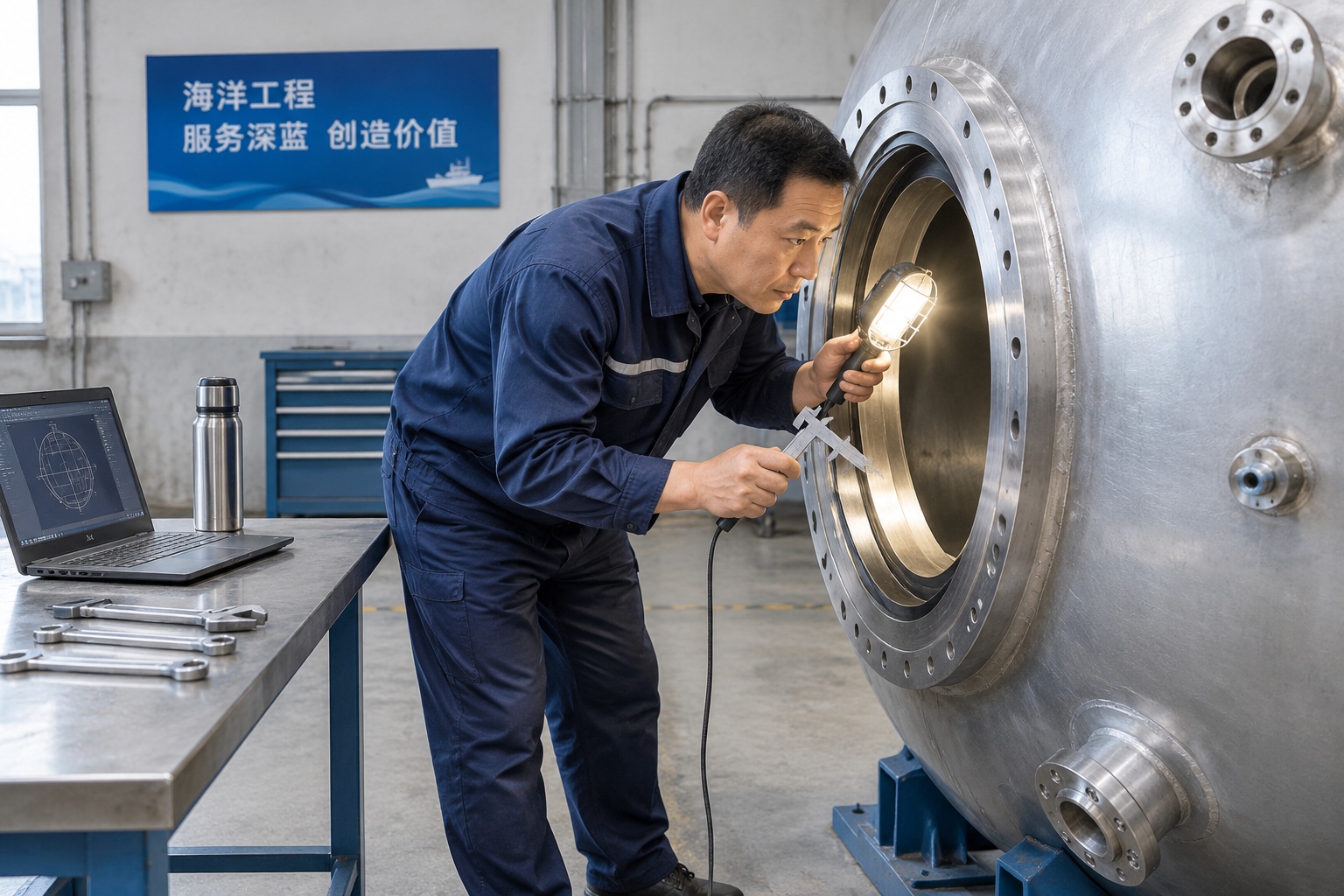
“2,000-meter class” does not mean exactly 2,000 meters
In ocean engineering, depth ratings are usually a range, not a fixed number. The word “class” signals a design bracket, with a safety margin built in. A 2,000-meter-class platform may be designed to work at or around 2,000 meters, while its hull and fittings are built and pressure-tested to a greater depth. China’s crewed submersibles work the same way: a “4,500-meter-class” vehicle operates near 4,500 meters but must survive tougher testing during construction and certification.
So “2,000-meter class” is best read as an operating zone rather than a ruler. Actual working depth may sit above or below that number. The important part is that the whole chain — hull design, seals, certification — is engineered for more than the target, rather than squeezing the margin to zero.
The “first” framing deserves the same care. It is the description used by the project team and domestic outlets, referring to a platform for long-term human occupation at this depth. Earlier seafloor labs have existed — but mostly in shallow water, often just tens of meters down. Moving a crewed lab to two kilometers is the genuinely new part.
From “go down and look” to “move in”
Think of a submersible as a car: pack energy, load breathing gas, dive for a few hours, come back up. Think of a lab as a house: you need air, water, power, waste handling, a place to sleep and work, and a plan for what happens if something breaks.
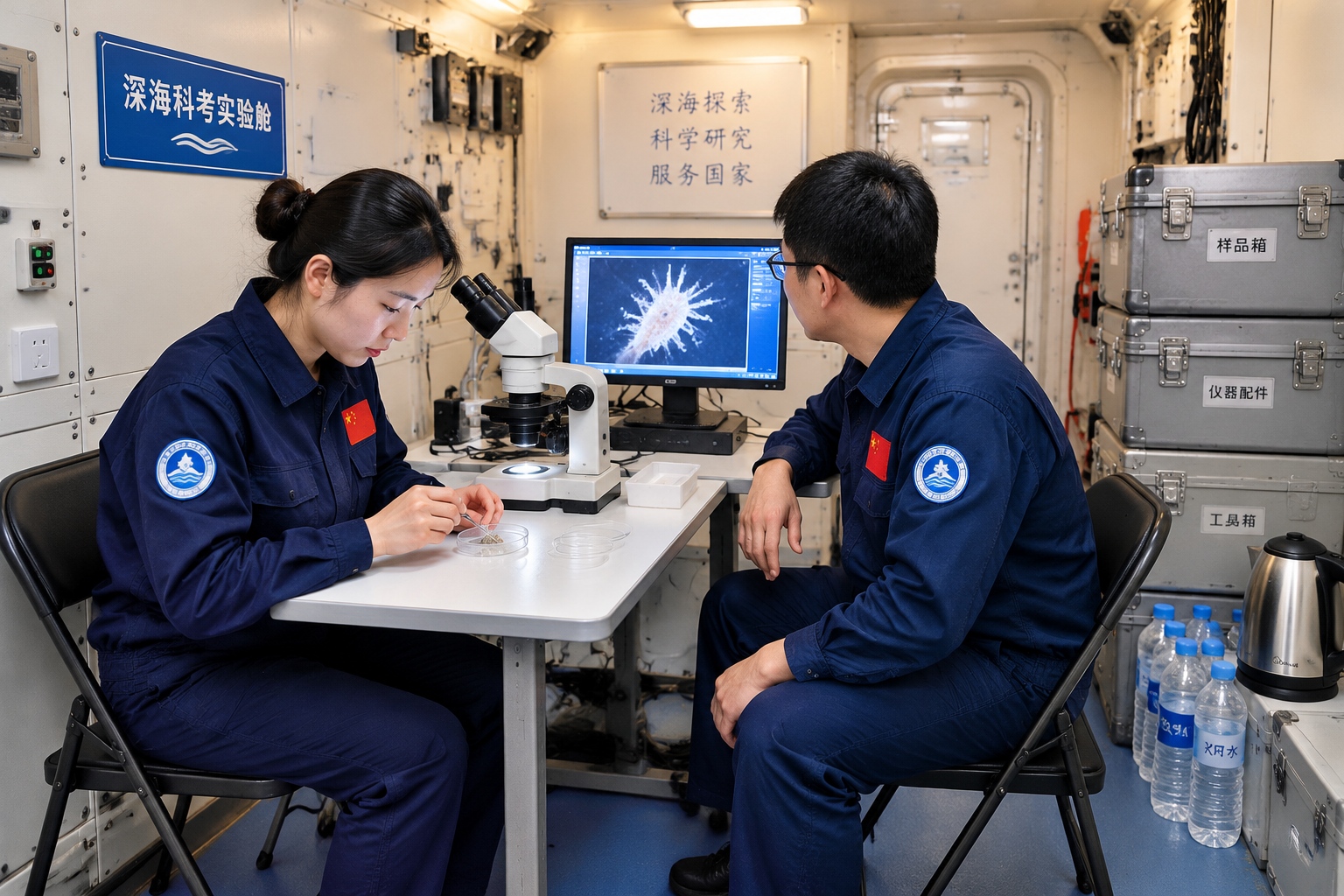
A short dive supports a small sphere, a few people, a few hours. A long-stay platform has to regenerate air, scrub carbon dioxide, manage humidity, guard against fire risk in a sealed space, store or recycle water, handle waste, and keep power running for weeks — mostly without someone watching every machine, because a crew of two or three cannot be on shift around the clock.
People are the second variable. Two weeks in a windowless space disrupts sleep, strains mood and judgment, and magnifies small faults. That is why mission design has to include rotation, redundancy and psychological support, not just hardware.
Four engineering problems: air, power, signal, pressure
Life support. Air cannot simply be tanked and forgotten. Carbon dioxide must be removed continuously, oxygen topped up at the right rate, humidity controlled to protect equipment and people, and fire risk managed through both materials and rules. The system needs redundancy: valves, sensors and controllers have to keep working after a fault.
Power. Weeks underwater rule out a single battery pack. The options are high-density batteries, fuel cells, or a tether to a surface support vessel — each with trade-offs in weight, endurance and risk.
Communication. Radio is nearly useless in salt water. Sound travels, but with limited bandwidth: across tens of kilometers, practical rates are often only a few kilobits per second. That means raw data cannot be streamed to the surface in real time; much of it has to be processed or stored on site, or moved physically through a surface ship.
Pressure. Any full-sphere or cylindrical hull must hold its shape at 2,000 meters, with hatches and penetrations sealed tight. Rescue has to be planned in advance, because waiting times in an emergency are measured in days, not hours.
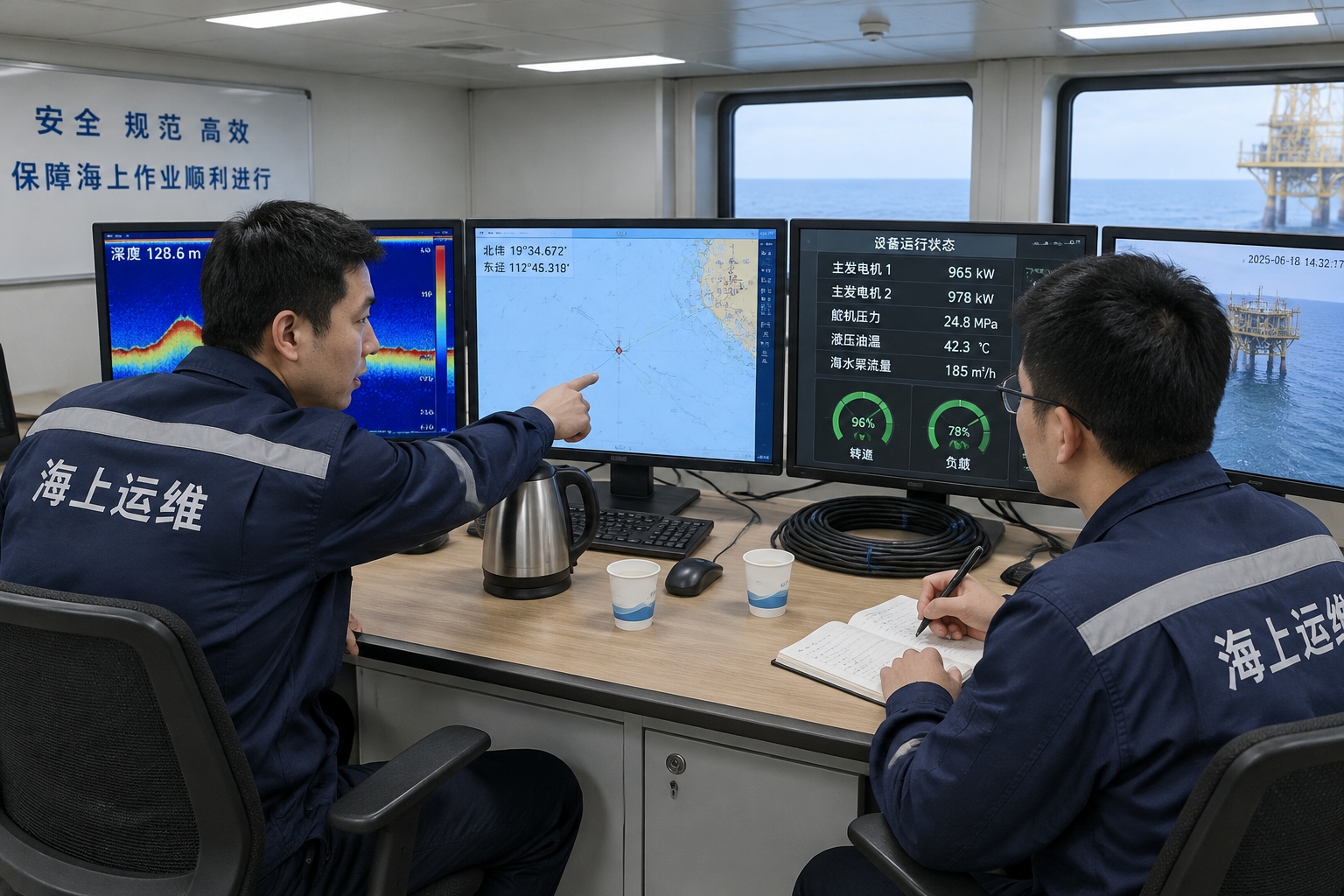
What kind of science needs weeks, not hours
What does staying longer actually buy? A few concrete directions:
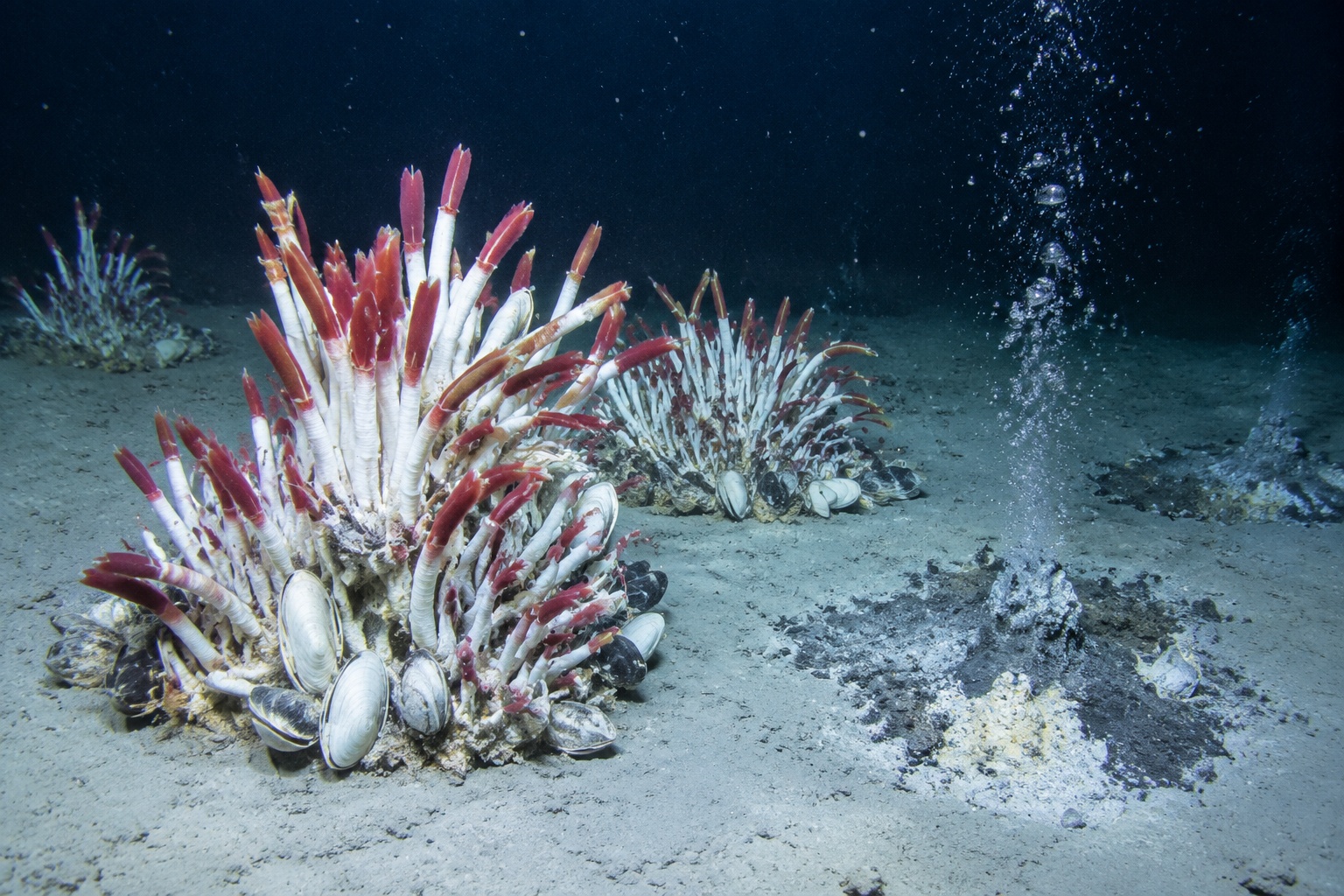
Cold seeps and hydrothermal ecosystems. The South China Sea has active cold seeps, where methane leaks from sediment and supports life communities built on chemical energy instead of sunlight. Short dives can photograph and sample. Only a long stay makes it possible to watch how those communities grow, reproduce and change over time.
Earthquakes and geological hazards. Ocean-bottom seismometers record tremors, and a long-term station in deep water can catch signals that brief expeditions miss. With complicated tectonics in the South China Sea, continuous observation has direct value for earthquake and tsunami research.
Life limits and biochemistry. High pressure, low temperature, darkness and chemical energy together form a natural laboratory for studying the boundaries of biology.
Environmental baselines. If deep-sea resources are ever mined at scale, scientists need to know what the seafloor looked like before, rather than guessing afterward.
That last point is the most contested in public debate, and it is exactly why long-term observation tends to be more useful than a one-off survey.
Why it matters to people who will never go down
The ocean covers about 71 percent of Earth’s surface, but most of the seafloor has never been mapped in detail, and a far smaller share has been directly observed. Only about a quarter of the seabed has been covered by modern high-resolution mapping. The deep sea is the planet’s largest unexplored space — and it is not disconnected from daily life: it helps regulate climate, hosts faults linked to earthquakes and tsunamis, and is the setting for a growing argument over deep-sea mining.
Being able to stay there for long stretches is less about record-keeping and more about scientific infrastructure — closer to a polar research station than a trophy. It is not daily news, but it shapes who can do sustained research.
There are limits worth saying out loud. These facilities are expensive, complex to operate, and demanding of ships and crews; their value depends on scientific design, not on a depth record. And with deep-sea environmental protection under debate, any long-term project on the seafloor will face closer scrutiny.
What to watch next
The first crewed long-duration tests, the first published results, and how long actual operations can be sustained will say more than the “first” label. The real test of a deep-sea lab is simple: can people get down safely, do good work, and come back up.
Start the discussion at forum.chinacomes.com