
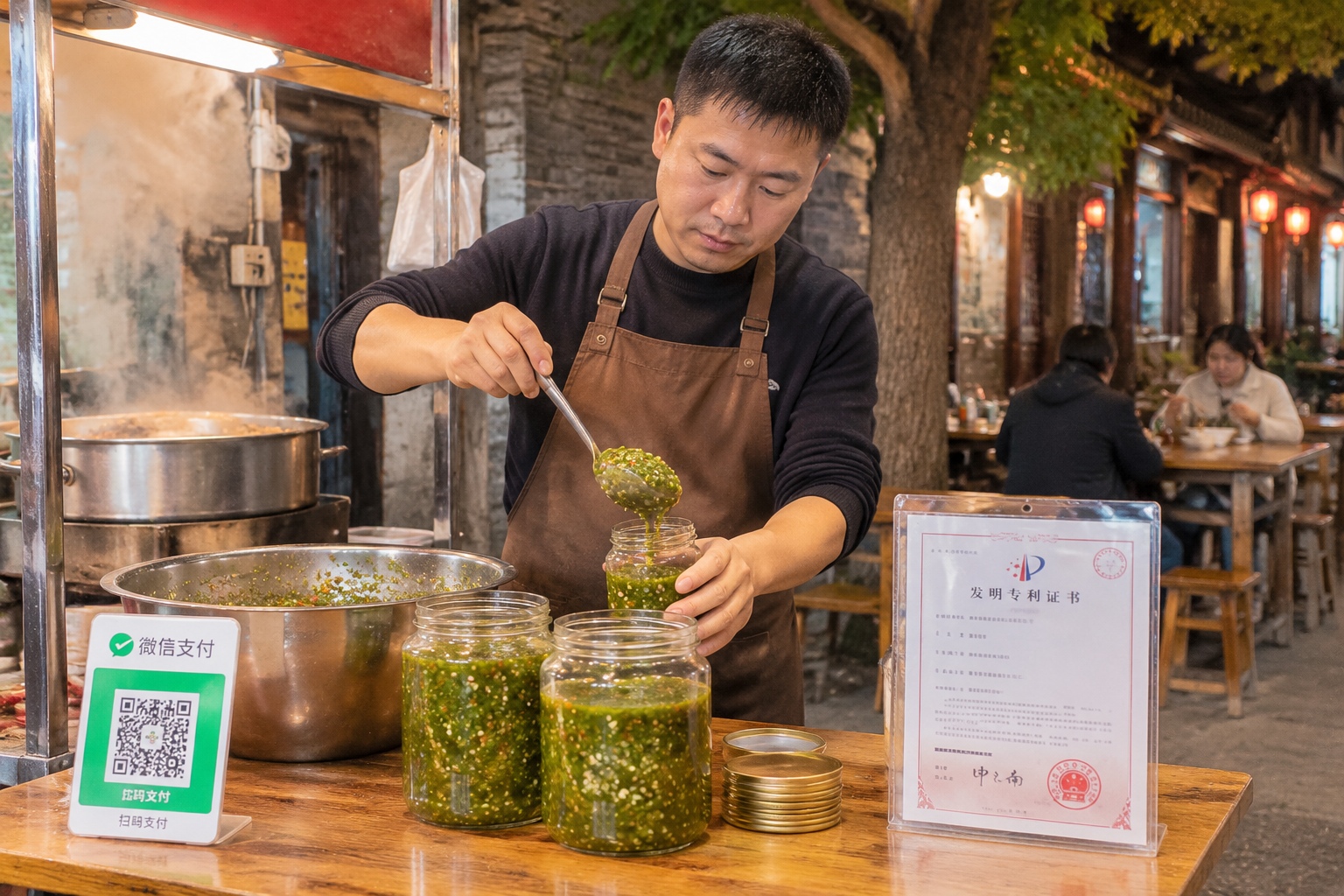

A patent certificate beside the QR code
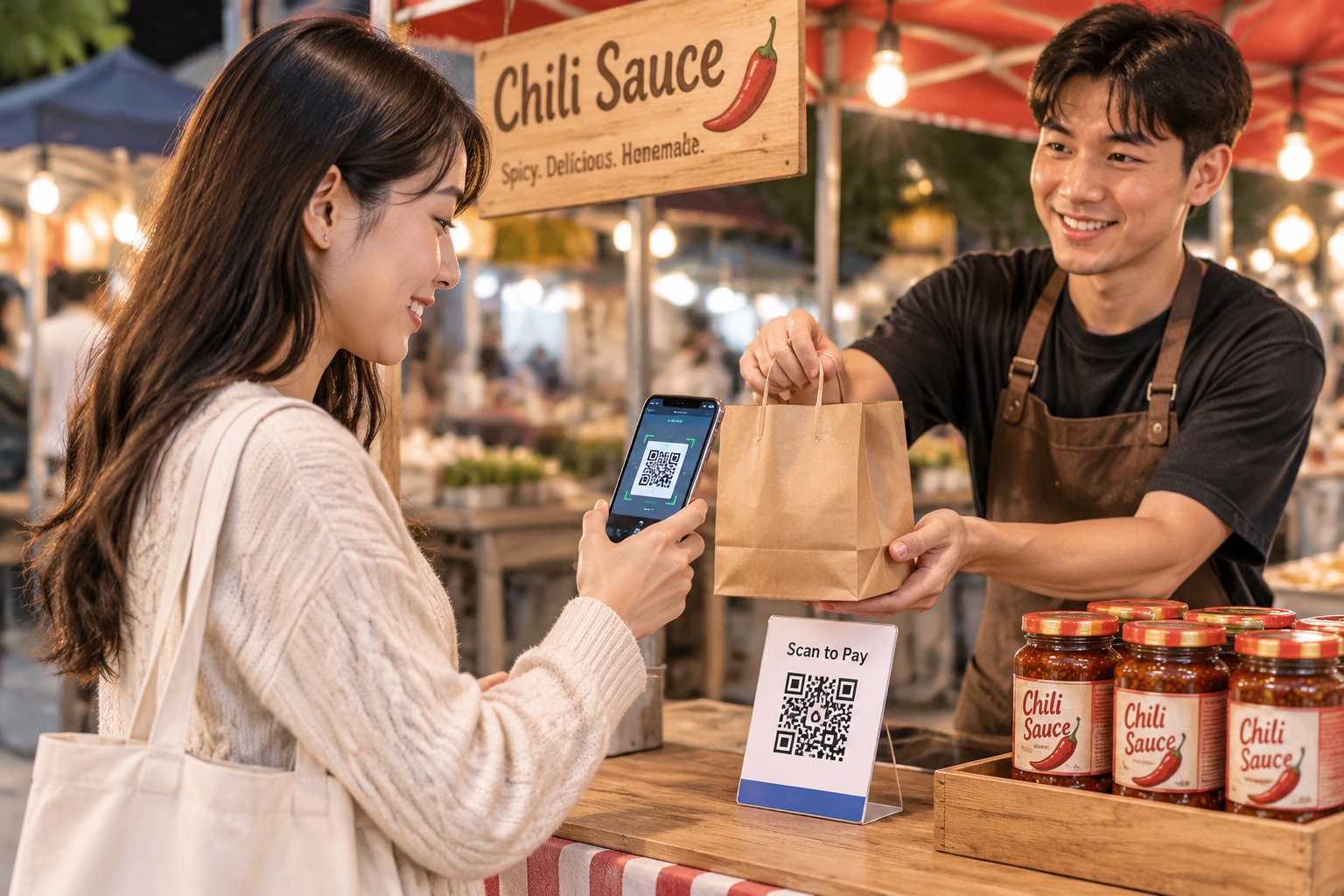
At 8:20 on a humid Tuesday evening in Chengdu, Liu is doing what he has done for eleven years: spooning sauce into small plastic cups for strangers. His stall is barely two meters wide. A gas burner heats a pot of oil. A folding table holds three jars of chili sauce, a stack of takeaway boxes and a QR code taped to a card. Beside the QR code, inside a clear plastic sleeve, is a photocopy of an invention patent certificate. The paper is wrinkled at one corner and has a faint orange oil stain.
Most people who stop for a five-yuan cup of cold noodles do not notice it. A few do. One young man points at the certificate and asks whether it is real. Liu laughs, wipes his hands and says it took longer than his marriage registration. Then he goes back to weighing sauce.
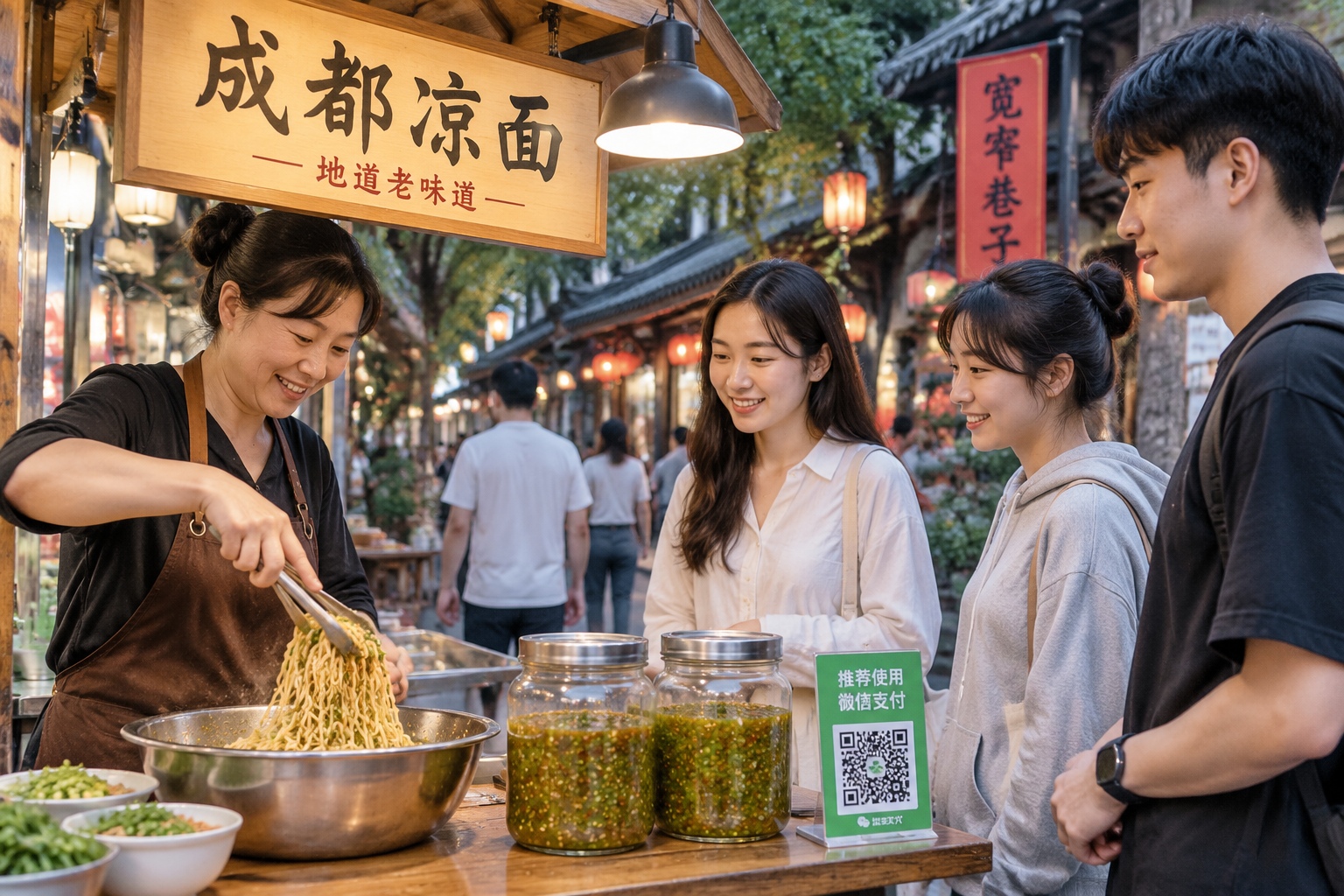
Why a street vendor starts inventing sauce
Liu is 39 and grew up in a county outside Chengdu. He worked in restaurant kitchens for years, then opened a late-night stall selling cold noodles, dumplings and a thick chili sauce. In 2019 he began to dislike the sauces he could buy wholesale. They were too sweet, too salty or tasted of additives. He wanted something sharper: green Sichuan pepper, erjingtiao chilies, rapeseed oil, fermented broad bean paste. The ingredients were easy to find in Chengdu. Getting them to taste the same in every batch was not.
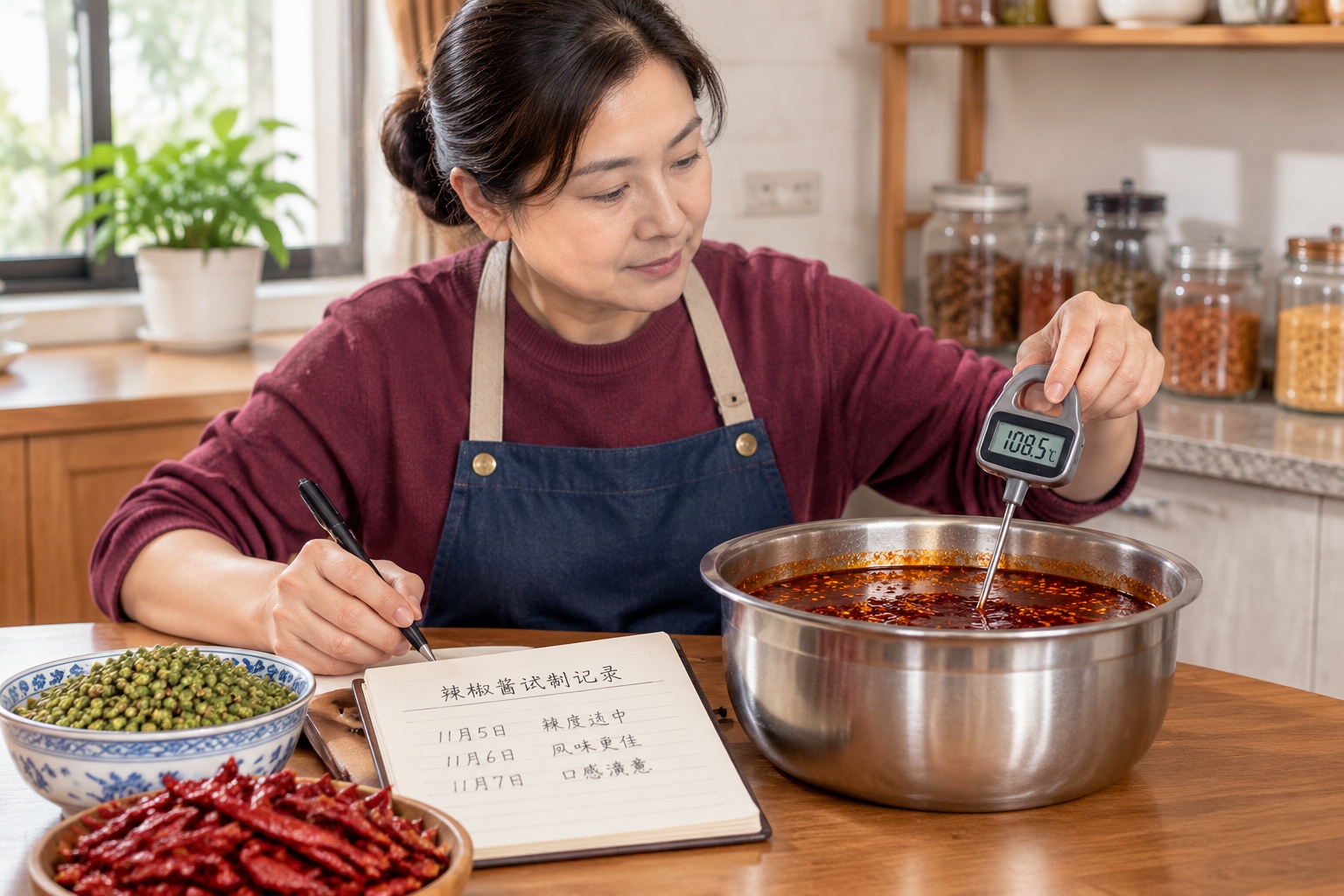
He started mixing at home after the stall closed. He kept a notebook with dates, temperatures and comments. Early batches were bitter because the oil was too hot. Some separated in the jar. One batch turned dull olive-brown within a week. He learned that the recipe was not only a list of ingredients. It was a sequence: when to add the pepper, how long to let the oil cool, how to keep the green color without making the sauce taste raw.
He tested the sauce on customers, first as a free spoonful on noodles. Regulars began asking whether they could buy a jar. That was the shift. He was no longer selling only a topping for dinner. He was selling a product that people wanted to take home.
The unlikely step: a street vendor files a patent
Chinese street food is usually a cash business with little formal intellectual property. A good vendor relies on location, speed, memory and word of mouth. Liu did not set out to become an exception. A friend who worked at a local trademark agency explained the difference between a trademark, which protects a name or logo, and a patent, which can protect a process. A flavor cannot be owned. A repeatable production method can.
In 2021 he filed an invention patent for a method of making shelf-stable green pepper sauce. The application described how to heat the oil, when to add the chilies, how to sterilize the jars and how to keep the sauce from separating. In 2023, after more than two years of examination, he received the patent. He also registered a trademark for the label. The process cost him several thousand yuan in agent fees, plus official fees that were reduced because he applied as an individual. For a street vendor, that is not small money. It is roughly the profit from several weeks of good nights.
Why a patent, not just a secret recipe
The patent is not a marketing miracle. It does not make the sauce taste better, and it does not stop every copycat. But it gives Liu a language to use when he talks to a contract factory, a platform or a distributor. It also changes how he describes himself. He is not only a cook with a good hand. He owns a method.
This is still rare in China’s street economy. Many vendors do not know the difference between a patent and a trademark, and few have the time to file either. The barrier is not only money. It is paperwork, patience and the belief that a recipe will last long enough to be worth protecting.
From jars to labels: grassroots branding in China
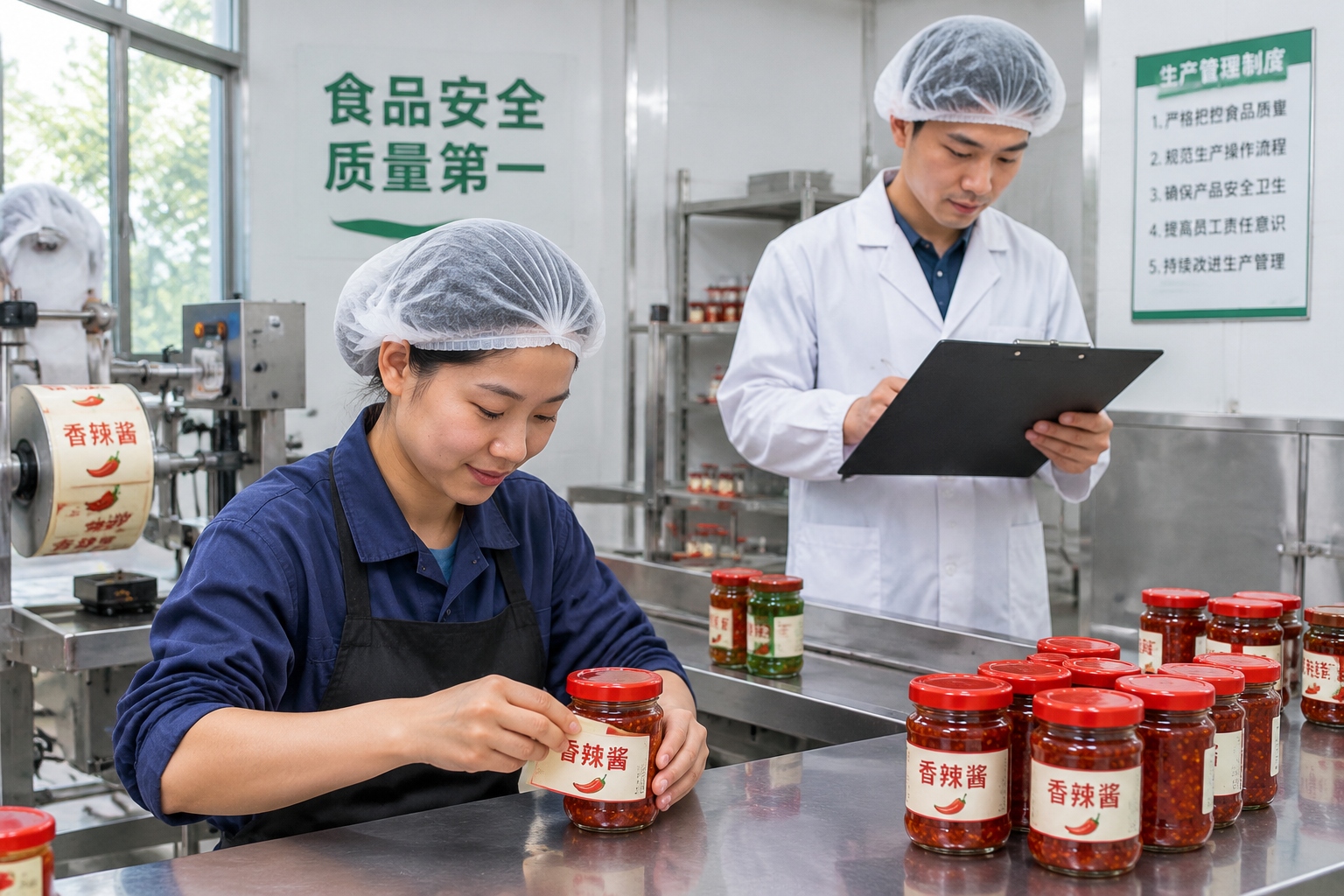
Selling jars from a stall created a new problem. Liu could not legally mass-produce sauce in his home kitchen. In 2022 he signed a contract with a small food factory in suburban Chengdu that had a food production license, known in China as an SC license. He supplies the core spice blend and controls the first cooking step. The factory handles filling, sealing and sterilization. This arrangement is common among small Chinese food brands: a person with a recipe rents capacity from a licensed plant. It lowers the cost of entry, but it also creates dependence and quality risk. Liu visits the factory every two weeks and rejects batches when the color is off.
The packaging looks modest but deliberate: a 200-gram glass jar, a shrink sleeve, a printed batch number and a QR code that leads to a WeChat mini-program. The page shows the production date, a short video of the cooking process and a button for reordering. A local design student helped with the label for 1,500 yuan. Liu prints labels in batches of 2,000. He also runs a WeChat group for regular customers and takes pre-orders before the weekend.
The stall remains part of the business. It is research and development, customer service and marketing in one. Tourists buy a jar, post a photo on Xiaohongshu, and a few online orders arrive from Beijing or Shanghai. A courier picks up boxes at a convenience store near the night market. Liu still sells noodles, because the stall pays the rent and because it gives him something a factory cannot: immediate feedback.
What customers noticed
In 2021, Liu sold perhaps twenty or thirty jars a week, mostly to regulars. By 2024, he was selling around 1,200 jars a month, with more than half of orders coming from outside Chengdu. The numbers are small by Chinese e-commerce standards. They are meaningful for one person. A jar sells for 28 yuan, plus shipping. The sauce is not cheap compared with supermarket brands, and some customers tell him so.
The feedback is specific. Customers like that the sauce tastes of fresh green pepper rather than sugar. They complain when a glass jar breaks in transit, so he switched to thicker bubble wrap. One Shanghai customer wrote that the sauce reminded her of a trip to Sichuan. Another asked why the label says small-batch and then sold out for three weeks. Liu reads the reviews at night, after cleaning the stall.
Not everyone is impressed. A neighbor says the patent is useless because anyone can stir chili oil at home. A customer once asked why he does not lower the price to compete with a local brand that costs half as much. Liu explained that his oil and pepper costs are higher and his batches are smaller. The patent does not solve that. It only helps him defend a small position in a crowded market.
What this means for China’s street economy upgrade
Street vending in China is often discussed as survival employment, and that is still true. Many vendors sell what they can, where they can, with thin margins. But a layer of sellers is now using formal tools: trademarks, patents, food licenses, social commerce and contract manufacturing. This is not the majority. It is a visible edge, and it says something about how consumer upgrade works on the ground.
China’s consumer upgrade is often described through premium brands, new malls and faster delivery. There is another version. An ordinary vendor learns to package trust. A QR code, a batch number, a patent certificate and a factory visit are all ways to turn a personal reputation into a product that can travel. The tools are not exotic. They are the same tools companies use, scaled down.
Policy has moved in two directions. Many cities relaxed rules on street vending after 2020 to support employment. Chengdu, among others, allowed temporary stalls in designated areas. At the same time, food safety enforcement has become stricter. The result is a middle ground: more space to sell, more rules to scale. Vendors who want to grow have to learn both.
The limits are real. Patents cost money. Infringement is hard to police. Most street food cannot be standardized without losing what makes it good. Not every vendor should file a patent, and most will not. The point is that the option is no longer confined to companies with lawyers and offices. A man with a folding table can walk into an agency and ask.
Back at the stall
At 10:40 pm, Liu packs up. He pours the leftover sauce into a container, not to sell but for tomorrow’s noodles. The patent certificate goes back into a drawer under the cash box. He says the stall is still the best lab, because customers tell him the truth in ten seconds. The brand may grow online. The feedback still starts here, under fluorescent light, next to a pot of oil.