

Two Very Different Meal Trays
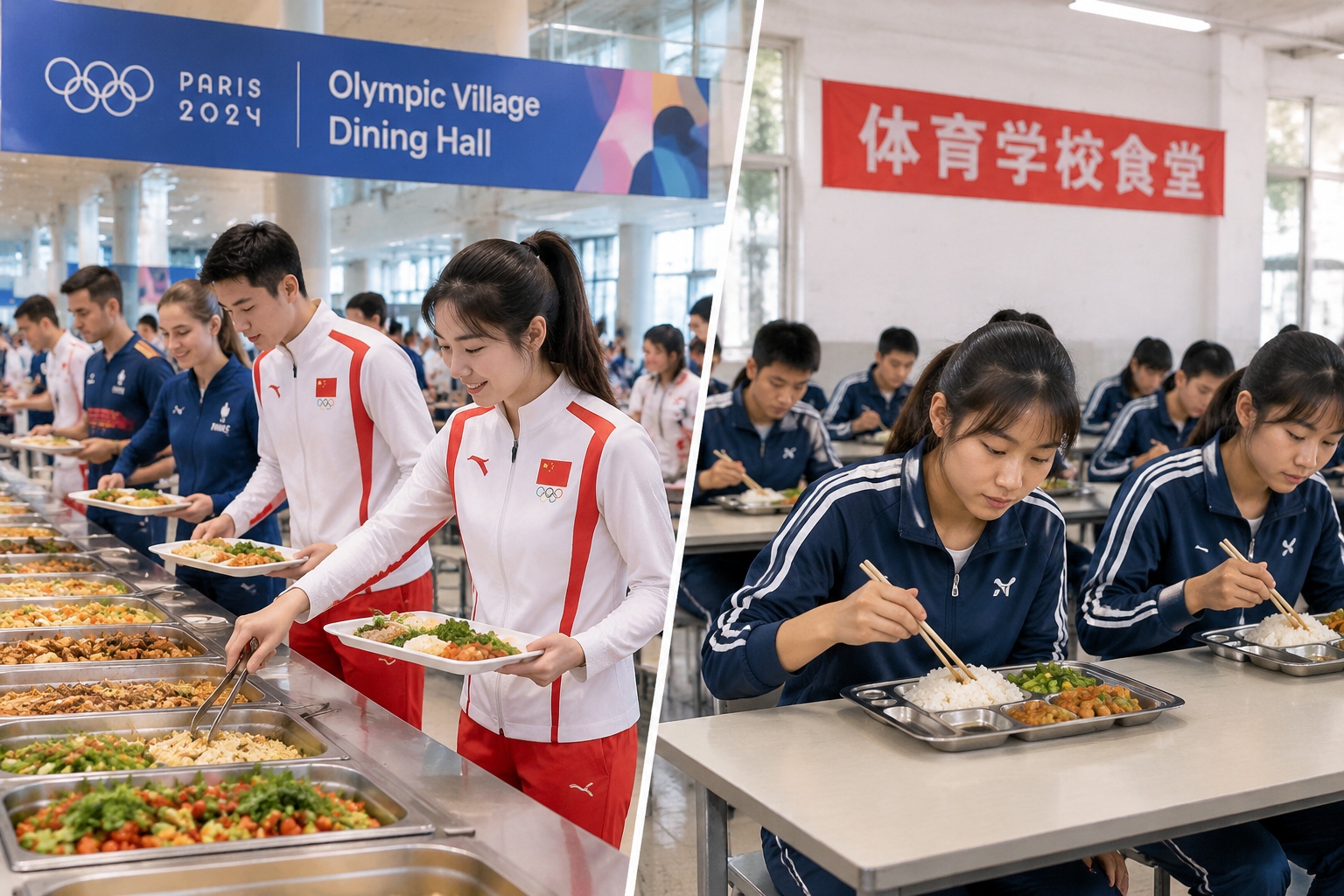
At a sports school in Shandong province, 15-year-old gymnast Liu Yang balances a round plastic tray filled with tomato-and-egg stir-fry, a piece of braised pork, steamed rice, and a bowl of seaweed soup. She sits down on a long bench next to teammates. A coach at the head of the table reminds them to eat more greens. About 700 kilometers north, at the Beijing Olympic Village, snowboarder Wang Jin walks past a massive buffet: made-to-order pasta, freshly sliced salmon, spicy Sichuan noodles, and a salad bar with twenty kinds of greens. Small digital tags next to each dish show exact protein, calorie, and carbohydrate counts. Wang’s nutritionist has already suggested he try the quinoa salad for extra fiber. These two scenes capture the gap in how Chinese athletes are fed, from grassroots training to the Olympic stage.
Inside the Olympic Village Cafeteria
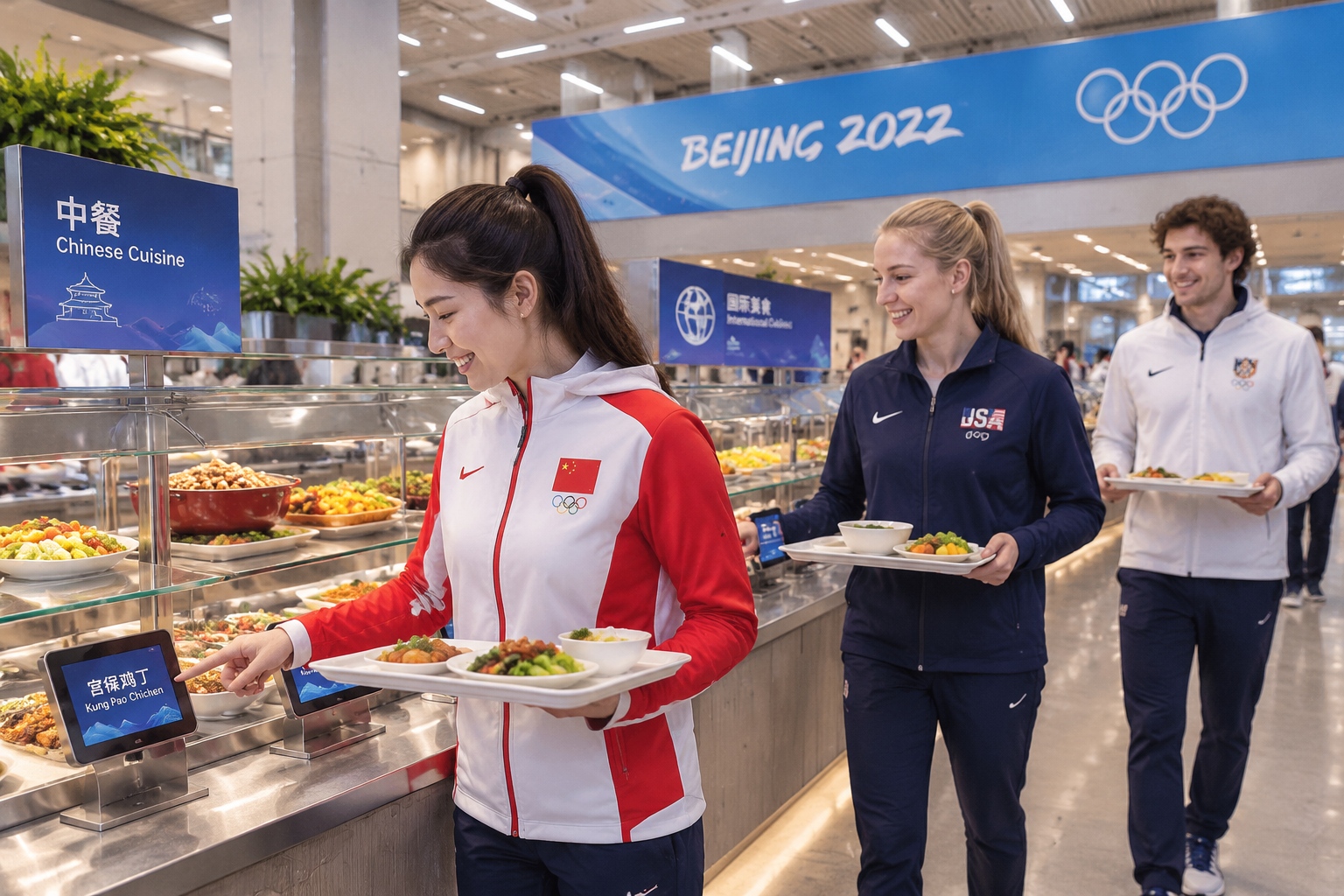
During the 2022 Beijing Winter Olympics, the main dining hall covered more than 20,000 square meters — roughly the size of four soccer fields. It operated 24 hours a day, serving breakfast, lunch, dinner, and late-night snacks. The menu rotated daily and offered over 600 dishes across eight cuisine sections: Chinese, Asian, Western, Mediterranean, and more. Dedicated stations served barbecue, hot pot, sushi, and even a robot arm that brewed coffee. For athletes with restricted diets, there were gluten-free, halal, and vegetarian zones.
A Day of Elite Dining
Breakfast might include a custom omelet bar, congee with twenty toppings, fresh fruit, and a cold cut station. By lunch, the Chinese section could feature braised lamb, mapo tofu, and sautéed greens. In the evening, athletes often gathered around the hot pot station, and the kitchen kept a 24-hour soup bar. The scale was enormous: the village prepared roughly 5,000 meals per day, using more than 10 tons of raw ingredients daily.
Nutrition Science on a Plate
More than variety, the standout feature was nutrition precision. Every dish carried a label with calories, protein, fat, and carbs. Athletes could log meals into an app to check their intake versus their daily requirements. A boxer might aim for 30% protein, while a cross-country skier building endurance would be steered toward complex carbohydrates. The kitchen adjusted menus around competition schedules, ensuring food was available even at 2 a.m.
Inside a Sports School Canteen
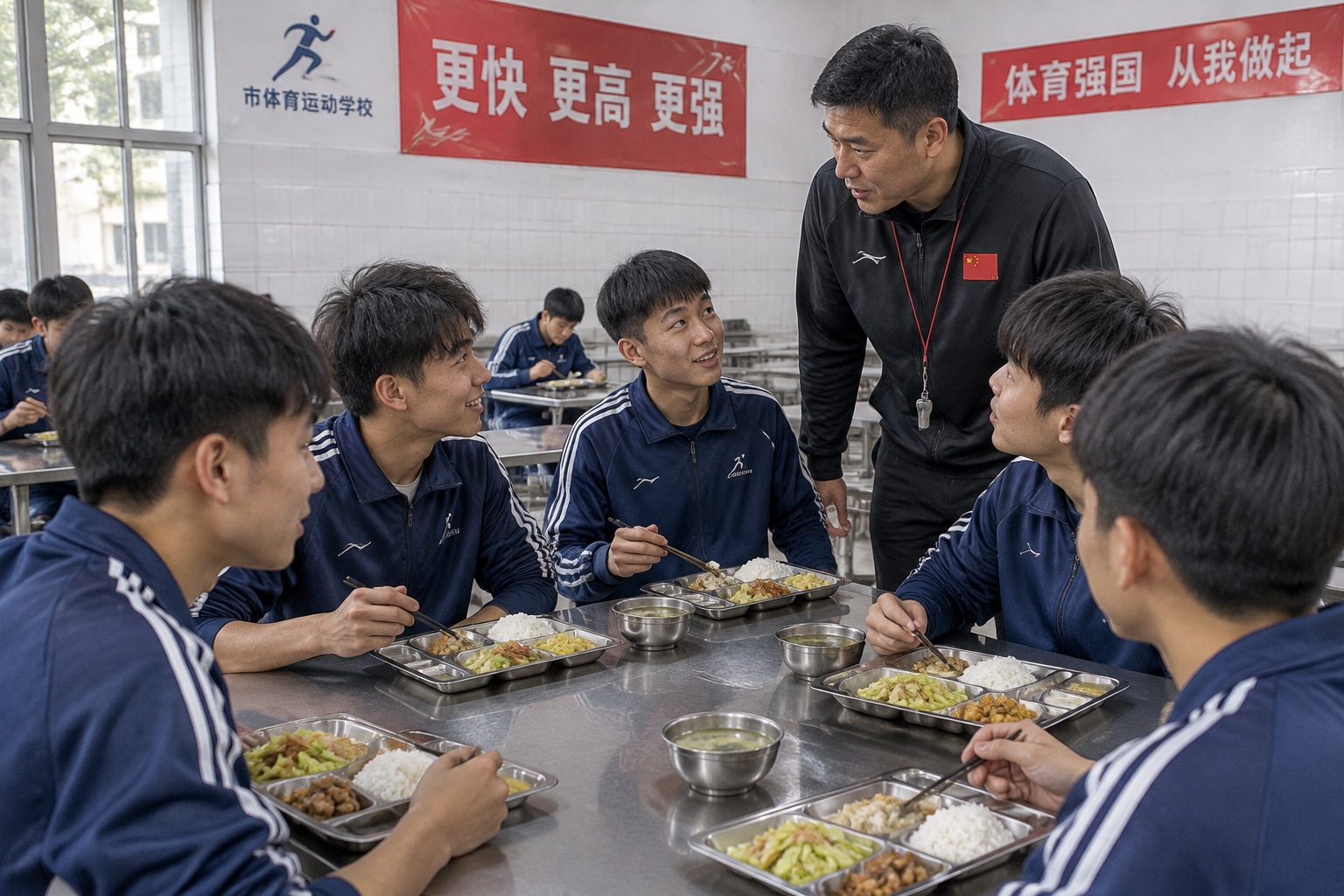
In a typical provincial sports school, the canteen is a functional room with long tables and plastic stools. Lunch might be rice, stir-fried cabbage, braised chicken, and egg drop soup. The cook, often a local chef with no formal nutrition training, plans the weekly menu around budget and what’s available at the market. Many schools spend around 25 yuan (about $3.5) per athlete per day on food — enough for three meals, but not much room for premium ingredients.
Home-Style Food on a Tight Budget
Athletes can take as much as they want, but quality varies. One school in the northwest may serve lamb noodles three times a week because lamb is cheap there. Another school in a coastal city might add a piece of fish to Friday’s lunch. In rural schools, meals often rely heavily on carbohydrates, with less protein than growing athletes need. In richer districts, sports schools are beginning to hire part-time nutritionists. But across the country, the standard is still far from the Olympic Village.
The Cost Gap
The financial difference is monumental. The Olympic Village dining operation costs millions of dollars to run, including specialized chefs, imported foods, and cutting-edge monitoring systems. A sports school canteen operates on a few hundred thousand yuan a year. This explains the quality gap, but also highlights the need for smarter investment in grassroots nutrition.
Why the Gap Exists
The gap is rooted in resources and priorities. The Olympic Village is a showcase built to help elite athletes perform on the world stage. Sports schools, by contrast, are part of public education and sports infrastructure, competing for limited municipal budgets. There is also a cultural dimension: many coaches give nutrition advice based on tradition and personal experience, not evidence. Few schools employ full-time dietitians, so healthy eating is often left to common sense.
Reforms That Are Changing Menus
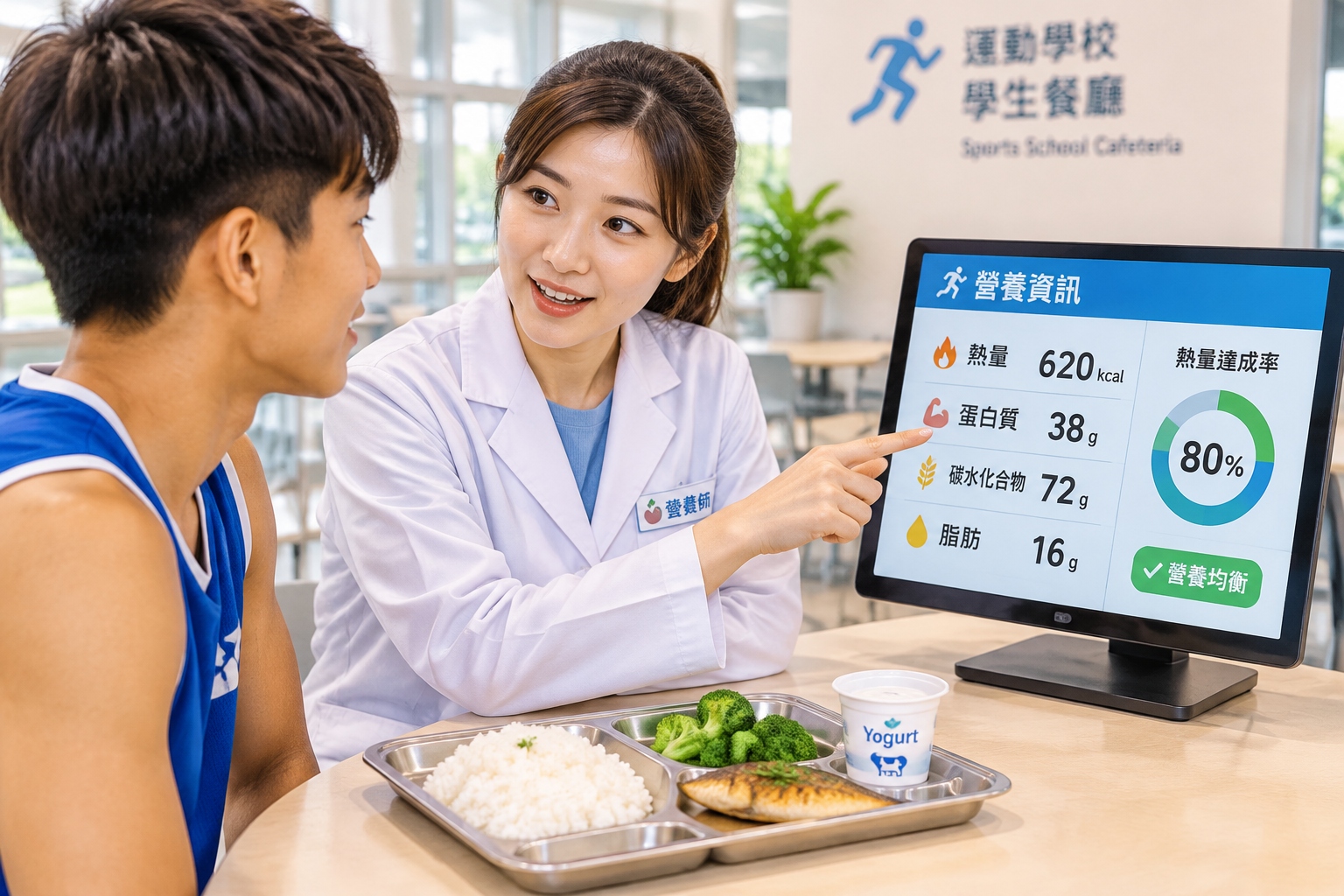
China has started to close this gap. In 2019, the General Administration of Sport published nutrition standards for young athletes in sports schools, recommending minimum amounts of protein, vitamins, and minerals. Several provinces have responded with action. The Zhejiang sports school has installed digital screens showing calories and macros on every dish. In Harbin, a winter sports academy opened a “strength diet” corner featuring more fish, eggs, and lean meat for skaters and skiers. Some schools now work with hospital dietitians to adjust menus seasonally. It’s uneven progress, but the direction is clear.
Voices from the Canteen
“Our food is not fancy, but it’s honest,” says Li Qiang, a swimming coach in Hubei. “We’ve added more fish and fruit in recent years. It costs more, but the kids train better.” Former sprinter Chen Yu recalls: “The best day was when the canteen served braised chicken wings. Everyone would race to the front. At the Olympic Village, you had everything, but I still miss that specific plate of wings.”
A Shared Mission
The gap between the Olympic Village and sports school canteens is real, but it’s not a static comparison. One is the summit of an athletic pyramid, the other the basecamp. Both need to provide good food, on different scales and budgets. As China invests more in grassroots sports and nutrition education, meals at sports schools are slowly improving. The ultimate goal is the same: to give every young athlete a good meal, a strong body, and a fair shot at gold.