

A Morning Bowl on Hui Street
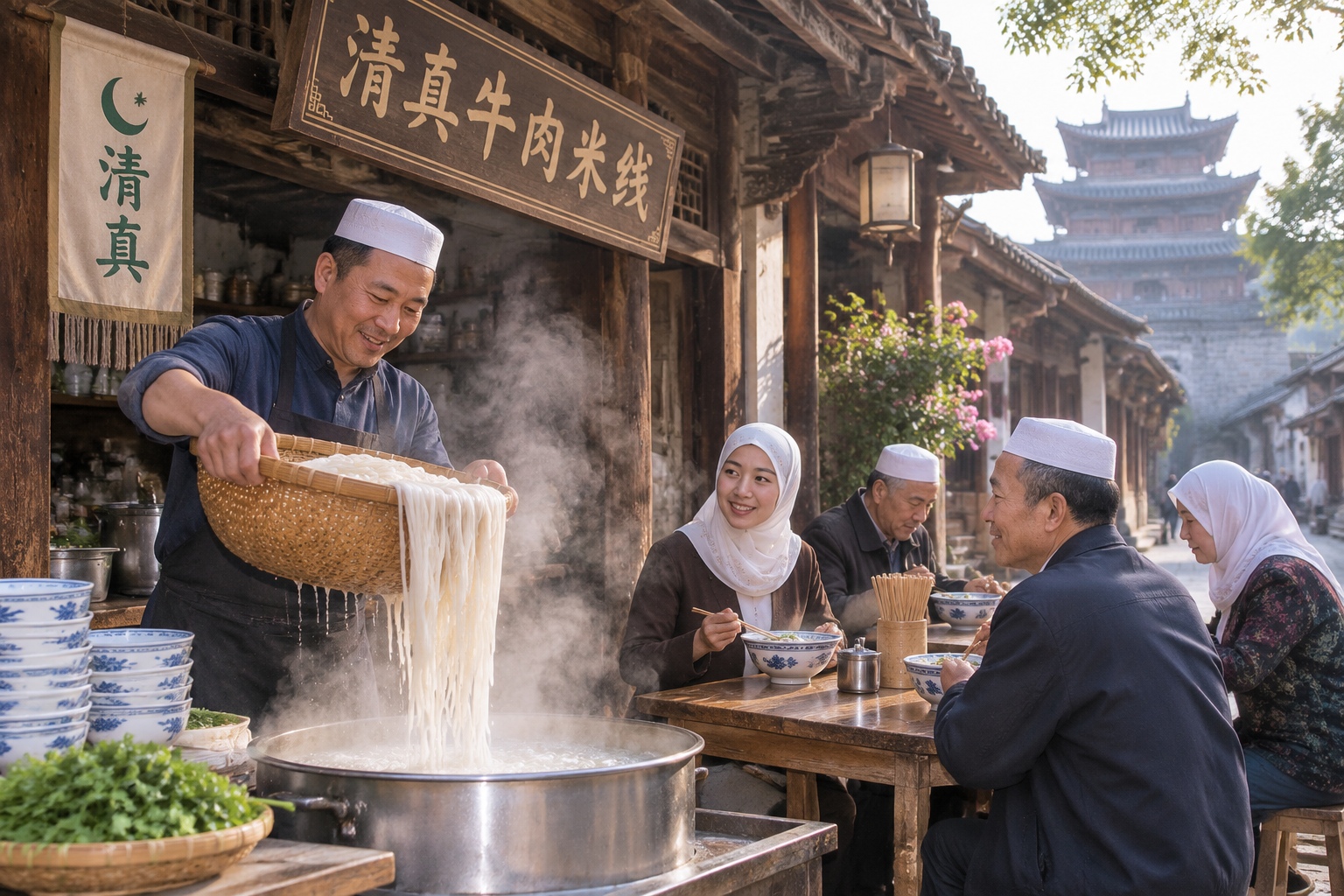
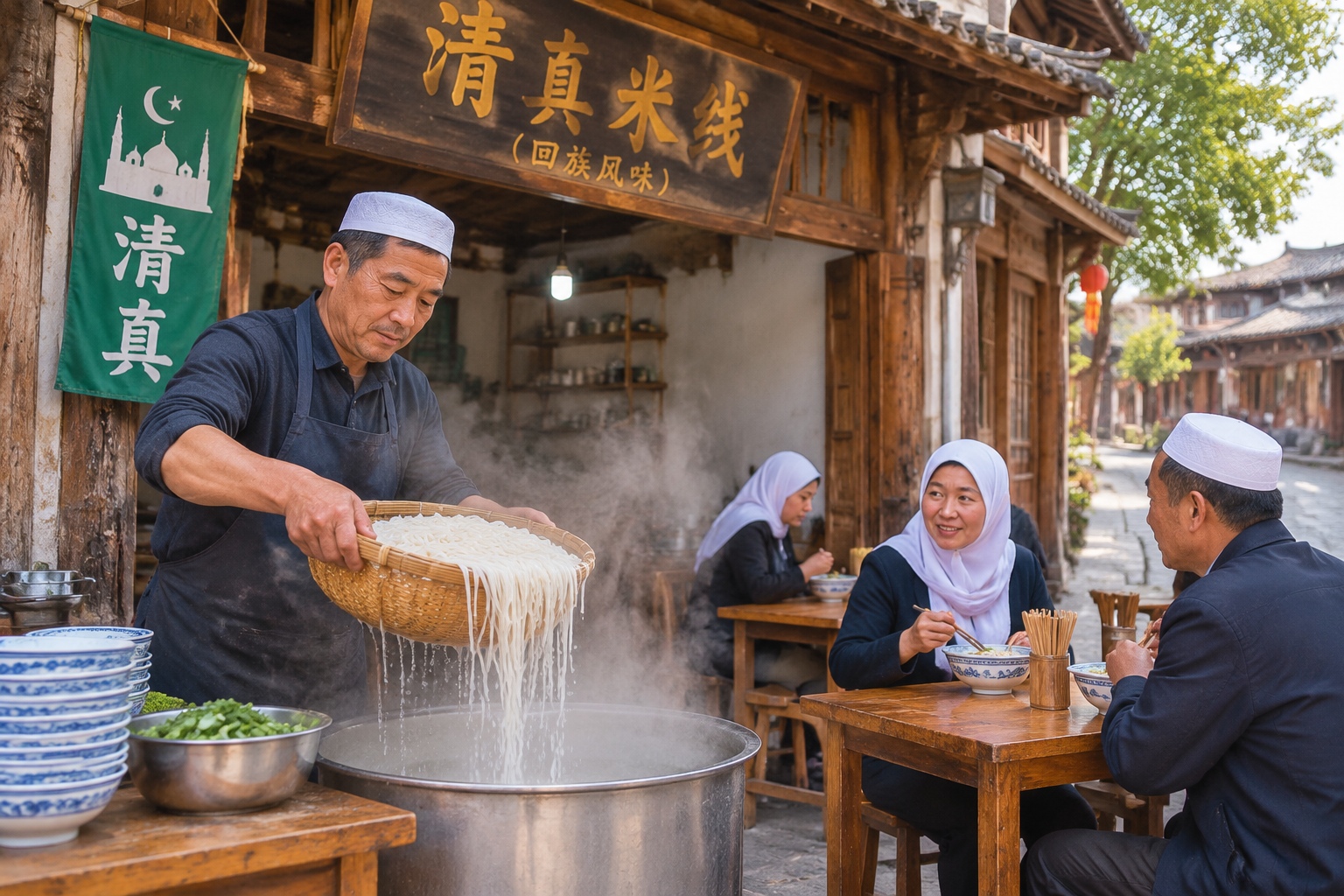
At 6:40 on a cool morning in Weishan Ancient Town, Yunnan, the shutters of Zhu Ji Meat Er Si are already half up. Steam curls from a wide pot of beef broth. Mr. Zhu, a Han Chinese man in his fifties, lifts a bamboo basket of rice noodles from the water, shakes it once, and tips the noodles into a white bowl. He adds a spoonful of minced beef, a pinch of scallion, and a ladle of hot soup. The smell reaches the stone street before the first customer sits down.
This is a Hui neighborhood street in the old town. Women in headscarves pass with vegetable baskets. Men in white caps stop to greet the shop owner. A retired teacher orders his usual small bowl, no chili. A young couple shares a table with a delivery driver. For a few minutes, the street feels less like a tourist site and more like a neighborhood kitchen.
Weishan: An Ancient Town That Still Works for a Living
Weishan sits in Dali Bai Autonomous Prefecture, about an hour’s drive from Dali’s better-known old town. It is one of Yunnan’s less commercialized ancient towns: stone-paved lanes, wooden shopfronts, and a mosque minaret a few lanes away from the main tourist street. Hui Muslims have lived in this part of Yunnan for centuries. Their shops, restaurants, and butcher stalls are part of the town’s daily rhythm, not a separate attraction.
In many European old towns, the center becomes a stage for visitors after the shops close. Weishan still works for a living. Locals buy tofu and greens in the morning market, get their hair cut, and eat breakfast at the same tables they have used for years. Tourism matters here, but it has not replaced the ordinary economy. That mix is exactly what makes the street interesting.
What Is Er Si, and What Makes It Halal?
Er si is a Yunnan rice noodle. Local rice is soaked, steamed, pounded into a dough, and cut into thin strands. It is firmer and slightly chewier than the wheat noodles many Western readers know from ramen or pasta, and it holds its shape in hot broth. In Weishan, the classic bowl is served with a “meat hat” — a spoonful of minced meat cooked with ginger, soy sauce, and local spices.
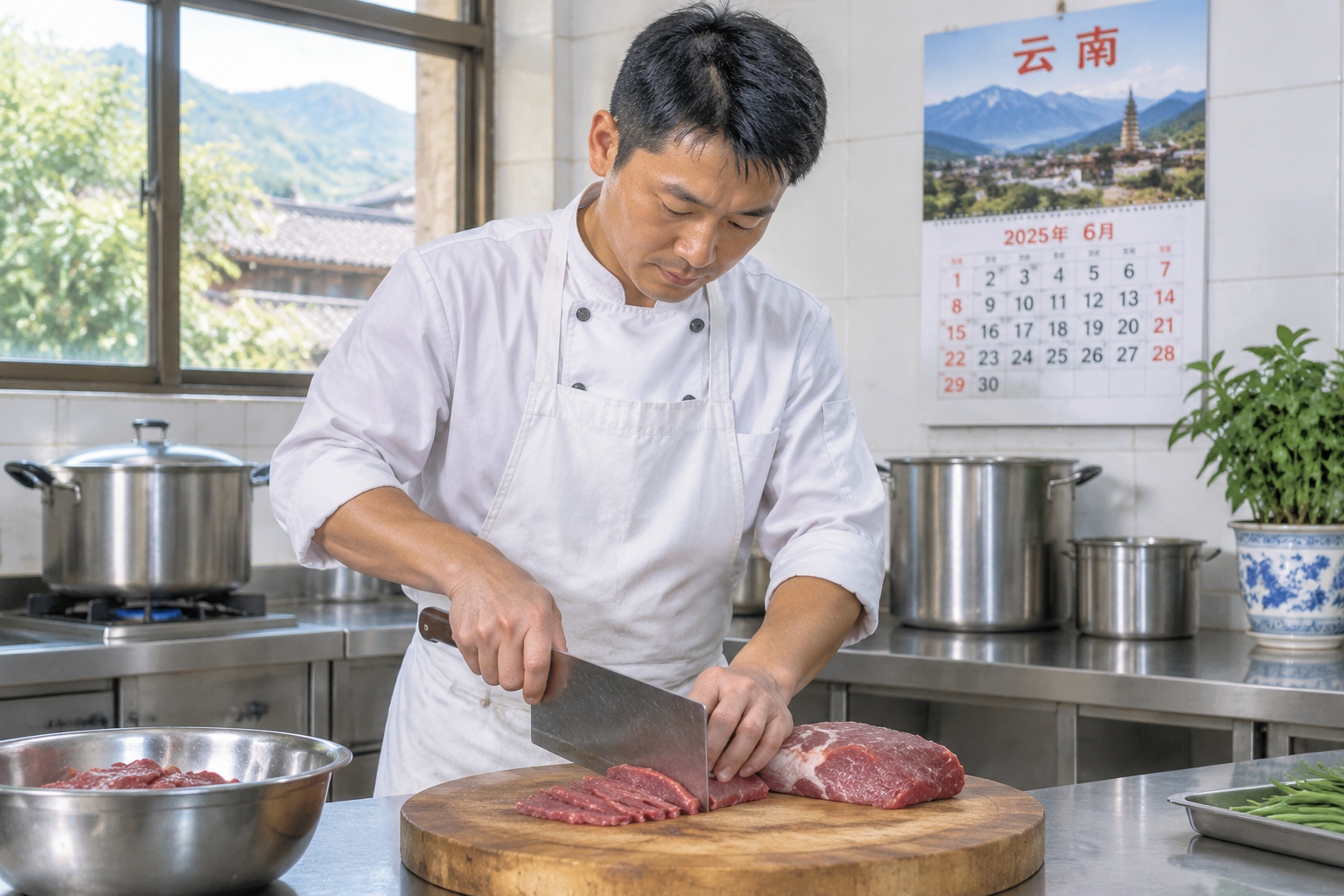
The halal version at Zhu Ji uses beef, not pork. The broth is made from beef bones and ginger. There is no lard, no cooking wine, and no pork in the kitchen. Mr. Zhu buys beef from a Hui butcher two streets away. He keeps a separate cutting board for beef, separate pots for broth, and a separate freezer. The shop displays a qingzhen sign, the Chinese term for halal, but the sign is not the whole story. For regulars, the real proof is in the kitchen.
How a Han Boss Learned the Craft
Mr. Zhu grew up in Weishan. He is Han Chinese, and like many people in town, he grew up eating at Hui restaurants. In his twenties, he worked at a noodle stall near the market. When he decided to open his own shop on the Hui street, he knew he could not simply copy a pork-based recipe. He asked an older Hui cook, Uncle Ma, to teach him.
The lessons started with shopping. Uncle Ma took him to the halal butcher and showed him how to check the beef: color, smell, texture. Then came the kitchen. “You cannot bring outside food in here,” Uncle Ma told him. “You cannot use the same pot for anything else.” Mr. Zhu learned to make broth without pork bones, to season with ginger and star anise instead of cooking wine, and to keep the work surfaces clean after every batch. He also learned the small social rules: greet the neighbors, do not smoke in the kitchen, and never serve anything you are not sure about.
Trust Is Built in the Kitchen, Not on the Sign
In China, qingzhen is not a single national certification system like “organic” in the European Union. For many Hui families, trust comes from knowing the butcher, the cook, and the kitchen. That makes the relationship personal. A regular customer may ask, “Where is the beef from today?” Mr. Zhu names the butcher. A woman may look into the kitchen and see the separate boards. Nobody asks for a certificate. They ask for consistency.
This is not so different from how a small kosher deli or a neighborhood bakery builds trust in other countries. The sign on the door matters, but the daily practice matters more. Mr. Zhu knows that one careless mistake — a shared knife, a wrong delivery — could cost him years of goodwill. “The Hui neighbors taught me,” he says. “If I do it wrong, they will tell me. That is a good thing.”
A Small Shop in a Tourist Town
The shop opens at 6:30 and closes in the early afternoon. On a normal weekday, Mr. Zhu sells around 200 bowls; on holidays, when tourists fill the old town, he can sell twice that. His wife takes orders. A cousin washes bowls. The rent has risen with tourism, but the family keeps the menu small: meat er si, plain er si, and a few side dishes. There is no second branch, no delivery app, no franchise plan.
The customer mix changes through the day. Early morning belongs to locals: retirees, market vendors, teachers on their way to school. Later, tourists arrive with guidebooks and cameras. Some ask what “er si” means. Some ask whether the food is spicy. A few ask if it is “real halal.” Mr. Zhu answers the same way each time: “The beef is from the Hui butcher. The kitchen is clean. You can watch.”
Everyday Ethnic Coexistence
On this street, ethnic difference is not a slogan. It is a set of small, practical habits. A Hui neighbor brings mint from her garden; Mr. Zhu sends over a bowl of broth. During Ramadan, the shop adjusts its hours and prepares takeaway boxes for customers after sunset. Han customers learn not to ask for pork. Hui customers know they can eat here without asking questions. Children from both families play in the lane after school.
In Western cities, multicultural neighborhoods are often celebrated through festivals and food fairs. That is one way to live together. Weishan shows another: daily repetition. People do not need to agree on everything. They need to know what the other person will not eat, when they will pray, and how to share a narrow street. That knowledge is not written on a banner. It is learned at the table.
Back to the Bowl
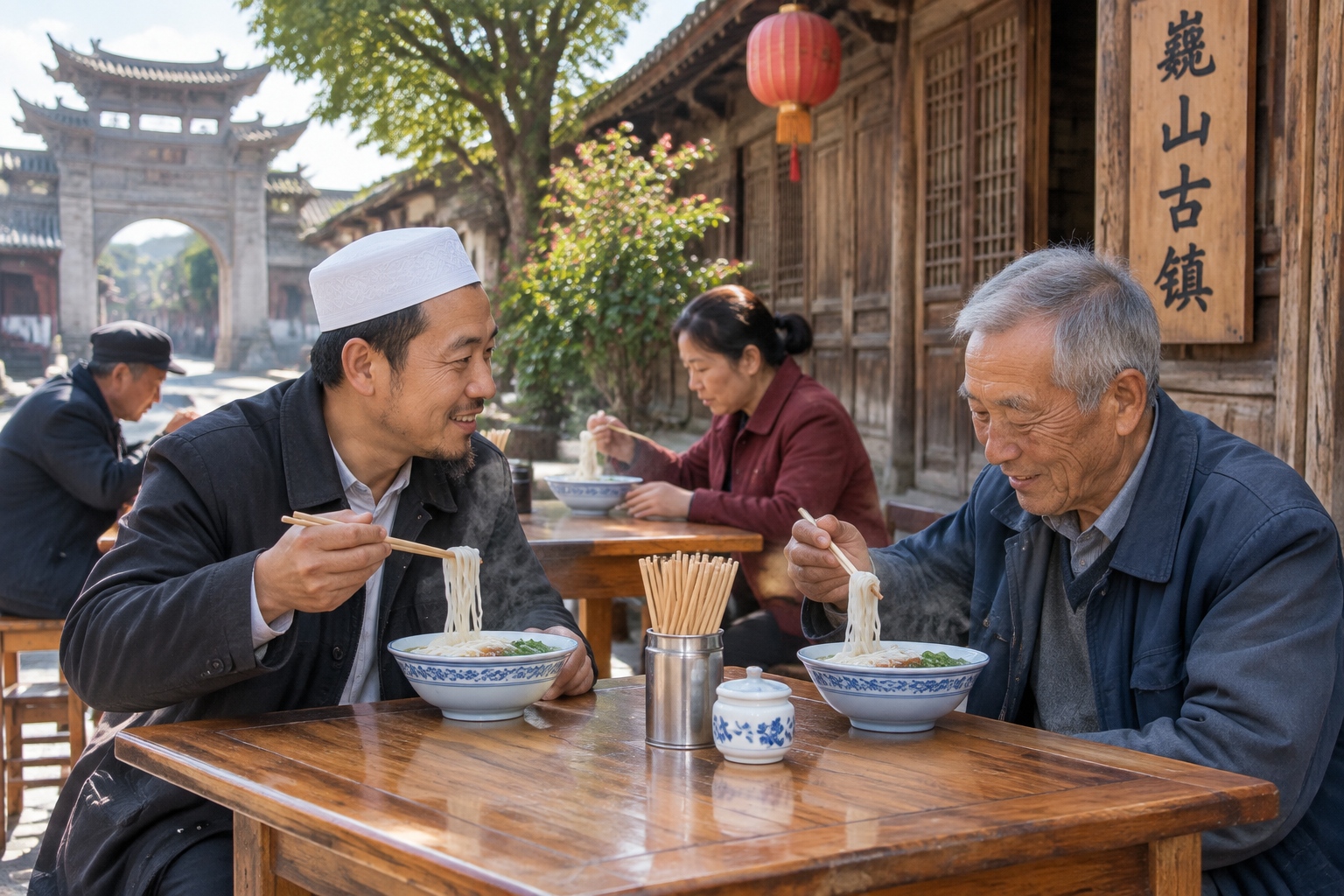
By 8 a.m., the shop is full. A retiree slurps his noodles quietly. A young couple takes photos of the bowl before tasting it. A Hui driver in a white cap sits down next to a Han teacher, and they talk about the weather. Mr. Zhu wipes the counter, lifts another basket of noodles, and calls out to his wife: “Two small, one large.”
The bowl itself is simple: rice noodles, beef, broth, scallion. But it carries a story that is easy to miss in headlines about China. A Han man learned a Hui craft. A Hui neighborhood made room for him. Customers from different backgrounds share tables without making a fuss. This is not a grand statement about harmony. It is just breakfast. And that is exactly why it is worth paying attention to.