

At 6:30 a.m., the Line Is Invisible
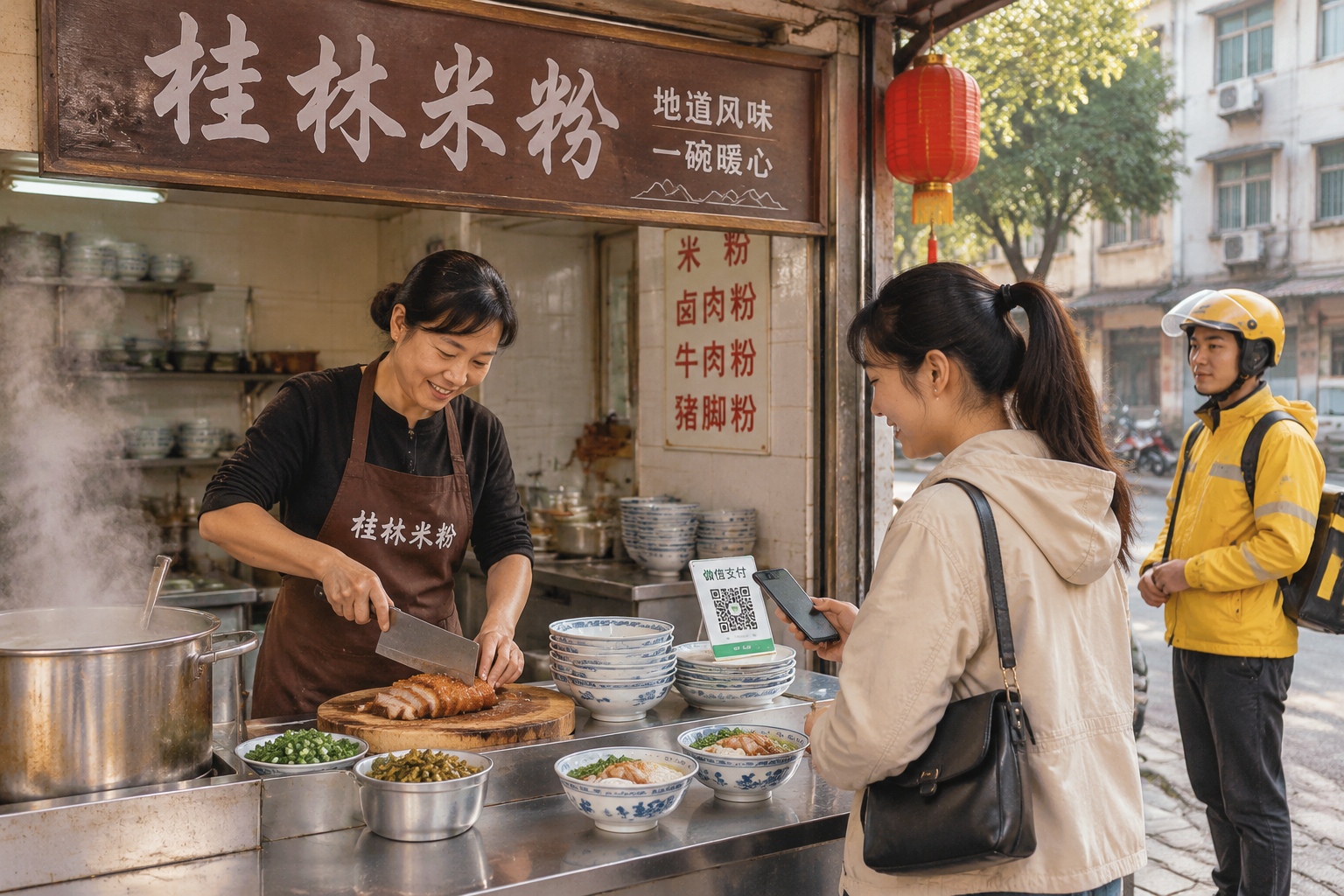
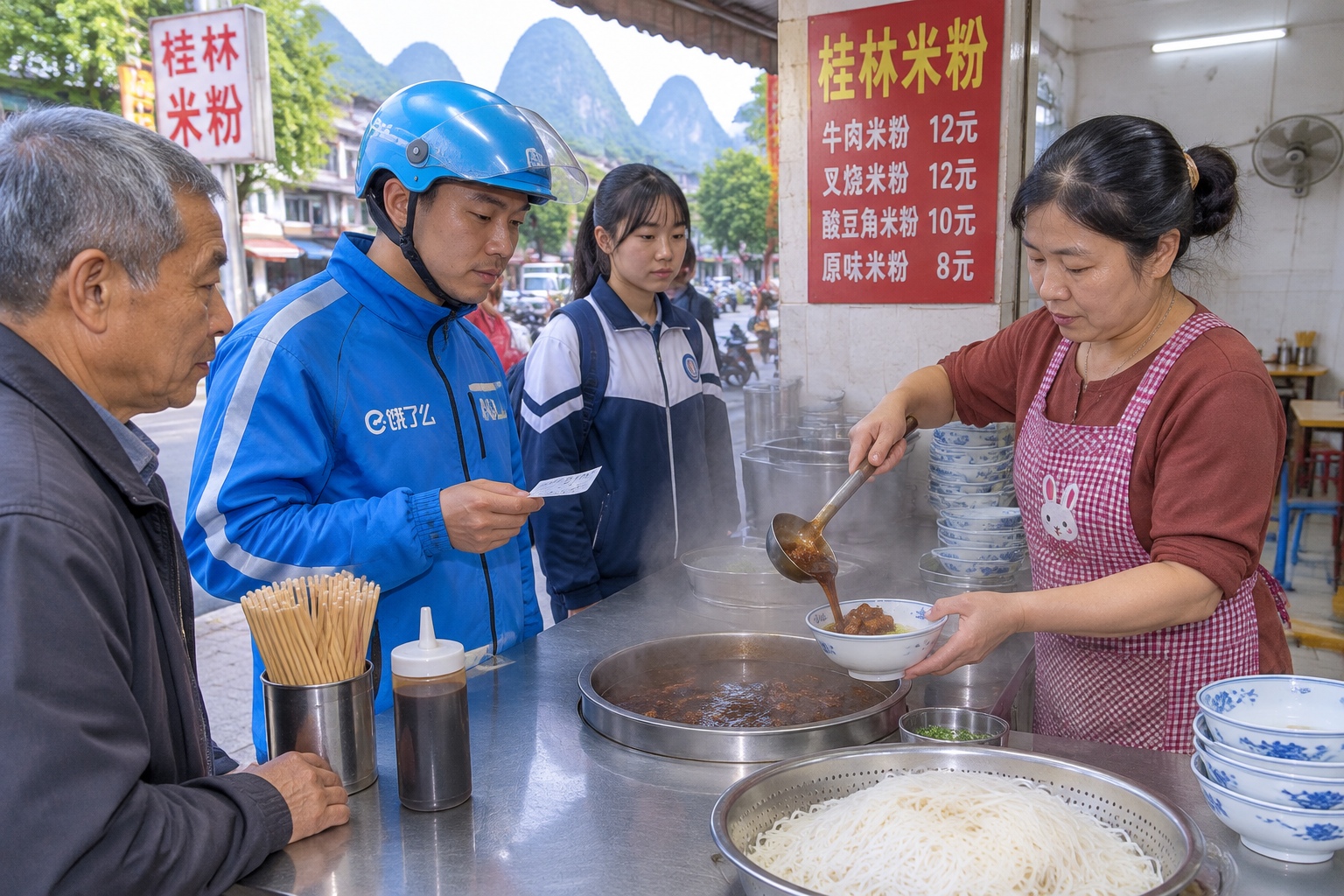
At 6:30 on a weekday morning in Guilin, a small rice-noodle shop near a residential street is already awake. Steam curls from a pot of broth. A stainless-steel tray of crispy pork, known here as guoshao, has just been cut. The sour, fermented smell of pickled bamboo shoots mixes with soy, star anise, and wet street air. A delivery rider in a blue helmet parks at the curb. A student with a backpack orders without looking at the menu. A retiree in a padded jacket pays with a phone, then waits with a small paper ticket.
To a visitor, the scene can look disorganized. There is no single line stretching out the door. People stand at different counters, talk to different workers, and seem to know exactly where to go. Yet the shop turns over customers at a speed that is almost invisible. Someone orders, pays, hands over a ticket, picks up a bowl, adds condiments, finds a seat or stands at the door, eats in seven or eight minutes, and leaves.
This is the first thing to understand about Guilin rice noodles: the local morning is not built around waiting. It is built around a sequence. And the sequence ends with a bowl that most locals want dry first, soup later.
What Is in a Bowl of Guilin Rice Noodles?
Guilin rice noodles, or Guilin mifen, are made from rice, not wheat. In shops you will usually see two shapes: round noodles, called yuanfen, and flat noodles, called qiefen. Round noodles have a slightly springy bite; flat ones are softer and wider, and they carry the sauce differently. Locals have preferences, but neither shape is considered the “correct” one.
The foundation is the braising liquid, or lushui. It is a dark, salty, aromatic broth made by simmering soy sauce, spices, bones, and sometimes herbs for hours. Each shop guards its recipe the way a bakery guards its starter. The liquid is not meant to drown the noodles. It is a concentrate, added in a small ladleful to season them.
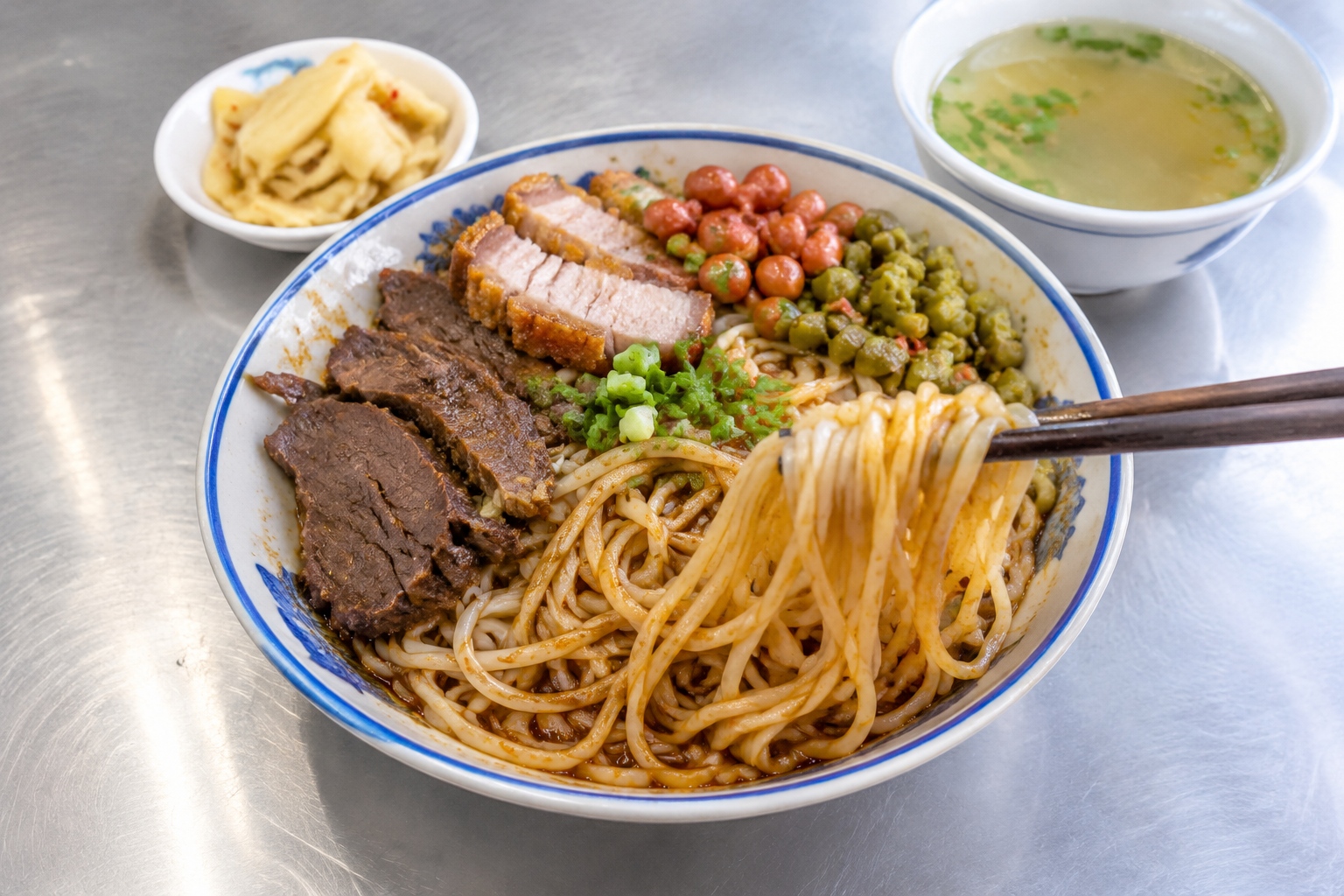
Then come the toppings. A standard bowl may include sliced braised beef, char siu, and guoshao—crispy fried pork with crackling edges. There are peanuts, chopped scallions, pickled long beans, and often sour bamboo shoots. The bamboo shoots are the most divisive element for visitors: fermented, pungent, and deeply savory. Locals often treat them as a seasoning, not a main topping. A spoonful changes the whole bowl.
The Art of ‘Dry-Mix’
“Dry-mixed” does not mean the bowl has no liquid at all. It means the noodles are tossed with a small amount of braising liquid before any soup is added. The goal is concentration. The noodles should be glossy and brown, not floating. You mix from the bottom of the bowl upward, lifting the noodles so the sauce that has settled at the base coats every strand. If you simply stir once and start eating, the last third of the bowl will taste much saltier than the first.
This is why locals pay attention to the first thirty seconds after the bowl is handed over. They add a little chili oil, maybe a spoon of sour bamboo, a splash of vinegar, or a bit of garlic water. They mix again. They taste. Only then do they decide whether the bowl needs more liquid.
Soup usually comes later—often halfway through the bowl, or after most of the noodles are gone. A small kettle or a pot of hot broth sits nearby. Pouring it in turns the remaining sauce and toppings into a light, savory soup. It is not a separate course. It is the second stage of the same bowl. For a visitor, this is the easiest way to understand the local logic: first the noodles are seasoned, then the broth extends the meal.
Why the Shop Moves Without a Queue
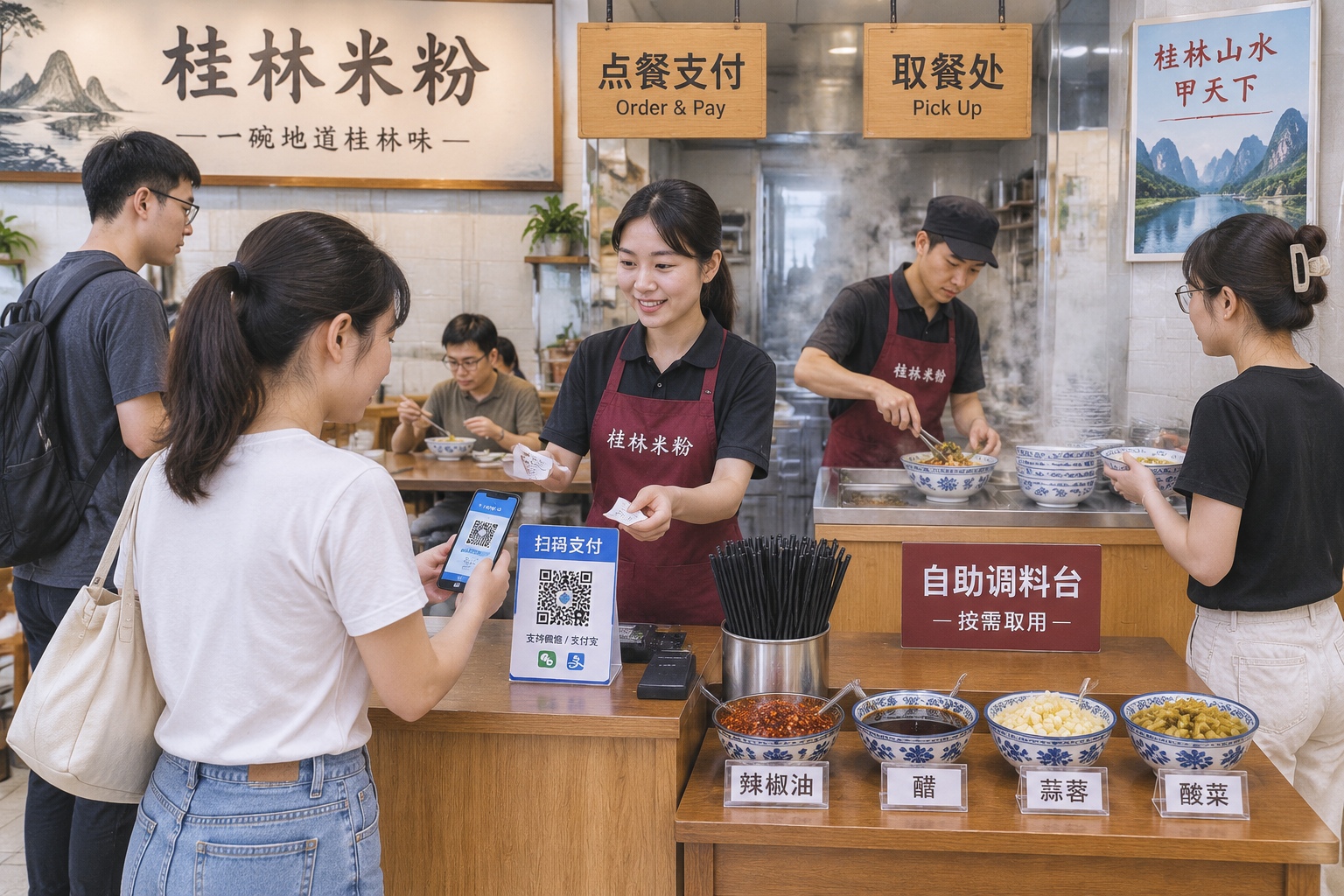
The apparent absence of a line is not a lack of order. It is a design. In many Guilin noodle shops, payment, pickup, and condiments are separated. You pay at one end, receive a ticket, and hand it to the noodle station. Workers assemble bowls in parallel: one scoops noodles, another adds meat, another ladles braising liquid. The cashier may also be the owner. A second window may serve online orders or customers who are only picking up.
Regulars shorten the process further. They order in shorthand: “two liang, extra meat, no soup yet.” Two liang is a portion size—roughly the local measure for a normal appetite—not a precise weight of the finished bowl. Three liang is for people who are hungrier. “Add soup” can mean a little broth at the start; “soup later” means keep it dry for now. A request for “more vegetables” usually means more pickles and scallions, not a salad.
At peak time, from about 7 to 8:30 a.m., there may be a short queue at the payment counter. But it breaks up quickly. The shop is not trying to create a dining experience. It is trying to move breakfast through a small space with as little friction as possible.
What a Bowl Costs—and What It Takes
In neighborhood shops, a basic bowl of Guilin rice noodles often costs around 6 to 8 yuan, roughly the price of a bottle of water in many European cities. Extra meat, a larger portion, or a tourist-area location pushes the price higher. For many residents, this is not a treat. It is a weekday breakfast, a quick lunch, or a late-night stop.
The low price depends on volume and preparation. Shops start early. Braising liquid may be simmered for hours, sometimes the night before. Pork is fried for guoshao. Beef is sliced and braised. Pickles are chopped. Rice noodles arrive fresh or are blanched to order. The menu is short, and the ingredients are prepared in batches. That simplicity is what makes speed possible.
A Public Space With Short Conversations
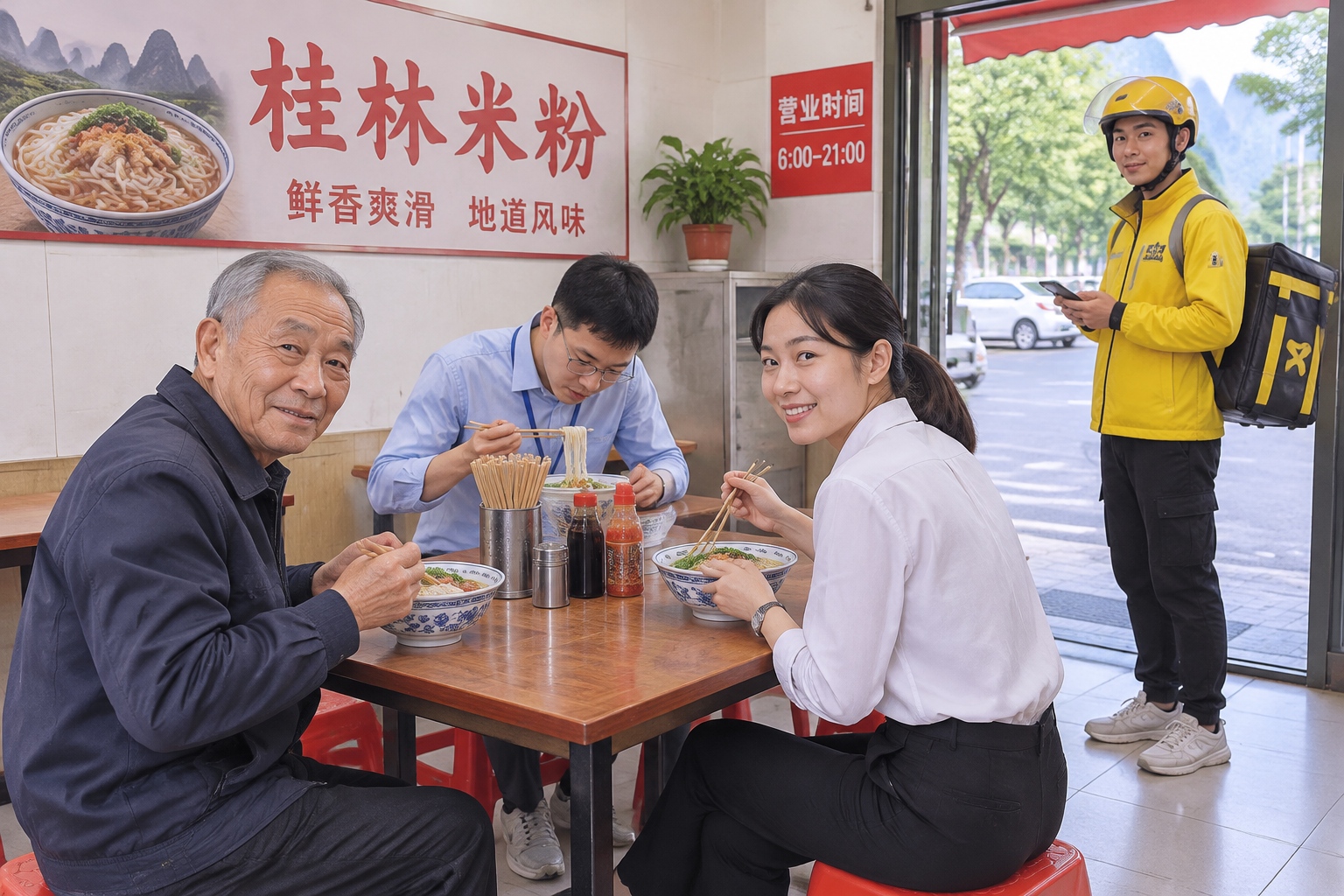
The dining room is rarely elegant. There may be a few square tables, plastic stools, a wall-mounted fan, and a condiment station with chili oil, vinegar, soy sauce, and chopped garlic. Customers share tables without much ceremony. A retiree nods at a neighbor. A delivery rider eats standing up because his next order is waiting. Two office workers discuss a meeting in short sentences and leave.
This is not a place for long lunches. It is a low-cost, high-frequency social node. People do not go there to impress anyone. They go because it is close, fast, warm, and predictable. The shop knows their order; they know how the shop works. That mutual recognition is part of the meal.
What Has Changed, and What Has Not
Guilin’s noodle shops have changed with the rest of China. Mobile payment is standard; a QR code taped to the counter often replaces cash. Delivery platforms have added another stream of orders, with bowls packed in paper or plastic. Tourist traffic has grown, and some shops now display English menus or photographs. Chains have entered the market, bringing standardized hygiene and brighter interiors. Local authorities have pushed for clearer food-safety rules and better waste handling.
But the core expectations remain stubborn. Locals still judge a shop by its braising liquid—whether it tastes deep, balanced, and not merely salty. They still care about the texture of the noodles and the crunch of the guoshao. They still want the bowl to arrive quickly. And they still want the first bite to be dry-mixed, not drowned in soup.
If You Order in Guilin
If you walk into a Guilin noodle shop and want something close to the local way, start simple. Ask for two liang, round or flat noodles, and a mix of beef and guoshao. Say “dry mix” if the shop offers a choice, or “less soup” if you are unsure. When the bowl arrives, add a little chili oil and pickled bamboo, then mix from the bottom. Eat a few bites before adding broth. If you want the second stage, ask for hot soup and pour in only half at first.
The shop may be busy, but you do not need to decode a long menu. The morning has a rhythm, and the bowl has a sequence. Watch the person next to you. Mix, taste, then add soup. In Guilin, that is not a tourist trick. It is simply how breakfast works.