
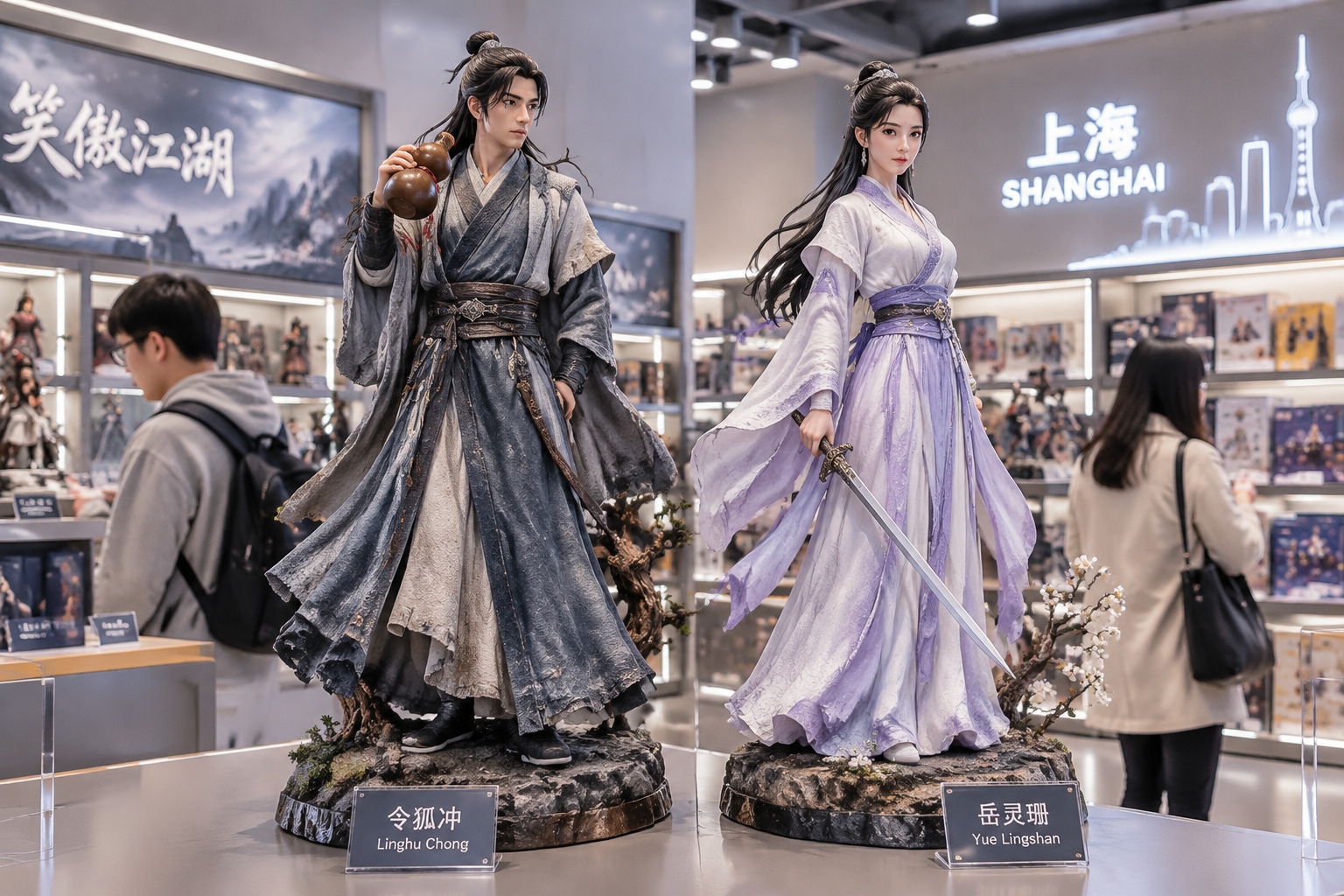

The air in the shop smells faintly of plastic and fresh ink. It’s a small, brightly lit corner in a shopping mall in Shanghai, far from the dusty bookstores where Jin Yong’s martial arts novels were once sold by weight. Here, on shelves illuminated by cool LED strips, stand hundreds of miniature figures. They are not the rough, mass-produced action toys of the 1990s that hung on keychains outside schools. These are meticulously sculpted statues, some no larger than a thumb, others standing tall with flowing silk robes frozen in mid-motion.
A young woman in her late twenties, wearing oversized glasses and a beige cardigan, picks up a figure of Linghu Chong. He is depicted in his signature pose: drunk, leaning against a rock, holding a wine gourd. The sculptor has captured the tilt of his head, the loose tie of his sash, and even the slight blur intended to mimic motion. She turns it over, checking the price tag—89 RMB (about $12). It’s not cheap for a toy, but she doesn’t hesitate. She puts it in her basket, alongside a blind box from another series.
This scene is becoming increasingly common in China’s urban centers. The “wuxia” (martial arts hero) genre, once the domain of television dramas and paperback novels, has found a new physical form: high-quality collectible figures and blind boxes. But who exactly is buying these miniature heroes? And what does their rise tell us about how younger generations in China are engaging with their own cultural heritage?
The Shift from Plastic Junk to Art Objects
For decades, wuxia merchandise in China was synonymous with low-quality plastic. If you grew up in China in the 90s or early 2000s, you likely remember the stiff, poorly painted action figures of Guo Jing or Xiaoliu Feidao that sold for a few yuan at street stalls. They were durable but aesthetically crude.
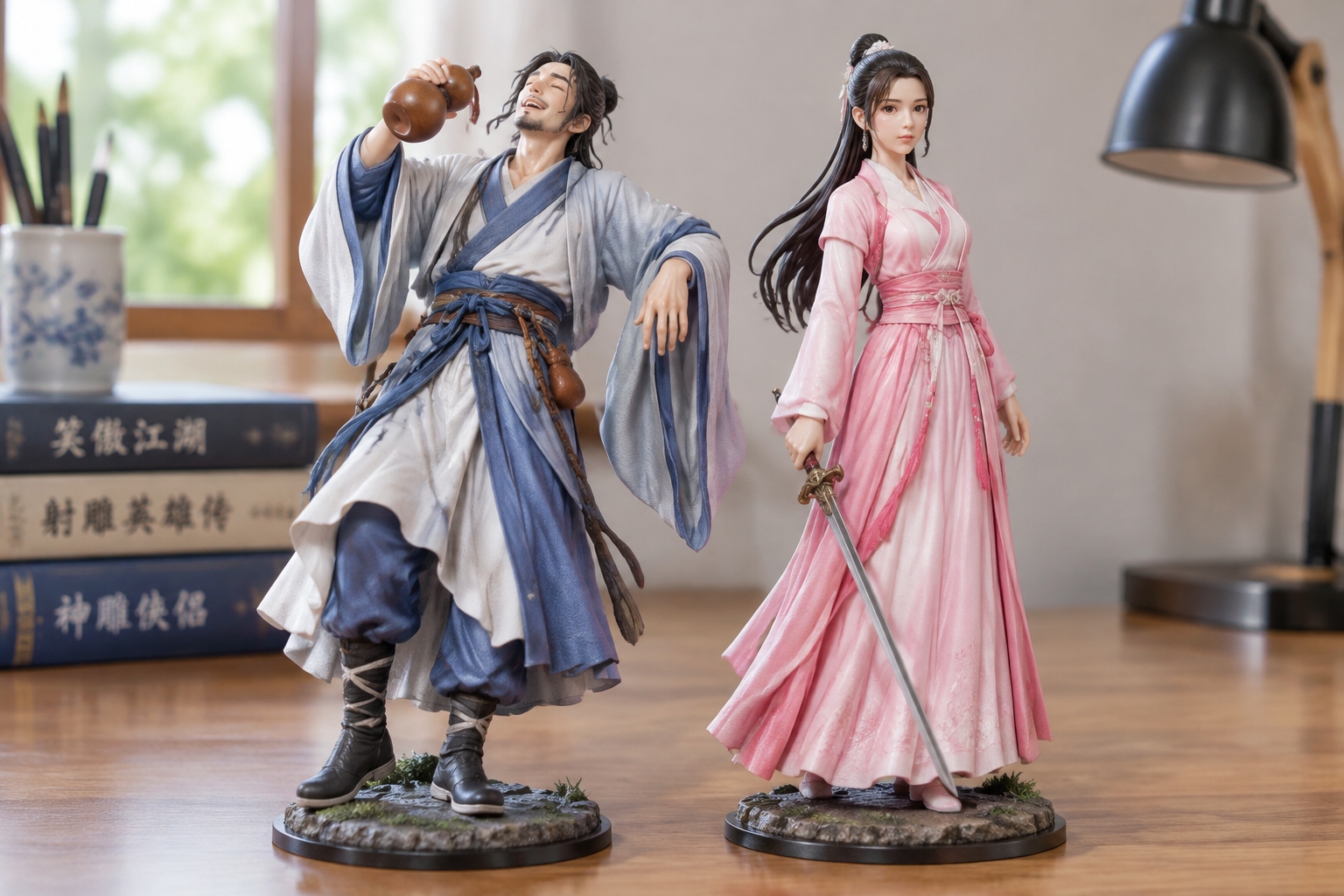
Today, the market has bifurcated dramatically. On one end, there are still cheap knockoffs. But on the other, there is a booming industry of “designer toys” and premium collectibles. Companies like Pop Mart have licensed major wuxia IPs (Intellectual Properties), including adaptations of Jin Yong’s classics like *The Smiling, Proud Wanderer* (Xiao Ao Jiang Hu) and *The Legend of the Condor Heroes*. These products are designed by professional artists, often in collaboration with the original authors’ estates or film studios.
The change is visible in the details. Take the recent “Linghu Chong: Drunk in Jianghu” blind box series. The figures feature intricate fabric textures on the robes, realistic skin tones, and dynamic poses that reference specific scenes from popular TV adaptations. They are packaged with care, often including a small card explaining the character’s backstory or the specific martial arts move depicted. This isn’t just merchandise; it’s curated art.
Who Is Buying Linghu Chong?
The buyer profile is more diverse than one might expect. While hardcore fans of Jin Yong’s novels are certainly part of the demographic, they are not the majority. The primary consumers are Gen Z and young Millennials (born roughly between 1995 and 2005) who grew up watching wuxia TV dramas rather than reading the original novels.
For these buyers, wuxia is less about literary depth and more about aesthetic identity. “I didn’t read all of Jin Yong’s books,” admits Chen, a 24-year-old graphic designer I meet at a convention in Hangzhou. “But I grew up watching the TV series. Linghu Chong represents freedom and rebellion. Collecting his figures is a way to keep that feeling close. It’s like having a piece of my childhood on my desk.”
There is also a growing segment of overseas collectors. As Chinese pop culture gains global visibility, international fans are entering this niche. Online forums in English discuss the sculpting quality of Chinese wuxia figures, comparing them favorably to Japanese anime figures. For these buyers, owning a Linghu Chong figure is a way to connect with Chinese storytelling traditions without needing to speak fluent Mandarin.
Blind Boxes and the Thrill of Uncertainty
A significant driver of this market is the “blind box” model. Popularized by Pop Mart, blind boxes are sealed packages containing one random figure from a series. You know the theme (e.g., Wuxia Heroes), but you don’t know which character or pose you’ll get until you open it.
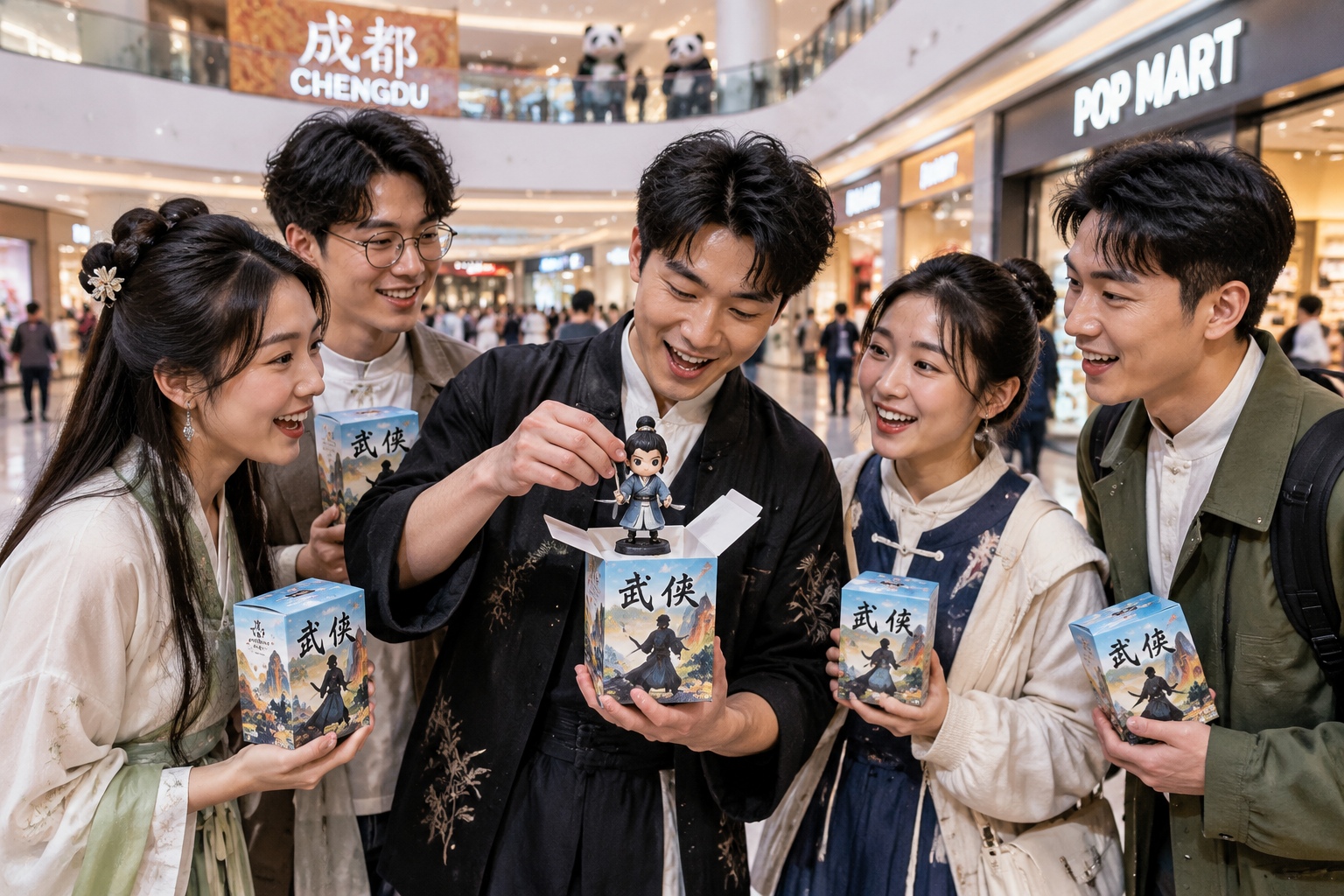
This gamification of collecting adds a layer of excitement and social interaction. In shopping malls, groups of friends often buy multiple boxes together, swapping duplicates to complete their sets. The process turns solitary consumption into a communal activity. When someone pulls the “hidden edition” (a rare variant with unique coloring or accessories), the crowd around them erupts in cheers.
For wuxia fans, this mechanic mirrors the unpredictability of the martial arts world itself. Just as Linghu Chong never knows which enemy he’ll face next, collectors never know which hero they’ll unlock. It’s a playful resonance between the product and the narrative.
Materializing the Spirit of Xia
Beyond the thrill of collecting, there is a deeper cultural function at play. Wuxia literature and film are deeply concerned with concepts like *Xia* (chivalry), *Yi* (righteousness), and personal freedom. These are abstract moral codes. Collectible figures make these abstractions tangible.
When a young person places a figure of Yue Lingshan on their shelf, they aren’t just buying a doll. They are curating an environment that reflects values like loyalty, tragedy, or the beauty of fleeting youth. In a fast-paced, high-pressure urban life in China, these objects serve as emotional anchors. They remind the owner of a narrative world where individual agency matters, where a single sword stroke can change destiny.
Moreover, this trend represents a shift in how Chinese youth consume culture. There is less shame associated with “guochao” (national tide) or traditional aesthetics than there was twenty years ago. Wearing Hanfu-inspired clothing and collecting wuxia figures is now seen as stylish, not geeky. It’s a way of reclaiming local cultural symbols and presenting them through a modern, globalized lens.
Practical Guide: Where to Find and Buy
If you are visiting China or interested in exploring this market, here are some practical tips:
- Where to buy: Major cities like Shanghai, Beijing, Chengdu, and Hangzhou have dedicated Pop Mart stores or toy boutiques. Online platforms like Taobao and JD.com offer the widest selection, including limited editions.
- Price range: Standard blind boxes typically cost between 59 RMB ($8) and 120 RMB ($17). Larger, high-end statues can range from 300 RMB ($42) to over 2,000 RMB ($280).
- Best time to buy: New series are usually released on Fridays. Special editions often launch during major festivals like the Mid-Autumn Festival or Chinese New Year.
- Authenticity: Always check for holographic stickers and official licensing marks. Counterfeits are common, especially for popular characters like Linghu Chong.
The rise of wuxia collectibles is more than a commercial trend; it’s a cultural conversation happening in plastic and paint. As these figures move from shelves to living rooms, they carry with them stories of freedom, honor, and identity that continue to resonate across generations and borders.