


A pair of tweezers in Tianjin
On a Wednesday morning in Tianjin, Li Jing, a 34-year-old researcher in a traditional Chinese medicine analysis lab, picks up a thin slice of dried danshen, or Salvia miltiorrhiza root, with a pair of tweezers. She places it in a small tube, adds solvent, and waits for the sample to run through a liquid chromatography-mass spectrometry instrument. On the screen, a line of peaks appears. Li is not asking whether danshen is good. She is asking a narrower question: is this batch chemically similar to the last one, and can its main components be measured within a known range?

That question may sound modest. It is also where much of modern Chinese medicine research begins. The field is often described abroad as a contest between tradition and science, as if an herb is either believed or disproved. In practice, the work is more granular. Researchers turn a traditional formula into a set of measurable problems: which molecules are present, in what amounts, how they change during processing, what they do in cells and animals, and whether a controlled human study can detect a benefit that matters to patients.
From an old text to a molecule: the qinghao case
The best-known example is qinghao, or sweet wormwood. In the 1960s and 1970s, Chinese scientists screened traditional remedies for antimalarial activity. Tu Youyou’s team at the China Academy of Traditional Chinese Medicine found a clue in Ge Hong’s fourth-century text, A Handbook of Prescriptions for Emergencies, which described steeping qinghao in water and wringing out the juice. The team shifted to a low-temperature ether extraction, isolated the active compound artemisinin in 1972, and later showed its clinical value against malaria. Tu received the 2015 Nobel Prize in Physiology or Medicine.
The story is powerful, but it is often simplified. Artemisinin is a single compound derived from a plant used in Chinese medicine, not a complex formula prescribed after syndrome differentiation. The old text offered a lead and a processing hint. Chemistry, pharmacology, toxicology, and clinical trials did the rest. That distinction matters. It shows how traditional experience can enter the lab without proving that every traditional formula works in the same way.
What pharmacologists look for in a formula
For a multi-herb formula, the analytical problem is harder. A single decoction may contain dozens or hundreds of compounds, and the compounds may interact. Researchers use chromatographic fingerprints to compare batches, mass spectrometry to identify known and unknown molecules, and pharmacokinetic studies to see what enters the bloodstream and at what concentration. Network pharmacology maps possible targets and pathways, but it generates hypotheses rather than proof. A computer model can suggest that a compound might affect inflammation; it cannot show that a patient will feel better.
This is why papers often move in stages. A cell study may show that an extract reduces a marker of inflammation. An animal study may show reduced swelling or tissue damage. Neither answers the question that regulators and patients care about: does this product, at this dose, in this population, produce a clinically meaningful benefit compared with a placebo or standard care? Those are different questions, and they require different evidence.
Why clinical trials of formulas are hard
Randomized controlled trials are the strongest tool for judging whether a treatment causes a change. Applying them to Chinese medicine formulas is not impossible, but it is awkward. First, formulas are complex and variable. A trial must lock down the source, processing, dose, and chemical profile of the product, or the results may not be repeatable. Second, traditional practice is individualized. A doctor may adjust a formula according to a patient’s pattern, age, and symptoms. That is clinically sensible, but it complicates the fixed intervention that a classic trial expects.
Third, placebo design is difficult. Decoctions have strong tastes and smells. Capsules can hide taste but not always the physical effects. Researchers have used inert pills, low-dose formulas, and attention controls, but no design is perfect. Fourth, endpoints matter. A study may report a change in a blood marker, a symptom score, or a quality-of-life measure. A statistically significant change is not automatically a change that patients notice or that justifies cost and risk.
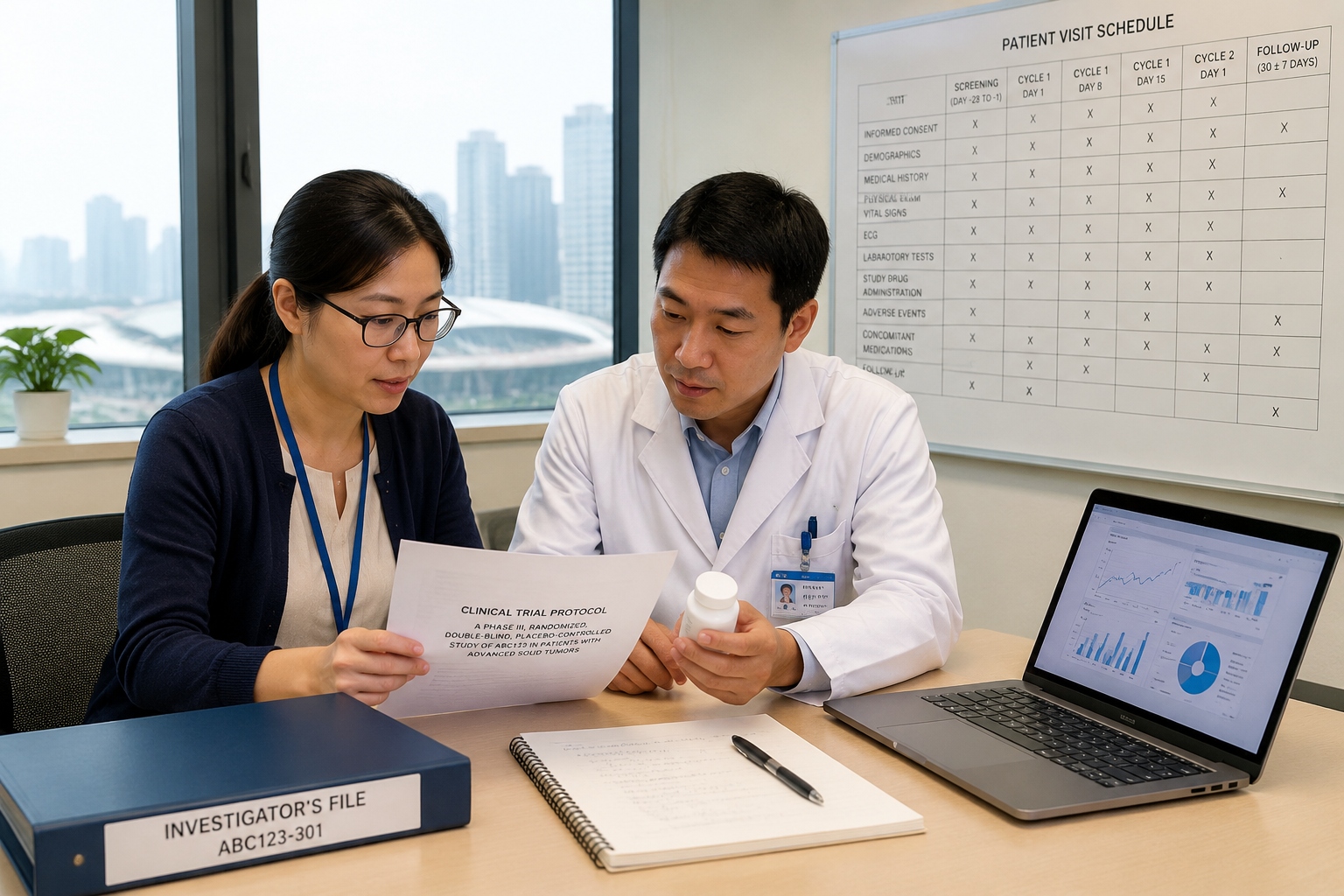
Some Chinese formulas have been tested in larger, international trials. Compound Danshen Dripping Pills, a formula used for angina, was one of the earlier attempts to follow the US Food and Drug Administration’s investigational new drug path. Public updates have described phase II work and later phase III planning, but the status and full results should be checked against regulatory documents and peer-reviewed publications, not press releases. During COVID-19, several Chinese medicines were studied in randomized trials, and international reviewers raised familiar questions about sample size, blinding, and whether the outcomes were robust. That debate is normal in clinical research. It is also a reminder that a registered trial is a start, not a finish.
Quality control and safety are part of the evidence
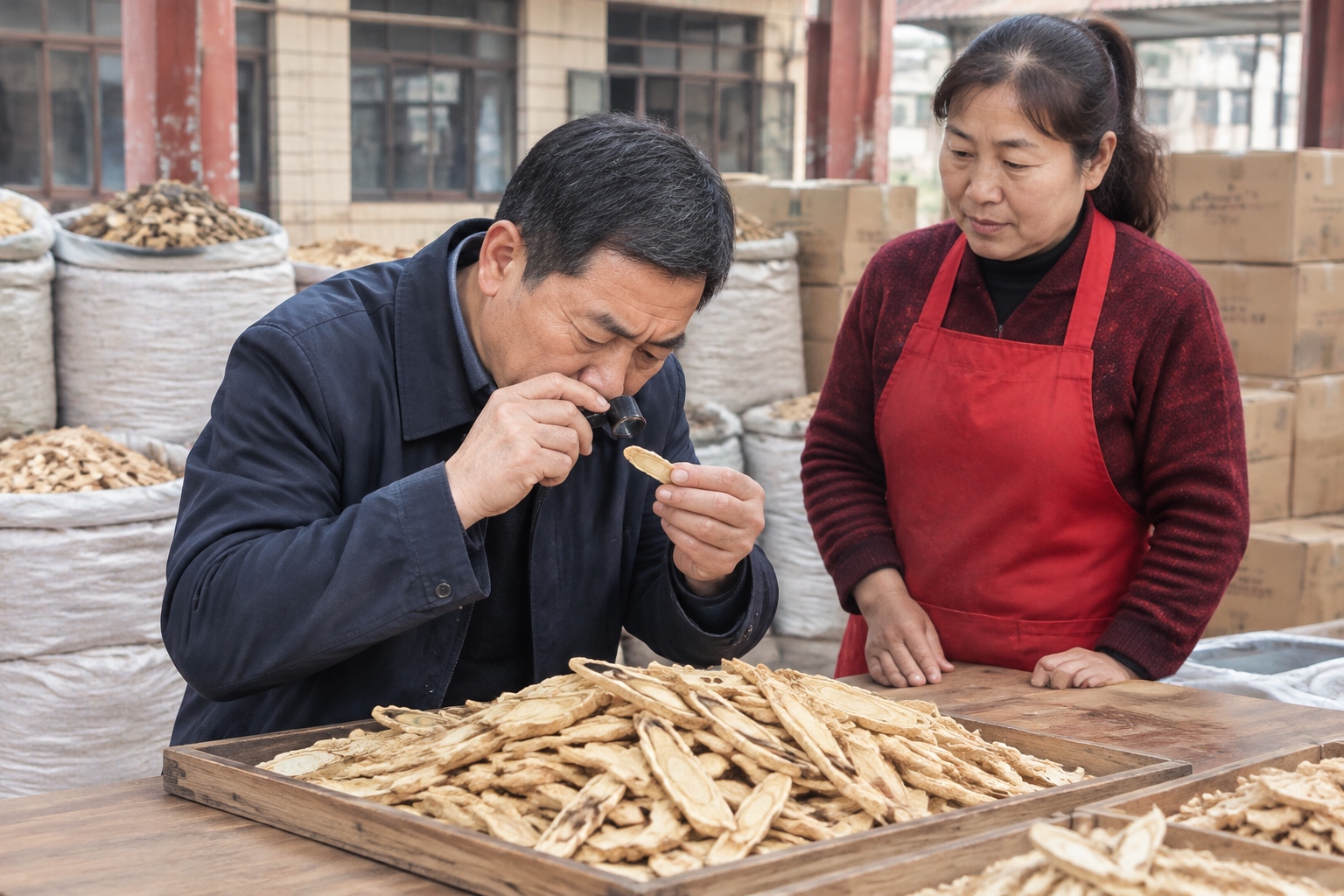
A formula can only be as reliable as its ingredients. Chinese pharmacopoeia standards set tests for identity, moisture, ash, extractives, marker compounds, heavy metals, pesticide residues, and microbial limits. The 2020 edition of the Pharmacopoeia of the People’s Republic of China includes monographs for hundreds of herbal medicines and prepared slices. At markets and processing sites, samples are checked for species substitution, sulfur fumigation, and contamination. These are not side issues. If a product contains the wrong species or an inconsistent dose, a clinical trial cannot tell you much.
Safety monitoring runs in parallel. China has a national adverse drug reaction reporting system, and the National Medical Products Administration publishes annual reports. Traditional Chinese medicine reactions are a minority of total reports, but they include liver injury, allergic reactions, and interactions with western drugs. Some herbs are known to be toxic if misused, and some traditional preparations contain minerals or animal materials that require strict limits. The honest position is not that natural means safe. It is that safety has to be measured, reported, and followed over time.
Evidence is a ladder, not a headline
News coverage often compresses this ladder into a headline: ‘Study proves Chinese medicine works.’ The claim may rest on a cell experiment, a small uncontrolled case series, or a trial with a surrogate endpoint. None of those is worthless, but none is the same as a large, preregistered, placebo-controlled trial with clinically meaningful outcomes. Systematic reviews and meta-analyses sit higher on the ladder because they pool studies and examine consistency. Real-world evidence can add useful information about long-term use and rare harms, but it is vulnerable to selection bias.

There is also a cultural dimension. In China, many patients use Chinese medicine alongside western medicine, sometimes in the same hospital. A cancer patient may receive chemotherapy and an herbal formula for fatigue. A patient with irritable bowel syndrome may try a decoction after standard treatment disappoints. These are real choices, made in clinics and homes, not abstract debates. Good research should respect that reality while being clear about what is known, what is plausible, and what is still unproven.
What to ask when you see a Chinese medicine study
When a headline says a Chinese medicine is effective, ask five questions. What was the study design: cells, animals, a human trial, or a review? If it was a trial, how many patients, and was there a placebo or standard-care comparison? What was the main outcome, and was it something patients feel or a laboratory marker? Was the product chemically characterized, and did the researchers report its quality and dose? Was the trial registered, and were the results published in a peer-reviewed journal?
Then ask a sixth question: who paid for it, and what do the authors say about limitations? Industry funding does not automatically invalidate a study, but it belongs in the picture. So do conflicts of interest, publication bias, and the difference between statistical significance and clinical importance. These questions are not hostile to Chinese medicine. They are the same questions researchers ask about any drug, supplement, or procedure.
Back in Tianjin, Li Jing finishes a batch comparison and writes a report. It contains similarity scores, concentration ranges, and uncertainty estimates. It does not say effective. That word belongs to clinical trials and regulators, and it should be used carefully. The quiet work in the lab is less dramatic than a headline, but it is how a tradition of experience becomes something that can be tested, repeated, and argued with.