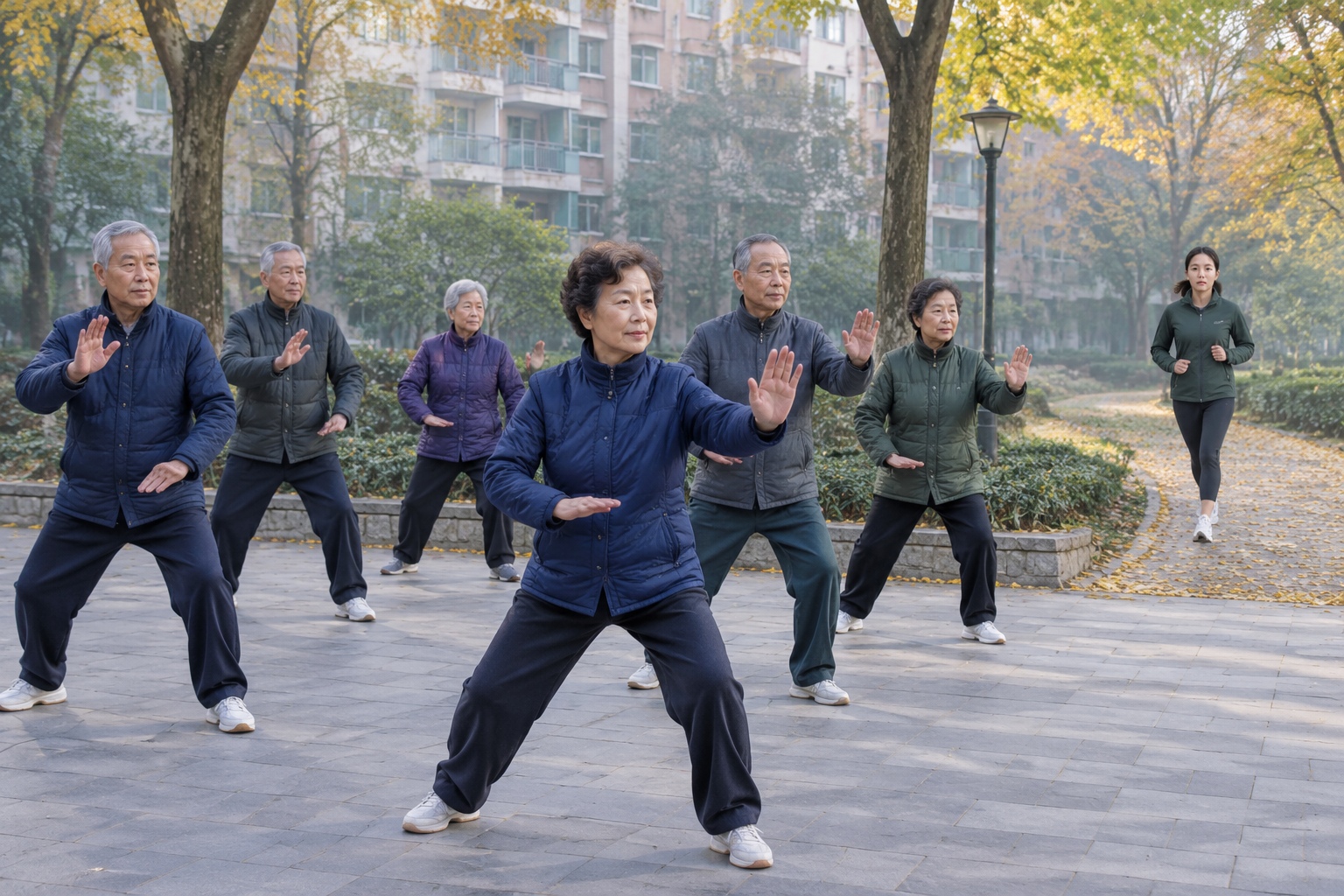

A Checkup That Came Back Normal
On a damp Tuesday in November, in a clinic two floors above a noodle shop in Hangzhou, a product manager named Chen Yu heard a sentence that made no sense to her.
She was 32. For three months she had been waking at 3 a.m., her eyes went dry by mid-afternoon, her shoulders felt screwed tighter each week, and she had snapped at a colleague over a shared spreadsheet. Two weeks earlier she had paid for a full private health check: blood work, ultrasound, the whole package. Everything came back normal. Her liver enzymes were perfect.
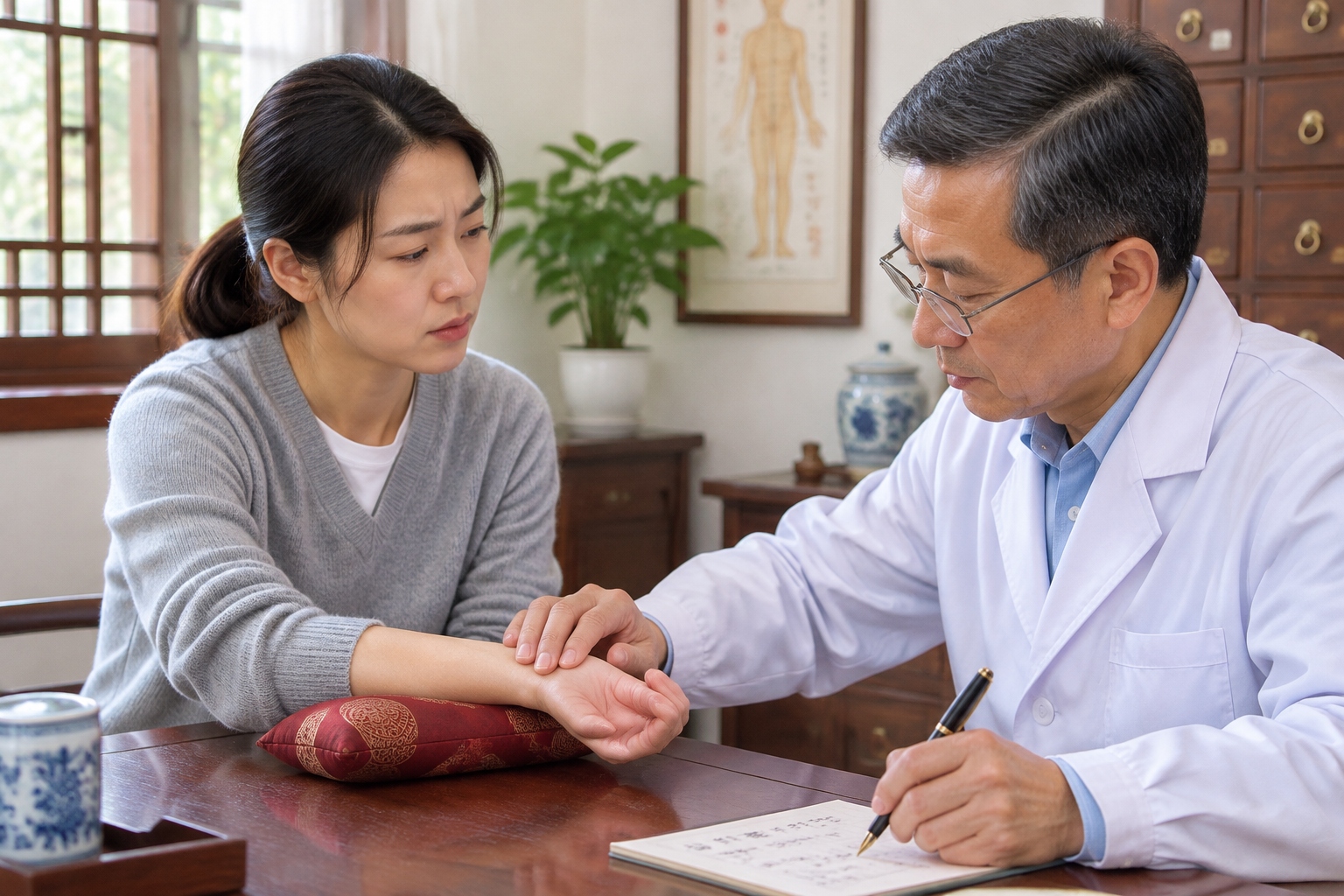
The doctor, a man in his late fifties with half-rim glasses, spent four minutes holding her wrist. Then he wrote six characters on his pad: 肝气郁结 — gan qi yu jie, “liver qi stuck and knotted.”
“So my liver is fine,” she said.
“Your liver is fine,” he agreed. “Your liver qi is not.”
If you grew up somewhere that teaches medicine as anatomy, this sounds like a contradiction, or a sales pitch. It is neither. But to see why, you have to notice that the word “liver” is doing two different jobs in two different systems — and that neither system is joking.
The Map Is Not the Territory: What the Five Zang Actually Are
Chinese medicine’s five zang — 肝 心 脾 肺 肾 — are almost always translated as liver, heart, spleen, lungs, kidneys. The translation is where most of the confusion begins.
In the anatomy you learned at school, an organ is a thing: a location, a weight, a blood supply. The liver sits in the upper right abdomen and processes toxins. The spleen filters blood and can be removed. The heart is a pump of roughly 300 grams. These are objects.
The zang are better understood as roles. In the classical texts they are the “storage” organs: they hold qi, blood, essence and spirit, and they are defined mainly by what they do to one another. Their paired fu organs — stomach, gallbladder, small intestine, large intestine, bladder — are “transit” organs: they receive, move and pass things along. The spleen is a zang; the stomach is its fu. One holds and transforms, the other receives and ripens. Together they describe digestion.
So when a TCM doctor says “spleen,” she is not reaching for the fist-sized lymphatic organ behind your left ribs. She is naming a function: the part of you that turns lunch into energy and keeps blood inside its lanes.
The Same Word on Two Different Maps
English speakers do this constantly without noticing. When someone says “she has a big heart,” nobody calls a cardiologist. “I have a gut feeling” is not a gastroenterology referral. “He broke my heart” describes grief, not an infarct.
A cleaner analogy might be a bank. A river bank and a financial bank share a word and nothing else. One is geography, one is an institution. Nobody accuses geographers of being unscientific because they don’t discuss interest rates.
TCM’s five organs sit closer to “the digestive system,” “the immune system” or “the nervous system” than to a single organ: they are names for coordinated networks. When a doctor in Beijing says your spleen is weak (脾虚), she usually means a pattern — poor appetite, loose stools, fatigue after eating, a pale tongue — not a damaged organ. Nothing needs to come out.
What Each of the Five Organs Does in Chinese Medicine
These are working summaries, not a textbook. The point is to show how much territory each word covers.
Liver (肝): the traffic controller
The liver’s job is 疏泄, “free coursing” — keeping qi moving so nothing stagnates. It stores blood, opens into the eyes, controls the tendons, and shows up in the nails. Its emotion is anger, its season is spring, its flavour is sour, its colour green, its note the jue (角). This is why a TCM doctor may treat irritability, PMS, dry eyes, tight shoulders and a bitter taste in the morning as one pattern rather than five complaints. Western medicine would route those five to a psychologist, a gynaecologist, an ophthalmologist, a physiotherapist and a dentist. TCM routes them to one line on a page.
Heart (心): the residence of the mind
Beyond moving blood through vessels, the heart houses the shen, usually translated as spirit or mind. That is why palpitations, insomnia, restless thoughts, poor memory and mouth ulcers can be grouped together. The heart “opens into the tongue,” which is why tongue colour is read as a window on blood and spirit, and “manifests in the face,” which is why complexion counts as diagnostic rather than decorative. Its emotion is joy — including the exhausted, overstimulated kind.
Spleen (脾): the supply chain
The spleen governs 运化, transformation and transportation. It converts food into qi and blood, then lifts the clear part upward. It also “holds blood in the vessels,” which is why unexplained bruising or heavy periods may be framed as a spleen issue. It controls the muscles and limbs, opens into the mouth, and is tied to pensiveness — the kind of worry that makes you eat badly and then feel worse. In modern Chinese vocabulary, 脾虚 is shorthand for a very unglamorous set of complaints: bloating, loose stools, the 3 p.m. collapse.
Lungs (肺): the boundary and the waterworks
The lungs govern qi and respiration, but also “regulate the water passages,” which is why a lung pattern can surface as swelling. They govern the skin and body hair — your outer boundary — and open into the nose. Grief is their emotion. Anyone who has had a cold settle into the chest in autumn has met the lung system, and any Chinese parent telling a child to wear a scarf “or you’ll hurt your lungs” is speaking this language, not cardiology.
Kidneys (肾): the account you were born with
The kidneys store jing, essence: what you inherit and slowly spend. They govern birth, growth, reproduction and ageing; govern the bones and produce marrow; govern water; open into the ears; manifest in the hair. Fear is the emotion, winter the season, salty the flavour. Lower back ache, thinning hair, ringing ears, night-time urination and low libido all fall into “kidney” territory here — one package of ageing rather than five separate clinic visits.
The Five Elements Grid: Why Colour, Flavour, Tone and Season All Map In
The five organs are the visible tips of a correspondence system built on the five phases: wood, fire, earth, metal, water. Each phase carries a season, a direction, a colour, a flavour, a tone, a tissue type and an emotion. This grid is why Chinese medicine can seem to be talking about everything at once.
| Phase | Organ | Tissue | Emotion | Colour | Flavour | Tone | Season |
|---|---|---|---|---|---|---|---|
| Wood 木 | Liver | tendons, nails | anger | green | sour | jue 角 | spring |
| Fire 火 | Heart | vessels, face | joy | red | bitter | zhi 徵 | summer |
| Earth 土 | Spleen | muscles, lips | worry | yellow | sweet | gong 宫 | late summer |
| Metal 金 | Lungs | skin, body hair | grief | white | pungent | shang 商 | autumn |
| Water 水 | Kidneys | bones, hair | fear | black | salty | yu 羽 | winter |
You can read the table as poetry, as a mnemonic, or as a clinical checklist. Historically it was all three. What it is not is a list of five independent organs — the columns are the point. A patient with dry eyes, irritability and tight tendons in spring is showing the wood column. A patient with grief and a dry cough in autumn is showing the metal column.
Why the Network Changes the Treatment
If the model were only vocabulary, prescribing would be arbitrary. It isn’t. The network shapes the formula.
Take Xiao Yao San (逍遥散), one of the most dispensed herbal prescriptions in China. It is used for what the literature calls “liver qi stagnation overacting on the spleen” — in practice, stress-related digestive trouble: cramping, bloating, irregular bowels, irritability, a wiry pulse, symptoms that worsen around deadlines. A Western GP might offer an antispasmodic and a suggestion to manage stress. Xiao Yao San puts herbs that “course the liver” and herbs that “strengthen the spleen” into one packet. The logic is relational: two systems are out of step, so treat the relationship.
This is also why a Chinese herbal prescription is usually six to fifteen ingredients rather than one active molecule. It is closer to editing a paragraph than to replacing a word.
What It Looks Like in an Ordinary Chinese City
For readers from Europe or North America, the surprising part may be how unremarkable all this is. Chinese cities run on two medical systems at once, and people move between them without drama.
By the government’s own count, China has several thousand hospitals dedicated to traditional Chinese medicine, plus a TCM department in most general hospitals. Medical universities teach both. In 2019, the World Health Organization’s ICD-11 included a chapter on traditional medicine for the first time — a classification decision, not an endorsement of efficacy, but a sign that the vocabulary is being standardised for health records.
Everyday language carries it too. 上火 — “heat rising,” meaning a sore throat, a mouth ulcer, a breakout after too much fried food — is used by people who would never call themselves believers. So is 湿气, “dampness,” blamed for sluggishness on humid days. Compare how casually an American says “I’m fighting something off” or “my allergies are bad.” Nobody asks for a lab result.

What This Does Not Mean
Two honest caveats, because the alternative is a postcard.
First, different vocabulary is not proof of effectiveness. The evidence base for Chinese herbal medicine is uneven: some formulas have been tested in randomised trials with modest results, many have not been studied well at all, and “natural” is not the same as “safe.” Aristolochic acid, found in certain traditional herbs, is a documented cause of kidney failure and urinary cancer; China restricted several related herbs in the early 2000s for that reason. Herbs interact with drugs. Dosage matters.
Second, Chinese people argue about this themselves. Plenty of young professionals in Shanghai and Shenzhen call certain TCM products 智商税 — an “IQ tax” — and there are public fights every year over hospital funding. The system is contested inside the country, not defended in unison.
What the two systems mostly do in daily practice is divide labour. A broken wrist goes to orthopaedics. Insomnia, chronic digestive complaints, irregular periods, and the grey zone of “I don’t feel well but nothing is wrong” often go to the TCM clinic, sometimes because nothing else worked.
If You Walk Into a TCM Clinic
A first visit looks different from a Western checkup. Expect questions about sleep, bowel movements, whether you feel hot or cold, your dreams, and how you feel at different hours. Expect a look at your tongue, and three fingers on your wrist for a pulse read at several depths and positions. Expect a diagnosis phrased as a pattern — “liver qi stagnation with spleen deficiency” — rather than a disease name.
One practical piece of advice: be explicit about your actual organs. If you have a diagnosed liver condition, hepatitis, or abnormal blood tests, say so, plainly. A TCM practitioner in China is trained to spot red flags and refer, but the word “liver” is slippery enough that clarity helps.
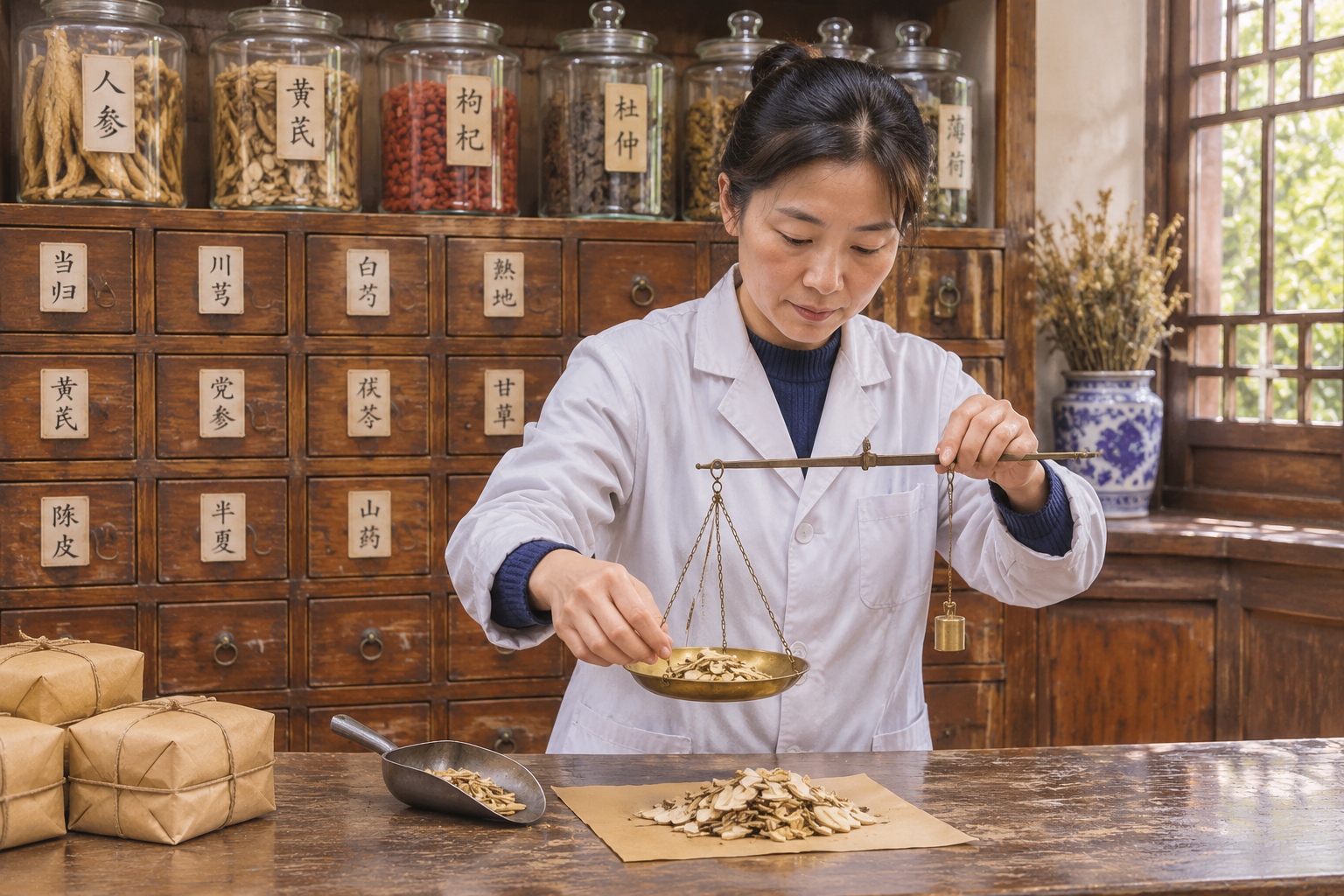
Chen Yu left with a two-week granule prescription and one unglamorous instruction: stop answering work messages after 10 p.m. Both probably mattered. Her 3 a.m. wakings eased within a month. Her eyes still dry out in front of a screen, but less.
She still can’t fully explain what “liver qi” is. She can explain what her week feels like when it gets stuck — which, in this system, is the more useful information.