
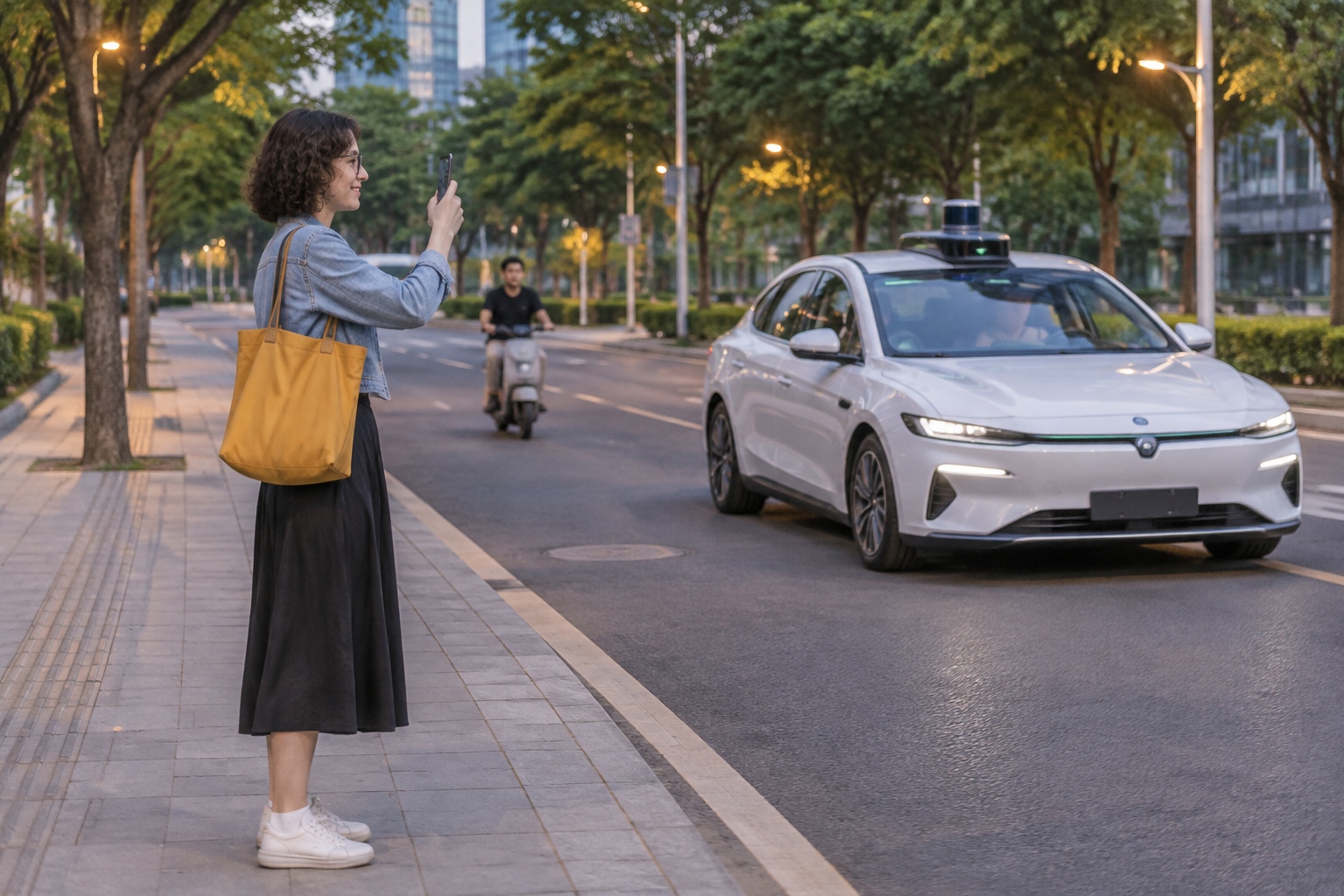

9:12 a.m., a curb in Guangming
The car pulls up and there is nobody in the driver’s seat. No hand on the wheel, no shoulder behind the headrest. Just a white sedan with a lidar dome spinning on the roof, a strip of green light along the rear window, and my own face in the glass, looking faintly ridiculous next to a suitcase.
I had chosen the driverless option in the ride-hailing app fifteen minutes earlier, mostly to see whether it would actually work. It did. A colleague booked it on her account first, because my phone number is not Chinese and the app, like many apps here, quietly assumes it is.
That small friction is worth naming at the start, because it shapes the whole visit. Shenzhen does not put its future behind glass with a polite sign saying do not touch. It puts it at a curb, in a queue, in a shop where the vendor will hand you a robot dog’s lead and tell you to walk it around the aisle.
The city is younger than most of its own residents’ parents’ marriages. In 1979 this stretch of coast was fish ponds, lychee orchards and a county town of a few hundred thousand people. Today it holds more than 17 million, and the median resident is in their early thirties. Four decades here is not history — it is the lifespan of the person sitting next to you on the metro.
Stop one: where watching ends and flying begins
The new science museum out in Guangming is where most visitors should start, because it resets your expectations for the rest of the day. Entry is free. You reserve through a WeChat mini-program a few days ahead, the form wants a passport number if you are not Chinese, and gate staff will actually look at the passport, so carry it.
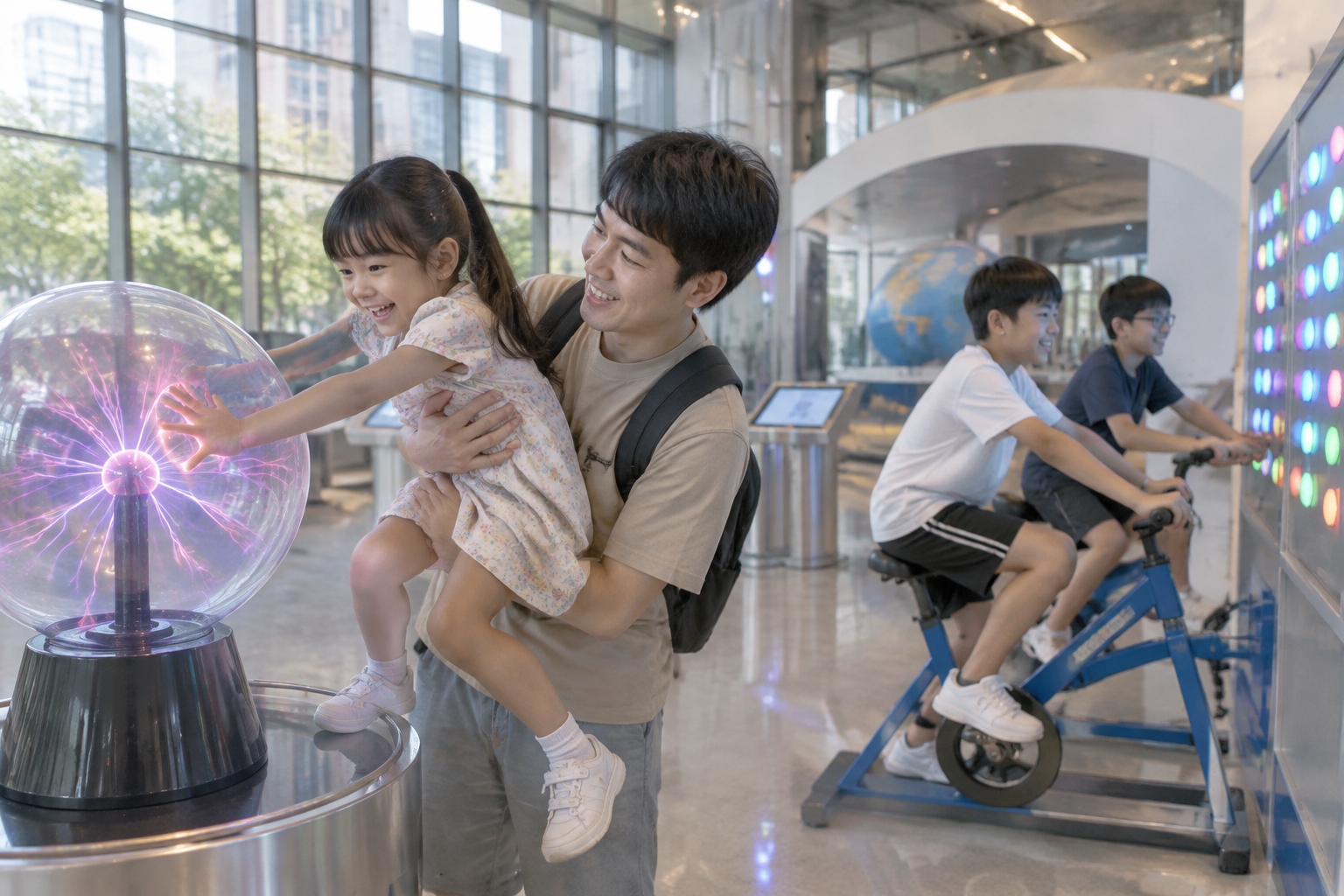
Inside, the noise tells you what kind of museum it is. Not the hush of vitrines, but the clatter of a hall where a dozen things are being operated at once by people who are not reading the labels. Two twelve-year-olds take turns on a bicycle wired to a wall of lights. A father holds his daughter up so she can put her palm on a plasma globe. By 10:30 the queue for the flight simulator is forty minutes long and nobody in it looks bored.
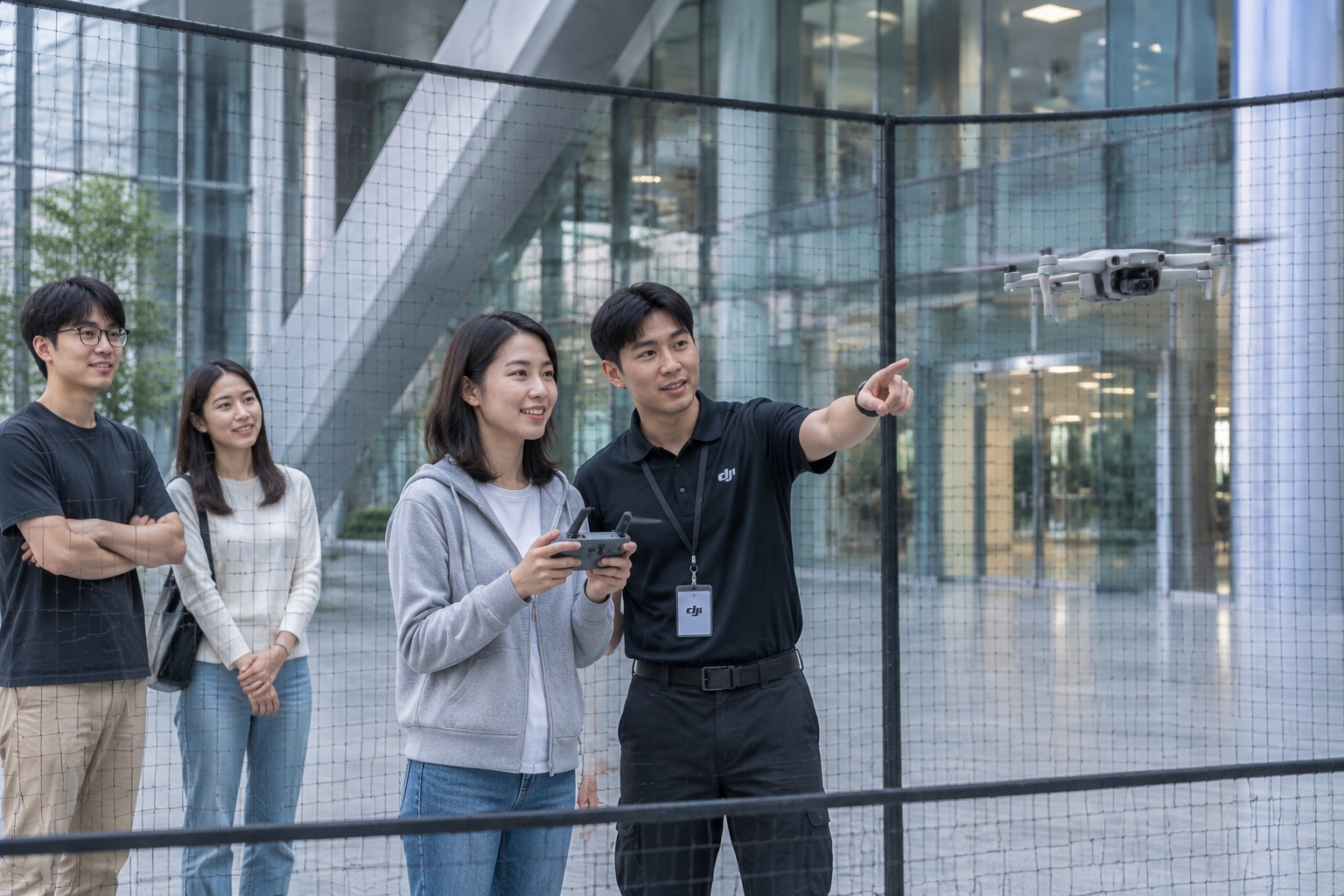
Half an hour’s drive west, DJI’s headquarters changes the register completely. Two towers lean against each other on V-shaped stilts, all exposed steel and glass, and from the plaza below you can watch staff test drones in the gap between the buildings. On the ground floor there is a store open to the public. Behind a net, an employee runs short demonstration flights and then hands the controller to whoever is standing closest.
That handover is the point. A woman in her twenties flies a palm-sized drone in a slow circle, over-corrects, laughs, and the machine bounces gently off the netting. Nobody tells her she is doing it wrong. She tries again and gets it. Two minutes earlier she had been a spectator.
If you want more flying time, the DJI flagship store at OCT Harbor on the coast has a bigger hands-on area and a long queue of families on weekends. Entry is free at both. Bring your passport for any purchase that needs a tax-refund form.
Stop two: Huaqiangbei, where the future is sold by the bag
The metro drops you into a basement corridor and you come up into fluorescent light and the smell of hot plastic and solder. Huaqiangbei is a district of electronics towers, and SEG is the one everyone names first: floor after floor of stalls, escalators that smell faintly of fried food, and the constant click of someone testing a component.
Nothing here is curated. On one floor a man sells loose LEDs by weight, scooped out of a bin with a plastic cup. On another, a woman quotes you three prices for a USB-C cable in ten seconds — 8 yuan, 15, 25 — and explains the difference in a way that is either honest or beautifully rehearsed. I bought the 8-yuan one. It still works.
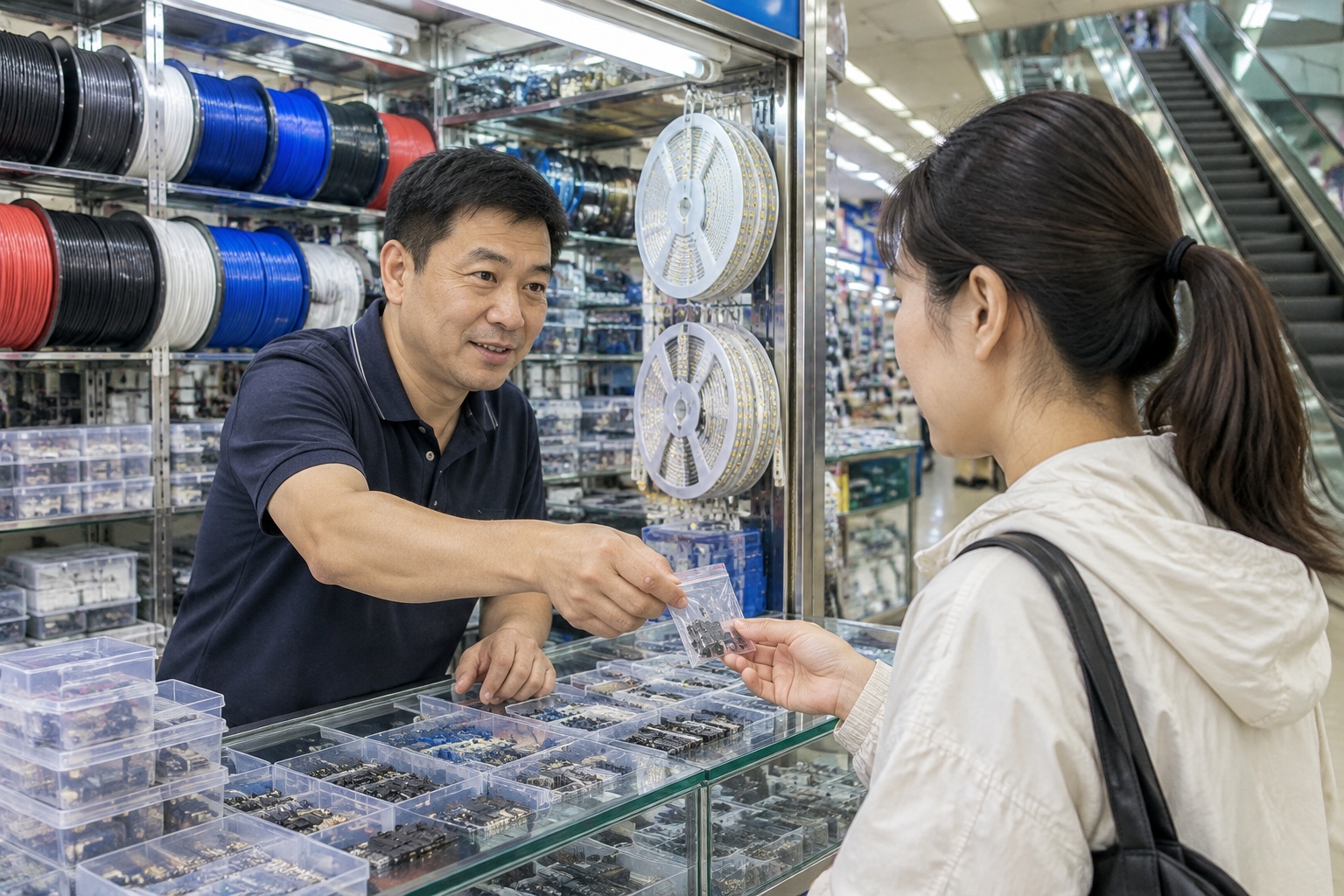
The newer addition is a robot store a few streets away that calls itself a robot 6S shop. The extra S’s, a staff member told me, cover sales, service, spare parts, showroom and something like solutions; nobody entirely agrees on the list. What matters is that you can walk in, ask a real question about a robot dog’s battery life, and get an answer from someone who repairs them. Children are allowed to hold the lead. Adults are allowed to ask how much.
This is the part of Shenzhen that foreigners find hardest to believe and easiest to verify. The city does not only design the consumer gadget; it sells the screws, the housing, the cable and the prototype, all within four blocks of each other.
Stop three: a drink from the sky, a taxi with no one in front
Late afternoon, Talent Park in Nanshan. Joggers, a wedding photo shoot, someone flying a kite badly. Near the north gate there is a white kiosk about the size of a bus shelter, with a row of lockers and a flat landing pad behind it. This is a drone delivery point.
You order on Meituan like any other takeaway, pick the drone point as your address, and wait. Around fifteen minutes later a hexacopter comes in low over the trees, hovers, lowers a paper bag into a locker slot with a whirr you can hear from ten metres away, and climbs back out. The bag contains bubble tea. It is still cold. It cost 19 yuan.
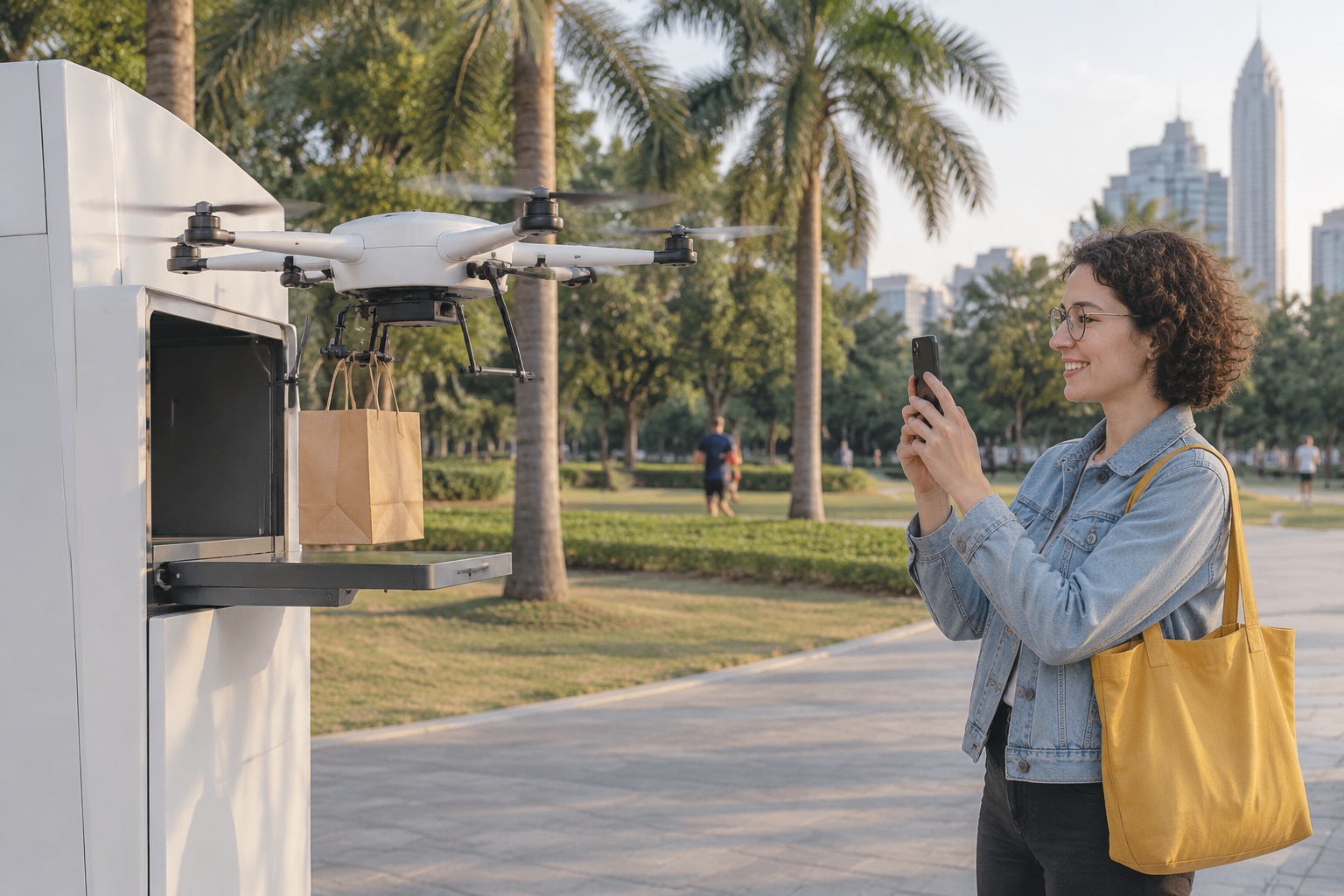
Be honest about the limits: this is not delivery to your hotel window. Routes run between fixed points, coverage is patchy, and wind or rain can close the pad for the day. Once the kiosk was out of order and a man in a maintenance vest apologised to a small queue of disappointed teenagers. The system is real, and it is also new.
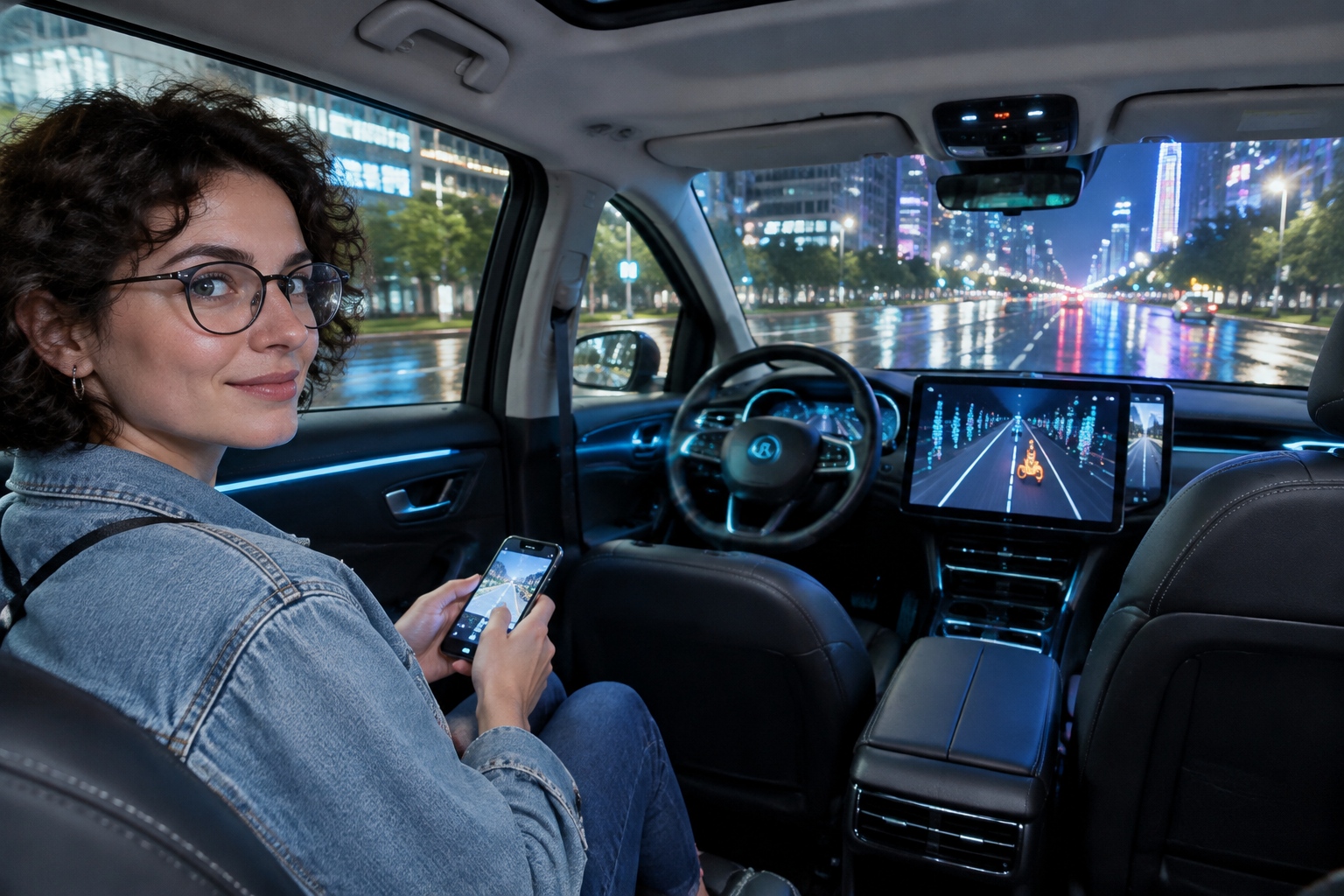
Then dusk, and the robotaxi again. Sitting in the back with an empty front seat is a different sensation from sitting in the back with a driver you can talk to. The screen shows what the car sees: pedestrians as columns of dots, a scooter drifting into the lane rendered in orange. The wheel turns by itself, smoothly, and then overcautiously at an unsignalised crossing, waiting a half-second longer than a human would before rolling forward. Somewhere, a remote supervisor is watching several cars at once.
My eight-kilometre ride cost 11 yuan, roughly a dollar fifty, after a first-ride discount. Full fares run higher. It is not a gimmick you book once for the story, although everyone does; residents in the pilot zones have started using it to get to work.
A route you can actually follow
Day one
- 09:00 Shenzhen Science and Technology Museum, Guangming. Book three to seven days ahead; free; allow two and a half to three hours.
- 12:30 Lunch near the museum, then about 45 minutes by metro and taxi to Nanshan.
- 14:00 DJI Sky City for the building and the demonstration flights; 45 to 60 minutes, free entry.
- 16:00 DJI flagship store at OCT Harbor, then walk the waterfront.
- 18:00 Talent Park. Order a drink to the drone kiosk and watch the approach; 30 to 40 minutes including waiting.
- 19:30 Robotaxi ride. Book only inside a designated pilot zone; 20 to 40 minutes depending on the route.
Day two
- 10:00 Huaqiangbei. Start at SEG, wander two or three towers, then find the robot shop; allow half a day if you like asking questions.
- 14:00 Shenzhen Museum or a slow walk along Shenzhen Bay, depending on how much electronics you can absorb.
- 18:00 Night market food in Futian or Nanshan, where the tech talk gives way to grilled oysters and plastic stools.
One day only? Keep the science museum, the drone kiosk and the robotaxi; save Huaqiangbei for next time, because it deserves unhurried browsing.
The practical bits: passports, bookings, and what is free
- Passport: carry it. Hotels, museum reservations and SIM cards all want it. Robotaxi apps usually require a mainland phone number and real-name verification, and not every one accepts a foreign passport — ask your hotel front desk to book the first ride, then decide whether it is worth setting up yourself.
- Payments: Alipay and WeChat Pay both link to foreign cards now, which makes Meituan and DiDi usable without a Chinese bank account. Small stalls in Huaqiangbei may still prefer cash or a QR code tied to a local wallet.
- Reservations: the science museum is free but timed and releases slots a few days out, and weekend slots vanish fast. DJI demonstrations are walk-in. Drone delivery needs no booking, just the app. Robotaxis are app-only and geofenced.
- What is genuinely free: museum entry, both DJI stores, the Talent Park waterfront, and the view from the Sky City plaza. What is not: almost everything you will want to buy inside.
- Timing: October to March is the comfortable window. July to September brings 33°C heat, typhoon warnings, and grounded drones.
- Language: English thins out sharply once you leave Nanshan. A translation app and screenshots of addresses will do more for you than phrasebook Chinese.
None of this is a theme park. The driverless cars are confined to pilot zones, the drones fly fixed routes, and the shop that repairs robot dogs also sells phone cases to make rent. That mix is the honest picture: a city where the future arrives first, unevenly, and in ordinary places you can walk into with a passport and a phone.