

Where captured carbon actually goes
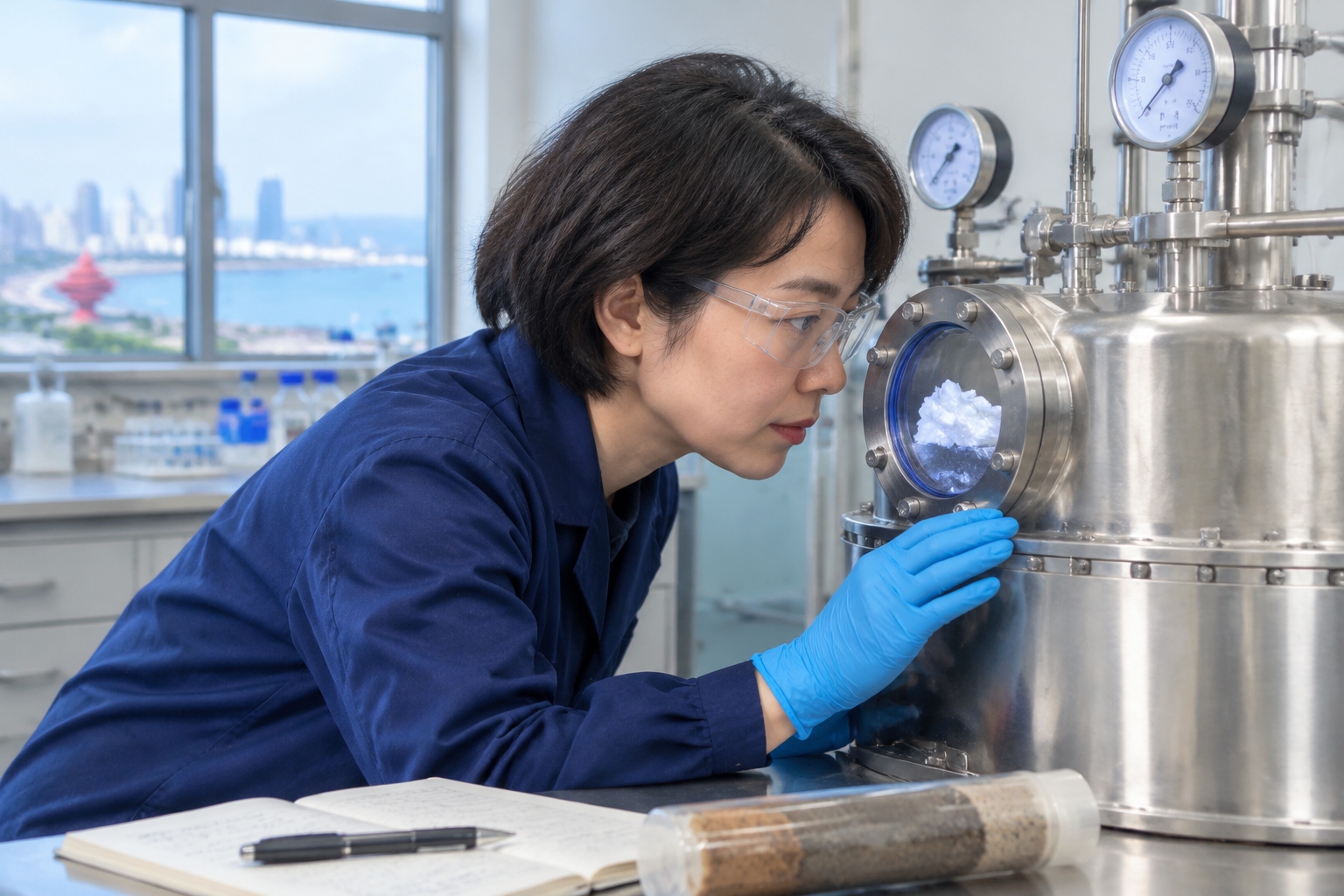
In a marine lab in Qingdao, a high-pressure vessel sits behind a safety shield. Inside, water, sediment and carbon dioxide are held at a few degrees Celsius and dozens of atmospheres. A researcher watches through a sapphire window as a white, ice-like solid begins to form. That solid is CO2 hydrate—a cage of water molecules holding CO2. The experiment is small. The question behind it is large: after carbon is captured, where does it go?
Carbon capture and storage (CCS) is often described as a capture problem. It is not. Capture is the front end. Storage is the endpoint, and it is the part that determines whether the whole chain is real. A power plant or cement kiln can capture a million tonnes of CO2 a year; that stream has to be compressed, transported and injected into a formation that will keep it out of the atmosphere for centuries. Without that, capture is a very expensive way to produce a gas.
Most operational CCS today sends CO2 into deep saline aquifers or depleted oil and gas fields. Norway’s Sleipner project has injected about 1 million tonnes a year into a saline formation since 1996. Northern Lights, also in Norway, is designed for 1.5 million tonnes a year in its first phase. These are industrial-scale, regulated projects. Deep-sea hydrate storage is not in that league. It is a research route, with lab work and limited sea trials, and no commercial project. That distinction matters.
How CO2 hydrates form—and why the deep sea matters
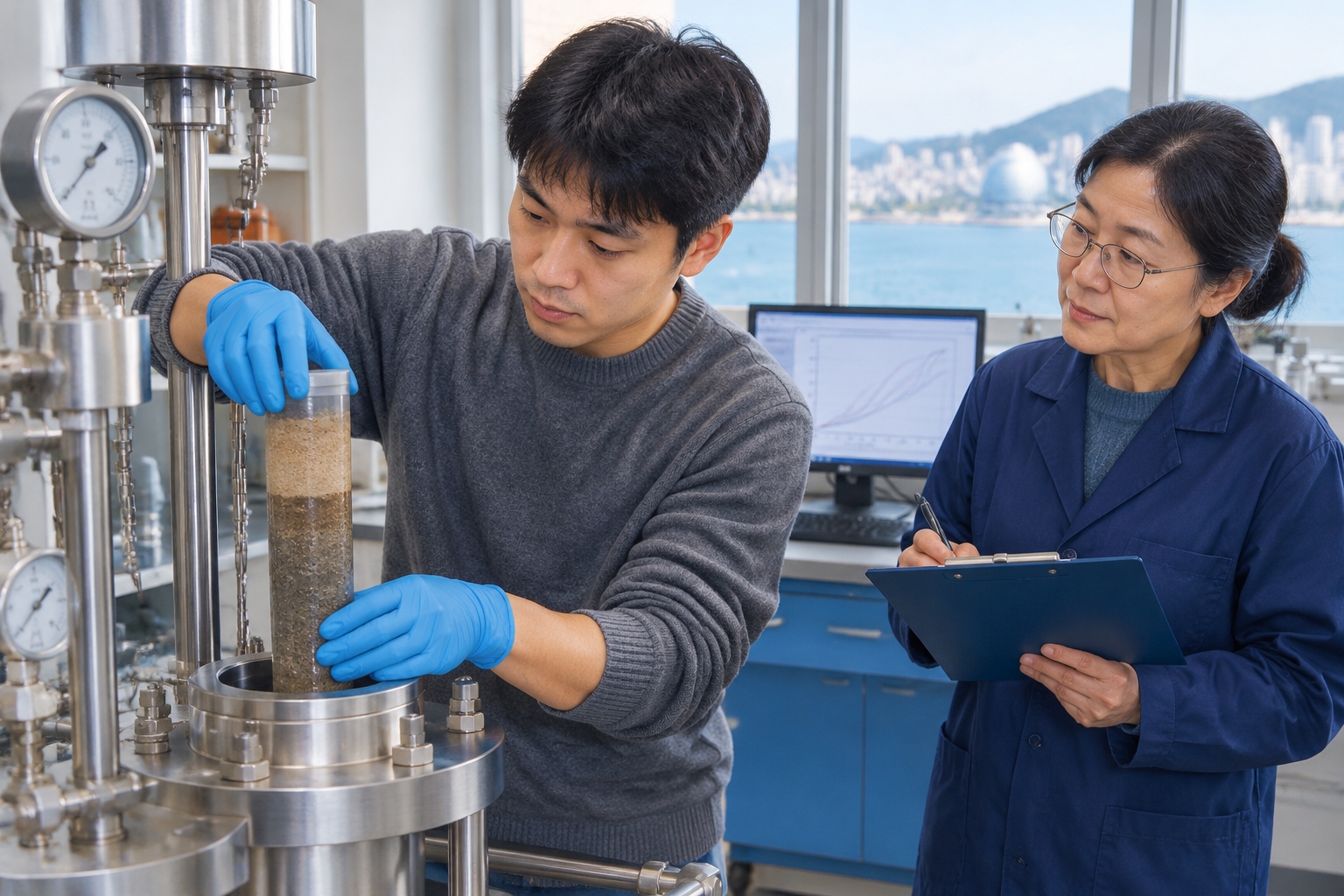
CO2 hydrate is not a chemical reaction in the usual sense. It is a physical structure. Under low temperature and high pressure, water molecules arrange themselves into cages around CO2 molecules. The result is a solid that looks a little like dirty ice. It can form in sediments, filling pore spaces and reducing permeability.
The stability conditions are the key. At around 10°C, CO2 hydrate needs roughly 4.5 megapascals of pressure to remain stable—about the pressure at 450 meters of water depth. At 1,000 meters, pressure is about 10 megapascals and temperature is often 4–6°C. That is comfortably inside the hydrate stability zone. In deep-sea sediments, the cold and pressure do much of the containment work.
But “stable” does not mean simple. Salinity shifts the boundary. Sediment type matters. If hydrate forms too quickly around an injection well, it can clog the pores and stop injection. If it forms too slowly, CO2 may migrate before it is locked. Engineers would need to manage the injection rate, the temperature of the CO2 stream, and the pressure in the formation. The appeal is that the hydrate itself can help seal the store. The risk is that the same process can make the store hard to control.
This is also not “dumping CO2 into the ocean.” The idea is injection into sediments beneath the seabed, usually several hundred meters to more than a kilometer below the seafloor. Direct ocean storage is a different proposal, and it is restricted under international marine rules. Sub-seabed storage is treated more like geological storage, but the legal picture is still developing.
Not all storage routes face the same risks
Comparing storage routes is not a beauty contest. Each has a different geology, cost profile and monitoring burden.
Depleted oil and gas fields
These are well understood because the industry already drilled them. Infrastructure can sometimes be reused. The weaknesses are geography and legacy wells. Old wells can leak if they are not properly plugged, and pressure management can be tricky. Not every country has suitable fields near its emissions.
Deep saline aquifers
These are the workhorse of CCS. They are widespread, large and proven at scale. The main requirements are a porous rock layer and a caprock above it that does not leak. Monitoring is possible but not trivial. Sleipner and Northern Lights show the route can work; they do not show it is easy everywhere.
Mineral carbonation
CO2 reacts with certain rocks to form solid carbonate minerals. This is the most permanent option in principle. Projects in basalts, such as CarbFix in Iceland, have shown rapid mineralization. The limits are speed, water use and site-specific geology. It is not a drop-in solution for every emitter.
Deep-sea hydrate storage
The potential advantage is offshore capacity near some coastal industrial regions, plus the self-sealing behavior of hydrates. The disadvantages are early-stage technology, difficult monitoring and marine environmental questions. It should be treated as one option in a portfolio, not a replacement for proven routes.
The hard part: monitoring a store you cannot see
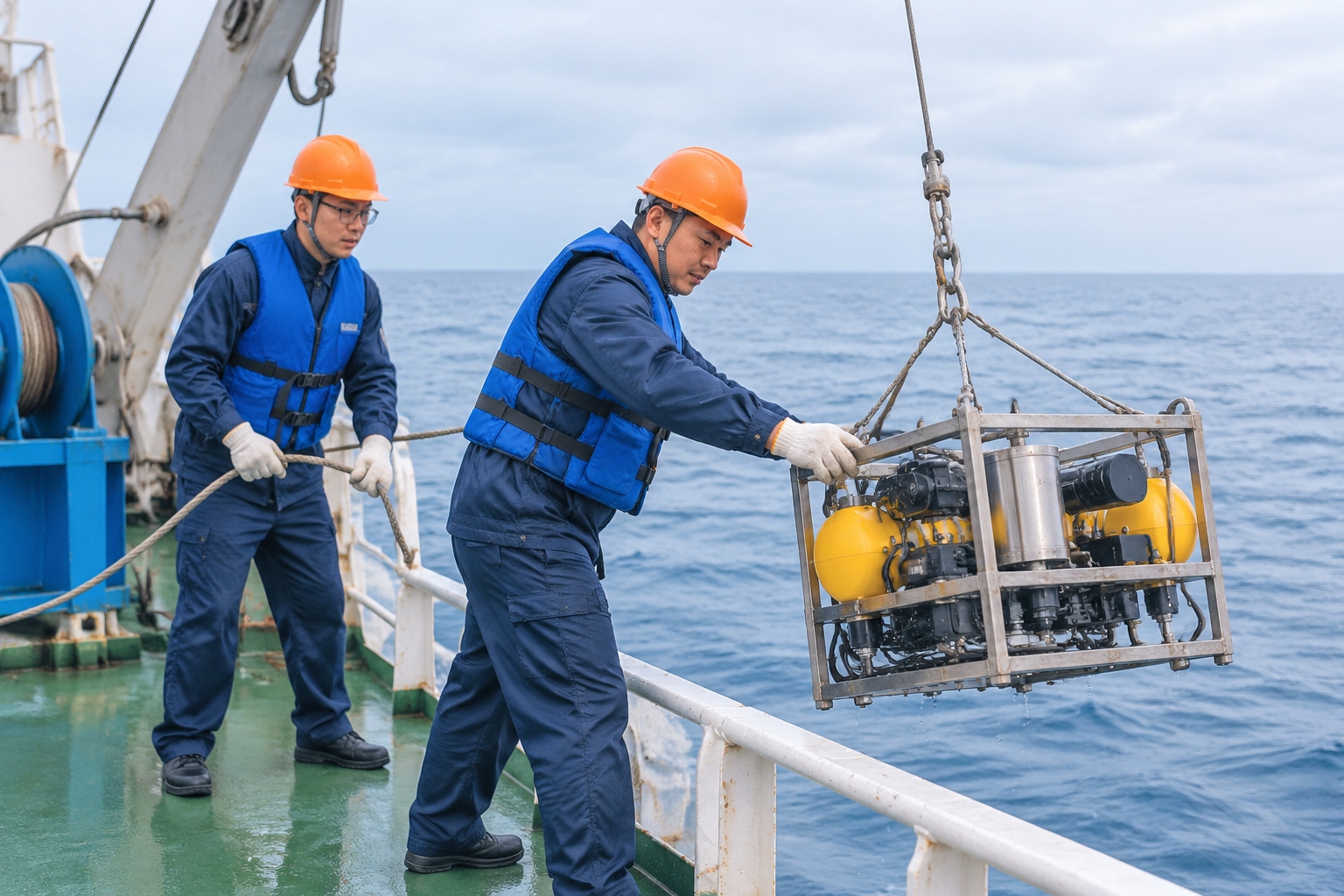
For any sub-seabed store, the public question is simple: will it stay there? The technical answer is a monitoring, reporting and verification (MRV) system. That means pressure sensors in the injection well, seismic surveys of the CO2 plume, seabed chemistry sampling, acoustic leak detection and, in some cases, autonomous underwater vehicles. Regulators want to see not just that a project works on day one, but that it can be watched for decades.
Leakage risk from a deep-sea hydrate store is not mainly a sudden blowout. It is more likely to be slow seepage through a fault, a poorly sealed well, or displaced brine moving through sediments. Hydrate dissociation could occur if temperature or pressure changes, but the deep sea is relatively stable. The bigger operational risk may be that injection creates fractures or changes stress in the sediment. That is why site characterization matters more than a single clever technology.
Natural CO2 seeps and natural hydrate deposits give scientists analogues. They show how CO2 moves in marine sediments over long periods. They do not answer every question about a pressurized industrial store. The monitoring plan has to be designed for the specific site, and the results have to be public enough to earn trust.
Lab tests, sea trials, and the commercial gap
Publicly documented work on CO2 hydrate storage is mostly at laboratory scale. Researchers form hydrates in sediment cores, measure permeability changes, and run computer models of plume behavior. There have been marine field experiments on hydrate-bearing sediments, and CO2 has been injected into sub-seabed formations in other CCS projects, but they are not commercial hydrate storage projects. No one is operating a deep-sea CO2 hydrate storage facility at industrial scale today.
That gap is not a reason to dismiss the idea. It is a reason to be precise. A lab test can show that hydrate forms and reduces permeability. It cannot show how a 1-million-tonne-per-year injection project behaves over 30 years. A sea trial can show that equipment works in cold, deep water. It cannot settle liability, cost or environmental impact. Commercial demonstration would need a site with good caprock, a monitoring plan, a regulatory pathway and a business model—likely a carbon price or a storage fee.
The cost question is unresolved. CCS already faces an energy penalty: capturing and compressing CO2 takes energy, and storage adds transport and injection costs. Deep-sea operations add vessels, subsea equipment and long-term monitoring. The route may only make sense where onshore storage is scarce and offshore sediments are close to industrial clusters. That is a real niche, but it is not universal.
What would make the hydrate route credible
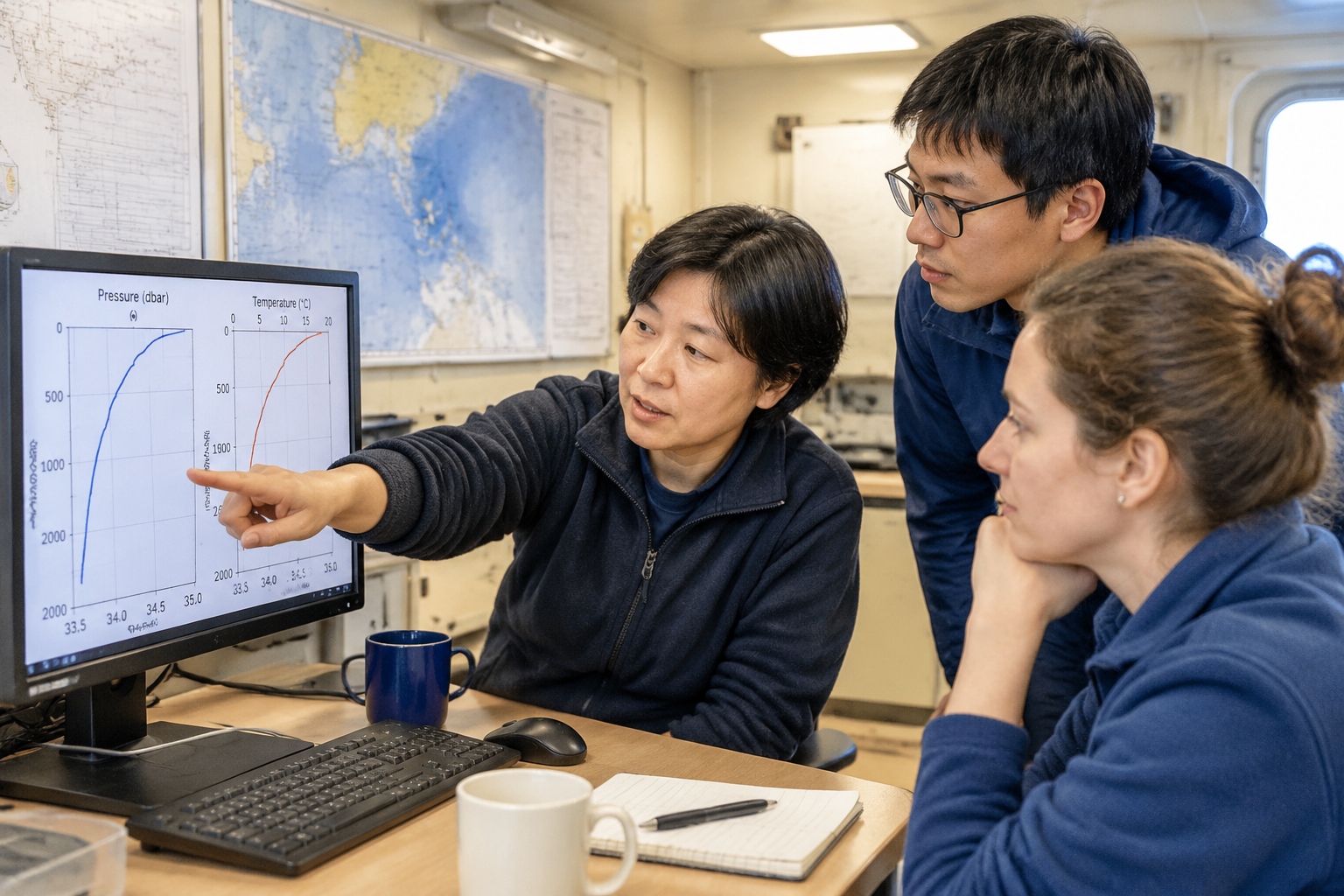
Three things would move deep-sea hydrate storage from a promising research idea to a serious option. First, a field demonstration at a meaningful scale—not a lab experiment, not a single injection test, but a multi-year project with published pressure, temperature and plume data. Second, a monitoring system that regulators and independent scientists accept, including baseline studies of the seabed ecosystem. Third, a clear legal framework for sub-seabed CO2 storage, including long-term liability.
None of that is impossible. The reason to watch this route is not that it will replace saline aquifers tomorrow. It is that the storage question is becoming the bottleneck for carbon capture. If the world wants to capture more CO2, it will need more than one kind of store. Deep-sea hydrates might be one—if the data hold up.
Back in the Qingdao lab, the white hydrate in the vessel is still a small sample. The researcher logs the pressure, takes a photo, and moves to the next test. That is how a storage route begins: not with a headline, but with a measurement that someone else can check.