

Introduction: A Midnight Bowl of Noodles
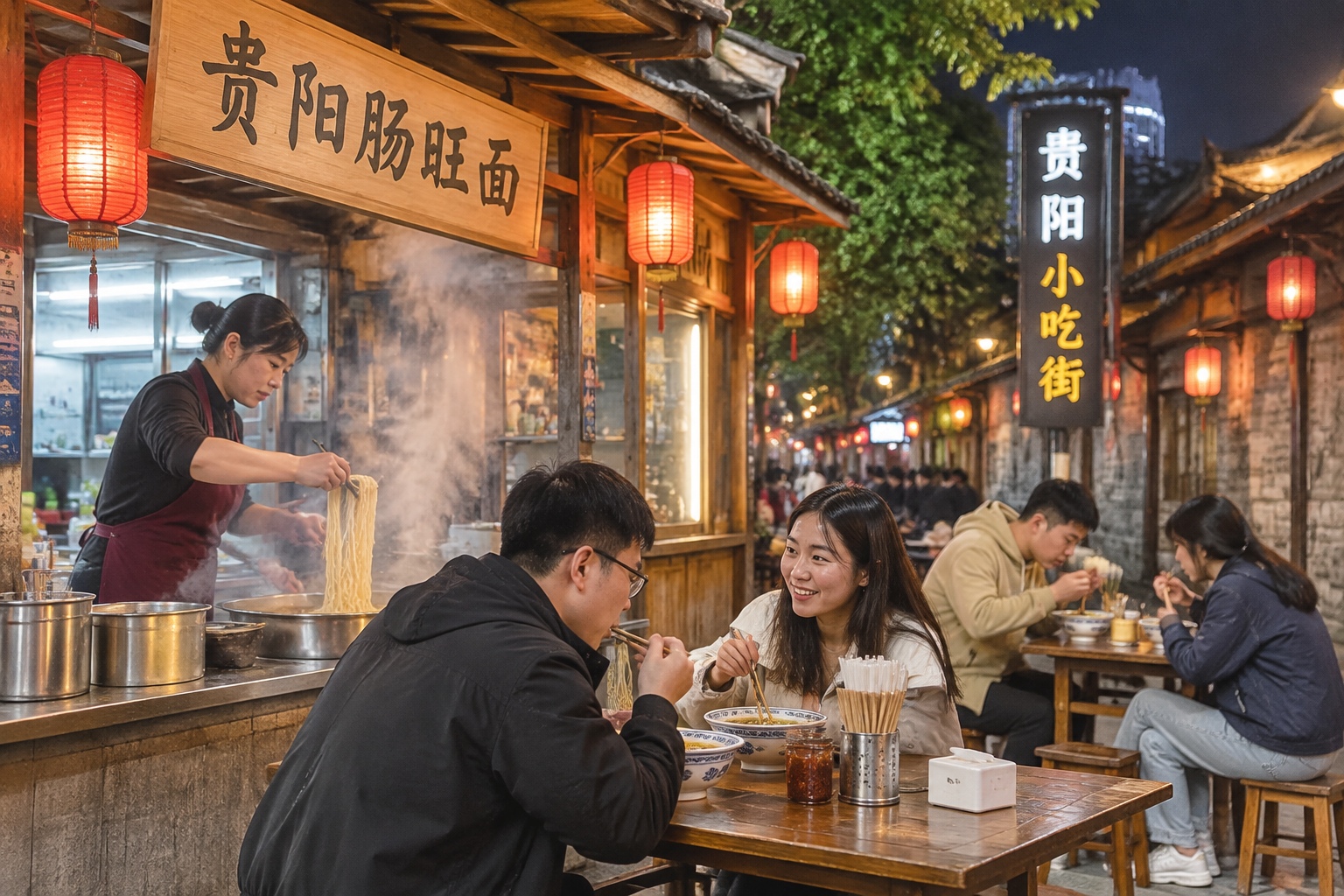
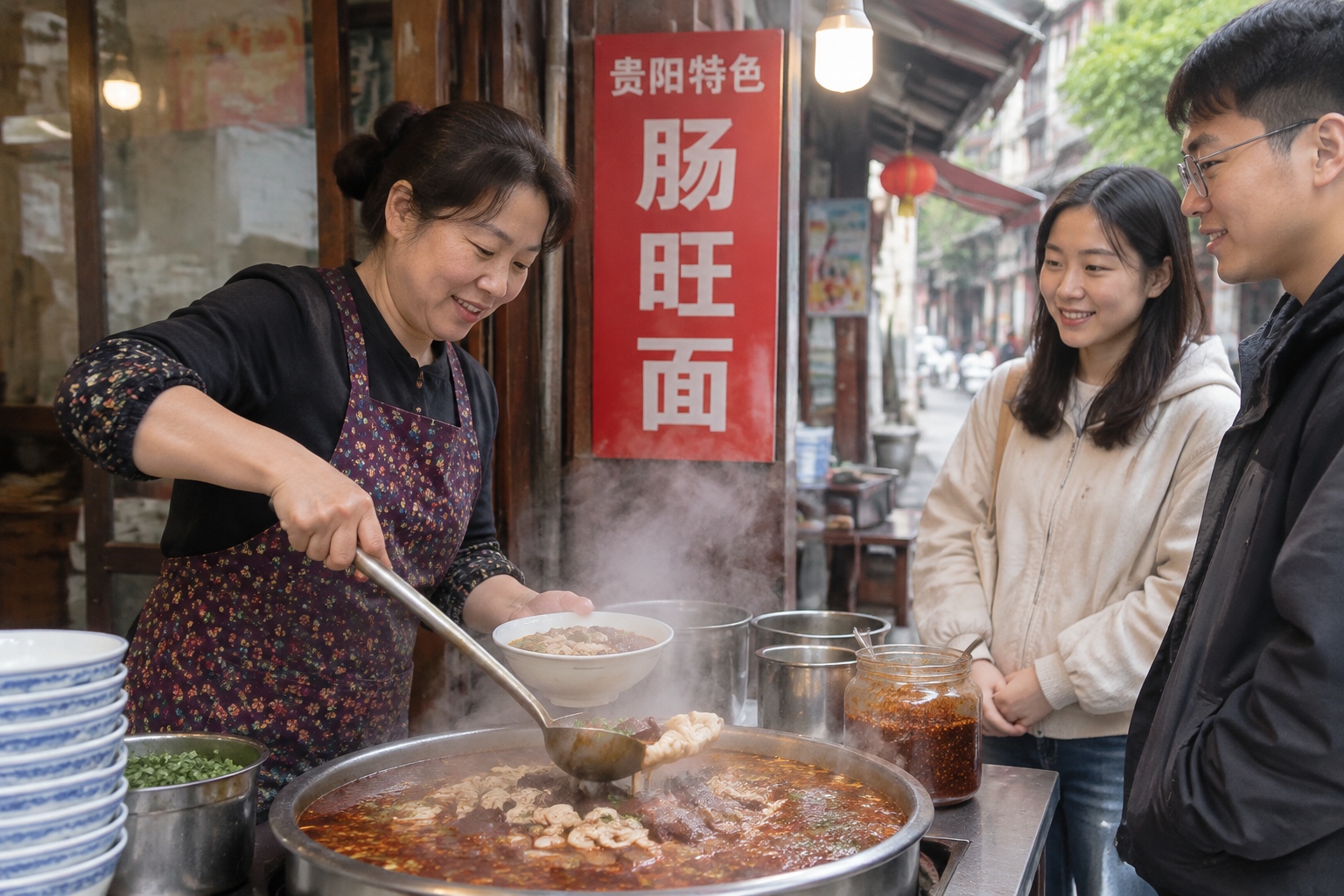
It’s past 11 p.m. in Guiyang, the capital of Guizhou province in southwest China. The air smells of charcoal and chili. On a narrow alley near the city center, a small noodle stall is still buzzing. Mrs. Chen, 58, has been running this stall for 22 years. Her specialty is changwang mian (intestine and blood noodle soup), a local classic. ‘Tourists snap photos, but my regulars are taxi drivers, night-shift workers, and students who’ve been coming since they were kids,’ she says, stirring a bubbling pot.
This scene captures something essential about Guizhou snacks. They aren’t just listed in travel guides; they are the rhythm of everyday life. But in recent years, the province’s street food has also attracted curious visitors and young entrepreneurs, generating subtle changes. To understand what these snacks mean today, I asked locals across generations—street vendors, office workers, retirees, and chefs—to share their stories.
The Daily Bowl: Snacks as Routine
For most Guizhou locals, snacks are not occasional treats; they are breakfast, lunch, and late-night comfort. ‘I have siwawa (cold spring rolls) almost every afternoon from a cart near my office,’ says Xiao Li, 32, an accountant. ‘It’s cheap, fresh, and the vendor remembers my preference for extra peanut sauce.’
Similarly, sour soup fish, a Miao and Dong specialty, is a frequent family dinner, not just a tourist spectacle. ‘My grandmother used to make it with wild tomatoes from our village,’ recalls Ms. Yang, a university staff member. ‘Now we buy packaged sour soup base, but the taste still brings us together every weekend.’ Locals emphasize that these foods are tied to memory and community—more than what you see in Instagram posts.
Street Stalls vs. Snack Chains
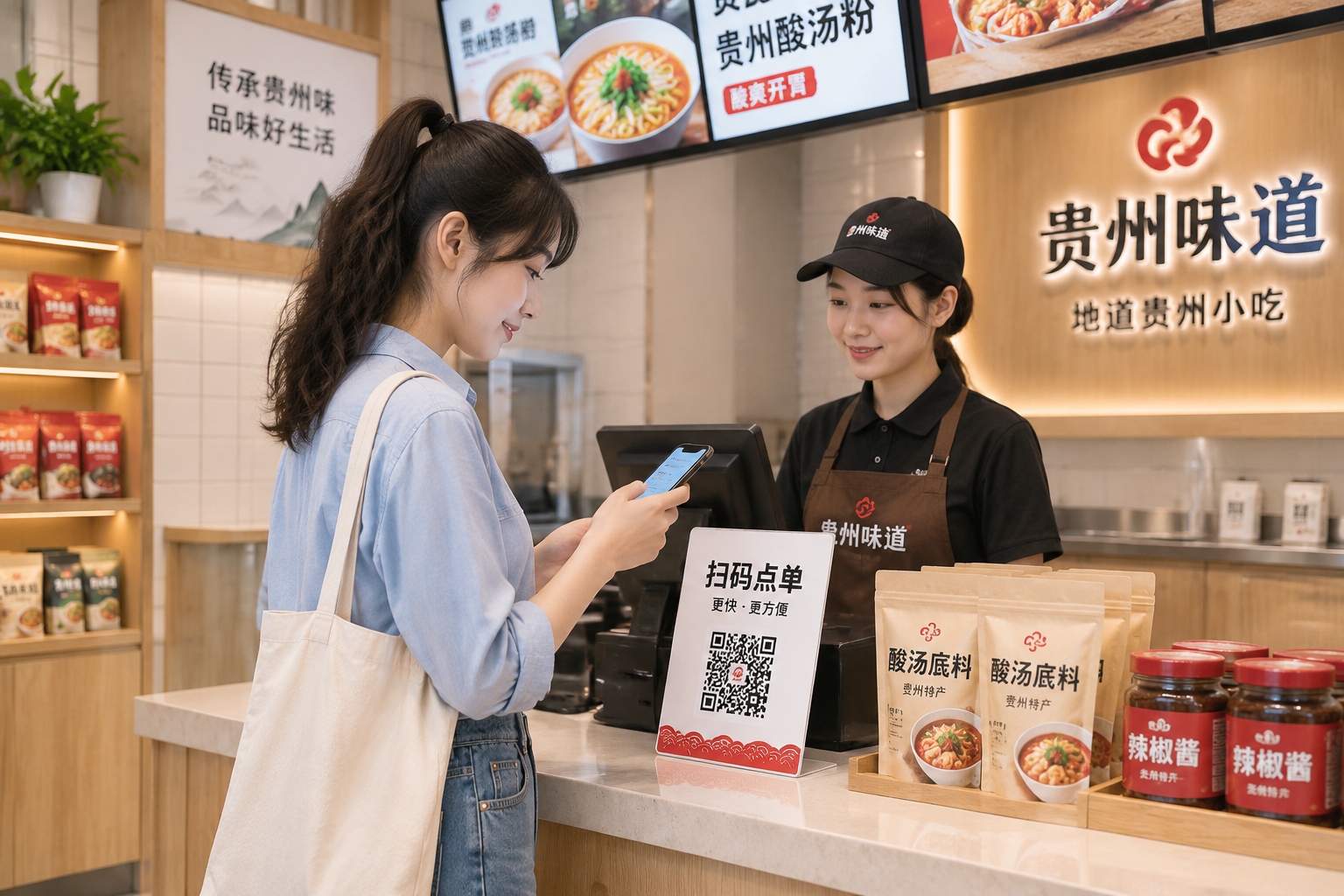
One visible change is the rise of chains. Take huajiang (grilled fish in chili) and changwang mian: several brands now have standardized shops with QR code ordering. ‘I used to worry they’d lose the soul,’ says Mr. Wang, 45, a cab driver. ‘But some chains actually keep the original recipes. The difference is, they’re cleaner and faster.’ Still, many insist that the best flavor comes from the old stalls. ‘The charcoal fire, the worn-out bench, the vendor’s chat—that’s part of the taste,’ adds a retired teacher, Grandma Liu.
Changes: From Local to International
Guizhou snacks have also traveled beyond the province. In cities like Beijing and Shanghai, restaurants specializing in Guizhou cuisine have popped up, often run by young migrants who grew up with the flavors. ‘I opened my shop in Shanghai because my colleagues always asked me to bring back homemade chili sauce,’ says Chef Zhang, 29. ‘Now I serve luosifen (snail rice noodles) and erkuai (rice cake) with a twist—adding cheese or bacon for local palates. Some Guizhou regulars scold me, but most locals love it.’
Technology has also played a role. Delivery platforms now offer Guizhou snacks 24/7. A college student, Liu, says: ‘I can order qiandai jiao (tofu dumplings) at 2 a.m. from a stall that used to close at midnight.’ However, delivery means the texture suffers—something the older generation laments. ‘Snacks should be eaten on the spot,’ insists Mrs. Chen, the noodle vendor.
Preserving Authenticity Amid Change
Despite the modernization, many locals are confident that the core of Guizhou snacks remains intact. ‘The soul is in the ingredients: fresh chili, fermented beans, wild herbs,’ says a food blogger from Guiyang. ‘As long as we keep those, the food will stay authentic even if the setting changes.’
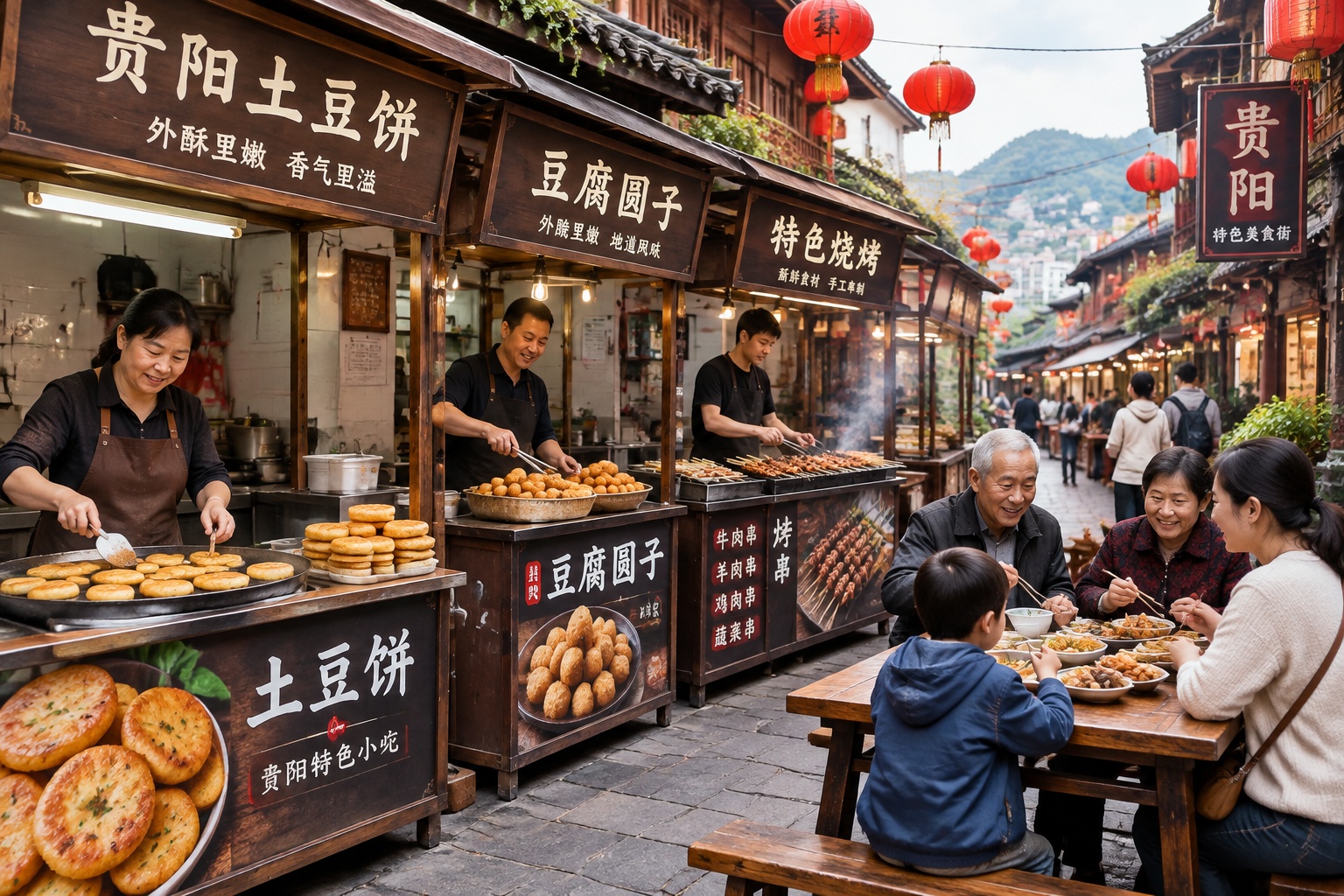
Neighborhoods like Erqi Road and the ‘Snack Street’ near Jiaxiu Tower still bustle with traditional vendors who have been there for decades. Here, you can see biang biang mian being pulled, potato cake sizzling on griddles, and shizi (lion’s head meatballs) steamy in wooden trays. Tourists wander with cameras, but the regulars just walk up and order without a menu—a quiet sign of enduring routines.
Conclusion: More Than a Meal
What I learned from these conversations is simple: Guizhou snacks are not only for eating. They are threads that connect generations, memories, and a sense of place. The next time you see a line outside a humble stall in Guiyang, know that it’s likely filled with locals who have been coming here long before any travel influencer discovered it. That’s the real taste of Guizhou.