

A tucked hand, a gripped wrist
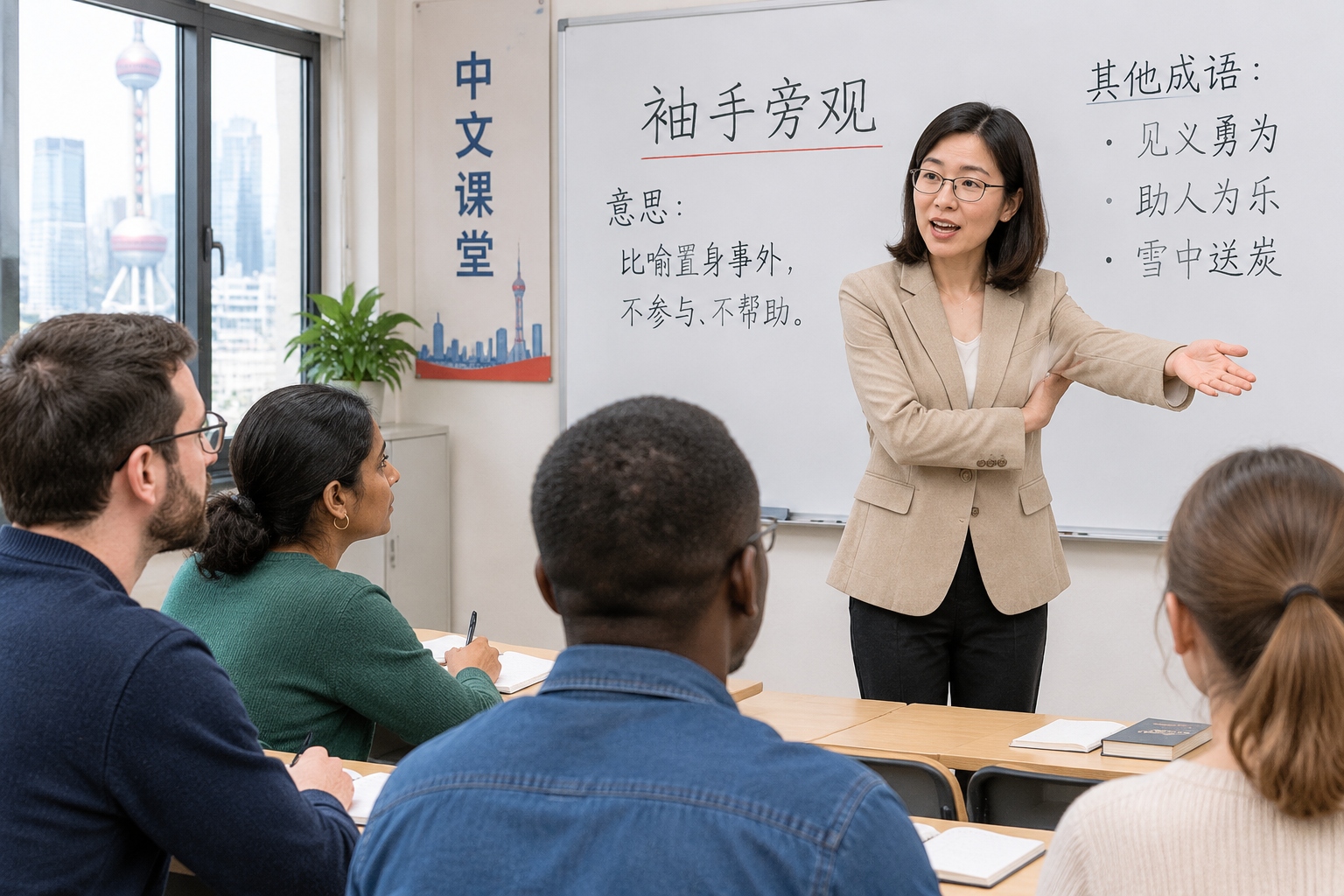
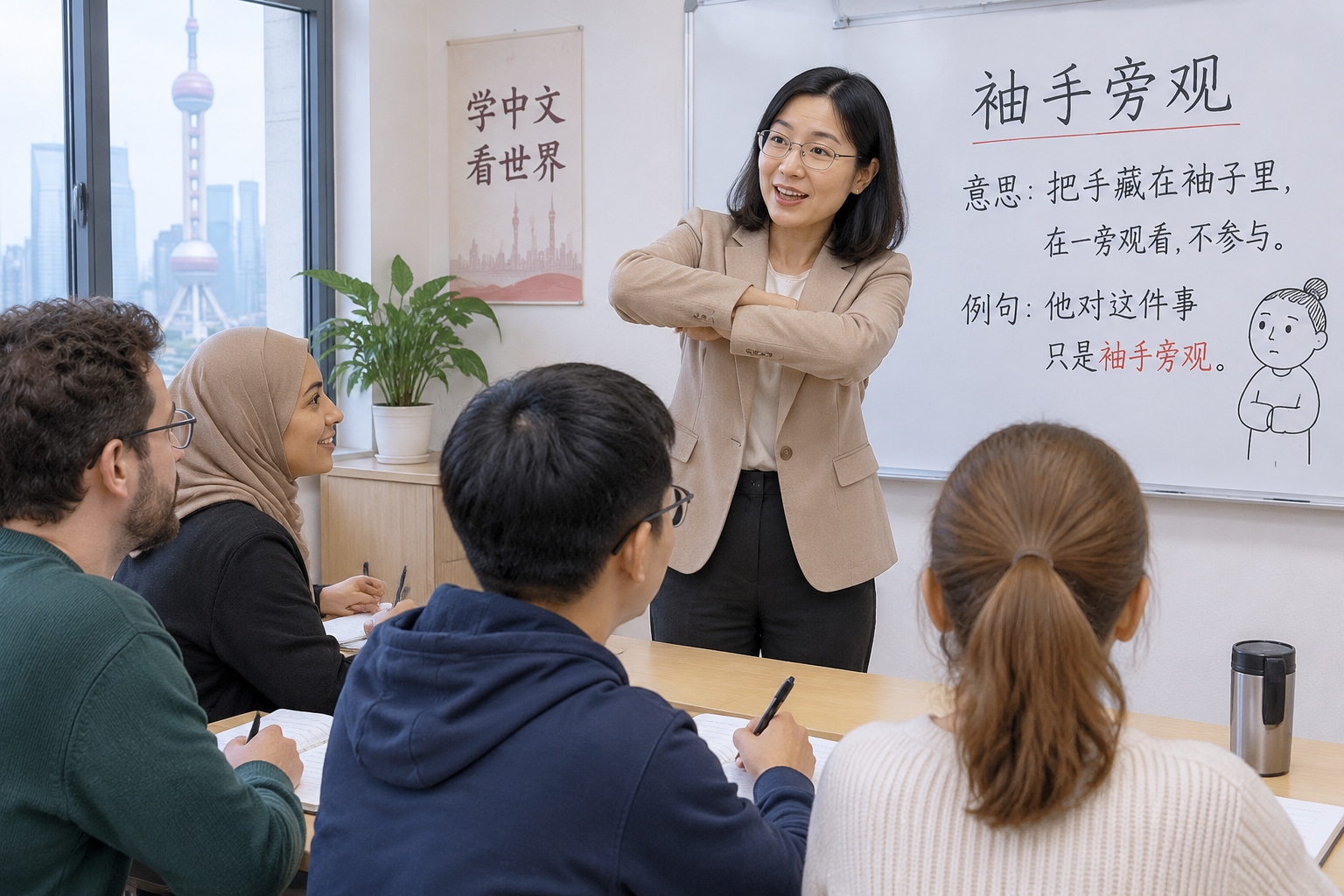
A Chinese-language teacher in Shanghai asks her adult students to tuck their hands into their sleeves. Then she writes 袖手旁观 on the board. The phrase pictures hands inside sleeves; in use it means standing by without helping. The gesture is easier to remember than a definition. Many Chinese expressions about social life and emotion begin with the body.
Earlier parts of this series looked at body parts and clothing as markers of role, function, and situation. This last layer is more active. The body performs actions, feels emotions, and passes through ages. Once you see the system, a large group of words becomes less arbitrary.
1. Actions become social interaction
Social relations are carried out through the body: bowing, shaking hands, patting a shoulder. Chinese fixes some gestures into words for attitude, relationship, and strategy. 袖手 means putting the hands into the sleeves; 袖手旁观 means to look on with folded arms. Its opposite is 插手, to reach a hand in, meaning to intervene. 拱手 is to cup one hand over the other in respect; 拱手让人 means to yield something respectfully, often with a trace of helplessness.
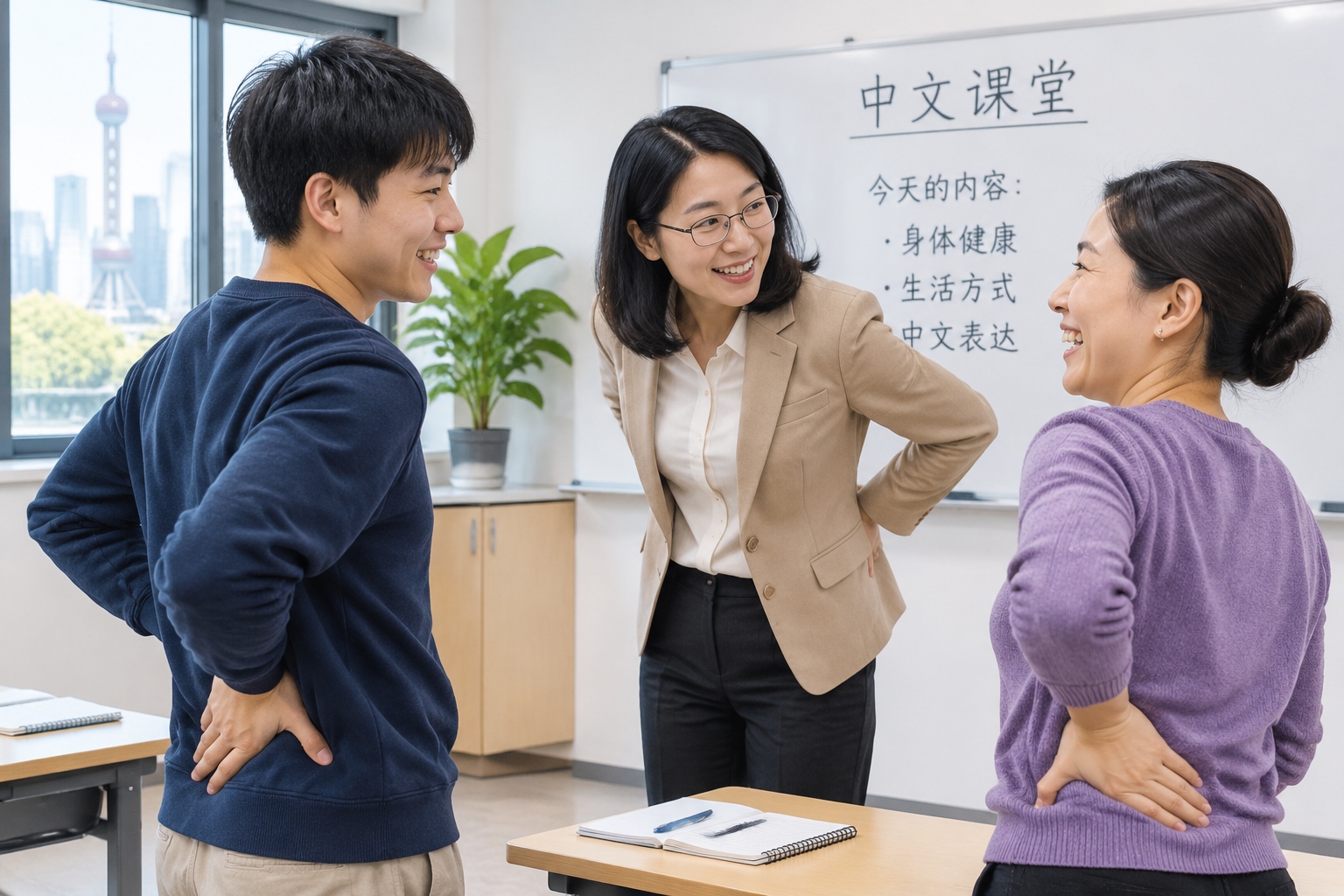
扼腕 is to grip one wrist with the other hand, a gesture of regret or indignation; 扼腕叹息 is to sigh while gripping the wrist. 折腰 is to bend at the waist, hence to submit. Tao Yuanming said he would not 为五斗米折腰, bend his waist for five pecks of rice. 撑腰 is to support the lower back, hence to back someone up. Support helps a person stand; it does not do the work for them. 掣肘 is to pull at someone’s elbow, meaning to restrain. 染指 is to dip a finger into something, meaning to reach improperly into profits. 指手画脚 is to point and draw in the air, meaning to order people around; 指鹿为马 means confusing right and wrong; 指桑骂槐 means indirect scolding.
Feet follow the same logic. 失足 is to lose footing, hence to fall into error. 立足 is to have a foothold, hence to have a basis or position. 插足 is to put a foot in, hence to intrude. 涉足 is to wade in, hence to enter a field. 跺脚 is to stamp in anxiety; 跳脚 is to stamp in anger; 蹑手蹑脚 is to move on tiptoe; 笨手笨脚 is clumsy; 毛手毛脚 is careless or too forward; 动手动脚 is to get fresh. Chinese does not only say support, oppose, intervene, or submit abstractly. It draws the mechanics of social relations with a body.
2. Sensations become emotion
Chinese can say 我很生气, I am angry, or 我很害怕, I am afraid. Yet many vivid expressions treat emotion as a change inside the body. 肝火 is liver fire, meaning anger; traditional Chinese medicine links the liver to anger, so 肝火旺 or 大动肝火 means to be quick to rage. 心肠 is heart and intestines, meaning disposition: 心肠好 is kind-hearted, 铁石心肠 is hard-hearted. 肺腑 is lungs and viscera, meaning the inner heart: 肺腑之言 is a heartfelt word. 肝胆 is liver and gall, meaning sincerity and courage: 肝胆相照 is to treat each other honestly.
胆, the gall bladder, is especially revealing. 胆量 is courage; 胆识 is courage and judgment; 胆怯 is timid; 胆战心惊 is trembling with fear; 提心吊胆 is anxious; 胆大包天 is recklessly bold; 吓破胆 is frightened out of one’s wits. Traditional medicine treats the gall bladder as the organ of decision, so a strong gall bladder means courage. Most speakers do not think about the theory, but the association remains. Knowing gall bladder equals courage unlocks a whole set.
心, the heart, is the larger emotional center. 心花怒放 is joy blooming; 心灰意冷 is discouraged; 心猿意马 is a restless mind; 心慌意乱 is flustered; 心满意足 is satisfied; 心寒 is bitterly disappointed; 心疼 is tender concern or pain for someone; 心酸 is sad and sour; 心虚 is guilty or lacking confidence; 心直口快 is frank; 心狠手辣 is ruthless. The heart is a meeting point of feeling, will, and moral sense.
Intestines and belly join in. 肝肠寸断 is grief that cuts the liver and intestines into inches. 牵肠挂肚 is to worry constantly. 搜肠刮肚 is to think hard. 小肚鸡肠 is petty. 满腹狐疑 is full of suspicion; 满腹经纶 is full of learning. Brows and eyes are another stage: 眉开眼笑, 愁眉苦脸, 扬眉吐气, 喜上眉梢, 眉来眼去, 白眼, 青眼, 红眼, 冷眼, 眼红, 眼高手低. Hair joins too: 怒发冲冠, 令人发指, 鹤发童颜, 白发, 青丝. Hair marks both age and emotion.
3. States mark life stages
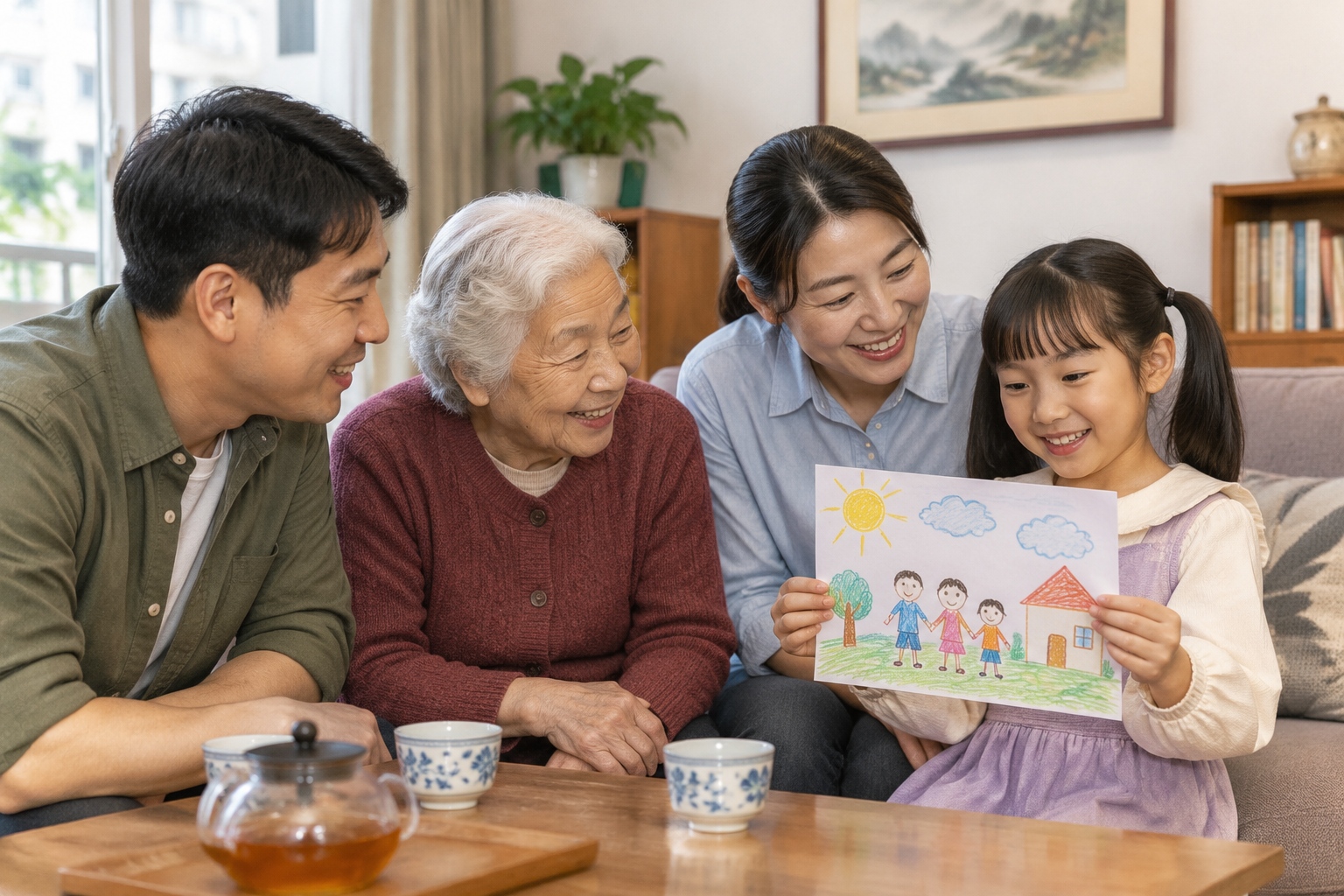
Chinese uses physical states to mark stages of life. 襁褓 is the cloth that wraps an infant, hence infancy. 垂髫 is hair hanging down, hence childhood. 总角 is hair tied into two horns, hence childhood; 总角之交 is a childhood friend. 及笄 is a girl’s fifteenth year, when she pinned up her hair and inserted a hairpin. 弱冠 is a man’s twentieth year, when he received a cap in a coming-of-age ceremony. 黄发 is yellowing hair, hence old age; 垂髫 and 黄发 often appear together as 黄发垂髫, the old and the young. 鹤发童颜 is white hair and a rosy face. 白发 is old age; 青丝 is black hair, also youth or affection.
These words may sound ancient, but they still appear in literature, idioms, and formal writing. A little knowledge of old customs makes them clear: babies were swaddled, children wore hair in knots, girls had a hairpin ceremony, boys a capping ceremony, and old people’s hair turned yellow or white. A body state is a social clock. Some words have moved into modern speech. 发小 means a friend who grew up with you; 结发夫妻 means a first marriage, from an old wedding rite of tying hair.
4. Body words carry moral judgment
Body words do not only describe. They evaluate. 衣冠禽兽 is a beast in human clothes, a harsh insult for someone cruel and hypocritical. 衣冠楚楚 is neatly dressed, often with a raised eyebrow about outward respectability. 人面兽心 is a human face and a beast’s heart. 心狠手辣 is cruel; 心慈手软 is kind. 铁石心肠 is hard-hearted. 肝胆相照 is honest; 肝脑涂地 is utterly loyal. 肺腑之言 is heartfelt. 满腹经纶 is learned. 小肚鸡肠 is petty. 手足无措 is flustered. 袖手旁观 is cold detachment. 拱手让人 is reluctant yielding. 仰人鼻息 is humiliating dependence.
These phrases come with praise or blame. A good heart is kind; a cruel heart is vicious. Liver and gall suggest sincerity; human clothes on a beast suggest hypocrisy. To support a waist is to back someone; to bend the waist is to submit. A foothold is stability; a slip is a fall. For learners, the definition alone is not enough. The emotional color matters.
5. Why the body performs social life and emotion
Four reasons stand out. Body action is the prototype of social interaction. Emotion is first felt as bodily change: heartbeat, flushed face, trembling, rising heat. Life stages are marked by body states: swaddling, hanging hair, hairpins, caps, white hair. And Chinese word-building is flexible. One 心 forms 心肠, 心腹, 心机, 心术, 心寒, 心酸, 心疼, 心虚. One 胆 forms 胆量, 胆识, 胆怯, 胆战心惊. One 手 forms 袖手, 拱手, 扼腕, 撑腰, 折腰, 染指, 指手画脚. Grouped by action, emotion, and age, the vocabulary becomes a network rather than a list.
6. How learners can approach this vocabulary
Start with actions: 袖手, 拱手, 扼腕, 撑腰, 折腰, 掣肘, 染指, 指手画脚, 立足, 失足, 插足, 涉足. For each, see the movement first, then the social meaning. Then group by organ and emotion. Heart: 心花怒放, 心灰意冷, 心猿意马, 心寒, 心酸, 心疼, 心虚. Gall bladder: 胆量, 胆识, 胆怯, 胆战心惊, 提心吊胆. Liver: 肝火, 肝肠寸断, 肝胆相照. Intestines and belly: 牵肠挂肚, 搜肠刮肚, 小肚鸡肠. Brows and eyes: 眉开眼笑, 愁眉苦脸, 扬眉吐气, 白眼, 青眼, 红眼. Memorize the fixed link between organ and feeling.
Then group by age: 襁褓, 垂髫, 总角, 及笄, 弱冠, 黄发, 白发, 鹤发童颜, 结发夫妻, 发小. Learn praise and blame with the phrase: 心狠手辣 is negative, 心慈手软 neutral to positive; 袖手旁观 negative, 撑腰 neutral to positive; 衣冠禽兽 strongly negative, 衣冠楚楚 often judgmental. Keep the picture: a wrist gripped in regret, a hand supporting a waist, grief cutting the intestines, hair lifting a hat. The clearer the picture, the fewer mistakes.
Conclusion
Chinese uses body action, sensation, and state to perform social interaction, emotion, and the stages of life. 袖手 is standing by; 拱手 is yielding; 扼腕 is regret; 撑腰 is support; 折腰 is submission; 掣肘 is restraint; 染指 is improper involvement; 指手画脚 is bossy pointing. 立足 is a foothold; 失足 is a fall; 插足 is intrusion. 肝火 is anger; 胆量 is courage; 心花 is joy; 肝肠寸断 is grief; 牵肠挂肚 is worry; 眉开眼笑 is delight. 襁褓 is infancy; 垂髫 and 总角 are childhood; 及笄 and 弱冠 are adulthood; 黄发 and 白发 are old age. 衣冠禽兽 is hypocrisy; 肝胆相照 is sincerity; 心狠手辣 is cruelty; 心慈手软 is kindness.
Taken together, the series shows a full picture: the body is a map, where position is circumstance; a tool, where function is role; a stage, where action is interaction; a container, where sensation is emotion; and a clock, where state is age. For learners, this system does more than help memorize words. It shows how Chinese organizes abstract social meaning through concrete bodily experience. Next time you see 袖手旁观, 扼腕叹息, 肝肠寸断, or 总角之交, picture the body first. Then think about the social and emotional world behind it. Chinese is not only spoken. It is acted out, felt, and lived.