

Introduction
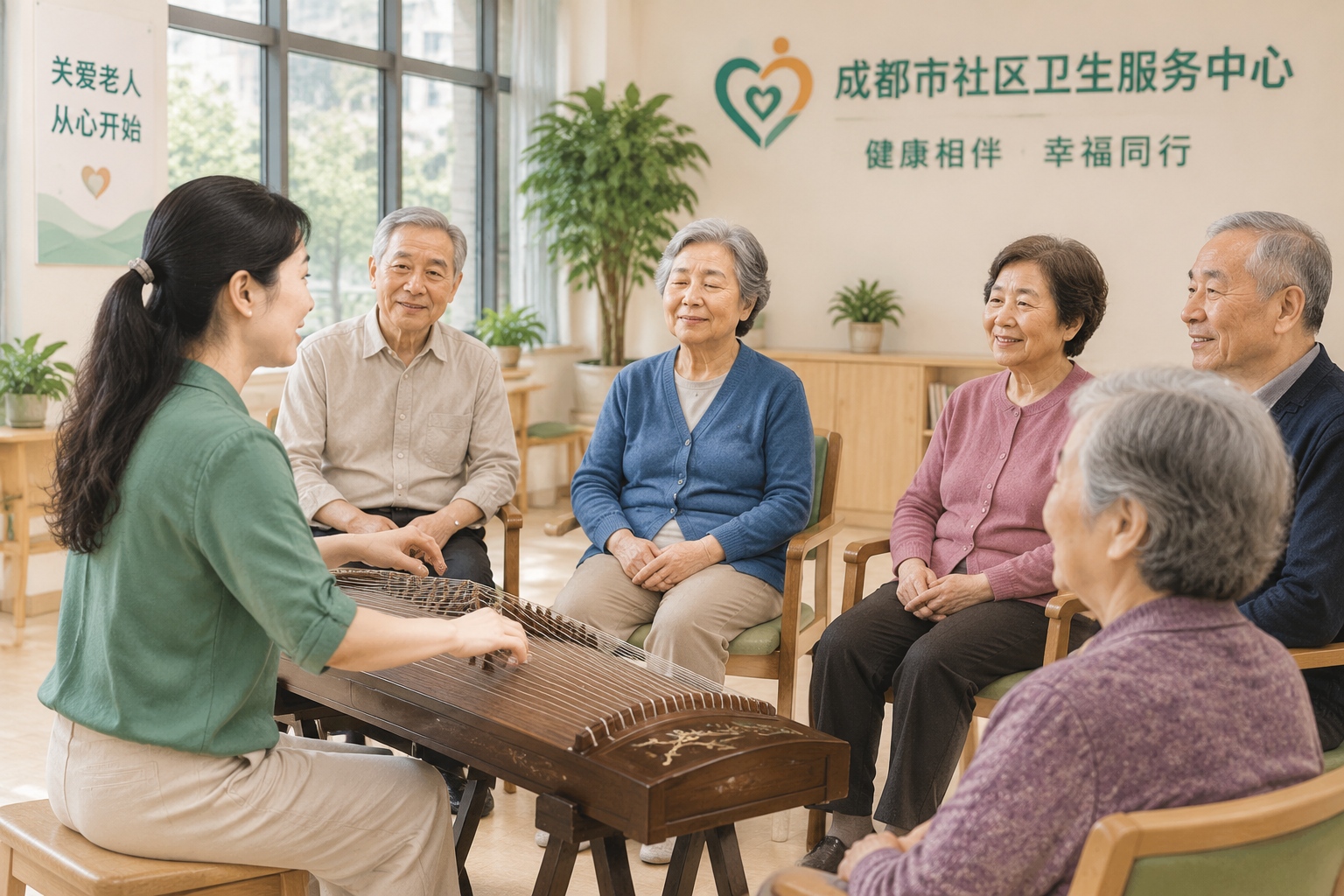
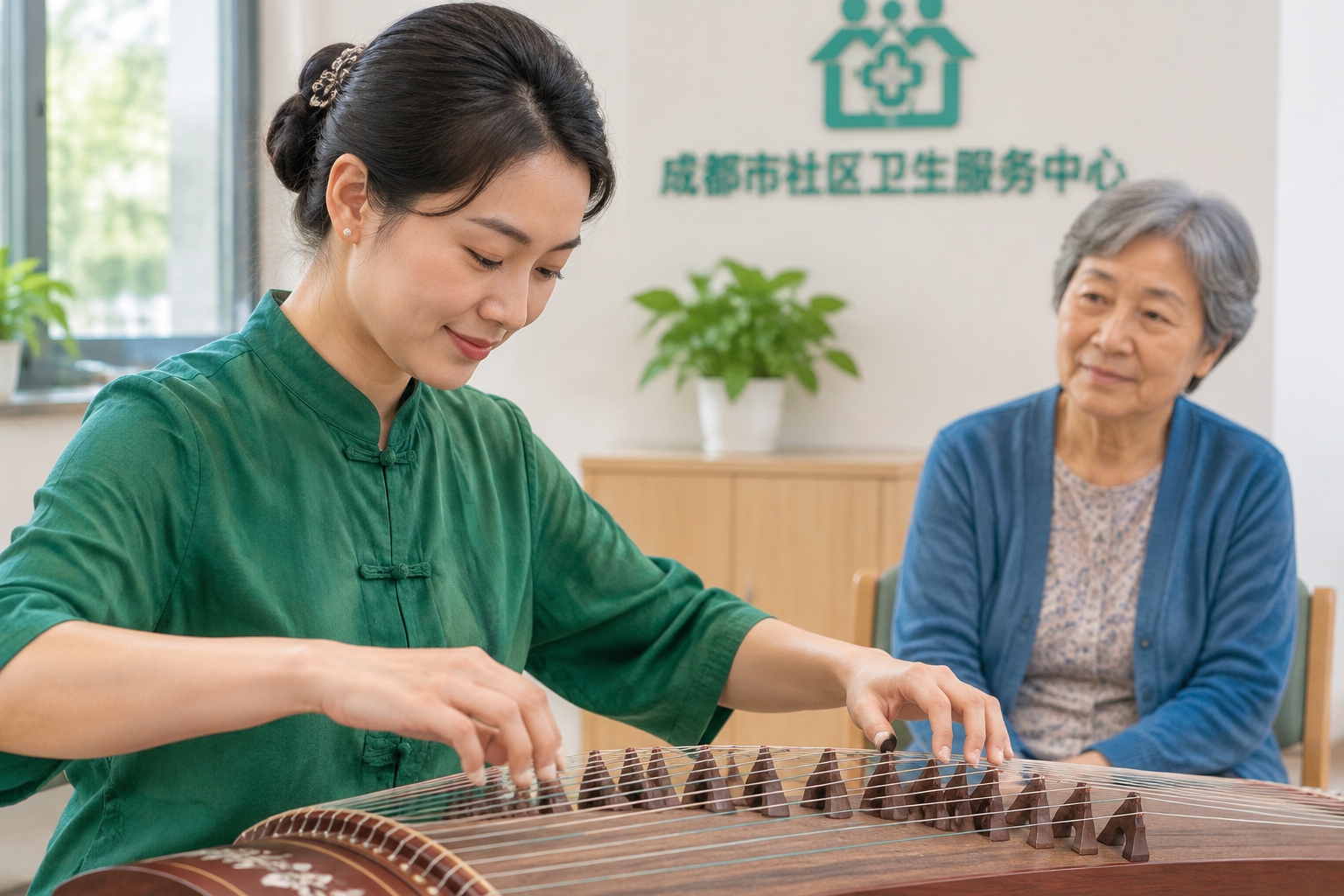
On a Tuesday morning in a community health center in Chengdu, six older adults sit in a circle. A woman in her late fifties, Chen Lihua, closes her eyes as a music therapist plucks a low note on a guzheng, the Chinese zither. The note hangs in the air, then fades. “That’s the yu tone,” the therapist says. “In the five-tone system, it’s linked to the kidneys and the emotion of fear.” Chen nods. She has been coming for three weeks, she says, and finds the sessions help her sleep better. She doesn’t know much about the theory. She just likes the way the music makes her feel.
This is one of the more grounded ways to encounter the five-tone system (五音, wuyin) in China today. It is not a hospital treatment, but a community wellness activity. Yet it draws on a framework that has been part of Chinese medicine and music theory for over two thousand years. The five tones—jue (角), zhi (徵), gong (宫), shang (商), and yu (羽)—are not just musical notes. In traditional Chinese thought, they correspond to the five elements, five organs, and five emotions. The idea is that specific tones can influence specific bodily systems and emotional states. For a Western reader, this can sound like a mix of music theory, philosophy, and folk belief. But it has a logic, and it is being used—cautiously—in some modern therapeutic settings.
What Are the Five Tones?
The five tones form a pentatonic scale, which is common in many musical cultures. In Chinese music, they are named gong, shang, jue, zhi, and yu. Each is associated with an element: gong with earth, shang with metal, jue with wood, zhi with fire, yu with water. Through the five elements, they link to organs: gong to the spleen, shang to the lungs, jue to the liver, zhi to the heart, yu to the kidneys. And each organ is tied to an emotion: the spleen to worry, the lungs to grief, the liver to anger, the heart to joy, the kidneys to fear.
The system is recorded in ancient texts like the Huangdi Neijing (Yellow Emperor’s Inner Canon), compiled around the 2nd century BCE. It was never just about music; it was part of a broader cosmology that linked music, medicine, and government. In imperial China, music was believed to influence social harmony. The same notes that regulated the body were thought to regulate the state.
The system is not a simple one-to-one prescription. It’s a map of correspondences. A practitioner might choose a tone to “regulate” an emotion that is excessive or stuck. For example, if someone is irritable and angry, a therapist might use jue (wood/liver) music to help smooth the liver qi. If someone is anxious and fearful, yu (water/kidney) music might be used to calm the kidneys. But this is a simplified description; real practice is more nuanced.
The correspondences at a glance
Gong (宫) – earth – spleen – worry
Shang (商) – metal – lungs – grief
Jue (角) – wood – liver – anger
Zhi (徵) – fire – heart – joy
Yu (羽) – water – kidneys – fear
From Ancient Theory to Modern Rooms
At a traditional Chinese medicine hospital in Beijing, Dr. Liu, a licensed TCM practitioner, uses five-element music therapy as an adjunct to acupuncture and herbal treatment. She plays recorded music or sometimes live instruments. “We don’t use it for everything,” she says. “For pain, for anxiety before surgery, for sleep problems—it can help some patients relax. But it’s not a replacement for drugs or other treatments.”
In China, music therapy is not a regulated profession in the same way as in the US, where board-certified music therapists must complete a degree and internship. In China, practitioners come from various backgrounds: some are TCM doctors, some are psychologists, some are musicians with training. This variability means quality and evidence vary too. Some hospitals have dedicated music therapy rooms; others offer it as a volunteer service. The Chinese Music Therapy Association was founded in 1989, but formal training programs are still limited.
In practice, the tones are played on instruments like the guzheng, guqin, and dizi (bamboo flute). The guqin, a seven-string zither, has a long association with scholars and meditation. Its soft, low sounds are often used in five-tone therapy.
What Does the Research Say?
Modern research on music and health is extensive. Studies show that music can affect heart rate, blood pressure, and stress hormones. It can reduce anxiety in medical settings. But research specifically on the five-tone system is thinner. A few small studies from Chinese universities have looked at five-element music for conditions like insomnia, depression, and hypertension. For example, a 2019 study in a Chinese journal found that five-element music therapy, combined with usual care, improved sleep quality in older adults with insomnia. But the sample sizes were small, and the studies often lack rigorous controls. A 2021 review in the journal Frontiers in Psychology noted that while traditional Chinese music therapy has cultural value, more high-quality trials are needed. A Cochrane review on music therapy for depression found that music therapy may help, but the evidence is moderate to low quality.
None of these studies prove that the specific five-tone correspondences work as claimed. They suggest that music itself can be helpful, and that cultural expectations may play a role. The placebo effect is real, and in a supportive environment, that’s not necessarily a bad thing.

Why Does This Framework Persist?
For many Chinese people, the five-tone system is not a medical prescription but a cultural language. It offers a way to talk about emotions and the body together. In a society where mental health stigma still exists, framing emotional distress as a “disharmony of qi” can be more acceptable than saying “I have anxiety.” It also fits with a holistic view of health that many people find appealing.
In recent years, the five-tone concept has been commercialized. Music apps offer “five-tone playlists” for different moods. Wellness influencers sell “five-element sound healing” sessions. Some of this is harmless; some is overblown. The key is to separate the cultural value from medical claims. If you enjoy listening to guzheng music and it helps you relax, that’s fine. But if you have a serious health condition, you should see a doctor.
A Different Way of Listening
In the West, music therapy is often goal-oriented and individualized. A therapist might use improvisation to help a child with autism communicate, or songwriting to help a veteran process trauma. The five-tone approach is more predetermined: the therapist selects tones based on a diagnostic framework. That can feel less flexible to a Western-trained therapist. But it also provides a structured entry point. For someone who grew up with Chinese music, the pentatonic scale may feel familiar and soothing. For others, it may just be pleasant music. Either way, the act of listening attentively in a safe space can be therapeutic.
What to Keep in Mind
If you’re curious about the five tones, here are some practical points. First, don’t self-diagnose or self-treat serious conditions. Music can be a complement, not a substitute. Second, individual differences matter. A tone that calms one person may irritate another. Third, check the credentials of anyone offering “music therapy.” In China, look for practitioners with training in music therapy or TCM. In the West, look for board certification (MT-BC). Fourth, be wary of anyone promising dramatic results. Music is powerful, but it’s not magic.
Back in Chengdu, Chen Lihua doesn’t worry about the theory. She comes to the center for the company and the calm. “I don’t know if it’s the yu tone or just the quiet time,” she says. “But I leave feeling lighter.” That might be the most honest way to think about the five tones: not as a cure, but as a cultural tool for paying attention to how music makes you feel.