
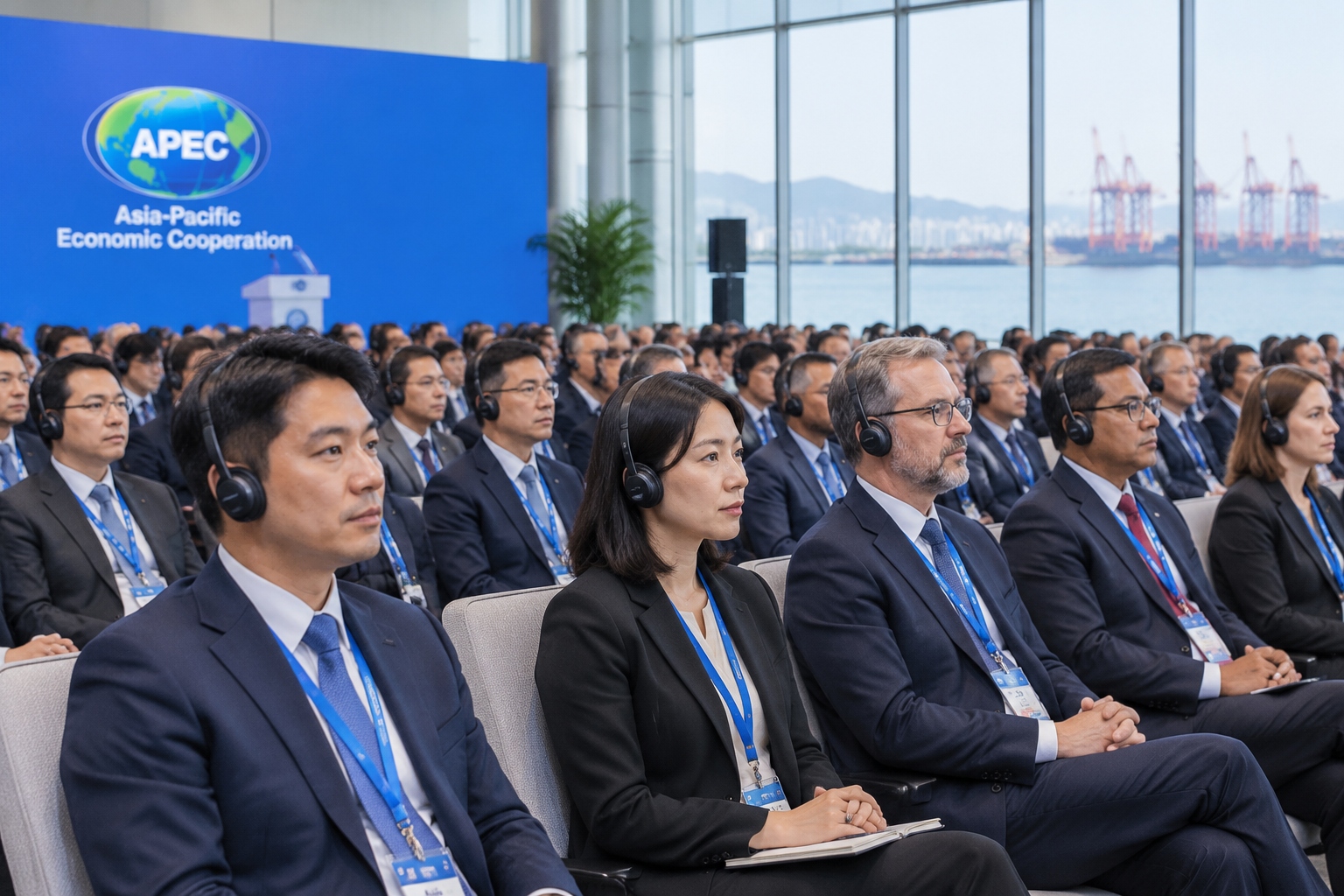

8:15 a.m. in Qianhai
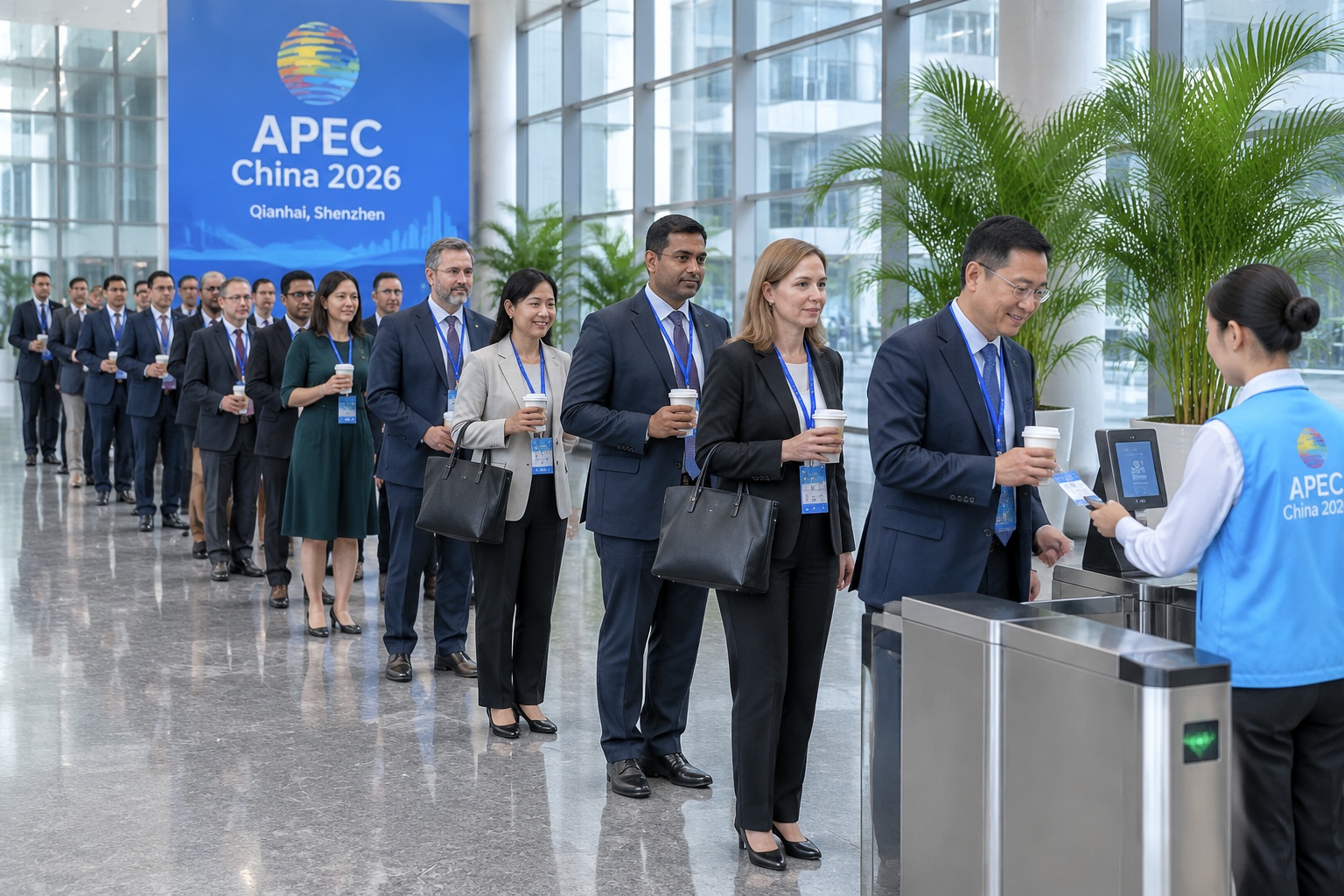
By quarter past eight on the opening morning, the security queue curled past a row of potted palms. Badges on lanyards, earpieces tuned to four languages, people from Seoul and Santiago, Jakarta and Ottawa, comparing notes on the coffee. Roughly 2,000 government and business leaders in one hall, according to the organisers — the largest gathering of its kind this city has hosted.
What they could see from the coffee line was not the skyline in the photographs. It was a low, wide convention hall on reclaimed land in western Shenzhen, with the Pearl River estuary on one side and a container terminal on the other. Fifteen years ago this was mudflat and yards for stacking boxes. Today it is Qianhai, a 120-square-kilometre cooperation zone with Hong Kong that functions as Shenzhen’s test kitchen: rules are tried here first, then applied citywide or dropped.
That is the first thing to understand about why a summit of this size landed here rather than in Futian’s central business district or the older convention centre downtown. Qianhai is not a landmark. It is a laboratory.
Why a policy lab, not a postcard
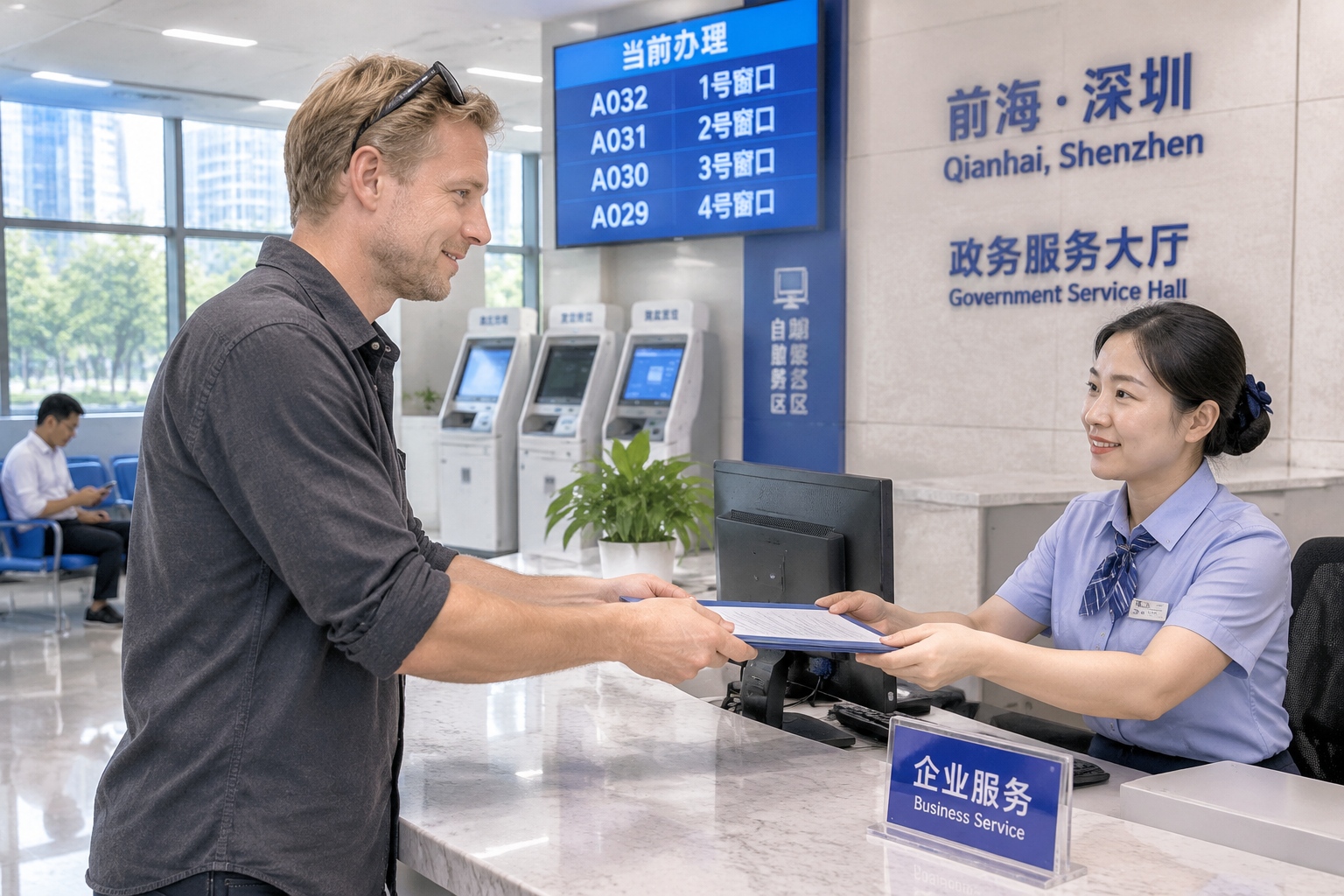
For readers outside China, Qianhai needs one line of explanation. It is a designated zone, created in 2010 and expanded in 2021, where cross-border rules on money, people and data are loosened before they are loosened anywhere else. Cross-border renminbi lending was piloted here. So were foreign-invested telecom and e-commerce ventures, and the “one counter” service that lets a company finish registration, tax and customs paperwork in a single visit rather than six.
Walk out of the hall and the district still looks half-finished in the way that new districts do: a wide promenade, a few good coffee places, emptier side streets on weekends, construction hoarding around the next tower. Office workers cross Guiwan on shared bikes at 8:30, stopping for steamed buns and soy milk from a stall that has been there longer than the glass towers behind it. It is not a showroom. People live and work here, and the rents are still lower than in Futian.

The number that matters — and how to read it
Shenzhen’s commerce authorities put a figure on the floor of this conversation: more than 10,000 foreign-invested enterprises were newly registered in the city in 2025. The cumulative stock is around 34,600, which is roughly 14.7% of China’s national total.
Read that 14.7% carefully. It is a share of the number of companies, not of the dollars invested. The two measures have been moving in opposite directions. In dollar terms, foreign direct investment into China fell in 2023 and 2024, and has only partly recovered. Yet the count of foreign-invested companies keeps climbing, and Shenzhen takes an outsized slice of it.
More companies, smaller average cheques. That pattern describes a particular kind of investor: not a carmaker sinking a billion dollars into a plant, but a twenty-person German sensor firm, a Singaporean logistics-software team, a Japanese design studio opening its third Asian office. They are not buying land. They are buying proximity — to suppliers, to engineers, to a market they want to test before committing elsewhere.
Twenty-one items, five buckets
Ahead of the summit, the city published 21 tasks aimed at capturing what local officials call the “APEC dividend”. The list is long, but it sorts into five buckets: the cross-border movement of people, of goods, of money, of data, and the softer category of business atmosphere.
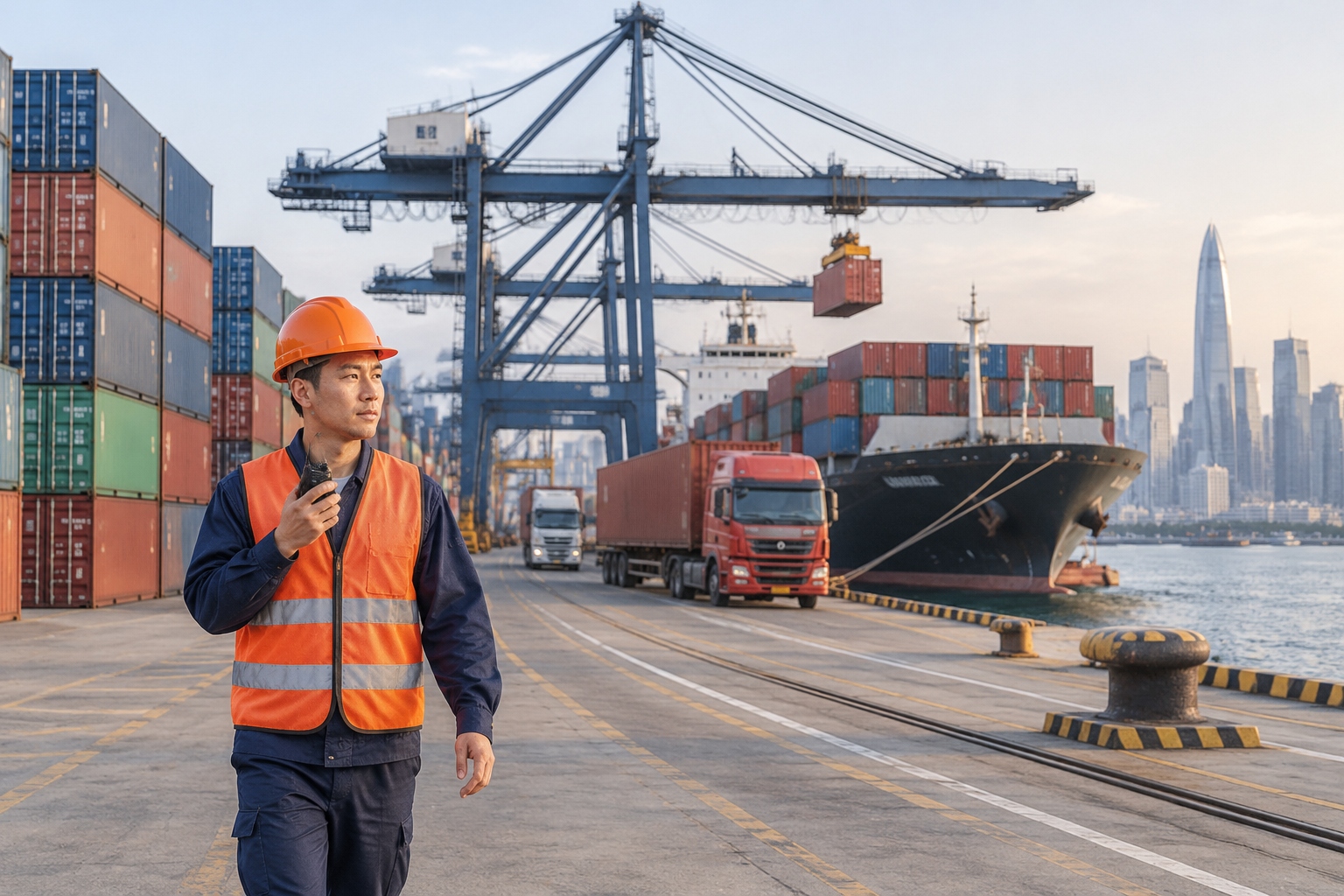
On people: China’s visa-free transit window now runs to 240 hours, and foreign work permits in Shenzhen can be processed through a single window that also handles residence permits. On goods: Shenzhen’s ports handle roughly 30 million containers a year, among the busiest in the world, and the tasks target clearance times rather than ribbon-cuttings. On money: qualified foreign limited partnership (QFLP) quotas let overseas capital flow into local funds with fewer approvals than a decade ago. On data: the Greater Bay Area runs a negative-list system for cross-border data transfer — meaning some categories flow freely and only the listed ones need review. Anyone who has tried to move customer records out of China knows why that matters.
The fifth bucket is the one executives underestimate: schools, clinics, arbitration, intellectual property enforcement. These are the reasons a foreign manager agrees to move a family, and the reason a company stays past year three.
From registration to first order: one founder’s timeline
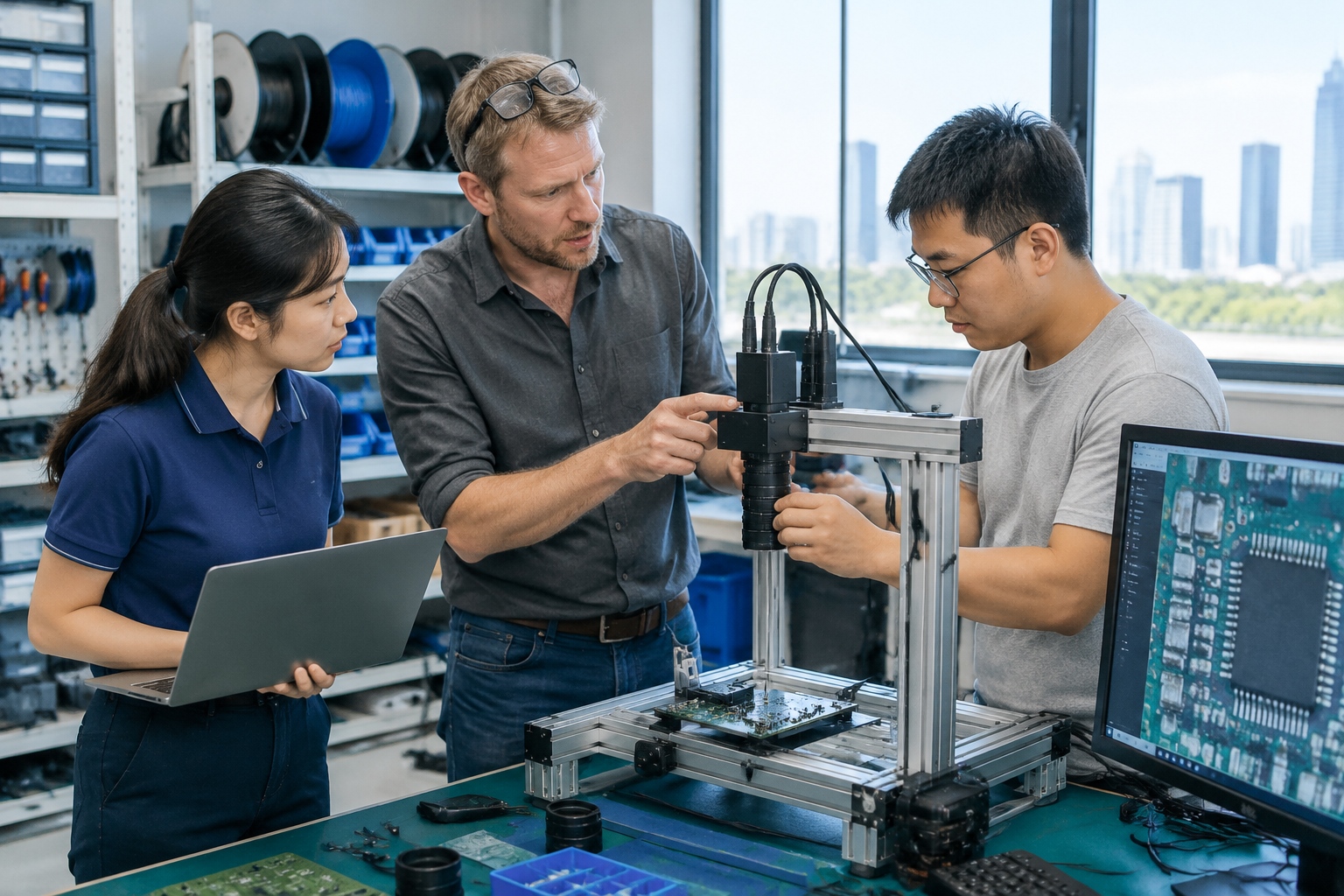
Elias Norberg, 36, is Swedish. He runs a machine-vision company that builds inspection cameras for electronics assembly lines. He chose Qianhai in 2023 after a year of comparing Shenzhen with Penang and Guadalajara.
Registration took three working days, done online with a Chinese partner as legal representative. The business licence came the same week. The bank account took three weeks — the honest friction point, and the one every founder mentions. He hired two engineers, both Chinese, one poached from a Shenzhen automation firm, one a returning graduate.
The first order came five months in, from a contract manufacturer in Dongguan. His prototype cost around 4,000 euros and took eleven days to iterate, because the machined housing came from a shop 40 minutes away and the camera module from Huaqiangbei. “In Europe that loop is six weeks and three phone calls with a distributor,” he says. That gap — not tax incentives — is what he says he is paying for.
What he did not get: a cheap office. Qianhai rents are lower than Futian but not low. And he spent four months on a data-compliance review before his cameras could send diagnostic logs to a server in Frankfurt.
Cost, speed, market entry: a rough way to weigh it
Most investment decisions about Shenzhen come down to three variables that pull against each other.
Cost. Shenzhen is no longer cheap. An experienced hardware engineer costs more here than in much of Southeast Asia, and social insurance adds a real percentage on top of salary. If your business is labour-intensive assembly for export to the United States, the arithmetic has changed and other cities know it.
Speed. This is where the city still wins outright. Component density means a design change on Monday can be a physical board on Thursday. Nowhere else offers that at this scale.
Market entry. Shenzhen is a proving ground. Win a contract with a Shenzhen manufacturer and you have a reference customer for the rest of the country — and increasingly for Southeast Asia, where Chinese firms are building their own supply chains.
My rough rule: if your product needs fast iteration and hardware, weight speed heavily. If it is a service sold to local consumers, weight market entry. If it is commodity assembly, look hard at cost first and be honest about the answer.
What to check before you commit
Read the 21 tasks as a menu, not a guarantee. Most of them apply to specific sectors or specific zones.
- Which rules actually cover you. Qianhai, Bao’an and Longgang offer different terms, and the incentives attached to a district are often tied to how much you invest or export.
- Data. The negative list is short, but the review process for listed categories is real. Budget time, not just money.
- The cost curve. Ask what a desk, an engineer and an apartment will cost in three years, not today.
- Domestic competition. Your Chinese competitor iterates as fast as you do, sometimes faster, and prices accordingly.
- Talent logistics. Housing, schooling and permits for foreign staff are solvable but slow; the companies that succeed usually start eighteen months early.
- Capital movement. Repatriating profits is routine; moving large sums quickly is not. Structure before you need to.
Back in the hall
At the end of the opening session, the delegates filed out past a model of the district at roughly 1:200 scale, with little lights where the new towers will be. Nobody was asking whether China is open. The questions were narrower and more useful: which door, under which rule, at what cost, and how fast.
That is the real answer to why this summit came to Qianhai. Capital is not betting on a skyline. It is betting on a place where the paperwork moves fast enough to be worth the price of the plane ticket — and it keeps a spreadsheet open on the rest.