
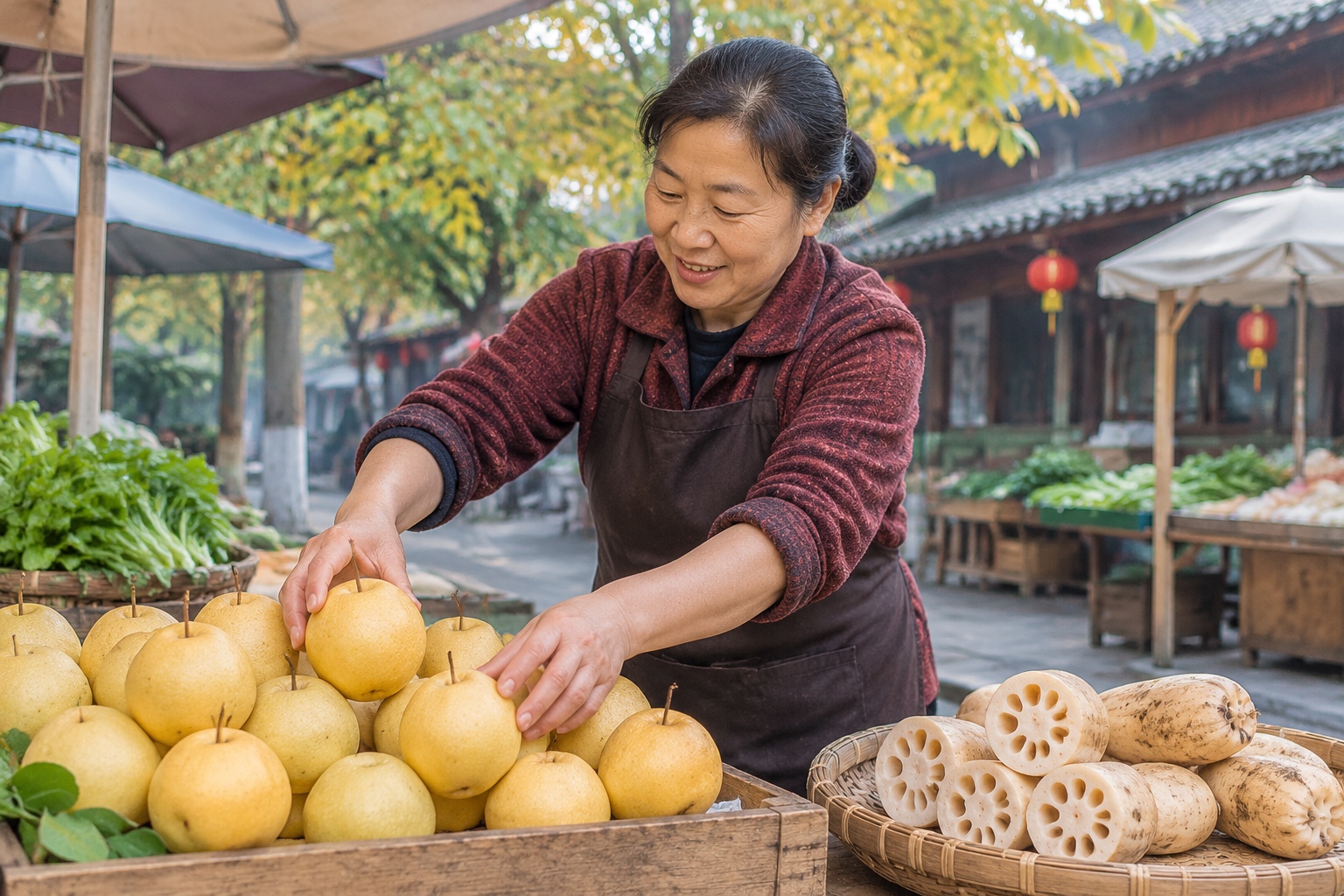

A Signal at the Vegetable Stall
In late September, a vegetable stall in Chengdu starts stacking pears next to the lotus root. The vendor doesn’t say much about it. When a customer coughs, she just points at the pears. It’s not a prescription. It’s a seasonal nudge — something most shoppers here absorb without needing an explanation.
For a visitor from Manchester or Minneapolis, this might look like folk wisdom dressed up as advice. But it comes from a system that has organized Chinese thinking about health and environment for more than two thousand years: wuxing, the Five Elements. Not “elements” in the chemistry sense, but five phases or movements — wood, fire, earth, metal, water — that describe how things change in relation to one another.
The framework isn’t a relic. It shows up in how people talk about the weather, what they eat in July versus November, and why a doctor might ask which direction your bedroom window faces.
Five Phases, Not Five Substances
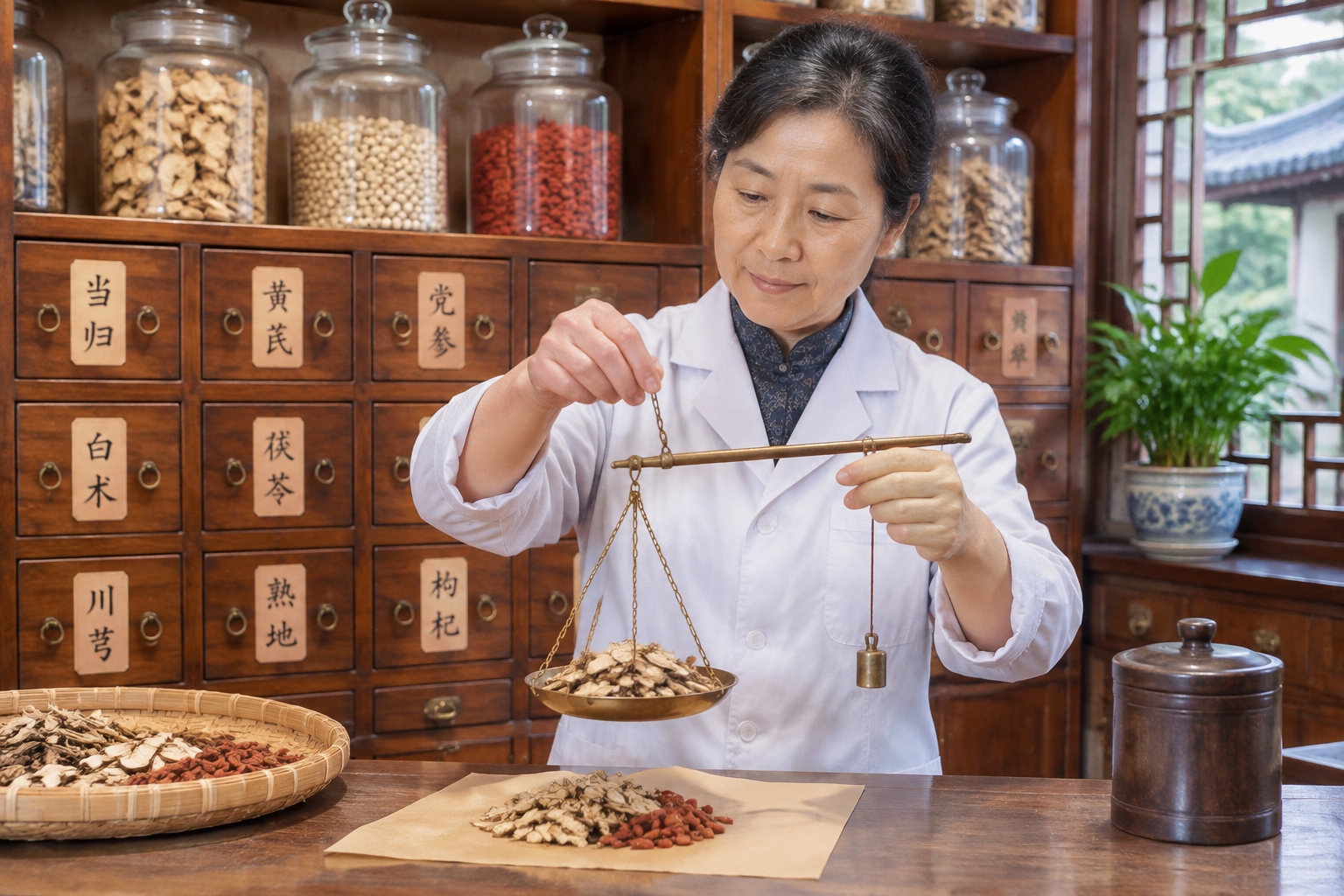
The first thing to untangle for non-Chinese readers is the word “element.” In English, an element feels like a building block — solid and separate. In the Chinese framework, each phase is defined by its relationship to the others. Wood feeds fire. Fire creates earth (ash). Earth bears metal. Metal carries water (condensation). Water nourishes wood. It’s a loop, not a list.
Each phase maps onto a season, a direction, a climate quality, and a set of organs and emotions. Spring is wood, east, wind, liver, anger. Summer is fire, south, heat, heart, joy. Late summer is earth, center, dampness, spleen, worry. Autumn is metal, west, dryness, lungs, grief. Winter is water, north, cold, kidneys, fear.
This is where Western readers often hit a wall. Anger connected to the liver? Grief to the lungs? It sounds poetic but unscientific. And it is poetic — but it’s also a practical mnemonic system. Before lab tests and imaging, this was a way to organize observations: people get more respiratory infections in dry autumn air; cold winters do stress the kidneys and urinary system; heat exhaustion in summer is real.
The mapping isn’t a claim that emotions cause organ failure. It’s a language for noticing patterns. You could compare it to how Western folk wisdom says you’ll “catch a cold” from being chilly and wet — not literally true in a germ-theory sense, but a useful behavioral heuristic for a long time.
Seasons and What They Ask of You
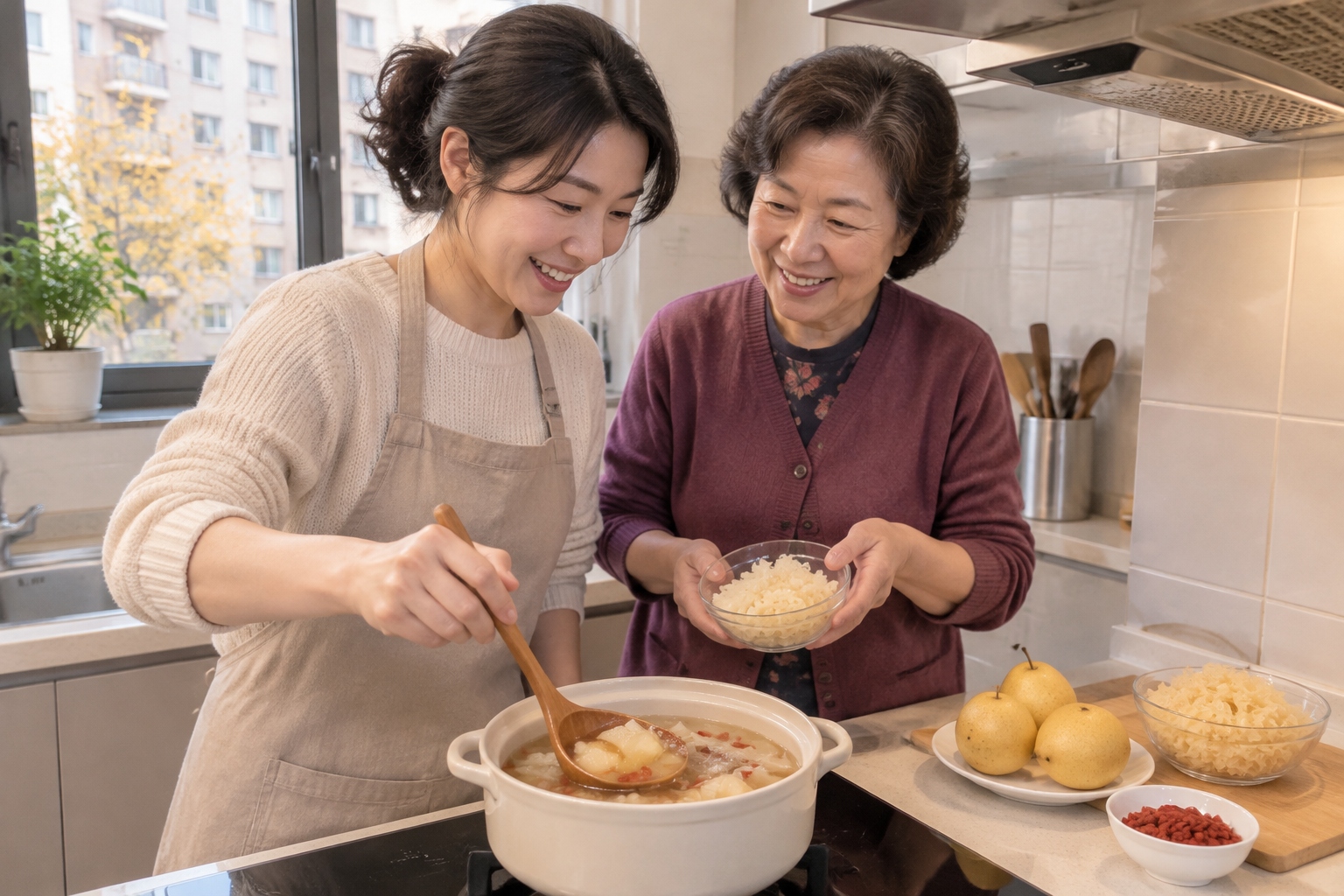
In practice, the seasonal advice is remarkably concrete. Spring is about “rising” — eating young greens, getting outside, stretching. Summer calls for cooling foods and hydration but warns against too much cold, because the digestive system is seen as weaker when the body’s energy is on the surface. Autumn is about moisture: pears, honey, sesame, white fungus. Winter is about storage: more sleep, warming stews, fewer raw foods.
You don’t need to accept the metaphysics to notice that this is a coherent seasonal eating pattern. It overlaps with what nutritionists in other countries say about eating what’s in season. The difference is the explanation. In the Five Elements framework, the reason you eat pears in autumn isn’t vitamin C or fiber — it’s that autumn dryness attacks the lungs, and pears are moistening.
A friend of mine from Germany who teaches English in Nanjing once told me she started drinking more soup in winter “because everyone else did, and honestly it felt better.” She didn’t convert to anything. She just adjusted.
Directions and the Geometry of Health
The compass directions are the part that puzzles foreigners most. Why would north matter to your kidneys?
In the classical system, each direction carries the quality of its season. North is winter, cold, water, kidneys. South is summer, heat, fire, heart. East is spring, wood, liver. West is autumn, metal, lungs. The center is earth, the pivot.
Historically, this shaped architecture and settlement: courtyards facing south to catch winter sun, sleeping quarters arranged to avoid drafts from the north. You can still see it in old Beijing courtyard homes (siheyuan) and in the way some families instinctively close north-facing windows at night.
Does direction have a physiological effect? Not in the way a compass needle affects iron in your blood. But orientation affects light exposure, temperature, humidity, and airflow — and those do affect sleep, mood, and respiratory comfort. A north-facing bedroom in Harbin in January is a different sleeping environment from a south-facing one. The Five Elements framework encodes that practical knowledge in symbolic language.
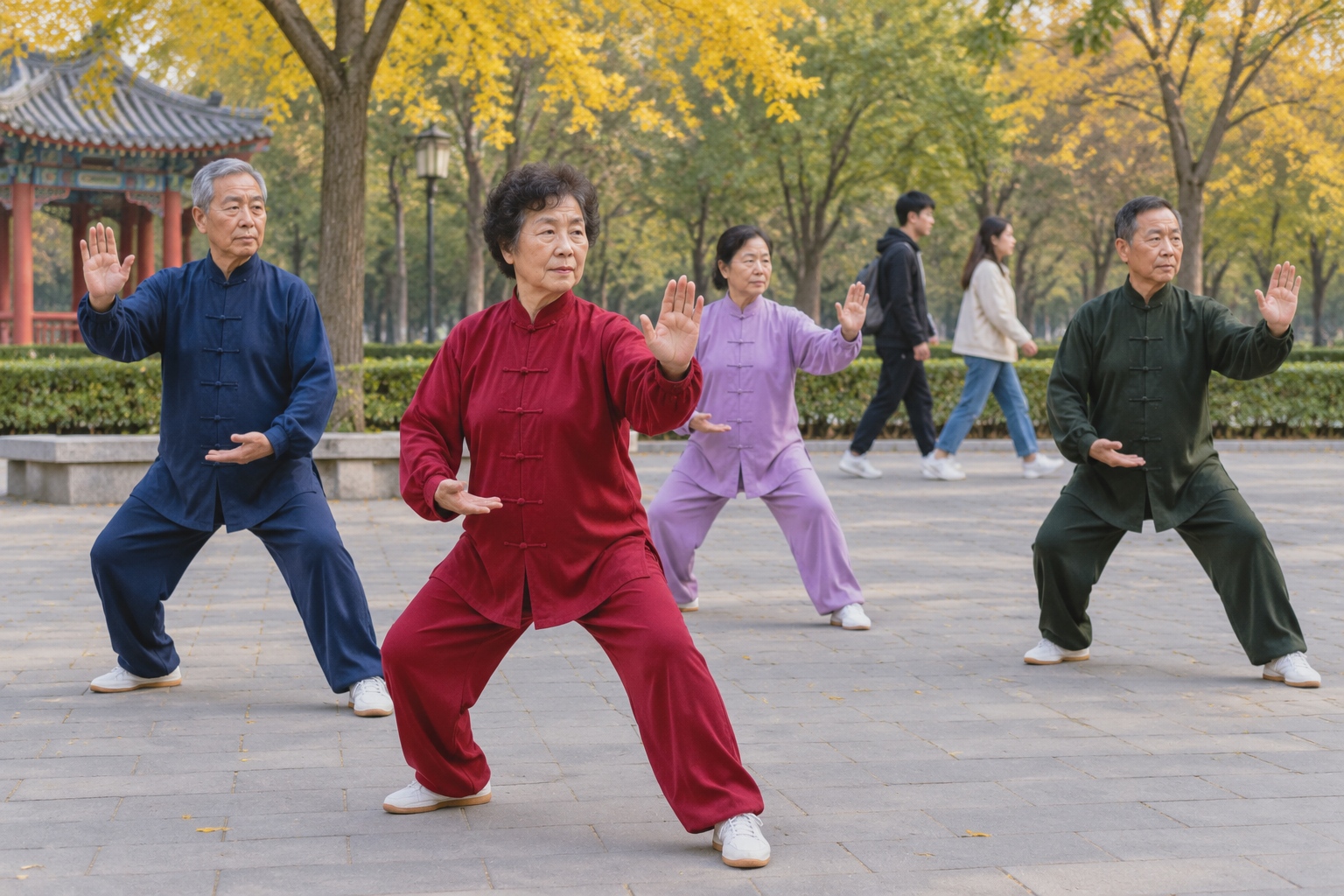
Some practitioners take direction more literally, advising patients to sleep with their head pointing a certain way. Others treat it as metaphor. In modern TCM hospitals, you’re more likely to be asked about your sleep, diet, and stress than which way your bed faces — but the directional vocabulary still surfaces in conversation.
Where It Shows Up in Daily Life
Walk into any Chinese supermarket in early August and you’ll see li qiu — the start of autumn — marked on promotional signs, even if it’s still 35 degrees outside. Mooncakes appear. So do “autumn tonic” gift boxes. This is the jieqi system, the 24 solar terms, which divides the year into finer slices than four seasons. It was added to UNESCO’s intangible cultural heritage list in 2016, and it still organizes agricultural advice, festival foods, and a lot of small talk.
Younger Chinese people don’t necessarily believe in the organ-emotion mapping. But many follow the food rhythms anyway. A 2023 survey by a Chinese health platform found that over 60 percent of respondents under 35 said they adjust their diet “somewhat” with the seasons. Some of that is wellness culture, some is family habit, some is just that seasonal food tastes better.
What’s interesting is how this coexists with modern medicine. Most people I know in China see a doctor for infections and blood pressure, and also drink goji berry tea because their mother told them to. The two systems sit side by side without much friction — not because people are confused, but because they serve different purposes. One treats disease. The other manages daily life.
The Limits Worth Naming
It would be dishonest to present this as a perfectly harmonious system. Some Five Elements advice is harmless. Some is not. “Detox” teas sold under the guise of traditional wisdom can cause digestive problems. Delaying medical treatment because a condition is “just dampness” is a real risk. And the framework has historically been used to justify all sorts of things — dietary restrictions for pregnant women, for instance — that don’t hold up to scrutiny.
The more defensible reading is the one most thoughtful practitioners in China hold: traditional seasonal and dietary frameworks are a vocabulary for paying attention to your body and environment. They’re not a replacement for diagnosis. When a Chinese friend tells you to eat pear for your cough, she’s not prescribing. She’s offering a culturally specific form of care — the same instinct that makes a British grandmother suggest chicken soup.
Why This Matters for Outside Readers
If you come from a culture where health is mostly about individual biology — genetics, germs, lifestyle — the Five Elements framework can feel like it’s answering a different question. It’s less “what is wrong with this organ” and more “how is this person out of step with the season.”
That’s the useful takeaway. You don’t have to believe that autumn dryness weakens your lungs to notice that your skin gets drier in October and your sleep shifts. You don’t have to accept that north equals kidneys to recognize that a north-facing apartment feels different in winter. The framework is a reminder that human health is embedded in weather, light, food, and place — a point that modern environmental medicine makes in its own language.
The pear vendor in Chengdu isn’t doing metaphysics. She’s doing what people have done for a long time: noticing a season and offering something that fits. Whether you call it Five Elements or just common sense, the habit of connecting body to environment is worth keeping.