


Introduction: A Reader from Texas Meets Chinese Fantasy
When Mark, a 34-year-old software engineer from Austin, first stumbled upon a Chinese cultivation novel translated online, he was baffled. The protagonist spent pages meditating, forming elixirs, and ascending through realms—all while battling demons and scheming immortals. His first thought: “Is this some kind of religious scripture? Are Chinese people actually practicing these rituals?” He’s not alone. Many overseas readers encounter cultivation novels (xiuxian xiaoshuo) and wonder: Is this superstition? A guide to Taoist magic? Or just pure imagination?
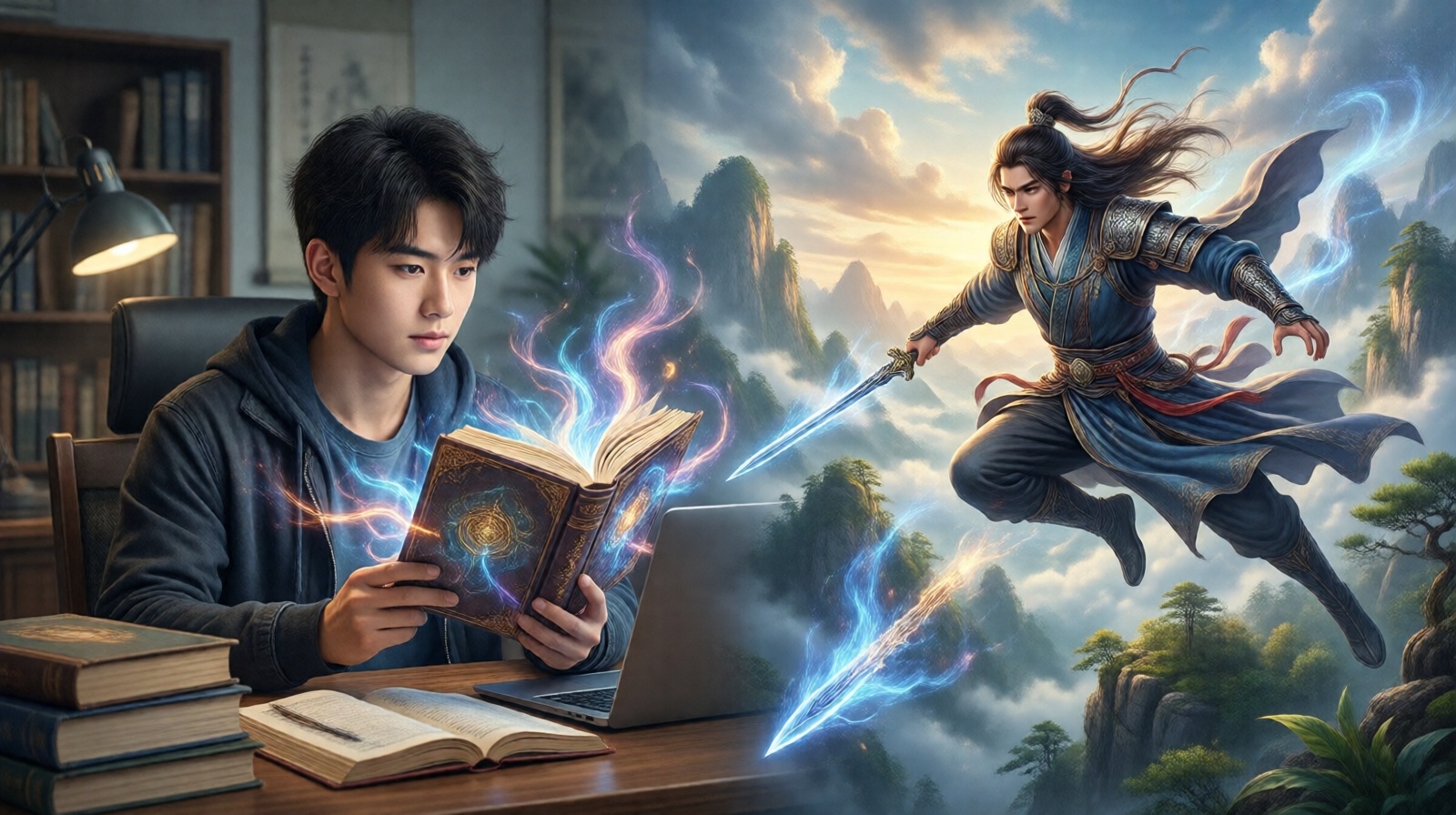
Common Misunderstandings: Clearing the Fog
1. Cultivation = Taoist Practice? — It’s a Fictional System, Not a Real Faith
The first and biggest misunderstanding is equating cultivation novels with actual religious practices. While the genre borrows terms like “qi,” “dantian,” and “alchemy” from Taoism and Chinese folk religion, its usage is purely fictional. Think of it like how Western fantasy uses “mana,” “spells,” and “magic circles”—they stem from historical occult beliefs, but no reader thinks Harry Potter is teaching real witchcraft. Similarly, a Chinese college student reading A Will Eternal isn’t learning Taoist rituals; they’re enjoying an adventure story. The authors themselves are often secular young people who treat these concepts as world-building tools, not doctrines.
2. Training = Self-Torture? — It’s a Growth Metaphor, Like Western Magic Training
In cultivation novels, protagonists endure grueling trials: fasting for months, breaking bones, surviving lightning strikes. To outsiders, this looks like masochism. But in context, it’s a metaphor for personal growth—similar to how Luke Skywalker trains with Yoda under harsh conditions, or how Harry Potter students practice defensive spells. Chinese readers love the “upgrade” mechanic: each breakthrough represents overcoming real-life struggles like exams, job competitions, or relationship setbacks. The pain is symbolic, not literal. No one actually tries to cultivate by standing in a thunderstorm.
3. Immortal Heroes = Chinese Version of Wizards? — More About Mindset Than Spells
Another common comparison is to label cultivation as “Chinese magic.” But the focus is different. Western magic often relies on incantations, wands, and external power sources. Cultivation emphasizes inner cultivation—mental state, virtue, and understanding of the Dao (the Way). A cultivator’s power comes from self-discipline and enlightenment, not an inherited spellbook. This philosophical tint makes the genre unique: it’s about breaking mental shackles as much as physical limits. For example, in Journey to the West (a classic inspiration), the Monkey King gains power not just by learning spells, but by achieving enlightenment.

The True Sources of Cultivation Novels
Ancient Myths and Folklore
The roots lie in China’s vast mythological tradition: Classic of Mountains and Seas (Shanhaijing) with its strange creatures, Journey to the West with its epic cultivation journey, and countless folk tales about immortals living in mountains. Modern authors cherry-pick these elements, remixing them into original worlds.
Taoist Philosophy Romanticized
Concepts like “the Dao follows nature” (道法自然) are romanticized to support the idea that ultimate power comes from harmony with the cosmos. This is not a religious teaching but a narrative device. For instance, a character might achieve sudden enlightenment by observing a waterfall, symbolizing that wisdom often comes from everyday life—a poetic notion, not a ritual.
Contemporary Web Novel Innovation
China’s web novel industry (over 400 million readers) has spawned many subgenres. “Mortal Flow” (凡人流) started with Renegade Immortal, telling the story of an ordinary person rising against heaven. “Waste to Top” (废柴逆袭) is a favorite: a seemingly talentless hero overcomes adversity through grit. These resonate with young Chinese facing intense social pressure—the cultivation world becomes a stage where hard work can break class barriers, a sharp contrast to real-life stagnation.
Why Cultivation Novels Are So Popular in China
1. Aspiration to Break Social Stratification
China’s competitive education system and job market make upward mobility feel difficult. Cultivation novels offer a fantasy where anyone, regardless of humble origins, can ascend to godhood through effort. The “leveling up” metaphor is deeply appealing.
2. Imaginative Escape from Daily Stress
With long work hours and high expectations, many Chinese find solace in these sprawling epics. Reading about flying swords, immortal realms, and epic battles provides a mental vacation—just like binge-watching Game of Thrones or playing The Legend of Zelda.
3. Community Co-Creation
Web novels are often serialized, with authors reading comments and adjusting plots. Readers vote for characters, suggest twists, and build a shared mythology. This interactive culture makes cultivation novels a living experience, not a finished product.
Cultural Differences: Why Misunderstandings Happen
How Young Chinese Actually See Cultivation Novels
For Chinese youth, these novels are pure entertainment. A 2022 survey found that over 80% of readers consider them “fantasy for fun” and don’t associate them with religious belief. They discuss cultivation like Western fans discuss Dungeons & Dragons—as a fictional system with its own rules.
Contrast with Real Chinese Life
Meanwhile, real China is a high-tech society: 5G, high-speed rail, AI surveillance, and intense scientific education. The same person who reads about immortal cultivation might be a programmer debugging code or a student studying for a math exam. This juxtaposition shows that fantasy and rationality coexist.
Official Attitude: Supporting Creative Culture, Distinguishing Fiction from Superstition
Chinese authorities do not encourage actual superstition. They have regulations against content that promotes real occult practices or fraud. Cultivation novels are classified as “fantasy literature” and are published legally. The government even supports the industry—the online literature market was worth over $4 billion in 2023. The line is clear: fiction is fiction.
Conclusion: An Invitation to Imagination
Instead of viewing cultivation novels as an exotic religious artifact, enjoy them as what they are: a rich fantasy genre that explores universal themes of ambition, identity, and transformation. The flying swords and immortal pills are no more real than the One Ring or the Force. They are tools for storytelling. So next time you encounter a cultivation novel, leave the skepticism behind and join the millions who find wonder in these tales. The only thing you need to cultivate is an open mind.