

Introduction: A Reader’s Habit
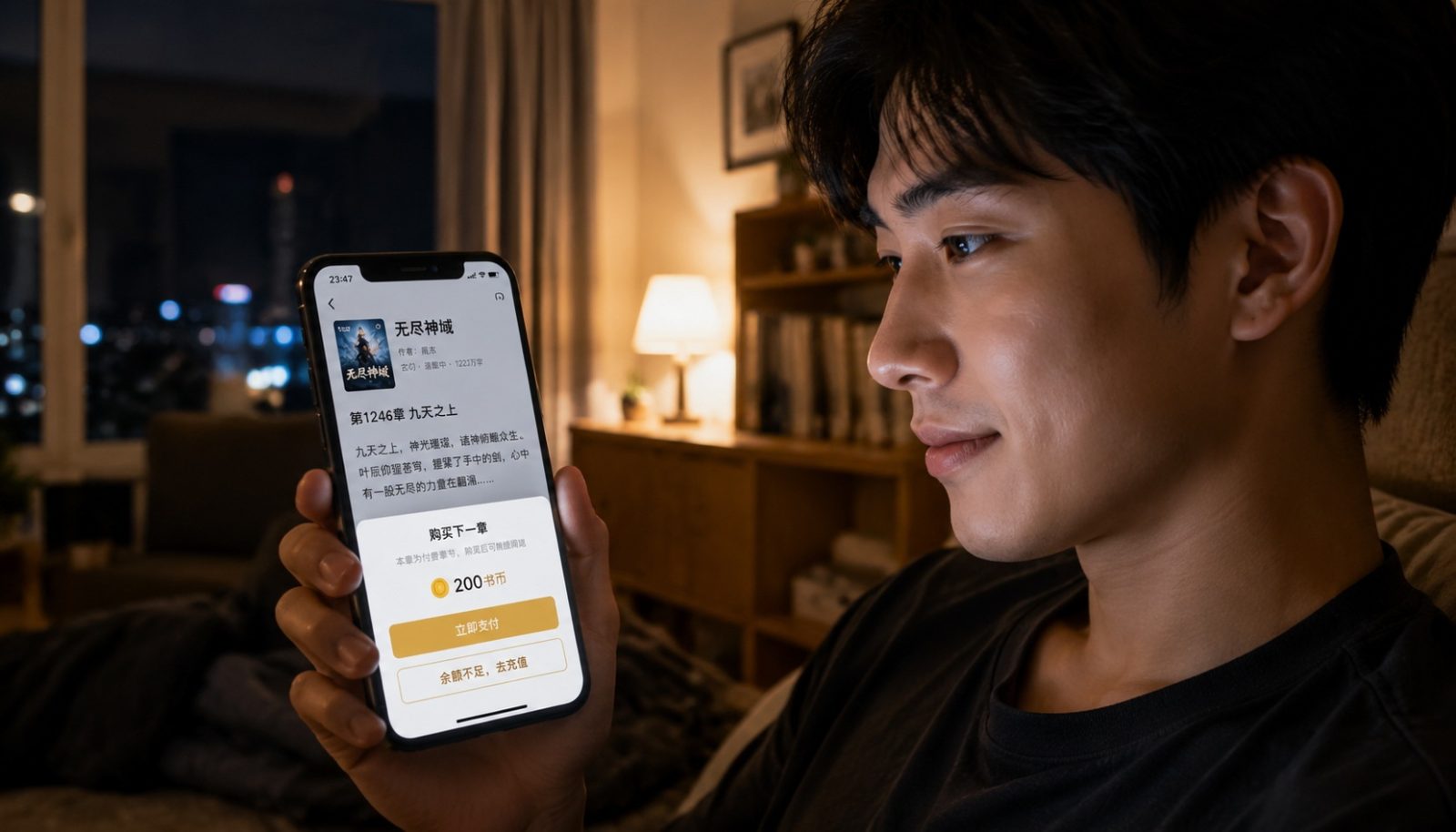
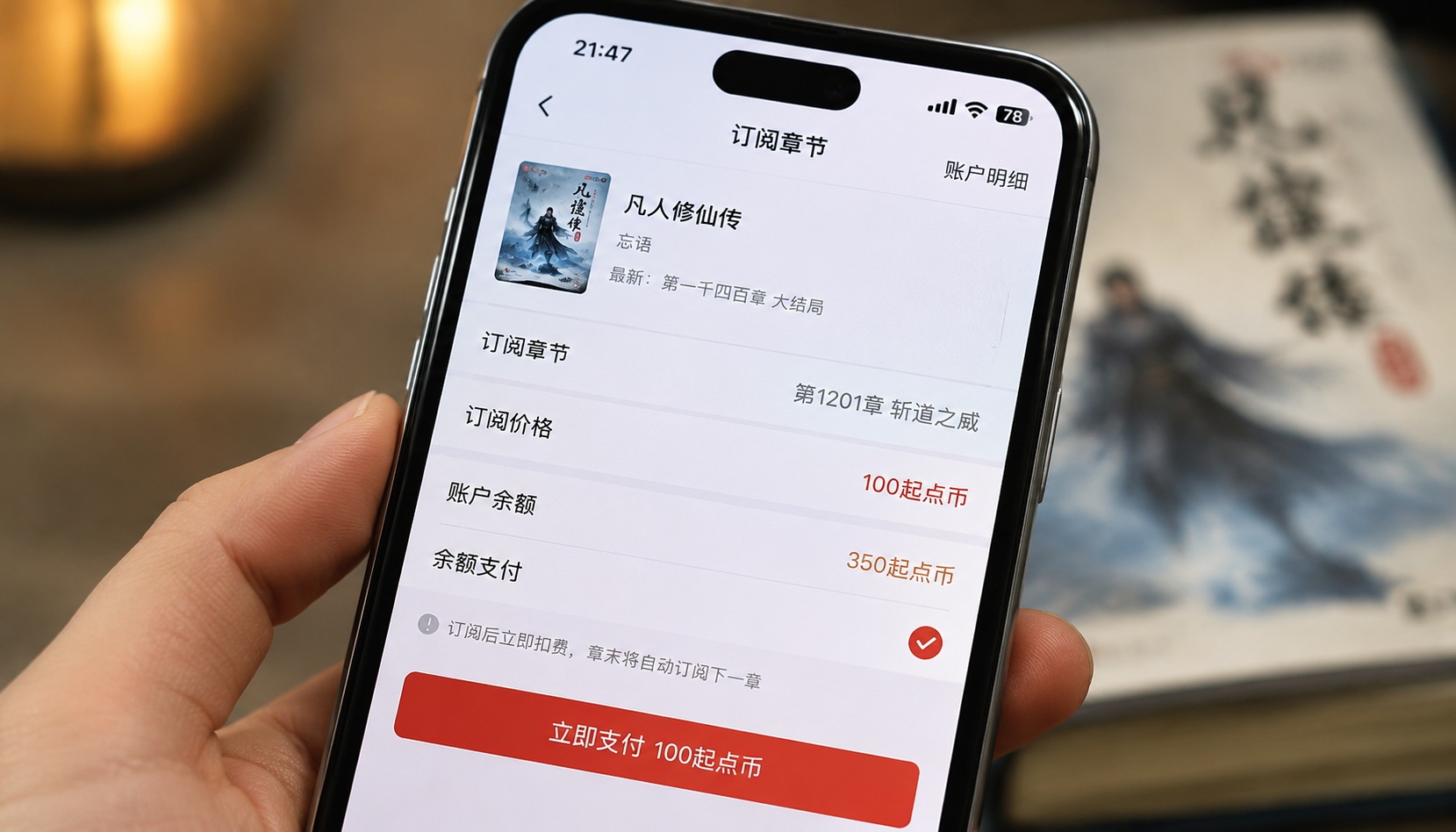
Every evening at 10 PM, Zhang Wei, a 28-year-old software engineer in Shanghai, opens the app Qidian (起点中文网) on his phone. He clicks on the latest chapter of ‘I Shall Be Immortal,’ a cultivation novel he has been following for two years. The chapter costs 0.1 yuan (about 1.5 US cents). Without hesitation, he pays. This ritual repeats every day. Zhang is one of millions of Chinese who pay for web novels chapter by chapter.
How the Model Works
Unlike Western subscription services like Kindle Unlimited, Chinese web novels typically operate on a micro-transaction system. Readers pay per 1,000 characters (or per chapter) using virtual coins. The price is low: typically 0.03–0.15 yuan per chapter. Authors earn a share of the revenue, often 50–70% after platform fees. Platforms like Qidian (owned by China Literature) and Zhulang (创世中文网) host thousands of serialized novels, most updated daily.
The model relies on the ‘freemium’ approach: the first 20–30 chapters are free, then each subsequent chapter costs a small fee. Readers can also earn free coins by watching ads or completing tasks. But heavy readers—those who follow multiple stories—spend an average of 30–50 yuan ($4–$7) per month.
Why Readers Pay: The Psychology of Addiction
Cultivation novels are built on long-running plots with cliffhangers. The hero grows step by step, and each chapter ends at a tense moment. Paying a few cents to instantly satisfy curiosity feels trivial. This is the ‘sunk cost’ effect: once a reader has invested time in hundreds of free chapters, switching to a different story feels wasteful, so they pay to continue.
Moreover, readers form emotional bonds with characters. The 2022 survey by China Literature showed that 68% of paying readers said they ‘couldn’t bear to wait’ for free updates. The author’s daily release schedule creates a habit loop: anticipation, payment, instant gratification.

Economic Sustainability for Authors
For authors, the pay-per-chapter model provides a direct income stream. A moderately successful author with 5,000 paying readers per chapter can earn 150,000 yuan ($21,000) annually. Top authors like Tang Jia San Shao (唐家三少) earn millions. The barrier to entry is low: anyone can start writing on these platforms, build an audience, and earn money if their story gains traction.
Platforms also use data-driven recommendations. Algorithms analyze reader behavior—which chapters are paid for, where readers drop off—to help authors adjust pacing. This feedback loop makes the stories more addictive, which in turn increases revenue.
Comparison with Western Models
In the West, serialized fiction platforms like Wattpad rely on advertising or subscriptions. The per-chapter payment is rare. Chinese readers accept micro-payments because of the prevalence of mobile payments (Alipay, WeChat Pay) and a culture used to buying digital content in small increments. The same model powers other content like paid music lyrics or online literature gift-giving.
The success is staggering: China Literature reported 1.9 billion yuan ($270 million) in online reading revenue in 2023, with over 400 million active users. Cultivation novels represent a major category.
Conclusion
The pay-per-chapter model thrives on a combination of low cost, high engagement, and serialized storytelling adapted for the mobile era. It turns reading into a daily habit, paying into a creator economy that sustains a vast ecosystem. For many Chinese readers, a cent per chapter is a small price for the thrill of cultivation.
Start the discussion at forum.chinacomes.com