
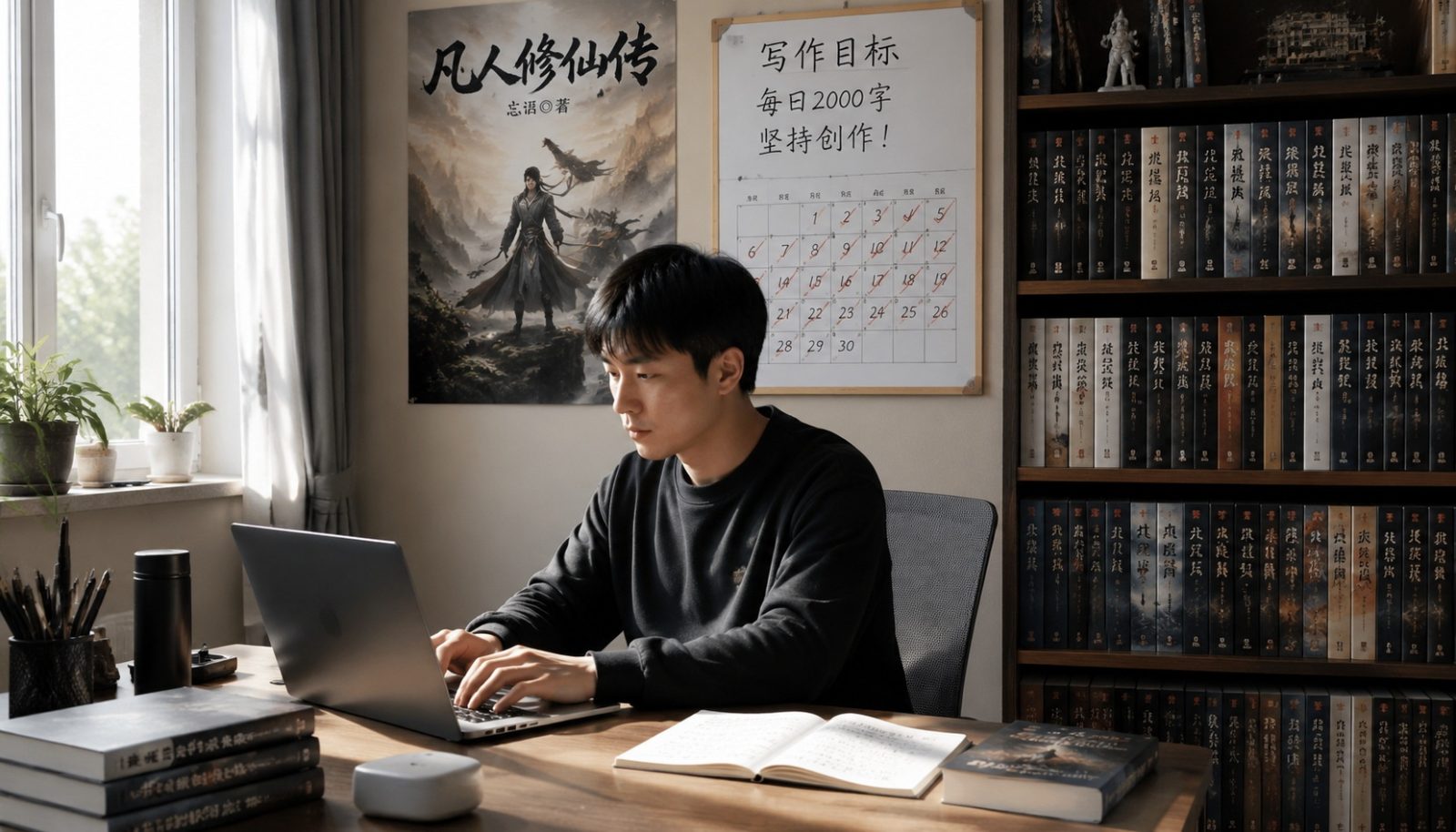

The Morning Ritual: Coffee and a Blank Page
Xu Ming, 28, wakes at 7 a.m. in his rented apartment in Chengdu. The first thing he does is not check his phone—it’s to open his laptop and stare at the blinking cursor of a Word document. His novel, Sky Sword Chronicles, is currently at chapter 1,204. He needs to add another 10,000 words today.

Xu Ming sips his American coffee, takes a deep breath, and begins. His fingers move fast—about 80 words per minute. He doesn’t stop for perfection; he writes the scene as it comes. The protagonist, a young cultivator, is about to break through to the next realm. Xu Ming has planned this chapter for weeks. By 11 a.m., he has written 5,000 words.
Afternoon Momentum and the Voice-typing Trick
After a quick lunch of noodles, Xu Ming switches to voice-typing. He paces in his living room, speaking into his phone’s microphone, his words turned into text in real time. “The sword flew across the valley, leaving a trail of golden light…” He says it, and the text appears. This is how he hits 3,000 more words by 3 p.m.

Xu Ming learned this technique from other authors in his online writing group. “You can’t type 10,000 words by hand every day for years,” he explains. Voice input saves his wrists and lets him capture dialogue more naturally. But it requires focus—one distraction and the text is gibberish.
The Evening Push: Reader Pressure and Discipline
At 6 p.m., Xu Ming takes a break. He checks his reader comments: 2,000 messages on his novel’s forum. Some praise the latest twist, others beg for more chapters. He posts a short reply: “Two more chapters tonight.” Then he opens a second monitor and reviews his plot outline.
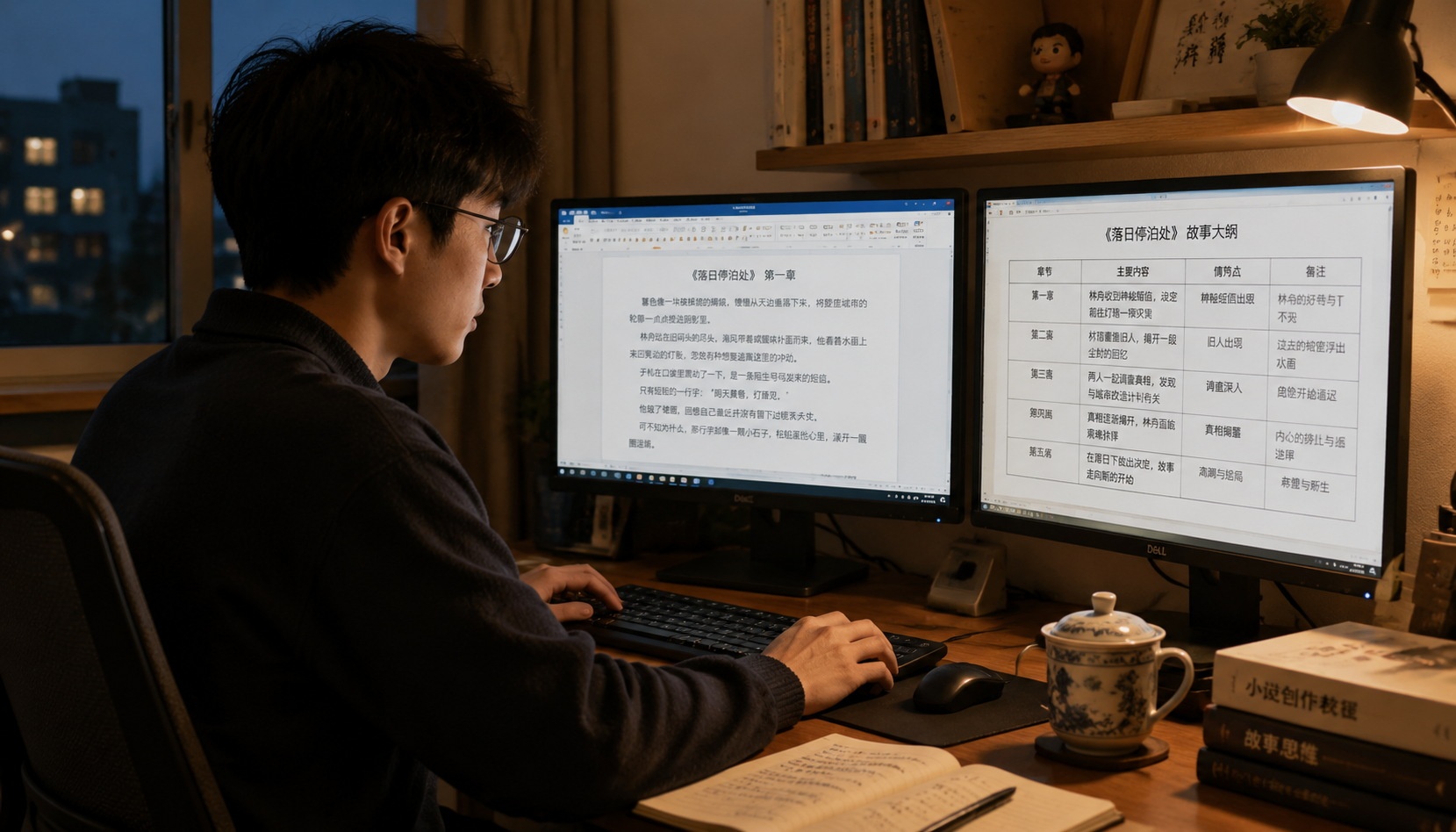
By 9 p.m., he has written the final 2,000 words. He edits quickly, correcting typos and smoothing transitions. At 10 p.m., he uploads the new chapter. Total word count for the day: 10,050. He closes the laptop, rubs his eyes, and lies on the couch. For a moment, he doesn’t think about cultivation, Qi, or immortal sects. He just listens to the street noise outside.
Why 10,000 Words? The Economics of Web Fiction
Xu Ming is one of hundreds of thousands of Chinese online fiction writers. On platforms like Qidian and Zongheng, authors are paid per 1,000 words read by paying subscribers. To earn a decent living—around 10,000 RMB a month—they must produce at least 10,000 words daily. The pressure is relentless, but the top authors can make millions.
Cultivation novels, known as xianxia or xiuzhen, dominate the charts. They blend Chinese mythology, Taoist concepts, and endless power progression. Readers love the fantasy escape, but they also demand speed. “If you stop writing for a day, your readers leave for another book,” Xu Ming says. So he writes on weekends, holidays, and even on sick days.
Not a Dream Job, But a Real One
Xu Ming smiles when asked if he loves his work. “I love the story. I hate the deadlines.” His routine is built on discipline, not inspiration. He sets daily word goals, uses productivity apps, and limits social media. He has learned to type with minimum finger movement and to speak clearly even when tired.
Yet, there are moments of pure joy: when a reader quotes his lines back to him, when a plot twist goes viral on social media, or when he finishes a chapter and feels the world he created is alive. For now, he keeps writing. Tomorrow, he will wake up and do it all over again.
Start the discussion at forum.chinacomes.com