

Under the Mango Trees with a Phone
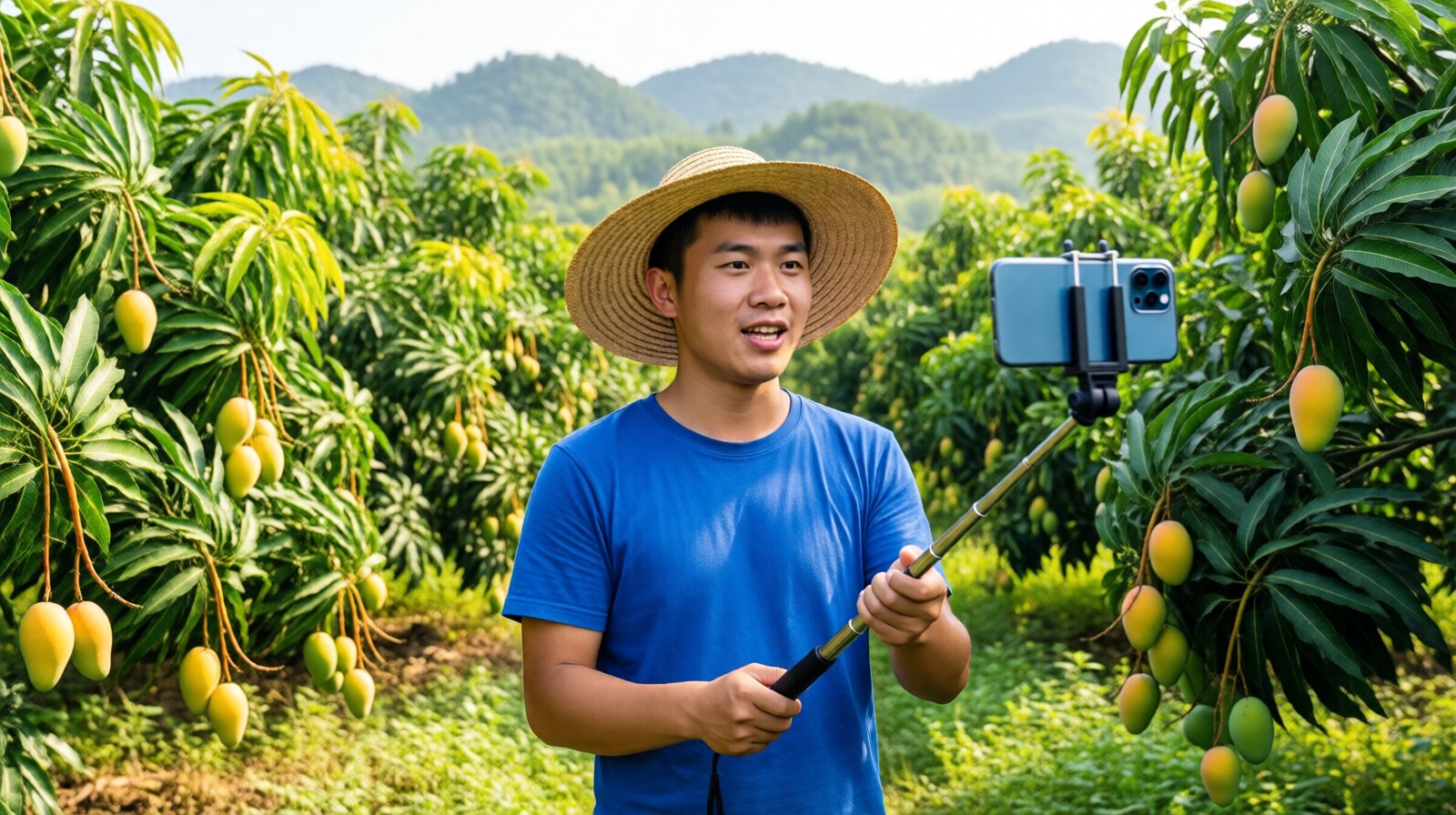
The heat at two in the afternoon is intense. In the mango orchards of Youjiang District, Baise City, Guangxi, I found 28-year-old Huang Jun holding a selfie stick, speaking to his phone in a lively local accent. He was standing right in the middle of a row of mango trees, their heavy branches almost touching the ground. The screen showed a pile of comments, and his voice shifted between playful sales talk and patient answers to questions about ripeness and delivery.
“This is the Gui Qi variety,” he told his viewers, pointing to a yellowish-green mango he had just cut open. “See that? No fiber, sweet and juicy. We’ll pick it at the right time and ship it straight to you.”
When the stream ended, he wiped his forehead and grinned. “Back in 2019, I was working in a factory in Shenzhen. Never thought I’d be talking to my phone under a hot sun every day.”
Why Come Back?
Huang Jun’s story is not unique. In Guangxi, many young people used to leave for the big cities on the coast. But in recent years, some are coming back. For Jun, it was a combination of homesickness and a push from his family’s shrinking income.
“My family has grown mangoes for more than 20 years, but every year around harvest time, we used to wait for middlemen to come and buy from us. Prices were unpredictable, and sometimes, if it rained, the fruit would rot before the trucks arrived,” he explained.
In 2019, his father called to say that the harvest was good but the price was terribly low. “I was already exhausted by the factory life. I just thought, maybe I can try selling online. I knew nothing about it then.”
The First Livestream Was a Mess
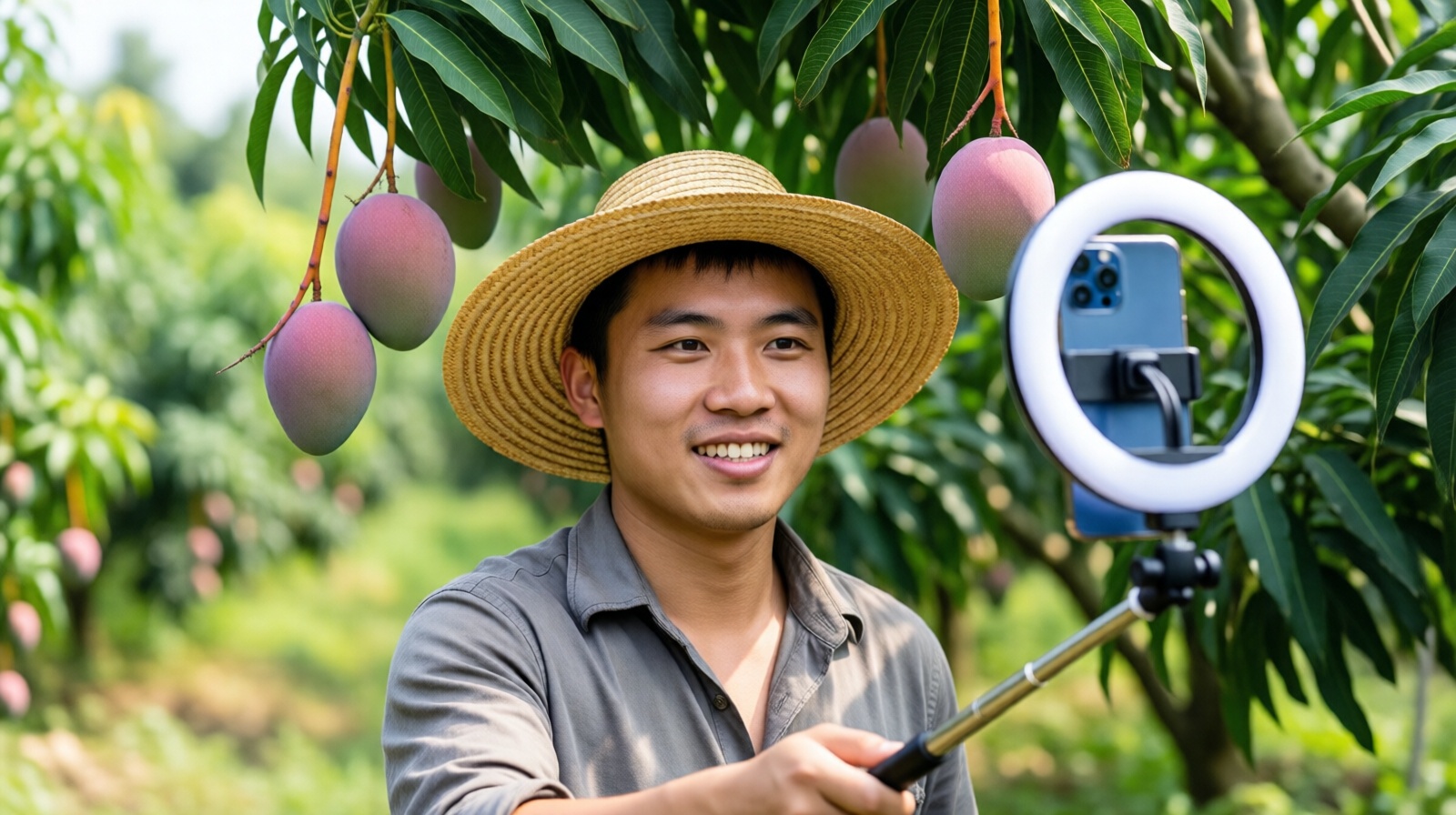
Jun’s first livestream was awkward, he admits. “I used my personal video app account and just pointed at the mangoes. I didn’t know how to talk to the camera. There were only a handful of viewers, and most were friends who came to laugh at me.”
He took a short course by watching tutorials online. He learned that you need to show the product, talk about its benefits, and interact with the audience. He started by standing in the orchard and answering every comment, even the silly ones.
“The big breakthrough came when a customer from Shanghai said they received the mangoes and they were fresh. They made a video and posted it online. After that, more people started following.”
Within a month, his follower count grew from a few hundred to over ten thousand. By the end of the first season, he had sold about 15,000 kilograms of mangoes.
Building a Local Supply Chain
Selling is one thing, delivering is another. Mangoes are perishable, and getting them fresh from the orchard to customers across China is a logistical challenge.
Jun works with his father and several relatives to organise the picking. “We only pick fruit at the right maturity, around 80 percent ripe. Then we put them in special protective foam nets and boxes.” He also partnered with a local express delivery station to get better rates and faster shipping.
To reassure customers, he livestreams the packing process. “People want to see their fruit being handled carefully. So we set up a table in the cool shade, and the workers weigh, wrap, and box the mangoes right in front of the camera.”
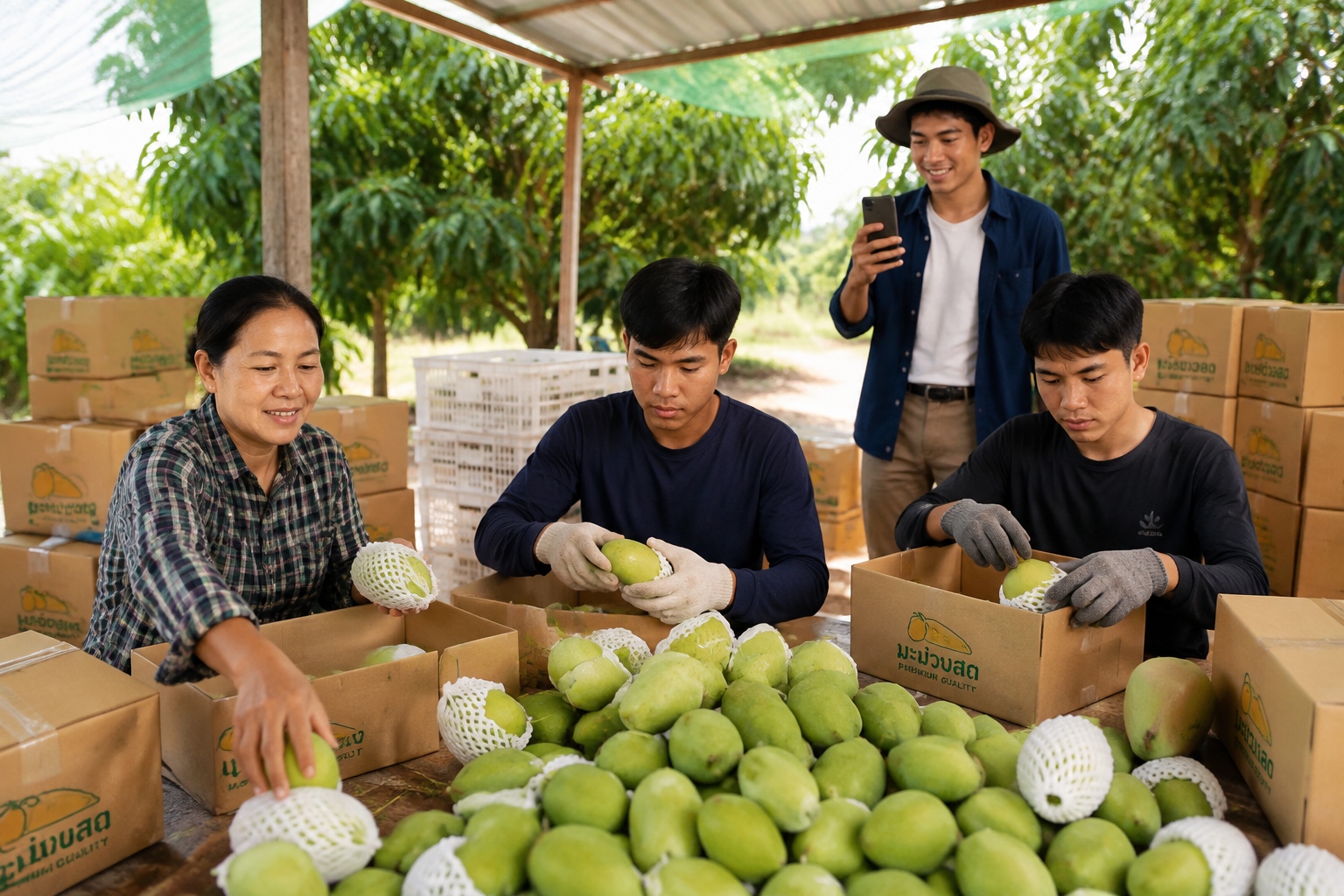
His mother, who used to nag him to get a steady job in the city, now helps with the packaging. “She said she never thought a phone could sell so much,” Jun laughs.
A Day in the Livestream Room
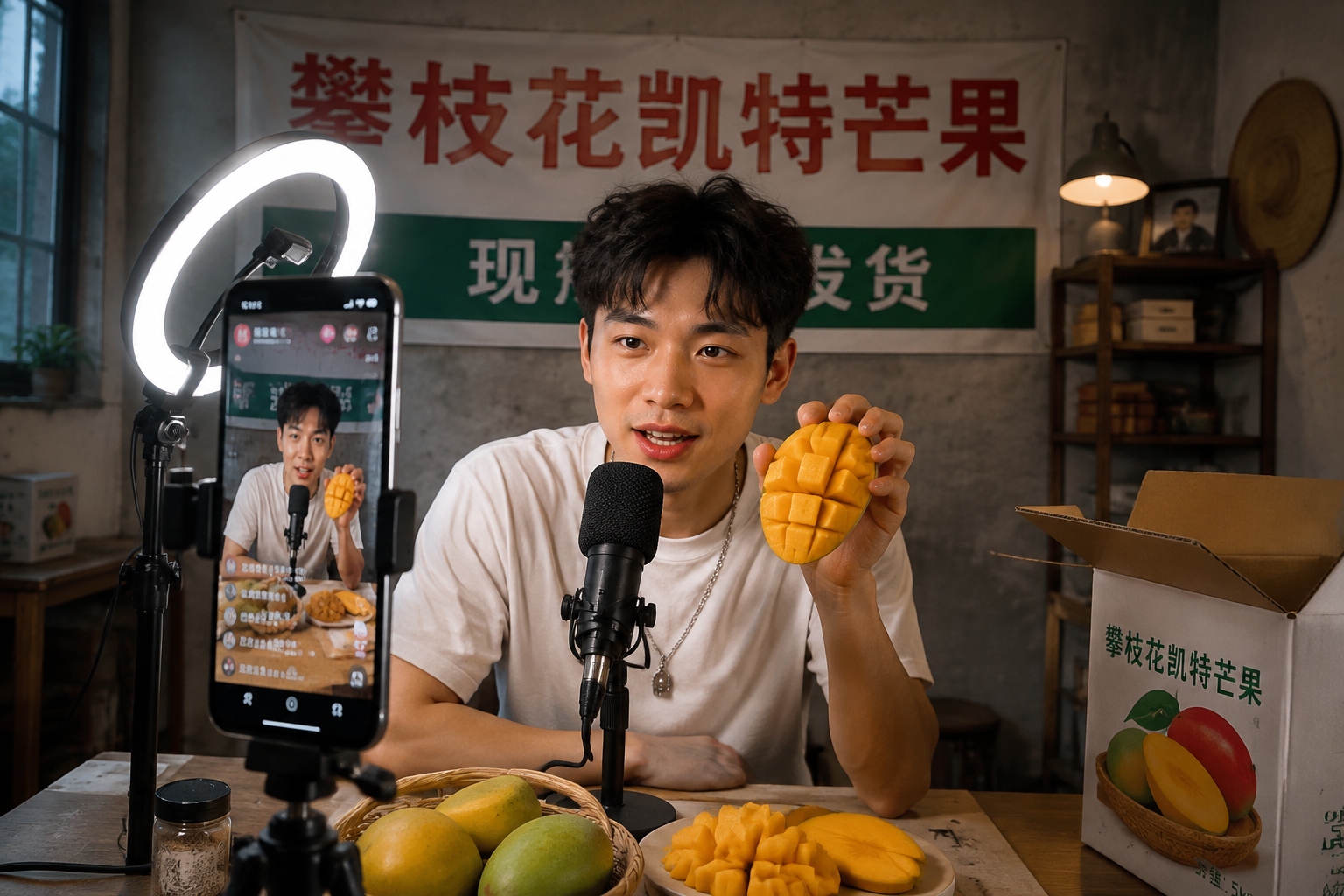
Every evening, after the packing is over, Jun moves to a small room in his house that he has turned into a studio. A desk, a ring light, and a phone tripod are all he needs. He starts the livestream and talks for two to three hours, answering questions, tasting mangoes, and telling jokes. “Sometimes I feel like an entertainer, but it’s worth it,” he says. The live sessions help him connect directly with consumers and build a loyal following. “Once a customer buys, they often come back for more,” he adds.
More Than Just Money
With every season, the operation grows. In 2021, Jun registered a small e-commerce company and hired two other young people from the village. He also started working with six neighbouring families, buying their mangoes at a better price than middlemen.
“I earn more than I did at the factory, but it’s not just about money. People in the village look at me differently now. A few other young people have come back and started selling other local products like walnuts and tea,” he said.
For him, the most meaningful change is the interaction with customers. “When someone tells me, ‘This is the sweetest mango I’ve ever had,’ I feel really proud. My father used to say that mango prices depend on the weather and the middlemen. Now, we have a direct connection with the people who eat the fruit.”
Challenges Ahead
Not everything is smooth. Competition among livestream sellers is getting intense. “You have to constantly keep up with new trends. Sometimes I feel burnt out,” Jun admits. There are also risks of frost and pests, and the pressure to deliver consistent quality.
He is thinking about building a small processing workshop for dried mango slices to reduce waste and create more income. He also hopes to improve his packaging design to make it more attractive.
“I’m learning every day. Being a farmer is no longer about just planting and waiting. It’s about marketing, logistics, and telling your story.”
The Rural Revival Starts with People
From my short visit, I saw how a simple idea—selling mangoes via livestream—can have a ripple effect. The orchards are greener, the village is livelier, and there are young faces among the fruit trees.
Jun’s phone is now his main tool, and the mango orchard is his office. “The city life gave me a salary, but here, I have a life, and I am building something that belongs to me and my family.”
As the sun began to set, he opened his app again and started a short stream to show the golden light on the mango leaves. People were watching from thousands of kilometres away, curious about this pocket of Guangxi. It was a small, everyday moment of a new kind of agriculture taking root.
Start the discussion at forum.chinacomes.com