

It Starts with a Message
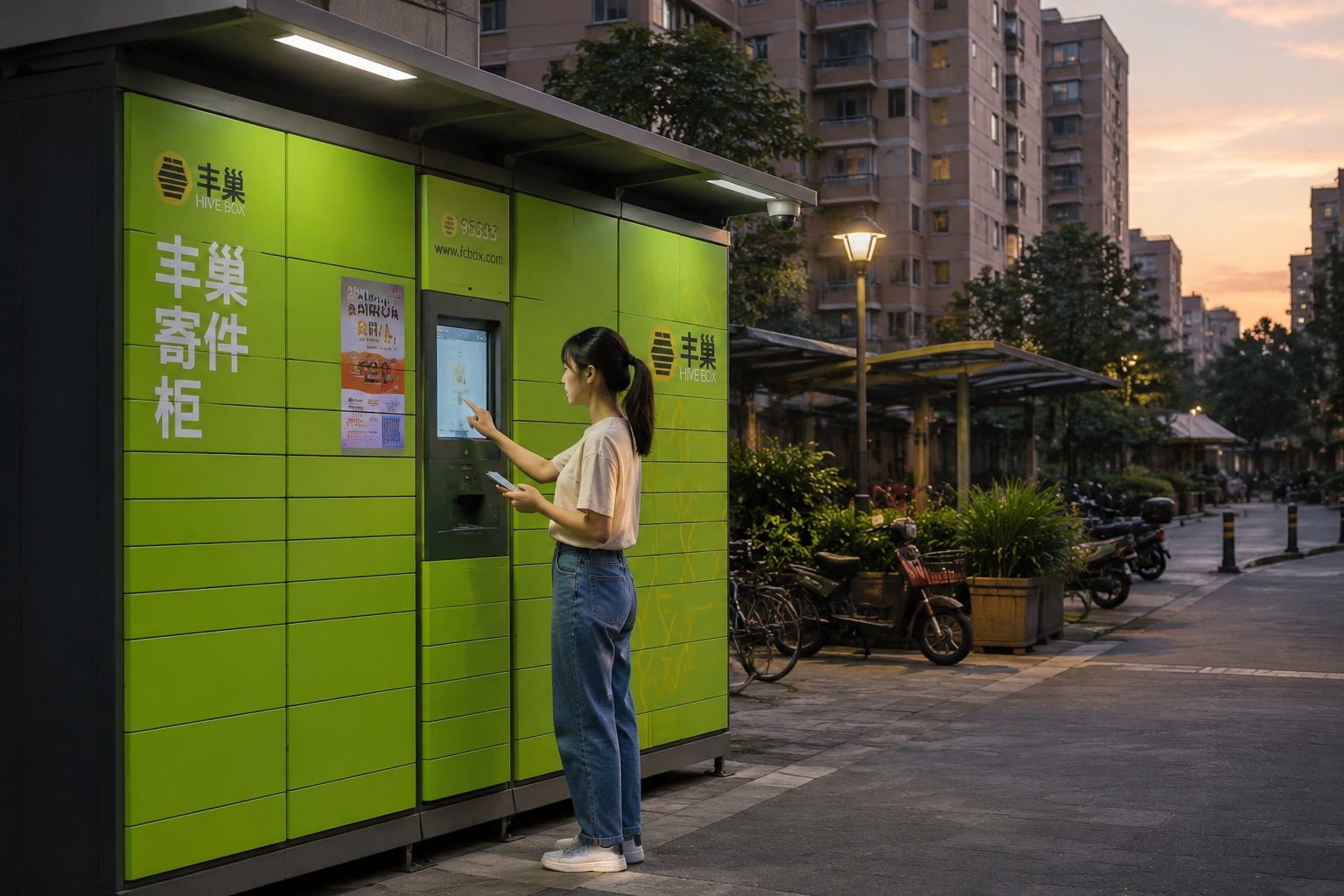
Imagine walking home late in the evening, phone buzzing with a short text: “Your parcel is at locker 02-18. Pickup code: 839562. Valid until tomorrow 23:59.” You turn the corner, tap a screen, punch in six digits, and a metallic door pops open. Inside is the box of coffee beans you ordered two days ago. No knocking, no waiting, no signature.
For millions of people in China, this is not a tech demo. It’s as mundane as checking the weather. Parcel lockers and pickup stations have become the default way package deliveries reach consumers—so much so that “doorstep delivery” often feels like the exception rather than the rule.
The Locker: A Box That Never Sleeps
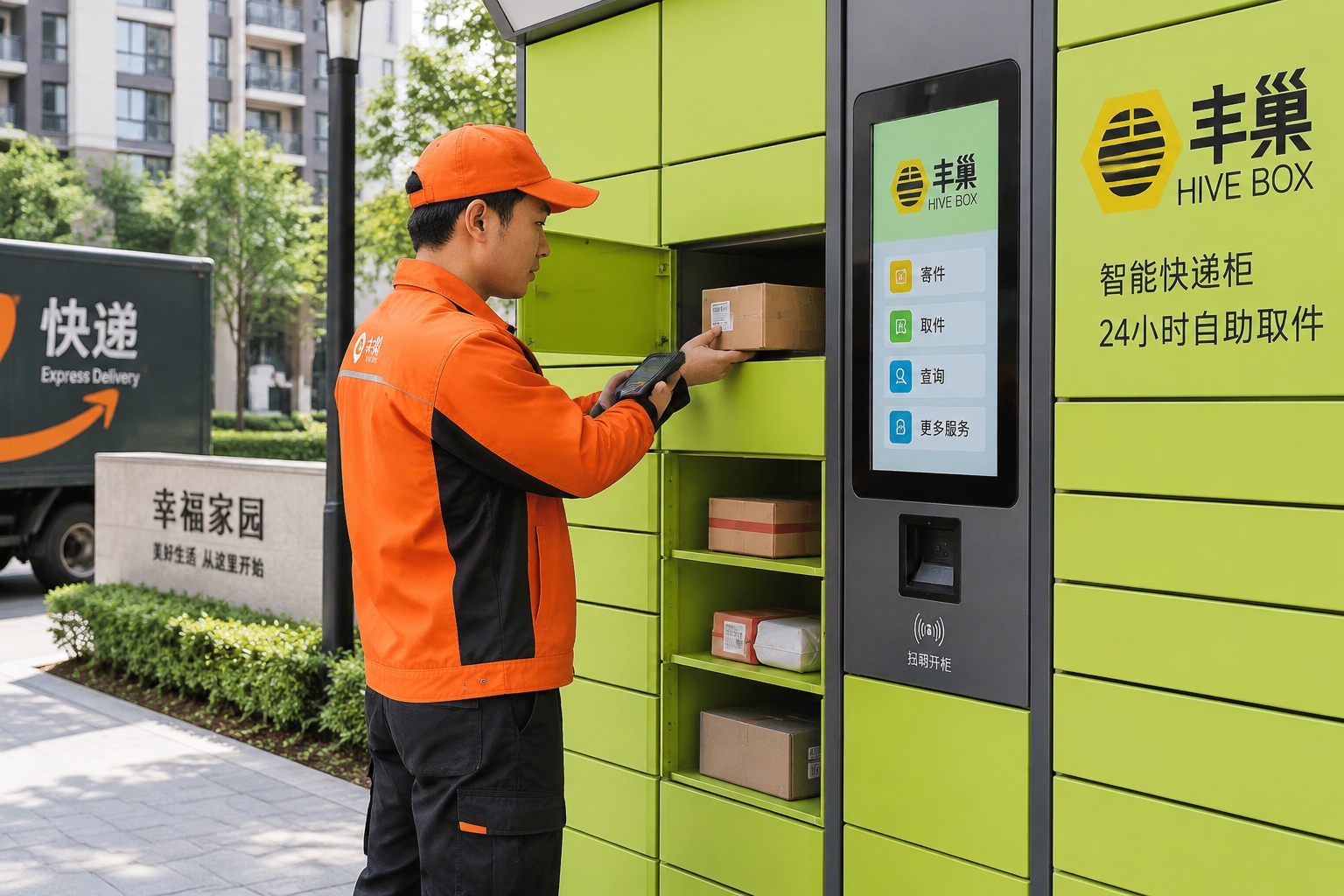
Chinese cities are dotted with tall green or blue cabinets—often tucked into apartment compounds, office lobbies, metro stations, or street corners. Companies like Hive Box (丰巢) and Cainiao Post (菜鸟驿站) operate thousands of these units. When a courier delivers a package they don’t leave it with a neighbor or wait for you to come down. Instead, they place it inside a designated compartment and push a notification to your phone.
Here’s how it works: the courier scans the parcel barcode, system selects a free locker, the locker slides open, in goes the box. A few seconds later you get a text with a unique six-digit pickup code and a location. At the locker, you tap the screen, type the code, and the door opens. Alternatively you can use a QR code from an app. The entire operation takes less than a minute.
What makes this system so attractive is it runs 24/7. Whether you are grabbing groceries at 7am or returning home after midnight, your package is waiting there. In a high-density country where every minute counts, that convenience matters.
The Station: A Social Miniature of Community Life
Not every package fits into a locker. Large boxes, fresh produce, or anything too bulky often ends up at a “station” (驿站). Walk into a typical Cainiao Station and you’ll find not a sterile warehouse but a converted storefront—usually squeezed into a neighborhood supermarket, a printing shop, or a dedicated parcel room.
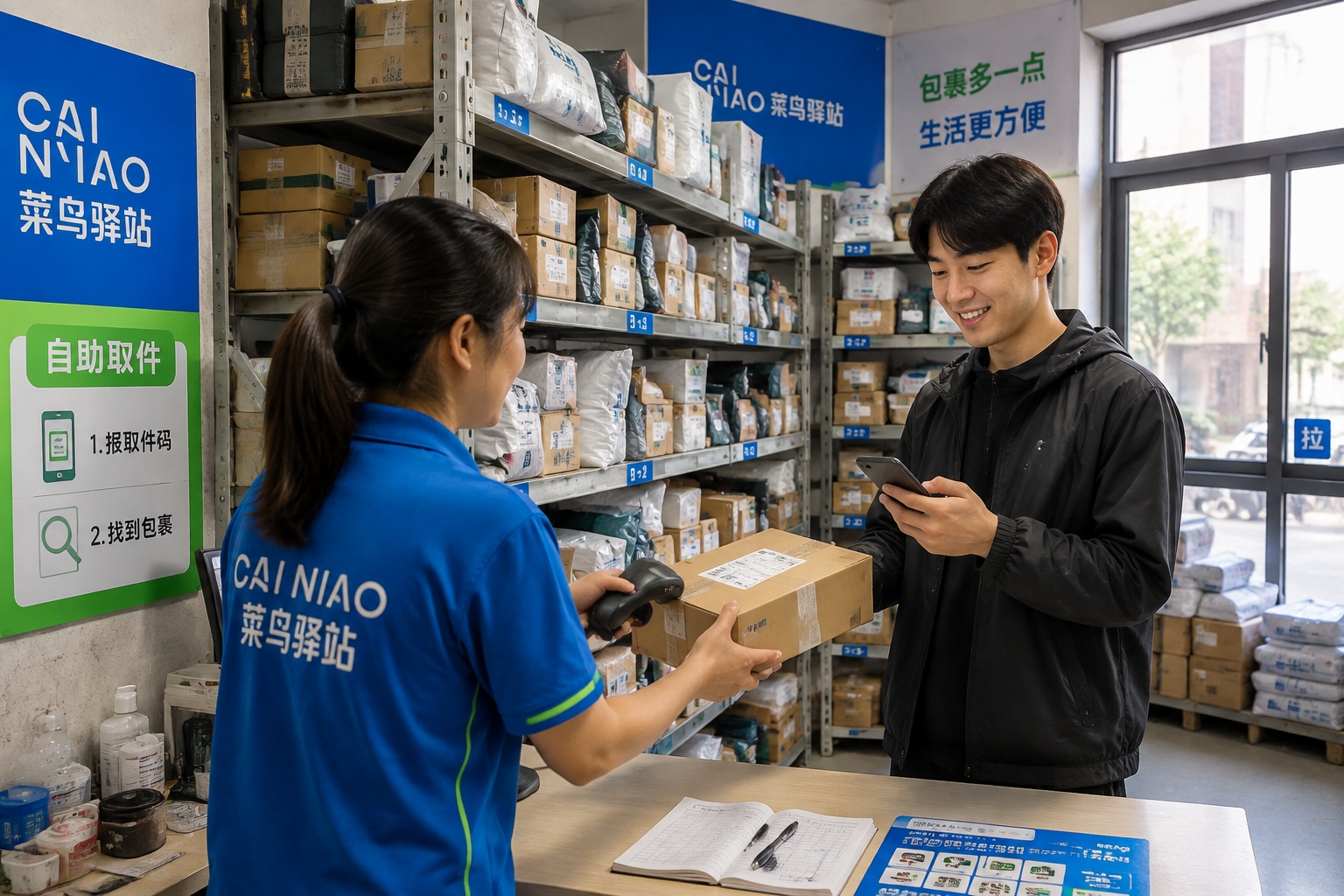
Station staff, many of them small-business owners, scan every item on arrival and stack it on labeled shelves. When a resident comes in, they simply say the last four digits of their phone number. The staff member glances at the shelves, grabs the right parcel, and hands it over. It sounds chaotic, yet in well-run stations the average wait time is under two minutes.
These stations are not just logistics hubs either. They operate as informal community anchors.
Small Talk and Neighborly Rituals
During evening rush hour, the station becomes a microcosm of the neighborhood. A grandmother picks up her granddaughter’s swimsuit, a freelancer grabs a box of camera gear, an office worker retrieves a forgotten phone charger. Seeing the same faces day after day, people naturally start chatting.
“Sorry, I’ve been waiting for this fish sauce,” a man might say to the store owner as she hands him a dripping bag. “Ah, it’s from your hometown, right?” she replies. Daily routines like this are woven into the fabric of China’s urban neighborhoods. The parcel station, like the old neighborhood grocery, is a place where a familiar face still feels familiar.
Why Not Just Deliver to My Door?
Visitors from Europe or North America often ask why couriers don’t simply ring the doorbell and hand over the package. Several reasons, all rooted in how Chinese cities are organized.
First, apartment buildings often have strict security and no easy access for couriers to enter the lobby and take the elevator. The courier would need to split their time between many high-rise blocks, and doorstep delivery consumes precious minutes. If every package went door-to-door, prices would rise or delivery times would stretch.
Second, Chinese urban dwellers spend long hours at work or commuting. Being home at a set time is hard. If a package arrives at noon on a Tuesday, who is going to be there? A locker or station solves that mismatch gracefully.
Third, the parcel volume is staggering—China handles over 100 billion packages a year, according to the State Post Bureau. Lockers and stations act as an efficiency buffer that absorbs the surge. In this context, the “choice” of self-pickup isn’t an inconvenience; it’s a shared compromise that makes the entire system faster and cheaper.
Surge Days: When the Whole System Gets Stress-Tested
If you want to see this infrastructure at its peak, walk past a station during a major shopping festival like Double 11 (November 11) or 618 (June 18). Around mid-morning, a truck pulls up and disgorges hundreds of parcels. Workers scan them into a temporary maze of carts, baskets, and plastic crates. Locker compartments fill up by 10am, leaving floor-to-ceiling shelves packed in the station.
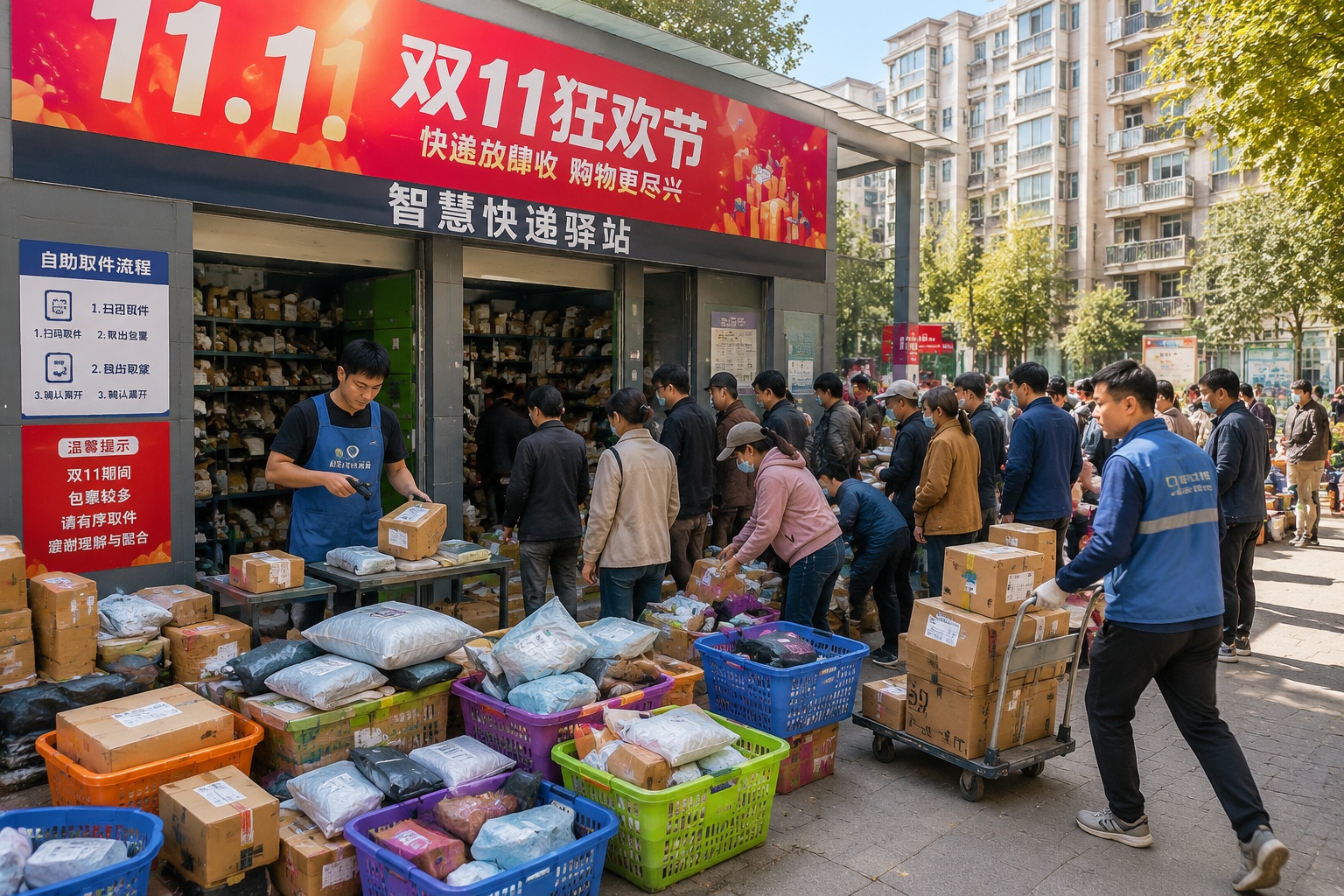
Residents receive notifications, often complaining in community group chats about missing items. But the system normally bounces back in a few days. Station staff work overtime, sometimes until past midnight, and occasionally even rent extra space. This annual ritual is as much a test of logistics as it is a test of patience.
For consumers, the unspoken rule is simple: don’t wait for the system to deliver to your door. Check your phone, visit the station, and get your parcel before the following evening. When a package sits too long, the station may charge a small fee—usually the equivalent of 30 to 50 US cents per day—but most are generous with reminders.
Some locker operators, like Hive Box, began introducing overtime fees after a free period (often 18–24 hours). This has created a long-running debate: is it fair to charge for a package you couldn’t pick up in time? Many residents see it as a minor annoyance, while others feel it adds pressure. The debate is a telling sign of how deeply this system is embedded in daily life.
Who Benefits, Who Pays the Price
From a courier’s perspective, lockers and stations are a game changer. Instead of spending an hour per apartment block, they can complete dozens of deliveries in a single stop. In some Chinese cities, a typical courier handles more than 200 parcels a day; without these facilities that number would simply crumble.
Consumers, in turn, gain flexibility. A mother doesn’t need to drag her toddler to stay home waiting for a parcel. A young professional can collect packages on the way back from a workout. The only real downside is the absence of the “front door moment”—the surprise, the direct handoff, the chance to inspect before the courier leaves. That personal touch has largely disappeared, replaced by a more efficient, self-service routine.
A Quiet Symbol of Modern China
On the surface, the parcel locker system is just about logistics. Look a little closer and you see a mirror of contemporary Chinese society: dense cities, flexible working hours, a deeply pragmatic approach to technology, and an unspoken social contract between courier, station owner, and consumer.
So the next time you visit China, don’t be surprised if a text message leads you to a green metal cabinet. Take the code, open the door, and be glad it’s there. And if you need help, look around—someone with a phone in their hand and a package in the other is probably about to show you how it’s done.
Start the discussion at forum.chinacomes.com