
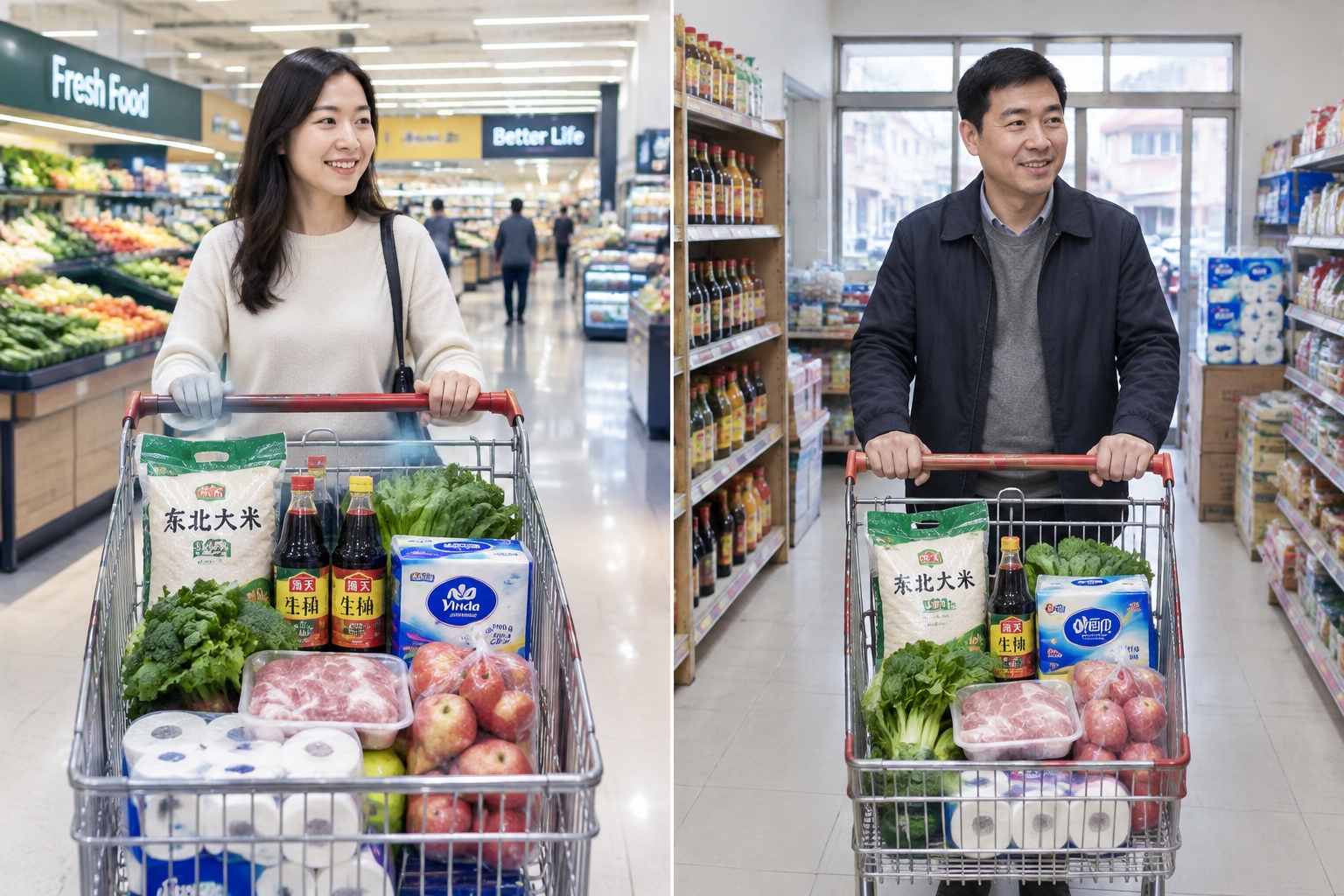

One Shopping List, Two Very Different Carts
On a Saturday morning in late March, Liu Wen pushed a cart through a busy supermarket in Shanghai’s Putuo District. Nearly 800 kilometers away, in a county town in Hubei Province, her cousin Zhang Lei did the same thing at the largest supermarket near his apartment.
They carried the same list: a 5-kilogram bag of rice, a 1.8-liter bottle of soy sauce, a pack of six tissue boxes, a kilogram of pork belly, 500 grams of tomatoes, four apples, a tube of toothpaste, and a 12-roll pack of toilet paper. Same brands where possible. Same specifications. Same day.
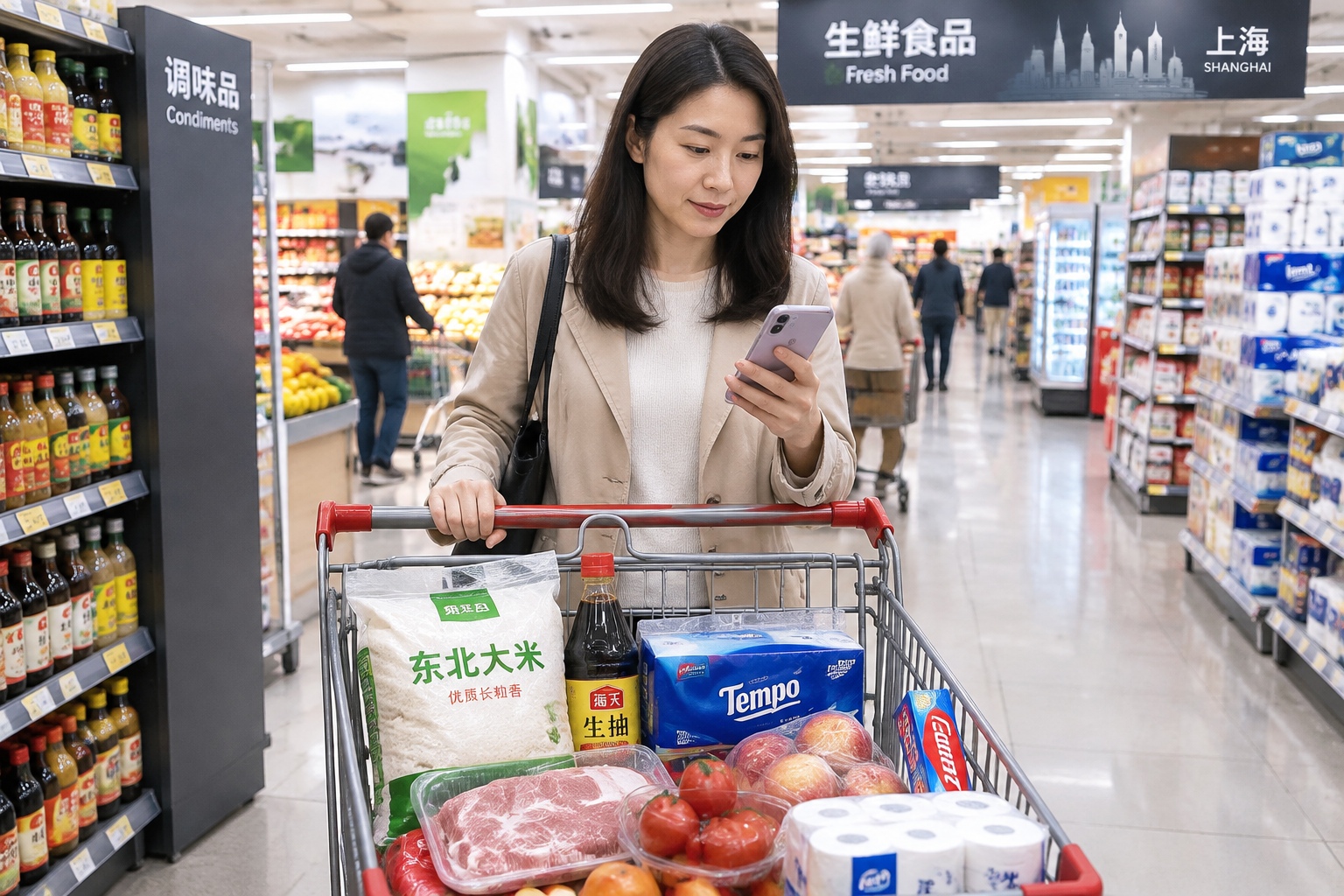
The assumption most people make — inside China and outside it — is that the big city costs more. Higher rents, higher wages, fancier stores. Surely the small-town cart is cheaper.
That assumption is wrong for most of the items on this list. And understanding why tells you more about how China’s supply chains actually work than any macro economic report.
Why We Chose This Comparison
Online debates about Chinese prices often collapse into anecdote: “I bought cabbage for 50 cents in my hometown” versus “I paid 4 yuan in Beijing.” Those stories are real, but they rarely compare the same thing at the same time.
So we set ground rules. Same product category. Same brand and specification whenever available. Same weekend. Two local shoppers — Liu Wen, a 31-year-old office worker in Shanghai, and Zhang Lei, a 28-year-old teacher in Hubei — buying for their own households, not for a photo op.
We focused on what a typical family actually puts in a cart every week: staples, fresh food, and daily chemicals. Not luxury imports, not restaurant meals, not housing.
What the Receipts Showed
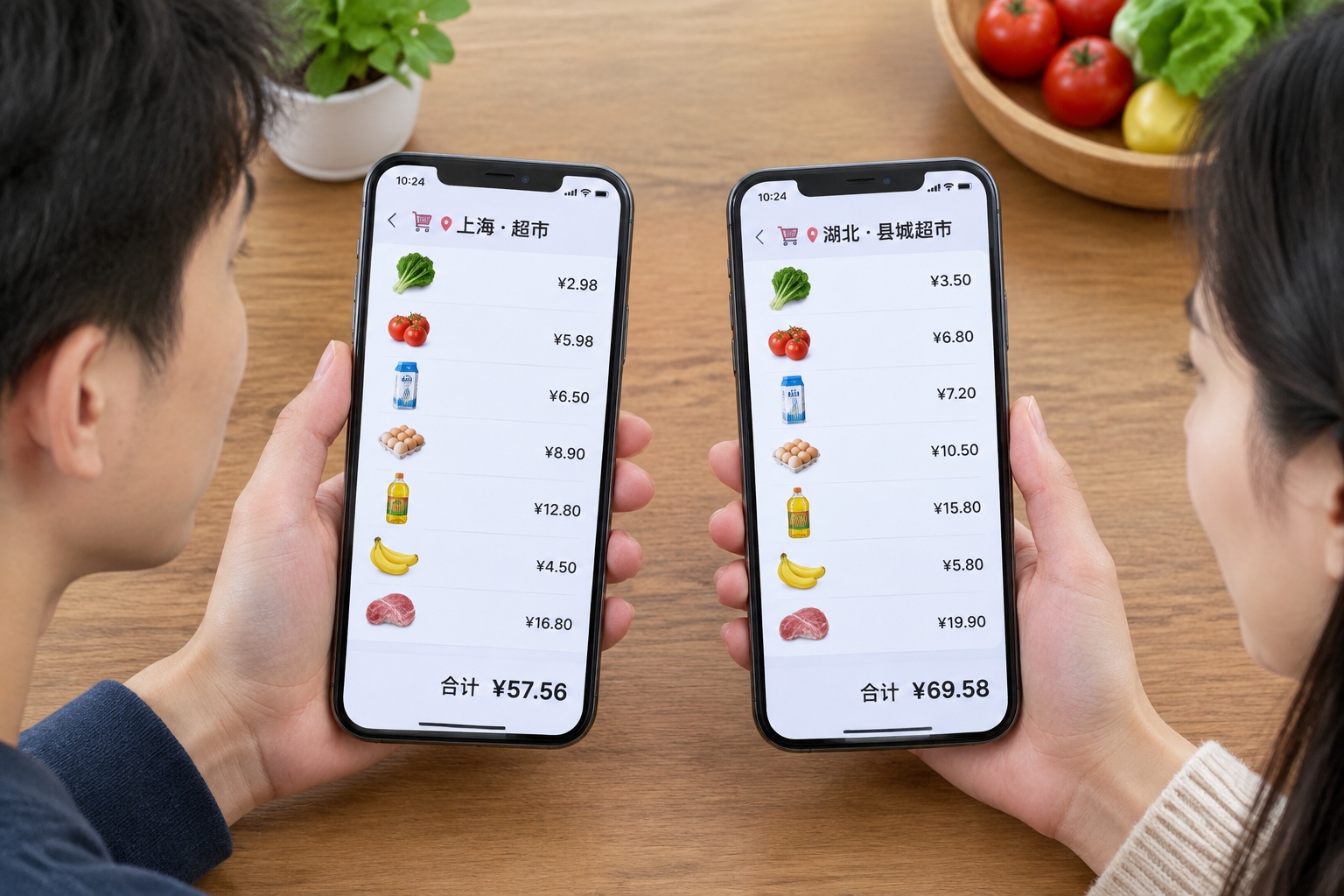
Here is the breakdown. Prices are in yuan, converted to US dollars at roughly 7.2 yuan to 1 dollar for reference.
Standardized Goods: The Big City Wins
The 5-kilogram bag of rice, a nationally distributed brand: Shanghai paid 39.9 yuan ($5.54). The Hubei county town paid 45.8 yuan ($6.36) — about 15% more.
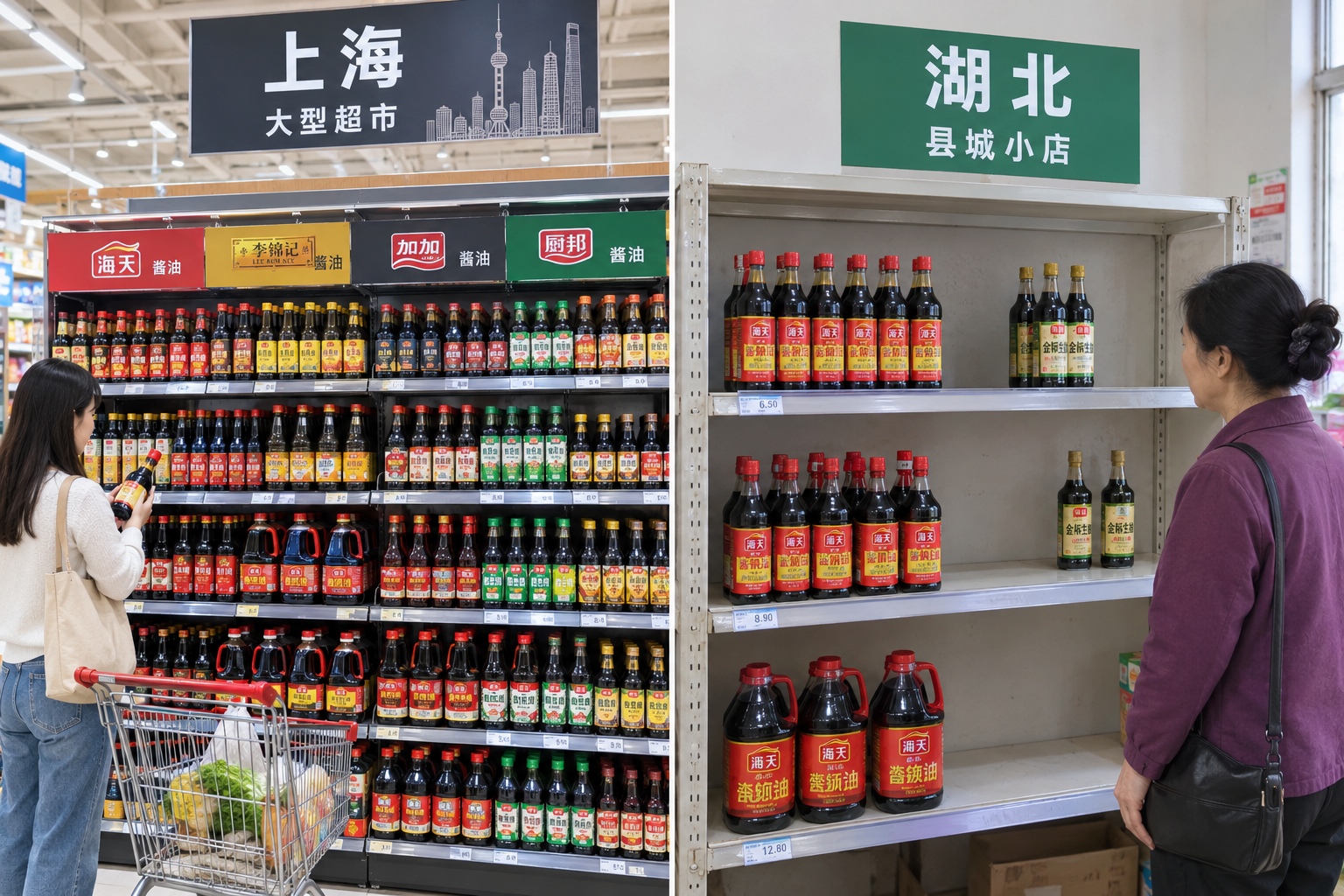
The 1.8-liter soy sauce, same brand: 23.5 yuan in Shanghai, 27.9 yuan in Hubei.
The six-pack of tissues: 18.9 yuan versus 22.5 yuan. The toothpaste: 12.8 versus 15.5. The 12-roll toilet paper: 29.9 versus 35.8.
None of these are exotic. They are the definition of everyday. And in every case, the small-city shopper paid more.
Why? Volume. The Shanghai supermarket is part of a national chain that buys directly from manufacturers or first-tier distributors. It receives truckloads at regional warehouses and distributes to stores. The Hubei supermarket buys from a local distributor, who bought from a provincial distributor, who bought from the manufacturer. Each layer adds a margin.
Liu Wen’s supermarket also runs weekly promotions on these items to drive foot traffic. Zhang Lei’s store runs promotions maybe once a month, and the discounts are smaller.
Fresh Produce: A More Complicated Picture
Here the story splits.
Pork belly, same cut, same day: Shanghai 28.8 yuan per 500g. Hubei 32.5 yuan. The big city was cheaper, likely because the Shanghai store sells far more pork and can buy whole carcasses at lower unit cost.
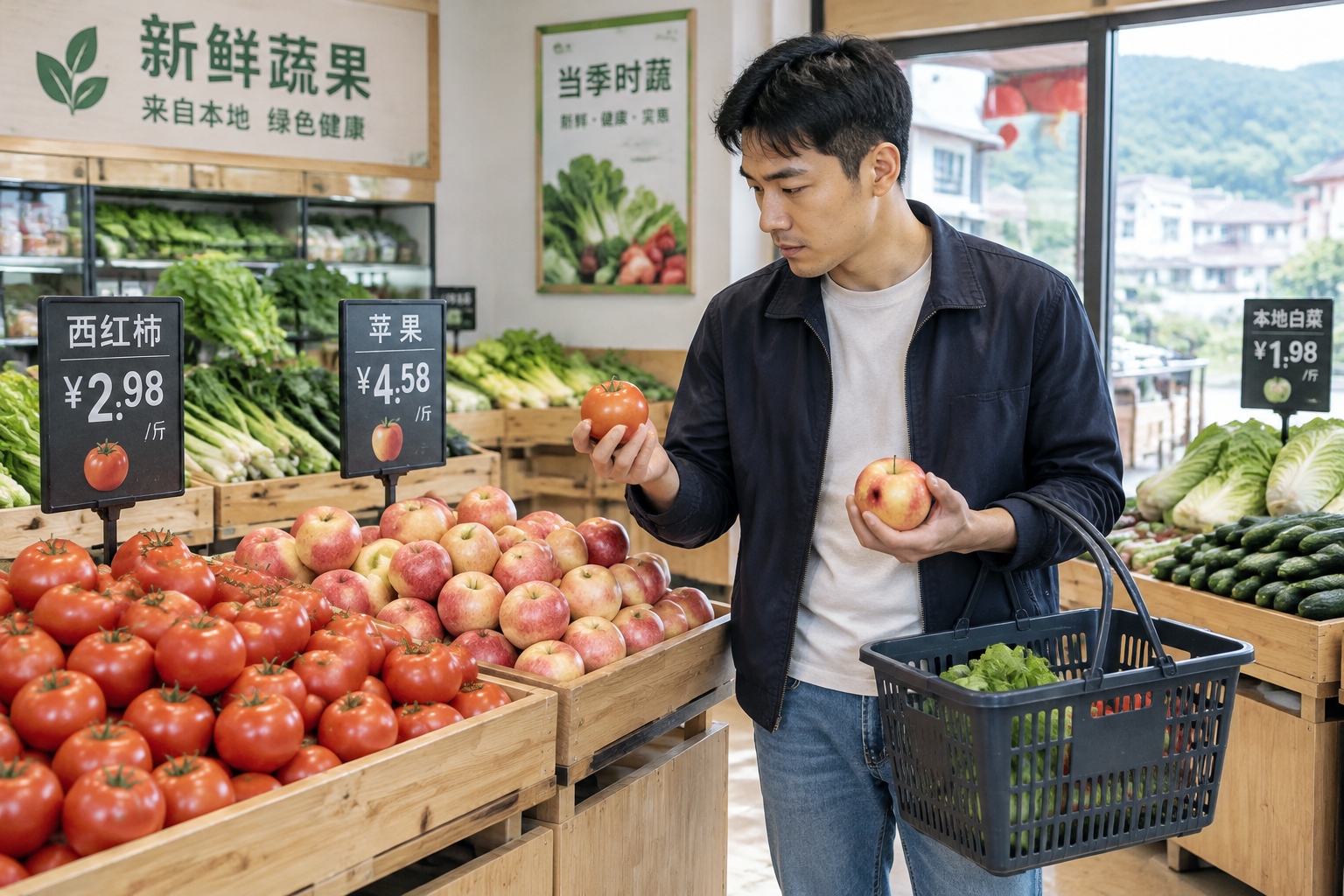
Tomatoes: Shanghai 6.9 yuan per 500g. Hubei 5.5 yuan. The small town won — local greenhouses were in season, and the tomatoes traveled less than 30 kilometers to the store.
Apples: Shanghai 9.9 yuan per 500g for a common variety. Hubei 7.8 yuan. Again, the small town was cheaper, probably because the apples came from a nearby orchard rather than a distant cold-chain hub.
This matches what supply-chain researchers have documented for years: standardized packaged goods flow efficiently to big cities, while fresh produce often flows through big cities to small ones — or, if it is truly local and in season, never leaves the small town at all.
Zhang Lei explained it simply: “In spring, everyone here eats what grows nearby. The supermarket competes with the wet market down the street. If they price tomatoes too high, nobody buys them.”
The Hidden Costs of Small-Town Shopping
Zhang Lei’s cart also revealed something that rarely makes it into price comparisons: limited choice.
His supermarket carried one brand of soy sauce in the size we wanted. Liu Wen’s Shanghai store carried four. The Hubei store had no discount section for near-expiry goods. It had no store-brand alternatives, which are typically 20–30% cheaper.
“If I want the cheaper option, I have to order online and wait three days,” Zhang Lei said. “Or I drive to the city.”
That is a real cost, even if it does not show up on the receipt.
What This Means for Visitors and Residents
If you are traveling in China and trying to eat and shop on a budget, the practical takeaways are straightforward.
For packaged goods and daily chemicals: Buy in big cities or on e-commerce platforms. Large supermarkets and online stores almost always beat small-town shops on price for the same brand.
For fresh food: Buy local and in season. A county-town wet market in spring or autumn can be remarkably cheap. A big-city wet market is also competitive, often cheaper than the supermarket next door.
For anything imported or out of season: Expect to pay more in small places. The logistics chain is longer, and the customer base is thinner.
For services — haircuts, meals, repairs: The small town usually wins. Labor is cheaper, rents are lower, and competition is personal.
The Bigger Picture
The old mental model — big city expensive, small town cheap — was never quite right, but it made sense when supply chains were short and local. Today, China’s retail prices are shaped less by local rent and wages than by scale, logistics, and competition.
A Shanghai supermarket sells so much rice that a few cents of margin per bag is enough. A Hubei supermarket sells so little that it needs a bigger margin to survive.
That is not a story about one place being better. It is a story about how scale works — and why the same shopping list can cost more in a place where everything is supposed to be cheaper.
Liu Wen’s cart total: 187.5 yuan ($26.04). Zhang Lei’s: 213.2 yuan ($29.61).
Same list. Same weekend. The small town paid 14% more.
Start the discussion at forum.chinacomes.com