

Introduction
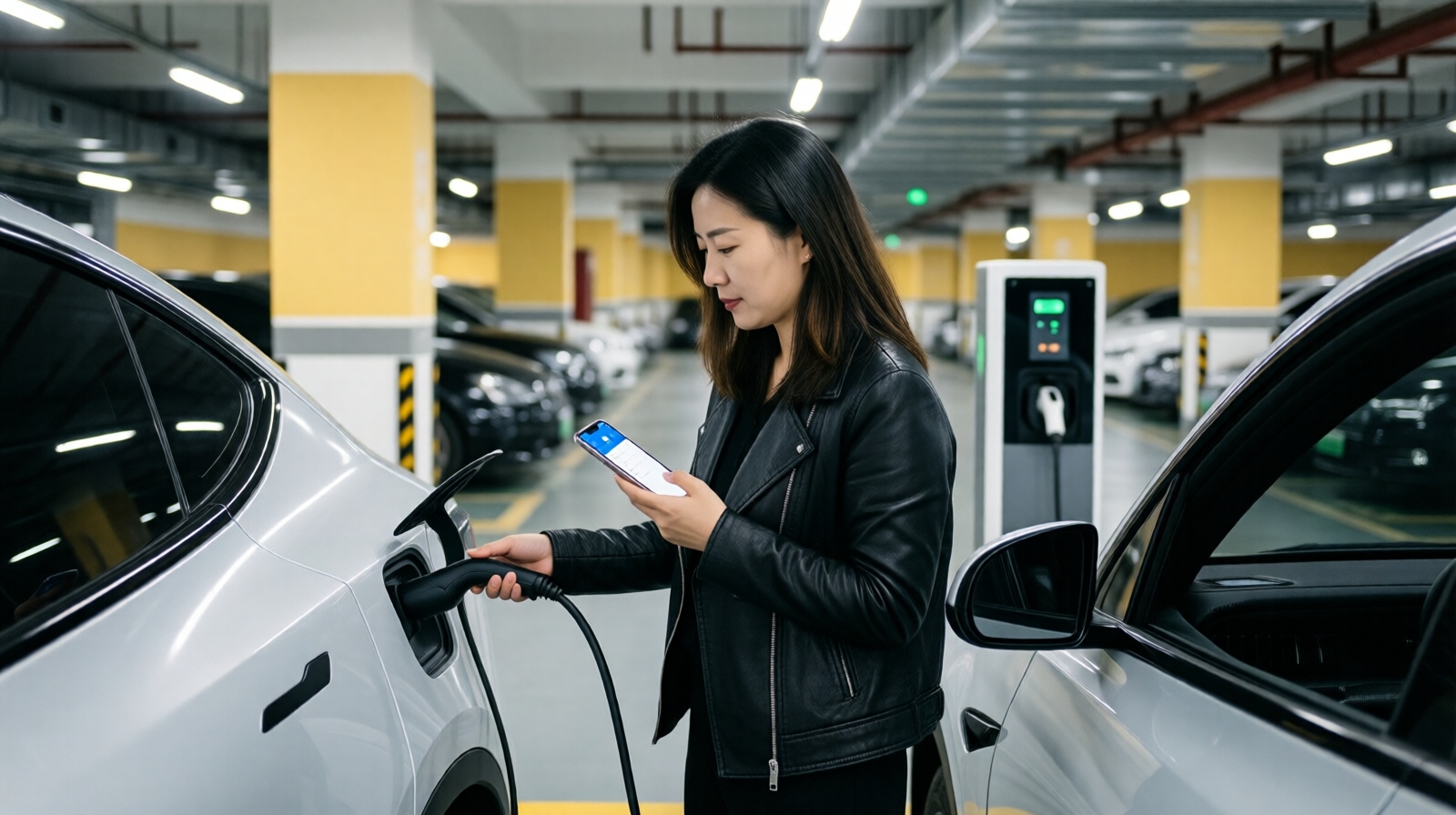
In a residential neighborhood in Shanghai, a woman named Li Wei pulls her white electric hatchback into the parking spot under her apartment building. She plugs the charging cable into the port, taps a button on her phone screen, and walks upstairs. By morning, the battery is full. This nightly routine has become ordinary for millions of Chinese EV owners. What they don’t see is the invisible coordination happening inside the power grid—a continuous flow of data, price signals, and automated commands that decides when and how fast each car charges.
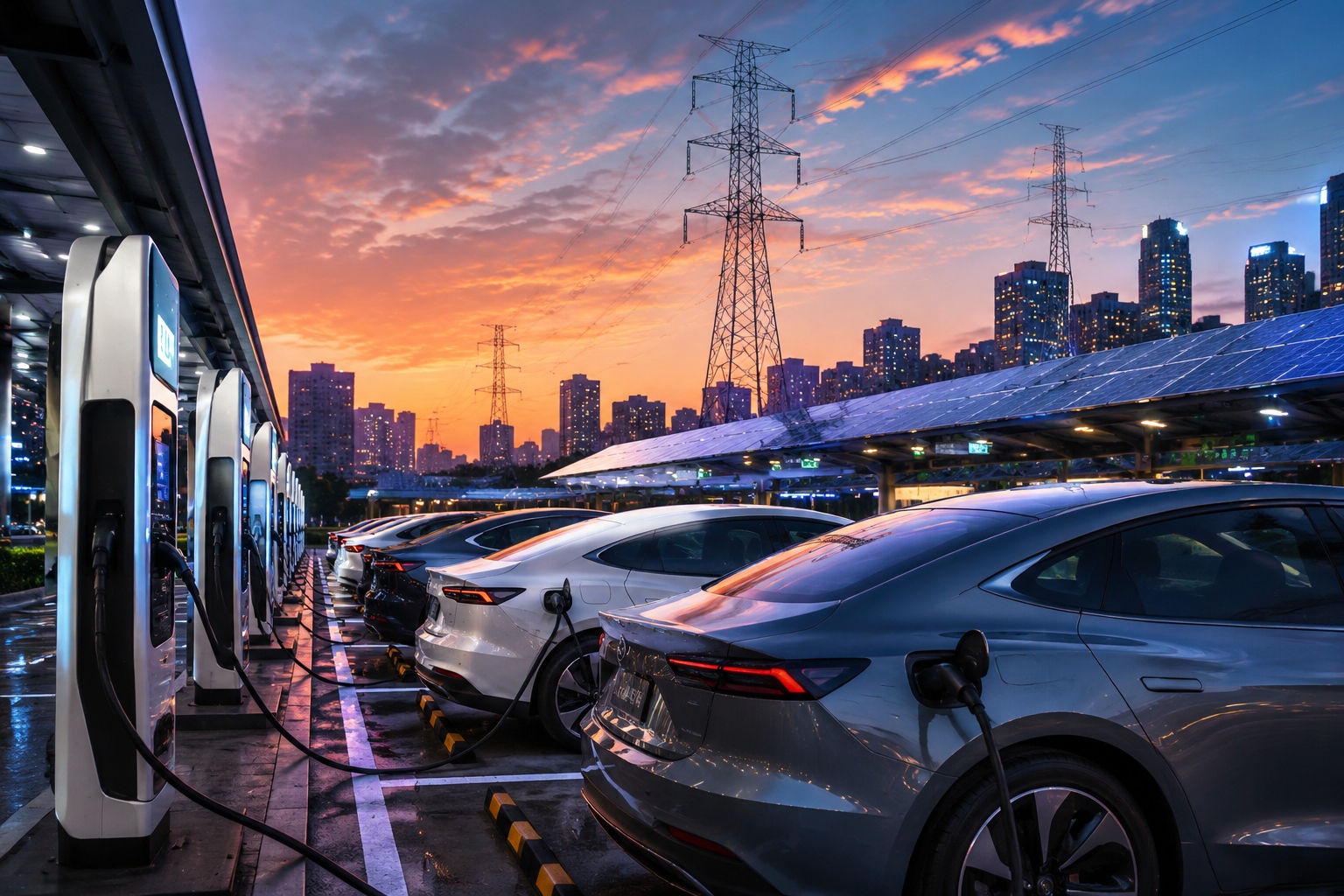
China now has over 20 million new-energy vehicles on its roads, more than any other country. Every evening, when drivers return home and plug in, the demand for electricity spikes. The grid must handle millions of charging sessions simultaneously, often in the same residential blocks. If not carefully managed, these spikes can overload local transformers, black out neighborhoods, or force utilities to make expensive emergency purchases. Yet widespread blackouts caused by EV charging are rare in China. The reason lies in a quiet system of tools and rules that operates in the background: the hidden power battle.
Why the Charging Peak Is a Challenge
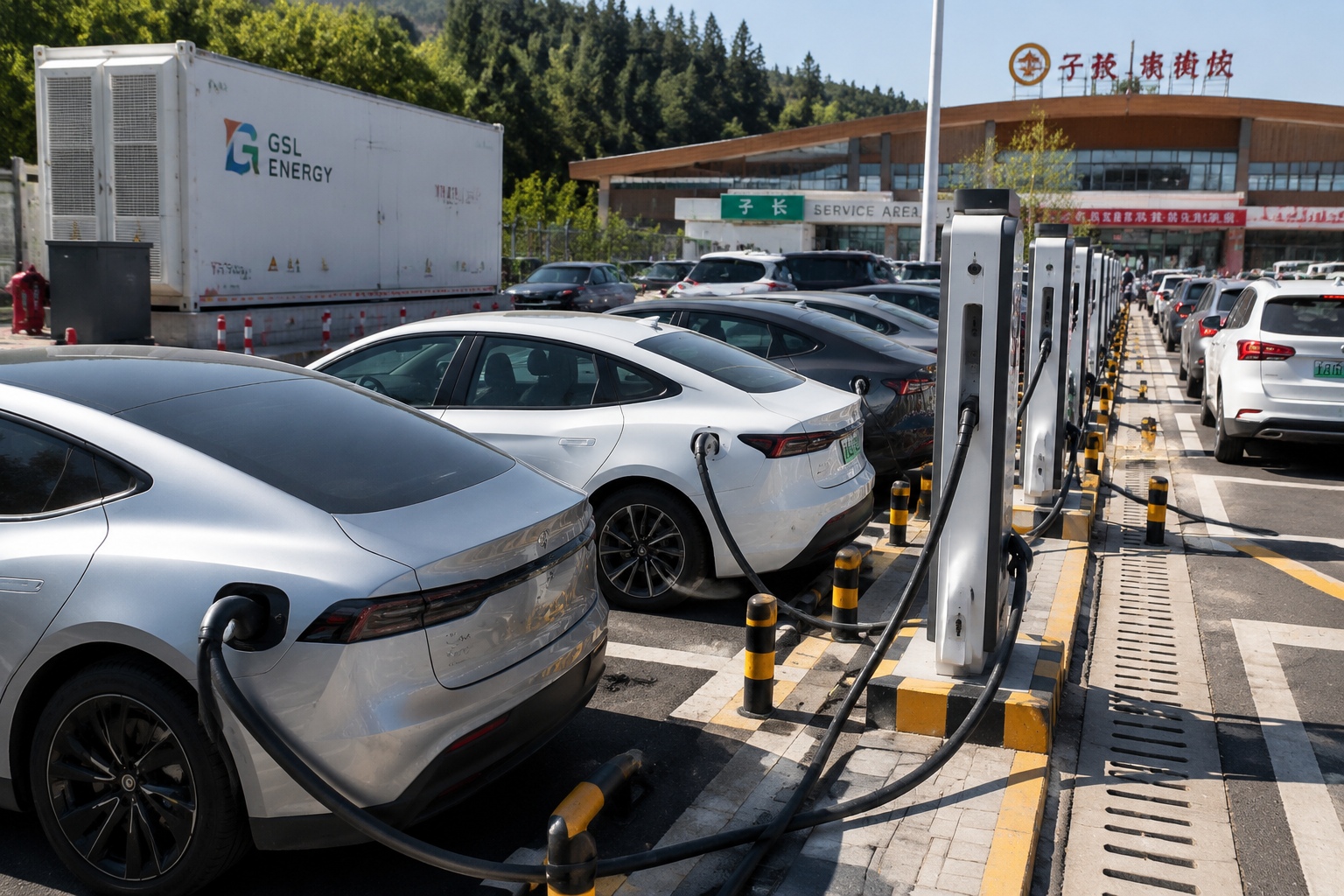
The first big challenge is a timing problem. Most EV owners charge in the late afternoon and evening, right when home power use peaks. In cities, older apartment complexes built decades ago may not have enough transformer capacity to feed hundreds of new chargers. On highways, the situation worsens during Chinese New Year and other travel holidays, when service area chargers line up for hours and demand surges to several times normal levels. During this year’s National Day holiday, the State Grid reported that charging volume on highway service area stations jumped by nearly 30 percent from a year earlier. The grid’s load curve develops a sharp evening peak, and the difference between peak and valley widens.
How the Grid Fights Back: Orderly Charging, Storage, and Price
To deal with this, grid operators have adopted a tool called ‘orderly charging’ (有序充电). This digital control system no longer treats every charger as a free user. When a car is plugged in, the charger and the grid exchange information. The system can postpone or slow down charging during local peak hours, and resume full power at night when demand falls. For instance, in a community with a 630 kVA transformer, the system might reduce each charger’s output from 7 kW to 3.5 kW for a short period, keeping total load safe. This controlled delay rarely bothers drivers, because the battery is still ready by the next morning. In some pilot projects, the grid also uses machine learning to predict charging demand based on weather, holiday calendars, and traffic flows.
Another key countermeasure is battery storage. At many highway service stations and busy urban charging hubs, large battery containers are installed on-site. These units store electricity during the night when it is cheap, and release it during the day when chargers are busy. A service station in Jiangsu used its storage system to smooth out demand surges during the recent holiday, enabling more than 600 charging sessions per day without needing to upgrade the local substation. Storage not only reduces strain on the grid, but also brings revenue by arbitraging price differences.
Price is the third lever. China has widely implemented time-of-use electricity tariffs. In Shanghai, for example, the price of electricity charged to a home EV charger is as low as 0.3 yuan per kilowatt-hour after 10 p.m., while it may be twice as high during the evening peak. This encourages owners to delay charging until late night. Many cars have smart scheduling, and most charging apps allow users to set a timeslot. As a result, the actual charging load is no longer concentrated at 7 p.m., but naturally shifts toward the valley hours. To make the system easier to grasp, one popular app displays a simple curve: the cheapest hours are highlighted in green, the peak hours in red.
A Two-Way Conversation Between Grid and Drivers
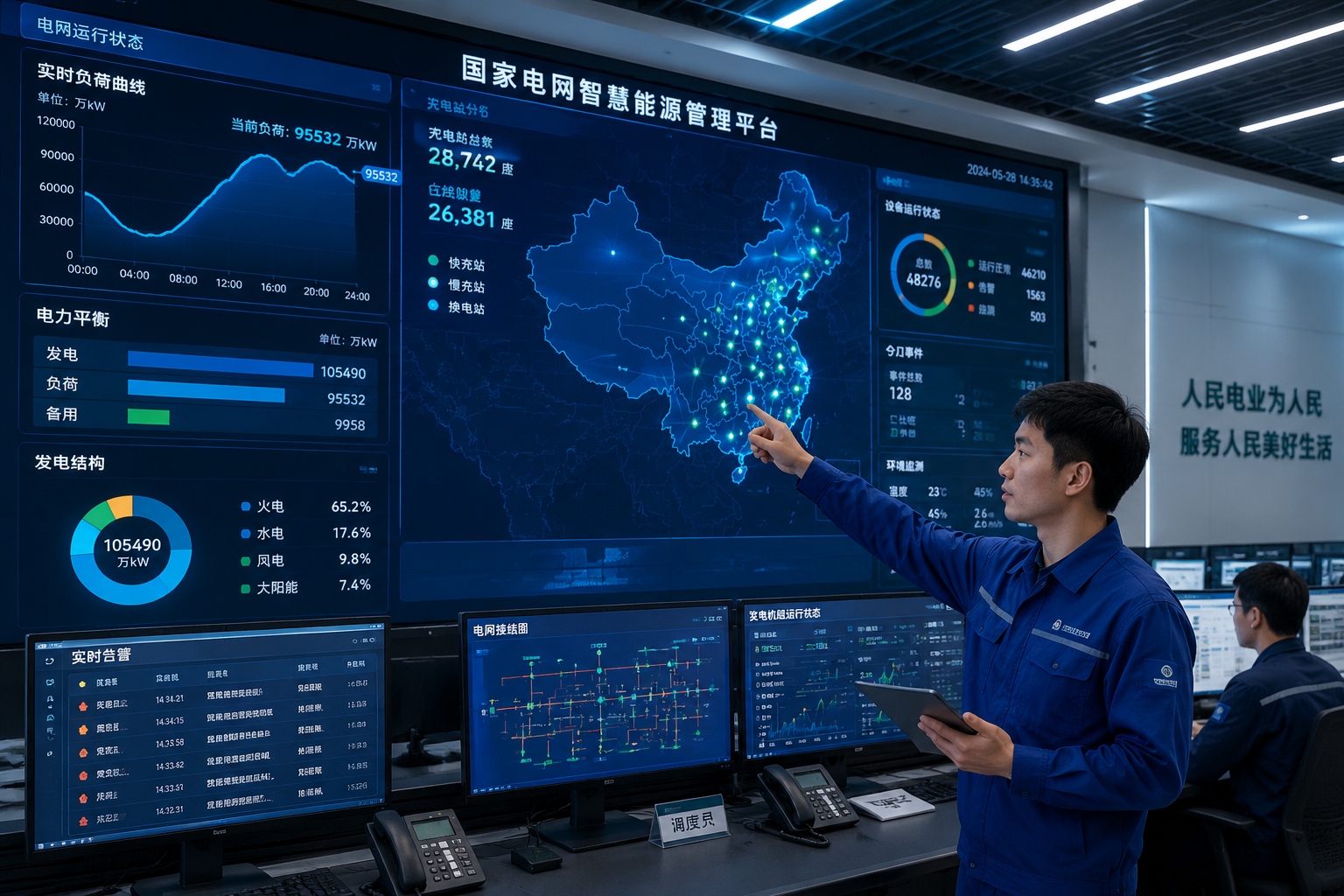
But the most visible change is the way grids and drivers interact. Charging apps such as State Grid’s e-Charge and private platforms like TELD or Star Charge now serve millions of users. They offer real-time availability, reservation, and automatic payments. In residential communities, a growing number of parking spots come with private chargers connected to an orderly charging network. The driver simply plugs in, and the system decides the optimal charging schedule. For older neighborhoods lacking capacity, utilities are upgrading transformers and adding distribution infrastructure. Some cities have launched ‘shared charger’ programs, allowing several households to use one charging station sequentially, further flattening the demand curve. In Shenzhen, a district near the city center saw over 80% of its new charge points integrated into a smart dispatch platform within a year, allowing all chargers to respond to grid signals automatically.
What Comes Next
Looking ahead, the next step is vehicle-to-grid, or V2G. It transforms EV batteries into mobile energy storage units that can discharge electricity back to the grid when needed. China has launched pilot projects in more than a dozen cities, including Beijing, Wuxi, and Shenzhen. In one test, a bus depot in southern China lets its electric buses sell power to the grid during the evening peak, then recharges them at night. The buses earn money while providing a valuable service to keep the grid stable. As renewable power grows, solar and wind generation fluctuate with the weather, so flexible resources like EV batteries become even more valuable.
China’s trials of ‘virtual power plants’ are already aggregating thousands of chargers and batteries into a single dispatchable resource that can be adjusted in seconds. On the outskirts of Qinghai, a solar park uses a large battery bank to store midday solar power, and then releases it in the evening to charge overnight long-haul electric trucks.
Conclusion
None of this makes the front page of newspapers. It’s the unglamorous work of load forecasting, communication protocols, and pricing schemes. But the results are striking: a transportation transformation that has overwhelmed grids elsewhere is being absorbed in China with minimal disruption. In Shanghai, for example, nearly half of new car sales are now EVs, yet evening peak demand has increased by less than 5% thanks to these adjustments. The nation has also built more than 10 million charging points, covering over 90% of highway service areas, making it the largest charging network on Earth.
The ‘hidden power battle’ is not a war. It is an increasingly sophisticated system of give-and-take between millions of drivers, thousands of chargers, and a national grid that constantly has to balance supply and demand in real time. For global readers, China’s experience offers a practical playbook that goes beyond building more power plants. It shows that solving the charging challenge is as much about intelligence, incentives, and cooperation as it is about hardware.
Start the discussion at forum.chinacomes.com