
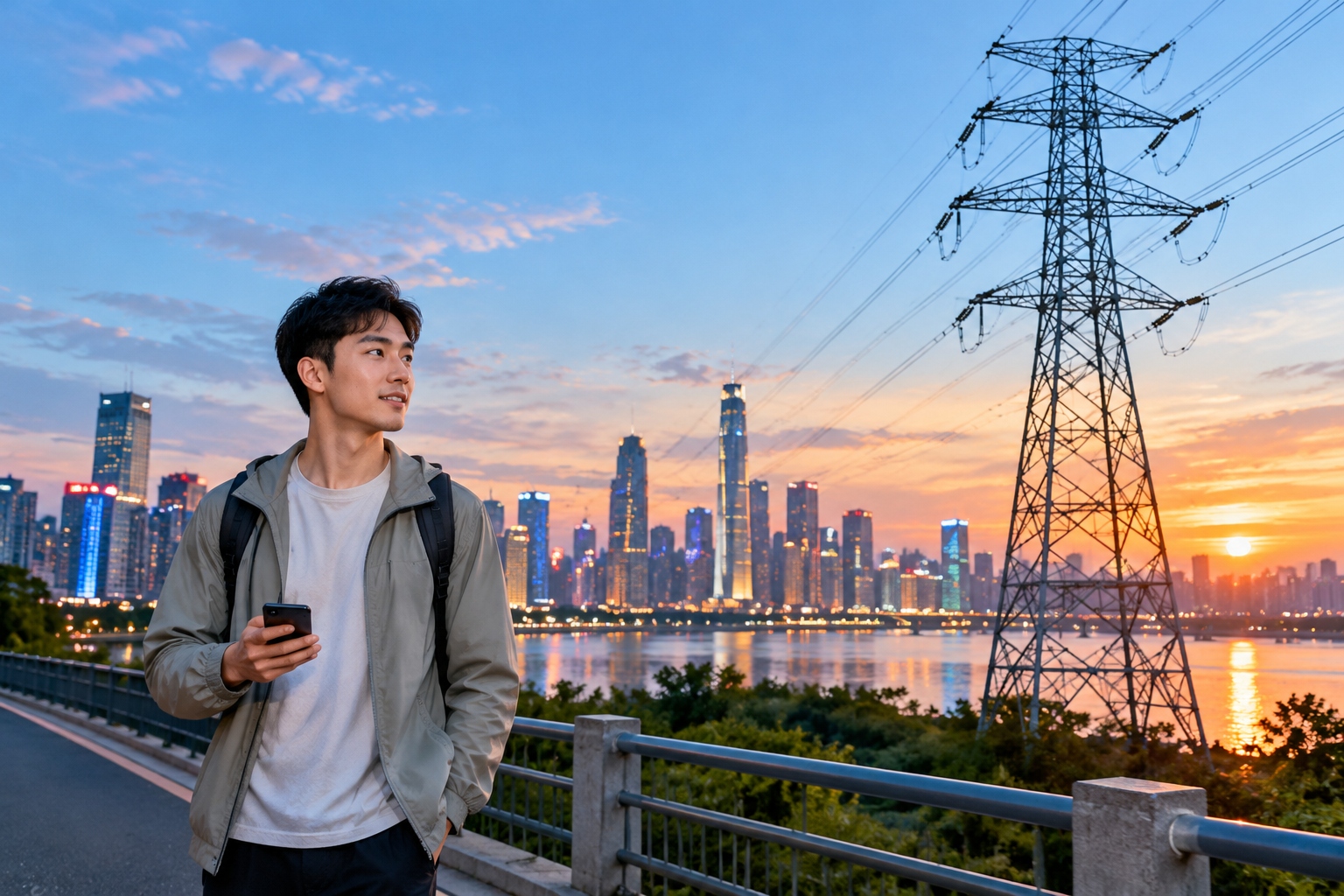

It’s 8 PM in Shanghai, 35°C, and I’m Holding My Breath
My air conditioner is humming. The fridge is humming. My laptop fan is trying to join the choir. It’s a midsummer evening in Shanghai, and everything electric is running at full throttle — except my brain, which is fixed on one question: Will the power go out tonight?
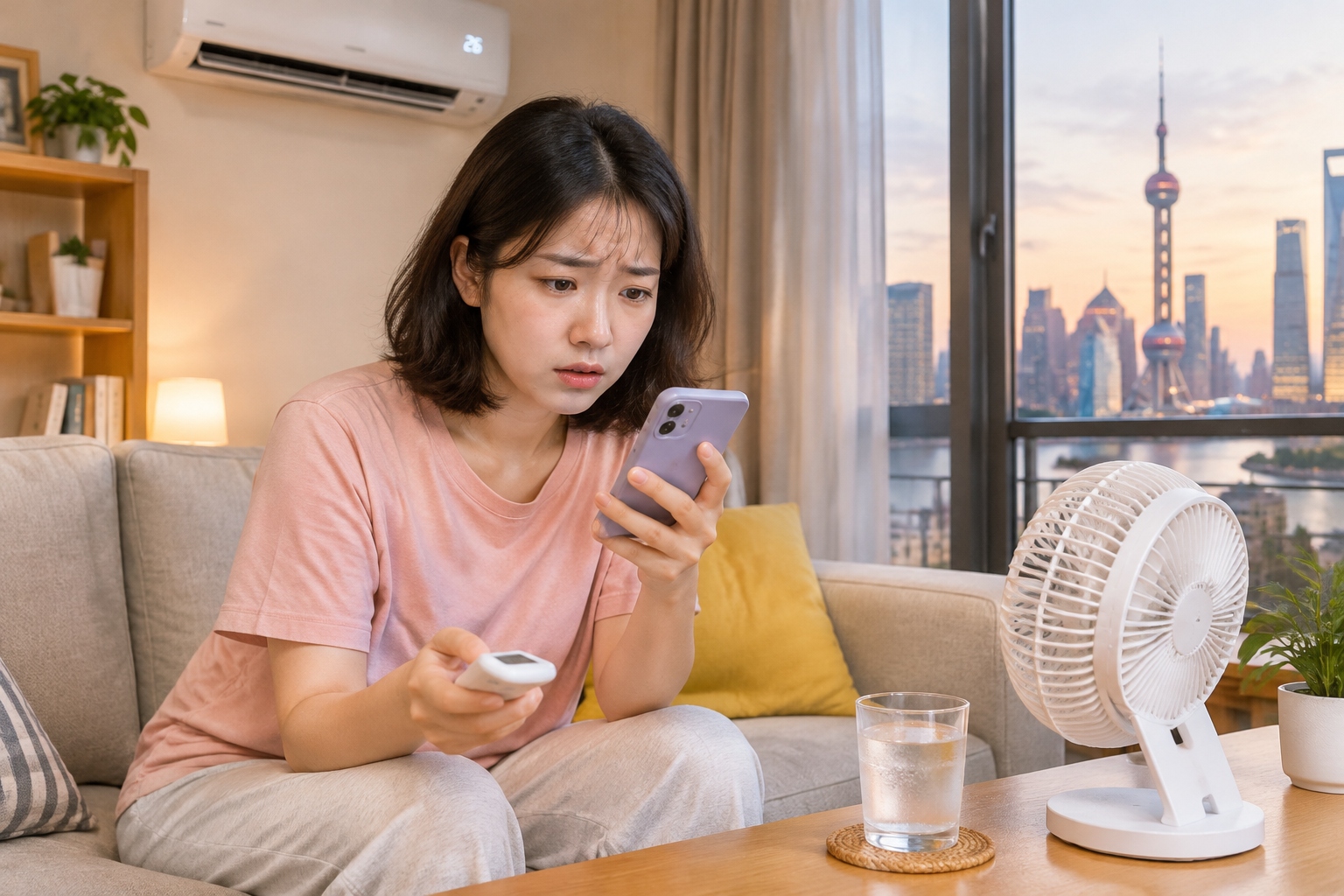
I know, I know. China is the world’s largest electricity producer. In 2023, the country generated over 9,000 terawatt-hours — more than the next three countries combined (the U.S., India, and Russia). The Three Gorges Dam alone could power a small country. And yet, every time a heatwave hits, I find myself checking the local power outage alerts like a nervous stock trader watching the ticker. Why?
The Great Power Paradox: More Supply, More Stress
Let’s start with the numbers. China’s total installed power capacity has soared past 2,900 gigawatts, with renewables making up more than half of new additions. Wind and solar farms are sprouting across deserts, mountains, and even floating on lakes. The grid is massive, modernizing fast, and designed to handle some of the world’s highest peak loads.
So why do ordinary people — especially in big cities like Shanghai, Chengdu, or Shenzhen — still feel a knot in their stomachs when summer temperatures hit 40°C?
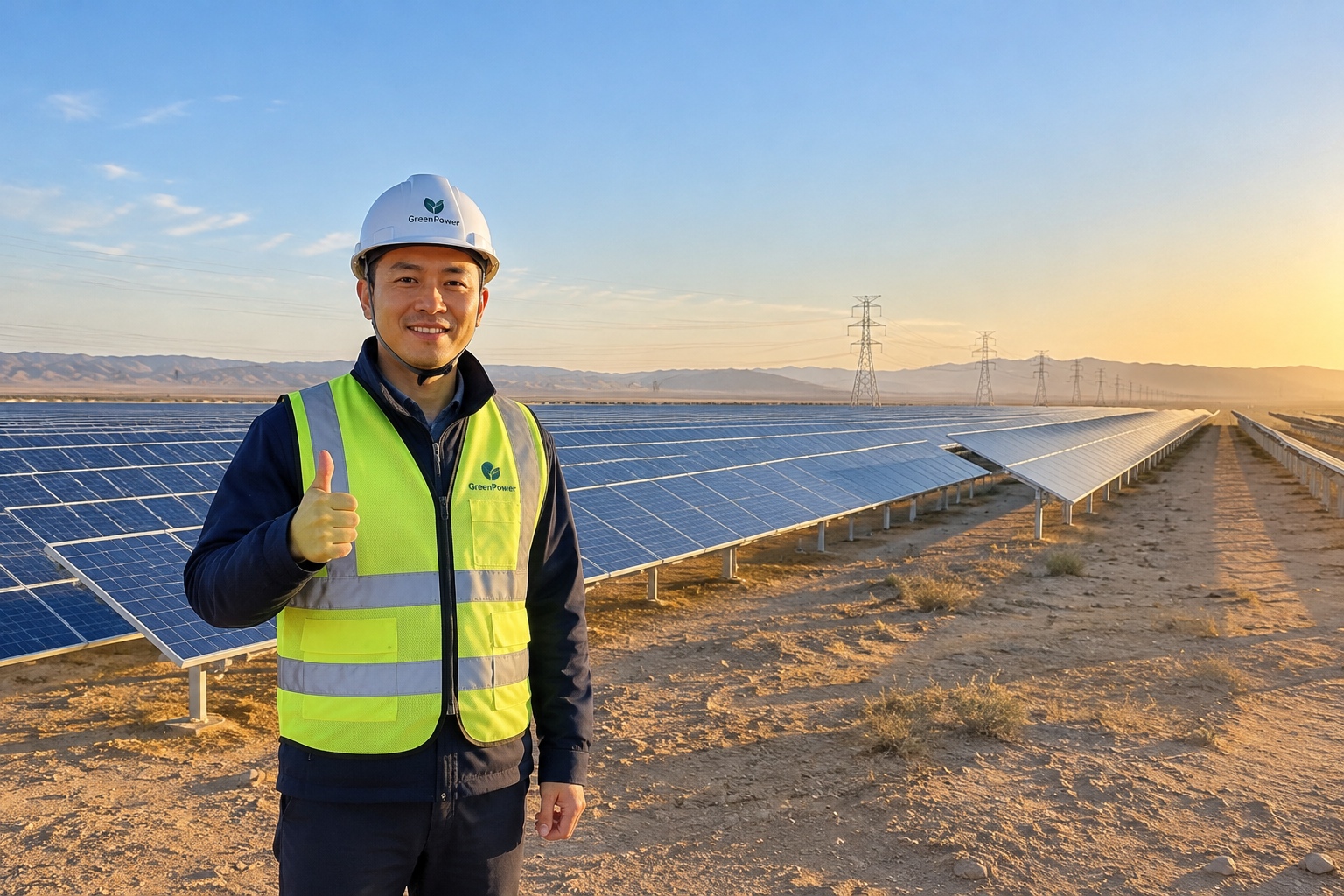
Partly because of a mismatch between where the power is generated and where it’s consumed. Most of China’s clean energy comes from the west (wind in Gansu, solar in Xinjiang, hydro in Sichuan), but the biggest demand comes from the east coast. That means massive transmission lines, hundreds of kilometers long, susceptible to weather, wear, and congestion. Think of it as a very long extension cord — and it doesn’t always cope well when everyone plugs in a giant air conditioner at the same time.
When the Wind Doesn’t Blow and the Sun Doesn’t Shine
Another joke I tell my friends: “China’s grid is like a gym bro who’s super strong but has a bad back — can lift a car, but sneezes and pulls a muscle.” The “muscle” here is the intermittent nature of renewables. On a calm, cloudy day, wind and solar output can drop by 70% or more. Battery storage is improving fast — China added 22 gigawatts of new storage in 2023 — but it’s still not enough to cover a full week of heatwave.
So when a city like Chengdu (which relies heavily on hydropower from Sichuan) faces a drought, the lights go dim. In 2022, an extreme heatwave and drought forced Sichuan to ration electricity for more than a week. Factories shut down, malls turned off escalators, and residents were asked to set air conditioners to 26°C or above. I remember my friend in Chengdu texting me: “I’m surviving on a hand fan and a wet towel. Can you send a generator?”
That’s the paradox: China can generate enough electricity to power the entire world three times over (if you count per capita consumption), but local distribution and weather events can still create real shortages. It’s like having a giant water tank but a garden hose with a kink.
The ‘Saving Electricity’ Meme That’s Real
In China, “saving electricity” isn’t just a slogan from the 1980s. It’s a living memory. Many older people remember the planned blackouts of the 1990s and early 2000s, when factories rotated power cuts. Young people, on the other hand, have grown up with near-uninterrupted power — so when a blackout does happen, it feels like a betrayal.
Social media amplifies the anxiety. During the 2022 Sichuan crisis, Weibo was flooded with photos of dark streets, empty elevator shafts, and people reading by candlelight. The government quickly restored power, but the psychological dent remained. Now, every summer, the phrase “power rationing” (限电) trends on microblogs whenever temperatures rise.

And here’s the ironic part: China’s push for “dual carbon” goals (peaking emissions by 2030, carbon neutrality by 2060) means the country is retiring coal plants faster than it can build reliable backup. The result is a cleaner grid — but also a more volatile one. As a friend who works in the energy sector told me: “We’re driving a new electric car while still learning how to change the tires.”
What About the Future? (Spoiler: It’s Getting Better)
I don’t want to sound like a doomsayer. China’s power grid is improving rapidly. Ultra-high-voltage (UHV) transmission lines are being built to send electricity from west to east with less loss. Pumped-storage hydropower and giant battery farms are being installed to smooth out the bumps. And demand-side management — like smart meters that let you sell back solar power to the grid — is becoming more common.
But the technology is ahead of the culture. Most Chinese households still don’t have home batteries or solar panels (though rooftop solar is booming in rural areas). The idea of “energy independence” is still a niche concept. So when the grid stumbles, people feel it directly.
Here’s a prediction: In five years, the number of blackouts per capita will drop significantly as storage and transmission catch up. But in the meantime, every summer I’ll keep my phone charged, my water bottles full, and a hand fan within reach. Because even the world’s largest electricity producer can have a bad day.
So, Should You Worry About Blackouts in China?
If you’re visiting Shanghai or Beijing for a week, probably not. Hotels and commercial districts have priority power supply. But if you’re moving to a city like Chengdu or Chongqing, or planning to live in a new development on the outskirts, it’s worth having a backup plan. A portable power bank, a small fan, and a sense of humor help.
And if you’re an investor or a tech enthusiast, China’s grid challenges are actually an opportunity. The country is pouring billions into grid modernization, energy storage, and smart meters. The demand for reliable, green electricity is only going to grow. So the next time you hear about a blackout in China, don’t think “Third World problem.” Think “growing pains of a superpower that’s trying to be green.”
As for me, I’ll keep my lights on — and my fingers crossed.
Start the discussion at forum.chinacomes.com