


The Quiet River of Commuters
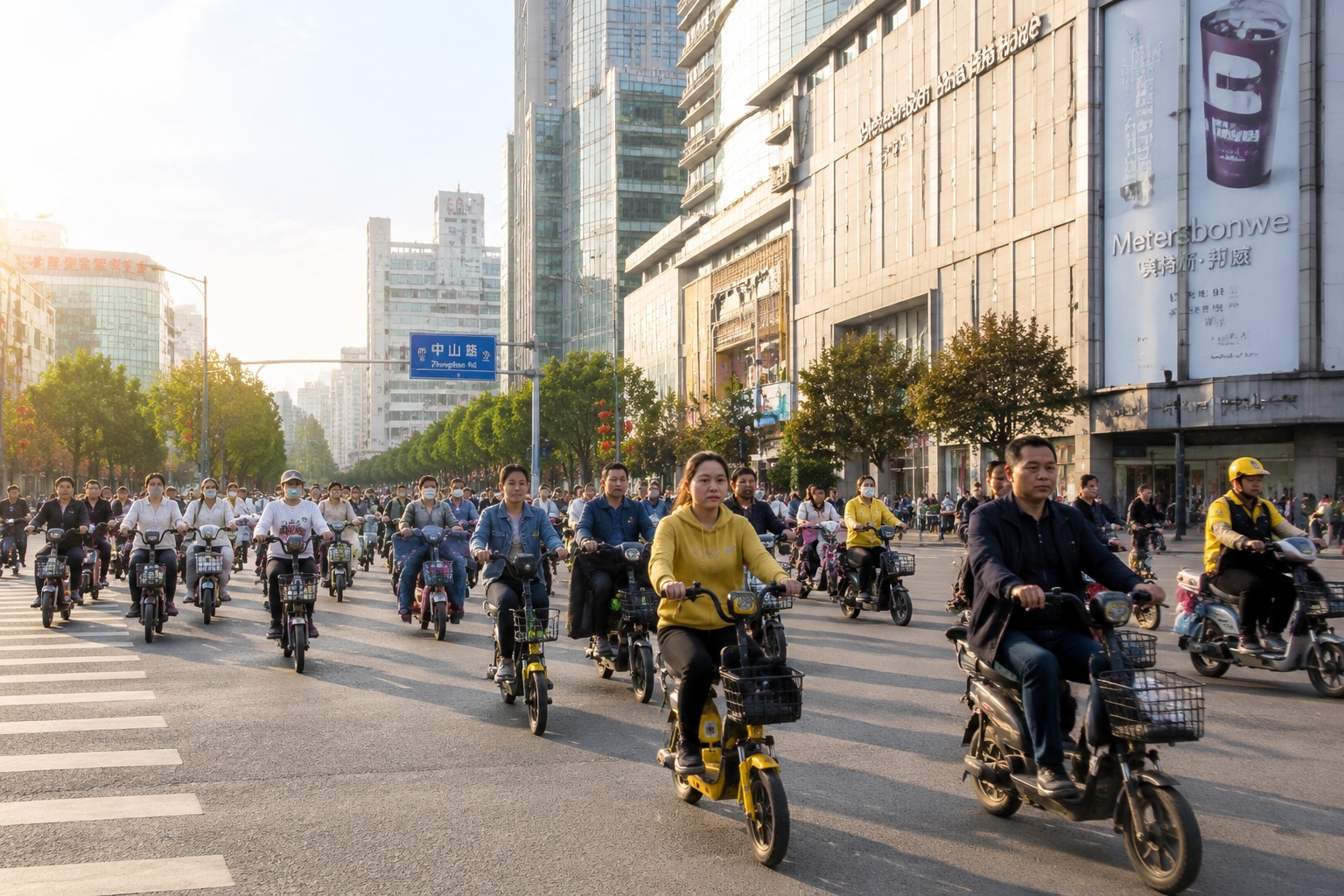
At 8:15 on a Tuesday morning in Chengdu, I step out of an apartment block and am immediately swept into a river of electric bikes. They stream past in both directions—some carrying school kids, others stacked with breakfast and tofu deliveries. The only sound is a soft electric hum, occasionally broken by a polite ring-ring from a handlebar bell. This is not a special day, just an ordinary commute hour in almost any Chinese city. There are over 350 million electric bikes in China—roughly one for every four people—and for millions, they are not a fun toy but the most practical way to get to work.
If you’ve just moved to China, or are just visiting, you’ll quickly realize that owning or using an e-bike is one of the most local things you can do. But the rules, habits, and equipment can feel confusing. Here’s a practical guide to riding an e-bike in China today.
Why the E-Bike Rules the Roads
Before diving into the how-to, it helps to understand why e-bikes have taken over. Chinese cities are dense, and car ownership brings traffic jams and expensive parking. Buses are crowded, and Metro stations may be a 15-minute walk away. An e-bike gets you door-to-door in half the time—often in 20 minutes or less. It costs just a couple of yuan to charge, and with most trips under 10 kilometers, it’s the perfect middle ground between walking and driving.
That’s why even the most high-tech mega-cities still rely on the humble two-wheeler. In Shanghai, more than 40% of all commuters use e-bikes or electric scooters, according to a local transport study. In smaller towns, it’s even higher.
Buying an E-Bike: The New National Standard
The first thing to learn is the New National Standard, which took effect in 2019. It defines three types of electric vehicles:
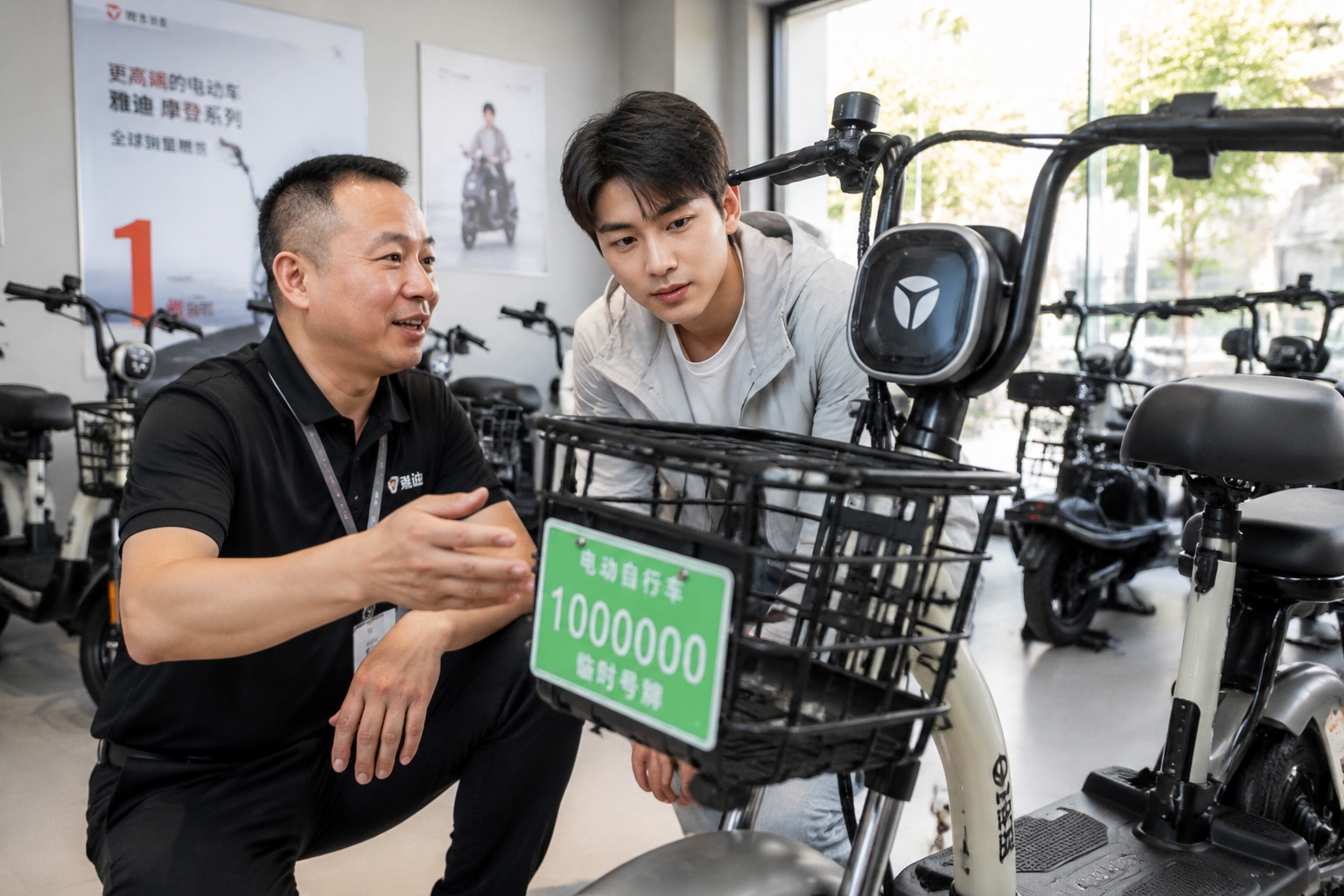
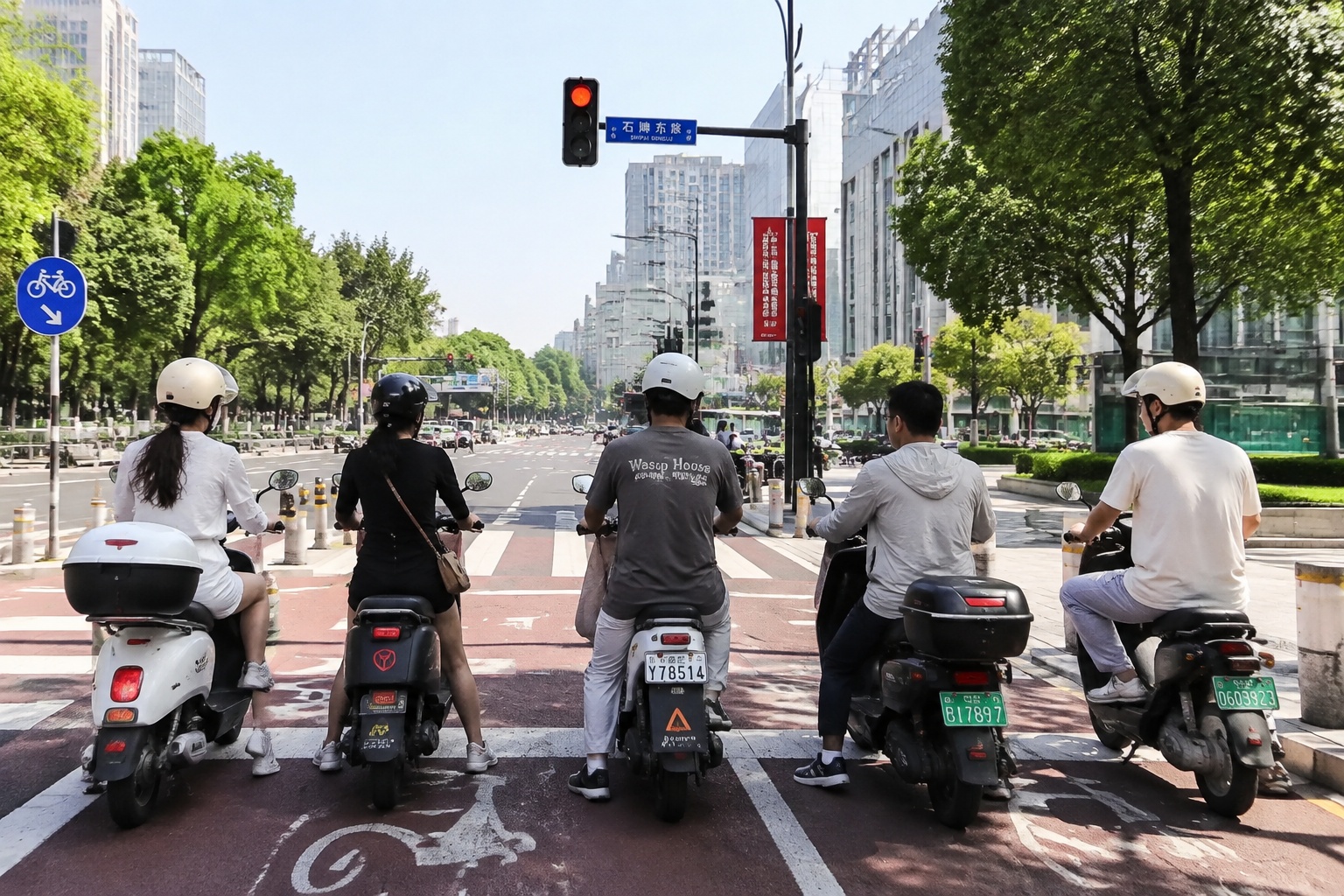
- Electric bicycle (电动自行车): with pedals, max speed 25 km/h, green number plate. You don’t need a driver’s license, but you must register it with the police and wear a helmet.
- Electric moped (电动轻便摩托车): faster, up to 50 km/h, blue plate, requires a driving license and registration.
- Electric motorcycle (电动摩托车): over 50 km/h, yellow plate, treated like a motorbike.
For most urban commuters, the green-plate electric bicycle is the go-to choice. It’s cheap—starting around 1,000 yuan—and it’s light enough to push if the battery dies. When buying, ask the shop to show you the model’s national certification, and check that the bike meets the new standard. Then you’ll need to register it at a local police station or non-motor vehicle management office. It’s usually free, just bring your ID, the purchase receipt, and maybe the bike’s certificate. Some cities allow online registration, but in practice, most shops will help you do it right after the purchase.
Helmet Up: The New Rule
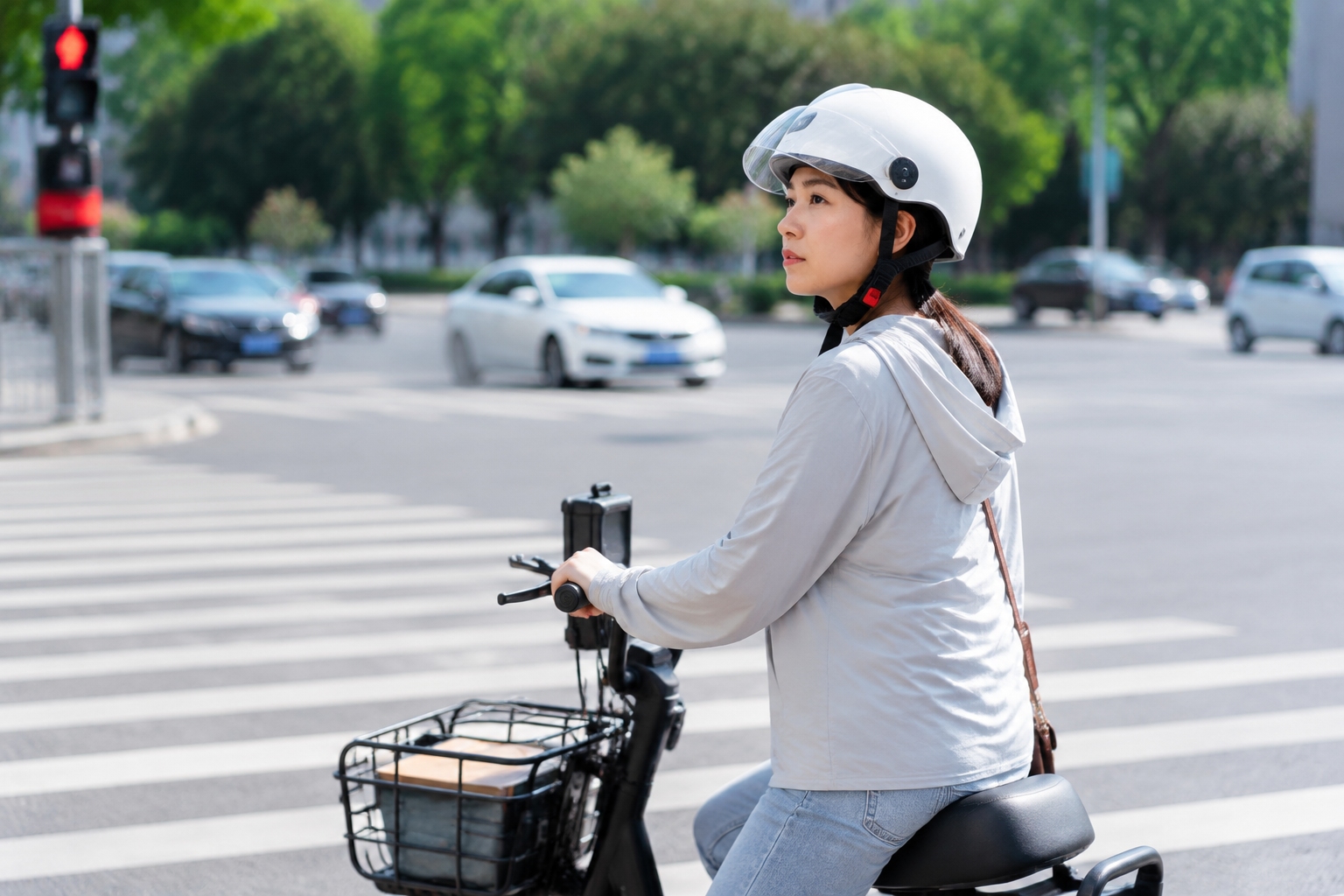
For a long time, helmets were optional in most of China. That changed in 2020 when the “one helmet” campaign kicked off, and now it’s enforced countrywide. You need to wear a helmet even on a slow green-plate e-bike. Police fines run from 20 to 50 yuan, but the real reason is safety: head injuries drop dramatically when riders wear helmets.
When choosing a helmet, don’t just grab the cheapest. The best ones meet China’s national standard (GB 811-2010 or GB 24429-2009). Look for a logo, and remember that a good helmet should be snug, cover your forehead, and have an adjustable strap. For electric bikes, many riders prefer a half-helmet because it’s cooler and easier to store. That’s fine, but if you’re going faster than 25 km/h, a full-face helmet is safer. And always replace a helmet after a crash—even if it looks fine.
Shared E-Bikes: The Pick-Up-and-Go Option
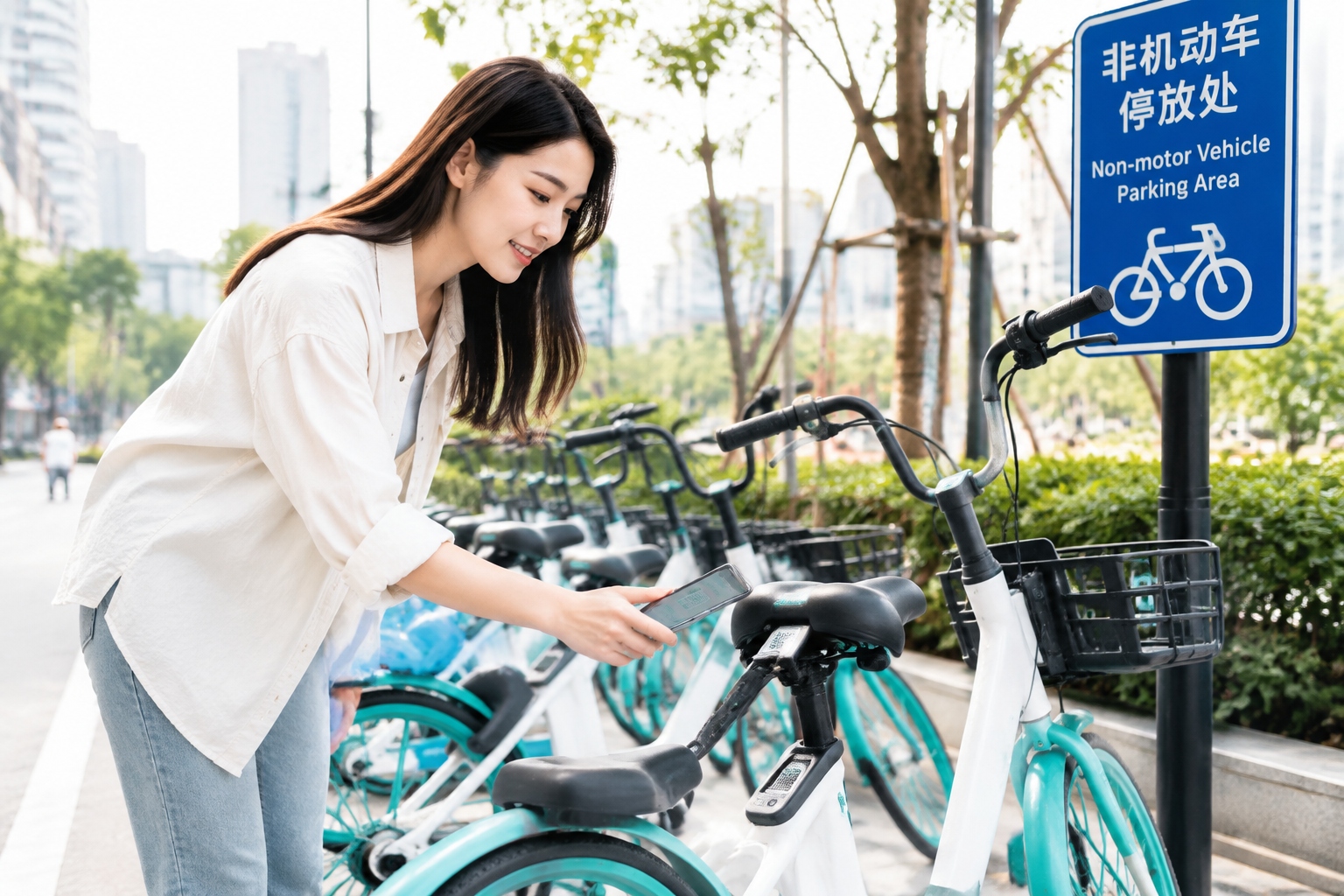
Don’t want to buy one? You’re in luck. Shared electric bikes have exploded in Chinese cities. The big names are Meituan, Hello (哈啰) and Qingju (青桔), and you can find them on sidewalks and parking areas. With a mobile app, you scan the QR code, unlock, and ride. They’re pay-per-ride: usually 2-3 yuan for 20 minutes, with packages available for daily commuters.
The catch is parking. Unlike shared bicycles, shared e-bikes need to be returned to designated parking areas—you can see them on the app map as blue areas. When you park, you must take a photo to prove you’ve parked correctly. Otherwise, the app may charge an extra “parking fee.” Also, the battery is managed by the service provider, so you don’t have to worry about charging.
One more tip: shared e-bikes are a great way to test if this mode of transport works for you before committing to a purchase.
Unwritten Rules of the Bike Lane
Riding in China can seem chaotic at first, but there are subtle rules that keep it going.
Use your bell—politely. Chinese riders rarely yell. A quick “ding-ding” means “I’m behind you, coming through.” If you’re walking and hear it, move aside without annoyance. It’s not aggressive; it’s just signal.
Yield to pedestrians. On sidewalks you’re not allowed to ride at all, but many do anyway. If you ride on the pavement, slow down and ring your bell. When crossing a pedestrian crossing, always give way to people on foot.
Stop at red lights. This is not a suggestion. Most intersections have a separate bike lane, and you must queue behind the stop line. Some sneaky riders run small lights, but don’t copy them—police fines and accidents are real.
Watch for cars turning. Chinese drivers may not always check blind spots. Always assume a car doesn’t see you, and never overtake a vehicle that’s turning at an intersection.
Rain? Take it easy. Road markings are slippery when wet. Slow down, and be extra careful with the brakes.
Charging and Maintenance: Keeping Your Ride Alive
Your e-bike’s battery is the heart. Most modern e-bikes use lithium batteries, which are lighter and last longer than the older lead-acid types. You can charge at home, but never charge inside your apartment’s common corridor—many residential buildings prohibit it due to fire safety. Use a dedicated outlet, and unplug once fully charged. Overcharging can be dangerous; many batteries have built-in protection, but it’s still good practice.
For lead-acid batteries, avoid draining them completely; charge when 30% remains.
Maintenance is cheap and easy. You’ll find a repair stall on almost every street. They can fix flats for under 10 yuan, replace brake pads for 15, and tune the brakes for free. Do a simple check monthly: tire pressure, brake tightness, and any loose screws. And if your e-bike starts making weird noises, get it checked early—small problems become big ones if ignored.
The Controversies and the Future
For all its benefits, the e-bike boom has brought serious challenges. Accidents are common: one 2021 report by the Chinese Ministry of Public Security found that e-bike accidents accounted for about 30% of all non-motorized vehicle deaths, despite speed limits. Batteries can catch fire—the city of Beijing even banned electric bikes from elevators and indoor charging after several fatal fires. That’s why the new national standard cracked down on unregulated models, and why many cities are now designing dedicated bike lanes, separate from both cars and pedestrians.
There are also environmental questions. While e-bikes are green when running, the batteries have a lifecycle that needs proper recycling. The industry is trying, but it’s not always well managed.
Yet, for all its contradictions, the e-bike remains the most democratic vehicle on Chinese roads. Rich or poor, young or old, everyone can ride one. It’s a symbol of flexibility, a quiet adaptation to city life. If you haven’t tried it yet, maybe it’s time to hop on.
Getting on the Road
Riding an e-bike is not just about hopping on and twisting the throttle. It’s about understanding the rhythm of the streets, respecting the unwritten rules, and taking care of your machine. Whether you buy one or grab a shared one, start slow, be alert, and you’ll quickly feel like a local.
Now, if you’ll excuse me, I need to charge my own bike. The delivery is waiting.
Start the discussion at forum.chinacomes.com