
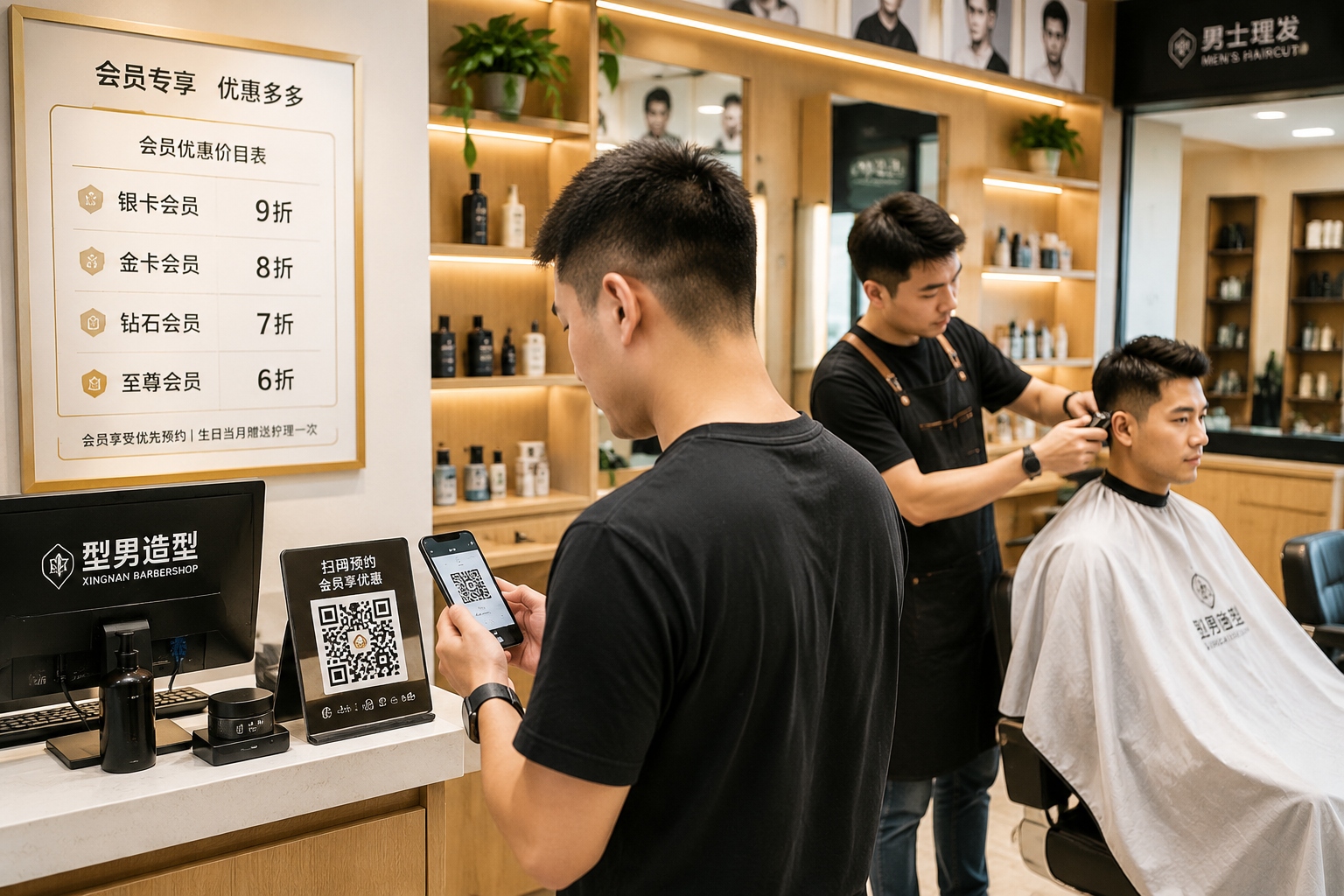

A Scene You’ll Recognize
After a haircut in a modest barbershop in Chengdu, the young owner hands you a phone screen showing a simple form: ‘Recharge 300 yuan and get 400 yuan of service.’ For a second, it sounds like free money. You’ve just been introduced to China’s prepaid card economy.
This interaction happens millions of times every day across China, from tiny neighborhood salons to chain bakeries and high-end gyms. Prepaid cards have become a core part of how small Chinese businesses manage cash flow and build customer loyalty. According to industry estimates, China’s single-purpose prepaid card market involves hundreds of billions of yuan each year. But the convenience comes with risks, and every year the national consumer association receives tens of thousands of complaints about prepaid card companies shutting down or refusing refunds.
Why Chinese Businesses Push Prepaid Cards
The logic is simple: prepaid cards give a business cash today in exchange for services tomorrow. For a small shop that may not qualify for cheap bank loans, a steady stream of prepaid income is a reliable float. Consider a barbershop with 300 regular customers who each prepay 1,000 yuan. That gives the owner a 300,000 yuan pool of working capital, enough to renovate the shop, buy supplies, or simply cover rent during a slow month. It is, in effect, an interest-free loan from customers.
Prepaid cards also lock in customers. A customer who has already paid is more likely to return, and once they return, the business has a chance to sell them more expensive services. In China’s service industry, ‘member retention’ is often the number one metric. The owner of a small bakery chain once told me that 70% of his monthly revenue now comes from prepaid card balances. That percentage feels surprising, but it explains why businesses are so eager to offer generous discounts.
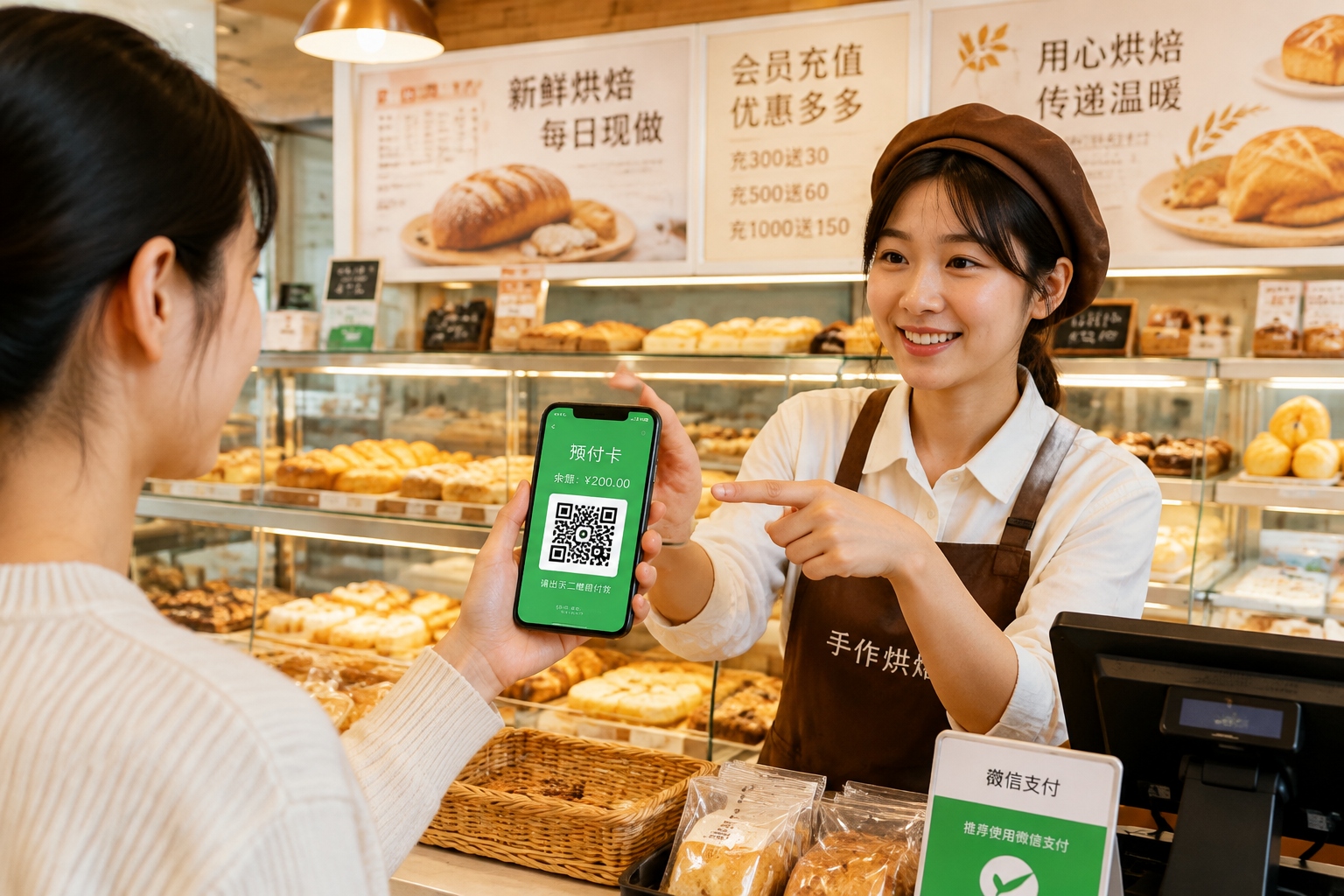
This model has been supercharged by the shift to mobile payments. Most prepaid cards today are not fragile plastic cards, but balances stored in a WeChat mini-program or Alipay account. You can top up with a few clicks and check your remaining balance anytime. That ease of use cuts both ways: it lowers the barrier to prepayment, but also makes the loss less visible until you try to use the card and discover the shop is gone.
How Prepaid Cards Work in Different Sectors
Hair Salons
Hairdressers are the classic case. A standard salon might offer a 50% discount to members who top up at least 500 yuan. The card is usually a simple database entry linked to your phone number; no physical card required. The potential for loss is moderate. A small salon is usually not trying to run away overnight, but if it does, your remaining balance disappears. For frequent customers, however, the discount is often worth the risk.
Bakeries and Cafés
Chain bakeries often run promotions like ‘buy 100 yuan worth of prepaid balance and get an extra 15 yuan.’ Since these are usually established brands, the risk of collapse is lower, but the money is locked to that specific chain. A customer who buys a 10 yuan breakfast and a 15 yuan coffee can use up a 100 yuan card in less than a week. For the baker, it’s partly a way to encourage repeated visits and to create a smooth, cashless habit.
Gyms and Fitness Clubs
Gyms are the highest-risk category. Many gyms push annual or multi-year memberships costing between 2,000 and 10,000 yuan, often with aggressive sales tactics. Because gyms have high fixed costs and unstable cash flow, some have a history of closing suddenly, leaving members with worthless cards. In the past few years, cities like Beijing, Shanghai, and Guangzhou have seen a steady stream of gym shutdowns. The Chinese consumer association’s complaint database regularly lists fitness clubs among the top three industries for prepaid card disputes.

Spotting the Risks: Signs a Prepaid Card Might Run Away
Not all prepaid programs are scams, but the risk of losing your money is real. Here are some common red flags:
- Brand-new shops: A shop that opened only a few months ago and immediately asks for a big prepayment has no track record. It could be a short-term business that collects money and then vanishes.
- Too-generous offers: If a gym offers a 60% discount for a two-year membership, they need cash now. If the business model doesn’t work, you’ll see a ‘temporarily closed’ sign on the door.
- Aggressive sales pitches: When staff pushes repeatedly or physically blocks your exit, that’s pressure designed to override your judgment. Legitimate businesses rarely need to act like sales bullies.
- Prices far below market: A hair salon that charges 30 yuan for a cut that normally costs 80 yuan is likely cutting corners or planning to disappear.
It’s also worth asking how long the business has been around. A ten-year-old local brand is statistically more trustworthy than a trendy new fitness center.
What the Law Says and Where to Turn
China has a national regulation called the Administrative Measures for the Prepaid Card of Single-Purpose Commercial Services. It requires businesses issuing prepaid cards to register with local commerce departments and to protect consumer funds. Many large chain stores comply, but thousands of small businesses do not. Enforcement is uneven, and by the time a business has closed, your legal claim may come too late.
If you find yourself in trouble, two tools can help. First, call the national consumer hotline 12315. Operators will record your complaint and may mediate with the business. Second, you can sue in a local court, where you will usually win if you have payment receipts and the business fails to deliver. But the process can take months, and for a few hundred yuan it often isn’t worth the time. That’s why prevention is better than cure.
Practical Advice for Foreign Residents and Travelers
Should you sign up? The answer: yes, but with limits. Here’s a practical set of rules used by savvy residents:
- Set the maximum you can afford to lose. Treat it like money spent, not money saved. Usually no more than 10% of your monthly entertainment budget.
- Prefer larger, established chains with multiple locations. They have more to lose from a scandal, and they are more likely to honor your balance at another branch.
- Check the card system. Does the shop use a standard WeChat mini-program? Can you check your balance online? A transparent system is usually a sign of a legitimate business.
- Keep proof of payment. Use WeChat Pay or Alipay and save the transaction record. Screenshots also help if you need to complain later.
- If you’re a short-term visitor, don’t prepay at all. The discount isn’t worth the hassle. Pay per service and you’ll avoid the risk entirely.

The Bottom Line
Prepaid cards are a form of economic trust. In a country where business relationships often rely on long-term familiarity, they can work beautifully. A local bakery that remembers your name and your usual order becomes part of your daily life. But underneath that warmth is an unsecured loan from you to a business. Never let a discount make you forget that.
The smart strategy is simple: keep your prepaid balance small, diversify your choices, and treat the card like a digital gift certificate. Use it, enjoy the savings, and don’t load more than you can afford to lose.
Start the discussion at forum.chinacomes.com