

Backstage in Paris, a Piece of Home
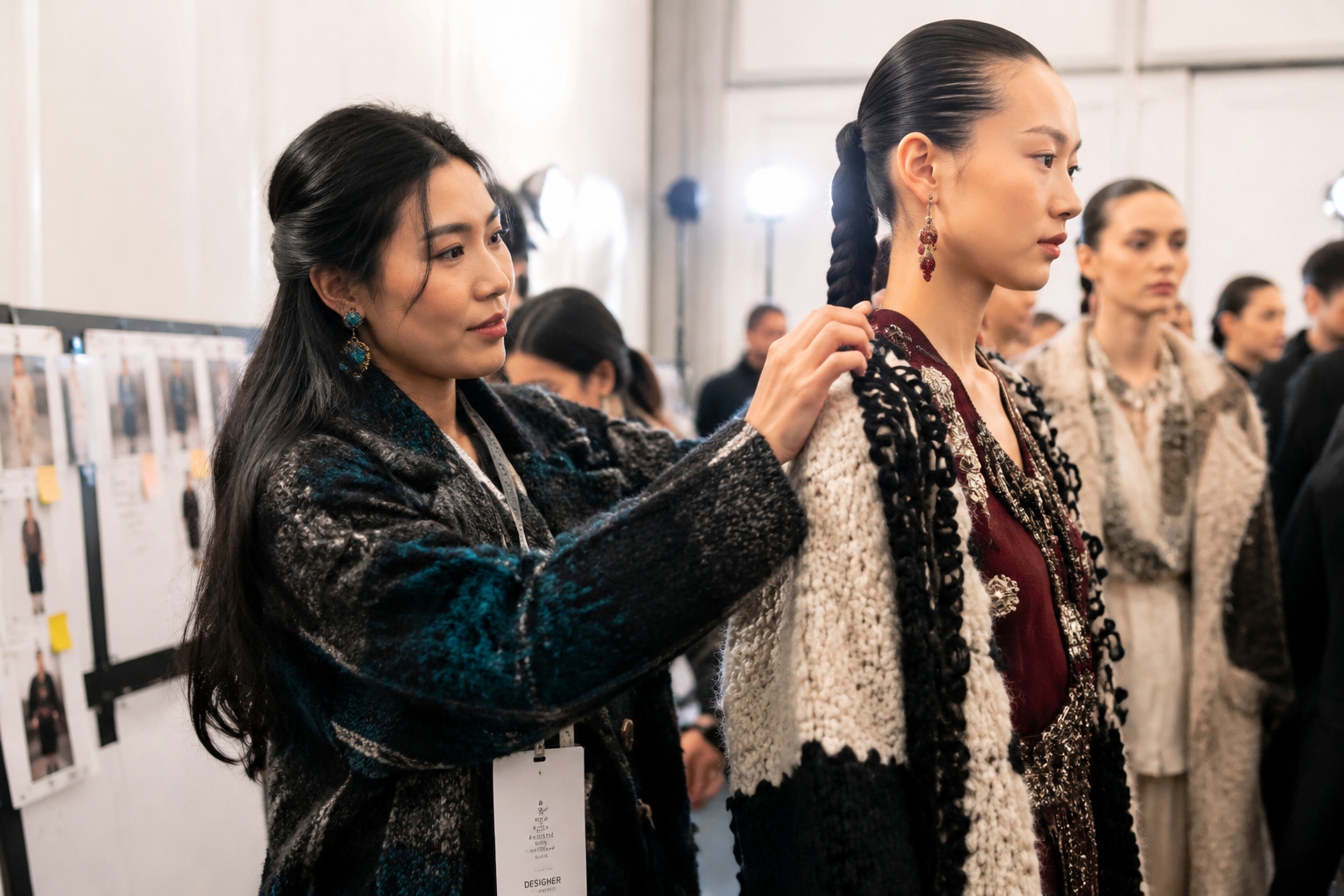
The noise backstage at Paris Fashion Week is controlled chaos—attendants, photographers, and models speaking French, Japanese, and English. But for Yangchen Lhamo, the sound that mattered most was the soft rustle of pulu, the thick handwoven wool she grew up surrounded by in her Tibetan village. Her designs, made from this ancient fabric, were about to walk down a runway in the city that defines global fashion.
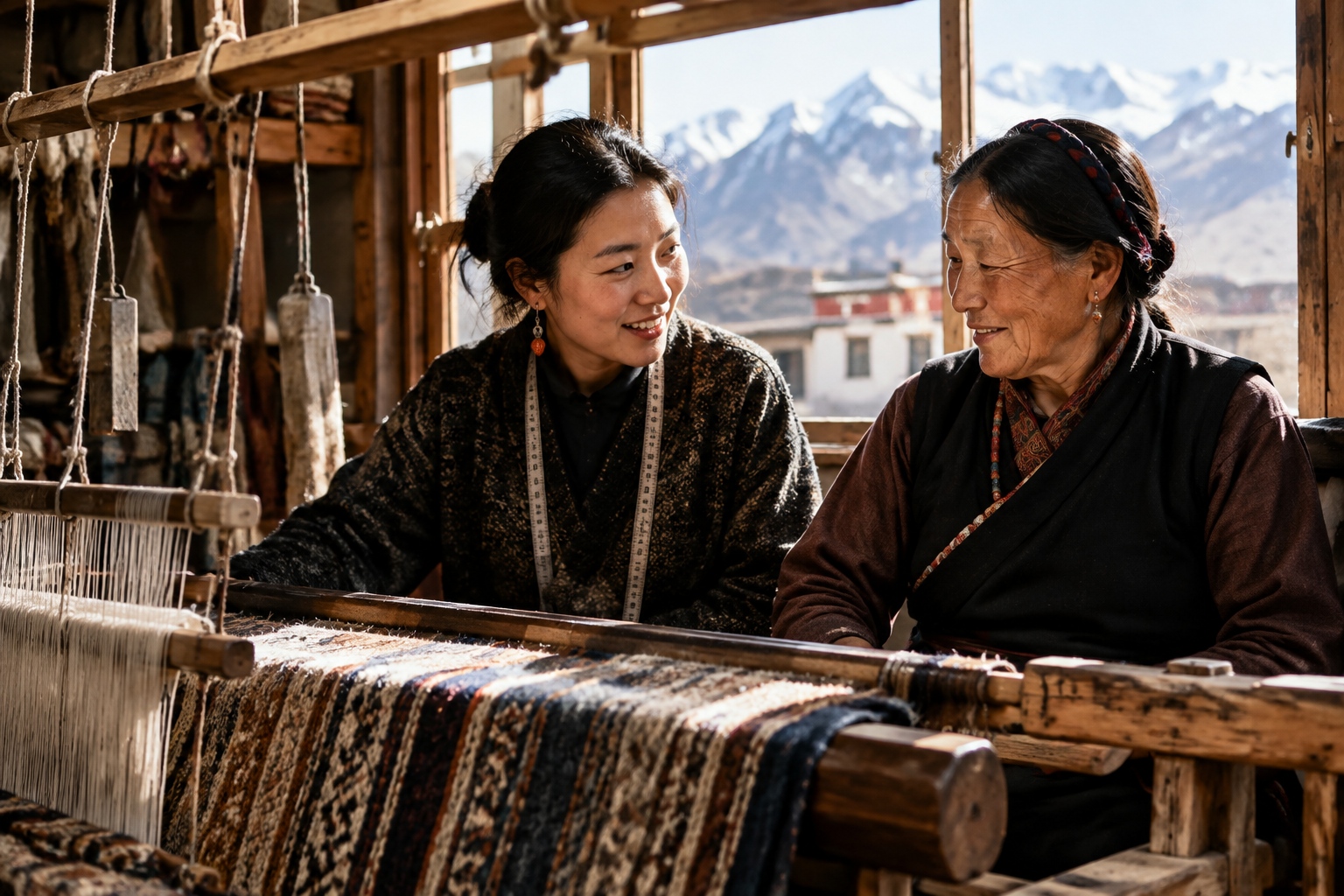
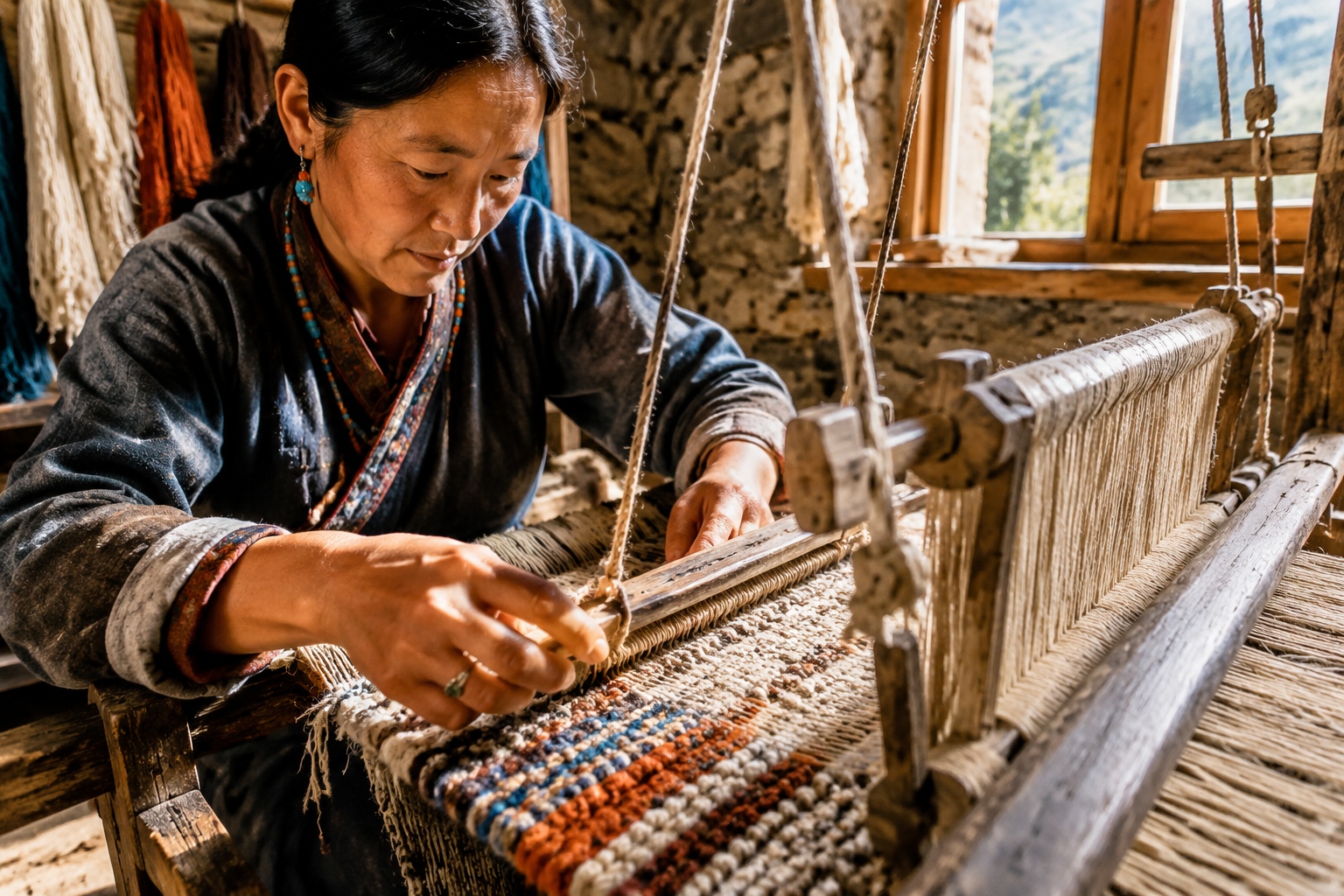
Yangchen is not a typical fashion designer. She didn’t dream of skyscrapers or luxury brands as a child. She remembers watching her grandmother and aunts at the wooden loom, dyeing yarn with plants and coaxing out a fabric so heavy and warm it could block the Himalayan wind. “It was just something we used for robes and blankets,” she says. “I never imagined it would end up here.”
What Is Pulu? A Fabric Handwoven by Generations of Tibetan Women
Pulu (also spelled pulu) is a traditional woolen textile woven by Tibetans, especially women, for centuries. It is made from sheep’s wool, often from hardy mountain sheep, and then pounded and felted to make it smooth and water-resistant. The fabric is typically used for local garments like the chupa, a long robe women wrap around their bodies and tie with a sash. Its texture is much rougher than the fine wools used in European couture—which is exactly what made it stand out in Paris.
For many Western readers, the closest comparison might be to tweed from the Scottish Highlands or Harris Tweed, a cloth that also carries a deep sense of place and history. Like Harris Tweed, pulu is deeply tied to its geography: the wool, the dye plants, and the weaving techniques have been passed down in specific communities for generations.
From a Village in Tibet to Design School in Shanghai—and Paris
Yangchen grew up in Gyantsé, a town in Tibet famous for its wool products. As a child, she was good at drawing and always fascinated by clothes. “But no one in my family thought being a designer was a real job,” she laughs. Still, she applied to an arts high school in Lhasa and later won a place at Donghua University in Shanghai, one of China’s top fashion schools.
It was in Shanghai that she first understood how her heritage was different. While her classmates worked with silk and cashmere, she kept returning to the heavier, earthy pulu her relatives made. “I started to think: Why is this not considered luxury?”
After college, she worked at a garment company for three years, then went to Paris to study fashion design and business at a private school. The experience taught her about French craft traditions, but also opened her eyes to how many luxury brands wrap their identity in heritage. “They have their own craft traditions and they tell stories of their regions. I thought, why can’t we do that for Tibet?”
Rebuilding Pulu for the Runway
Yangchen returned to Tibet in 2015 and started her own label. It wasn’t easy. The first problem was finding weavers. Younger Tibetan women were leaving for cities and no longer interested in the slow, hand-weaving process. “It takes about a week to make one long strip of pulu,” Yangchen explains. “But we can’t rush it. That’s part of its value.”
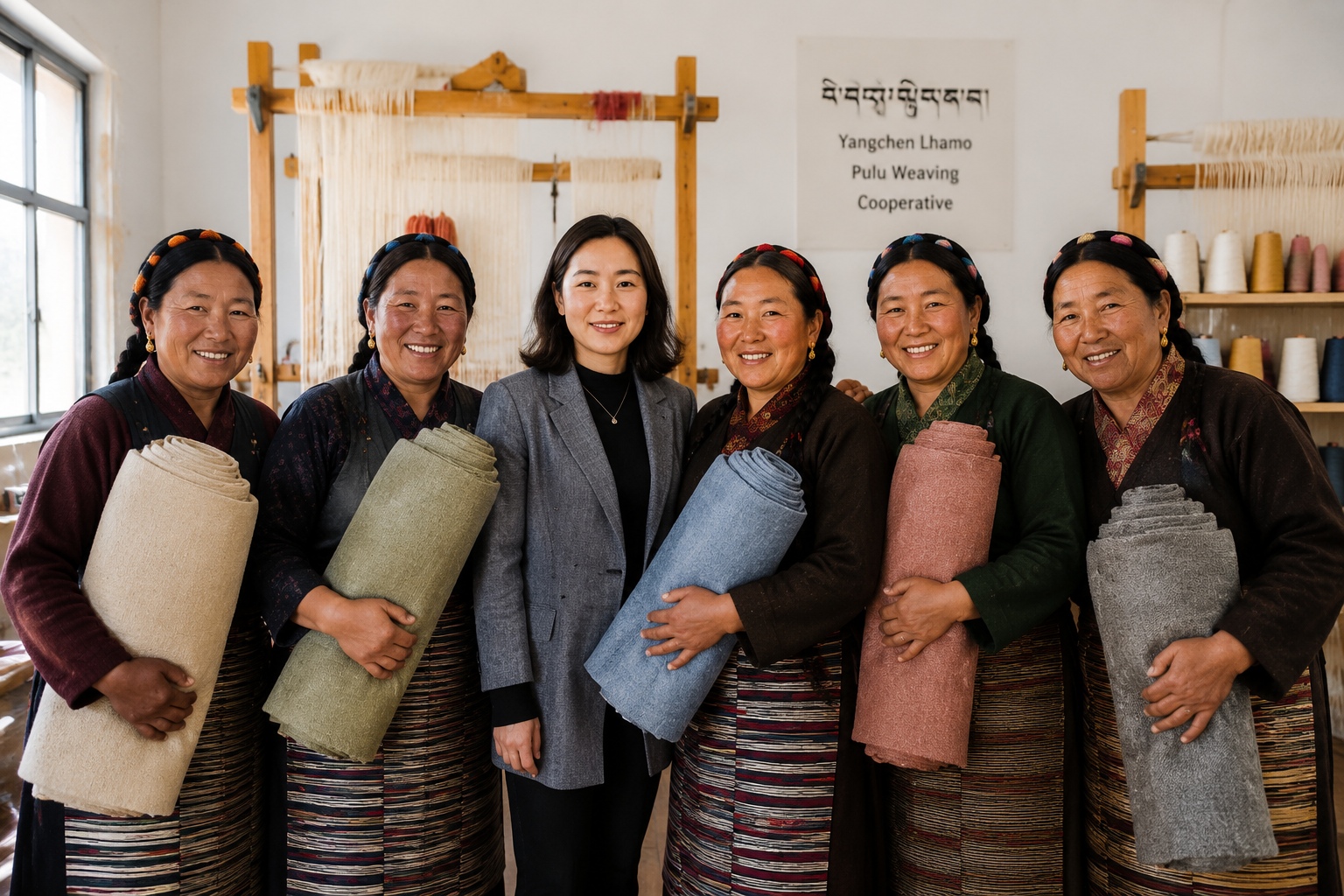
She decided to work together with a small cooperative in her hometown. The cooperative already gathered elderly weavers and supplied traditional robes to local markets. Yangchen offered them new patterns and colors while keeping the classic plant-based dyeing methods. She traveled to remote valleys to collect indigo, walnut shells, and wild rhubarb roots for natural colors. She also brought in Tibetan designers to help modernize the fit—turning the heavy fabric into coats, vests, dresses, and even accessories.
The key challenge was balancing innovation with authenticity. Yangchen insisted on using traditional weaving, but she also joined the strips with fine leather or metal joints, creating unexpected textures. She called the approach “pulu with a modern cut.”
The Paris Show: When the Himalayas Met Haute Couture
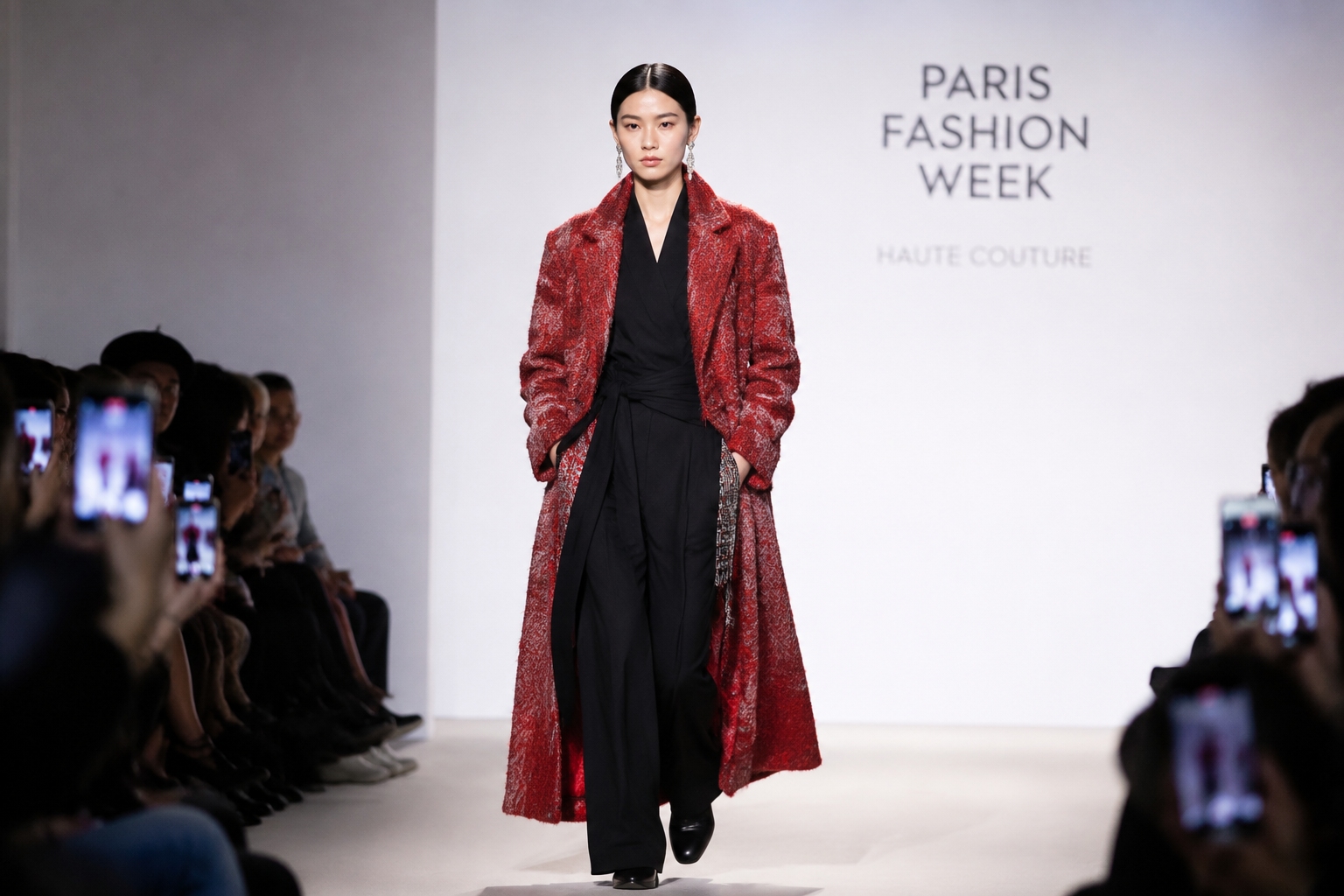
In 2019, Yangchen received an invitation to present her collection during Paris Fashion Week at a small showcase called “Craft in Progress,” hosted by a French organization exploring traditional fabrics from around the world. She named her collection “Winds of the Plateau.”
On the runway, models walked in long pulu coats, some with cropped pants underneath, others with flowing evening skirts. The fabric’s natural uneven surface caught the light, revealing subtle variations in color. One French fashion critic wrote that the collection had “the texture of a landscape rather than a textile.”
Behind the scenes, models told Yangchen they had never touched anything like it. “It feels alive,” one said. The show sold out within a few weeks, with orders coming from Japan, Germany, and the United States.
More Than Fashion: What This Means for Tibetan Communities
For the weavers back in Gyantsé, the Paris show changed more than just sales. Their work, often undervalued locally, suddenly gained international recognition. The cooperative now earns a fairer price for their pulu, and some young women have started learning the craft again. “When they see that something from our village is on a runway in Paris, they feel proud,” Yangchen says.
This is not just a feel-good story. China has invested significantly in intangible cultural heritage preservation, and many such handcrafts have been revived through tourist markets and export initiatives. But the story of pulu shows that the most powerful catalyst is often an individual with passion and a global network—not just a government program.
The Hard Part: Keeping a Craft Alive in a Changing World
Yangchen’s journey hasn’t been smooth. The COVID-19 pandemic shut down fashion weeks for two years, and her small workshop struggled to survive. But she pivoted to direct online sales and found that consumers in China, especially younger urbanites, were eager to buy unique, culturally rich pieces. “They don’t want the same fast fashion as everyone else. They want something with a story.”
There is also a deeper tension: how to stay true to a centuries-old craft while making it commercially viable. Some purists criticize her for using industrial sewing and leather accessories alongside the handwoven wool. But Yangchen sees it as evolution. “Traditions are not frozen. Every generation adds its own layer. That’s how they survive.”
Why This Story Matters Beyond China
For those who have never paid attention to Tibet beyond its tourist images, this story adds a different dimension. Tibet isn’t just a place of stunning landscapes and ancient monasteries—it’s also a living culture with contemporary creative voices. Yangchen’s success is part of a larger wave of Chinese designers from ethnic minority backgrounds who are integrating their heritage into global design languages.
It also raises a question familiar to anyone involved in craft traditions anywhere: how do we keep old skills alive in a fast-moving world? While there is no single perfect answer, the story of pulu offers one model: combine respect for the handmade with a sharp sense of modern aesthetics, and let the world respond.
As Yangchen puts it, “I want people to see that even a rough fabric made on a village loom can be elegant. It’s not about the fabric’s price—it’s about the truth it carries.”
Start the discussion at forum.chinacomes.com