

At 7:42 a.m., a table by the window
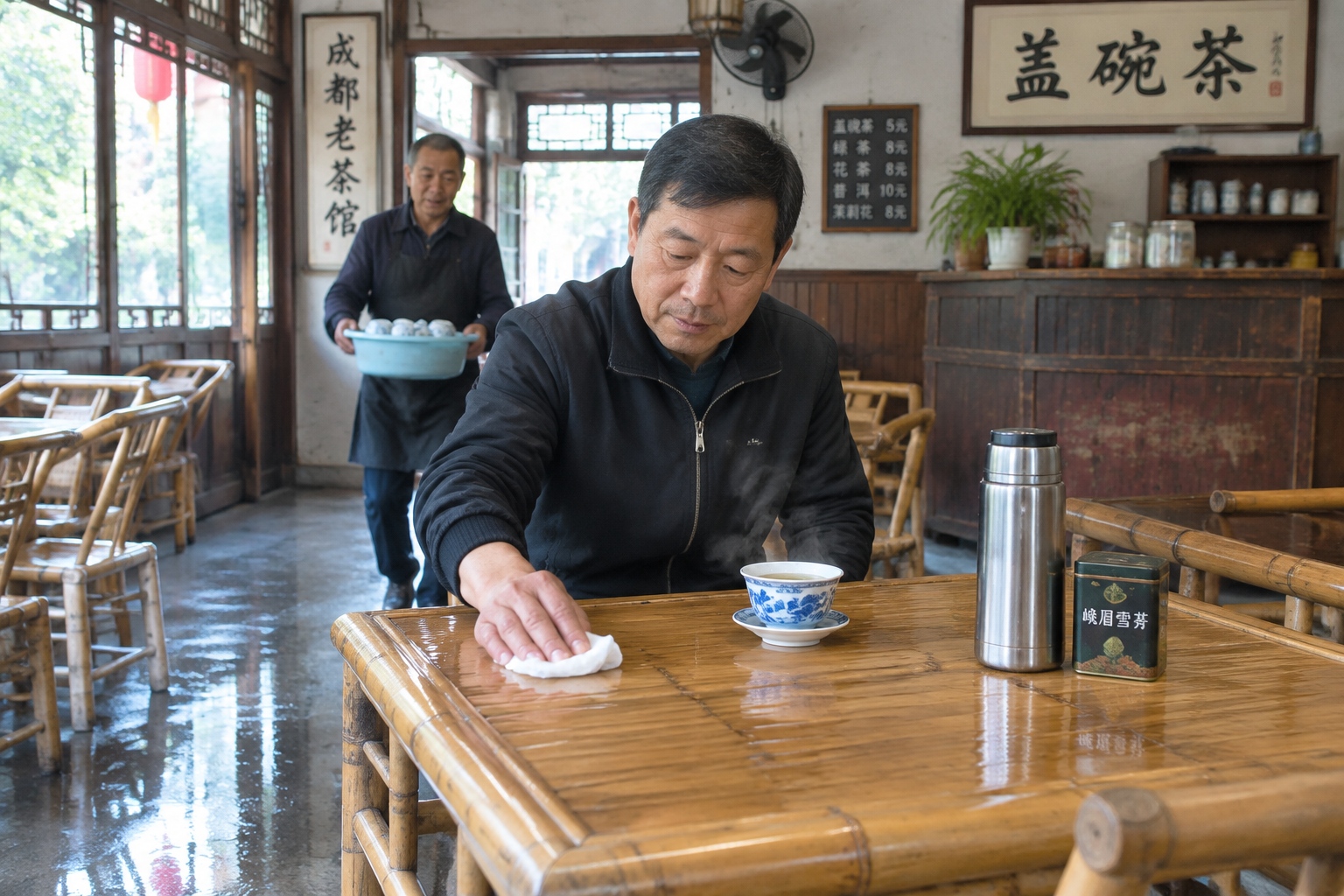
At 7:42 on a Tuesday morning in Chengdu, Zhou Liancheng is wiping a bamboo table with a tissue. The teahouse on a side street in Yulin has just opened. The floor is still wet from mopping, and the owner is carrying a plastic basin of cups. Zhou, 58, sets a thermal flask on the table, takes out a small tin, then changes his mind and orders the house jasmine tea for 12 yuan. “In the beginning, I came because it was cheap,” he says. “Now I come because I can taste the difference.”
Zhou runs a small air-conditioner repair shop nearby. He is not a tea master, and he does not use that word about himself. But he has done something that has become more common in China over the past decade: he has moved from drinking tea as a habit to paying attention to what is in the cup. His ten years with tea are a small, grounded way to look at a much larger story — how Chinese tea culture is carried forward, sold, reinvented and misunderstood in ordinary life.
A supermarket tea bag and a roadside stall
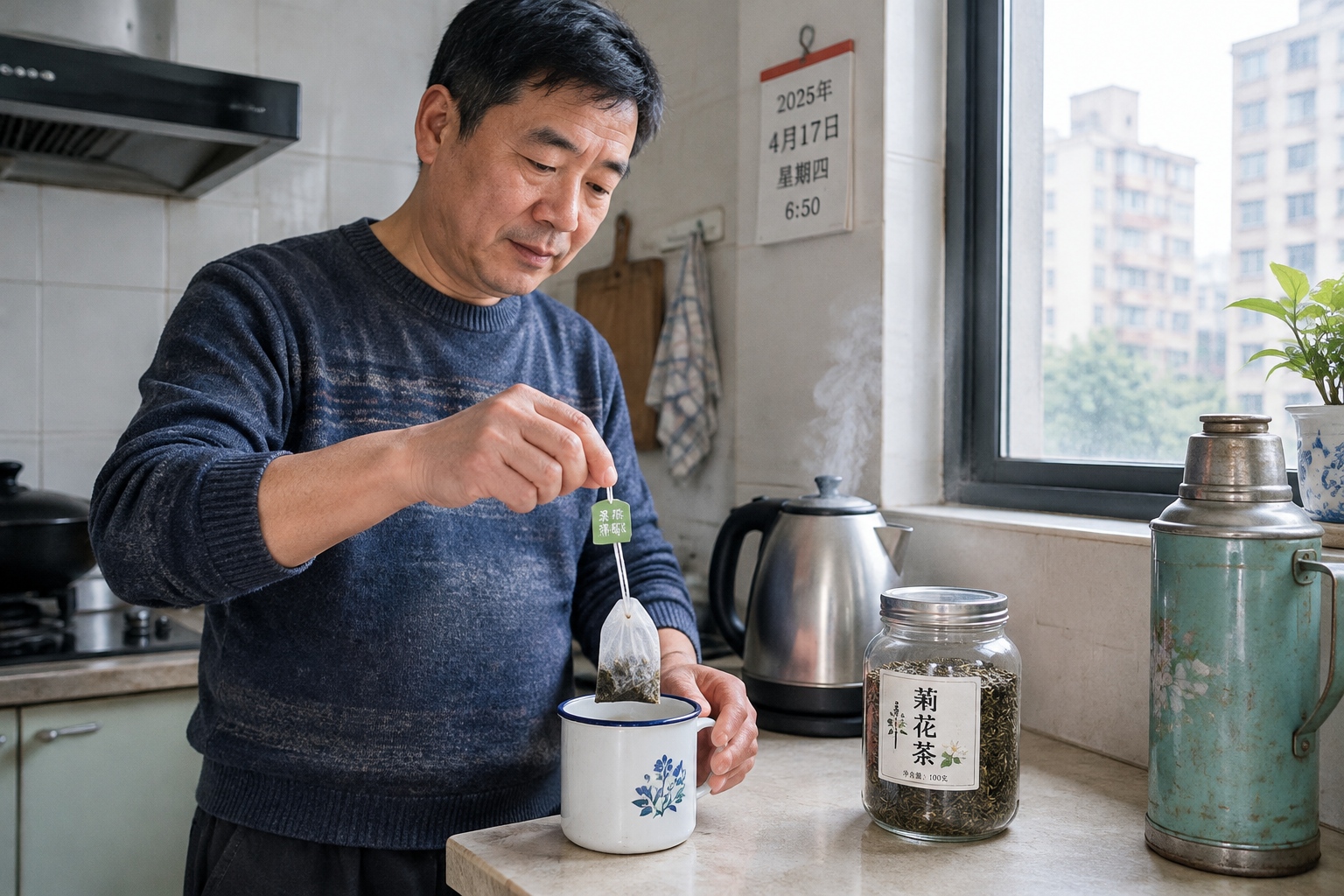
In 2015, Zhou drank tea the way many busy people do. There was a glass jar on the counter of his shop, a supermarket bag of jasmine tea, and hot water from a thermos. It was sweet, cheap and always the same. He did not think of it as culture. It was what you drank when you did not want plain water.
Then a customer left behind a half-open bag of loose-leaf green tea from Sichuan. Zhou brewed it too hot and used too many leaves. It tasted bitter. But it smelled like something — fresh, grassy, a little like the wet tea fields he had seen on the edge of the city. He started stopping at a roadside tea stall near the vegetable market. The vendor, a woman in her sixties, let him smell three kinds before buying 100 grams. She told him that jasmine tea is scented with flowers, not simply mixed with petals. He had not known that.
The first change was small: he stopped buying the cheapest bag. The second was more important. He began asking questions. What is this tea? Where is it from? Why does this one cost 80 yuan a jin and that one 300? The answers were not always clear, and that was part of the draw.
Year three: the tea market is a classroom with no blackboard
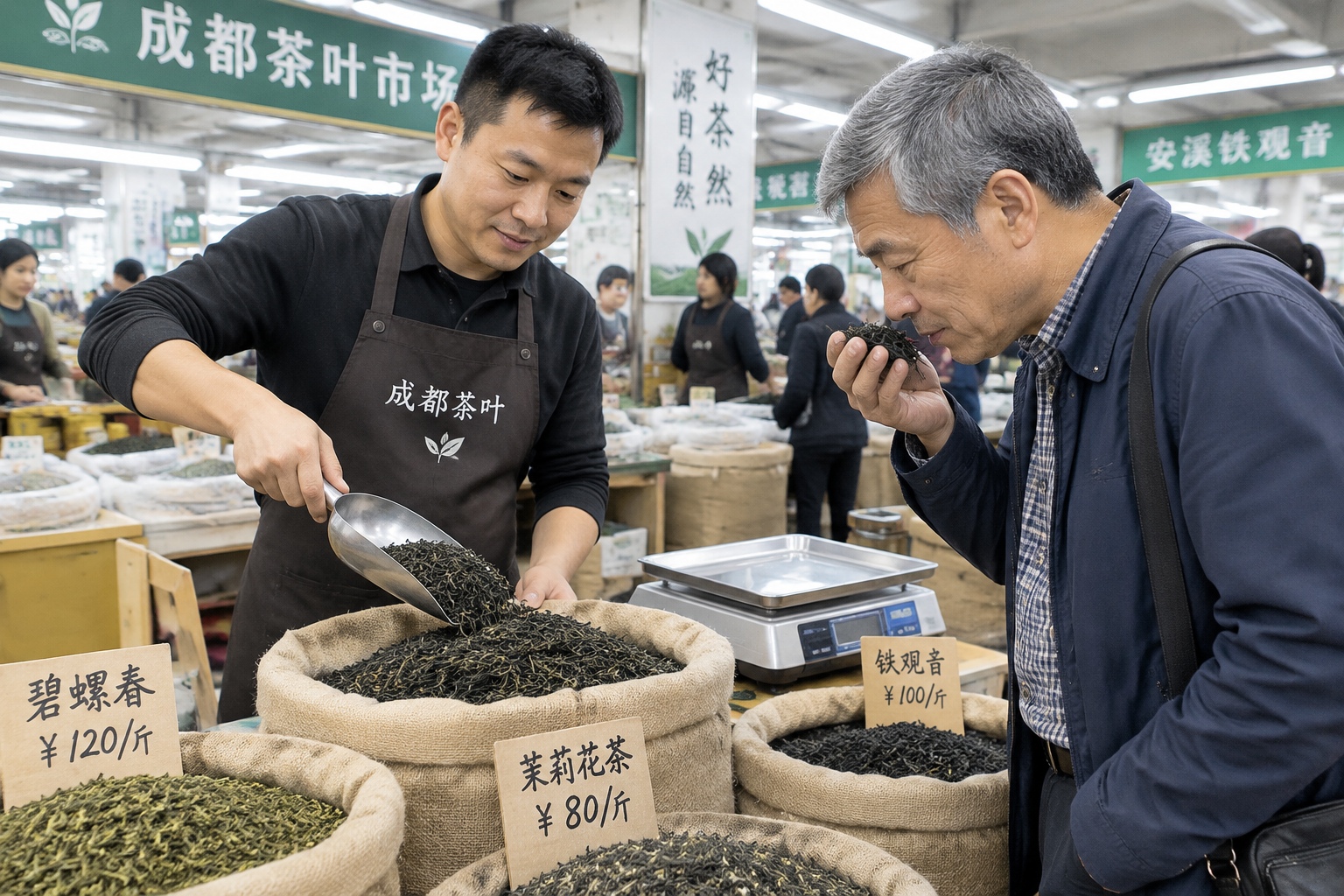
By 2017, Zhou was spending Saturday mornings at the tea market. In Chengdu, the market is a low-ceilinged hall of burlap sacks, scales, price tags written in marker, and vendors scooping tea with metal bowls. He brought a friend who knew more. They tasted at three stalls. At one, a vendor from Mingshan, near Ya’an, opened a bag of mengding ganlu. The leaves were small and pale. The tea was soft in the mouth, with a sweetness that stayed after he swallowed.
Zhou learned to look at the leaves, smell the dry tea, check the brewed color, and notice whether the sweetness lasted. He also learned that the market is not a museum. Vendors have rent to pay, and some stories are sales talk. Once he bought a tea sold as old-tree leaves and later suspected it was not. “You learn by losing money,” he says. “Not too much, I hope.”
This is where Chinese tea culture becomes practical. The country produces green, black, oolong, white, yellow and dark teas, with hundreds of local names. For outsiders, the labels can look like a secret code. For Zhou, the code opened one small door at a time. He did not need to master all of it. He needed to know what he liked, and why.
Year five: the tea table gets younger
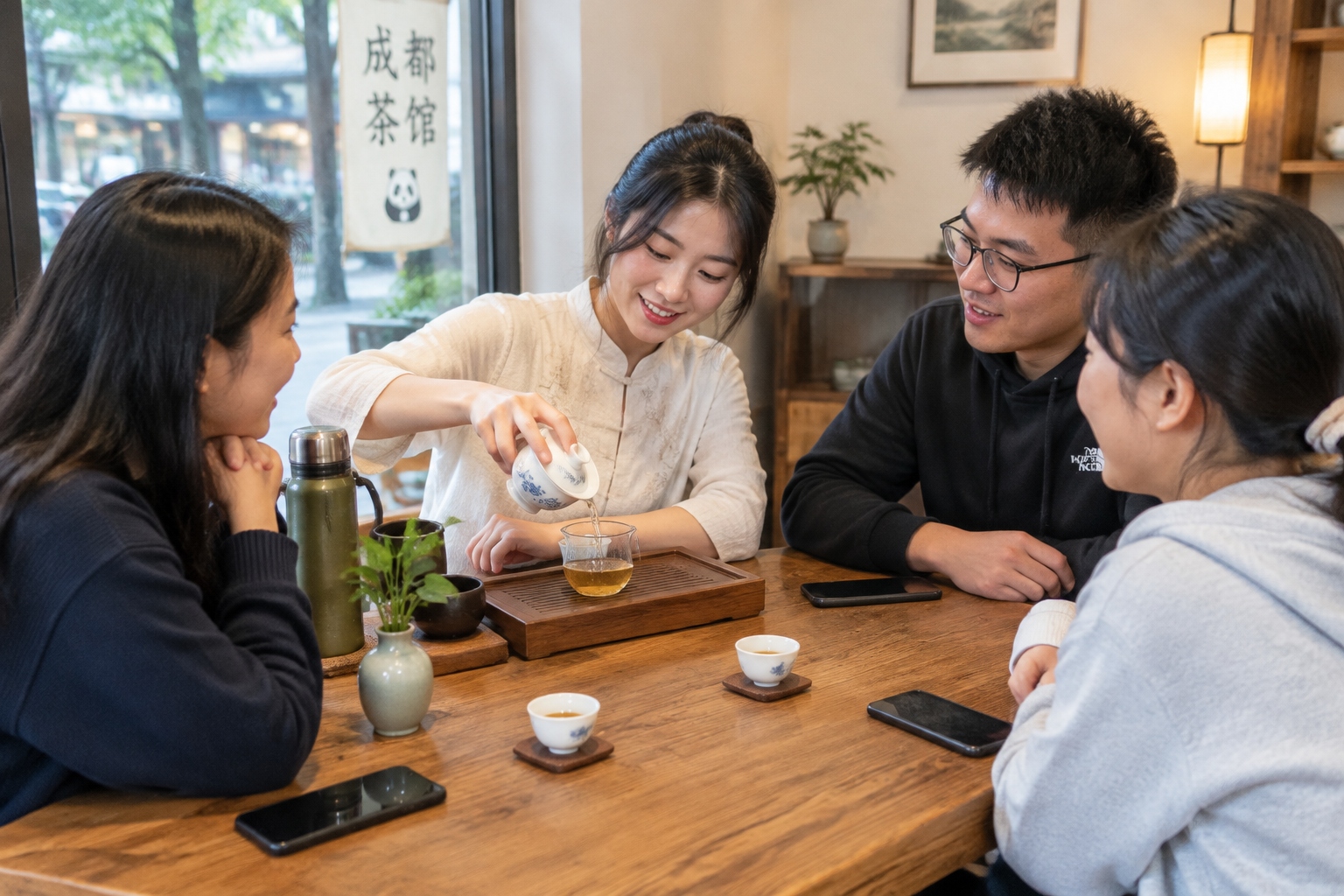
Around 2020, Zhou noticed a change in who was sitting at the tea table. His daughter, 27, worked in an office. She and her friends drank milk tea and fruit tea, but they also went to small tea bars where a server brewed gaiwan tea at the table. At first he thought it was a performance. Then he sat with them. They used phones to take photos, yes, but they also argued about whether the water was too hot. They talked about a tea’s finish — the taste that remains after swallowing. They did not use the same words as the vendors, but they were paying attention.
In Chengdu, tea has long been a public living room. Old men play mahjong, vendors rest, office workers sneak out for an hour. The new tea drinkers did not replace that. They added another layer. Some tea shops now sell a single cup for 38 yuan and a pot for 168. That is a lot for a daily drink, and it can make tea culture look like a luxury hobby. But on weekday afternoons, the same shops are often half full of young people sharing one pot and splitting the bill.
Zhou’s daughter corrected him once. “Dad, you’re brewing it too long.” He laughed and poured the tea away. The moment mattered more than the correction. Tea was no longer something he did alone with a thermos. It had become a way to talk across generations, even when the talk was about water temperature.
Year seven: from tasting to paying attention
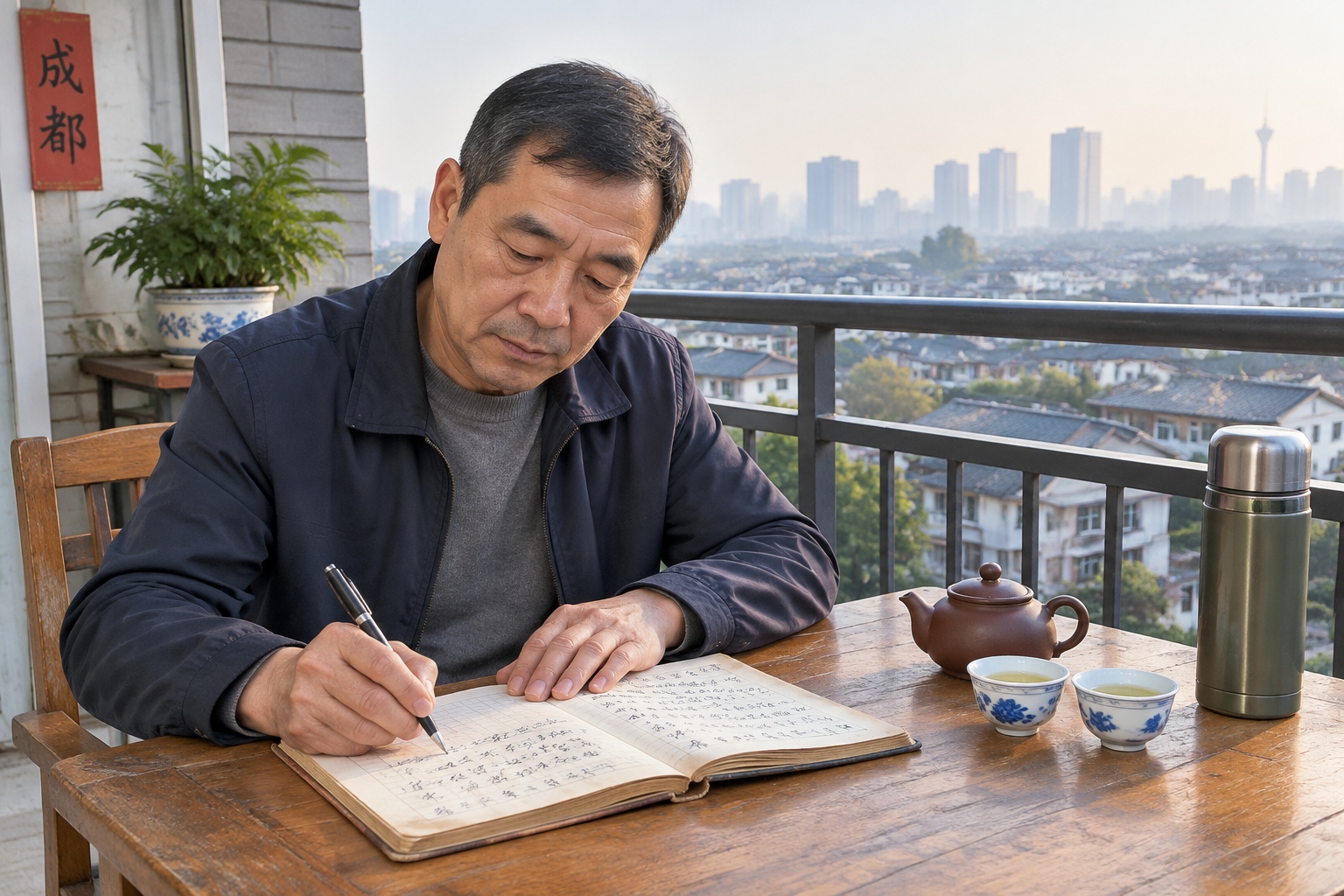
By 2022, Zhou had a notebook. It was not a fancy journal. It was an old account book from the shop, with dates, tea names, prices and short notes: “too bitter,” “sweet after,” “smells like roasted chestnut,” “do not buy again.” He learned that tea ceremony, in the Chinese context, is less about perfect movements than about attention. At a community cultural center, a teacher told the class: “茶道不是动作,是分寸.” That sentence stayed with him. He started using a smaller pot, lower water temperature for green tea, and a fair cup to even out the strength. He stopped filling the kettle to the top. Small changes, but they made the tea taste better, and they made him slow down.
This is the part that can be hard to explain to people who only know Chinese tea from Instagram images of wooden trays and white robes. The ceremony exists, and it is beautiful. But for many ordinary drinkers, the practice is embedded in daily life: a cup before work, a pot after dinner, a gift for a neighbor, a way to welcome a guest. The Chinese traditional tea processing techniques and associated social practices were added to UNESCO’s intangible cultural heritage list in 2022. That recognition is important. Zhou’s notebook is another kind of record.
Year ten: what understanding tea actually means
Ten years after the supermarket bag, Zhou is careful about the word “understand.” He can tell a fresh green tea from an older one. He knows that jasmine tea is scented with flowers, not simply mixed with petals. He can explain why a tea from a high mountain may taste different from one grown on a flat field, though he will also say that soil, weather and processing matter more than any single label. He still gets sold stories. He still has preferences that a tea expert might find odd. He likes a strong, slightly bitter tea in the morning and a softer one after lunch. That is not a flaw. It is a life.
What has changed is his relationship to the object. He no longer buys tea only by price or packaging. He asks who made it, how it was processed, and whether the farmer was paid fairly. He knows that the tea market has a romantic side and a hard side. Old teahouses in Chengdu are closing as rents rise. Some famous mountains are crowded with tourists. Young people are interested, but they are also busy. Tea culture survives because people keep making small choices — to sit down, to pour for someone else, to pay attention for ten minutes.
Last month, a neighbor’s child came into the shop while Zhou was brewing. The boy asked why the leaves were not in a bag. Zhou gave him a small cup, not too full. The boy took a sip and made a face. Zhou laughed. “Too bitter?” The boy nodded. “Then next time, I’ll use less.” That, more than any ceremony, is how the knowledge passes on.
Conclusion: the cup is still cheap
At 8:30, Zhou pays his 12 yuan, caps the flask, and walks out into the morning traffic. He will open the repair shop, argue with a supplier, eat lunch with his wife, and come back to the same table tomorrow if he can. The tea itself is not expensive. The difference is that he now knows what he is tasting, and who he is drinking it with. In a country changing as fast as China, that may be one of the more durable forms of heritage: not a performance for visitors, but a habit that ordinary people keep choosing.
Start the discussion at forum.chinacomes.com