

A Morning on the Tarmac
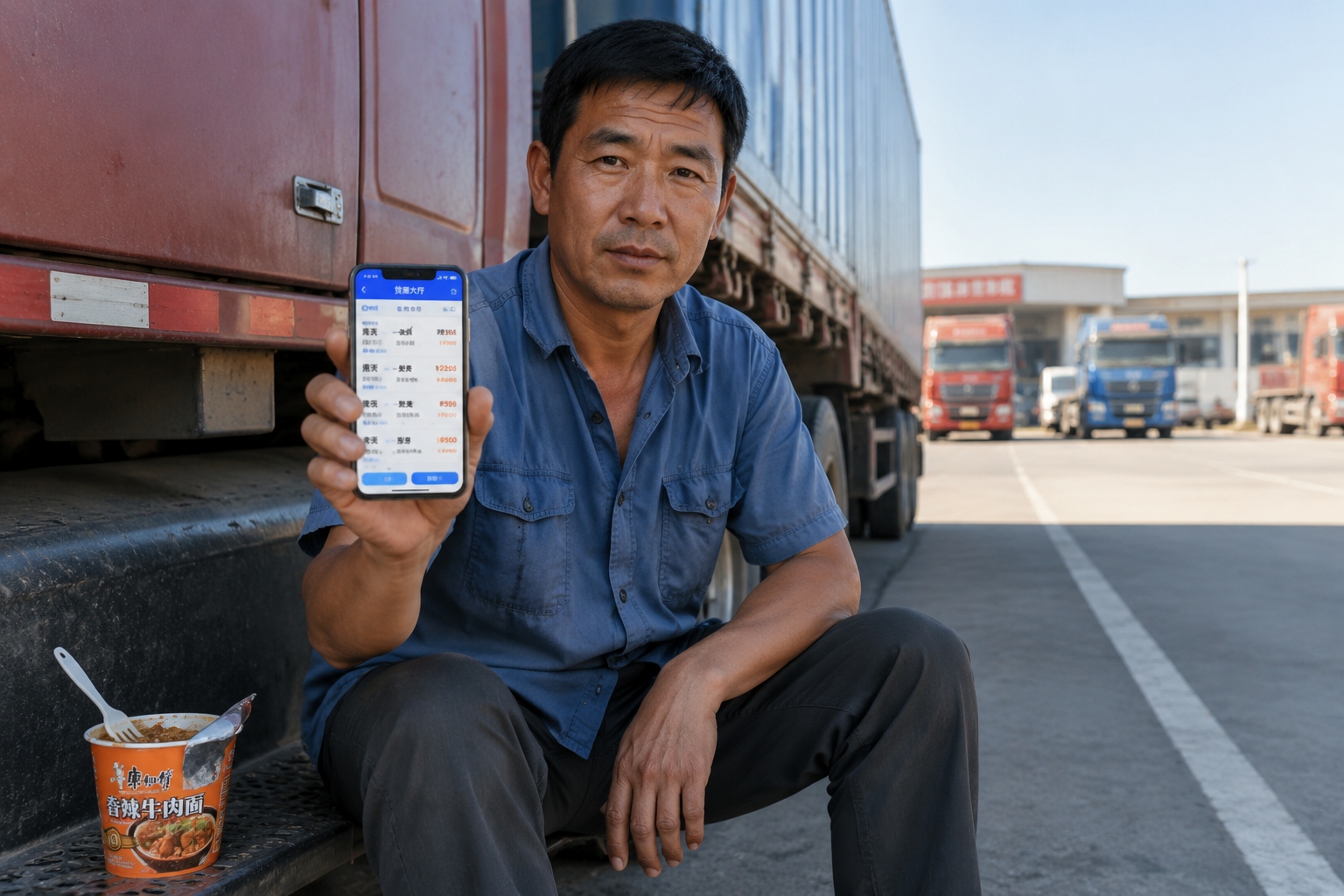
The service area on the Shenyang–Haikou Expressway just outside Linyi, a city in the northern Chinese province of Shandong, is already awake at six in the morning. A row of trucks sit on the concrete apron like resting elephants. Their drivers are washing their faces with bottled water or queuing at a metal kiosk with a hot-water tap. One of them, Chen Jianguo, sits on the bottom step of his 13-metre-long semi-trailer. He is wearing a faded blue short-sleeved shirt and sandals. A smartphone rests in his other hand.
The numbers on the screen reveal a world far from the romanticized image of a “knight of the road.” He is using a logistics platform called Manbang, which many Chinese truck drivers rely on to find freight jobs. Today, he quickly taps on a load: plastic pipes from a factory in Linyi to a warehouse in Hangzhou, 780 kilometres away. The fare: 4,600 yuan (about $640). Accepting it takes less than a second. He shuts the phone, pours himself a cup of instant noodles, and starts to tell me what the road network has done to him and for him.
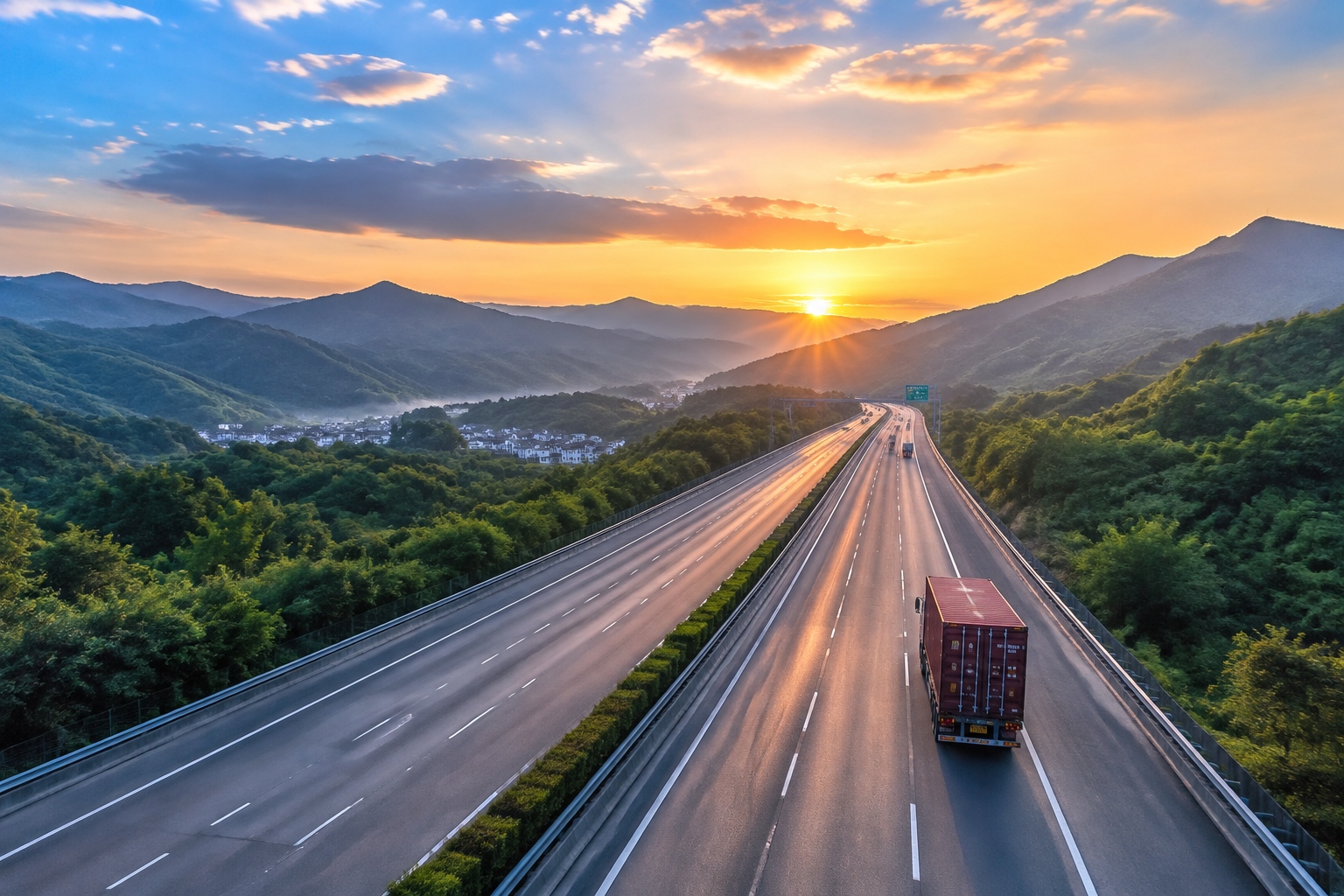
Chen is part of a fleet that numbers around 17 million across China, a workforce that quietly carries the country’s e-commerce, its vegetables, its vaccines, and its wall tiles. The tarmac they run on is the largest in the world. By the end of 2023, China’s expressway mileage had reached 177,000 kilometres — more than enough to circle the equator four times. But there is a catch that almost every foreign visitor notices: almost all of these highways charge tolls.
The Tolls Are the Engine
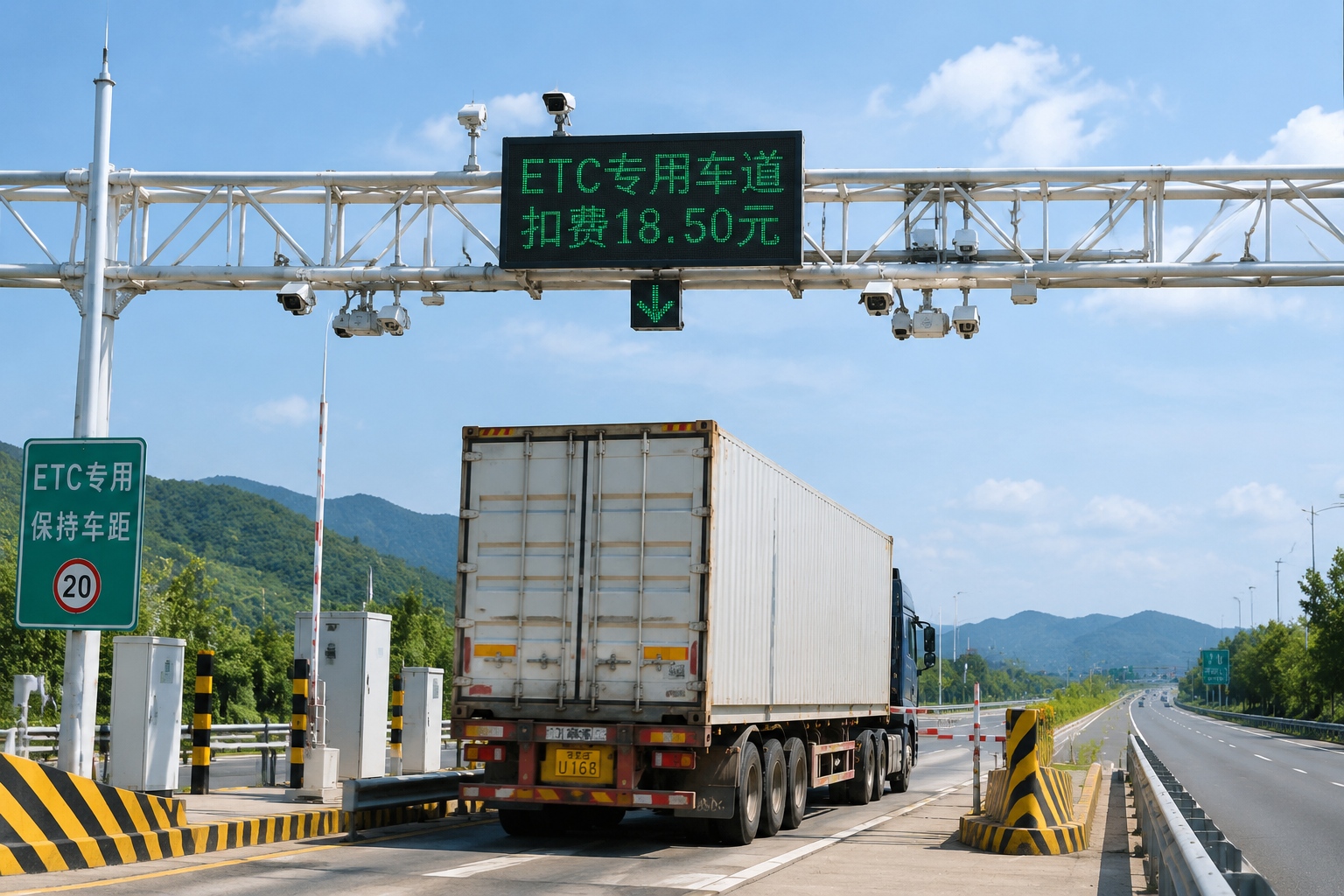
For a family car, a 300-kilometre expressway trip may cost less than 150 yuan, but for a loaded truck, the same stretch is a major business cost. Chen’s thirteen-meter, thirty-ton truck pays roughly 0.5 yuan per kilometre, meaning a typical 780-kilometre run leaves him with a toll bill of nearly 1,400 yuan. Diesel adds another 1,200 yuan. Insurance, food, and vehicle depreciation bring the total overhead on that single load to around 3,200 yuan, so his profit margin is thin and getting tighter.
“Some people think truck drivers are rich because they drive such expensive trucks,” Chen says with a laugh. “But we are only the middlemen of the highway.”
Why does China charge such high tolls? The answer lies in how the roads are built. Unlike many countries where interstates are funded by general tax revenue, China builds most expressways under a model of “debt plus tolls.” Local governments and state-owned conglomerates borrow heavily to finish a road, often mortgaging future toll income. This system has allowed construction to happen at a remarkable pace. A stretch of motorway that might have taken ten years of planning in California or France can be open in two to three years. But the debt remains, and drivers are the ones who pay it down, every single time they pass a gantry.
An Organic Digital Ecosystem
What actually makes China’s road network different is not just its size but the way it has interconnected with software. Chen’s freight app is a good example. The platform, also known as Full Truck Alliance, is the country’s largest online freight-matching marketplace. In 2022, it handled about 2.5 million loads per month. For a trucker like Chen, this means he rarely has to deadhead (drive home empty). He can plan a return route in advance, which lowers his costs — and also means fewer empty trucks on the highways.
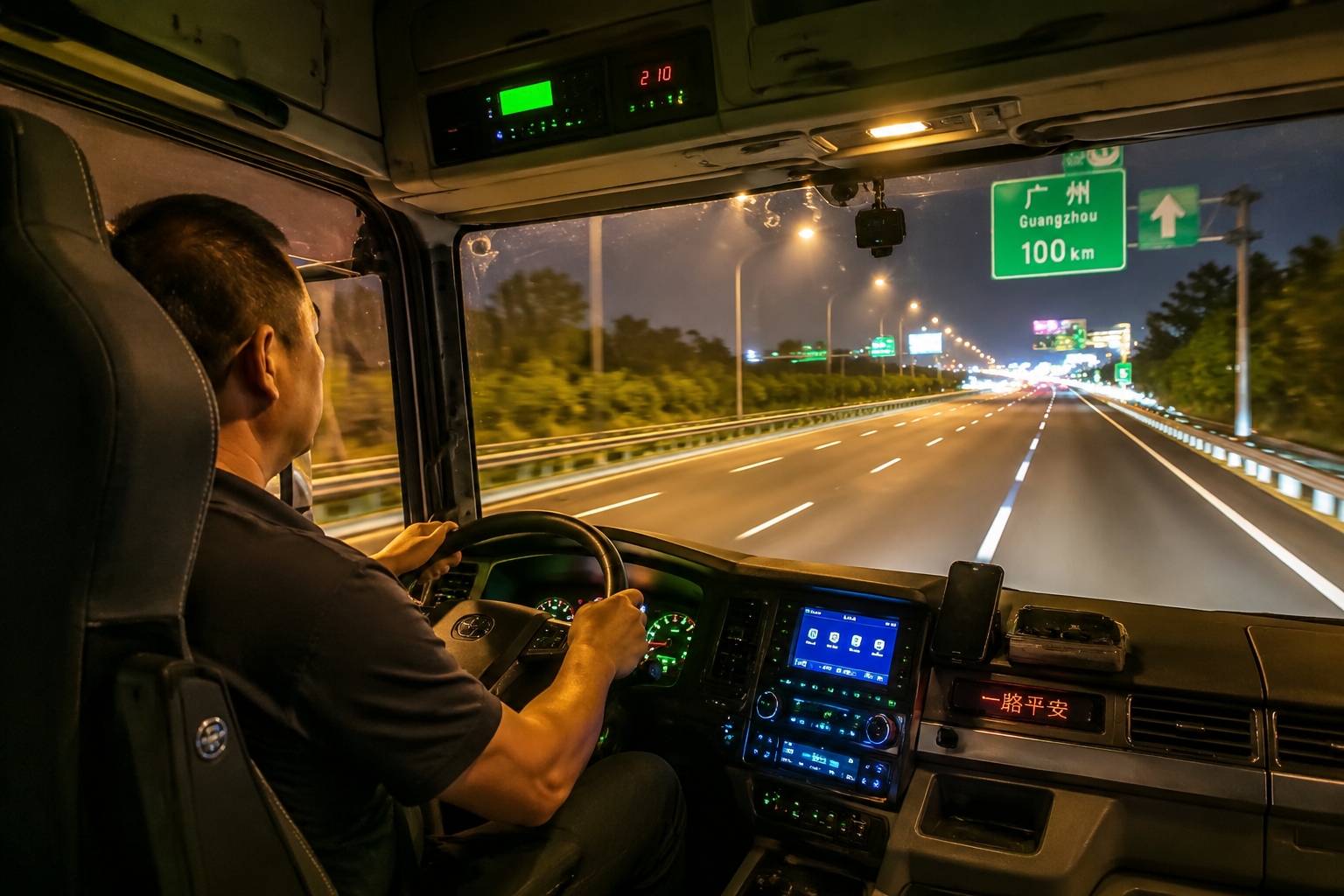
The roads also feed the country’s appetite for speed. In many Chinese cities, same-day or next-day delivery is now routine. A customer in Chengdu can order a physical object from a warehouse in Shanghai in the morning and receive it the next afternoon. Behind that miracle is a vast, invisible chain of thousands of trucks running on highways through the night, via toll gates that are scanned automatically. “We drive the night,” Chen says. “Because the road is open 24 hours, and so are we.”
What the Highway Takes
But the cost of being on the road is more than fuel and tolls. The lifestyle wears out the body and the mind. Chen often starts driving at 2 a.m. to deliver his load before the consignee’s warehouse closes at 5 p.m. He sleeps in his cab — a narrow bunk behind the driver’s seat, hardly longer than a camping mattress. The cab, however small, is equipped with a refrigerator, a small rice cooker, and a portable stove. He tells me that the habit of cooking in the cab is to save money: “I used to buy breakfast every day, but now I save 20 yuan. In a month, that is 600 yuan.”
His left knee has developed a chronic ache from jumping down from the cab several times a day. He recalls a night in January when freezing rain descended on a mountain section of the G30 Expressway. Traffic came to a standstill for fourteen hours. “There was no toilet, no food, and the heating was barely enough. The road gave us nowhere to go.” He says this without self-pity. “It is the price we pay for the gift.”
The Private Gifts in the Public Good
It would be easy to focus on the misery. But Chen’s life shows how the road network provides invisible freedom to millions of ordinary people. His daughter, now a nursing student in Wuhan, used to accompany him on trips. When she was small, she would sleep behind his seat in the “bunk” of the high-roof cab. Now she travels by high-speed train, but it was a freight truck, moving all the other things of life, that helped pay for her education.
“I couldn’t have built this life without the roads,” he says. “My old village road would not have carried my truck to the city. Now everyone in the village expects that a parcel will arrive within a week. That is normal for us, but when I think about it, it is actually a miracle.”
Standing next to his truck, he points west. “You can take this road all the way to Urumqi, and from there to the border with Kazakhstan. I never thought I could drive across the country when I started, but I have now seen more of China than most people will ever see. That is a gift for a simple man.”
Roads and Shadow
Chen also acknowledges the downsides beyond his own tiredness. The construction of new highways has routed around many aging county towns, draining the life from some once-busy roadside communities. Guesthouses, restaurants and repair shops that depended on long-distance truck traffic watched their customers vanish when the toll road opened. “They call it the ‘new high-speed prosperity’, but for some small shops, it is a slow death,” he says.
Then there is the deeper damage that isn’t measured in the wallet. The work takes a toll on family relationships. Chen says he spends about 200 nights a year away from home. When he returns, “sometimes my wife looks at me like we don’t know each other for the first hour. But then we sit down to eat, and the road is soon forgotten.”
The Road Ahead
Chen believes the highways will eventually be cleaner, quieter, and maybe even smarter. He has seen electric trucks charging at rest areas, and trials of autonomous trucks on the Yangtze River Delta sections. He is not afraid, though he knows the pace of change will be swift. “I only have about ten years left in this profession. Maybe after that, the truck will drive itself. But the expressway will still be there, and that will still be something.”
As the evening glow fades, Chen climbs back into the cab. He adjusts the mirror, checks the engine oil and turns the ignition. The diesel engine rumbles to life under the humming tarmac. He waves once through the window, pulls out of the service area and merges into a stream of headlights. The road is a promise and a burden, and it is also the only constant in his life.
In a country where the road network has expanded further and faster than almost anywhere in history, the truck driver is the one who knows both the cost and the gift moment by moment. The roads are not just a thin line on a map. They are the unpoetic, glorious, hot asphalt that carries everything else.
Start the discussion at forum.chinacomes.com