
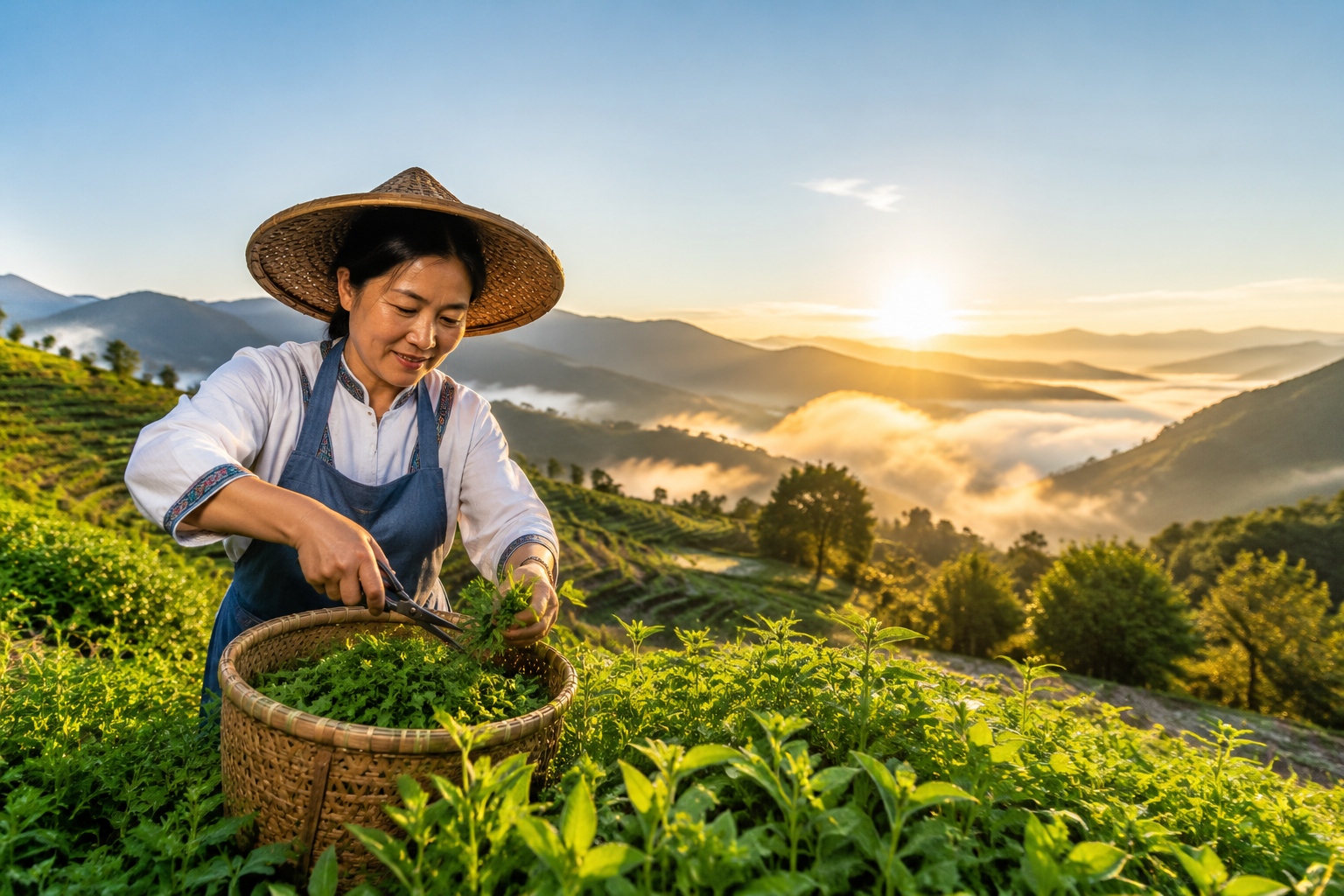

It was just after dawn when Wu Guifen, 58, walked into her terraced field on the outskirts of Linyi, in China’s Yunnan province. She wasn’t carrying a rake or a hoe, but a pair of scissors and a basket. Crouching low, she snipped the thick leaves of a plant that most Western visitors would walk right past — dangshen, or codonopsis, a root used in traditional Chinese medicine for centuries.
“When I started planting this in 2018, my neighbors thought I was wasting the land,” she told me, brushing dirt from her hands. “Now they’re asking me how to get started.” That shift explains something important about today’s China: the quiet but powerful way that traditional medicine is becoming a modern engine for rural incomes.
A ‘Fortune Grass’ Grows
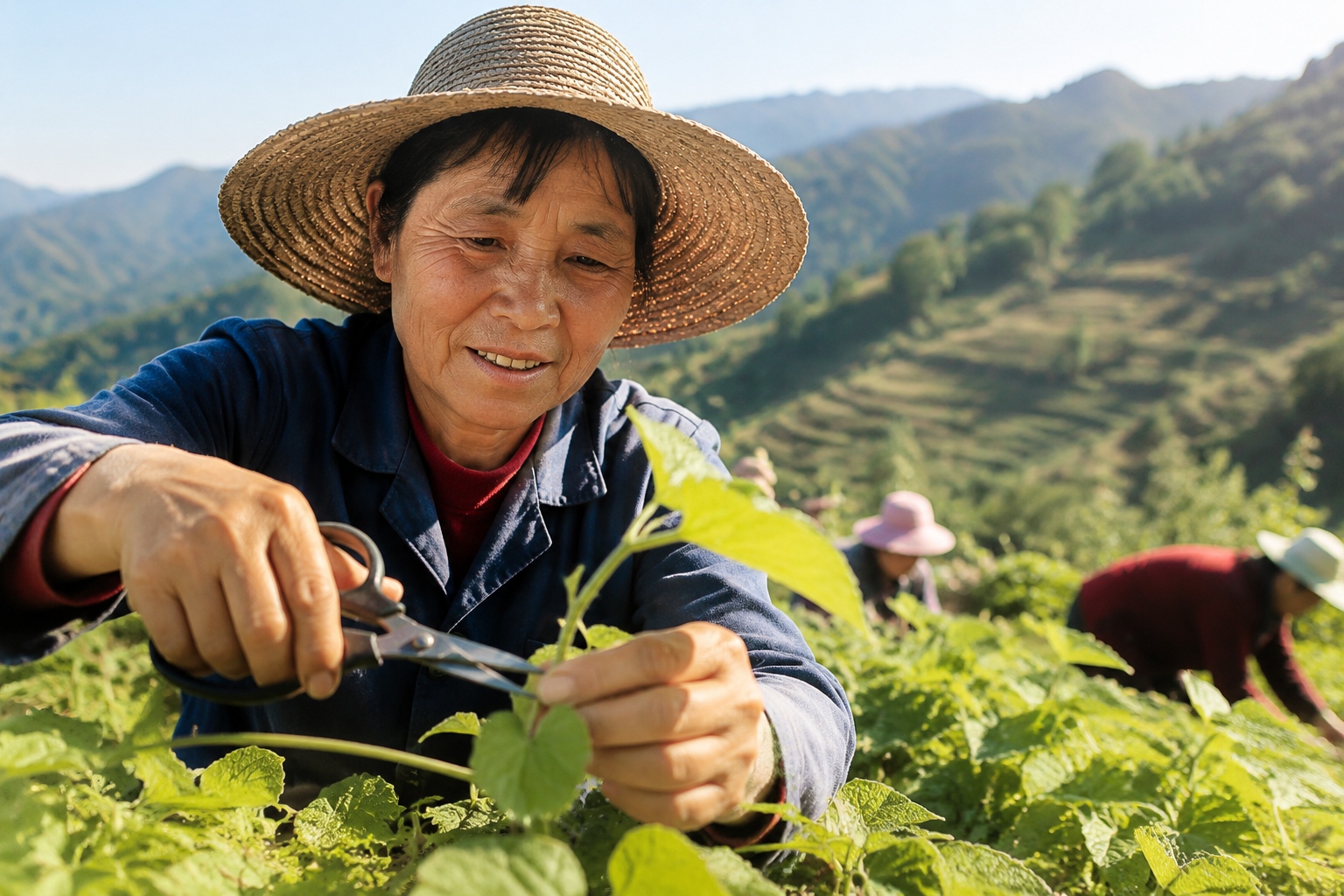
In Chinese, the phrase “富民草” — literally “people-wealth grass” — is often used to describe medicinal herbs that boost rural incomes. The name is not just inspirational. It reflects a real financial trend. According to industry data, the TCM industry’s retail value reached over 800 billion yuan in 2023, and planting areas for herbs exceed 40 million mu in China. That means millions of farmers have become part of a vast supply chain.
The number of TCM-related companies is also soaring. Between 2019 and 2023, the number of registered businesses engaged in herbal planting, processing, and sales grew by an average of 15% per year, according to the State Administration for Market Regulation. Many are small family firms, but some are large enterprises that invest in research and quality control.
From Mountain Plots to National Supply Chains
Traditional Chinese medicine, or TCM, is not a small niche. It’s a market that supports clinics, hospitals, pharmacies, skincare brands, and even food and beverage companies. In China, the retail value of the TCM industry exceeded 800 billion yuan (about $110 billion) in 2023, according to industry reports. Much of that starts with farmers like Wu.
But the path from a hillside plot to a consumer’s tea cup is long. It involves seed suppliers, planting guidelines, harvesters, drying facilities, processors, and logistics companies. In the past, most of these steps happened in separate towns, with little coordination. That’s changing fast.
Take the county of Fengshun in Guangdong province, where the local government has built a “TCM industrial park” that combines planting bases with processing factories and a research center. Farmers rent plots inside the park, receive training on standardized planting, and sell their harvest directly to the park’s buyers. The result is a shorter supply chain and fewer middlemen taking a cut.
Similar parks are sprouting up in Sichuan, Gansu, and Yunnan. They often come with subsidies for seeds and equipment, plus technical support from agricultural universities. For farmers, the appeal is clear: less guessing, fewer risks, and a reliable buyer at the end of the season.
Who Benefits? Farmers, Cooperatives, and Processors
For rural households, the most obvious benefit is income. In many villages, a farmer growing maize or rice might earn 2,000 to 3,000 yuan per mu (about one-fifteenth of a hectare) per year. Switching to medicinal herbs such as huangjing (polygonatum) or gouqi (goji berry) can bring in three to four times that amount, especially when the herbs are sold through organized channels.
Cooperatives play a big role. In Ningxia, for example, wolfberry cooperatives negotiate prices with buyers, provide seedlings at lower cost, and train farmers in organic methods. One cooperative I read about in the town of Zhongning offers advances on future harvests, so farmers don’t have to wait months for payment.
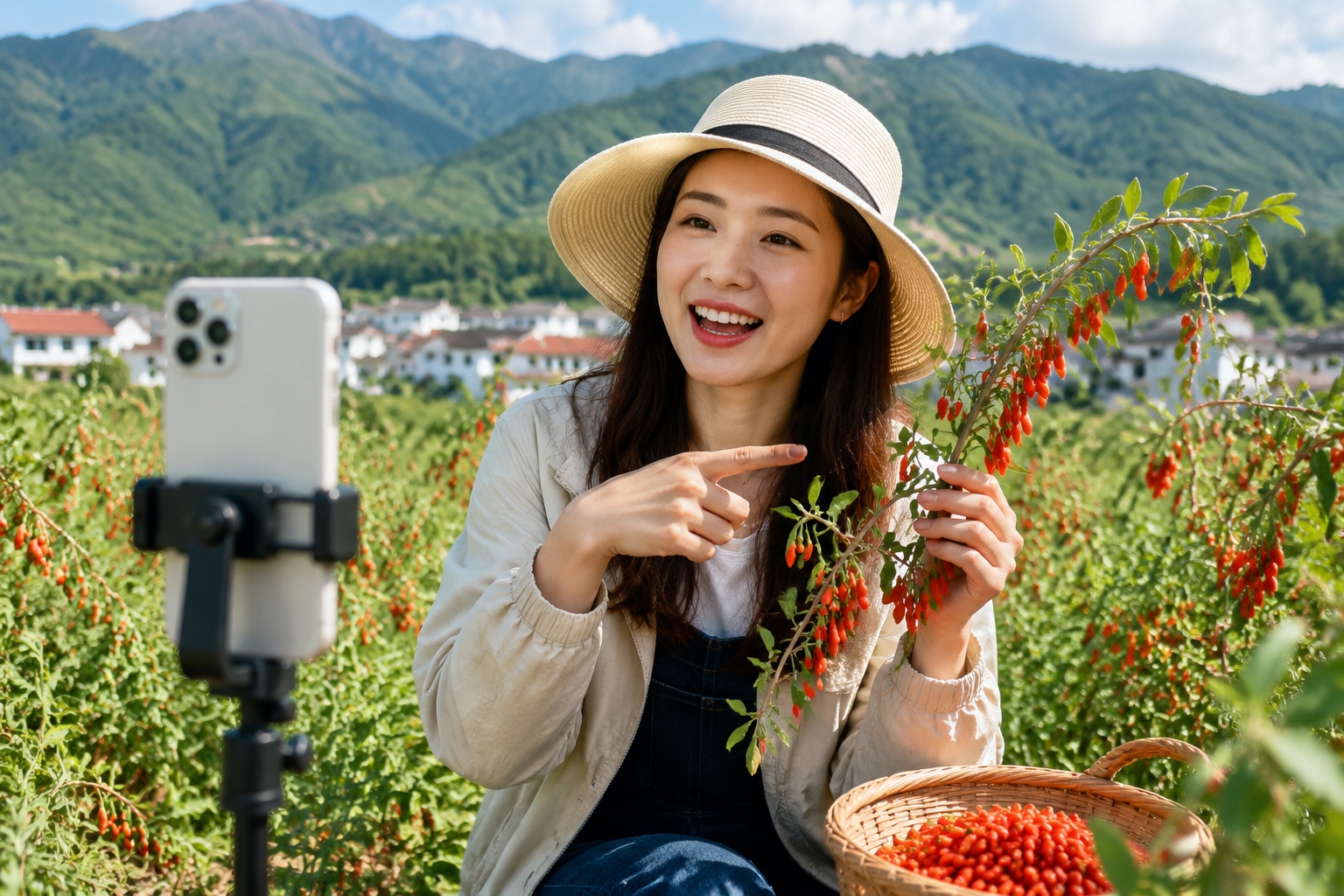
Young people are also returning to villages to run herb businesses. In Guizhou, a 29-year-old former factory worker named Chen Li started a small online shop selling dried herbs. She works directly with five villages, posting harvest videos on short-video platforms. “The internet changed what a village can sell,” she said. “I have buyers in Shanghai and even Singapore.”
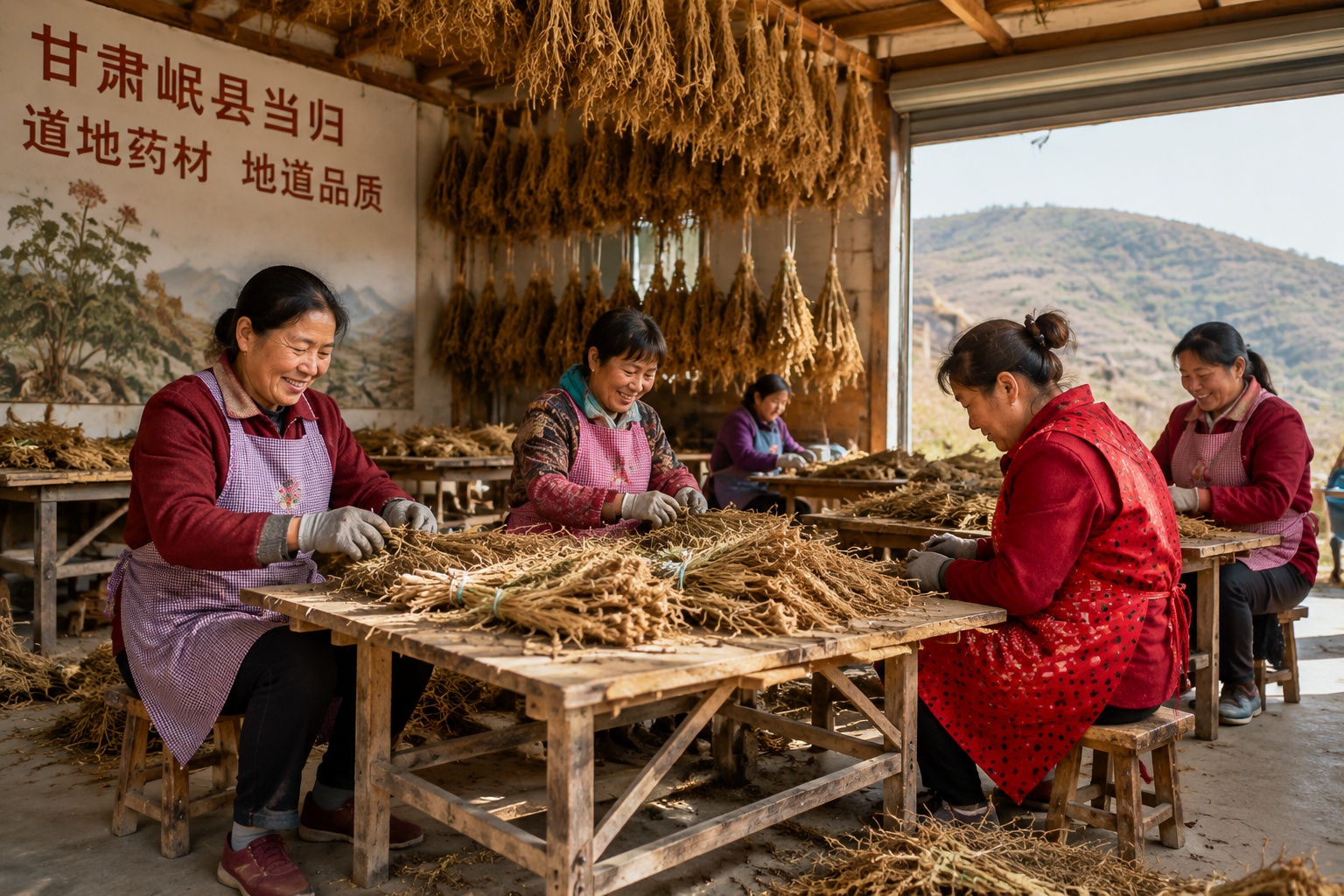
Even the process of drying and sorting herbs creates local jobs. In the small town of Weiyuan in Gansu, dozens of workshops employ women who clean and cut dang gui (angelica root) during the harvest season. A worker can earn 120 yuan per day, which is competitive with factory wages in the nearest city.
In some villages, herb planting has become the primary source of collective income. In the village of Xiazhai in Guizhou, the village committee rents out 300 mu of collective land to a herb company. The annual rental is 150,000 yuan, which funds a small library and a children’s play center.
Technology Changes the Game
It’s not just about planting more. New tools help farmers grow better herbs. Drones spray pesticides over large fields, soil sensors monitor moisture and pH levels, and blockchain-based tracking tags let consumers scan a code to see where their herbs were grown.
One well-known example is the “TCM cloud” platform launched by the China Association of Traditional Chinese Medicine. It collects data from thousands of farms, helping farmers decide what to plant and when to harvest. In the past, this was based on guesswork. Now it’s based on patterns from years of yield data.
At the processing end, modern factories use AI-powered sorters to classify roots by size and quality. This raises the value of the final product and reduces waste. A small processing facility in Anhui province told a local newspaper that its sorting line doubled efficiency after installing a computer vision system last year.
On the e-commerce side, platforms like Taobao and Pinduoduo have dedicated channels for authentic TCM herbs. Some villages live-stream their harvests directly to buyers, cutting out the middleman entirely. This has made it easier for small farmers to reach urban consumers with premium prices.
Quality standards are also improving. Some farms are applying for Good Agricultural and Collection Practices (GACP) certification from the World Health Organization, which helps them export to other countries. A wolfberry farm in Ningxia was among the first to receive this certification, opening doors to markets in Europe and North America.
Challenges Remain
It would be misleading to paint a picture of easy prosperity. Herb farming is risky. Prices can swing sharply when many farmers plant the same crop at once. In 2022, for example, the price of banxia (pinellia) dropped by nearly 40% in some regions because of oversupply. Disease and drought also threaten harvests.
Another challenge is quality control. Some farmers still use excessive pesticides, which leads to rejected batches and lost income. Government agencies have stepped up inspections, and many cooperatives now require soil testing before planting. But enforcement is uneven, especially in remote areas.
And while the internet helps, not every village has reliable high-speed access or the digital skills to sell online. Young people with such skills are still the exception rather than the rule.
There is also the question of ecological impact. Overharvesting of wild herbs has led to soil degradation in some areas. Sustainable farming methods, like intercropping and crop rotation, are being promoted but are not yet universal.
What This Means for the Future of Rural China
The TCM industry is not going to single-handedly solve rural poverty, but it is a meaningful part of the solution. For regions with hilly terrain and limited arable land, medicinal herbs are often a better fit than staple crops. They can grow on slopes, tolerate drier conditions, and command higher prices.
As the Chinese population ages and interest in natural wellness grows, demand for TCM products is expected to keep rising. The central government has included “rural revitalization through distinctive industries” in its long-term development plan, and TCM cultivation is frequently cited as a model industry.
The global TCM market is also growing. Countries like the United States, Germany, and Australia have been increasing imports of herbal extracts and supplements. Chinese companies are adapting their packaging and labeling to meet international regulations, which could bring even more revenue to rural producers.
For Wu Guifen, the future is simple. She plans to expand her dangshen plot next year and try a new herb, baizhu. “It’s not like other jobs I did,” she said, standing in the sun. “This work feels like it’s mine.”
Start the discussion at forum.chinacomes.com