
A Morning Ride, Then and Now
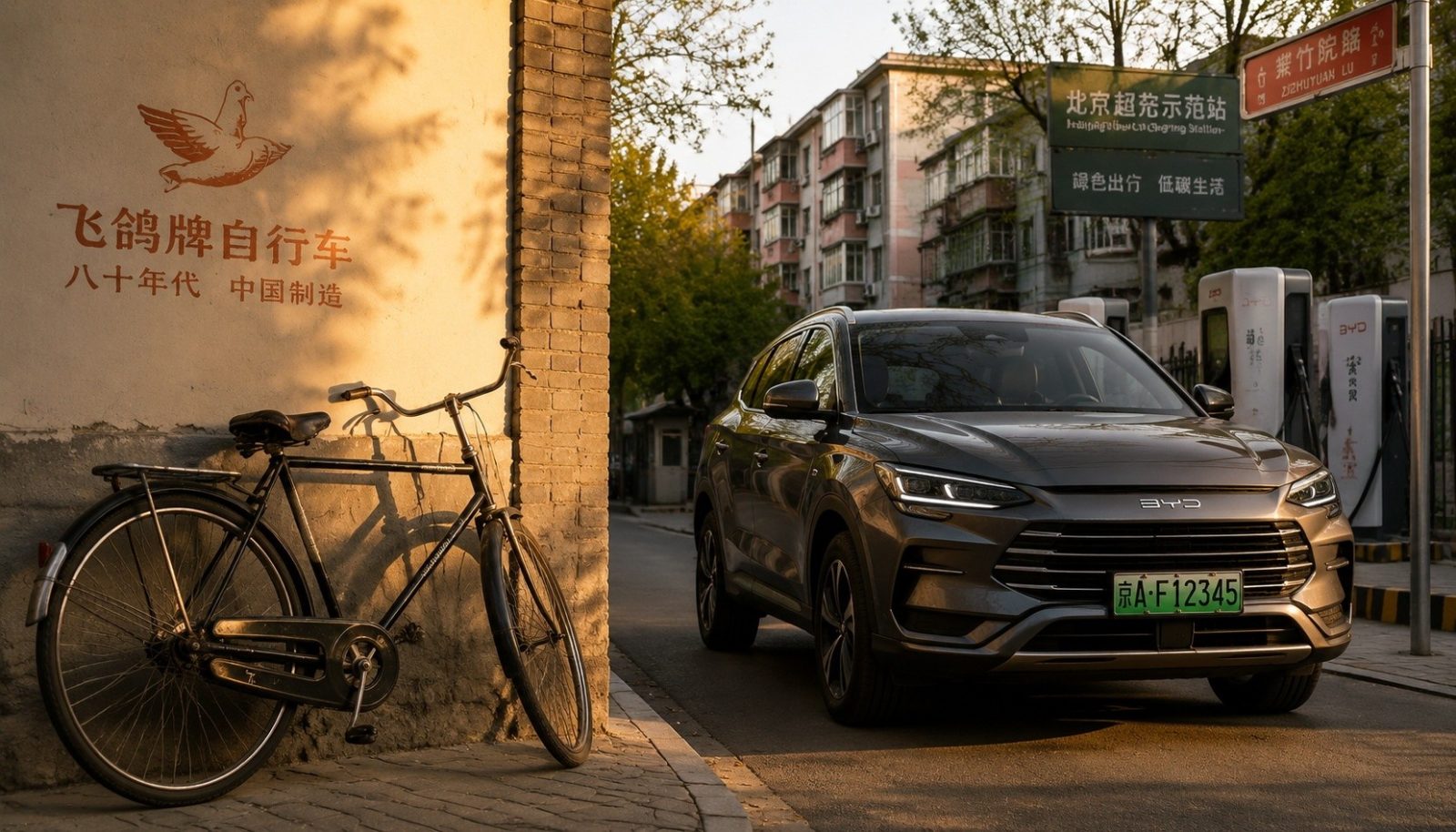
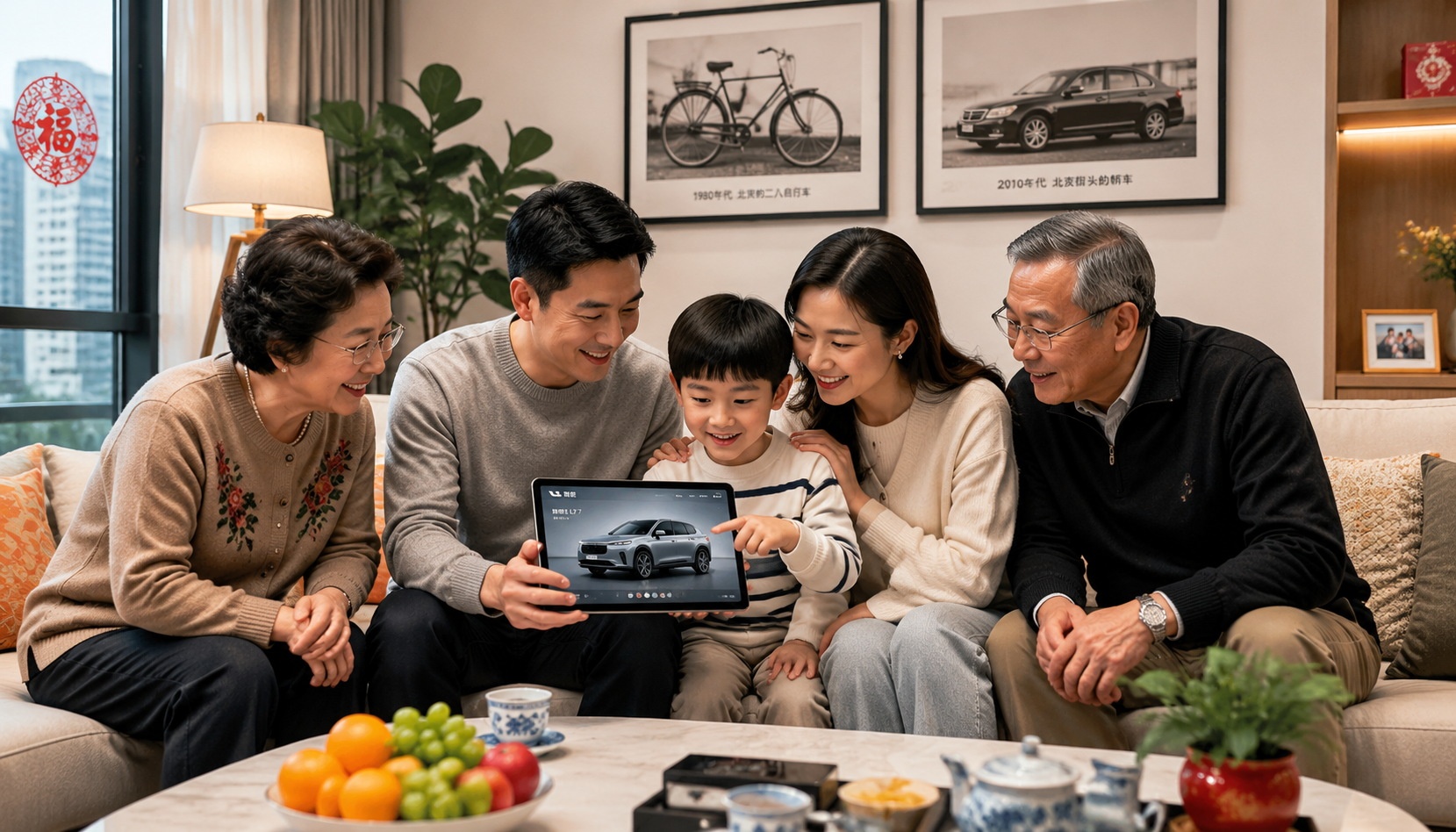
In 1988, my father strapped me onto the back of his Flying Pigeon bicycle every morning. I clutched his waist as we weaved through a river of other cyclists—thousands of bells ringing, metal frames clattering, the smell of coal smoke from breakfast stalls mixing with morning frost. Thirty-five years later, I drop my own daughter off at school in a white BYD Tang SUV. She watches cartoons on the rear-seat screen while I navigate traffic using the voice-controlled navigation. The distance is the same—four kilometers—but the journey belongs to two different worlds.
The Bicycle Era (1980s–1990s)
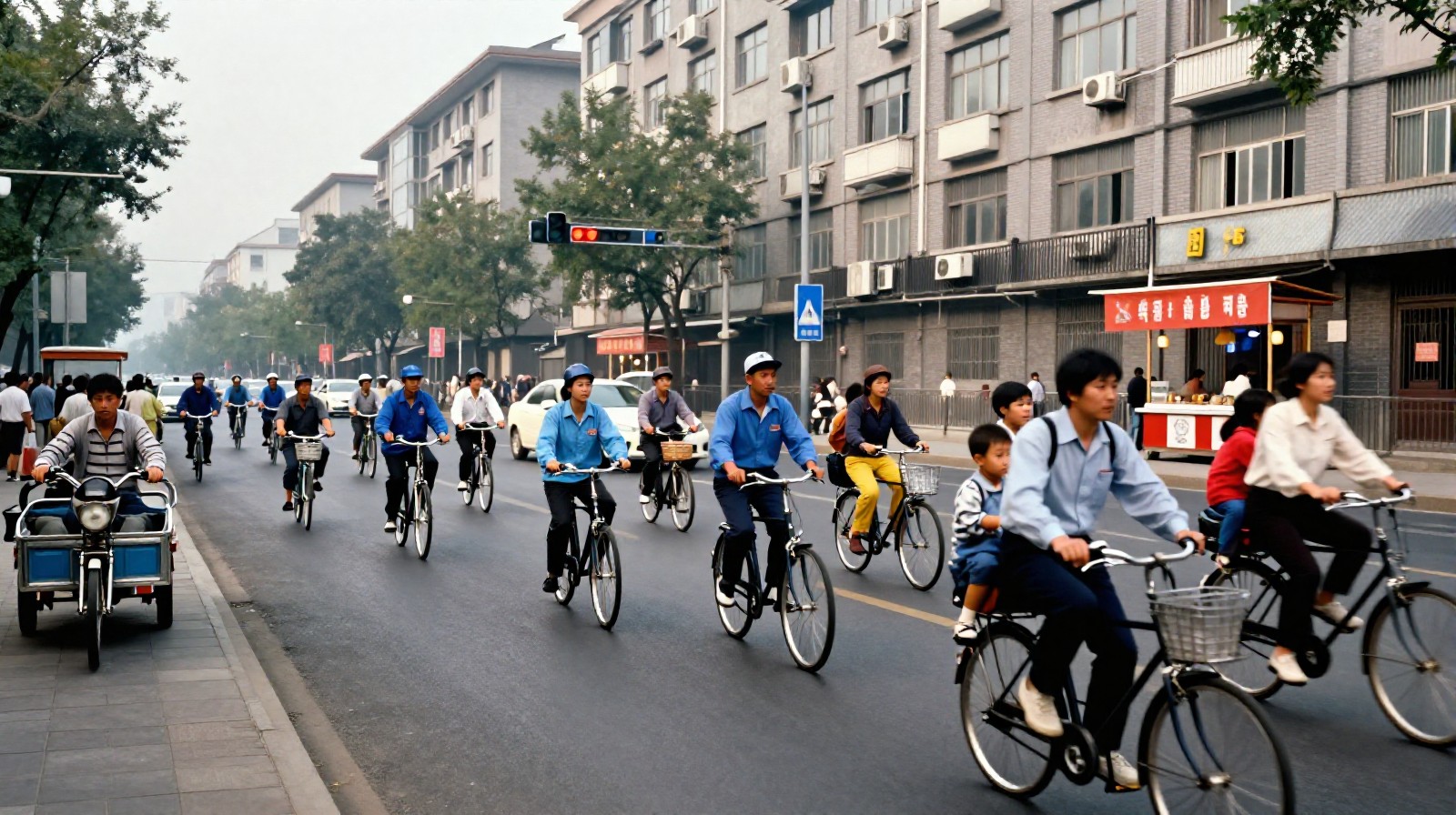
Back then, owning a bicycle was a milestone. My father saved six months of his salary—360 yuan—to buy that Flying Pigeon. It was one of the “three big items” (bicycle, sewing machine, wristwatch) that defined a family’s status. Bikes were not just transportation; they carried groceries, construction materials, even small furniture. On weekends, my father would attach a sidecar to carry my mother and me to the park. On Beijing’s main streets, bicycle lanes were packed, and traffic lights controlled both vehicles and bikes. The rhythm of life was slower: a trip across the city could take an hour, but nobody complained because there was no alternative.
Motorbikes and Electric Scooters (Late 1990s–2000s)
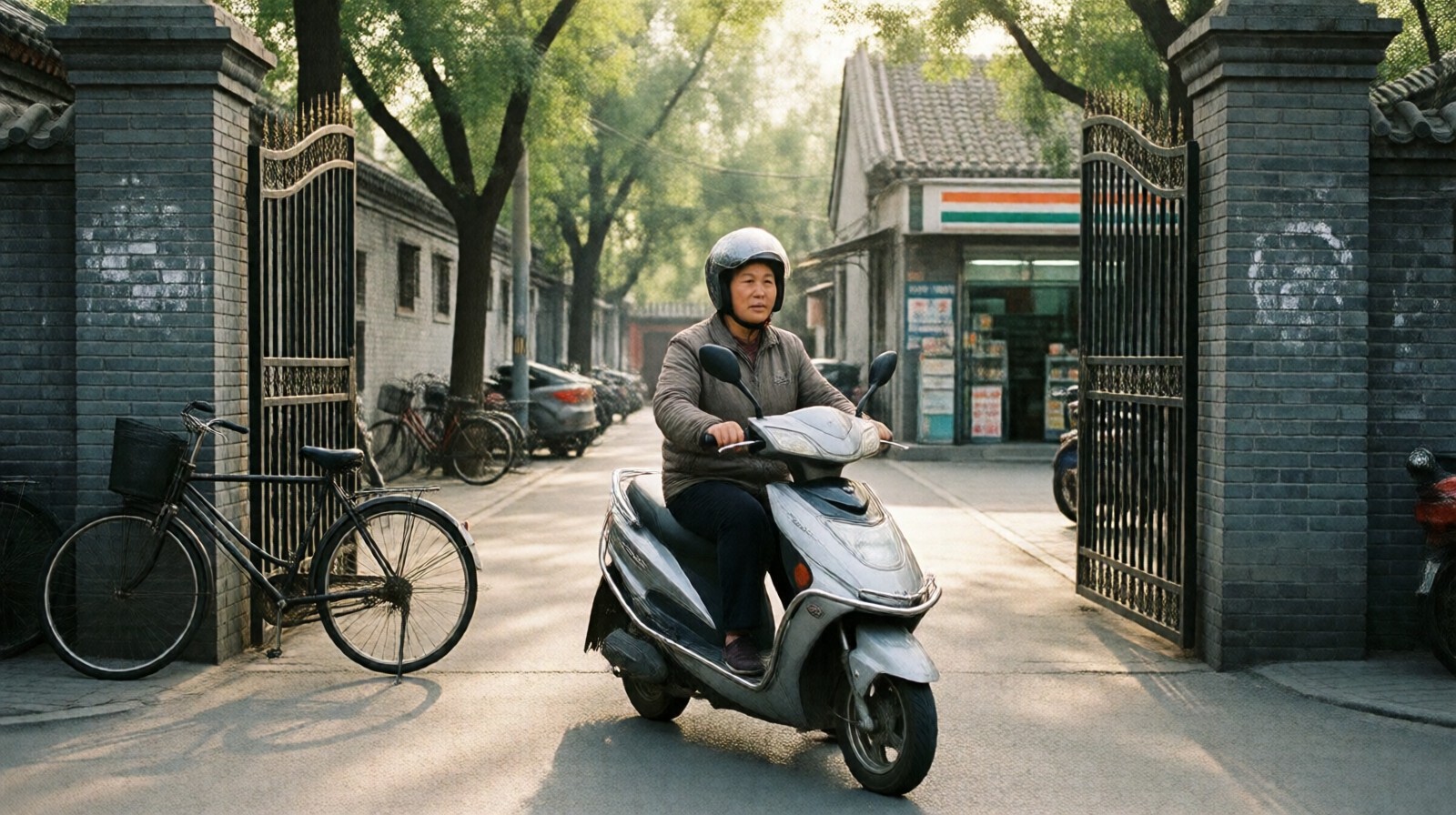
By the late 1990s, my uncle bought a motorbike—a red Jialing 125. It was loud, fast, and smelled of gasoline. He used it for his small delivery business, often saying it saved half the time compared to cycling. But within a few years, many Chinese cities began restricting motorbikes due to noise, pollution, and safety concerns. In Beijing, a ban on motorbikes in the city center pushed families toward electric scooters. My mother got one in 2005—a silent, battery-powered e-bike that could be recharged in the stairwell. It cost 1,500 yuan, about a month’s salary, but it let her commute to her new job at a supermarket in 20 minutes instead of 50. E-bikes became a symbol of practicality and rising incomes.
The First Car (2000s–Early 2010s)
My father got his driver’s license in 2008, at age 45. He spent nights studying a booklet of traffic rules and practiced parking in an empty lot behind our apartment. In 2010, we bought our first car—a silver Volkswagen Santana, the quintessential Chinese family sedan. It cost 80,000 yuan, equivalent to my parents’ combined annual savings. The day we drove it home, my mother wiped tears. That car changed everything: we could visit my grandparents in the suburbs more often, carry heavy goods from wholesale markets, and take weekend trips to the mountains. For the first time, our mobility wasn’t limited by bus schedules or tired legs. But traffic jams were already creeping in—the expressway that once took 30 minutes now took 50.
The SUV and the Electric Revolution (2010s–Now)
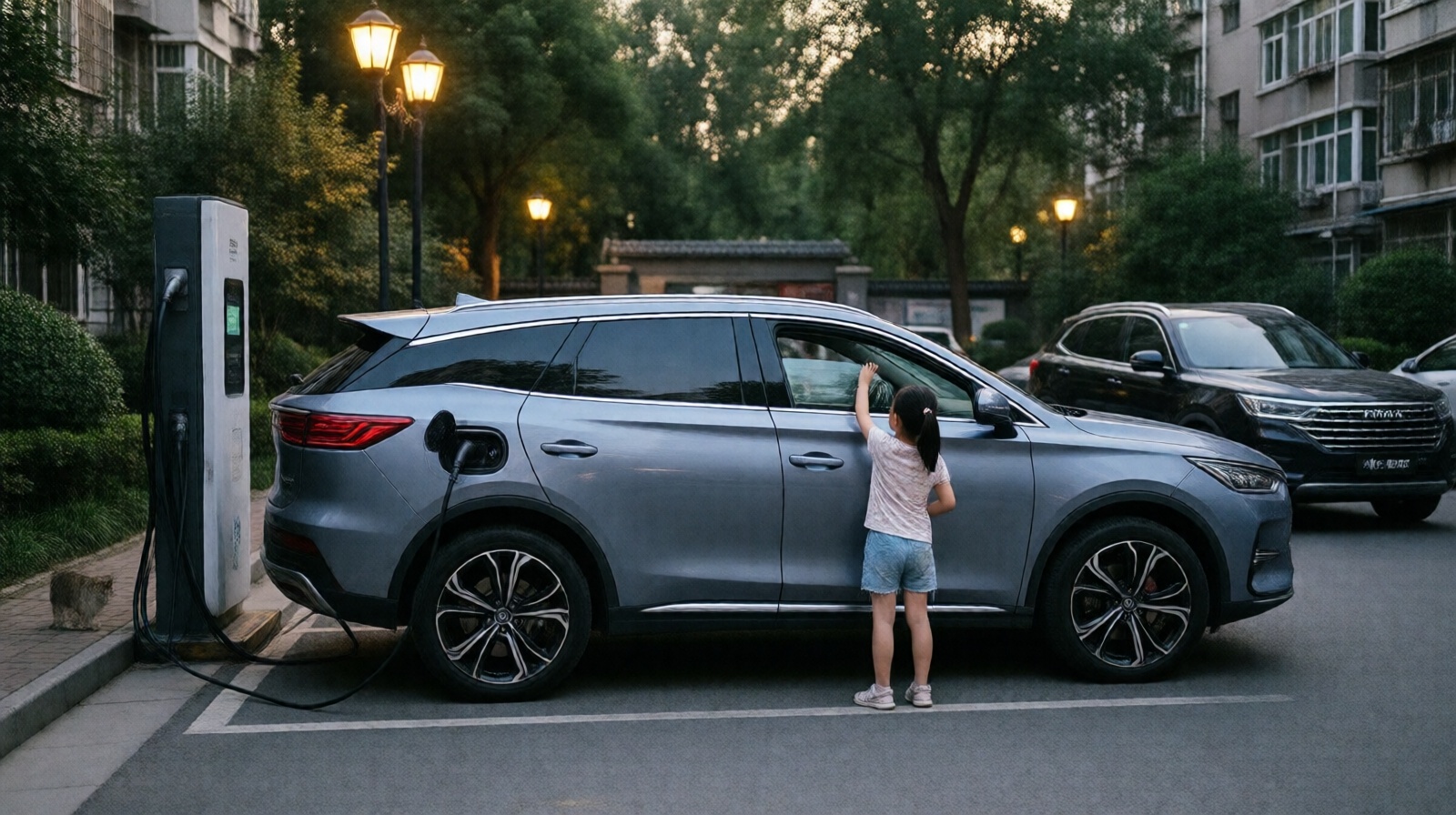
In 2018, we replaced the Santana with a Haval H6 SUV. My father wanted a higher driving position and more space for our growing family—my daughter, her stroller, and camping gear. SUVs became the default choice for Chinese families, accounting for nearly half of all new car sales by 2023. But the bigger change was electric vehicles. My cousin, a software engineer in Shenzhen, bought a NIO ET5 in 2022. He says charging is cheaper than filling gas, and the license plate lottery in Shenzhen is easier for EVs. Our neighborhood in Beijing now has charging piles by the community center; on weekday evenings, four or five EVs are plugged in simultaneously. Still, challenges remain: long highway queues at charging stations during holidays, and the anxiety of finding a charger in older districts.
More Than Wheels
Each vehicle in our family’s garage marks a chapter of China’s economic story. The bicycle represented frugality and equality; the motorbike and e-bike signaled rapid urbanization and rising consumerism; the sedan opened doors to personal freedom; the SUV and EV reflect prosperity and environmental awareness. Today, Beijing has 6.3 million cars—more than triple the number in 2000. The streets are congested, parking is a nightmare, and my father sometimes jokes, “We used to worry about not having a car; now we worry about having too many.” But when I see my daughter happily pointing at the BYD’s touchscreen, I know that for her generation, car ownership will be as ordinary as riding a bike was for mine. This is not just one family’s story—it is the story of hundreds of millions of Chinese families rolling forward, one wheel at a time.