

A Lunchtime Scene in Shanghai
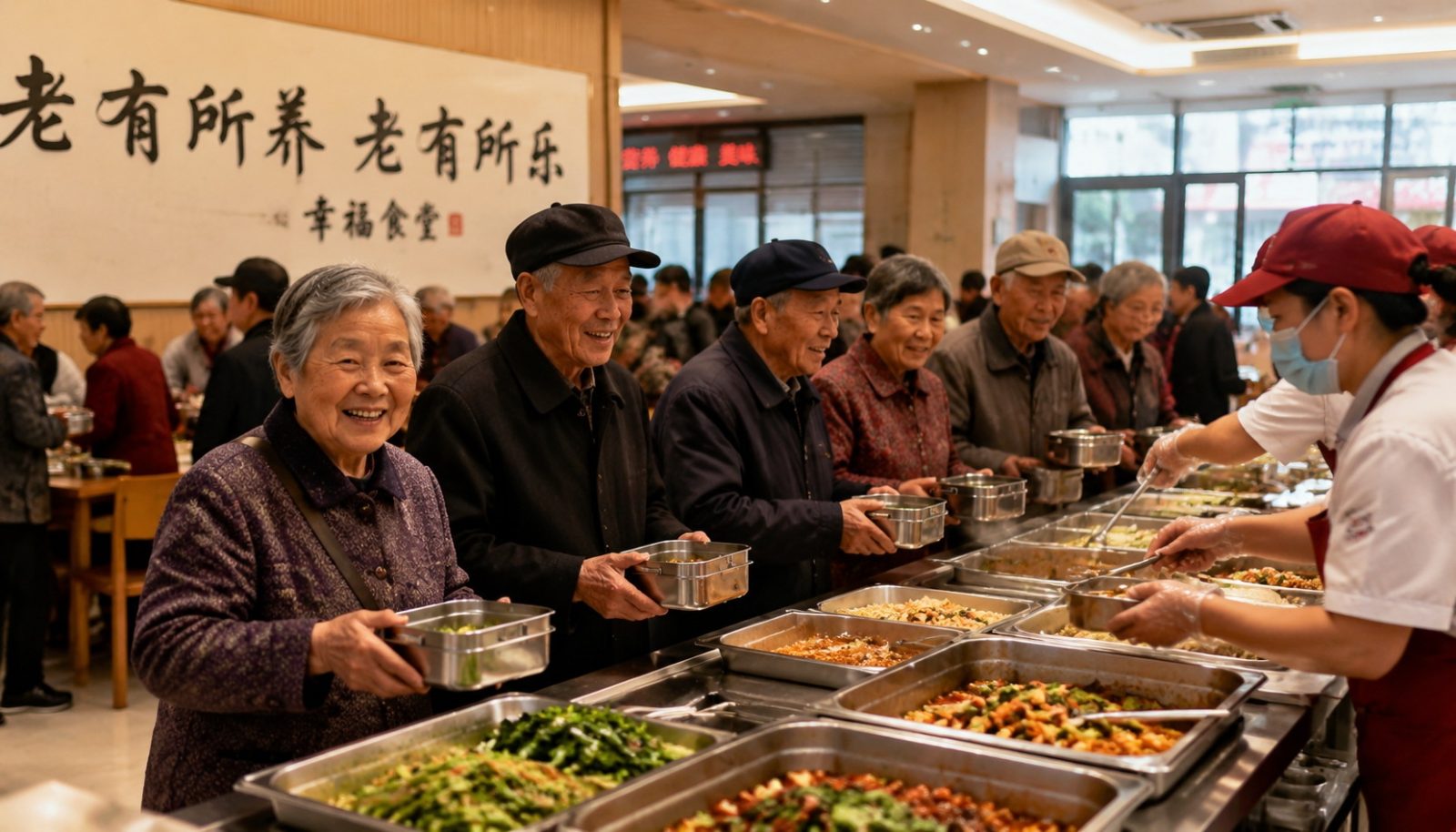
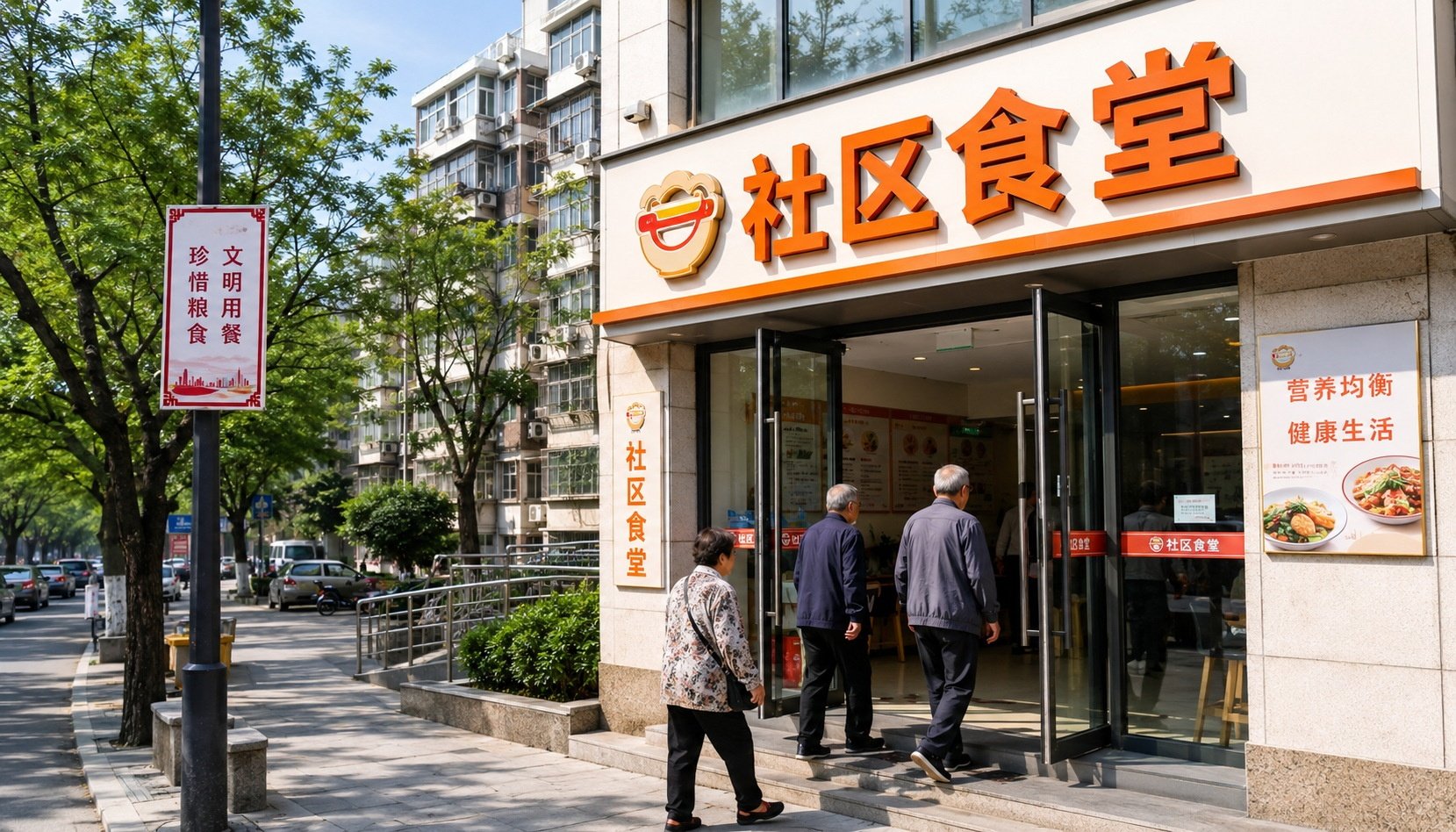
At 11:15 a.m., the queue starts forming outside the Changning Community Canteen in downtown Shanghai. Most of the people waiting are over 70, some with walkers or canes. They chat while holding reusable lunch boxes, discussing today’s menu. Inside, steam rises from stainless steel trays: braised pork belly (hongshao rou), tomato and egg stir-fry, cold cucumber salad, and a pot of free soup. A sign reads: “Seniors 60+: any two dishes with rice — 12 yuan ($1.70).”
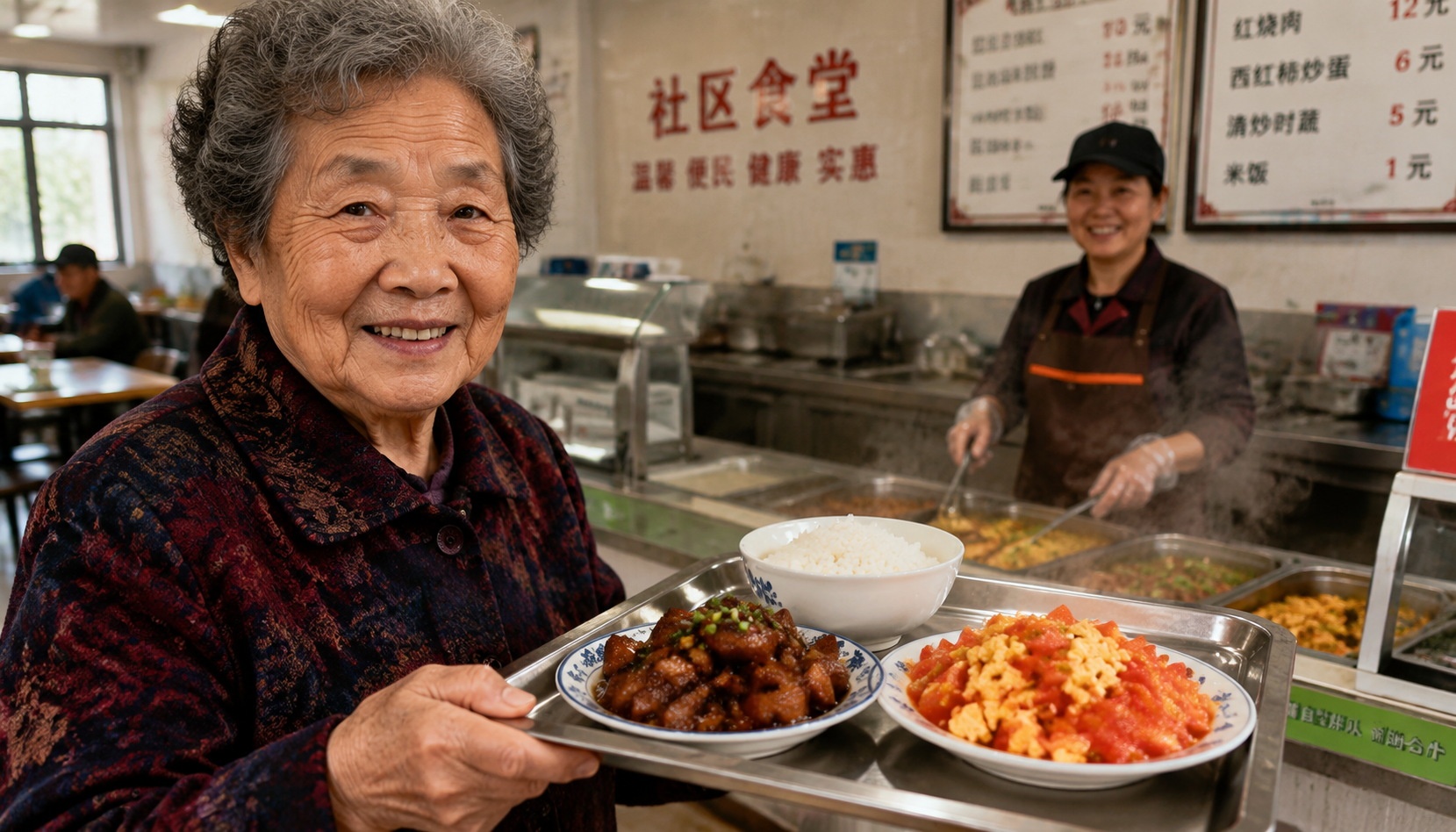
This is not a charity kitchen. It’s a community-run canteen — part of a nationwide effort to solve a very modern problem: how to feed a rapidly aging population with dignity and affordability.
Why China Needs Community Canteens
China has one of the fastest-aging populations in the world. By 2035, over 400 million people will be 60 or older — more than the entire population of the United States. Many live alone, their children working in distant cities. Cooking for one is a chore; grocery delivery apps feel too complex for some. Malnutrition and loneliness are real risks.
Community canteens (shequ shitang) have emerged as a practical solution. They first appeared around 2020, driven by local governments and neighborhood committees. Today, there are tens of thousands across the country, from Beijing to Chengdu, often located on the ground floor of apartment blocks or in community centers.
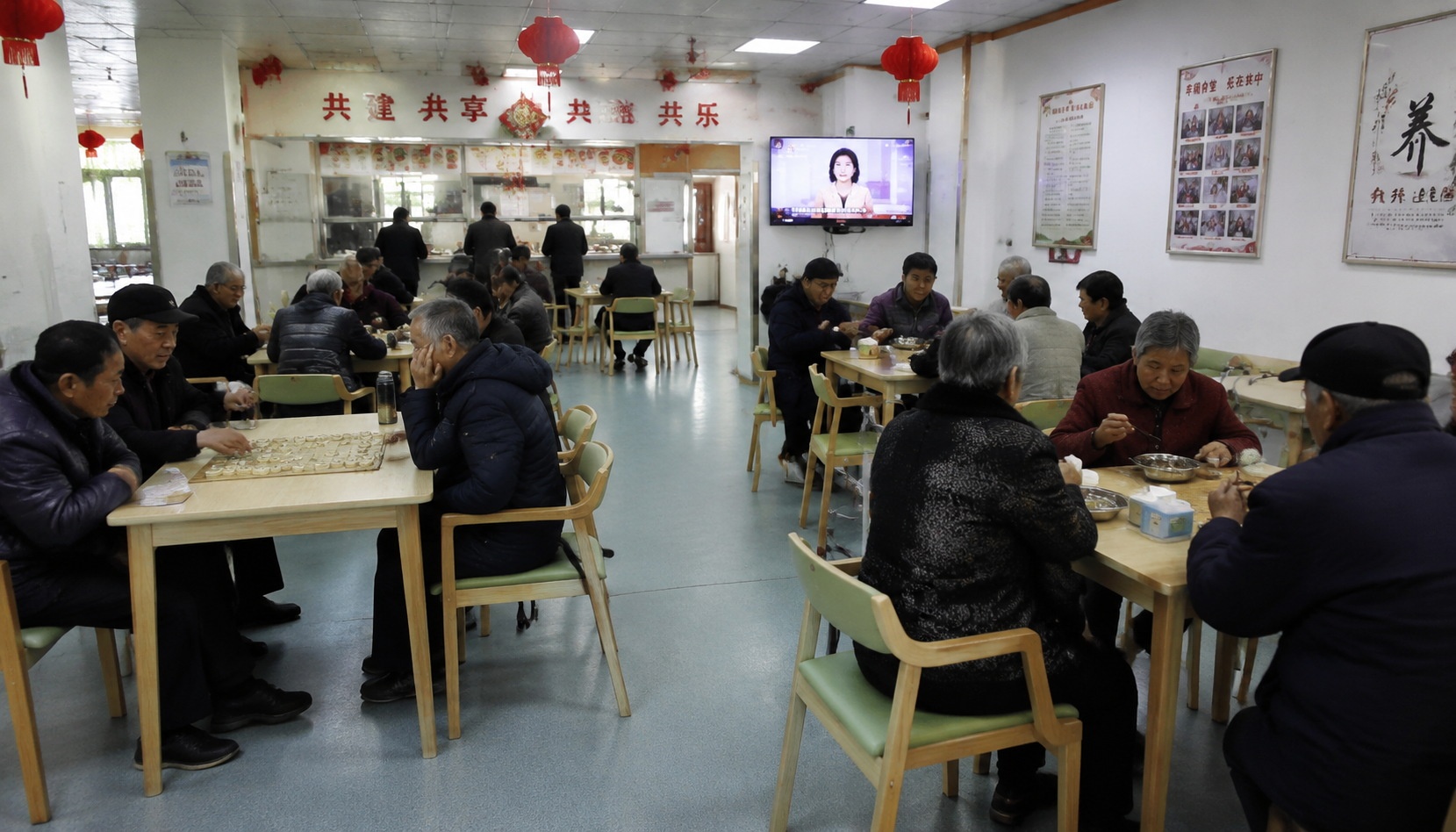
Unlike Western programs like Meals on Wheels (which delivers food to homes), Chinese canteens focus on bringing people out — turning a meal into a social occasion. Many have tables for four, chessboards, and even small TV corners. For many seniors, it’s the only place they meet neighbors regularly.
How They Work: Subsidies, Nutrition, and Trust
Most community canteens are partially subsidized by local governments. The rent is low or free, and some utilities are covered. Private catering companies bid to operate them, with a capped profit margin — typically no more than 5–10%. In return, they serve a set menu every day, designed by a nutritionist to be low in salt, oil, and sugar, with plenty of vegetables and protein.
A typical meal: rice or steamed bun, one meat dish, one vegetable dish, plus soup or fruit. Price for seniors is usually 10–20 yuan ($1.40–$2.80). Non-seniors can eat too, but pay about 50% more. Most canteens also offer delivery for homebound elderly, often handled by neighborhood volunteers or delivery platforms with reduced fees.
The real secret ingredient is trust. Many elderly Chinese are wary of takeout food safety. Seeing the kitchen, recognizing the cooks, and knowing the food is freshly made — that’s worth more than convenience. “I know the oil they use,” one 78-year-old regular told me. “And they never use MSG unless I ask.”
What’s on the Menu? Comfort Food, Home Style
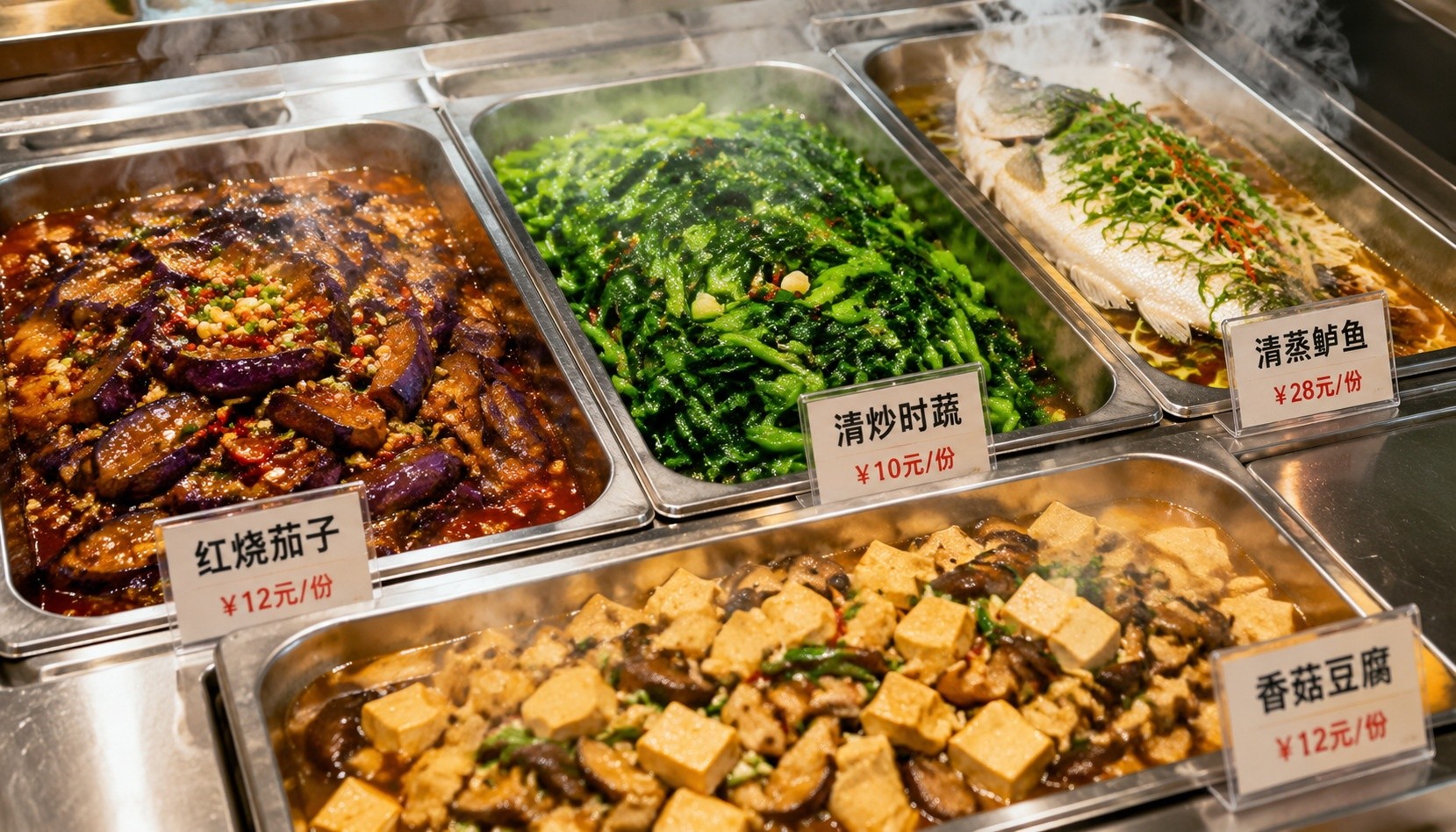
The beauty of community canteens lies in their ordinariness. No fusion, no Instagram plating — just solid home cooking. Dishes change with the seasons: stir-fried winter melon in summer, lamb stew in winter. Regional variety is huge. In Sichuan, you’ll find mapo tofu and twice-cooked pork. In Guangzhou, preserved egg porridge and steamed ribs. In Shandong, huge portions of dumplings and braised chicken.
Most canteens publish weekly menus on WeChat groups or notice boards. Seniors can pre-order or just show up. Meal times are early: lunch from 11:00 to 13:00, dinner from 17:00 to 19:00 — matching seniors’ schedules.
More Than Just Food: A Third Place
Sociologist Ray Oldenburg’s concept of a “third place” — a space beyond home and work where people gather — fits community canteens perfectly. Here, friendships form. A retired teacher tutors children in the corner while waiting for takeout. Two widows share a table and now vacation together. The canteen manager regularly hosts health talks and holiday parties.
For younger working people, these canteens also offer a cheap, quick lunch. Some offices nearby send employees in groups. But the priority remains seniors — they get priority seating and extra discount.
Challenges and Criticisms
No system is perfect. Some canteens struggle to break even, especially in less dense suburbs. The quality can vary wildly — a few have been shut down over hygiene issues. Others face the “salt problem”: elderly customers often complain food is too bland, while health guidelines demand less salt. Balancing taste and health is a constant negotiation.
Also, not every elderly person is mobile enough to walk to a canteen. Delivery capacity is limited. And in rural areas, where the elderly are even more scattered, community canteens are rare — though some mobile food trucks experiment with routes.
Why It Matters for the Rest of the World
Community canteens are a low-tech, high-touch solution that other aging societies (Japan, South Korea, parts of Europe) are already studying. China’s experiment shows that with modest government support and local creativity, you can build a meal system that respects seniors’ autonomy and social needs. It’s infrastructure you can taste — and that’s the warmest kind.
Start the discussion at forum.chinacomes.com