

The question I keep getting asked
“So are Chinese women actually running things, or is that just what the brochures say?” A friend asked me this over coffee in Shanghai last month. She had read one headline about China’s female billionaires and another about women quietly leaving the workforce. Both headlines were true. That’s the part worth explaining.
Start on an assembly line in Shenzhen
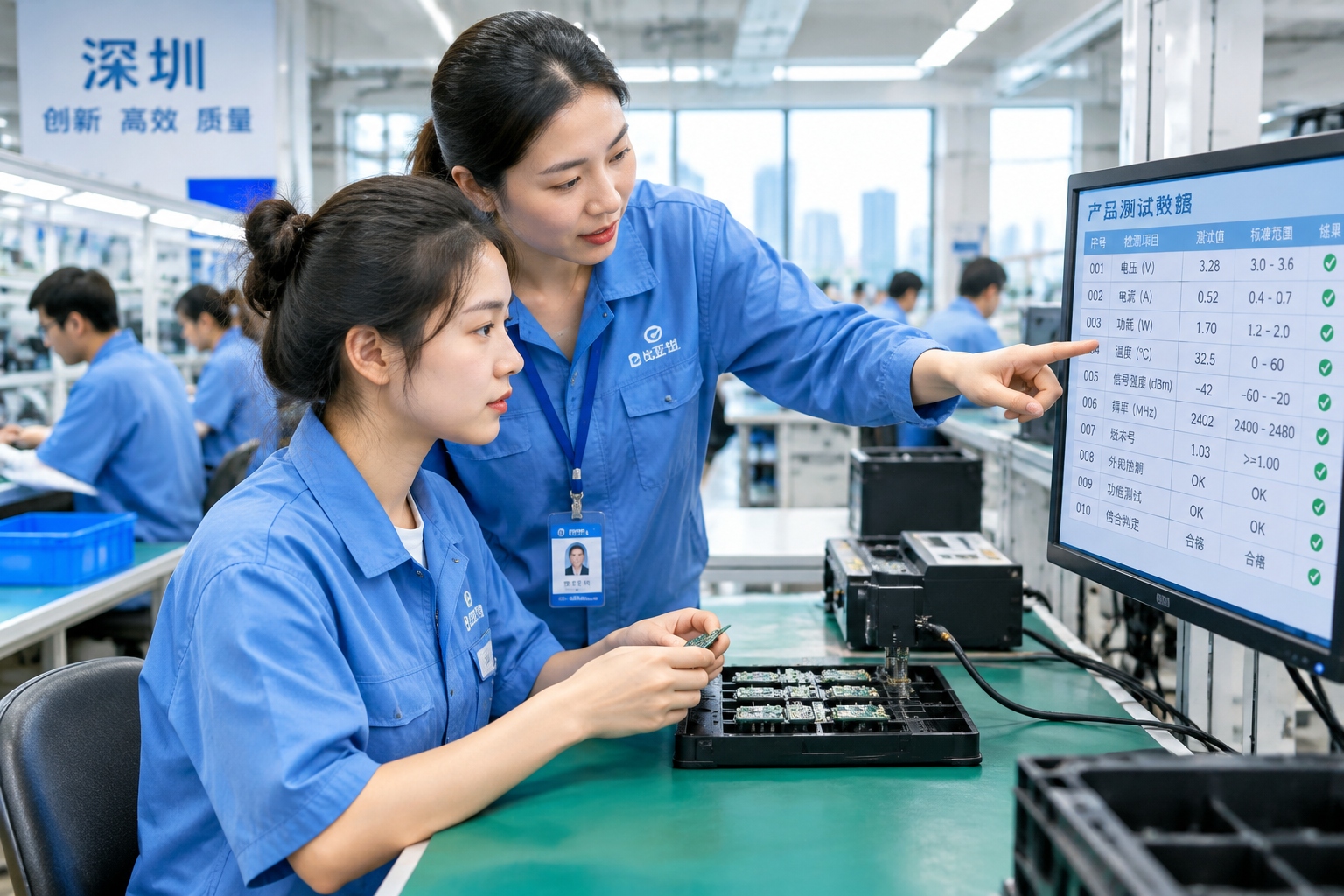
In 1988, a young woman from a village near Shantou named Wang Laichun took a job on a Foxconn production line in Shenzhen, making connectors for computer cables. She was 21. She stayed about a decade and ended up managing thousands of workers. In 2004 she and her brother started their own company, Luxshare Precision.
Today Luxshare builds components and assembles AirPods for Apple, and Wang — who almost never gives interviews and reportedly still walks the factory floor — is regularly listed among the richest self-made women in the world. Her story answers the question more cleanly than any statistic: can a woman with no capital, no famous surname and no connections reach the top of Chinese business? Yes. Not usually, not easily, but the pipeline is real.
The numbers, without the hype
If you are reading from outside China, here is the ground truth as far as anyone can measure it:
- Grant Thornton’s annual Women in Business survey has put mainland China’s share of senior management roles held by women at roughly a third for years — usually higher than the US, the UK, Germany and Japan in the same survey.
- China produces more self-made women billionaires than any other country, according to Hurun’s annual rich lists — in some years more than the rest of the world combined. Most of them built manufacturing, retail or packaging businesses, not apps.
- Alibaba has said for years that women are close to half its workforce and about a third of its senior managers.
- At board level the picture is far worse: independent surveys put women’s share of board seats at Chinese A-share listed companies somewhere around 15%.
- And the long trend line runs the other way. World Bank data shows China’s female labor force participation rate falling from roughly 70% in the early 1990s to around 60% today.
More women at the very top, fewer in the middle. Hold both of those in your head at once and you will understand this better than most commentary does.
Three women, three ways to run a company
Dong Mingzhu: the one who says it out loud
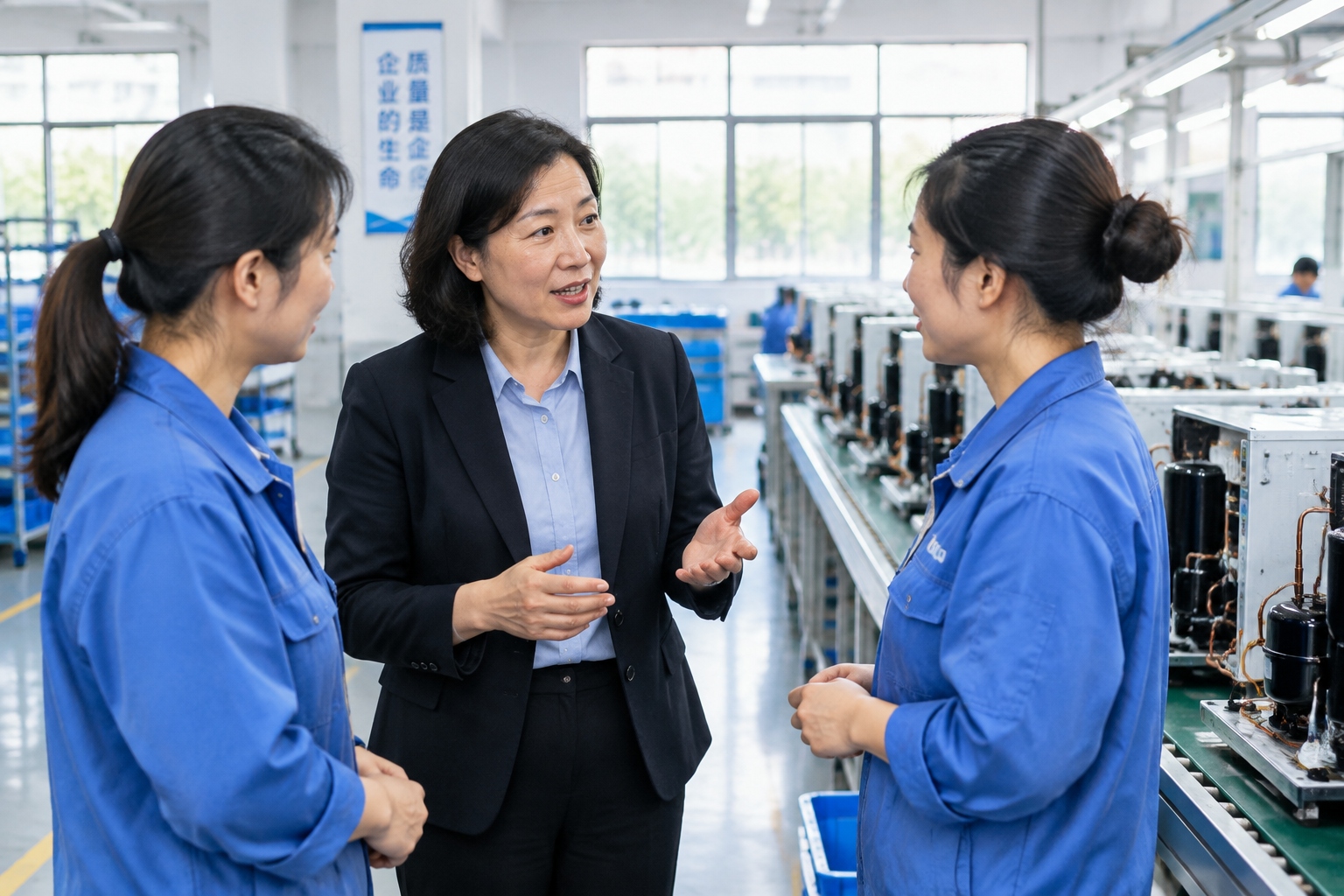
Dong Mingzhu joined Gree Electric, an air-conditioner maker in Zhuhai, at 36, after her husband died. She was a widow with a young son, and the job she took was the least glamorous one in the company: chasing distributors for unpaid debts. She became chairwoman in 2012. At 70 she is still hosting livestreams to sell Gree appliances, still publicly taking shots at rivals, still telling employees that if they walk out the door they should not expect to walk back in.
Western readers sometimes find her confusing, because she does not fit the collaborative female leader template. She is famously hard. She has also pushed Gree to build thousands of subsidized apartments for employees on its campus, and has repeatedly raised frontline wages. She-power in China is not one personality type — it includes the iron-fisted operator as well as the consensus-builder.
Jane Sun (Sun Jie): the one who ran the experiment
Sun Jie runs Trip.com Group, the travel company behind Ctrip. She trained as an accountant, served as CFO, and is one of the few Chinese CEOs who talks about gender and work with numbers rather than sentiment.
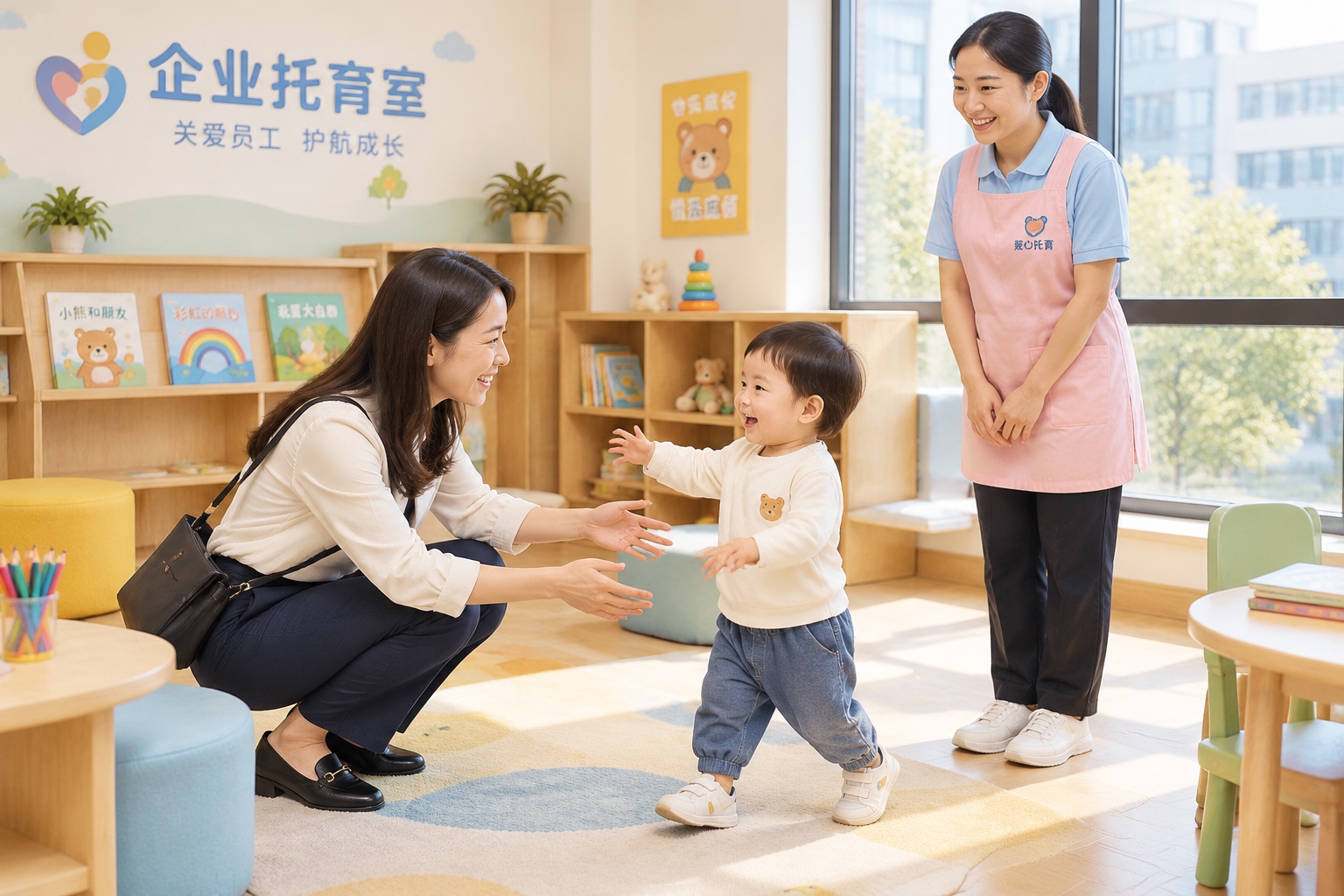
Back in 2010, Ctrip let a group of call-center staff work from home for nine months as part of a study designed with Stanford economists. Productivity rose about 13%, and the quit rate roughly halved. When COVID hit, that experiment turned into infrastructure: Trip.com scaled hybrid and remote work across a company of tens of thousands, and in 2023 rolled out a childcare subsidy of 10,000 yuan per child per year from birth to age five — a commitment of around a billion yuan, paid to parents of any gender. Her argument, essentially: you cannot tell women to lean in if the company never builds the floor they are standing on.
Liu Qing: the one who had to fix something
Liu Qing, president of the ride-hailing giant Didi, is the daughter of Lenovo’s founder — the opposite of a self-made story, and she has taken criticism for it. Then came 2018, when two passengers were murdered by drivers, and she became the public face of a safety crisis. Under her, Didi shipped in-app audio recording, one-tap emergency calling connected to police, real-time trip sharing and a set of features aimed specifically at women riders. Whether those features prevent crime is genuinely debated by researchers. What is not debatable is that they reset what a Chinese ride-hailing app is expected to include.

What actually changes inside the building
Strip out the speeches and here is what female founders and CEOs have pushed through in recent years:
- Subsidized childcare, on campus or nearby — Trip.com, Gree and a long tail of smaller firms
- Longer paternity leave: most provinces now give fathers 7 to 30 days, up from nearly nothing, though it is still a fraction of maternity leave
- Anti-harassment reporting channels, now standard in the HR policies of large tech companies
- Hybrid schedules in white-collar workplaces
- Products built around women’s actual complaints: safety features in ride-hailing, family accounts in travel apps, female health tracking
There is a catch, and HR managers will tell you about it privately. When provinces extended maternity leave from the national 98 days to 128–158 days after the three-child policy in 2021, some employers quietly started hesitating over hiring women in their late twenties. Policy and prejudice do not move at the same speed.
The cultural part that resists slogans
Two forces pull in opposite directions. Grandparents are still the backbone of Chinese childcare — a large share of urban kids grow up with a grandparent in the apartment, which is an enormous unpaid subsidy for working mothers and one that many families abroad simply do not have.
The other force is 996 — 9am to 9pm, six days a week — which is brutal for anyone with caregiving duties at home, and it is usually women who step off that ladder. The share of women in senior management has been flat at around a third for a decade. China has not solved this. It has put more women in the room than most countries while still charging them for it.
Where it shows up in the products
The clearest evidence is not in boardrooms, it is in what gets shipped. Xiaohongshu — RED — was co-founded by Miranda Qu and built a social commerce app whose review communities are overwhelmingly female, and which now shapes how a generation of Chinese consumers decides what to buy. Meitu was making photo tools for women long before creator economy was a phrase anyone used.
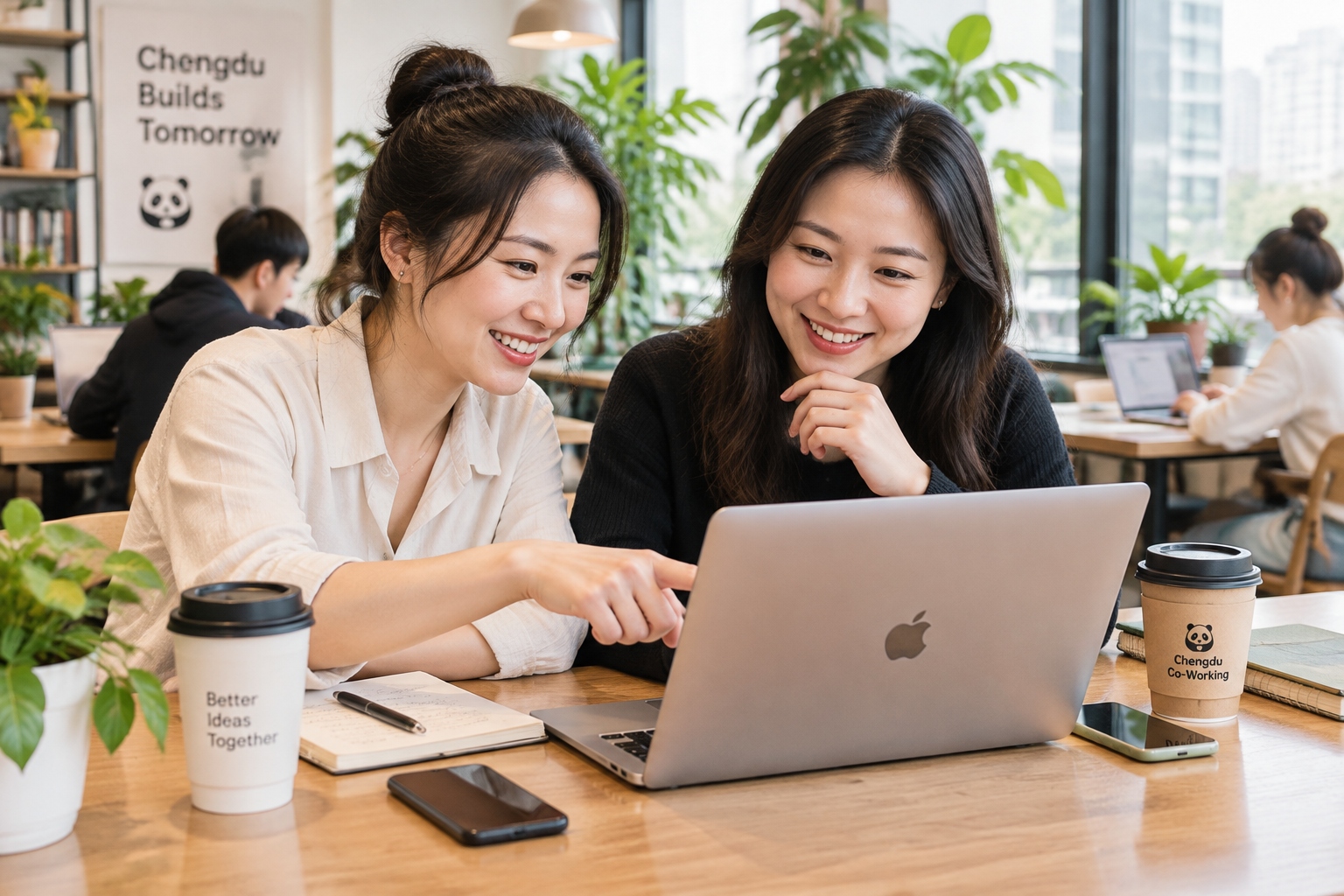
Teams led by women inside Alibaba, ByteDance and Trip.com pushed family booking, household group-buying and safety defaults that are now unremarkable. The pattern is simple: when women hold the decision, women’s products stop being a niche and quietly become the default.
What I would tell that friend now
China has not solved gender equality. The board seats, the labor-force numbers and the maternity-leave backlash all say otherwise. But the reflex that assumes a CEO is a man is weaker here than in much of the world, and it was broken mostly by women who came up through debt collection, sales floors, accounting departments and assembly lines rather than through boardroom pipelines. Watch the org charts, not the slogans.
Start the discussion at forum.chinacomes.com