
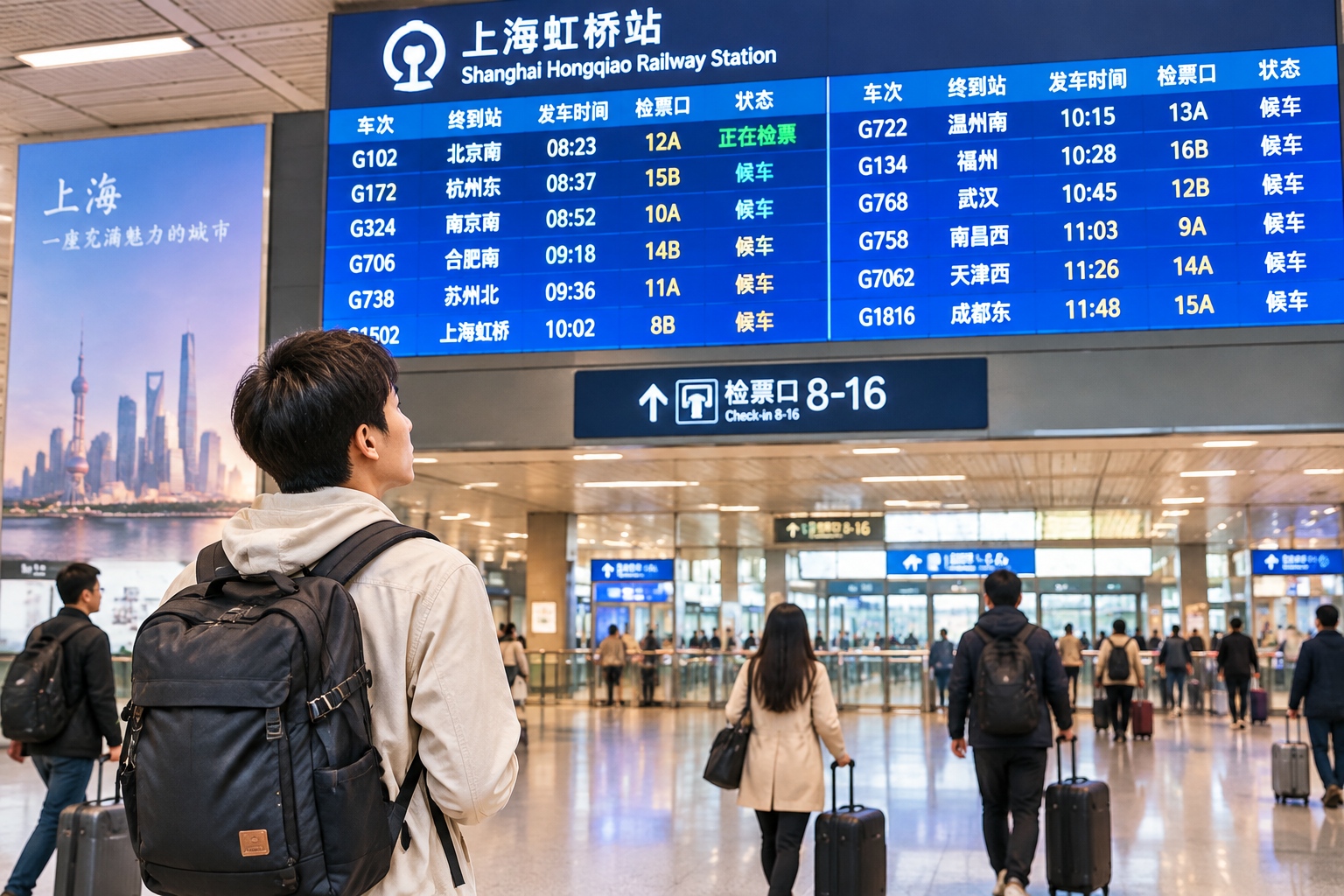

A departure board in Shanghai that doesn’t add up
At Shanghai Hongqiao Railway Station, the departure board scrolls every few seconds. Xi’an North — 5h 58m. Guangzhou South — 7h 38m. Kunming South — 10h 42m. A 27-year-old traveler from Seoul stands in front of it with a backpack, doing the same arithmetic that a lot of Korean visitors do in their first week in China.
He knows his own country’s numbers by heart. Seoul to Busan on the KTX: about two and a half hours, roughly 420 kilometers of track. That one corridor covers most of South Korea’s population and most of its economy. In his mental map, two and a half hours means “the other end of the country.”
Then he reads the board again. Beijing to Guangzhou is 2,298 kilometers of high-speed track — more than five times the Seoul–Busan line. The fastest trains cover it in 7 hours 38 minutes. Most take eight, eight and a half. And it is only one of dozens of long routes on the same screen.
Korean travel vloggers keep arriving at the same sentence in slightly different words: I knew China was big. I didn’t know it was five Koreas big.
The two numbers behind the confusion
South Korea covers about 100,000 square kilometers. China covers roughly 9.6 million — about 96 times more — with 1.41 billion people against South Korea’s 51.7 million.
Geography alone doesn’t explain the culture shock, though. Something more specific does: both countries built genuinely fast trains, and only one of them is a continent.
South Korea’s KTX system is anchored by the 423-kilometer Gyeongbu line, and it pulls nearly every major city into a two-hour radius of Seoul. It is a complete national network.
China’s high-speed rail network passed 48,000 kilometers at the end of 2024, roughly 70 percent of the world’s total, and carries well over 2 billion passenger journeys a year. Korea’s network is a national system. China’s is a continental one.
Why this lands harder for Koreans than for Europeans
European readers already have reference points. Paris to Marseille is 750 kilometers and about three hours on the TGV. Madrid to Barcelona is 620 kilometers and about two and a half hours. But Europeans live with the idea of a continent made of separate countries, each with its own language and border. Korea is one country, one language, one dense corridor, and a weekend trip that crosses the entire nation.
So when a Korean visitor in Shanghai says, “maybe we’ll also see Xi’an this weekend,” the answer isn’t “that’s a different country.” The answer is “that’s six hours each way.” Same country. Mostly the same language. Just a country the size of a continent.
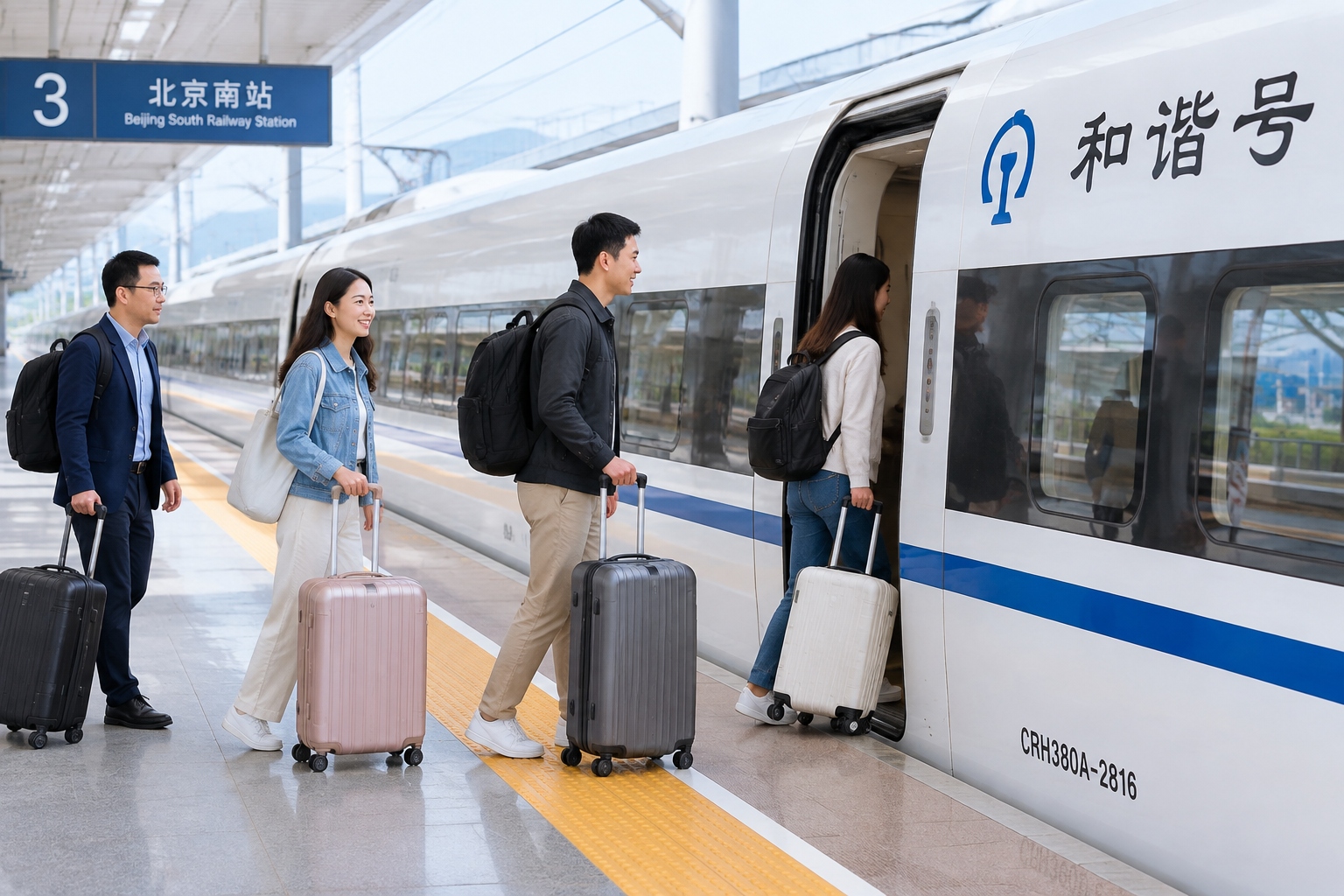
What actually changed: the visa-free door opened
For years this was a niche observation among business travelers and exchange students. A policy change pushed it into the mainstream. In November 2024, China added South Korean ordinary passport holders to its visa-free entry list — initially for 15 days, extended to 30 days shortly after. Pair that with flights of under two hours from Incheon to Shanghai or Qingdao, and a weekend in China became realistic for young Koreans in a way it simply hadn’t been before.
The numbers followed. South Korea became one of the largest sources of inbound visitors to China, and in some months the largest single source country. On Korean social media, “Friday after work, Shanghai” turned into a genre of content: three days, two nights, Wukang Road, Tianzifang, a cup of Heytea, a haul from Miniso, a photo of the Bund at night.

The ride itself: what eight hours buys you
The part Korean visitors talk about after they get home usually isn’t the speed. It’s what the train does with the time.
A second-class ticket from Beijing to Guangzhou costs 862 yuan, about $120. Seoul to Busan in standard class is around 59,800 won, about $43. Per kilometer, the Chinese fare is far cheaper. In absolute terms it’s a real purchase — more than many factory workers in inland provinces earn in three days. That’s why the slower overnight trains never disappeared. Millions of people still take them.
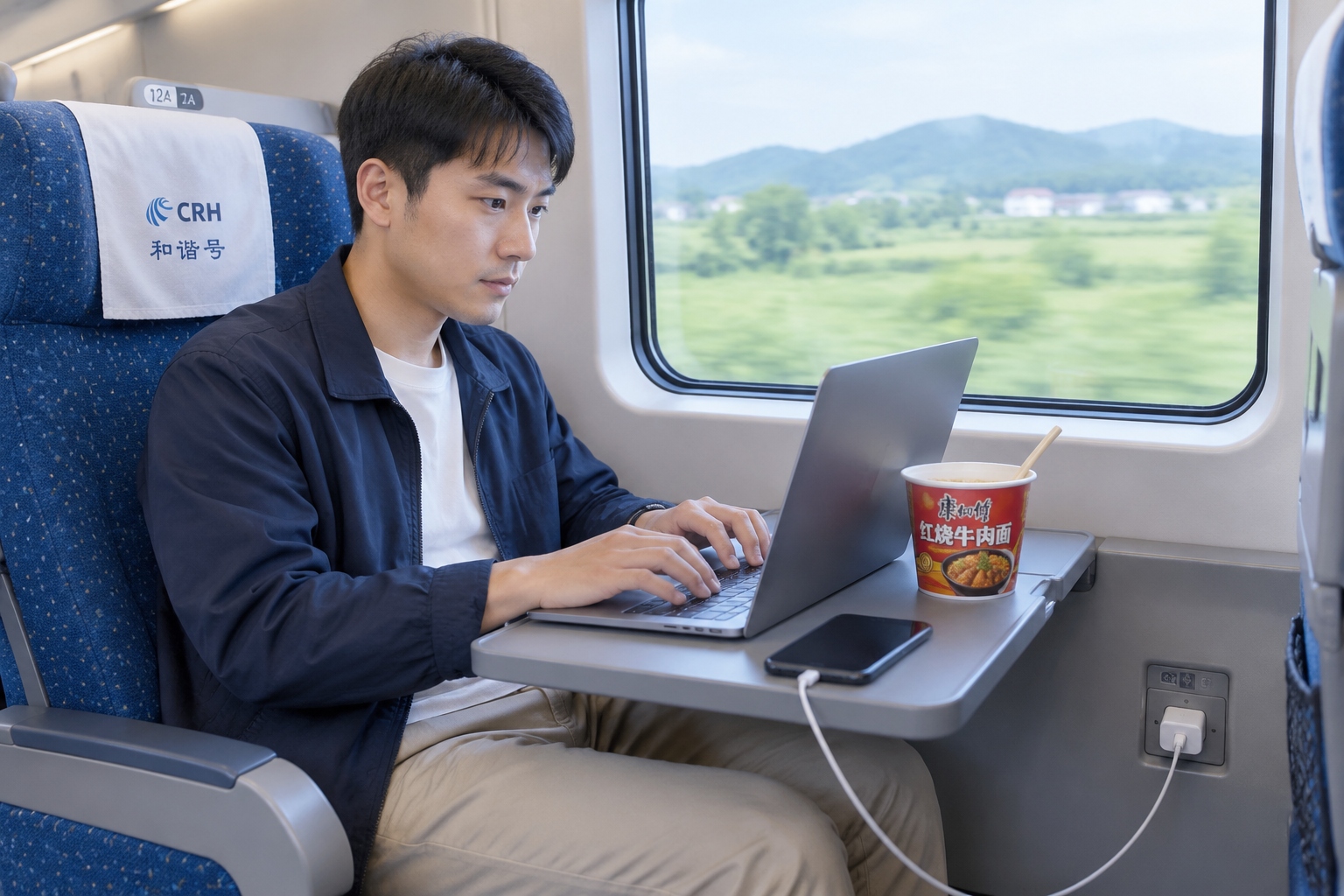
On board, the routine is unfamiliar the first time. Every seat has a power outlet. At the end of each carriage there’s a hot-water dispenser, and by hour three the corridor smells like instant noodles. Tray tables fold down. Nobody talks much. At a number of stations, something happens that surprises almost every foreign passenger: you can order food from a restaurant at the next stop through the 12306 app, and a staff member hands it to you at your seat during a four-minute platform stop.
The stations are the other surprise. Guangzhou South isn’t a train station in the European sense. It’s an airport with platforms, and like many Chinese high-speed stations it sits well outside the city center. A trip that reads “8 hours” on the ticket is often ten hours door to door.
The small frictions the vlogs skip
Foreign travelers need their passport registered in the 12306 app before booking. Station security means arriving 40 minutes early, not 15. Announcements come in Mandarin and English, but the English is sometimes half a beat behind the closing doors. Getting from a suburban station to a downtown hotel adds a metro ride, a DiDi, or both. None of it is difficult. All of it is unfamiliar, and unfamiliarity costs about an hour on the first trip and almost nothing by the third.
This is more than a travel story
Understanding that China behaves more like a continent than a country isn’t trivia. It explains why “Chinese food” isn’t one cuisine, why several provincial economies are bigger than most national ones, why governance is so heavily local, and why a brand can dominate one province and be unknown two provinces away.
It also explains why two visitors can take the same trip and be startled by completely different things. An American who has ridden Amtrak from New York to Chicago — 1,270 kilometers, about 19 hours — looks at Beijing to Shanghai, 1,318 kilometers in 4 hours 18 minutes, and sees an infrastructure miracle. A Korean on the same train sees something stranger: a train faster than anything at home, connecting two cities farther apart than his entire country.
Same train. Two entirely different reasons to be surprised.
Also true: the map isn’t even
The high-speed network is dense along the east coast and thinner as you move west. Lhasa still has no high-speed rail; the train from Beijing takes around 40 hours. For people in western provinces, “eight hours to Guangzhou” isn’t a fact of life — it’s a trip they might make once or twice in a lifetime. The speed that astonishes visitors is concentrated, and it’s concentrated exactly where you’d expect a country to build first: where the passengers and the money already are.
What Koreans say when they get home
Comment threads under Korean China-travel videos tend to move through three stages. First: the trains are faster than I expected. Second: wait, that was only halfway? Third, and the most interesting: so when Chinese people say a place is “close,” what do they actually mean?
The rough answer is under three hours. Under three hours is a day trip. Under six is a normal trip. Eight hours is a long day on a train, but not an unusual one. Flying isn’t automatically better either — Beijing to Guangzhou is about three hours in the air, plus two hours of airports, plus the delays that trains mostly avoid.
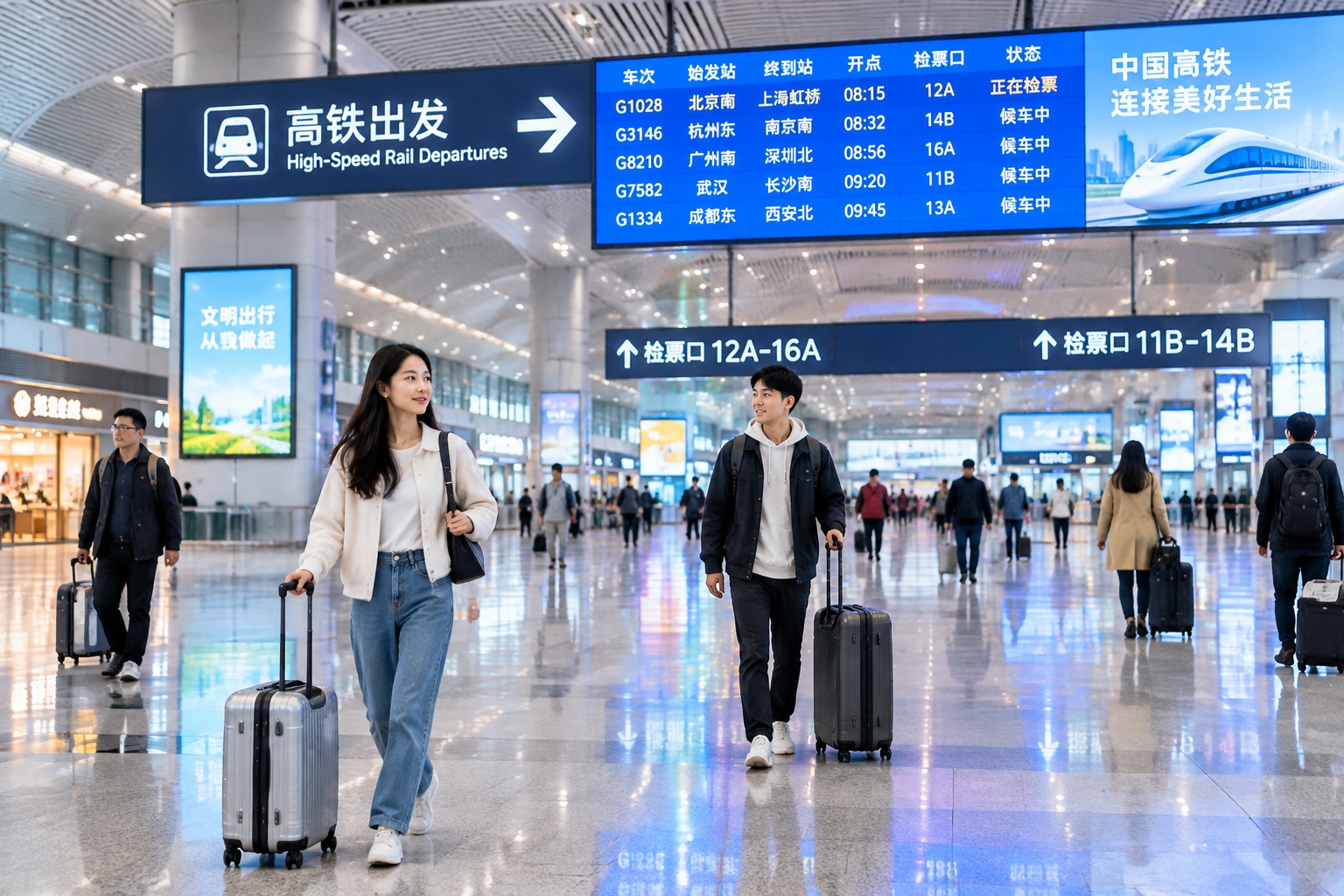
The distance you can’t see from the window
A Korean visitor who spends a week in Shanghai and Guangzhou has seen two cities out of hundreds, in a country where those two are 1,400 kilometers apart. That’s the part that takes longer to absorb than the train ride itself: not that China is far, but that China is large enough for “far” to mean something different.
By the last night of the trip, the departure board stops being confusing. It starts looking like a map.
Start the discussion at forum.chinacomes.com