
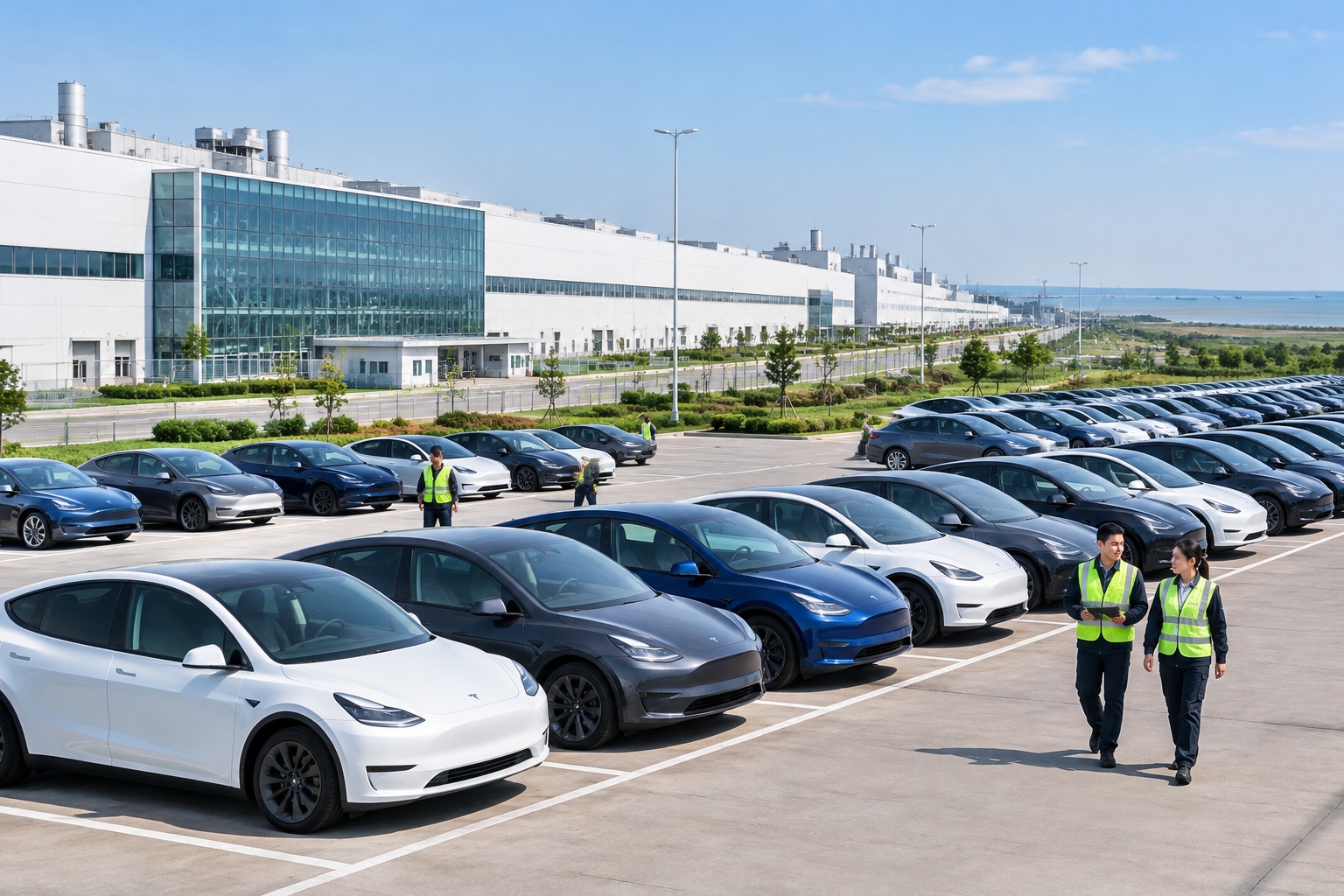

A field on the edge of Shanghai, and a stopwatch
The plot Tesla bought in Lingang, on Shanghai’s far southeastern edge near the East China Sea, covered about 86 hectares — roughly 120 soccer fields. It went at a public land auction in October 2018 for around RMB 973 million, close to US$140 million at the time. The roads around it were new, and most of them led to other empty plots.
Ground was broken on January 7, 2019. On December 30 that year, 357 days later, the first China-built Model 3s were handed to customers. Tesla’s Shanghai Gigafactory had gone from bare dirt to serial production in about 11 months.
The number gets quoted constantly inside China. What gets less attention is the machinery underneath it. The plant was not fast because Chinese construction crews are superhuman. It was fast because the slowest work — land, power, permits, suppliers — had largely been arranged before the first excavator showed up.
First came a rule change, not a construction miracle
Until 2018, a foreign carmaker could not own a factory in China outright. It needed a 50-50 joint venture with a Chinese company, which usually meant splitting profits and, often, sharing technology. In April 2018, Beijing said it would lift that cap for new energy vehicles. Tesla became the first wholly foreign-owned passenger car plant in the country.
That was not a favour to one company. It was a bet that foreign competition would push China’s own EV makers up the learning curve faster than protection would. For Shanghai, hosting the plant was worth more than the tax revenue a joint-venture partner would have brought.
Layer one: land that arrives pre-wired
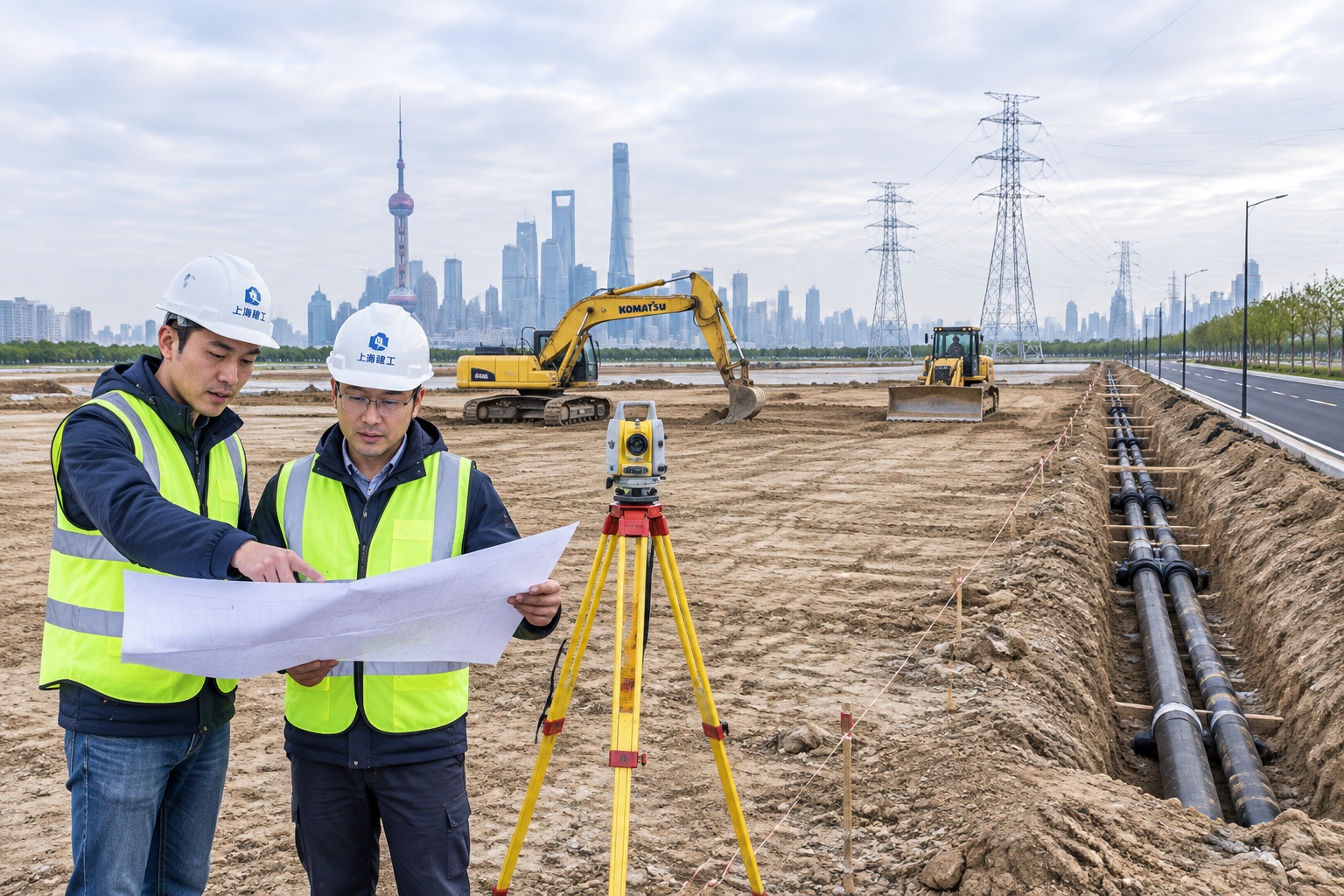
Industrial land in Chinese parks is normally sold under a standard that Western developers recognise but rarely get at this scale: qi tong yi ping, or “seven connections and one leveling.” Roads, water supply, drainage, electricity, gas, telecoms and heating are brought to the boundary of the plot, and the site itself is graded flat. The local government pays for that upfront, usually borrowing through a municipal financing vehicle, and recovers it later through tax revenue and rising land values.
A manufacturer buying a greenfield site in the United States or Germany usually inherits those jobs itself: extending a highway entrance, negotiating a grid connection, sometimes fighting a neighbour’s lawsuit before the first wall goes up. Tesla’s Berlin plant, announced in November 2019, ran straight into that reality — a court injunction over tree clearing, a fight over water permits, objections from local residents. Construction began in early 2020; the plant opened in March 2022, roughly two years later, and only after an initial target of July 2021 slipped.
Berlin was not a failure. It was a normal industrial timeline in a country where an environmental assessment, a building permit and a water permit are three separate processes, each with its own appeal window. Tesla built there anyway, because the market is there.
Layer two: approvals that run at the same time, not in a queue
Shanghai’s real advantage is administrative. Since 2018 the city has run most government services through a single online portal, and industrial projects are pushed through a system of parallel review rather than one permit after another. Under the practice known as gaozhi chengnuo — notification plus commitment — a company can start certain work by signing a written commitment to meet standards, with inspections moved later in the process. A district-level “task force” of officials is assigned to each large project, with a mandate to keep it moving rather than to process paperwork.
The effect is that the clock never stops for a single missing signature. In a sequential system, a four-month permit review that starts after a three-month environmental review becomes seven months. In Shanghai, those run side by side, and a project that misses a document gets a deadline to supply it rather than a rejection letter.
Layer three: the grid answers to one company
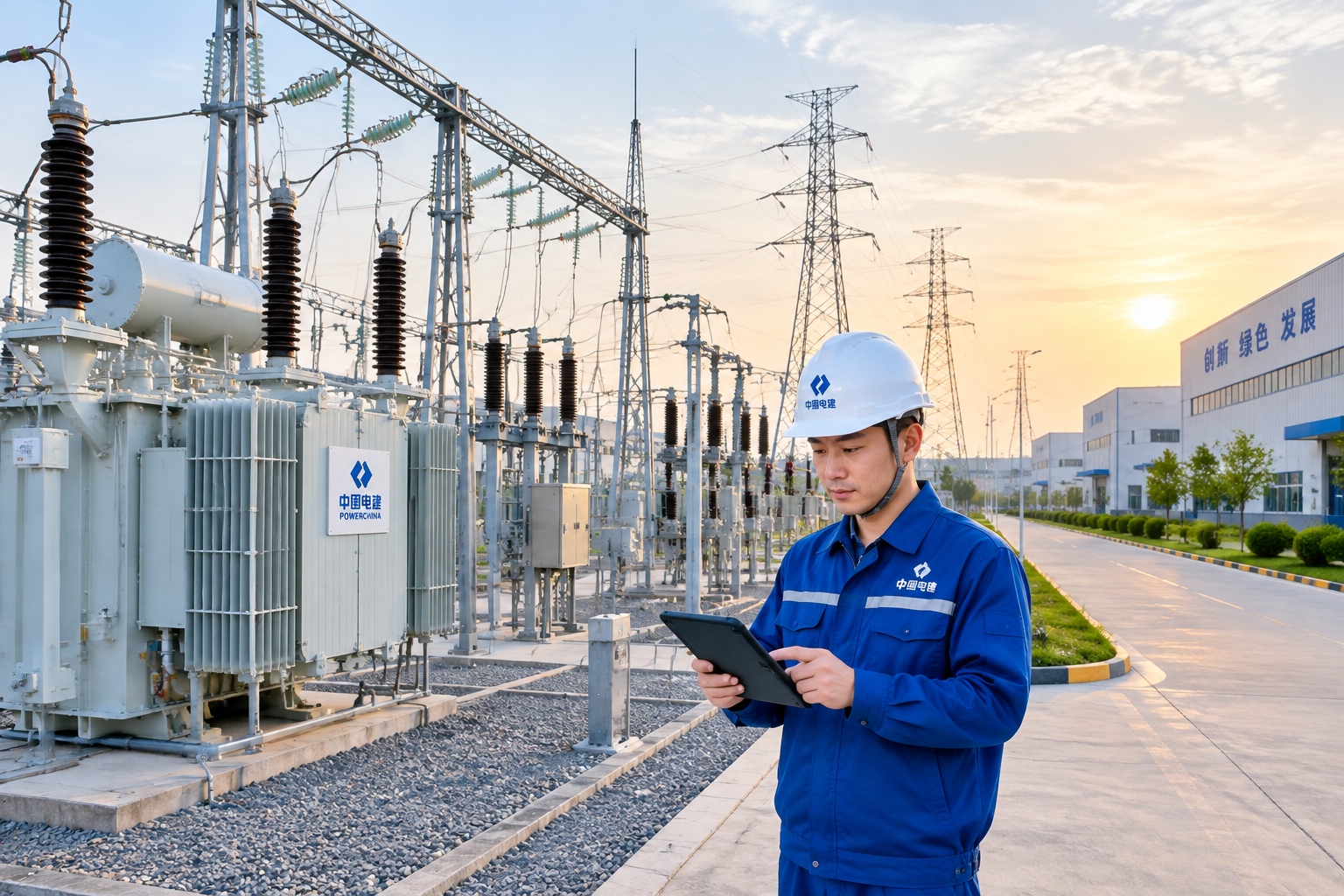
State Grid, the world’s largest utility, covers the vast majority of urban China, and it can build a dedicated substation for a single plant and the industrial park around it. That is what happened at Lingang: high-voltage capacity was brought in for Tesla and the surrounding zone, on a schedule set by the project rather than by a queue of other customers.
The contrast with the United States is sharp. Large new electricity loads there often wait years in an interconnection queue while studies are completed — Berkeley Lab’s surveys of grid queues have found median waits stretching well past four years for generation projects, and industrial customers face similar bottlenecks.
Price matters too. Industrial electricity in Shanghai generally lands somewhere around RMB 0.6–0.9 per kilowatt-hour, roughly 8 to 13 US cents, with cheaper overnight rates that suit robot-heavy production lines.
Layer four: the supply chain was the real accelerator
When the Shanghai plant opened, fewer than a third of its parts were made in China. By 2023 Tesla said more than 95% of the parts in a Shanghai-built car came from Chinese suppliers — over 400 of them, and more than 60 had begun supplying Tesla’s factories abroad.
Geography explains most of it. Lingang sits inside the Yangtze River Delta, one of the densest manufacturing clusters on earth. Within a four-hour truck drive you reach Ningbo’s die-casting and aluminium parts suppliers, Suzhou’s precision machining shops, Changzhou’s battery material plants and CATL’s huge cell factory in Liyang, Jiangsu. A component that takes six weeks by container ship from Asia to Europe takes an afternoon by truck here. That difference compounds at every stage of a recall, a design change, or a production ramp.
Layer five: the tempo is the expectation
Tesla repeated the trick in the same district. Its Megapack factory in Lingang broke ground in May 2024 and rolled its first unit off the line in February 2025 — about nine months, at a scale of 40 gigawatt-hours a year when fully ramped.
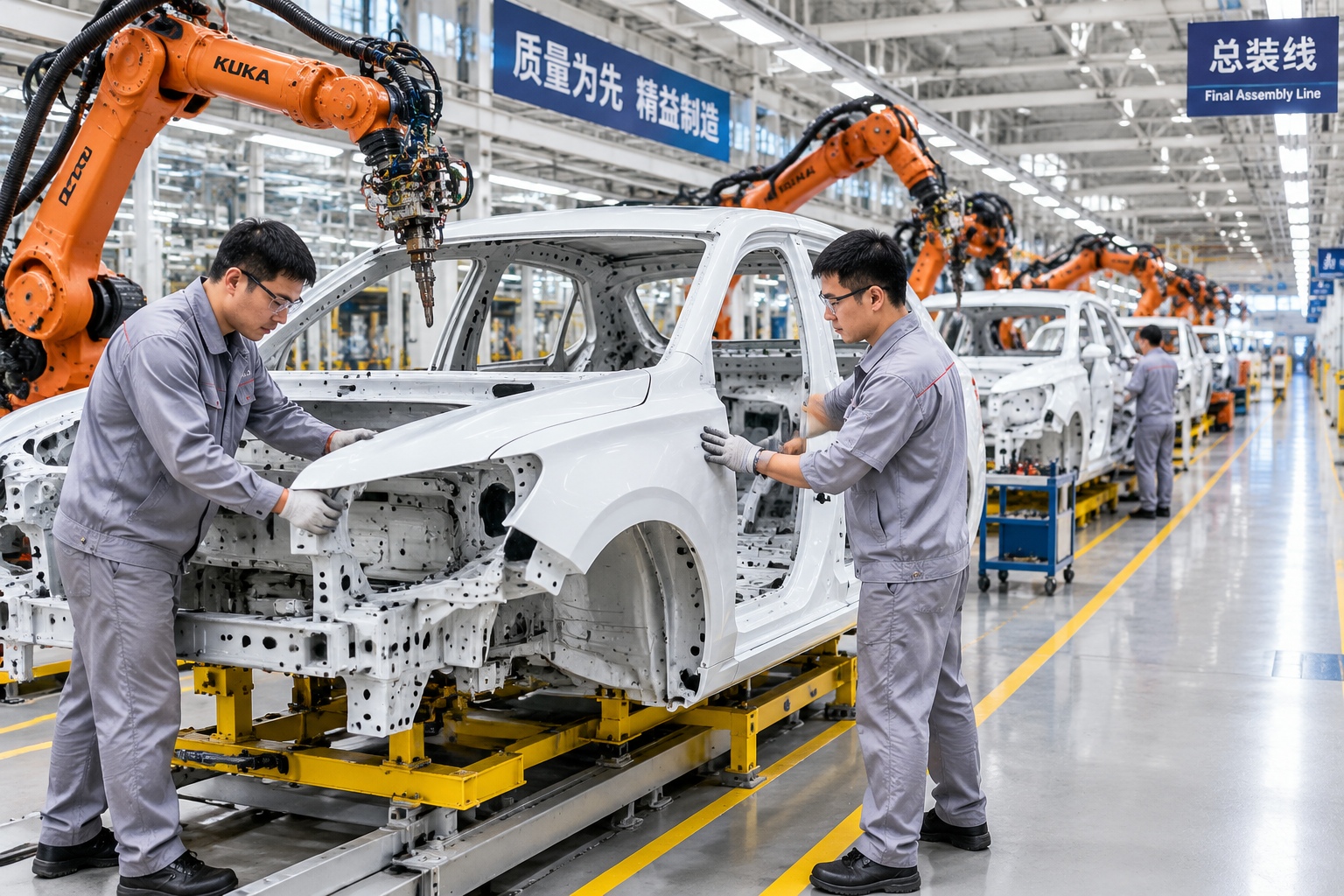
Construction in these parks runs on multiple shifts, and schedules are treated as commitments rather than opening bids. For a foreign manager used to change orders and re-baselined timelines, this is the least familiar part of working in China. It also explains why so many multinationals now run their global product launches out of Shanghai: not because labour is cheap — in Shanghai it is not — but because the whole chain around the factory moves at the same speed.
What the model costs, and where it does not apply
Not every project gets a task force. The mechanism is selective, and selective by design. A factory with 4,000 jobs, export volume and a marquee foreign brand gets a dedicated team. A small foreign firm renting two floors of an office in a second-tier city will meet a bureaucracy that is ordinary, slow, and occasionally baffling. The same country contains both experiences.
The bill also arrives later. Local governments sell industrial land cheaply and pay for infrastructure with debt, betting on tax revenue that may take a decade to appear. When the bet works — Lingang’s auto cluster, Hefei’s early investment in NIO — the returns are enormous. When it does not, you get what followed China’s 2015–2020 EV subsidy boom: a string of half-finished vehicle plants in provinces that misjudged demand.
Accelerated environmental and land approvals can also be contested afterwards, and the working tempo inside these parks is genuinely demanding, with long shifts and tight delivery windows that many foreign engineers find hard at first.
If you are the one doing it: a short checklist
For companies that want to use this system rather than admire it, the practical moves are consistent across projects:
- Your counterpart is a district, not a ministry. Negotiations in China usually happen with municipal or district governments, who control land, utilities and local approvals. National policy sets the boundaries; the district sets the schedule.
- Settle power before rent. A guaranteed connection capacity and a firm energisation date are worth more to a factory than a discount on the lease.
- Ask for the task force in writing. A named liaison team with a mandate to coordinate across departments changes the everyday experience of permitting more than any policy document.
- Map your tier-one suppliers within 500 kilometres before you sign. Proximity, not wage levels, is what makes the ramp fast here.
- Expect incentives to be land, tax treatment and speed — not cash. Direct subsidies exist but are increasingly scrutinised; the durable advantages are infrastructure and administrative priority.
- Treat the given timeline as real. In this system a schedule is a commitment with a person attached to it, and slipping it carries a cost that is social as much as financial.
The operating system, not the shovel
The useful way to read the Tesla story is not as a record for the fastest factory. It is as a demonstration of a system where a district government acts as project manager, a single state utility can be told to build a substation, thousands of suppliers sit inside a four-hour radius, and the workforce expects the tempo. Take one piece away and the 357 days stop being possible.
That system has real costs, real blind spots and real limits — it is built for large, strategic manufacturing, and it can leave debt and idle parks behind. But it is also the reason that, for a certain kind of factory, there is still nowhere else on earth that moves like this.
Start the discussion at forum.chinacomes.com