
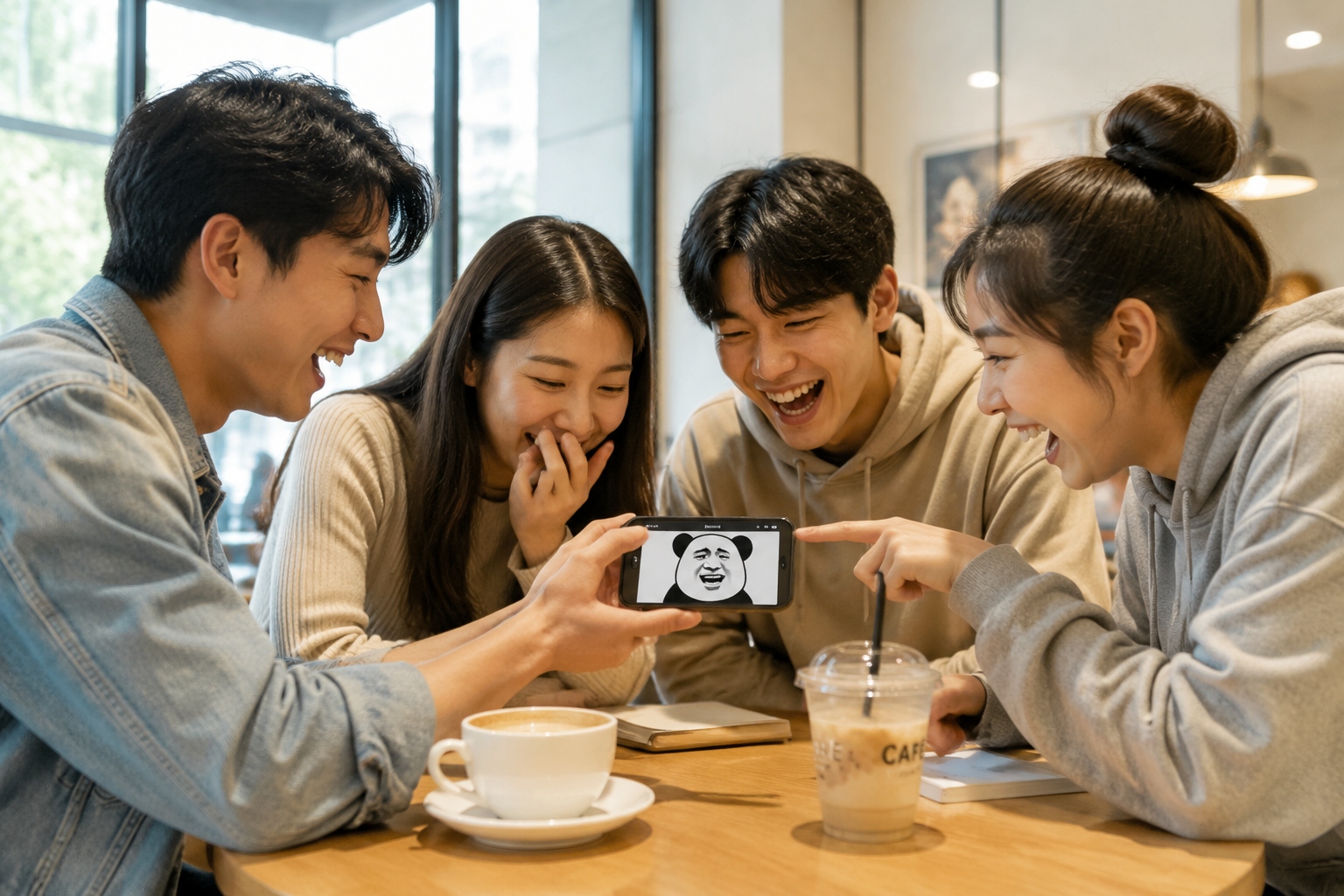

You know you’re in a Chinese group chat when a panda head shows up—not a shiny, cartoon panda, mind you, but a slightly unhinged one with tears gushing like a packed Waterworld. Sometimes it’s laughing so wide its jaw should have dislocated. Sometimes it’s just staring at you with the judgmental weariness of a yoga instructor.
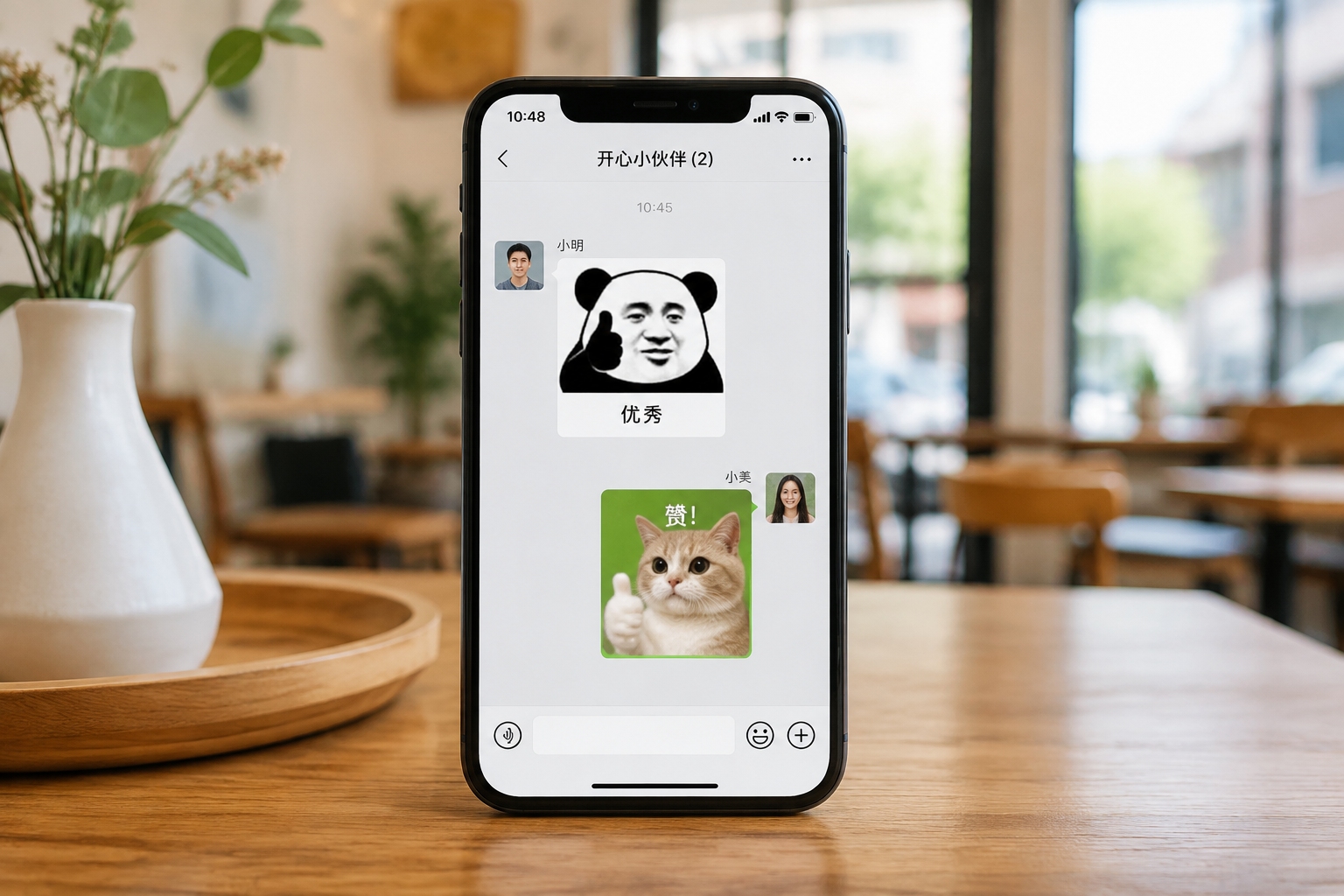
I sent a “?” once in a WeChat group. Instead of an explanation, I got a panda head smirking, then a green smiley face with a cocky eyebrow, then another panda, this time sobbing. I had accidentally discovered one of China’s most sophisticated communication systems: the biaoqingbao.
What Exactly Is a “Biaoqingbao”?
The Chinese word for meme is biaoqingbao—literally a “package of expressions”. But it’s more than that. It’s a cultural form that includes images, GIFs, videos and even self-made stickers. While Western internet humor often gives us a single meme template like Bad Luck Brian or Left Exit 12 Off Ramp, Chinese memes come in relentless waves. They scream, they cry, they turn a dignified scholar into a beer-guzzling hipster. They are theater.
Understanding biaoqingbao is now a survival skill for anyone living or socializing in China. But what makes them tick? And why are they so weirdly effective?
Meet the Icons: Panda, Cat and the Green Smirk
The Panda Head: An Emotional Trillionaire
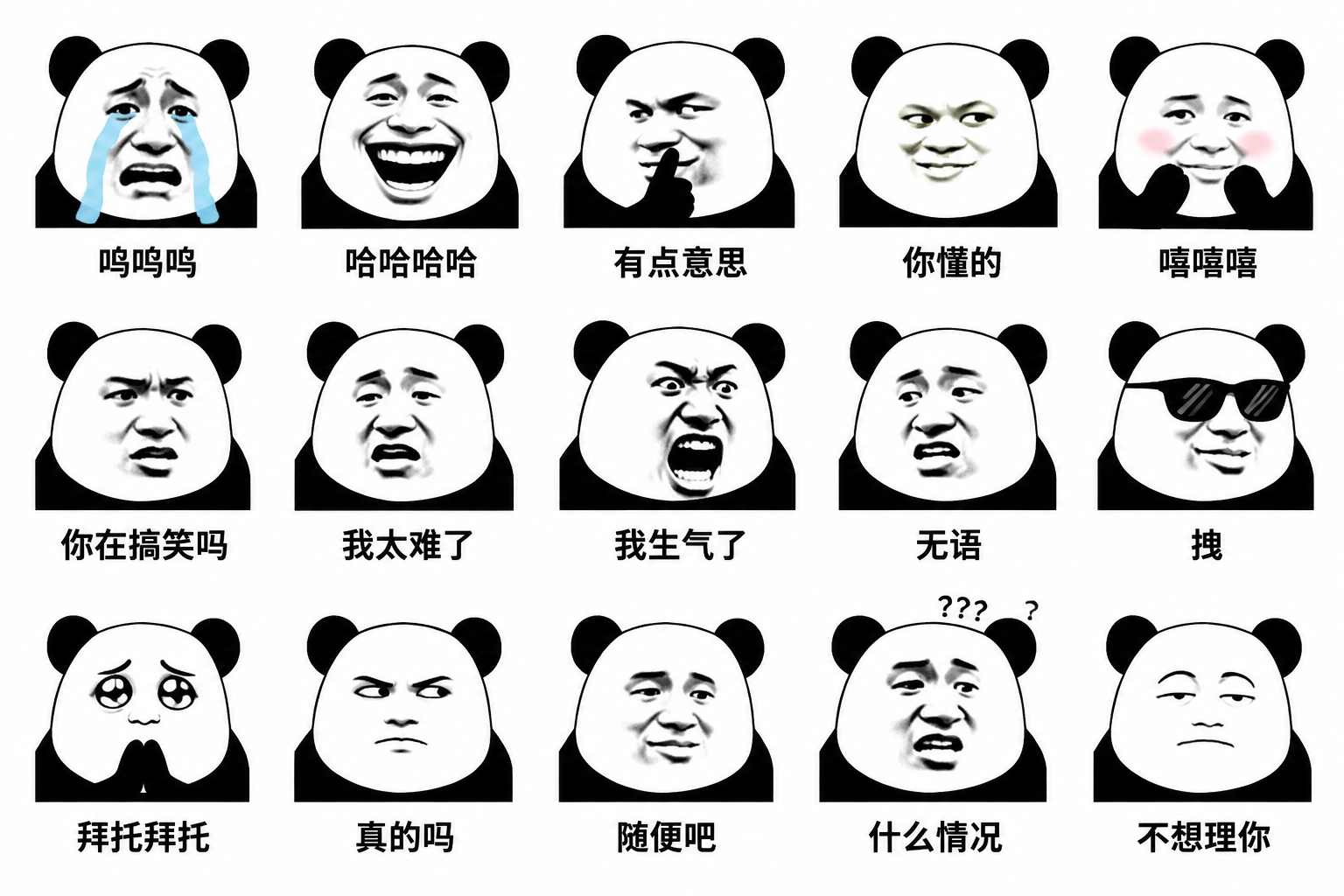
The panda head is the undisputed MVP of the meme world. It’s a generic cartoon panda face whose eyebrows, mouth and eyes have been photoshopped into an infinite emotional spectrum. It can cry like a broken faucet, smile like a smug politician, or stare blankly into your soul. This panda is a perfect vessel because it’s inherently cute—so when it does something absurd, the contrast makes it funnier.
One minute, the panda is wailing with a waterfall of tears, captioned “I’m fine”. The next, it’s lounging in a chair with sunglasses, captioned “Trouble? Never heard of her.” It’s so adaptable that entire albums exist just to organize panda expressions by intensity—from mildly concerned to completely disintegrated.
The “Shadiao” Aesthetic: Making Absurdity a Lifestyle
Another beloved genre is shadiao—which roughly translates to “stupid”, but in meme context means gloriously, self-consciously silly. These images are often low-resolution, poorly photoshopped, and deeply confusing. A cat’s head on a dog’s body with the text “I’m a car.” A portrait of a Chinese emperor waving a glowing lightstick. There’s no deeper message. The purpose is simply to be so absurd that you laugh out of bewilderment.
This aesthetic celebrates the incomplete, the clumsy, the “that took five seconds to make”. It’s a rebellious rejection of polish.
The Joke Mechanics: Homophones, Hyperbole and Everyday Absurdity
Homophones: When Words Bump Into Their Echoes
Mandarin is a goldmine for puns because of its relatively small number of syllables and four tones. A tiny shift can turn an innocent phrase into a hilarious double meaning. Take the famous “蓝瘦香菇” (lan shou xiang gu) from 2016. It literally means “blue thin mushroom”, but it sounds almost identical to “难受想哭” (nan shou xiang ku)—“I’m so upset I want to cry”. The blue mushroom instantly became an internet hero.
Similarly, “杯具” (bei ju) means “drinking cup”, but it sounds exactly like “杯具” for “tragedy”. So you see images of a solitary teacup with a human face, crying. And “鸭梨山大” (ya li shan da) literally means “The duck pear is as big as a mountain”, while sounding like “stress is as big as a mountain”. These layered puns reward those who know.
Hyperbole: A Tiny Problem, a Cinematic Meltdown
Chinese memes love to turn a small inconvenience into an epic tragedy. Missed the bus? Here’s a panda head slamming its face into a wall. Charger cable stopped working? A cat lying flat on the floor, with stars around its head, clearly done with life. The exaggerated reaction is a form of comic dislocation. It’s not that the problem is serious—it’s that we’ve all been there, and blowing it out of proportion is a way to release the tension.
Everyday Absurdity: Seeing the Funny in the Ordinary
Many of the best memes are born from daily life—finding a strangely shaped cloud and adding a speech bubble, or turning a friend’s lunch into a royal feast by photoshopping a crown onto a dumpling. There was even a viral photo of a shared bicycle stuck in a tree. Someone added a caption: “I want to be free.” This everyday absurdity gives people a sense of shared recognition. It’s the visual equivalent of “there’s a story here”.
Memes as Social Glue: How They Keep Chats Alive
Breaking the Ice
In a new group chat, sending a meme is like offering a drink at a party. It says: I’m here to make this fun. A well-timed panda head can dissolve the awkwardness of an empty conversation. This is especially useful in China’s sprawling group chats—family reunions, building management groups, alumni associations—where most people don’t know each other well but need to communicate.
Softening Conflict
Memes are experts at saving face. If a friend cancels plans at the last minute, you could text “No problem”. But sending a panda head holding a fist, with a caption like “Your funeral”, makes it a joke. The other person smiles and sends a cat begging for mercy. Conflict resolved, friendship intact. This playful framing allows people to express feelings without direct confrontation—a precious skill in any culture.
Creating Group Rituals
Chat groups often develop their own meme vocabularies. A moment from a shared trip, a ridiculous news story, or a colleague’s unforgettable blunder — all can be turned into stickers and deployed for years. When someone sends the “flaming colleague” meme, everyone laughs because they were there. These rituals turn a group of individuals into a tribe.
Self-Mockery and the Optimistic Grin
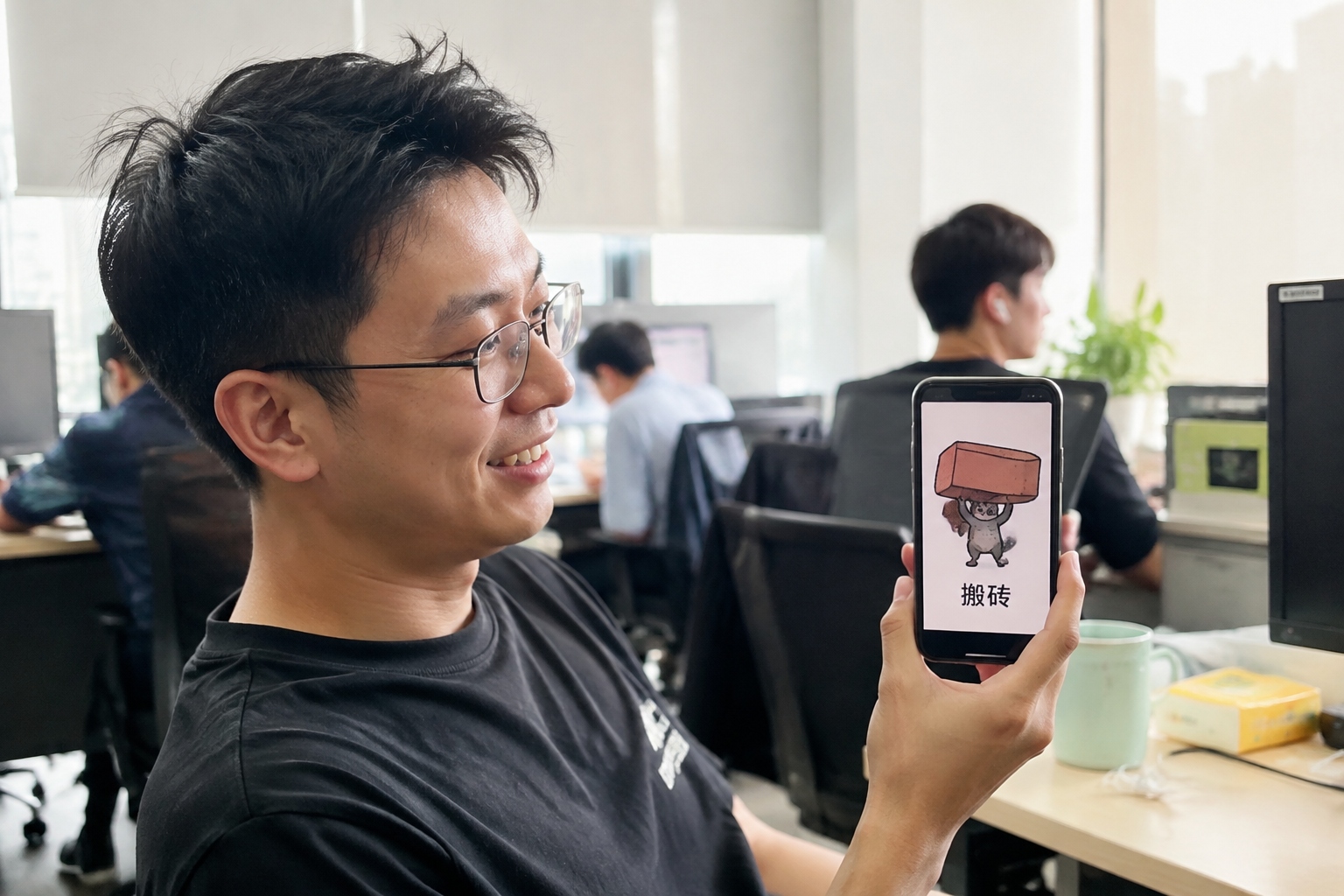
If you browse Chinese meme collections, you’ll notice a recurring subject: work and stress. The “搬砖” (ban zhuan) meme shows a cartoon character carrying a giant brick, meaning “to do low-paying hard labor”. Another popular one features a small, struggling animal carrying a huge backpack, captioned “I carry all the pressure”.
These memes often poke fun at being a da gong ren (a laborer) or “worker bee”. At first glance, this seems hopeless. But the fact that people turn their daily grind into humor is itself a form of optimism. It says: “Yes, life is hard. But if we can laugh together, we’ll get through it.” This is not denial—it’s resilience with a smiley face.
Why Chinese Memes Look Different to Outsiders
If you’re just getting to know Chinese memes, you might find them loud, overdone and tough to parse. The faces are bigger, the reactions more theatrical, and the puns are almost impossible to translate. But that’s precisely their strength. They depend on shared knowledge—about food, city life, workplace pressure, and ordinary struggles. The visual exaggeration is a shortcut to instant resonance. For those in the loop, a single panda head says more than a whole paragraph.
So, the next time you see a panda head crying, don’t scroll past it. That panda might be saying “I’m fine” or “I’m not fine at all”. It’s a small piece of contemporary Chinese life, packaged as a laugh. And honestly, isn’t that what good humor is for?
Start the discussion at forum.chinacomes.com