
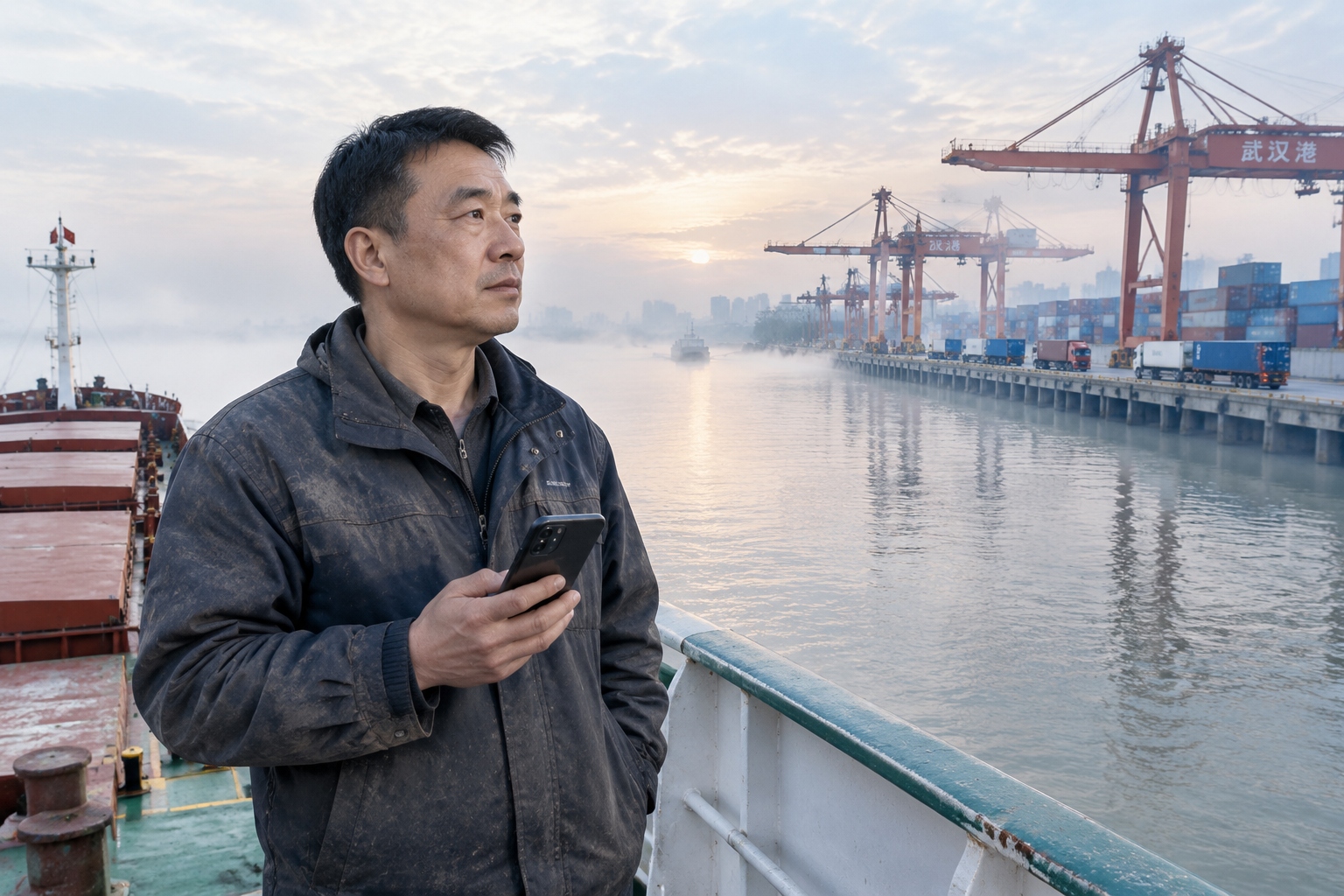

A steel order, posted from a phone
On a Tuesday morning in Wuhan, Liu Min does something that would have taken her three days a decade ago. She opens an app, types in 2,000 tonnes of steel coils that need to move from Wuhan to Chongqing, picks a loading window, and taps publish.
She is a shipping agent. She does not own a single vessel. Twenty minutes later, three quotes come back.
Four hundred kilometres downstream, near Jiujiang, a captain named Zhou is finishing breakfast in the wheelhouse of an empty 3,000-tonne bulk carrier. His phone buzzes. The listing fits his ship, his route and his schedule. He calls the number. By noon they have agreed on a price and a loading date, and the next ten days of his life have a destination.
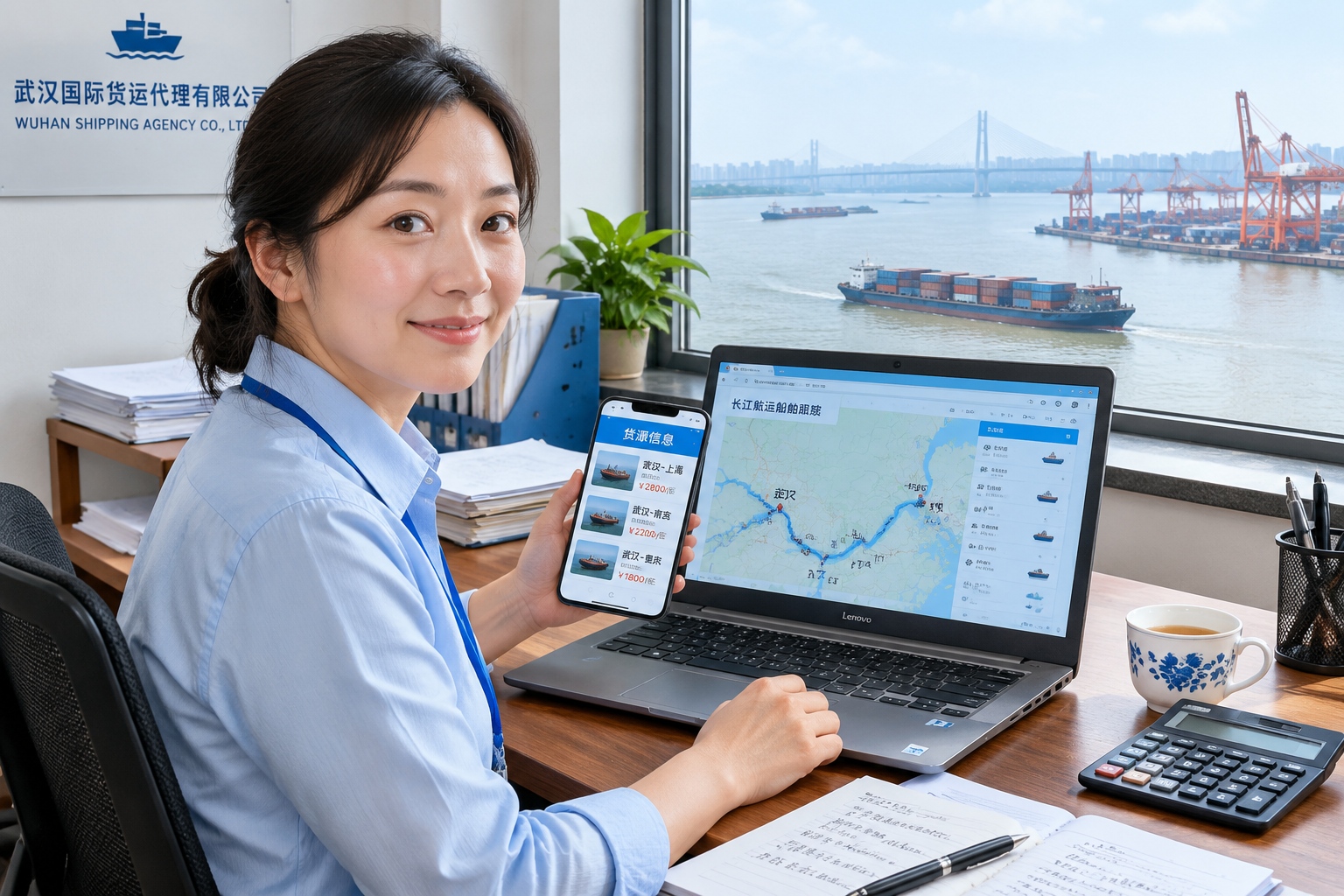
The Yangtze is not just a river. It is a supply chain.
The Yangtze runs roughly 6,300 kilometres from the Tibetan Plateau to the sea at Shanghai. It is the busiest inland waterway in the world. Main-line ports along it move more than 3 billion tonnes of cargo a year: iron ore, coal, steel, cement, grain, cars, and containers packed with things people bought online.
What makes the river complicated is not the volume. It is the fragmentation. Tens of thousands of cargo vessels work the Yangtze system, and many are owned by people with one, two or three ships. A vessel might be 50 metres long, or a 10,000-tonne ship that can also go to sea. A cargo needs a specific combination of size, draft, hold type, crane and route permit.
Matching those two things used to be a full-time human job.
Before the apps: phone calls, contacts and a lot of empty sailing
For most of the past thirty years, finding a ship worked like this. You called a broker. The broker called two more brokers. Somebody checked a chalkboard at the port office. Somebody’s cousin knew a captain who might be free next week.
The economics were rough on everyone. A ship unloads its coal in Nantong, then sails upriver empty, looking for the next job. In the industry this is called kongshi, empty running, and at its worst it consumed a large share of a vessel’s working days. Fuel burned, crew paid, nothing earned. Cargo owners waited just as long on the other side, unsure when their steel or grain would actually leave.
Brokers took a cut on every deal and, often, it was worth it. Without them, nobody found anybody.
What calling a ship actually involves
The obvious comparison is a ride-hailing app. It is not that. A person takes one seat; a cargo of steel coils needs a ship whose tonnage, draft and hold can physically hold it, and whose next route makes a detour worth the fuel. River ships travel at roughly 10 to 15 kilometres an hour going upstream. Loading can take half a day or two days.
So the platforms that have grown along the Yangtze work more like a matching service with strict engineering rules attached. A cargo owner posts a cargo board listing: type of goods, weight, origin, destination, loading window, budget. A shipowner posts a vessel schedule: where the ship is, where it is heading, how much space is free. The system then matches them using several layers of data.
The first layer is AIS, the Automatic Identification System that larger vessels are required to carry. Think of it as Flightradar24 for ships: a public feed that shows roughly where a vessel is, how fast it is going and where it has been. The second layer is the electronic navigation chart of the Yangtze, published and updated by the river’s waterway authority. It shows depth, shoals, buoys, bridge clearances and channel changes. Drop AIS positions on top of that chart and you can see, in real time, which ships will pass a loading berth in the next 24 hours.
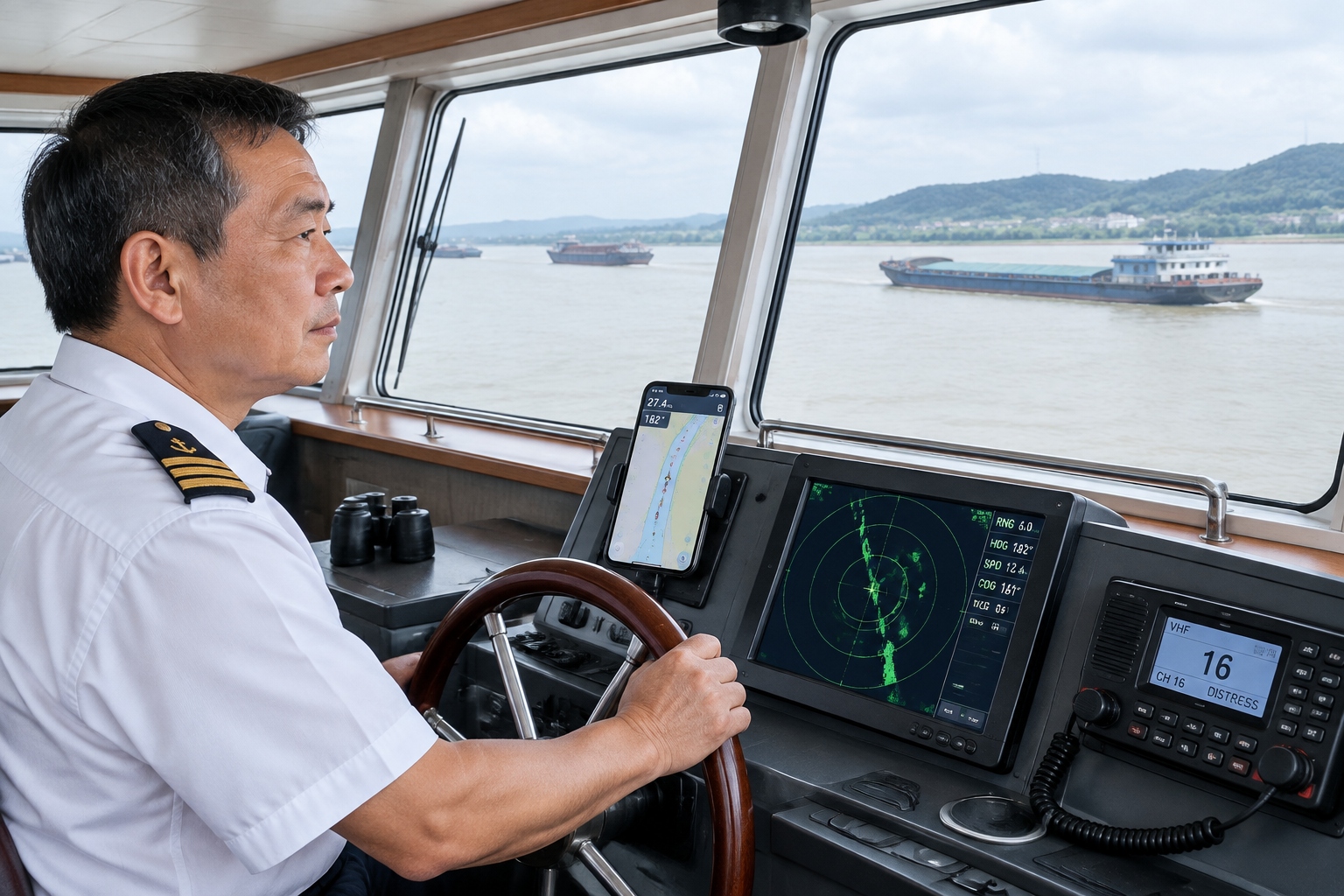
The third layer is the boring, decisive stuff: what the port can actually handle that day, and what the shipper is willing to pay.
The dispatch room behind the screen
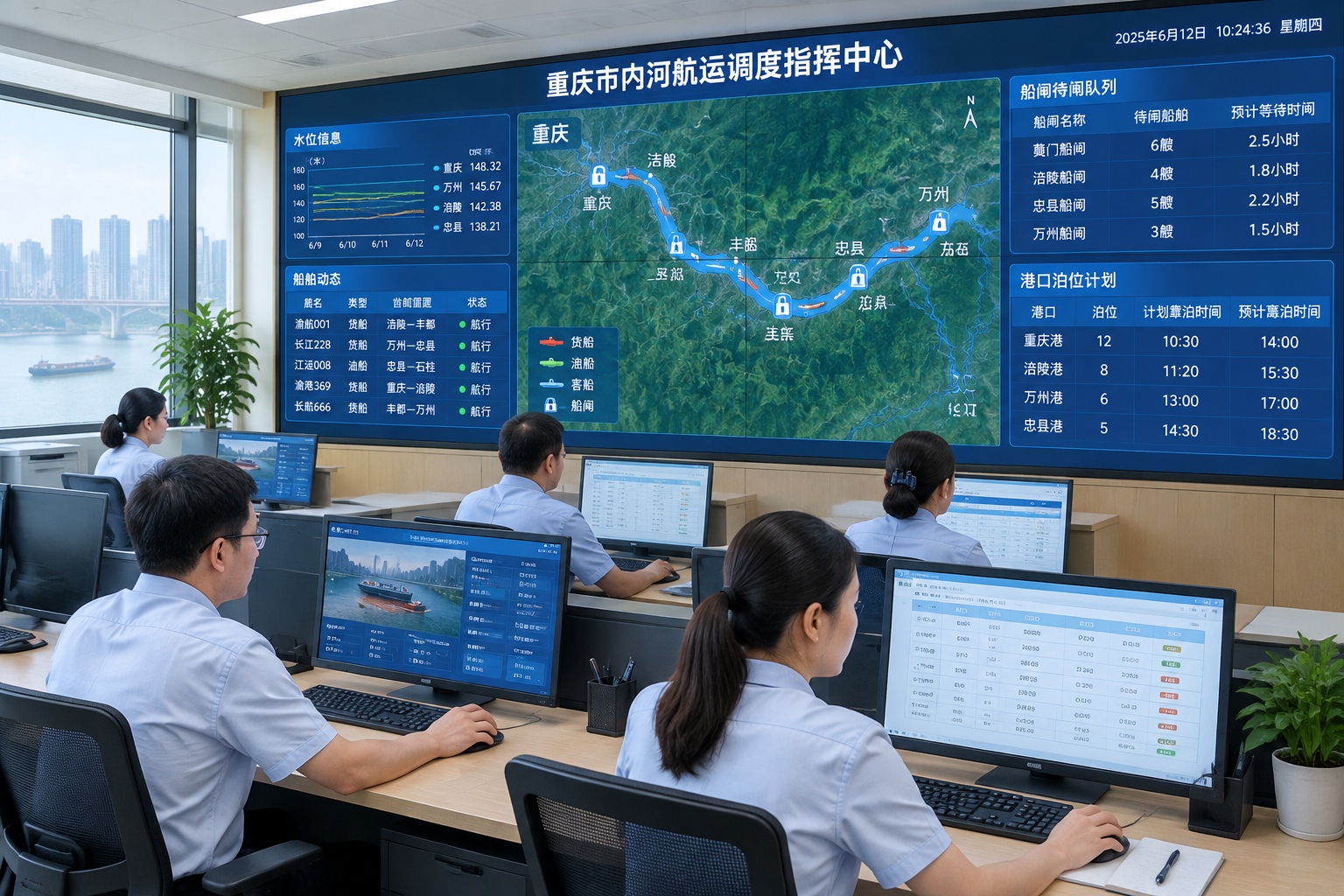
Anyone who thinks the algorithm does the work should spend an hour in a river dispatch centre in Wuhan or Chongqing. Screens cover one wall. Vessels appear as small labelled dots crawling up and down a long blue line.
The variables on the desk are physical, not digital. Water level, which changes the maximum draft a ship can carry into Chongqing and shifts with the seasons — tighter in the dry winter and spring, looser in the summer flood season. Fog, which can close stretches of the river for hours. Wind at the estuary. Berth availability at both ends. Fuel prices. And above all, the ship lock.
The Three Gorges lock is a five-step staircase for ships, and it is the great bottleneck of the upper river. Vessels book slots, queue, and wait. A single miscalculated arrival can cost a captain a day or more. Slipping into an earlier lock slot is sometimes worth more than a better freight rate.
Software can propose a plan: this ship loads tomorrow, reaches the lock on Thursday, takes berth 7 in Chongqing on Sunday. A human dispatcher and a human captain still sign off. A captain knows things an app does not, like how his ship handles a particular bend when the water is high.
What actually changes for people on the water
For a captain like Zhou, the change is arithmetic. In the past he might spend eight or ten days a month idle, waiting or hunting for cargo. Now it is closer to three or four. Same ship, same fuel tank, more paid voyages per year.
For a shipping agent like Liu, quotes that once took days arrive in under an hour, and she can compare them. That matters most for small shippers — a cement plant, a grain trader, a furniture factory — who never had the volume to command a broker’s attention.
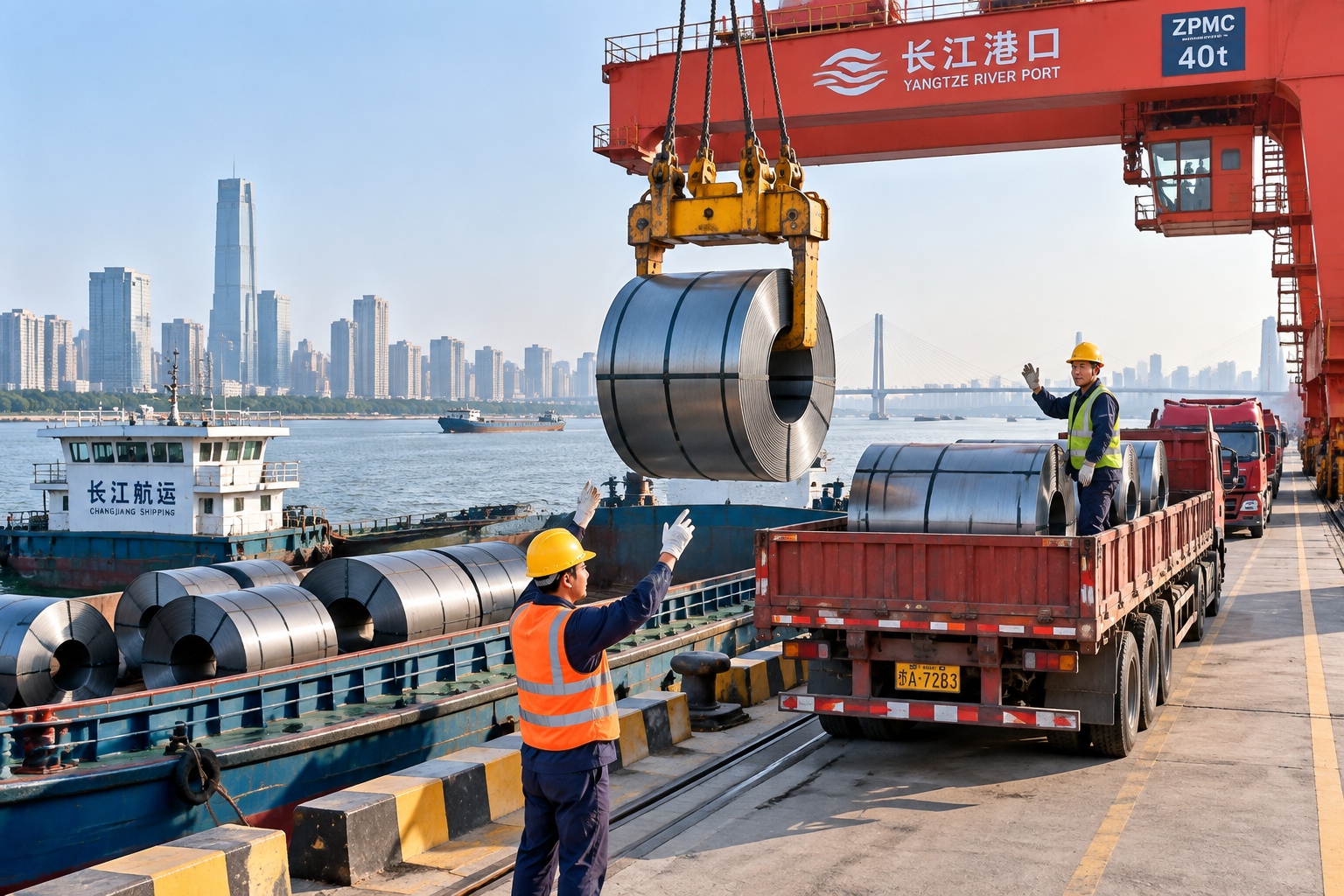
Downstream of both, the timetable gets calmer. When a barge’s arrival is known a day in advance, trucks can be scheduled instead of parked. Terminal crews can plan a shift. Steel coils move from barge to truck to factory without sitting on the quay for two extra days, which is exactly the kind of unglamorous improvement that shows up in a company’s costs.
Where it still gets stuck
The honest version of this story is uneven. Three things slow it down.
Signal. Parts of the gorges and some narrow tributaries drop mobile coverage. An app that only works in cities is not much use to a captain in a canyon.
People. The average age of a Yangtze river captain is high, and plenty of experienced sailors in their fifties and sixties would rather send a WeChat voice message than fill in a form with small type. Some platforms now have phone-based and voice-based booking for this reason. It is not a small design detail; it decides whether the tool gets used at all.
Data. Ports, shipping companies, local regulators and terminal operators each keep their own systems, and they do not always talk to each other. Add the cost of terminals, sensors and retrofits for small operators, plus disputes over fake listings and demurrage, and you get a system that is smart in patches rather than everywhere.
The bigger picture: what floats down the river
It helps to remember what is actually on these ships. Iron ore and coal for steel mills. Cement for construction. Grain. Cars built in Chongqing and Wuhan. And containers full of the things people order online, moving between inland cities and Shanghai, where the river meets the sea.
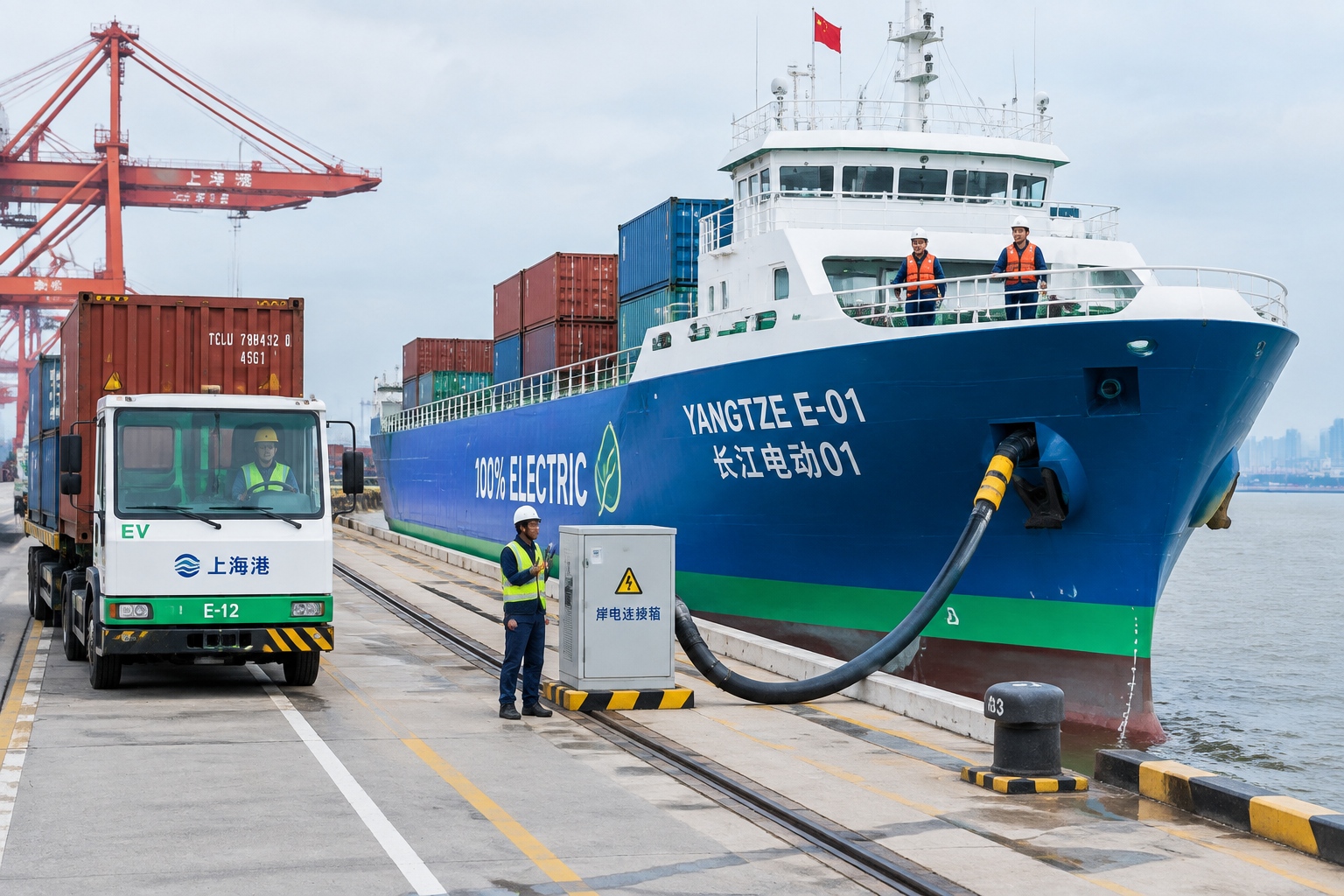
Cheaper, better-scheduled river freight is one reason inland cities can compete with the coast. It also connects to the greener side of shipping. Battery-powered container ships now run on parts of the Yangtze, including a 700-TEU all-electric vessel. LNG-powered ships are appearing. Ports offer shore power so vessels can switch off diesel generators at berth. Automated cranes and driverless trucks move boxes at the big terminals.
None of that works well without a digital layer underneath. Electric ships need predictable routes and charging windows. Automated terminals need to know what is arriving and when. Smart logistics is less a product than the wiring that lets the rest function.
Back at the dock
A week later, Zhou’s ship is alongside a berth in Wuhan, taking on steel coils in the grey morning light. He still reads the water himself. He still knows which bend needs care when the current is strong, and which lock master will wave him through if he arrives early.
The app did not replace any of that. It just told him where the cargo was.
That is roughly how the Yangtze is getting smarter — not with a single dramatic upgrade, but with a long series of small, practical fixes: one fewer empty week, one fewer day at anchor, one truck that leaves the terminal on time instead of waiting for a barge nobody could locate.
Start the discussion at forum.chinacomes.com