

The First Stone
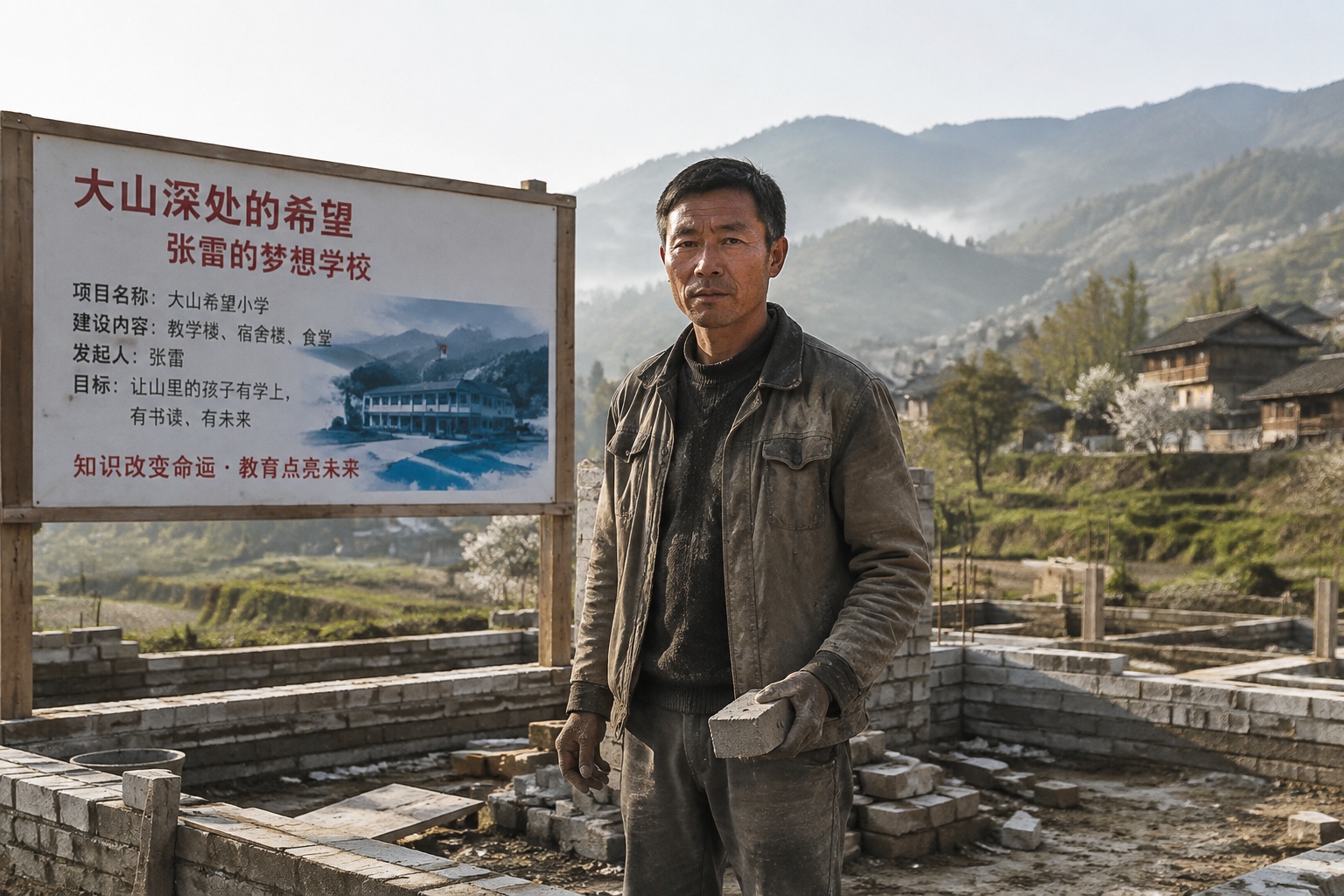
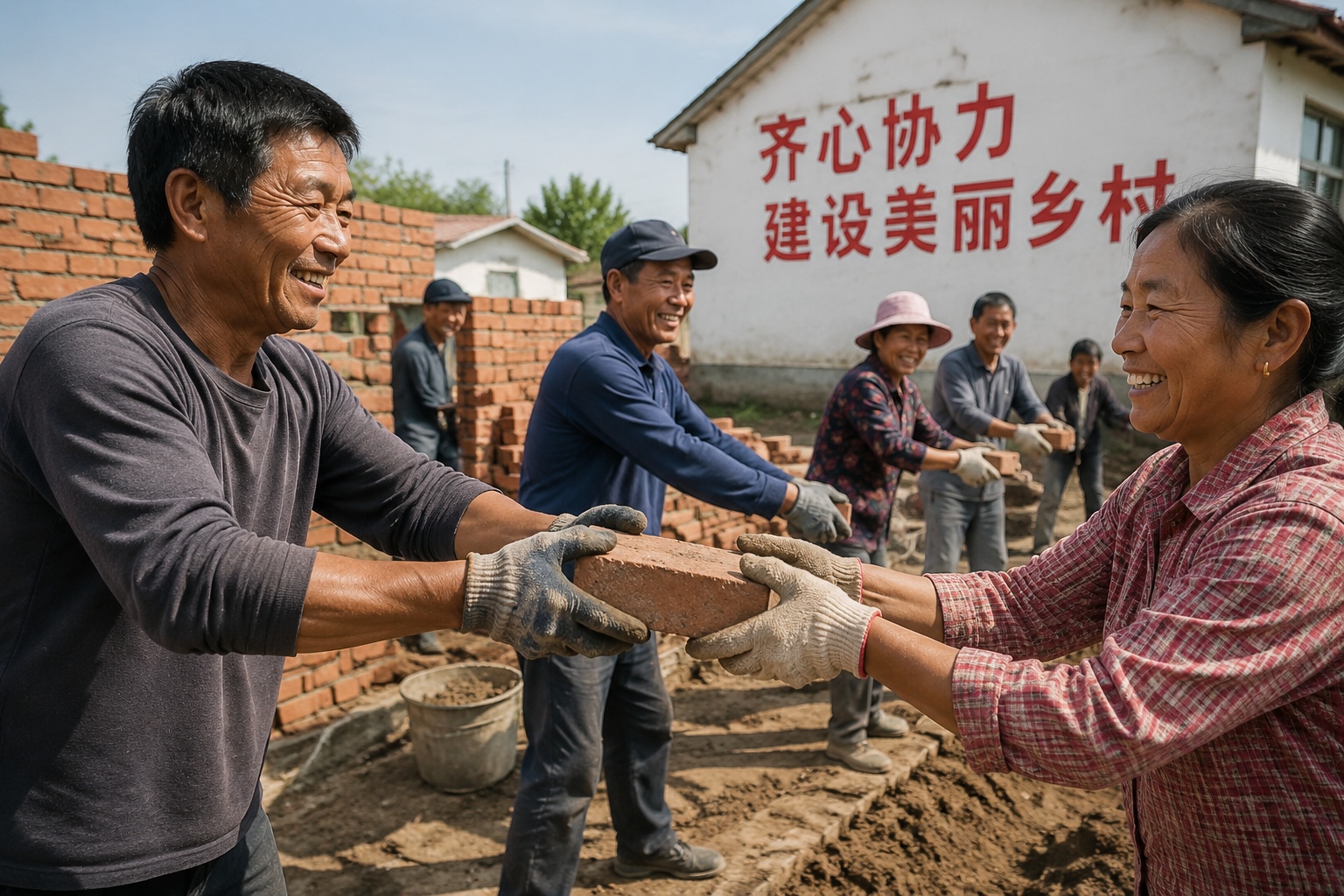
Morning mist clings to the slopes of a small village in Guizhou province. Zhang Lei, 38, wipes sweat from his forehead with a dirty sleeve and hoists another piece of sandstone onto the foundation. He has been at this since 5 a.m. The air smells of wet earth and crushed stone. In the distance, a rooster crows. Around him, a dozen villagers—farmers, retirees, even a few teenagers—pass bricks hand over hand.
“This is where the classroom will be,” Zhang says, pointing to a rectangle of leveled ground. “Maybe by September, if we don’t run out of cement.” He laughs, but his eyes are serious.
Why One Man Decided to Build a School
Zhang Lei used to work on an assembly line in Shenzhen, 1,200 kilometers away. Like millions of rural Chinese, he left his hometown for better pay. But after his own son—then 8—was badly injured in a fall while left in the care of elderly grandparents, Zhang came back for good. “I saw my child’s face through a hospital window, and I knew I couldn’t leave again,” he recalls.
Back in the village, Zhang noticed that the nearest primary school had closed three years ago due to lack of teachers. The only option for local children was a two-hour bus ride over mountain roads to the county town—a trip many families couldn’t afford. “The kids just stayed home, watching TV or playing in the mud,” says Zhang. “Some had never even held a pencil.”
That image—empty hands, blank faces—stayed with him. In early 2022, Zhang sold his motorcycle, used his savings of 40,000 yuan (about $5,500), and announced he would build a school himself. “Everyone told me I was crazy,” he says. “Maybe they were right.”
Building with Bare Hands and Borrowed Cement
Construction began in March 2022. Zhang had no blueprint, no permit, no construction experience. He learned masonry from YouTube videos and asked the village party secretary for permission to use a patch of unused land behind the old temple. The reply: “If you can finish it, it’s yours.”
Funding quickly dried up. Cement costs 500 yuan per ton; a single truckload of gravel runs 2,000 yuan. Zhang began knocking on doors. A neighbor donated two bags of cement left over from a home renovation. A local noodle shop owner gave 3,000 yuan. A retired teacher in the county town heard about the project and sent 10,000 yuan through a mutual friend. “I never asked for donations,” Zhang says. “People just started showing up with money or muscle.”
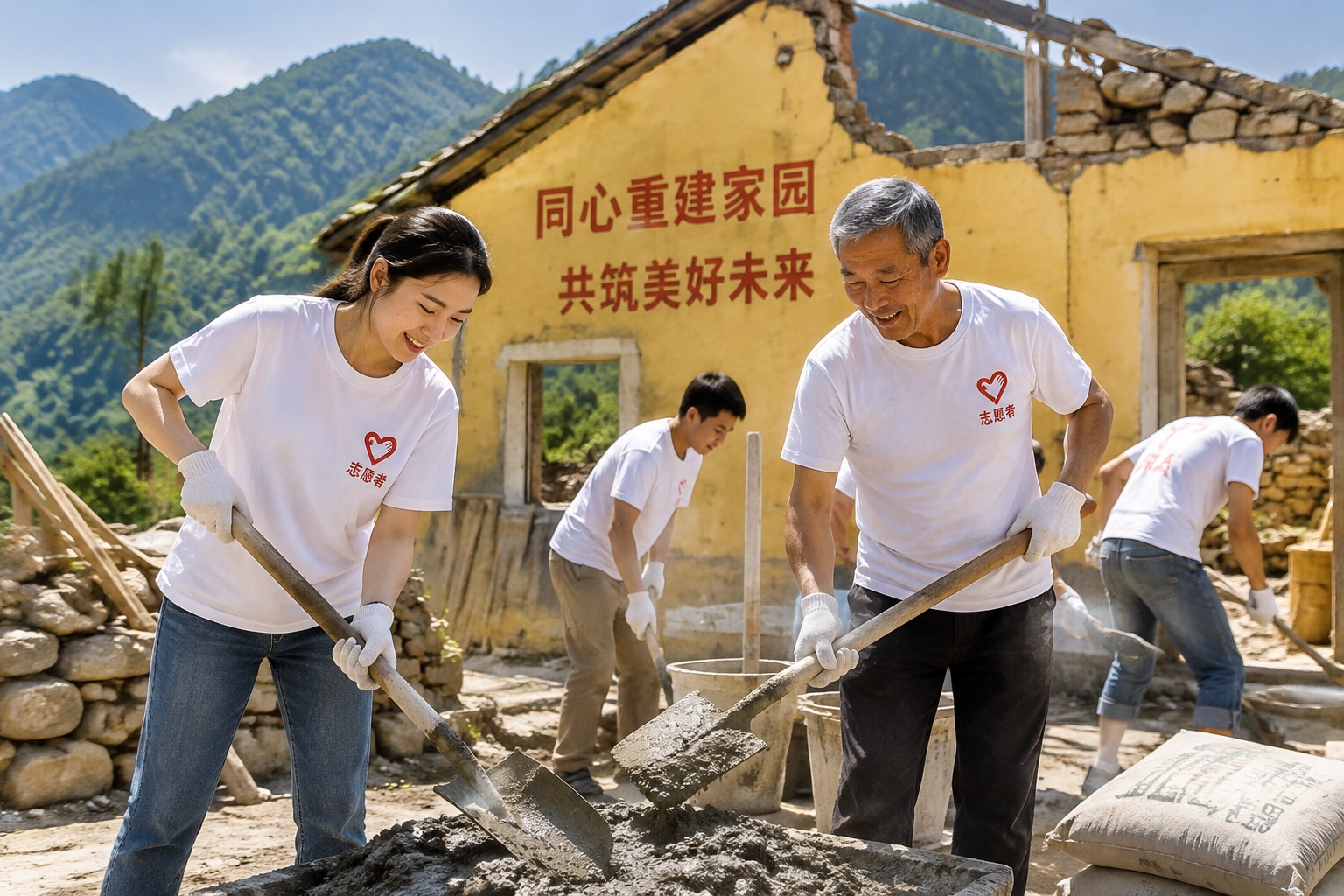
By summer, four walls stood, but the roof was missing. Then a provincial newspaper ran a short story. Within a week, a construction material company in the city donated enough corrugated steel for the roof. Volunteers from as far as Chengdu came to help during their vacations. “One guy was a college student from Shanghai,” Zhang remembers. “He slept on a straw mat and mixed concrete for a week.”
The School That Grows out of the Earth
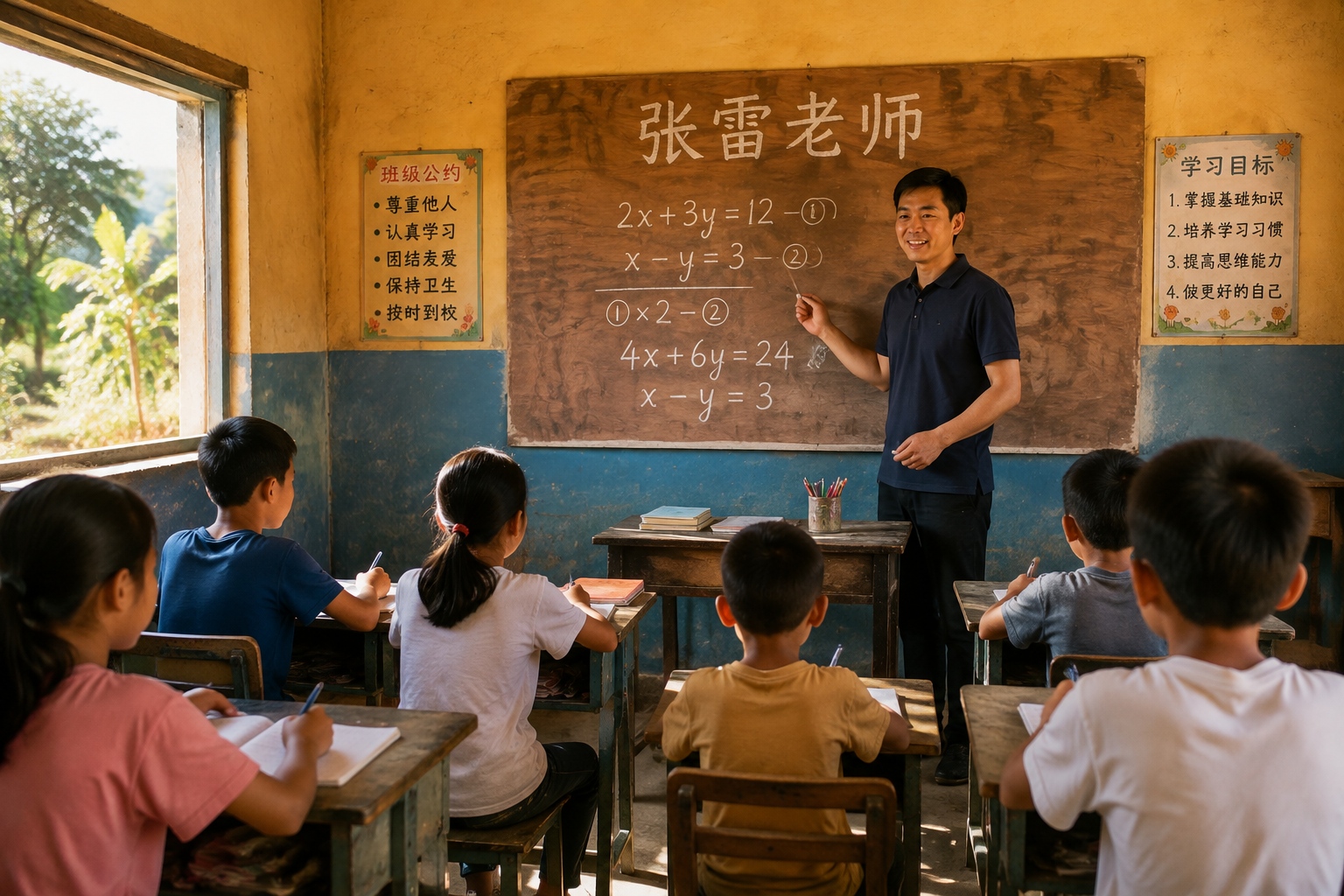
Eighteen months later, the school is not yet finished—but it is alive. Two classrooms are usable, painted bright yellow and blue. A third is being framed. There is no electricity yet, but a local electrician has promised to wire the building for free next month. Water comes from a communal tap 200 meters away.
On most mornings, you can hear children reciting poetry or multiplication tables through the open windows. Zhang acts as teacher, janitor, and security guard rolled into one. He also teaches basic English and math. “I only finished middle school myself,” he admits. “But I learn at night, from old textbooks and the internet. The kids need someone to show up.”
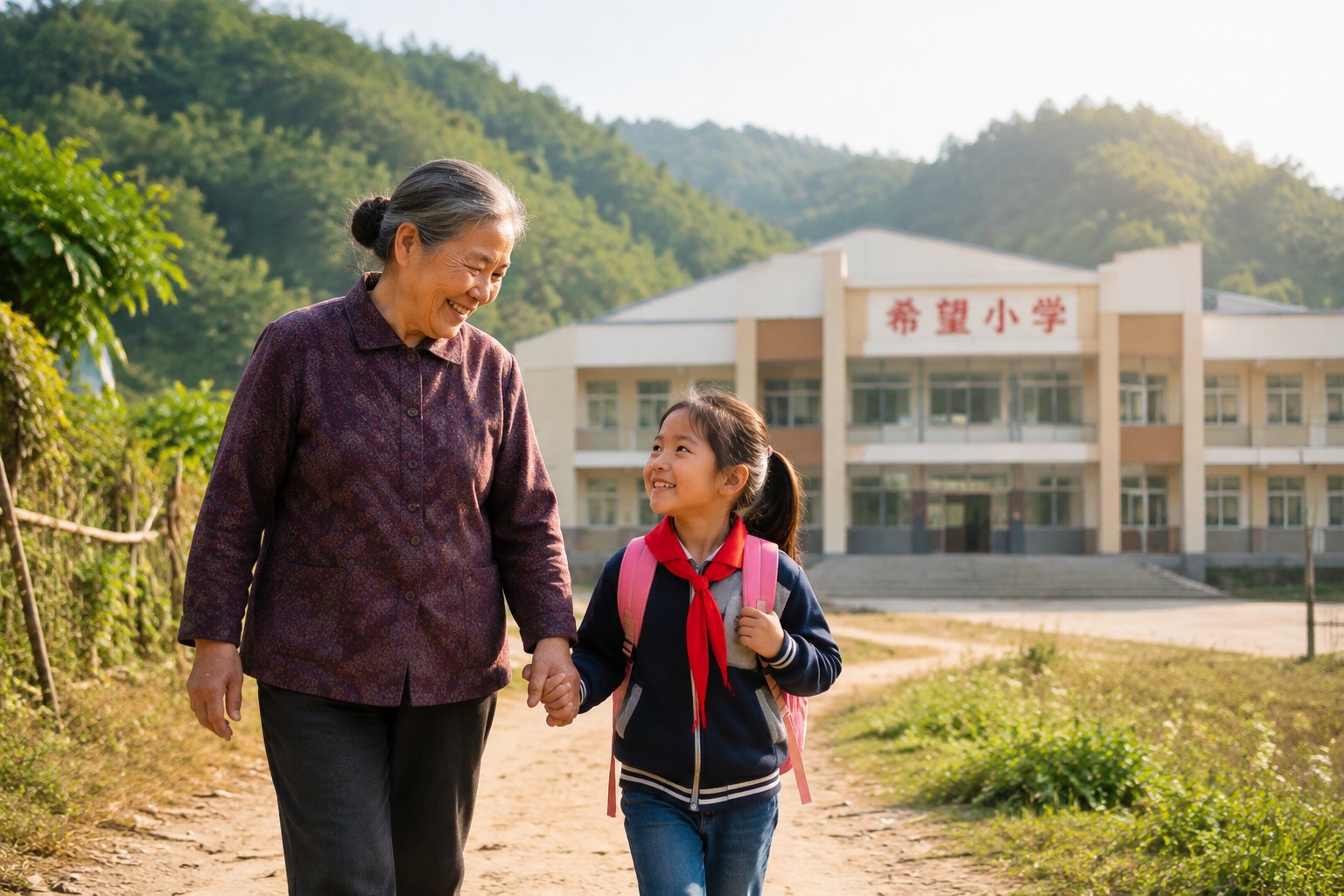
Eleven-year-old Xiaomei walks 40 minutes each morning to attend Zhang’s classes. Her parents work in a garment factory in Fujian province and send money home twice a year. “Before Uncle Zhang’s school, I just helped Grandma in the fields,” she says. “Now I want to be a teacher.” Her grandmother, 67, wipes her eyes when she talks about it: “This school gave her hope.”
There are 23 children enrolled, ranging in age from 6 to 13. They sit on mismatched chairs donated by a nearby middle school. The blackboard is a sheet of plywood painted with blackboard paint. But the children’s notebooks are filled with careful, hopeful handwriting.
Left Behind: A National Crisis
China has an estimated 68 million “left-behind children”—kids under 16 whose parents have migrated to cities for work, often leaving them with grandparents or relatives. According to a 2018 report by the Ministry of Civil Affairs, nearly half of these children live in poverty-stricken rural areas. They are more likely to suffer from depression, drop out of school, or be injured at home.
The government has built boarding schools and provided subsidies, but in remote mountainous regions like Zhang’s village, access remains patchy. “The system cannot reach every small valley,” says Li Hao, a professor of rural education at Beijing Normal University. “It’s often local heroes like Zhang who fill the gap.”
Activists argue that the root cause is the household registration (hukou) system, which ties public services including education to a person’s birthplace. Migrant workers in cities often cannot enroll their children in local public schools, forcing them to leave kids behind. “Until the hukou system is reformed, we will continue to have a generation growing up without parents,” says Wang Fang, a child welfare advocate.
One Man, One School, Many Questions
Zhang’s school is not a solution to a systemic problem—it is a patch. But it is a patch that works for 23 families. “I know I can’t build schools for every village,” Zhang says. “But maybe if a few more people do the same, something changes.”
He now plans to seek official registration as a private nonprofit school, which would allow him to apply for government funding and hire qualified teachers. But the paperwork is daunting. “I’d rather pour another slab of concrete than fill out forms,” he jokes.
Meanwhile, the village is buzzing with a new kind of energy. Grandparents who once felt helpless now gather at the school gate, chatting and making sure children get home safely. Some have started a small vegetable garden to feed the kids lunch. “This school belongs to all of us,” says 72-year-old Chen Shu, one of the volunteers. “We built it together.”
Conclusion: The Power of One
Zhang Lei’s hands are calloused and scarred. They have laid bricks, mixed cement, and held chalk. They also wiped Xiaomei’s tears when she missed her mother last month. In a country where infrastructure can seem overwhelming and government services can feel distant, Zhang’s story is a reminder that change is sometimes built stone by stone.
“When I look at the children writing at those desks, I think: this is why I stayed,” Zhang says, standing under the half-finished roof. “The school isn’t finished yet. But neither are we.”
Start the discussion at forum.chinacomes.com