
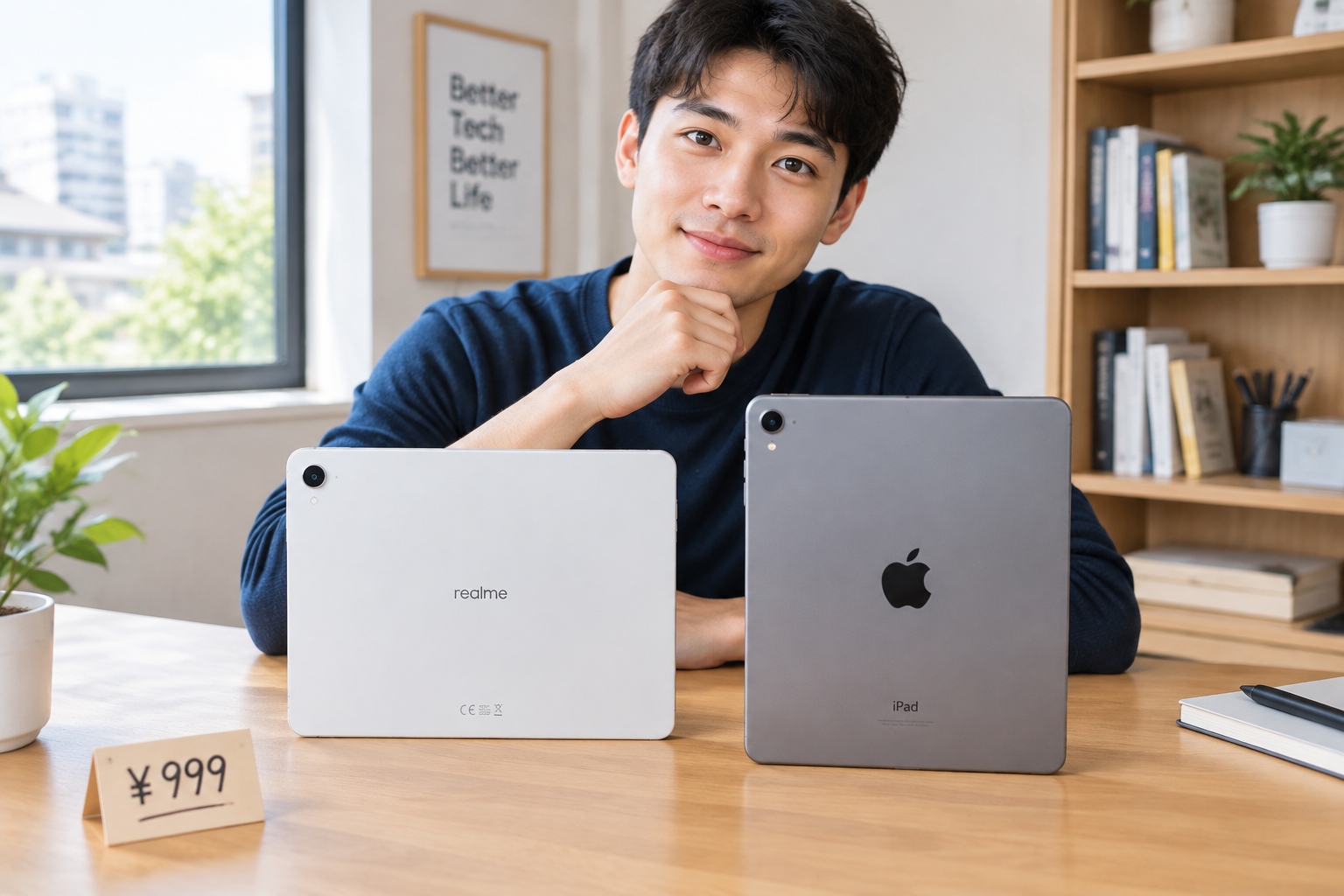

The $49 tablet challenge
I don’t own a $50 iPad. Few people do. But a $50 Chinese tablet shows up everywhere in my Weibo feed, on online marketplaces, and even in some Amazon search results. It tempts with a simple promise: get a 10.1-inch screen for less than the price of a pair of running shoes. So I decided to settle the obvious question in the most direct way. I bought one.
I ordered the second cheapest tablet I could find on a popular Chinese e-commerce site. It cost ¥349, roughly $49 at the current exchange rate. The listing promised a 10.1-inch display, 4GB of RAM, 64GB of storage, and Android 13. The brand came from Shenzhen’s white-label network: no famous logo, no marketing story, just a generic box that ships within 24 hours.
For the next seven days, this cheap slab of Chinese engineering became my main tablet. My iPad Pro stayed in a desk drawer. I used this $49 device for reading, video, notes, web browsing, casual games, video calls and even a little spreadsheet work. This is what happened.
Why a $49 tablet can exist at all
China’s consumer electronics story is rarely only about Huawei, Xiaomi or Lenovo. Underneath the famous brands sits a much larger ecosystem of small and medium factories, mostly around Shenzhen, that assemble devices from mature component supply chains. Screens, processors, batteries, plastic cases, connectors: every part can be sourced within a few hours of driving distance. The manufacturing chain is so efficient that a low-volume tablet order of a few thousand units is still profitable.
These white-label tablets fill an important gap in China’s market. Not everyone needs an iPad’s processing power. Many first-time users just want such a screen large enough to watch classes, video chat with family, or browse Taobao at night. Chinese brands also keep price low because so many local contenders compete on the same e-commerce platforms. That is why a mainstream factory can sell you a complete tablet for half the price of a meal for two.

Unboxing and hardware: what $49 actually gets
The box is plain, light and fully recyclable. Inside: the tablet, one USB-C cable, and a short manual. No charging brick. No protective case. That is common at this price point, and should be read as a hint of the cost-cutting decisions in every part of the device.
Build quality: plastic but not fragile
The back panel uses a textured plastic that doesn’t attract fingerprints and offers a surprisingly solid grip. The tablet weighs around 460 grams, close to an iPad Pro 11-inch, but the plastic frame makes it feel less dense. The tablet has a simple volume rocker and a power button. The SIM tray is slightly loose when you insert it, and there’s no headphone jack. I dropped it from sofa height once, and it survived without any visible harm.
Display: bad in bright light, fine in a dim room
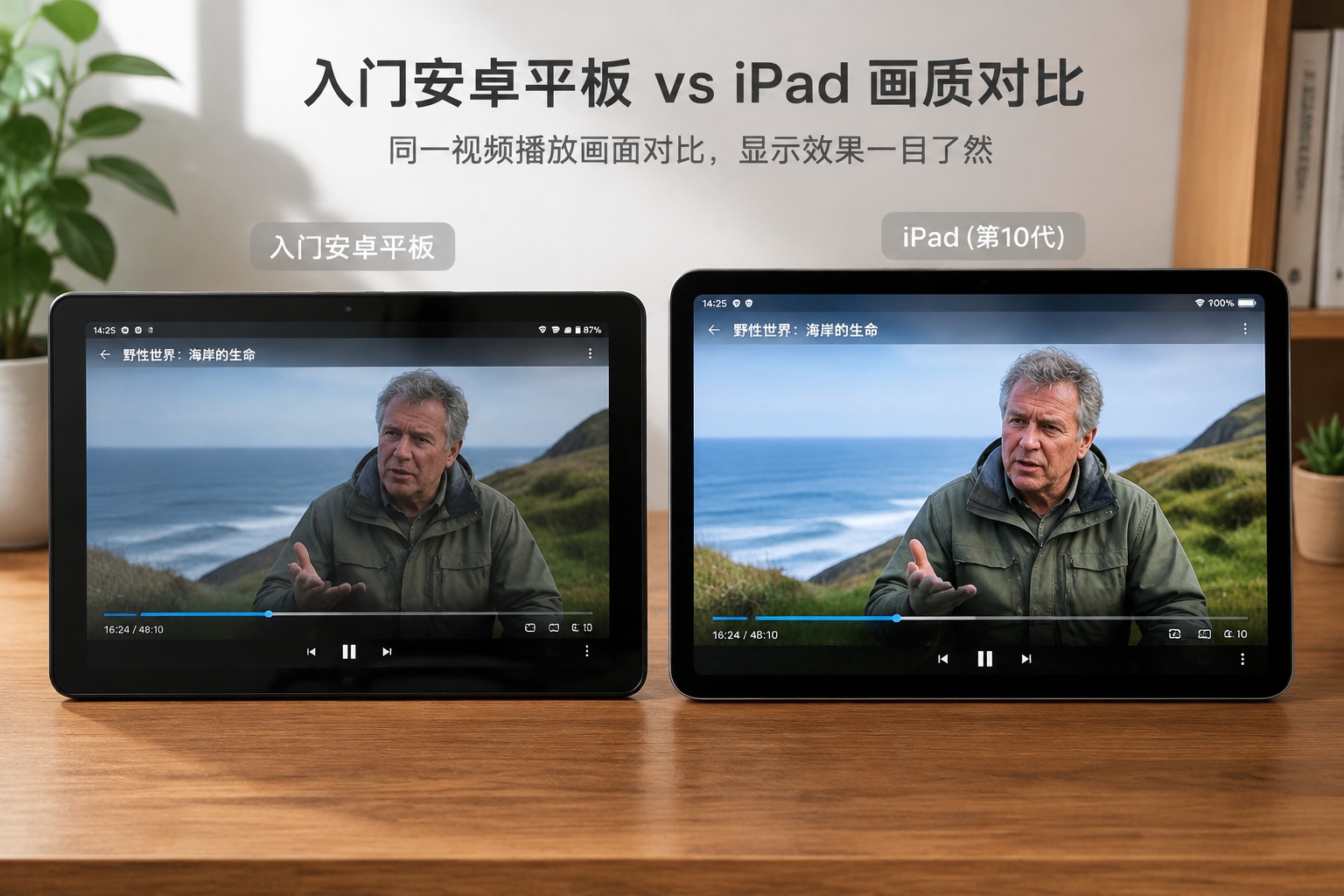
The 10.1-inch panel has a resolution of 1280 by 800 pixels. That is visibly less sharp than almost every iPad model, and the maximum brightness is noticeably lower. In a normally lit living room, colors look washed-out but acceptable. Near a window on a sunny day, the screen becomes a mirror. Reading long articles in daylight is tiring; reading in bed before sleep is fine. The viewing angle is also narrow, meaning two people sitting side by side will not see the same contrast.
Setup and software: Android, minus the polish
This tablet runs a near-stock version of Android 13. The international version I used included Google Play, and most apps installed without problems. The system, however, does not feel tuned. Opening Settings or switching between apps can show a brief white flash. There are few preloaded apps, but also no meaningful software update promise. In China, these budget tablets usually receive Android security patches for a year or not at all.
Daily performance tests
I used the tablet in the same way I would use an iPad: quick messages, content consumption, document editing, and social media. I did not treat it carefully, because that is the point of a budget device.
Streaming video: the strongest point
Video is this tablet’s home turf. YouTube at 720p and 1080p played without significant stutter over Wi-Fi. Chinese streaming apps such as iQiyi and Bilibili also ran smoothly. The small, dual speakers are tinny, but they are fine for spoken-word content and casual viewing. Rotating from portrait to landscape sometimes triggers a hiccup of one or two seconds while the video player restarts. The screen isn’t great, but it is perfectly usable for a Netflix or Bilibili session.
Web browsing and office work: usable, but not fluid
Heavy websites take one or two extra seconds to become interactive. Scrolling through X (formerly Twitter) feels less smooth than on an iPad, with tiny jumps that you notice after hours of regular use. Google Docs and Microsoft Outlook are functional for basic tasks, but opening a large spreadsheet causes a noticeable delay. The tablet’s 4GB of RAM is enough for one or two active apps; the third tab in Chrome often causes the previous one to reload.
Taking notes with a stylus is not realistic, because this screen is not designed for active pens. Typing on the on-screen keyboard is acceptable but sometimes lags, especially after a couple of hours of use. On the positive side, the tablet can connect to a basic Bluetooth keyboard, which turns it into an improvised writing machine. It won’t replace a laptop for any professional workflow, yet it can handle an email response or a short article with patience.
Light gaming: fine for casual titles
Puzzle games like Sudoku and basic Match 3 games run well. I tested a multiplayer battle royale game at low graphics settings, and it was technically playable. The frame rate fluctuated, especially when many players appeared on screen, and the device warmed up noticeably after 20 minutes. The game may be enjoyable for a child or a patient adult, but it is not a substitute for a higher-end Android tablet or an iPad.
Battery, charging and heat
The battery capacity is only 5,000mAh, a tiny amount compared with modern tablets. In my test, YouTube streaming lasted between four and five hours, and regular mixed used got through a full day but never into the next morning. For reference, an iPad typically delivers 9 to 12 hours of video playback.
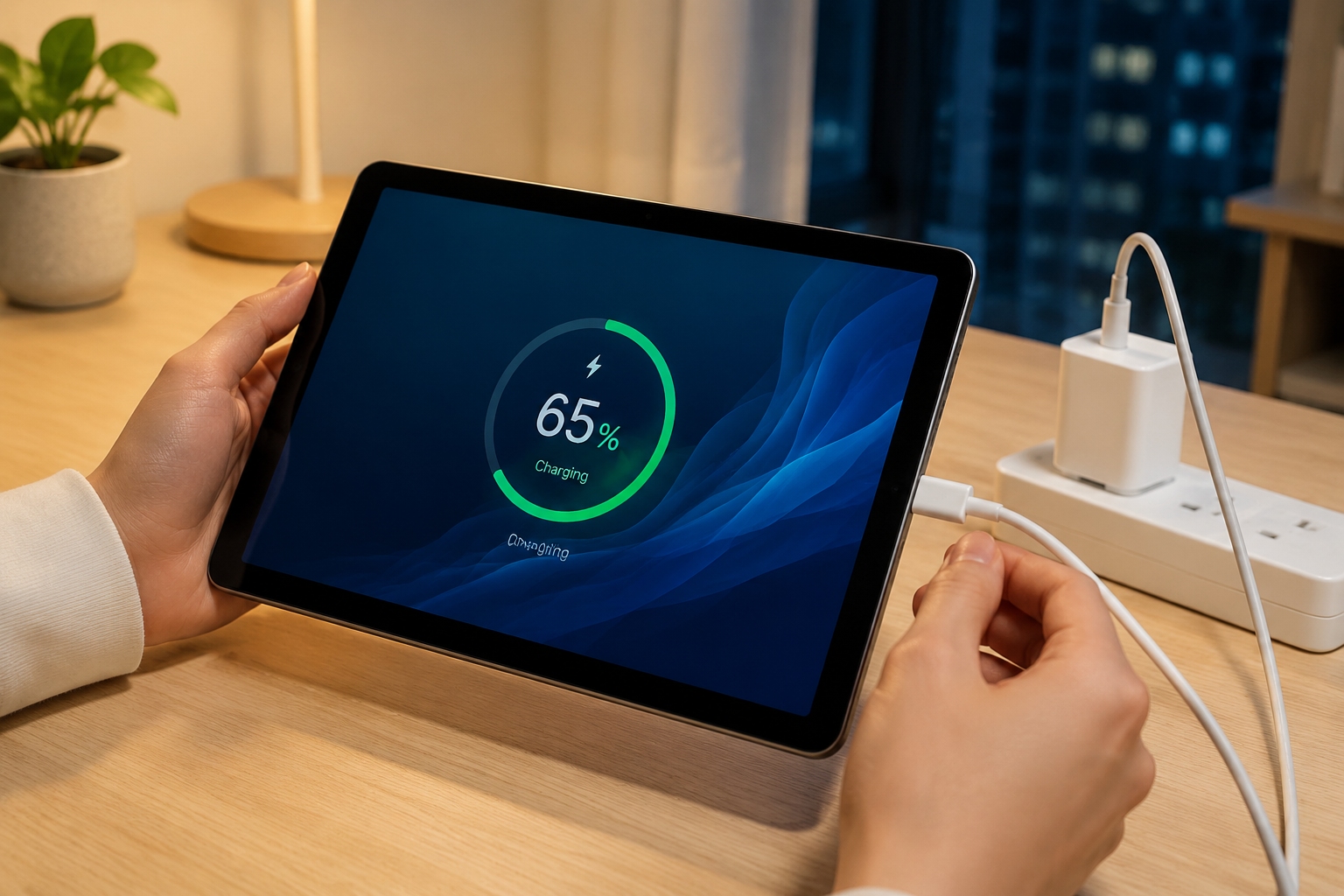
Charging is slow. With a standard 10W phone charger, the battery reaches full in about three and a half hours. The tablet supports USB-C, but no fast-charging standard is included. It also doesn’t include a charging brick in the box, so you must supply one. During charging, the back warms up but never to a dangerous level. During gaming, heat is noticeable but acceptable.
One week of living with the $49 screen
After seven days, I found myself using the tablet in a special way: I stopped being careful. I threw it into my backpack without a case, passed it to friends, and let my toddler tap the screen during breakfast. This kind of psychological freedom is valuable, but it doesn’t excuse the hardware limits. I used the device for notes at meetings, as a second screen for watching tutorials while cooking, and as a bedside reader. For those duties, it performs well enough.
By the end of the week, I had also developed a workaround list: avoid using three tabs at the same time, charge it every afternoon, and keep the screen brightness below 80% to reduce glare. The experience is not what you would call premium, but it is not frustrating enough to force you to throw it away.
Verdict: can this replace your iPad?
The honest answer for most readers is no. The gap in performance, screen quality and long-term reliability is very real. If you use an iPad for drawing with Apple Pencil, editing 4K video, or connecting to the broad universe of iPad-optimized apps, no $49 device can match that ecosystem.
For users whose needs are simpler, however, the calculus changes. A child watching educational videos, an elderly family member video-calling relatives, or an office worker who wants a basic second screen can all find the cheap tablet acceptable. At $49, even if it lasts only two years, the cost of ownership is still much lower than an entry-level iPad’s $329 starting price. But you should not expect software updates for more than a year, and any warranty support will be limited.

What the $49 tablet says about Chinese manufacturing
China’s tech industry has an expression: gou yong, meaning “good enough.” The phrase captures a design philosophy driven by price windows rather than technical ambition. A white-label tablet is deliberately built to a cost limit, using every cheap component available, while relying on Shenzhen’s supply chain to ensure it still works without being dangerous.
This philosophy spreads digital tools to people who cannot afford premium electronics, which is a positive force for inclusiveness. But it also has a darker side: the drive to reduce costs can mean shorter product lifetimes, fewer recycling options, and only surface-level quality control. The $49 tablet is neither a miracle of Chinese engineering nor a worthless gimmick. It is what happens when a mature manufacturing machine is asked to deliver a very specific set of trade-offs: large screen, reasonable performance, extreme low price, and only the minimum tools needed to survive a single product cycle.
That is something far more interesting than a simple iPad vs. China tablet argument. In the next decade, this same “good enough” logic will power many other products, not only tablets. And it will be the key to understanding China’s next wave of consumer electronics, for better and for worse.
Start the discussion at forum.chinacomes.com