

6:40 a.m., Jasper County, Iowa
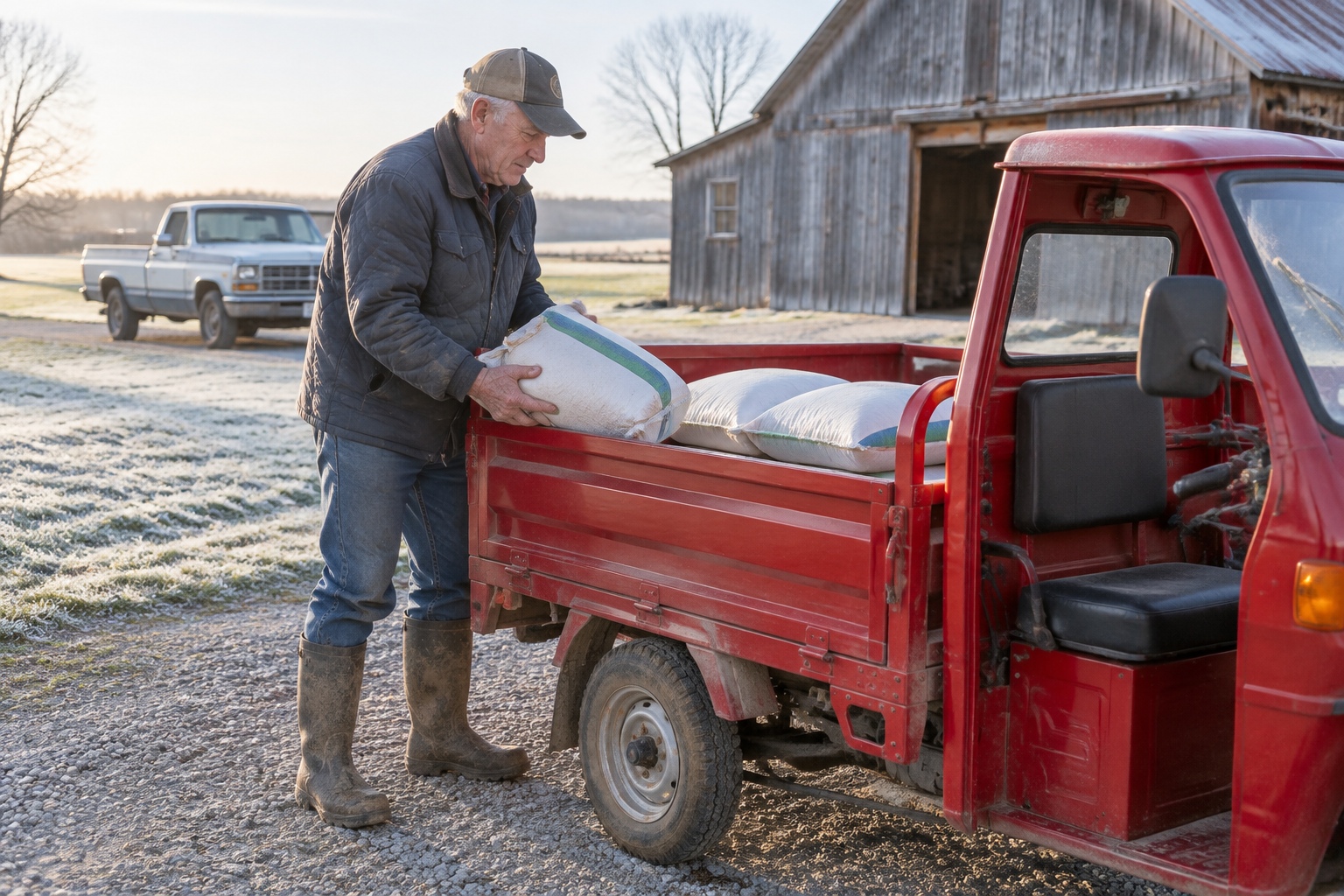
The barn light is still on when Dale backs the small red three-wheeler out of the machine shed. It is 31 degrees, frost on the gravel, and the motor makes a noise somewhere between a blender and a sewing machine. Two 50-pound bags of layer pellets sit in the cargo bed. A cooler of eggs for the church pantry is wedged behind the seat. Round trip to the chicken sheds: about 400 yards. He will make it twice before breakfast.
The vehicle is nine feet long and three feet wide, with a bench seat, a drop-side cargo bed, and a top speed around 22 miles an hour. In China it is a 电动三轮车, an electric three-wheeler. Almost everyone there calls it a 三蹦子 — san beng zi, roughly the thing that bounces three times, a nod to what it does to your spine on a bad road. Dale’s neighbors in Iowa call it something else. They call it the Chinese Cadillac.

How a Chinese electric tricycle ended up on an Iowa farm
The trike came from a factory in Jiangsu province, ordered online by Dale’s daughter-in-law, Lin, who grew up in a county town in Henan. She paid about 3,200 yuan for it, roughly $450 at the time, and then paid more than twice that again to have it crated, trucked to a port, and floated across the Pacific. By the time it cleared customs in Newark and a freight company dropped the crate on the driveway off I-80, the family had spent just under $2,000 — a number that sounds absurd until you price what American farmers usually buy for the same job.
Dale is 67 and has grown corn and soybeans and kept a small hog operation on this land for four decades. When the crate arrived in the fall of 2023 he assumed it was a joke, and his son assumed it was a lawn ornament. Then Lin sent a video from her hometown: a delivery rider threading a traffic jam on the same model, one hand on the handlebar, the other steadying a stack of cardboard boxes. Dale charged the battery overnight. He has barely touched his ATV since April.
A day’s work: feed, eggs, and a wet hillside
On a good day the trike is a small truck. On a bad day it is a shopping cart with a motor. The cargo bed holds around 500 pounds if you load it flat and don’t mind the rear end squatting. The lead-acid battery, 60 volts and 45 amp-hours, is good for something like 35 to 40 miles empty and closer to 20 with feed in the back. That covers the whole farm, the mailbox on the gravel county road, and a run to the co-op in town if he takes the back way and doesn’t push it.
It has no cab and no heater, so in January Dale wears the same Carhartt jacket he wears on the tractor. There is no suspension worth the name and the three tires are narrow, which matters most on the slope behind the hog barn.
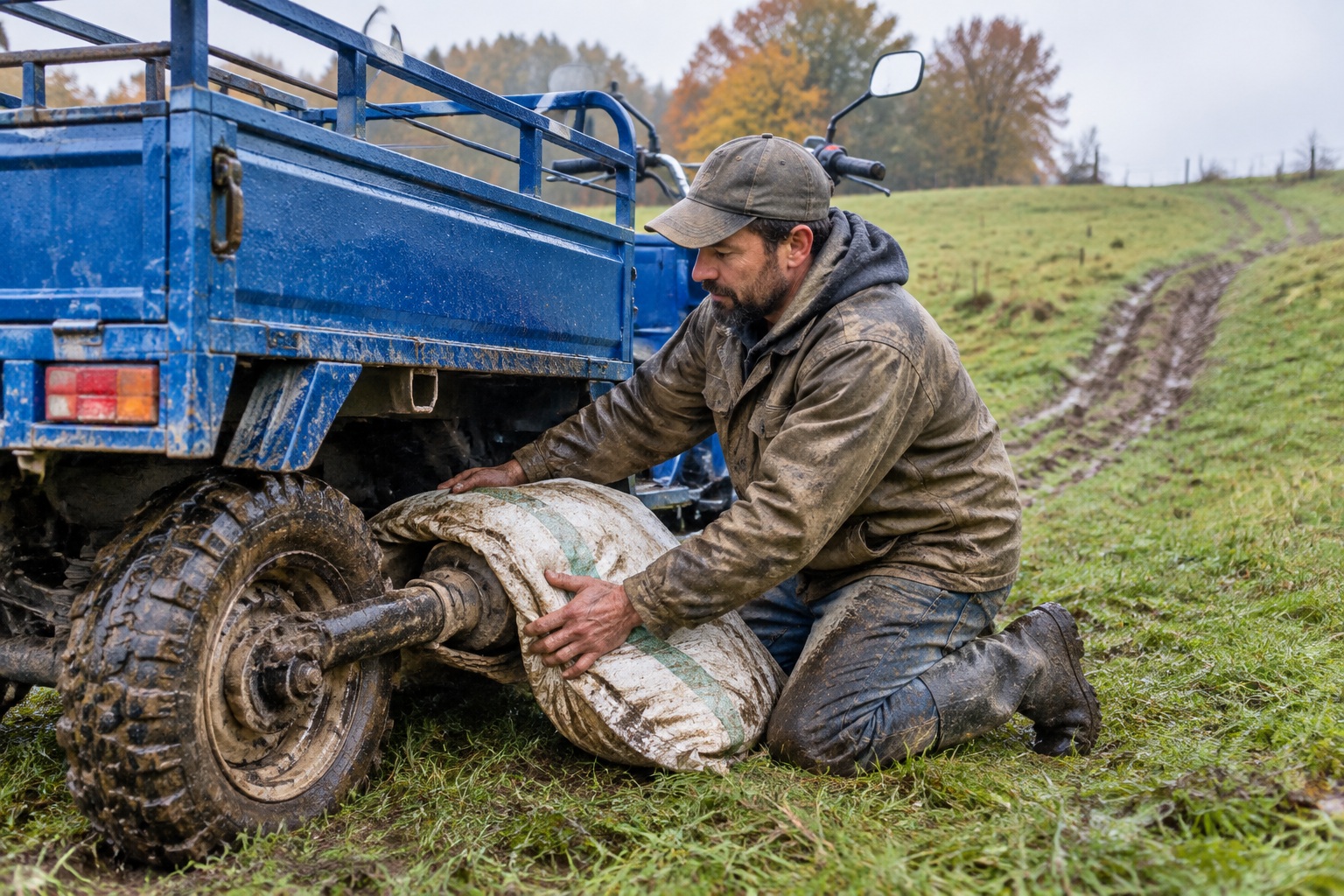
That hill is where the trike fails. Wet grass, a slight grade, and the rear wheels start to spin and the whole thing slides sideways a few inches before it stops. The first time it happened, Dale was carrying a full load of feed and spent twenty minutes unloading it into the mud to get the vehicle turned around. His fix is unglamorous: two feed sacks laid flat over the rear axle for traction, or waiting until early afternoon, when the sun has dried the slope. He has also learned to take the long way around the pond instead of the short way up it.
By noon he has moved three hundred pounds of feed, run the eggs down to the church, and carried two grandchildren to the pond and back with the dog riding in the bed like a passenger who paid for the seat. Charging happens in the barn, from a 110-volt outlet, through a step-up transformer he bought on Amazon for $60, because the charger in the box expects 220 volts. Eight hours to full. A full charge costs him around 30 cents at Iowa electricity rates. The battery will need replacing in two or three years, and a new one will run about $180 shipped.
What the neighbors say
By July, four people had asked to sit on it. Two asked where to order one. One — a retired seed salesman with a clean barn and firm opinions — priced a comparable American side-by-side at around $14,000 and decided to keep his golf cart.
That gap, more or less, is the whole story. The Chinese trike is not better than a $14,000 utility vehicle. It is slower, cruder, has no four-wheel drive, and cannot pull a trailer loaded with hay. It is simply cheap enough that a farmer can buy one the way he buys a squeeze chute or a used welder: as a tool for one job, without a loan and without a conversation about it. The people who designed it were not thinking about Iowa. They were thinking about a vegetable vendor in Henan who needs to move four hundred pounds of cabbage before the market closes.
The other end of the crate: Fengxian, Jiangsu
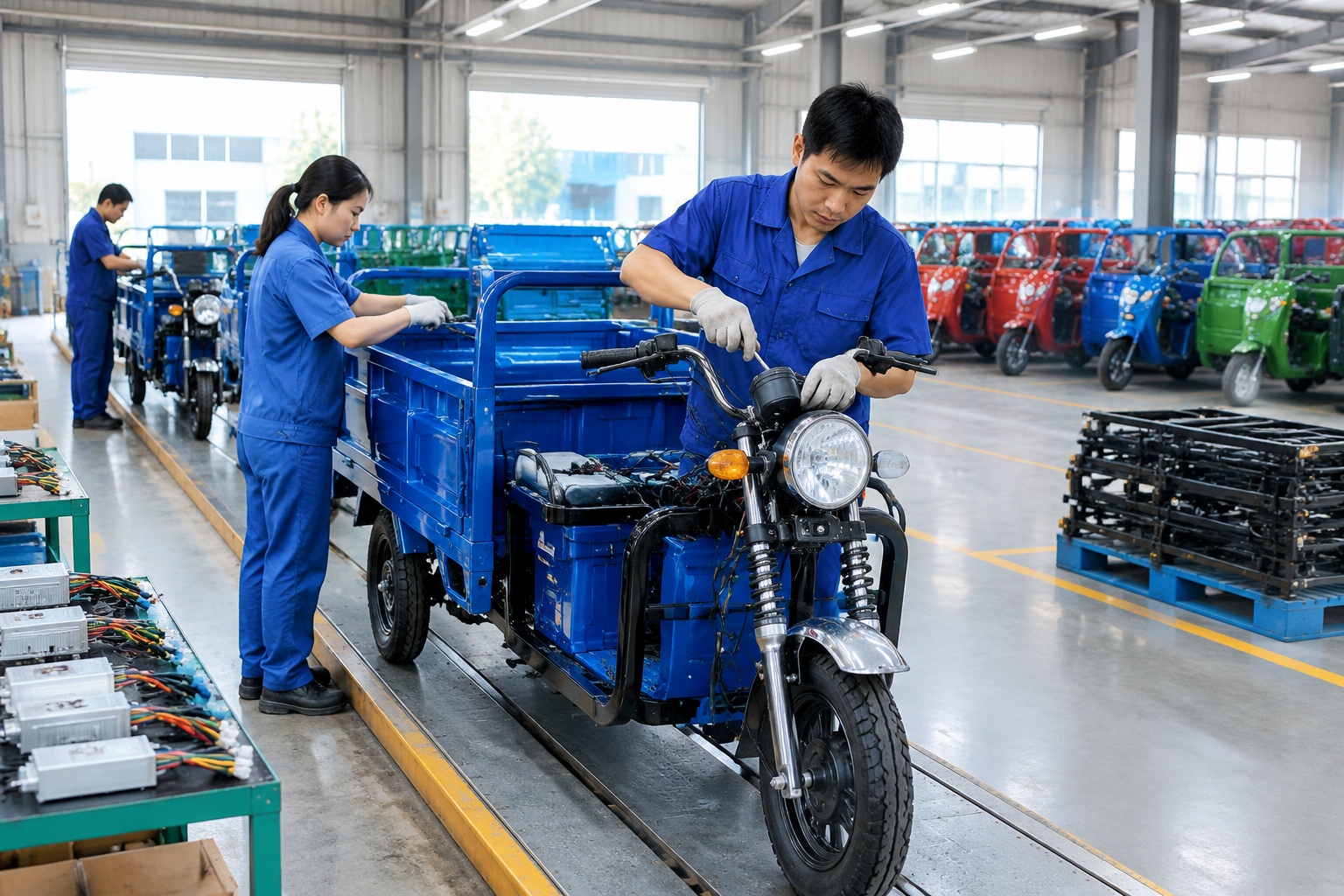
Fengxian, a county of about a million people in Xuzhou, is one of the places those machines come from. Local industry figures put annual electric three-wheeler output in the county at over three million units, spread across a few large brands and hundreds of small assembly workshops and parts suppliers that fill industrial parks along the county road. Drive through and you see racks of frames, pallets of controllers, and rows of finished vehicles in every color, waiting for a shipping label.
Liu Peng, 29, works on a final assembly line there. His station is the wiring harness, and he fits one into a frame roughly every eleven minutes, forty vehicles a shift. He earns about 5,000 yuan a month, close to $700, which is a decent wage in a county town and enough that he bought a used car last year. What he knows about the vehicles he builds is practical: which controller fails in the summer heat, which battery brand lasts, and that buyers overseas want the same thing buyers at home want — something that starts every morning and can be fixed with a hammer.
Most of what Fengxian makes stays in China. The rest goes to Africa, South Asia and Latin America in containers by the thousand, sold as delivery trucks, farm carts and market haulers. Then there is the other channel: ones and twos, sold through online marketplaces, crated up, and addressed to people like Dale.
The manual is in Chinese
In the third week, the controller failed. The trike would power on and refuse to move, and the small-engine shop in town would not touch it — no English wiring diagram, no dealer network, and therefore no liability chain the shop recognized. Dale photographed the label with a translation app, sent it to the seller on WeChat, and got an answer thirteen hours later, which felt slow until he realized China had been asleep. A replacement controller cost $45 and reached his mailbox from Shenzhen in nine days.
Import rules are their own puzzle. Vehicles like this often enter the United States classified for off-road or golf-cart use, which keeps them off most highways, off some county roads, and sometimes in a gray zone that varies from state to state. Many owners simply keep them on private land, which is where most of the work happens anyway.
What actually travels
The interesting part is not that a Chinese factory can build a cheap electric cart. It is that the design has been refined for two decades by people who use it as a working tool, not a toy. The bolt patterns are standard. The battery is old lead-acid technology on purpose, because it is cheap and a man in a shed can swap it himself. The cargo bed drops on three sides because someone, at some point, got tired of lifting sacks over a wall.
That kind of knowledge does not appear in a trade report, and it does not arrive with a brand name attached. It arrives in a wooden crate on a driveway in Iowa, gets covered in mud within a week, and then quietly becomes part of how a farm runs.
8:15 p.m., the barn outlet
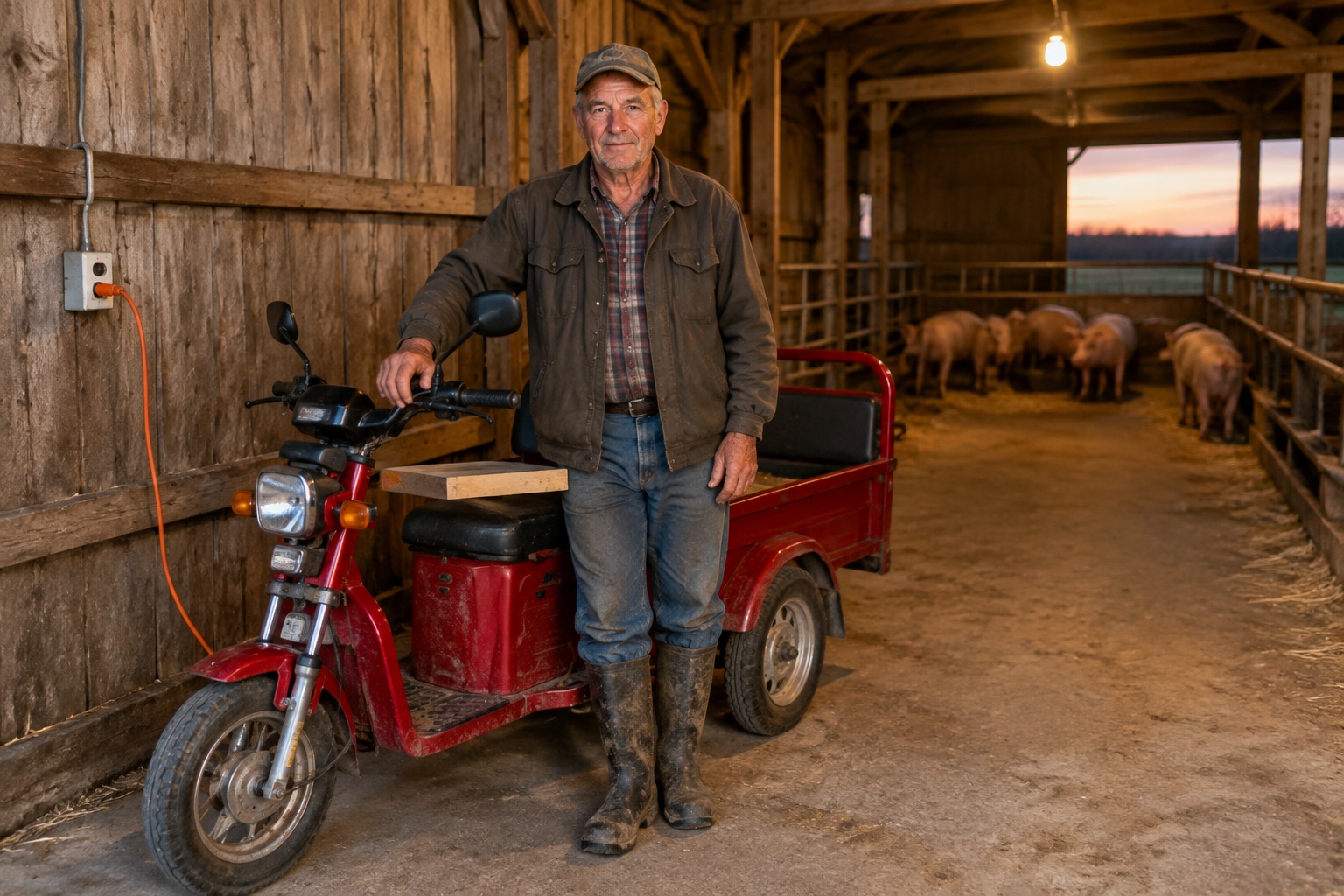
Dale backs the trike into the shed and plugs it in. The charger fan hums against the noise of the hogs. He sets a piece of plywood over the seat so the barn cats stay off it, and checks the tire on the left rear, which loses air slowly and always has. Thirty cents of electricity goes back into the battery overnight. Tomorrow morning, before the frost lifts, he will do the same four hundred yards again.
Start the discussion at forum.chinacomes.com