

Why a Three-Wheeled Box Is Showing Up on European Streets
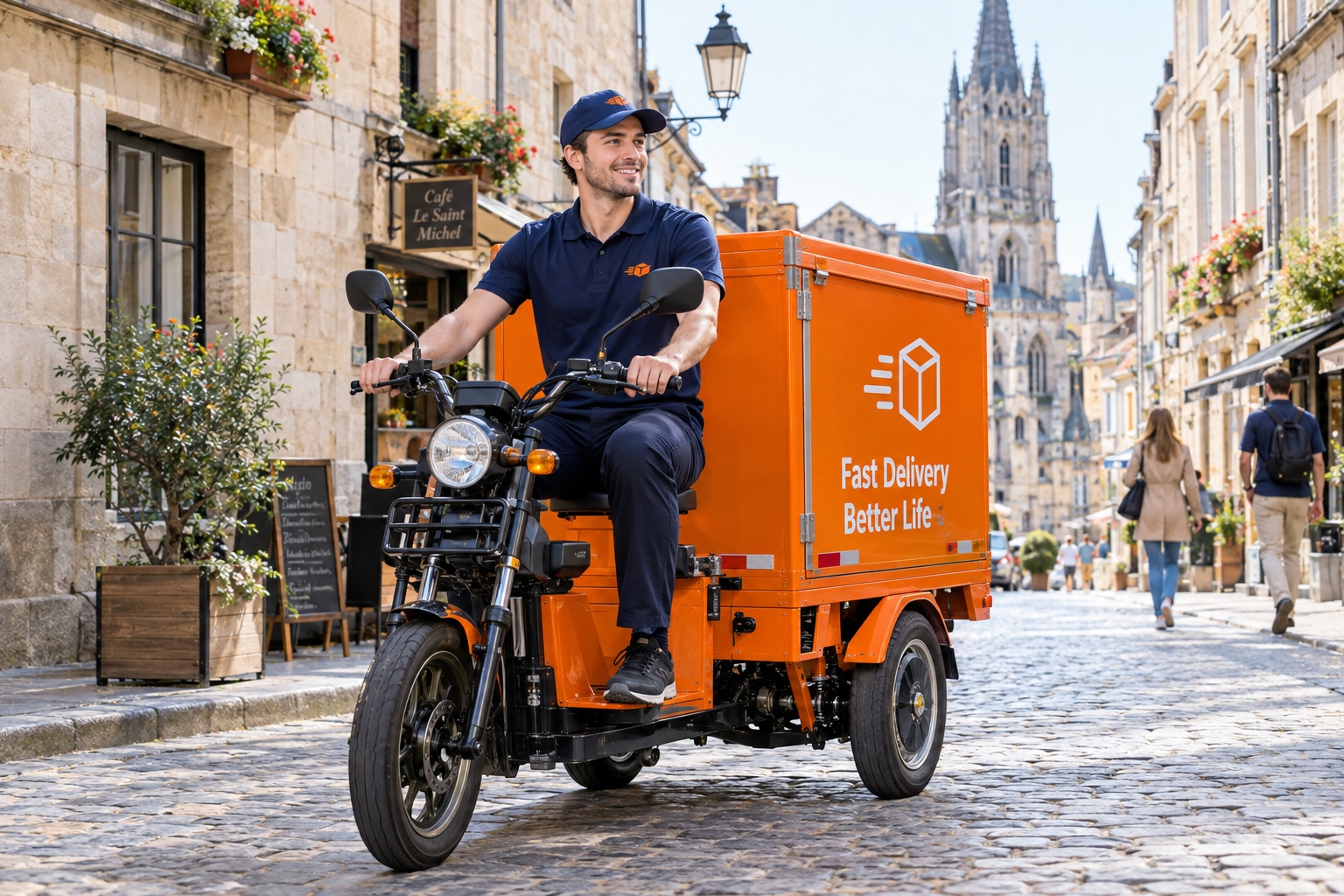
Milan, 8 a.m. A courier named Luca pulls up to a doorway on a street too narrow for a van. He’s riding a small electric three-wheeler with a plastic cargo box. It’s quiet, about the size of a golf cart, and it just parked on a patch of sidewalk no car could use. He drops off two parcels, hops back on, and disappears into traffic.
That vehicle likely came from China. Not the parcels—the trike. Across Europe, delivery companies and independent couriers are buying Chinese-made electric cargo trikes for the last mile. They’re cheaper than vans, easier to park, and legal in more and more city centers. But they also come with a learning curve.
This article explains what these trikes are, why they’re spreading, and what you should know before buying one. It’s written for couriers, small delivery businesses, and anyone curious about how Chinese manufacturing is reshaping European streets.
What Exactly Is a Chinese Cargo Trike?
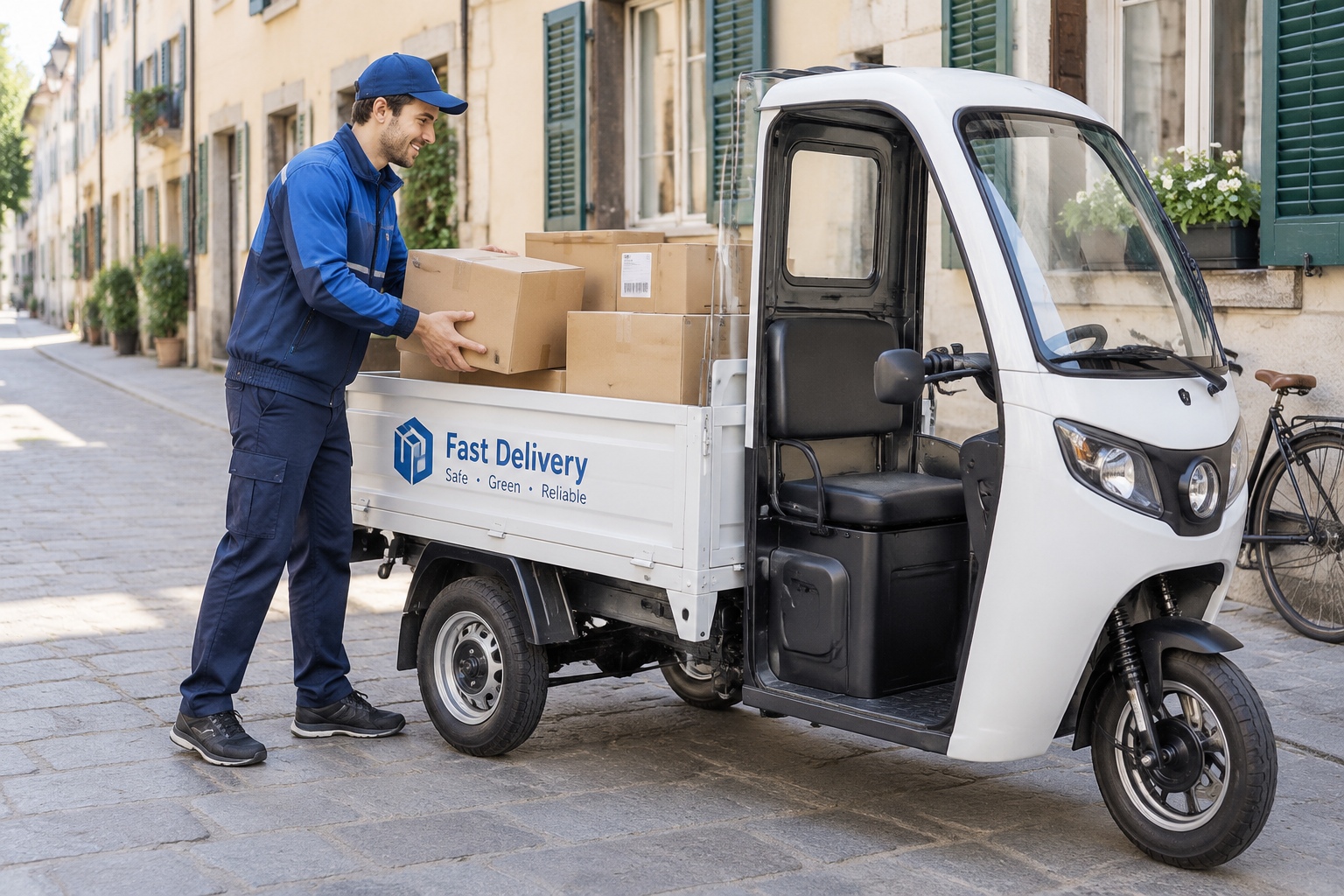
Think of a three-wheeled electric vehicle with a box on the back. Most have a single front wheel and two rear wheels. The driver sits in the middle, often under a small roof. The cargo box can hold 200 to 400 kilograms (440 to 880 pounds). Top speed is usually limited to 25 km/h (15.5 mph), which keeps them in the moped category in many countries.
Prices vary. A basic model from a Chinese factory costs around €1,500 to €3,000 (about $1,600 to $3,200) before shipping and import duties. A comparable electric delivery van from a European brand can easily cost €20,000 to €30,000. That price gap is the first reason couriers pay attention.
Range is typically 60 to 100 kilometers (37 to 62 miles) per charge, depending on load and hills. Charging from a normal wall outlet costs roughly €1 to €2 per 100 km. A diesel van burns €10 to €15 per 100 km. For a courier doing 50 km a day, the savings add up fast.
Most of these trikes are made in Jiangsu, Zhejiang, and Shandong provinces. The same factories that supply China’s massive domestic market for electric scooters and delivery bikes. China produces over 30 million electric two-wheelers a year. Cargo trikes are a natural extension of that supply chain.
Why European Couriers Are Making the Switch
Three pressures are pushing couriers away from vans.
First, money. Fuel, insurance, maintenance, and parking fines for vans are rising. Many European cities now charge congestion fees or ban older diesel vehicles from the center. A small electric trike avoids most of those costs.
Second, space. Old European cities were not built for vans. A trike can use bike lanes, park on sidewalks, and squeeze through alleys. In Paris, DHL and other carriers already use cargo trikes and bikes for central deliveries. Amsterdam has thousands of cargo bikes. Milan, Rome, and Barcelona are following.
Third, rules. A growing number of cities require zero-emission deliveries in low-emission zones. Electric trikes qualify. Vans often don’t.
But it’s not as simple as buying a trike and riding off. The legal picture is messy.
The Legal Maze: Registration, Licenses, and Bike Lanes
In the European Union, a cargo trike can fall into different vehicle categories. If it’s limited to 25 km/h and 250 watts, it might be treated like a moped (category L2e). If it’s more powerful, it could be a motorcycle (L5e) or a heavy quadricycle (L7e). Each category has different rules for registration, license plates, insurance, and driver’s license.
In practice, you need to check with your local vehicle authority. Some countries require a helmet. Some require a driving license (AM, A1, or B). Some allow trikes on bike lanes; others don’t. There is no single European standard yet.
There’s also the question of import duties. The EU has anti-dumping duties on electric bicycles from China. Cargo trikes may be classified under a different customs code, so they might avoid those duties—or they might not. A good importer will handle this for you. A cheap online seller often won’t.
One more thing: some Chinese trikes come with a Certificate of Conformity (CoC) for European roads. Many don’t. Without proper paperwork, you may not be able to register the vehicle at all. That’s a common and expensive mistake.
Practical Tips: How to Choose and Run One
If you’re considering a Chinese cargo trike, here’s what experienced couriers and importers suggest.
1. Buy from a European importer if you can
Yes, you’ll pay 20–30% more. But you get a warranty, spare parts, and help with registration. Direct-from-China sellers can be much cheaper, but you’re on your own if something breaks.
2. Check the battery
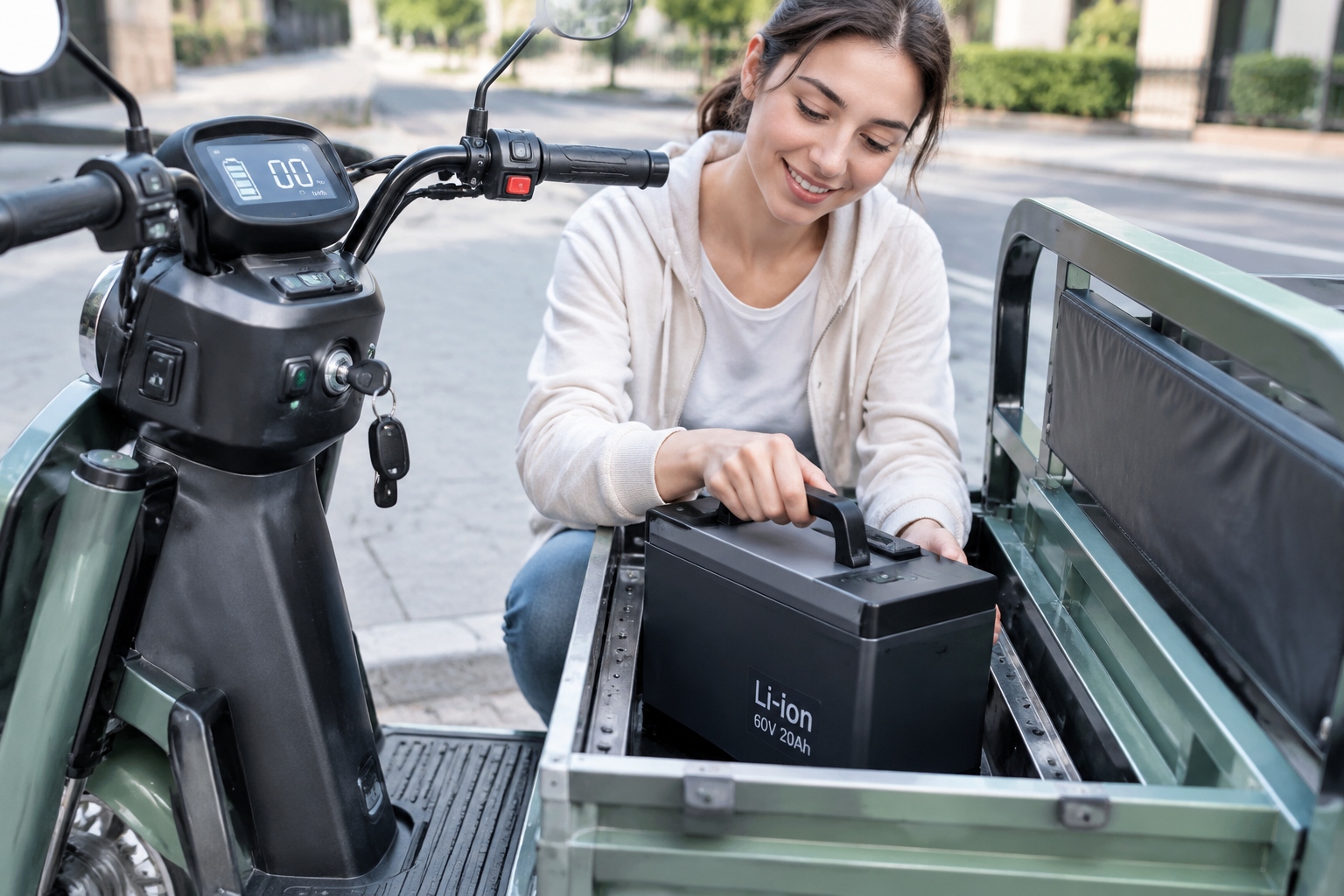
Lithium batteries are lighter and last longer than lead-acid. They also cost more. Look for a reputable cell brand (like CATL, BYD, or Lishen) and a battery management system (BMS). Avoid no-name batteries—they’re a fire risk.
3. Match the motor to your city
A 500W motor is fine for flat cities like Amsterdam. For hilly cities like Lisbon or Rome, you’ll want 800W or more. But more power may push you into a stricter legal category.
4. Think about payload and volume
A 300 kg payload sounds like a lot until you fill the box with bulky items. Check the box dimensions. Some trikes have removable boxes, which can be handy.
5. Order spare parts in advance
Brake pads, tires, inner tubes, controllers, and chargers. Chinese sizes may not match European standards. A flat tire can put you out of work for days if you don’t have a spare.
6. Sort out insurance early
Many standard insurers don’t know how to classify cargo trikes. Call around. Get a commercial policy that covers the vehicle and cargo.
7. Plan for winter
Cold weather cuts battery range by 20–40%. If you rely on the trike for a full day’s work, you may need a second battery or charging break.
8. Secure the battery
Battery theft is common. Use a lock, or take the battery with you when parked. Some trikes have removable batteries—that’s a plus.
The Pitfalls: What Couriers Wish They Knew
Not every purchase goes smoothly. Here are the most common complaints.
Cheap models cut corners. Weak brakes, thin frames, and poor welding. A trike that costs €1,200 may not last a year of daily use.
Battery fires. It happens. Use the charger that came with the battery. Don’t charge overnight in your apartment. Don’t buy a used battery of unknown origin.
Customs delays. Shipping from China can take 4–8 weeks. Customs can add another week or two. And you may get a surprise bill for duties and VAT.
No documents. As mentioned, without a CoC, registration can be impossible. Ask for the paperwork before you pay.
Software locks. Some controllers are locked to a certain speed or battery. Diagnosing problems can be hard without the right software.
One courier in Berlin bought a cheap trike online. He saved €800. Then he spent three months and €500 getting it registered. Six months later, the battery died. The replacement cost almost as much as the trike. He now buys from a local importer.
What This Says About China’s EV Supply Chain
China doesn’t just make cargo trikes. It makes the entire ecosystem: motors, controllers, batteries, chargers, and frames. That scale keeps prices low. It also means the technology improves fast. Five years ago, most cargo trikes had lead-acid batteries. Today, lithium is standard on better models.
Some Chinese factories now offer battery swapping, GPS tracking, and smart locks. European startups are importing these trikes and adding local service networks. It’s a small but growing niche.
For European couriers, the appeal is simple: a cheap, practical tool that fits narrow streets and tight budgets. It’s not a Tesla. It’s a workhorse.
Is It Right for You?
Ask yourself:
- How far do I travel each day? (Under 50 km? A trike works.)
- How much cargo? (Under 300 kg? Likely fine.)
- What are my city’s rules? (Check before you buy.)
- Can I charge at home or at a depot? (You’ll need a standard outlet.)
- Do I have a backup for repairs? (A local mechanic who works on e-bikes is a must.)
If you’re in a dense city with light loads, a Chinese cargo trike can cut your costs dramatically. If you’re doing long rural routes or heavy pallets, stick with a van.
Final Thoughts
The last mile is the most expensive part of delivery. European cities are making it harder for vans. Chinese manufacturers are making it easier for small electric vehicles. The result is a practical, if imperfect, solution that more couriers are trying every month.
It’s not a revolution. It’s a three-wheeled box with a battery. But for thousands of delivery riders, that box is starting to look like the future.
Start the discussion at forum.chinacomes.com