
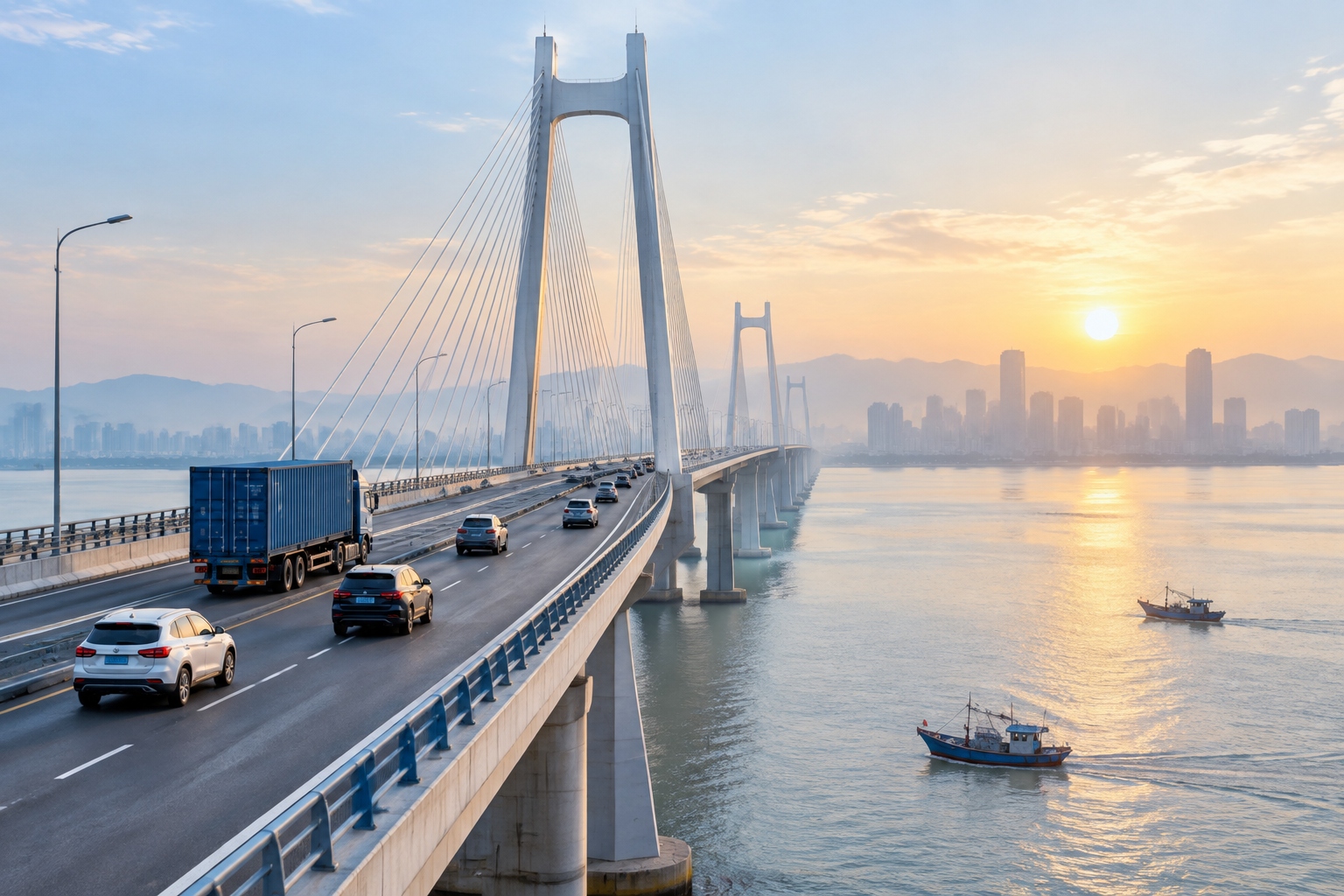

A 90-minute difference you feel from the driver’s seat
Leave Zhongshan’s Torch Development Zone at 7:30 on a weekday morning and drive east, and you can be on the Shenzhen side of the Pearl River estuary in about half an hour. Before June 2024, the same trip meant a two-hour crawl around the top of the estuary, or a ferry that fog or wind could simply cancel. The road is the Shenzhen–Zhongshan Link: roughly 24 kilometres of viaduct, cable-stayed bridge and undersea tunnel that opened on 30 June 2024.
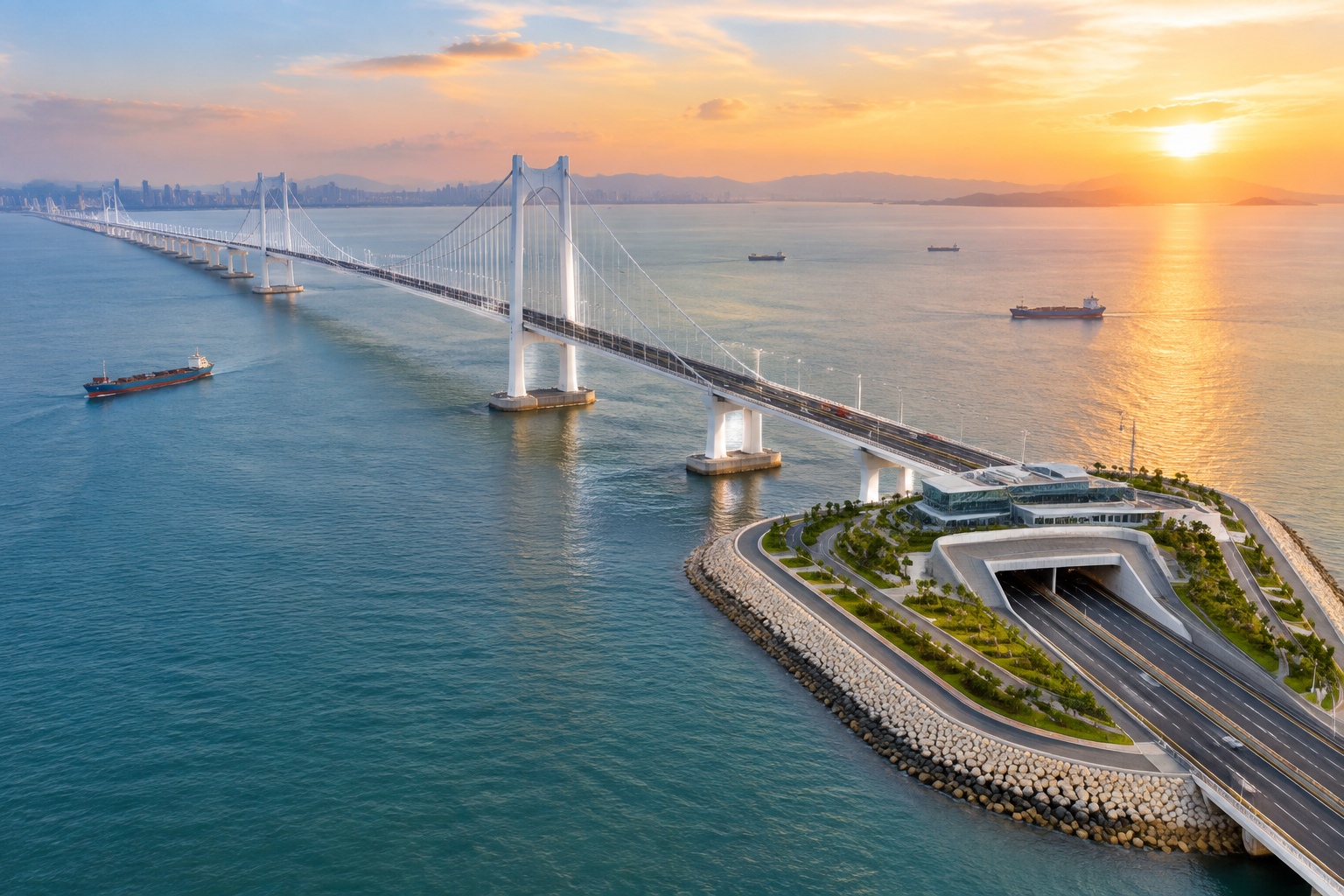
That is what a mega-project feels like from inside a car. No ribbon-cutting, no slogan, just 90 minutes of your day handed back, twice a day, five days a week. For a truck driver moving components between factories, it is one more delivery per shift. For a family in Zhongshan, it is a Saturday at a Shenzhen mall that no longer eats the whole day.
China builds big infrastructure faster and more often than almost anywhere else, and bridges over bays, rivers and gorges are the most visible part of it. This is the overview piece in a series on those bridges — the map before the walks. Later articles will take them one at a time. For now: how the pieces fit together, why they exist, and what they actually change for the people who cross them.
What counts as a ‘mega-project’ in China today
Four categories do most of the heavy lifting. Transport is the most visible: around 45,000 kilometres of high-speed rail, expressways reaching nearly every county, new airports, and the bridges in this series. Water comes next: the South–North Water Diversion moves water from the Yangtze basin toward the dry north, and the middle route alone runs more than 1,400 kilometres. Energy includes large hydro stations on the Jinsha River and ultra-high-voltage lines carrying power from the southwest to coastal cities thousands of kilometres away. Science has its own landmarks, such as the 500-metre FAST radio telescope sitting in a Guizhou basin.
Bridges sit where all of this overlaps. Official statistics put China’s road bridge count above one million — the overwhelming majority are ordinary crossings nobody photographs. The few that make international headlines are the ones where geography was genuinely hostile and engineers had to invent something.
Why so many bridges cross water
Mostly geography, and it is worth saying plainly, because it explains a lot. China’s population and manufacturing are concentrated in the east, and the east is sliced by water. The Yangtze runs about 6,300 kilometres through the middle of the industrial belt, and its wide estuary separates Shanghai from the Jiangsu cities just across the water. In the south, the Pearl River estuary is a gap of 20 to 30 kilometres between two of the busiest manufacturing regions on the planet: Shenzhen and Hong Kong on one side, Zhuhai, Zhongshan and Macao on the other.
Before bridges, those gaps were paid for in ferries and detours. Trucks queued for ferry slots, commuters planned around weather, and two cities an hour apart as the crow flies were two and a half hours apart by road. A bridge is not just a shortcut. It redraws which places belong to the same daily life.
The west has a different obstacle: mountains. Guizhou and Yunnan are largely highland, so roads either wind for hours or fly across gorges. That is why some of the world’s highest bridges stand in southwestern China rather than on the coast.
Europe, the United States and Japan build landmark bridges too — the Golden Gate, the Öresund link, the Millau Viaduct. The difference in China is volume and tempo: dozens of major crossings planned and delivered within the same decade, using repeatable designs and financing models. That scale is impressive, and it is also why arguments about cost and usefulness happen in public here.
Six bridges, six answers
Each of these gets its own story later in the series. Read together, they show what China is asking bridges to do.
- Hong Kong–Zhuhai–Macao Bridge (opened 2018). About 55 kilometres of bridge and a 6.7-kilometre immersed tunnel, built for roughly 126.9 billion yuan. Its job is not only traffic but connection between three cities with three different driving, customs and insurance systems.
- Shenzhen–Zhongshan Link (2024). About 24 kilometres, pairing the Lingdingyang suspension bridge — its 1,666-metre main span is among the longest for a steel box girder bridge — with an undersea tunnel. It turned a two-hour detour into roughly 30 minutes.
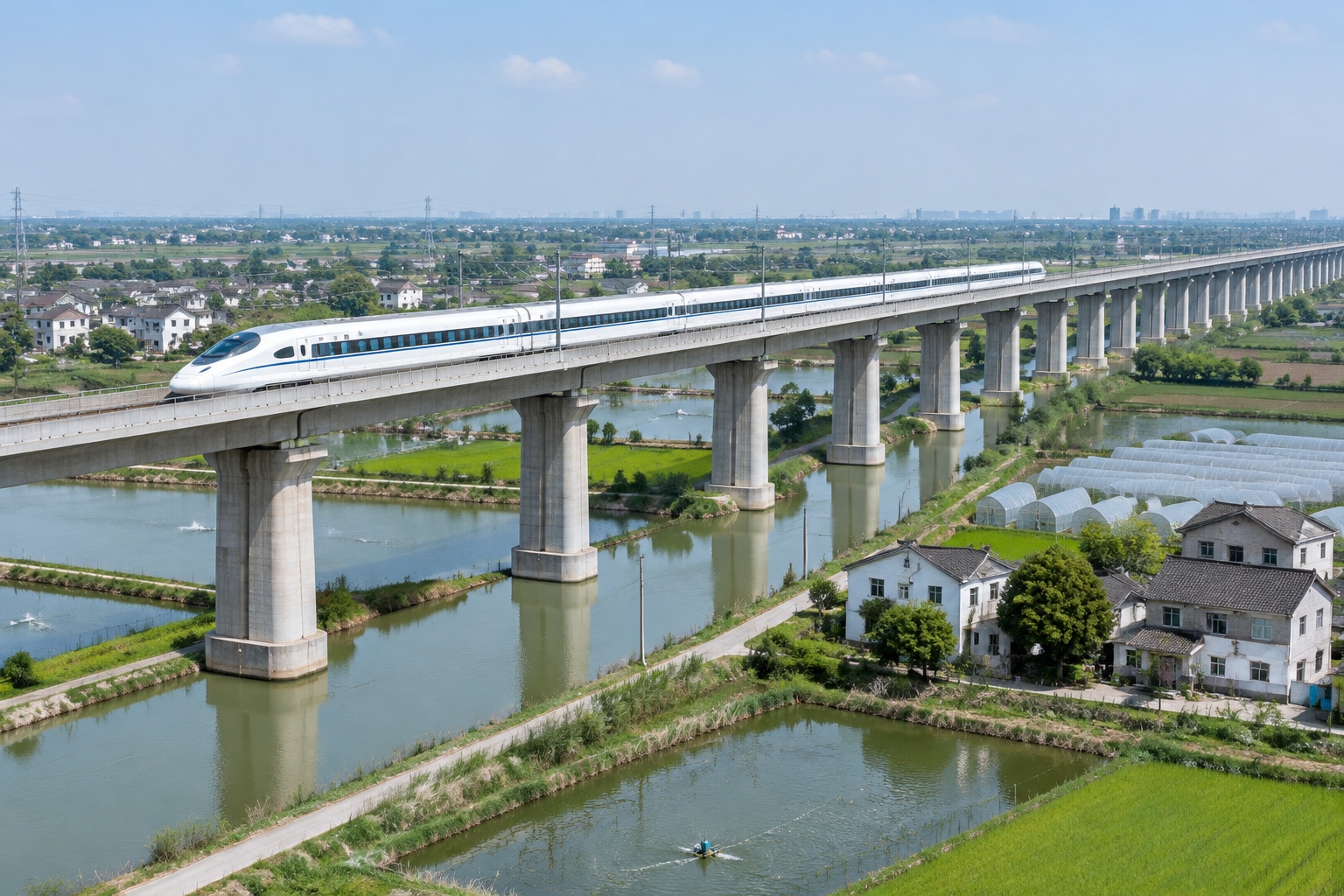
- Danyang–Kunshan Grand Bridge (2011). At about 164.8 kilometres, it is usually called the longest bridge in the world. In practice it is a very long viaduct carrying the Beijing–Shanghai high-speed railway over soft delta ground, canals and farmland so trains can hold their speed.
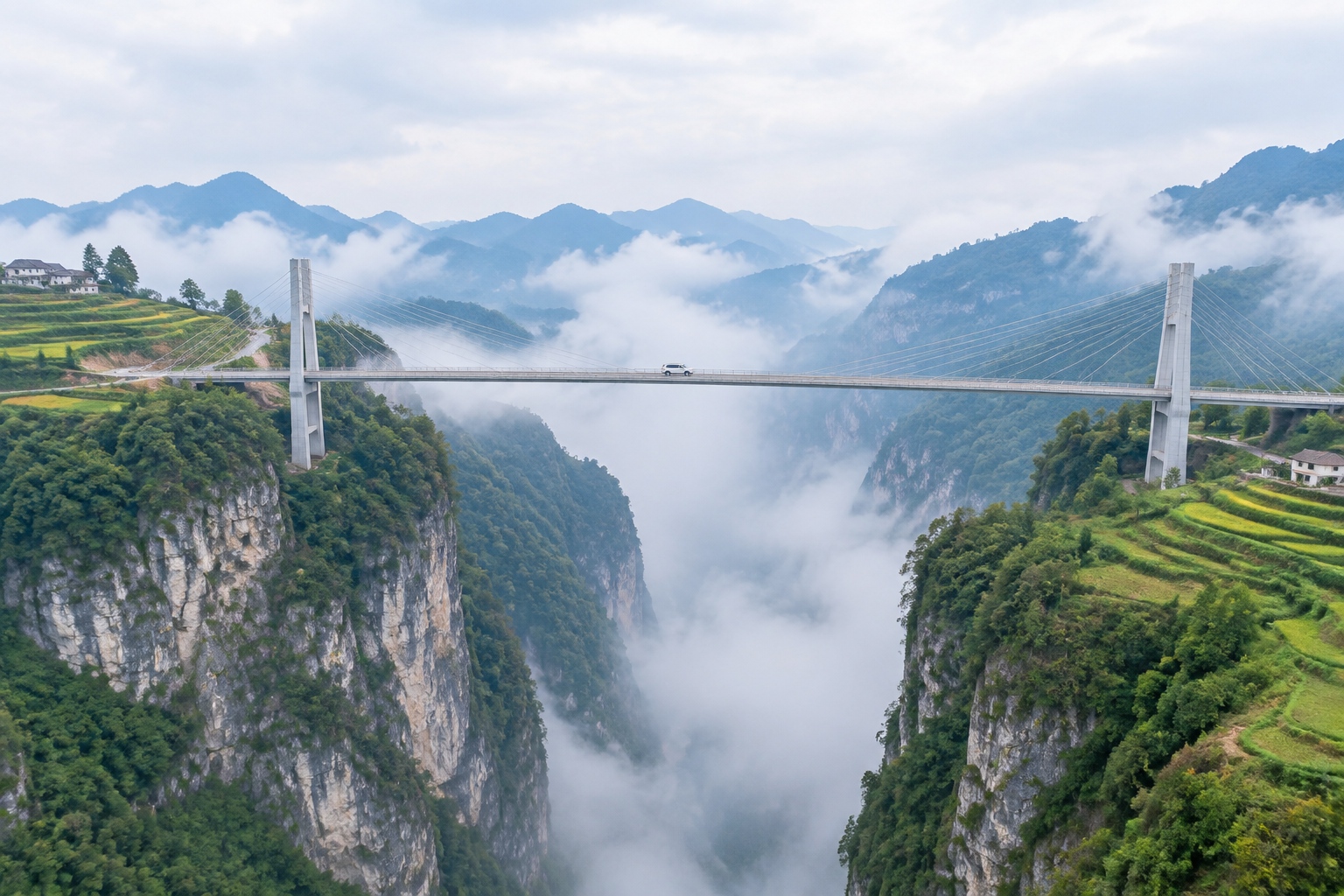
- Beipanjiang Bridge, Guizhou (2016). A 1,341-metre span with the deck about 565 metres above the river — briefly the world’s highest bridge. It turned a mountain crossing measured in hours into one measured in minutes.
- Pingtan Strait Bridge (2020). A 16.3-kilometre road-and-rail bridge to Pingtan Island in Fujian, built in a strait known for typhoons and heavy seas. Crews worked from an offshore platform that had to survive the same weather they were building through.
- Shanghai–Suzhou–Nantong Yangtze River Bridge (2020). An 11-kilometre crossing whose 1,092-metre main span was the first cable-stayed span over a kilometre designed to carry both cars and trains. It brought Nantong, north of the Yangtze, within about an hour of Shanghai by rail.
What changes on the ground
The clearest change is time. Nantong residents now take trains to Shanghai jobs instead of inching across an older bridge by bus. A Shenzhen company can put a warehouse or a supplier in Zhongshan and still visit it in the afternoon. Pingtan, once a ferry trip, became a weekend destination, and islanders have turned spare rooms into guesthouses.
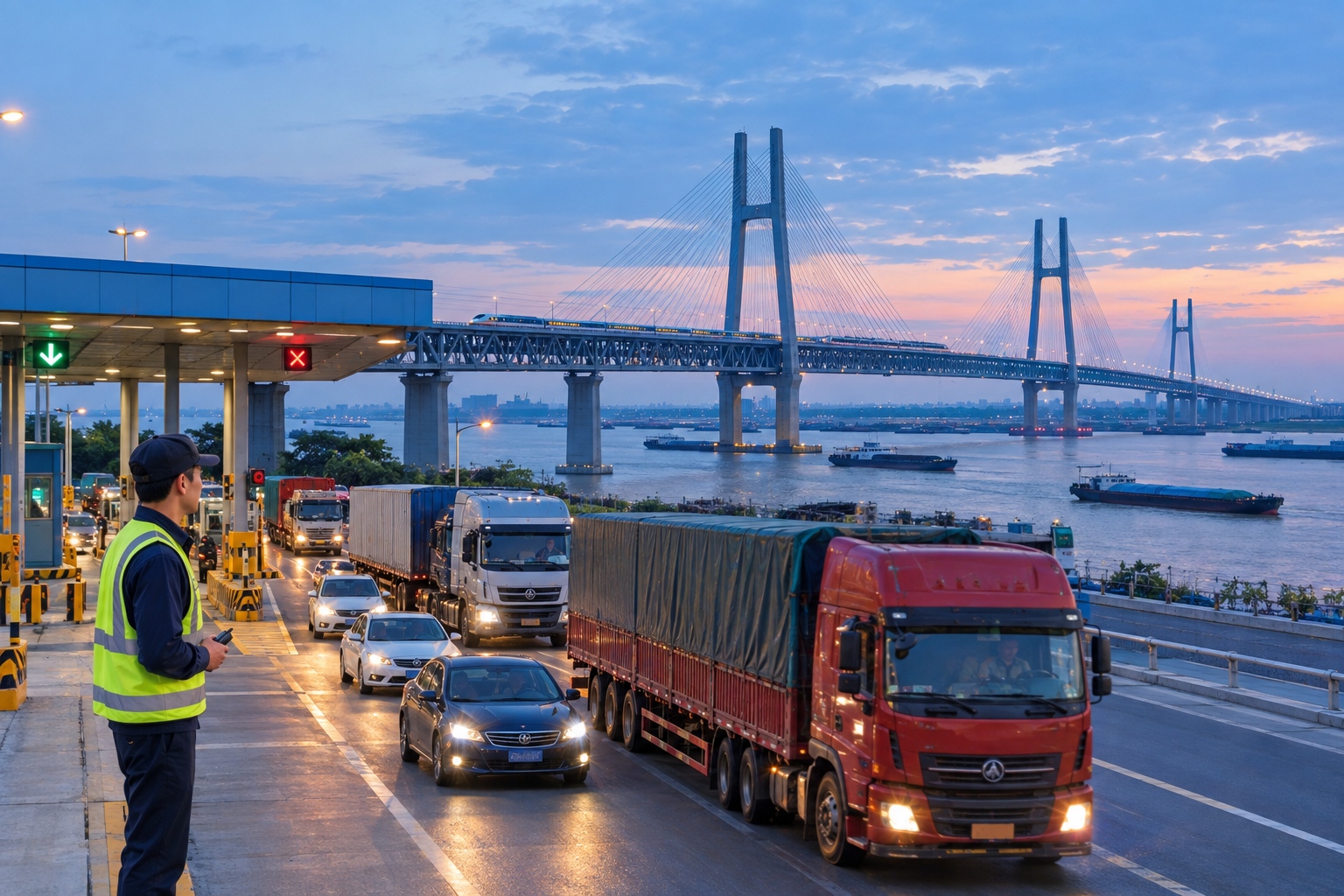
Logistics is less visible but bigger in money terms. A truck that saves two hours a day makes more runs a month; a factory that receives parts overnight can hold smaller inventories. Tourism follows bridges too — the Beipanjiang Bridge added a viewing platform and a small local trade in people stopping to look at the thing they used to drive over without thinking.
The parts that do not fit the postcard
Not every crossing performs as promised, and Chinese media and academics say so openly. The Hong Kong–Zhuhai–Macao Bridge is the standard example. The engineering is not in dispute, but for its first years traffic ran well below early expectations, partly because crossing it in a private car requires a quota, a special licence and cross-border insurance. The bottleneck was never the water; it was the border. Likewise, the toll of around 66 yuan (about US$9) on the Shenzhen–Zhongshan Link is real money for daily commuters, which is why cross-city buses and carpooling schemes matter as much as the concrete.
There are quieter questions too: what a new bridge does to property prices on the newly connected side, whether a small town gains a commuter boom or just a through-road, and how a very large structure changes a river or a fishing ground. These are the same debates that surround big infrastructure in Europe and North America. They are not a uniquely Chinese problem, and building faster does not make them disappear.
How to read the next bridge story
As the series moves to individual bridges, each piece will ask the same four questions. Who actually crosses it, and how often? What did that journey cost before, in hours and in money? Who paid to build it, and who is still paying through tolls? And what has appeared on the ground since — warehouses, guesthouses, half-empty bus lanes, or something nobody predicted?
Answer those four and the slogans dissolve on their own. Bridges are not symbols. They are decisions about who gets to be close to whom. The interesting part is always what people do with the distance once it is gone.
Start the discussion at forum.chinacomes.com