
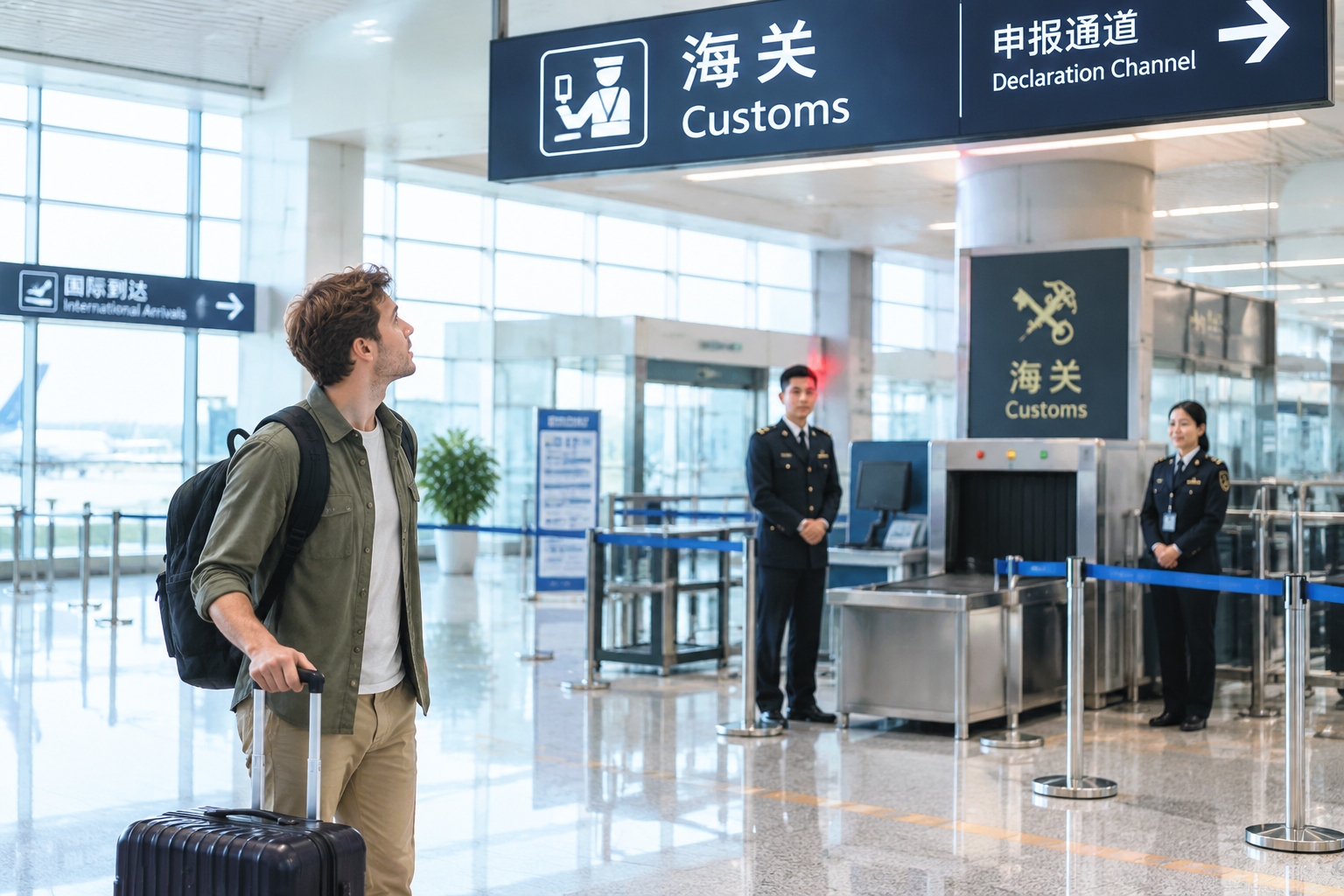

When you first land at a Chinese airport, the customs hall can look deceptively quiet. Most passengers walk straight through the green channel, and nobody stops them. But that calm hides a detailed web of duty-free allowances and tax brackets. Whether you are arriving in Shanghai with two weeks of shopping, or waiting at home for a birthday package from London, the rules are not hard to understand once someone explains how they are structured.
The “baggage and postal articles” tax: one tax instead of a maze
China’s customs uses a special simplified import tax, officially called the “duty on luggage and postal articles,” for goods carried by a traveller or sent by post or courier for personal use. It applies in place of regular import duties and value-added tax. You do not need a company or a customs registration number. The calculation is usually simply: dutiable value × rate.
This means that a tourist’s handbag, a pair of socks, an expensive skin cream and a bottle of whisky are all subject to one of three rates, not a long product-by-product schedule.
Three tax rates: 13%, 20% and 50%
The three rates currently in use for ordinary inbound personal articles are 13 per cent, 20 per cent and 50 per cent. Since April 2019, these have been the standard brackets. The exact classification is published in customs guidance, but the practical map looks like this:
- 13% (Category 1) covers everyday items such as food, beverages, medicines, books, magazines, laptop computers, digital cameras, phones and many household “smart” devices. That is why a returning traveller pays only 13% on a new phone.
- 20% (Category 2) covers most general consumer goods: clothing, shoes, hats, scarves, bags, suitcases, textiles, sportswear and common sports goods, ordinary watches, bicycles, small electrical appliances and normal cosmetics.
- 50% (Category 3) is reserved for goods that customs considers luxury or heavily restricted: tobacco and alcohol, precious jewellery, golf equipment, watches with a price at or above ¥10,000, and high-end cosmetics (generally those at or above ¥10 per millilitre or gram).
How customs decides what your goods are worth
Customs does not simply trust the tag on the box. China Customs uses an official dutiable value list for hundreds of common items. When you declare something, the officer compares the actual price on your receipt with this list. The working rule is:
- if your actual purchase price is between half and double the official list value, the actual price is accepted; and
- if your price is outside that range, or you have no receipt, the officer uses the listed value or may independently appraise it.
So always keep receipts. If customs wants to tax you at ¥2,000 for a jacket you bought for ¥900, showing the invoice usually solves the problem. For second-hand goods you already own, no tax is generally payable if you take them with you as personal effects. The issue starts with new items bought specifically before the trip.
Traveller’s luggage: ¥5,000 for residents, ¥2,000 for visitors
The allowance for goods carried on your person is not the same for everyone.
Resident travellers — people who live in mainland China — may bring goods bought abroad with a total value of no more than ¥5,000 without paying duty. In addition, they can buy goods at an “inbound duty-free shop” in the arrival port and combine that amount with goods from abroad, raising the tax-free total to ¥8,000. Suppose you land in Beijing after a holiday in Europe with gifts worth ¥4,000 and another ¥1,500 from the arrival duty-free shop. The total is ¥5,500, which stays under ¥8,000, so no duty is due. However, if your purchases from abroad alone exceed ¥5,000, the excess amount is dutiable. If that item is a single article costing more than the limit, customs often taxes the full value of the item rather than just the excess.
Non-resident travellers (foreign tourists and business visitors) have a lower threshold: ¥2,000 for goods they intend to leave in China. If you are a visitor bringing a few gifts, keep their value under ¥2,000. Personal effects you plan to carry back with you, such as a camera or the clothes you are wearing, are not counted as part of this allowance.
A separate rule applies to alcohol and tobacco: they have strict quantity limits even when their total value is inside the tax-free allowance.
Mail and courier packages: ¥1,000 per parcel, and the ¥50 “floor”
For sending items from abroad to someone in China by post or express courier, the system is more restrictive.
Since 2010, for personal mailed items, each parcel sent from Hong Kong, Macao or Taiwan may have a value not exceeding ¥800. From the rest of the world, the limit is ¥1,000. That is the total declared value of the contents. If the parcel contains a single indivisible article, such as a handbag or a laptop, it may still be allowed as a personal item even above the limit, as long as customs is satisfied that it is genuinely for personal use. But multiple items in one package whose total goes over the limit normally cannot be cleared under the parcel rules.
The second key is the 50-yuan rule: if the calculated duty is ¥50 or less, no duty is actually collected. This is why a book worth ¥120 at 13% yields no payment (¥15.60 is below ¥50) and a small low-cost gift can arrive duty-free.
Courier companies (DHL, FedEx, UPS, SF Express) operate under the same broad regime, but they usually require a more formal declaration. If a courier package has multiple items and the value is over ¥1,000, the recipient may need to use a customs broker or the package may be returned.
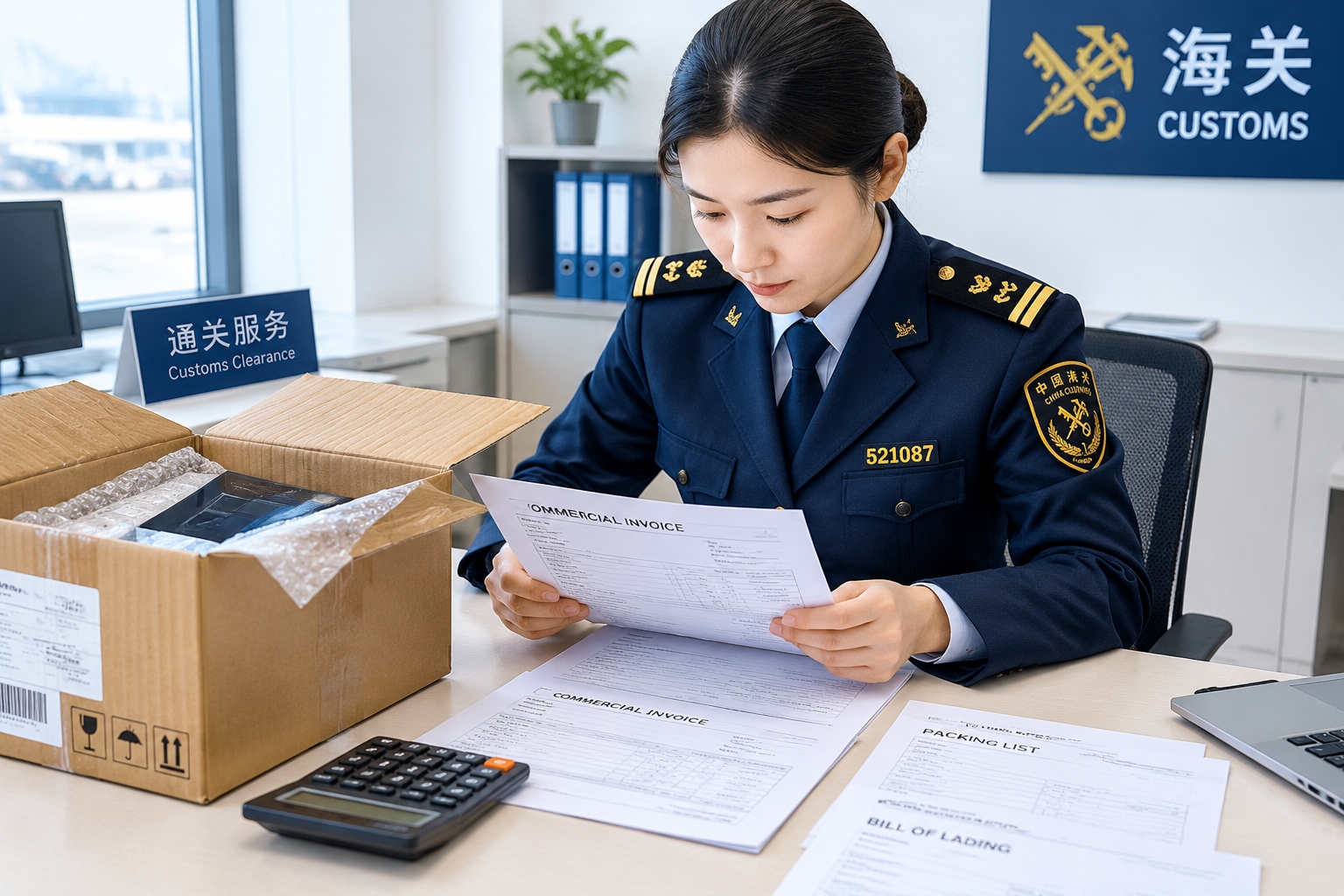
One important distinction: if you buy through a cross-border e-commerce platform registered with China Customs, your order follows a different mechanism, not the baggage-and-postal tax. That system has its own single-transaction limit (currently ¥5,000) and a blended tax rate that does not use the ¥50 exemption. For private mail and personal gifts, the rules explained here remain the default.
Calculate the tax: a few realistic examples
Let’s put numbers on the rules.
- Resident returning from Japan. She buys clothes worth ¥6,000. The first ¥5,000 is duty-free, and the excess ¥1,000 is taxed at 20%, so the bill is ¥200. If she instead buys one camera worth ¥8,000, the camera is an indivisible article, so the whole value may be taxed at 13%: ¥1,040.
- Birthday parcel from Canada. A sweater is declared at ¥700. Clothing/textiles fall in the 20% bracket, so duty is ¥140. Since the parcel is under ¥1,000 and the duty exceeds ¥50, the recipient must pay ¥140 before delivery.
- High-end perfume from France. A single bottle is declared at ¥900. Perfume of this type can fall in the high-end cosmetics category, taxed at 50%; the duty is ¥450. Because it is one indivisible item, the parcel can be cleared as a personal item even though the value is close to the ¥1,000 limit.
- Family box from the US with a cardigan and trainers. If the cardigan is ¥400 and the trainers ¥700, the total is ¥1,100 and there are two items. That parcel exceeds the ¥1,000 limit for non-HK/Macau/Taiwan mail and cannot normally be cleared as personal mail. It must either be returned to the sender or cleared by a licensed customs broker as cargo.
When customs decides it is no longer “personal”
Several actions can turn a small personal import into something much bigger:
- Splitting one order into several smaller packages to keep each below ¥1,000 may be considered evasion. Customs can intercept multiple parcels going to the same recipient and treat them together.
- Carrying obvious commercial quantities, such as fifteen mobile phones or fifty new T-shirts, triggers cargo rules. You would need a China-based importer, official paperwork and a commercial customs declaration.
- Under-declaring value is a common mistake. Customs can check e-commerce orders and payment records; providing a false declaration can lead to penalties or confiscation, and in serious cases to customs police involvement.
When a parcel is returned, the sender has to pay return shipping, and sometimes that cost is higher than the goods inside. Avoid unnecessary trouble by not pushing the limits of a single package.
Practical tips before you pack
- Keep receipts, invoices and online order confirmations.
- Keep your worn personal items separate from newly purchased goods so you can explain what is new if asked.
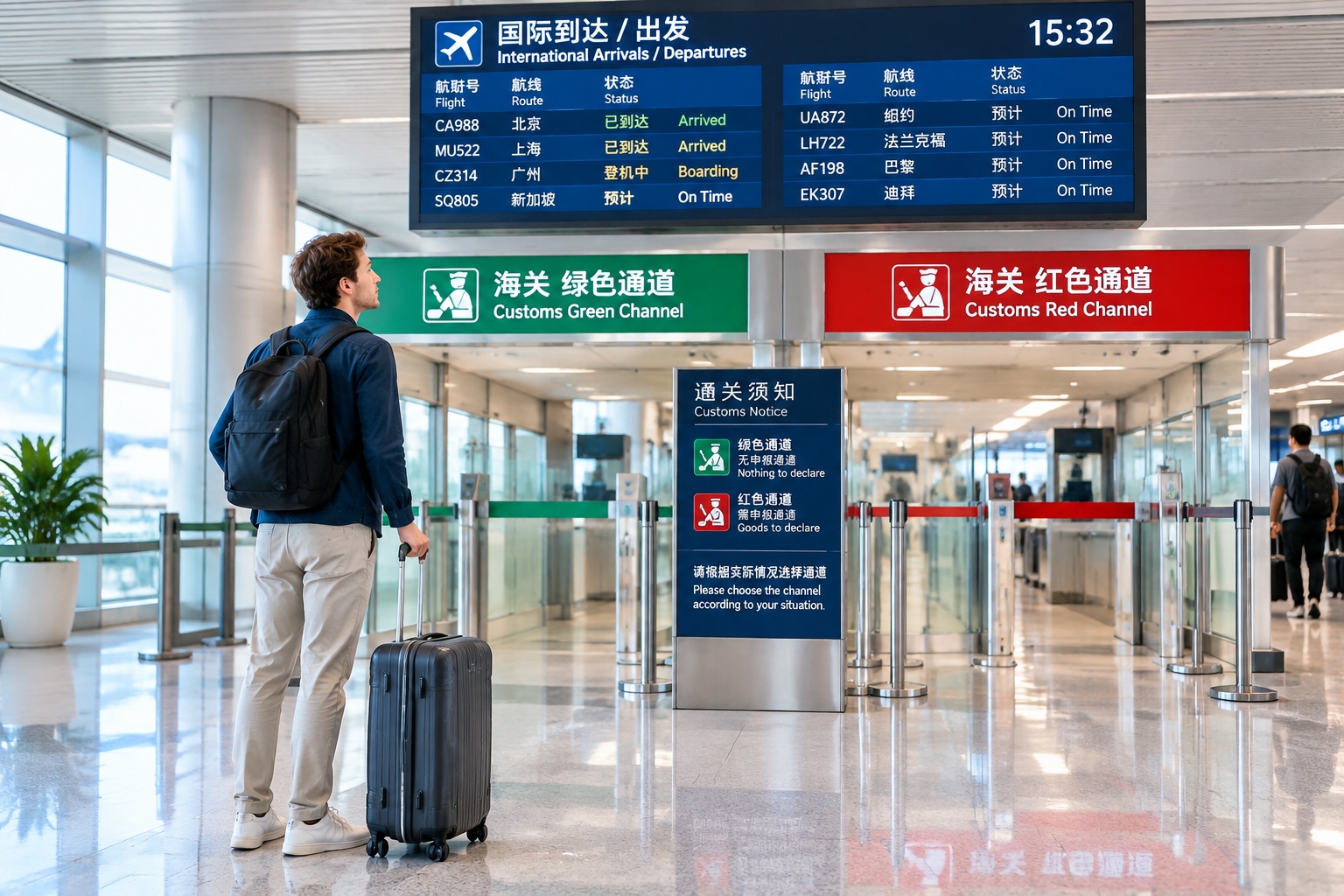
- If you know your new laptop is worth ¥9,000 and you are entering as a resident, use the red channel to ask about paying duty rather than slipping through the green channel and risking a false declaration.
- Do not send more than two or three similar items to the same address in the same week; a repeated pattern looks commercial.
- At the airport, duty can usually be paid by mobile payment at the customs desk, so queuing in the red channel is not as complicated as it seems.
The big picture
China’s rules for bringing in personal goods are designed to separate everyday personal use from commercial trading. If you understand the three rates, the parcel value limit, and the different exemptions for residents and non-residents, the outcome will rarely surprise you. Like any country, there are exceptions and small print, but the structure is clear.
Since duty regulations can change, before a major trip or before sending a high-value package, check the latest announcement from the General Administration of Customs of China, or ask a customs officer at the airport or port. A few minutes of checking can prevent your parcel from taking a long round-trip.
Start the discussion at forum.chinacomes.com