

A Taste of Germany in Eastern China
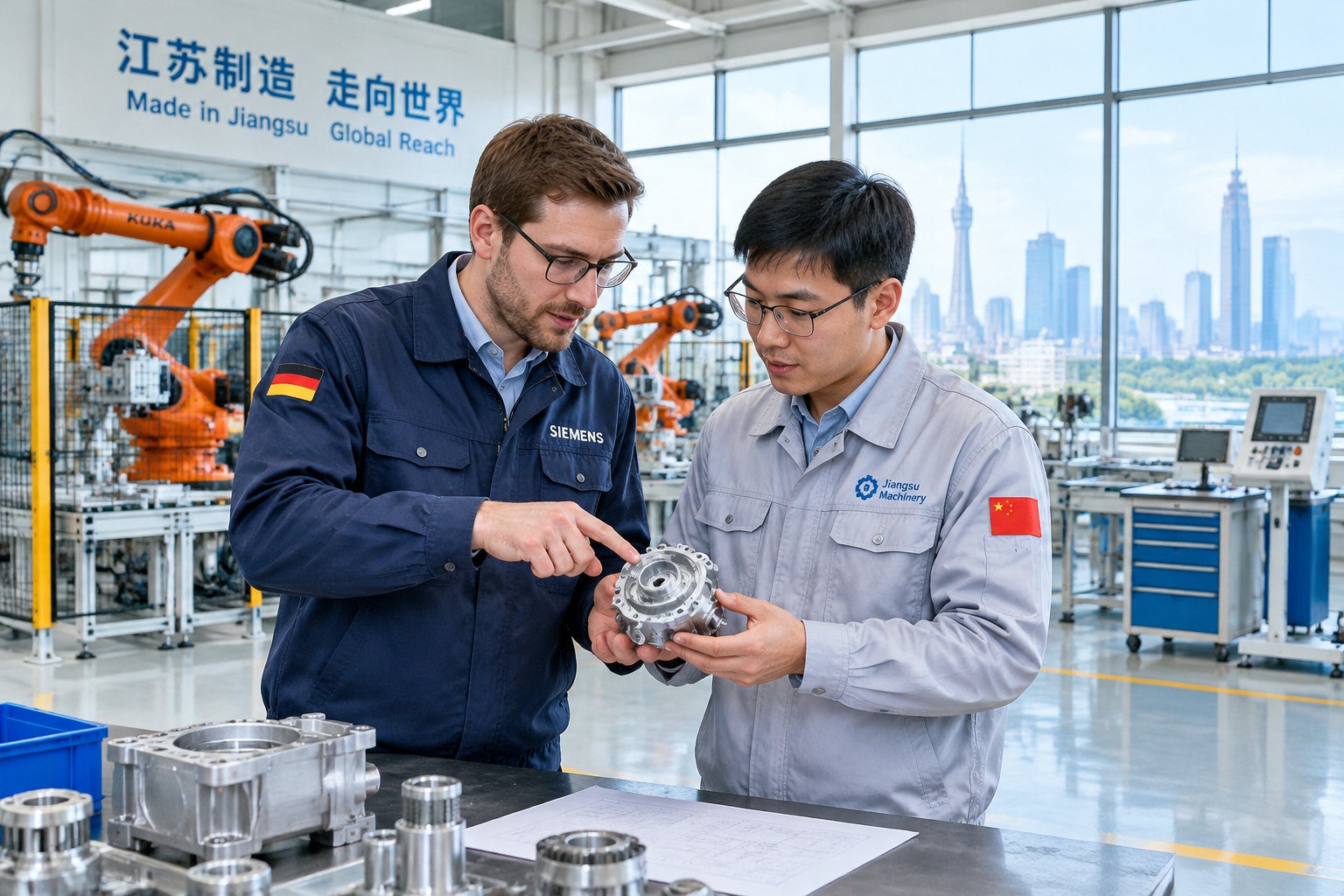
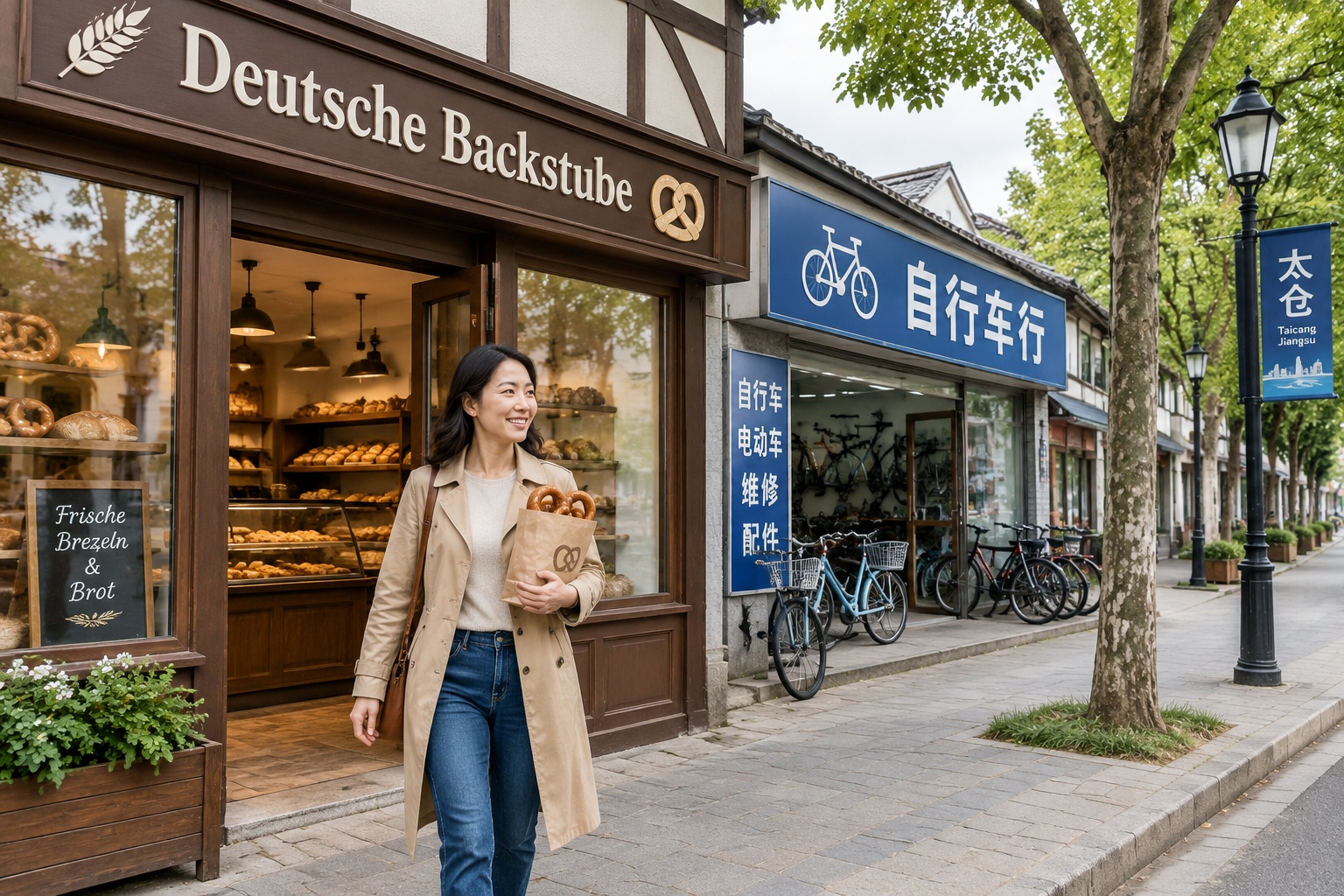
In Taicang, a county-level city in Jiangsu province, you can buy a warm pretzel at a German bakery, then walk past a sign that reads “Fachhochschule” and hear German spoken on the street. This is no European enclave—it’s home to more than 500 German companies, all doing business in one of China’s most manufacturing-dense provinces. Porsche has a plant here; Bosch runs a research center; hundreds of small and medium-sized “Mittelstand” firms make everything from fasteners to precision tools.
Why Jiangsu, Not the Cheapest Option
Foreign investors often assume China’s attraction is cheap labor. That’s outdated. Jiangsu’s wages are higher than in inland provinces. Yet German companies keep expanding. The real draw is the density of suppliers and engineers. If you are assembling a gearbox, you don’t need to import a specialty bolt from Germany—a supplier 20 kilometers away will deliver it the same day. One German plant manager in Suzhou told me: “When I need a new stamping die, I can have a working model in 72 hours. In Germany, it might take three weeks.” That speed is possible because Jiangsu sits in the Yangtze River Delta, a region with one of the world’s deepest industrial supply chains.
The Government’s Playbook: Less Bureaucracy, More Problem-Solving
For Western readers, the role of Chinese local government in economic development can be confusing. In Europe, municipalities often create rules and enforce them. In Jiangsu, officials see themselves as matchmakers. The city of Taicang built a dedicated “German center” that offers one-stop administrative services in German. They also publish “industrial chain maps” that show exactly where every component can be sourced. If a German firm needs a particular supplier, the city will help arrange introductions.
This support is not always smooth. Companies still complain about intellectual property concerns, environmental permits, and the occasional policy flip. But the underlying mentality is different: officials are measured by economic growth, so they treat each foreign investor as a long-term partner rather than a short-term cash cow. A comparison helps. In Germany, an investor waits for a permit to be approved; in Jiangsu, the approval officer might call you to ask if you need help expediting the paperwork.
Making the German Way Work with Chinese Talent
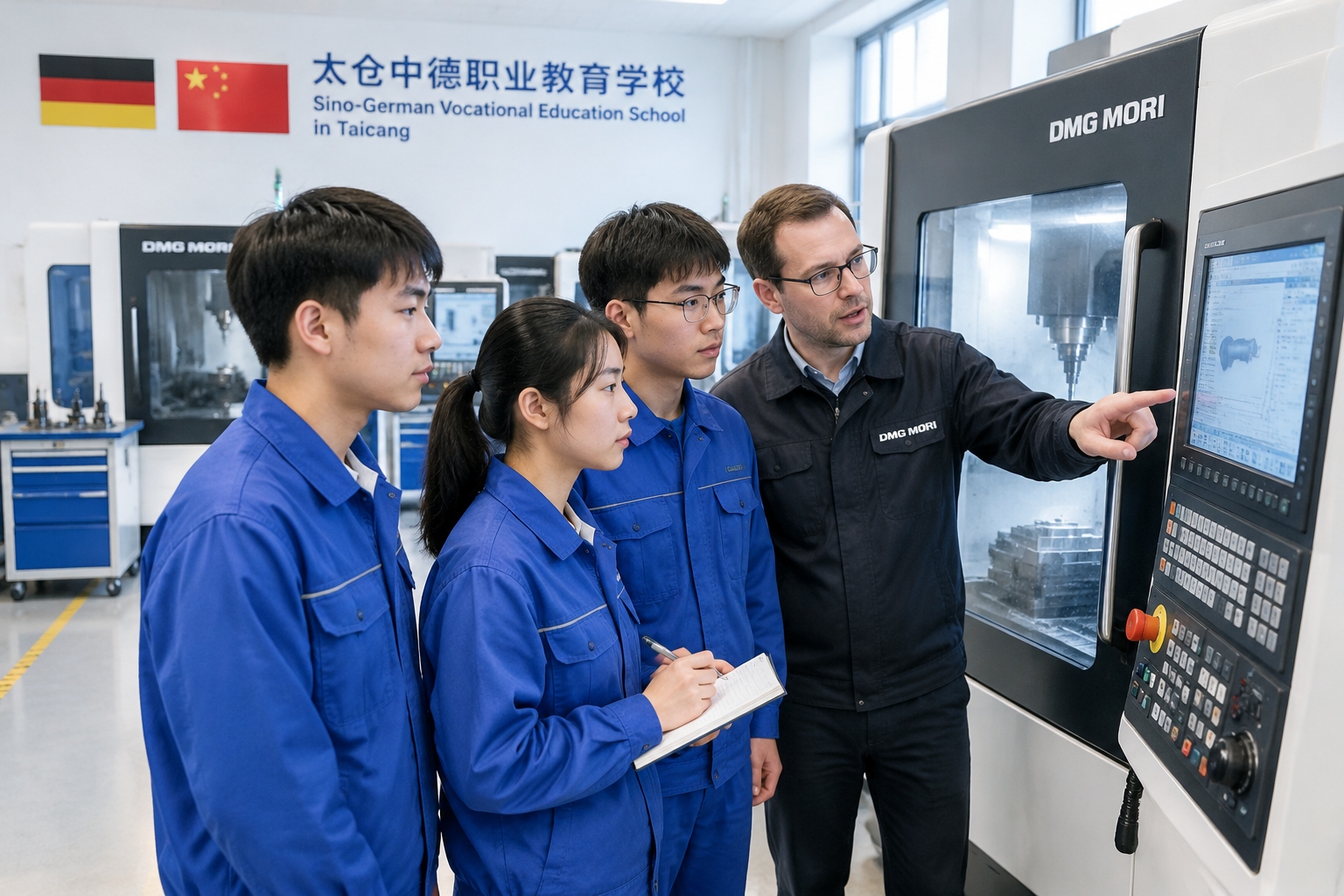
One of the most underappreciated reasons is vocational training. While many countries talk about copying the German “dual system,” Jiangsu actually did it. In Taicang, the Sino-German Vocational Education Training Center lets students split their time between classroom theory and hands-on work at German companies. Courses are taught partly in German and align with German standards. As a result, a young Chinese worker can operate a CNC machine to the same tolerances as an apprentice in Stuttgart. This creates a workforce that is both skilled and culturally bilingual.
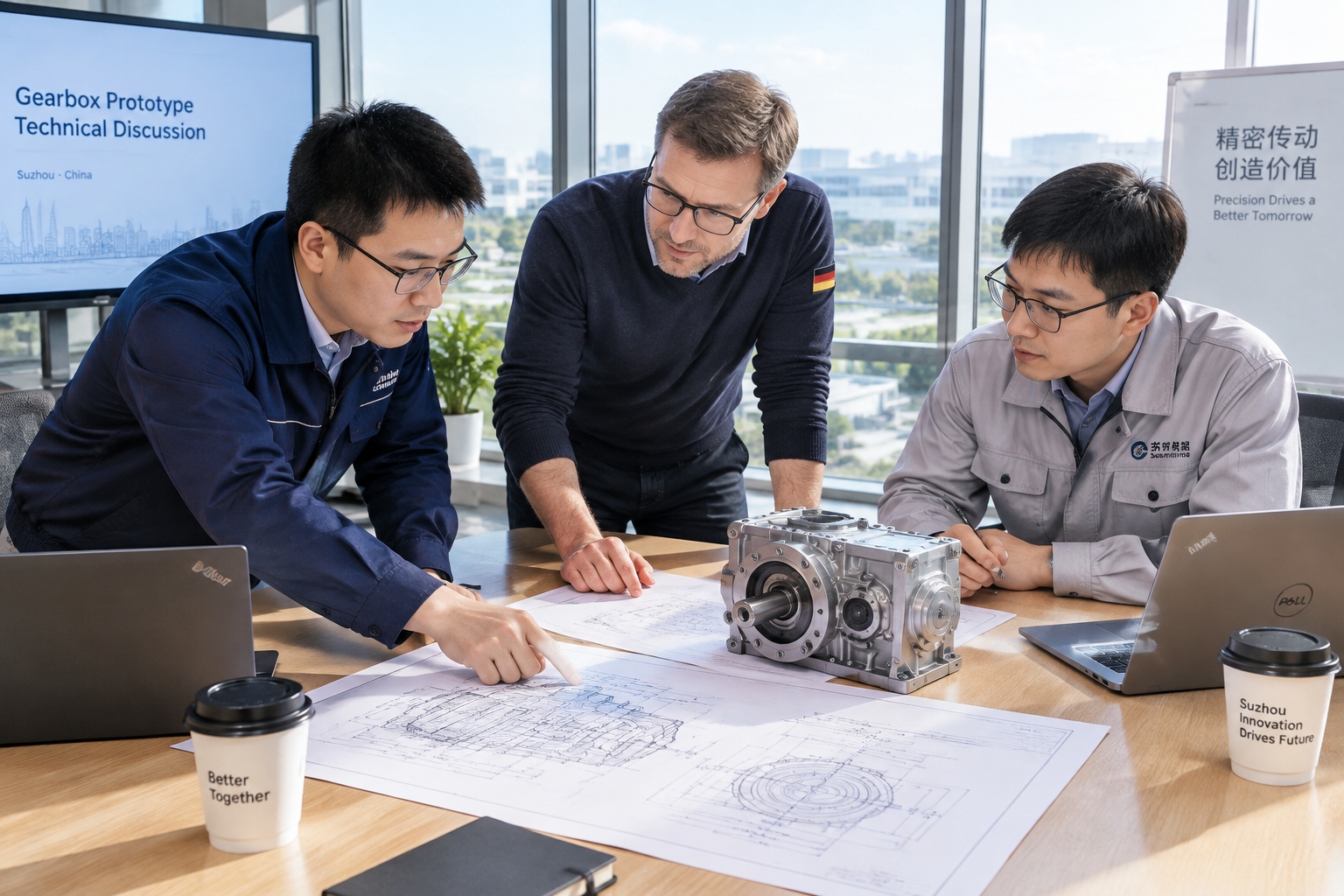
But cultural mixing is not automatic. German managers often want detailed documentation; Chinese engineers prefer fast iteration. The best teams learn to combine both. For instance, a German-owned automotive parts company in Jiangsu established a “war room” where Chinese and German engineers review failures together. They adopted Chinese speed for prototyping, but German methods for root-cause analysis. The plant now produces fewer defects than the parent factory in Germany.
Where the Expat Life Is Easier Than You Think
A common concern for German managers is lifestyle. Jiangsu addresses this with infrastructure. Taicang is a 30-minute train ride from Shanghai, which has major international airports and world-class hospitals. The city runs a German-speaking consulate service point, a German Evangelical church, and even a local German brewpub. Many expats say it feels like a quiet German town, but with more construction cranes and better public transport.
The cost of living for a foreign engineer is roughly 20–30% lower than in Shanghai, while housing is much better. Salaries for local staff are about 30–40% lower than in Germany, but so are living costs, and the pace of production is faster. For companies, this is a sweet spot.
What This Means for Your Business: A Practical Playbook
If you are an entrepreneur or manager considering a factory or R&D center in China, Jiangsu offers a tested path. Here are three concrete lessons from the German experience:
1. Choose a City by Cluster, Not by Map
Jiangsu’s cities are not identical. Suzhou excels in electronics and machinery, Changzhou focuses on new-energy vehicles and robotics, Nanjing has software and chemicals, and Taicang has a specialized German hub for precision engineering. Research which cluster is closest to your value chain before picking a location.
2. Ask for “Signature Services”
Local governments often offer customized policies for “leading industries.” If your company fits their priorities, you can negotiate land price reductions, tax rebates, and even special labor-training subsidies. Don’t be shy—the officials expect this kind of conversation.
3. Invest in Local Vocational Education
Instead of relying solely on university graduates, many successful German companies partner with technical colleges to create custom courses. This gives you a pipeline of workers who already understand your equipment and standards. It is a long-term investment that pays off faster than you might think.
The Limits of the Model
It would be dishonest to paint an entirely rosy picture. Rising land and labor costs are pushing some German firms to move to Vietnam or Mexico. Intellectual property protection remains a concern for R&D-heavy companies. And the pandemic period exposed the risks of over-reliance on one region. Yet despite these challenges, Jiangsu’s German community continues to grow. Why? Because the ecosystem is self-reinforcing: more suppliers attract more companies, which attract more talent, which attract better infrastructure.
A Relationship Built on Shared Temperaments
German companies are famously conservative, yet they have chosen Jiangsu for decades. The reason goes beyond economic incentives. Jiangsu, unlike other Chinese provinces, shares a certain German-style love for order. It is a place where contracts matter, where people value craftsmanship, and where the local government behaves more like a Mittelstand partner than a red-tape bureaucrat. In a time of global supply chain uncertainty, Jiangsu is not just a factory; it is a bridge between two industrial cultures.
For readers who have never been to China, this story is a reminder that “Made in China” includes complex engineering, not just cheap goods. The next time you see a German car brand, remember that a large part of its parts and software actually come from Jiangsu—and that this collaboration is built on a shared language of engineering.
Start the discussion at forum.chinacomes.com