

A Furnace That Stopped Smoking
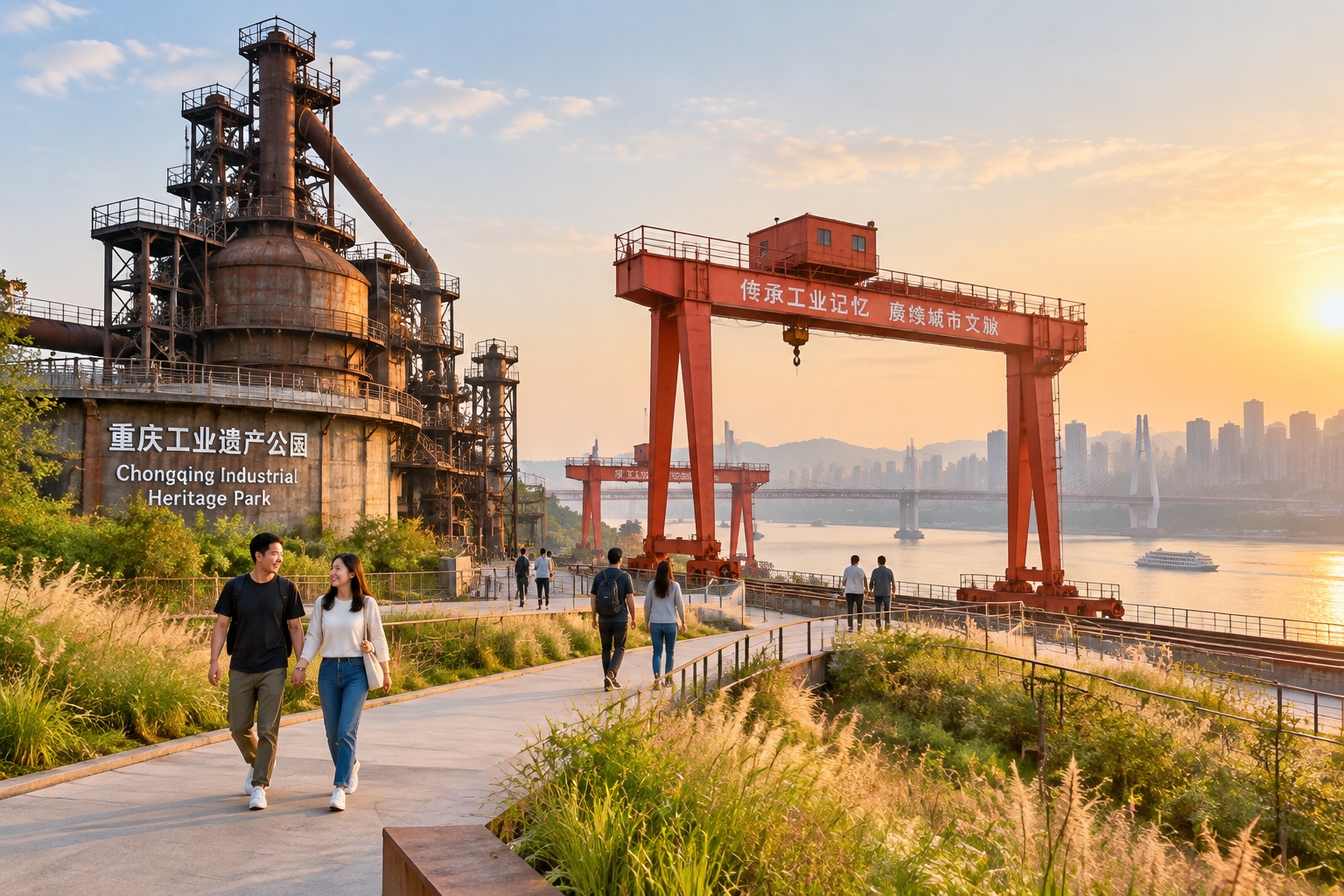
On a late spring afternoon, the old blast furnace in Dadukou still rises over the trees like a weather-beaten monument. The air smells of rust, river mud, and cut grass. Barges hoot somewhere downstream, and the wind carries the low hum of traffic across the Yangtze’s wide brown channel.
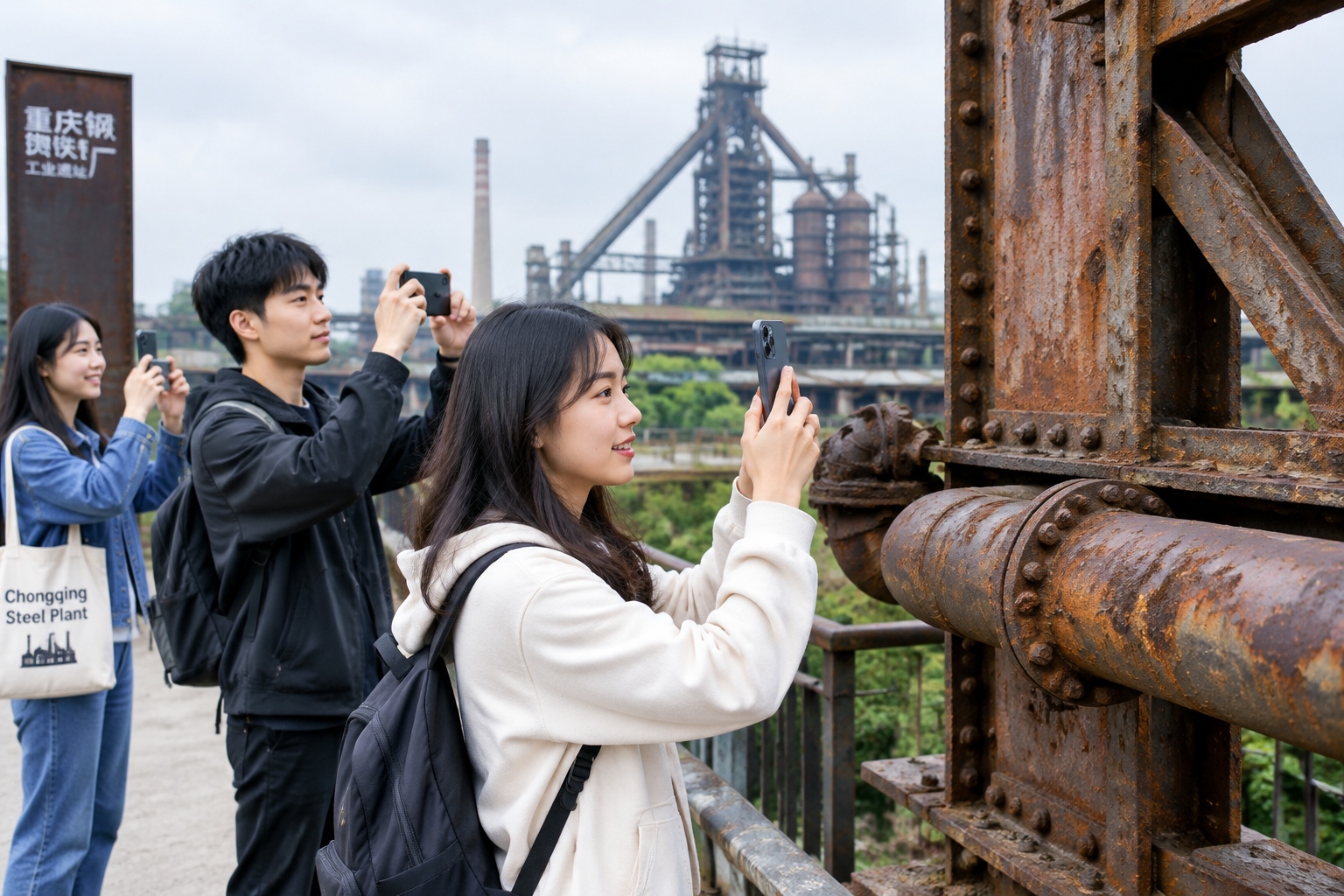
People walk slowly along new paths laid down between abandoned ore bunkers and gantry cranes. A child runs ahead, chasing the light rail that now marks the old rail corridor. A woman in a white sweater lifts her phone and photographs the huge steel ribs above her. No one here is in a hurry.
This is what’s left of Chongqing Steel, once one of China’s most important heavy-industrial plants. The new place is called the Chongqing Industrial Heritage Park, but many locals simply call it “the old steel plant.” It has become a strange kind of urban feature: a ruin park where history is left in place, not cleaned away and forgotten.
From Hanyang to the Mountain City
Chongqing Steel’s roots go back further than most visitors expect. The company’s lineage begins with the Hanyang Iron Works, founded in 1890 in Wuhan by Zhang Zhidong, a reformist Qing official who wanted China to build its own weapons and rails. In 1938, as Japanese troops advanced inland, the Chinese government organised one of the most dramatic industrial relocations of the 20th century: entire factories were crated up and shipped up the Yangtze. Many ended up in Chongqing, the wartime capital. The steelworks was re-established on the outskirts of Dadukou, where the river offered transport and the valleys offered some camouflage from air raids.
For decades, the plant was a city in itself. Workers lived in brick dormitories, raised families in the attached elementary schools, and visited the company clinic when they were sick. The blast furnaces never stopped glowing. At its peak, Chongqing Steel produced almost two million tons of crude steel a year, and the wider district became known as the home of “steel and big industry.”
The Last Heat
That world changed after China joined the WTO and the steel market began to consolidate. Competition, environmental pressure, and land prices started to make the riverside site less viable. In 2011, the last heat was tapped at the old Dadukou plant. Production moved to a new, more efficient factory in Changshou, further down the Yangtze, where modern equipment and much stricter pollution controls made steel in a completely different way.
The old site had no obvious future. Its giant structures were expensive to maintain, and for a few years, the state-owned company considered simply tearing it all down and selling the land for apartments. That’s how many industrial towns across China have ended. But in Chongqing, officials, conservationists, and urban designers pushed for a different path: keep the heavy things, build a museum inside them, turn the zone into public space.
Turning Rust Into a Park
Opening the heritage park did not mean polishing the old plant into a fresh-looking attraction. The design team actively preserved the scars. Steel girders are left rusted. Rail tracks still disappear under gravel. Yellow-and-black safety signs from previous decades hang on workshop walls. Old production line machines stand in the open, and their housings are now galleries and classrooms.
Visitors can walk through a former turbine hall that now holds art exhibitions. In another building, the huge flywheel from an old steam generator sits under a skylight. The old locomotive depot has become a café, and the turning yard for trains is a flat open square where children learn to ride bicycles.
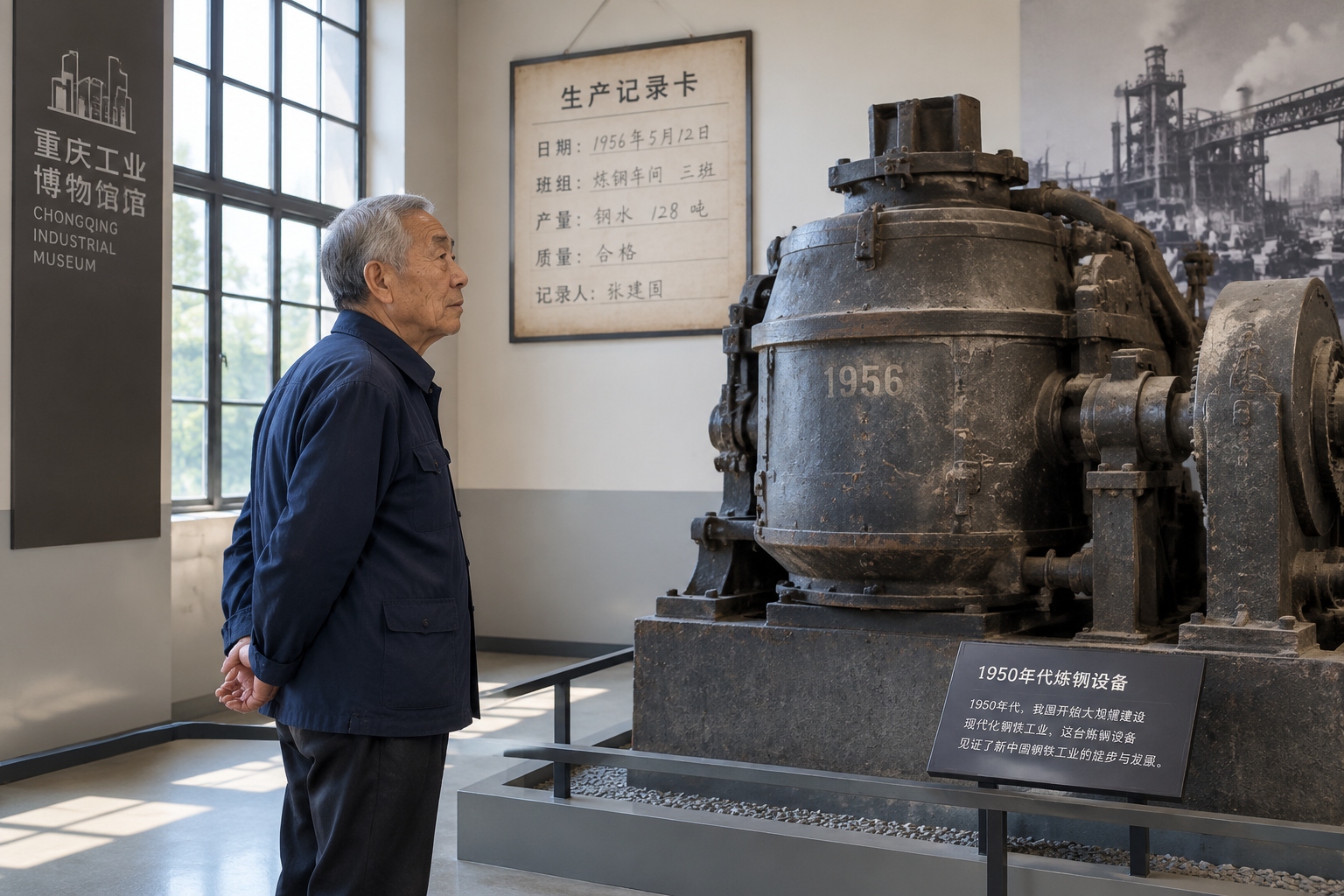
One of the most remarkable parts is the Chongqing Industrial Museum, which occupies part of the original plant. Its displays include a 1930s steel ladle, hand-drawn engineering plans, and portraits of the workers who kept the furnaces alive during the war. The museum doesn’t pretend that working in the smelter was poetic; the exhibits include the heavy protective equipment, the grime, and the long shifts.
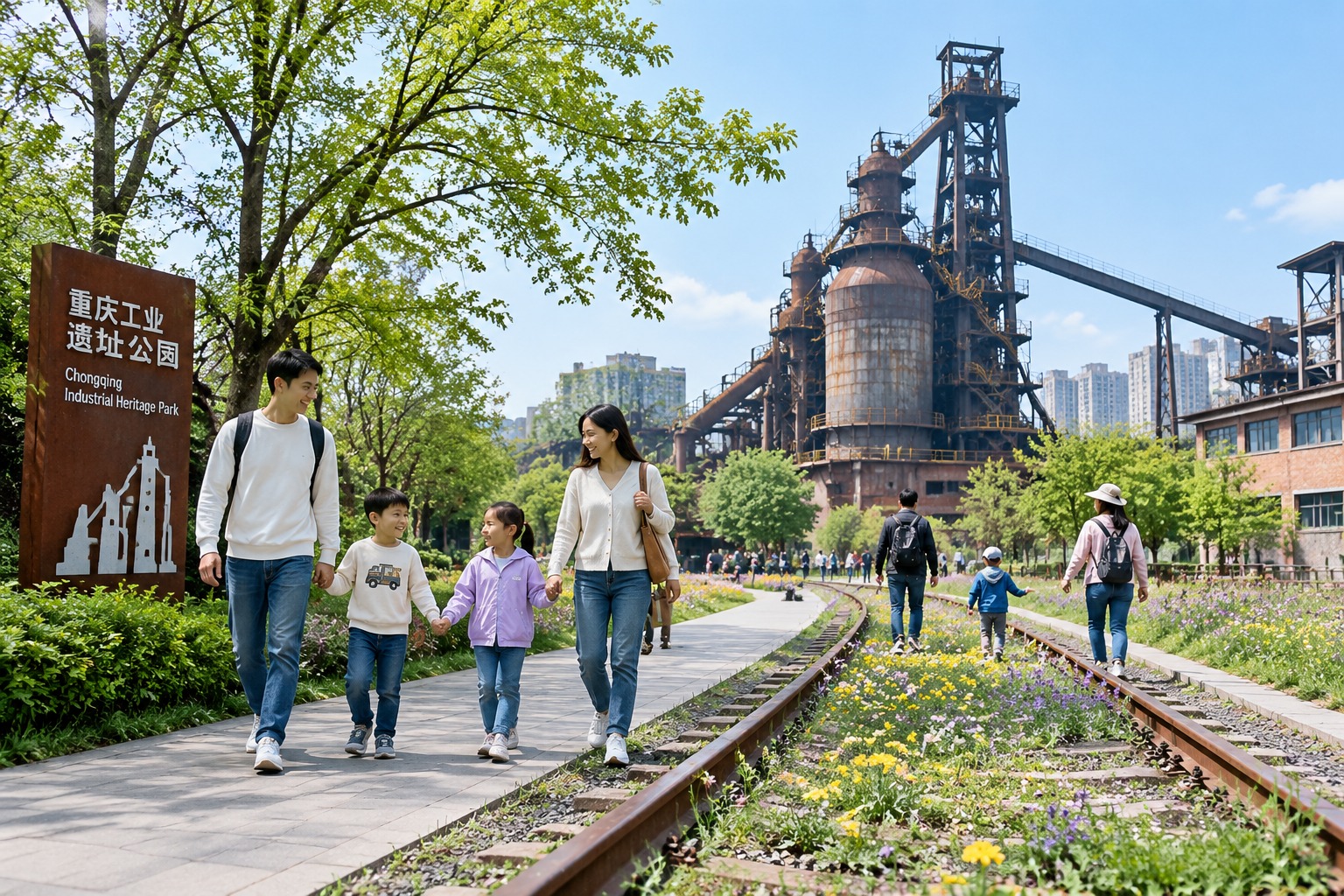
But a ruin park only works if people actually come. On weekends, the place fills with retired workers, young couples, and tourism coaches. Chen Jianguo, 68, worked in the rolling mill for 33 years. He now brings his grandson to the park nearly every Saturday. “It was not a beautiful place when I was young,” he says, standing in front of the old furnace. “But now I look at it and I see my whole life in it.”
A Model for Other Industrial Bases?
Chongqing’s industrial heritage park is one of many such projects across China. Beijing’s 798 art district was once a military electronics factory; Shanghai’s M50 began as a textile mill. But in the west, the projects are often larger, rougher, and more directly tied to the landscape.
The site sits beside the “Riverside Road,” part of a bigger project to reopen the Yangtze waterfront to the public. Walkers and cyclists come along the former rail path. The park connects to residential neighborhoods and bus routes, so it is not just a tourist enclave. At dusk, elderly residents practice tai chi near the old crane; a group of office workers sits on the grass with takeaway noodles.
The transformation reflects a broader pattern in China’s old industrial bases. Since the mid-2010s, the national government has developed policies to support the reuse of idle industrial land. Cities like Chongqing, Shenyang, Harbin, and Tangshan are trying to shift from smoky heavy industry to a mix of services, tech, and culture. Not every project succeeds. Some ruin parks end up empty and remote. But the best ones—and Chongqing’s seems to be one of them—manage to preserve memory while making the place genuinely useful today.
What the Ruins Tell Us
Steel production in Chongqing didn’t disappear; it moved. The new plant in Changshou still uses a degree of automation that makes the old way look almost prehistoric. But what the ruin park does is keep the old way visible. It helps a generation that never worked in the factory understand what “heavy industry” meant—how much coal, sweat, and iron was needed to make a bridge, a ship, or a bicycle frame.
On the evening I visited, a thin rain began to fall. People left the park slowly, and the blast furnace took on a dark silhouette against the yellow city lights on the opposite bank. A young father pointed up to the furnace and said to his daughter, “That’s what your grandfather used to call the dragon.” She didn’t understand, but she laughed. The dragon is not breathing fire anymore. But it still stands there, just as stubborn as the city it helped build.
Start the discussion at forum.chinacomes.com