
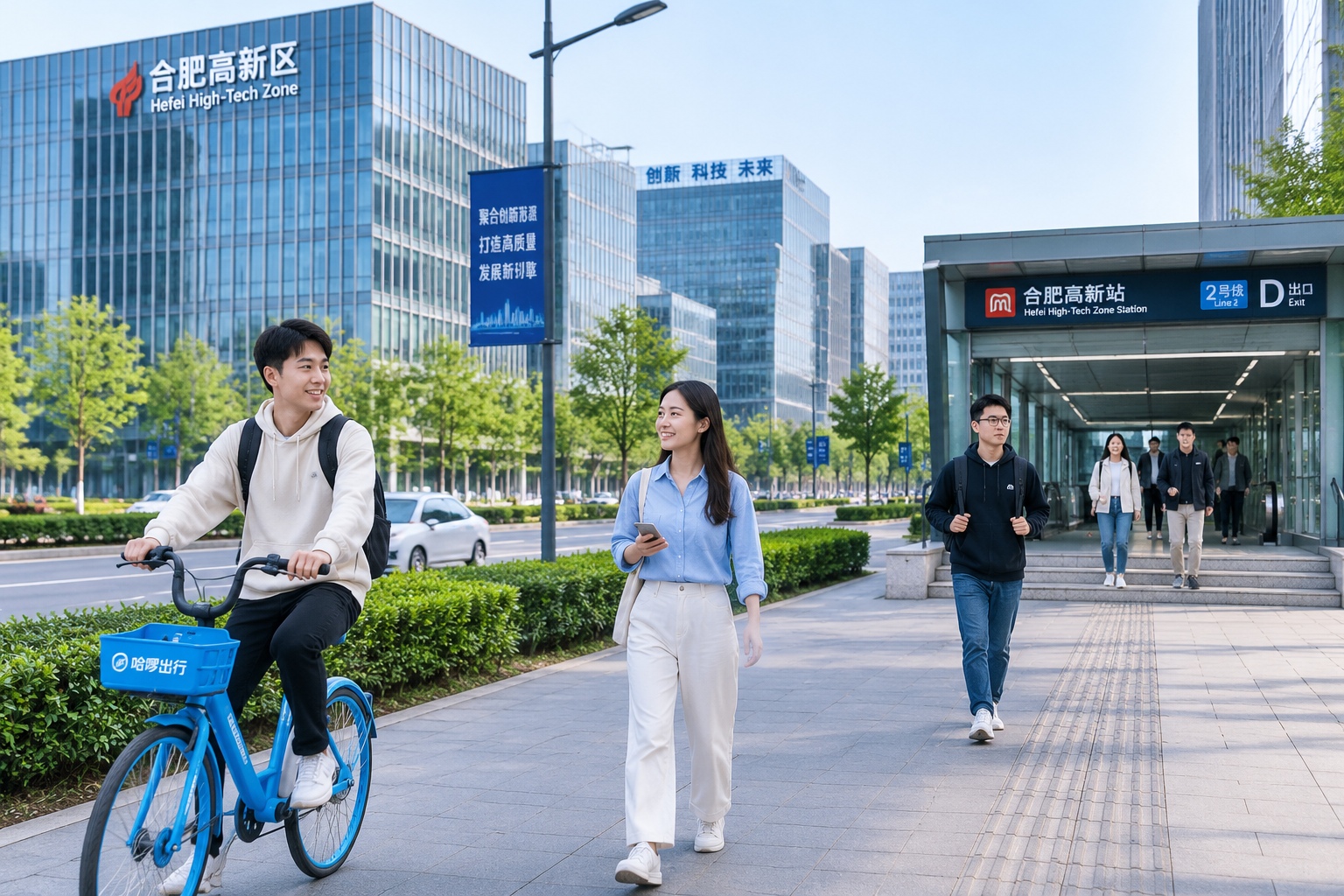

Morning: The Inflow
The gates of the Hefei High-Tech Zone are not grand. By 8:40 a.m., the wide sidewalks leading to research buildings fill with young people holding coffee cups in one hand and phones in the other. One of them is Li Min, 28, an algorithm engineer at a smart-sensor startup. She unlocks a shared bike from the rack near the metro exit, adjusts her backpack, and rides the last 300 meters to a six-story office building that looks like dozens of others in this district.
The lobby smells of fresh coffee and floor polish. Li Min swipes her card, nods at the security guard who already knows her face, and heads to the elevator. On the fourth floor, her team is already scattered around a long table. A whiteboard is covered with diagrams and sticky notes. Someone has written a phrase in red: “Off by 0.3 degrees.”
Hefei High-Tech Zone, established in 1991, is now home to more than 30,000 enterprises. The district includes state-backed research institutes and small startups working on quantum communication, electric vehicles, and everything in between. But at street level, it looks like a place where people simply go to work, not a science-fiction movie set.
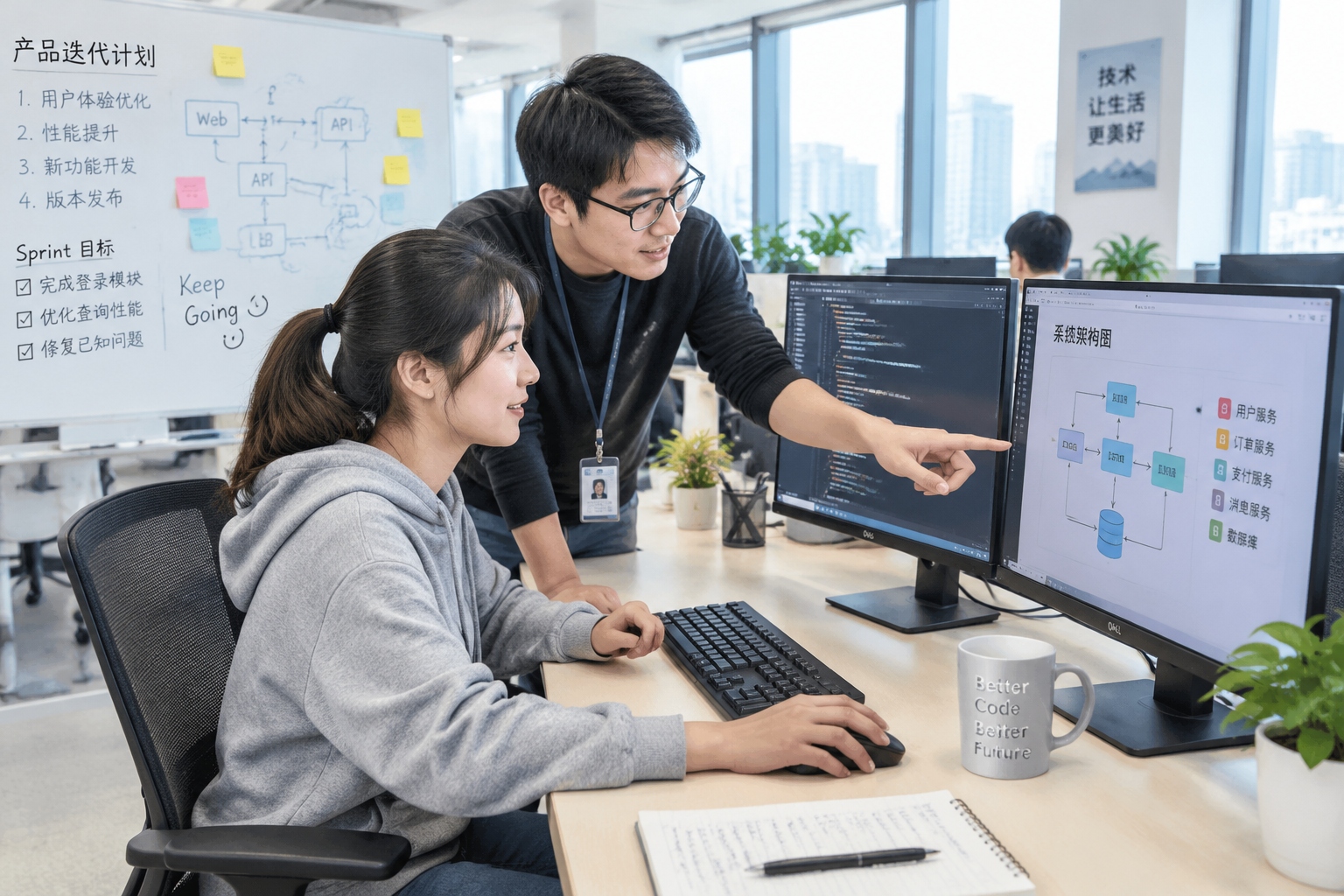
Work: The Lab and the Screen
Li Min’s job is to train algorithms that help industrial robots pick objects out of moving bins. At the morning stand-up, her colleague Xu Yang reports an issue: “The sensor array on car #4 is still drifting. The angle error is small, but the robot keeps missing the left edge.” Li Min takes notes on her phone. They discuss possible causes—temperature, vibration, a calibration file that might have been corrupted overnight.
By 10 a.m., she is back at her desk, surrounded by two monitors and a small notebook. Her code editor is open, showing a model that has been training through the night. She checks the loss curve, sees it hasn’t converged, and mutters something about learning rates. Another teammate jokes that the machine was “sleepwalking.” They laugh, but the laughter is brief.
In the lab next door, a technician is attaching tiny wires to a prototype board. A fan hums loudly to keep the equipment cool. Xu Yang is filming the robotic arm with his phone so the team can compare the visual feed with the sensor data. “Look at the lag,” he says, pointing to the screen. “It’s about 400 milliseconds. That’s enough for a system to become unreliable.”
This is the stuff that doesn’t make it into press releases. The challenges are not about headline-grabbing breakthroughs, but about tiny errors that compound. The teams here are not racing against time; they are wrestling with physics and software, one defect at a time.
Lunch: The Canteen Communal Table
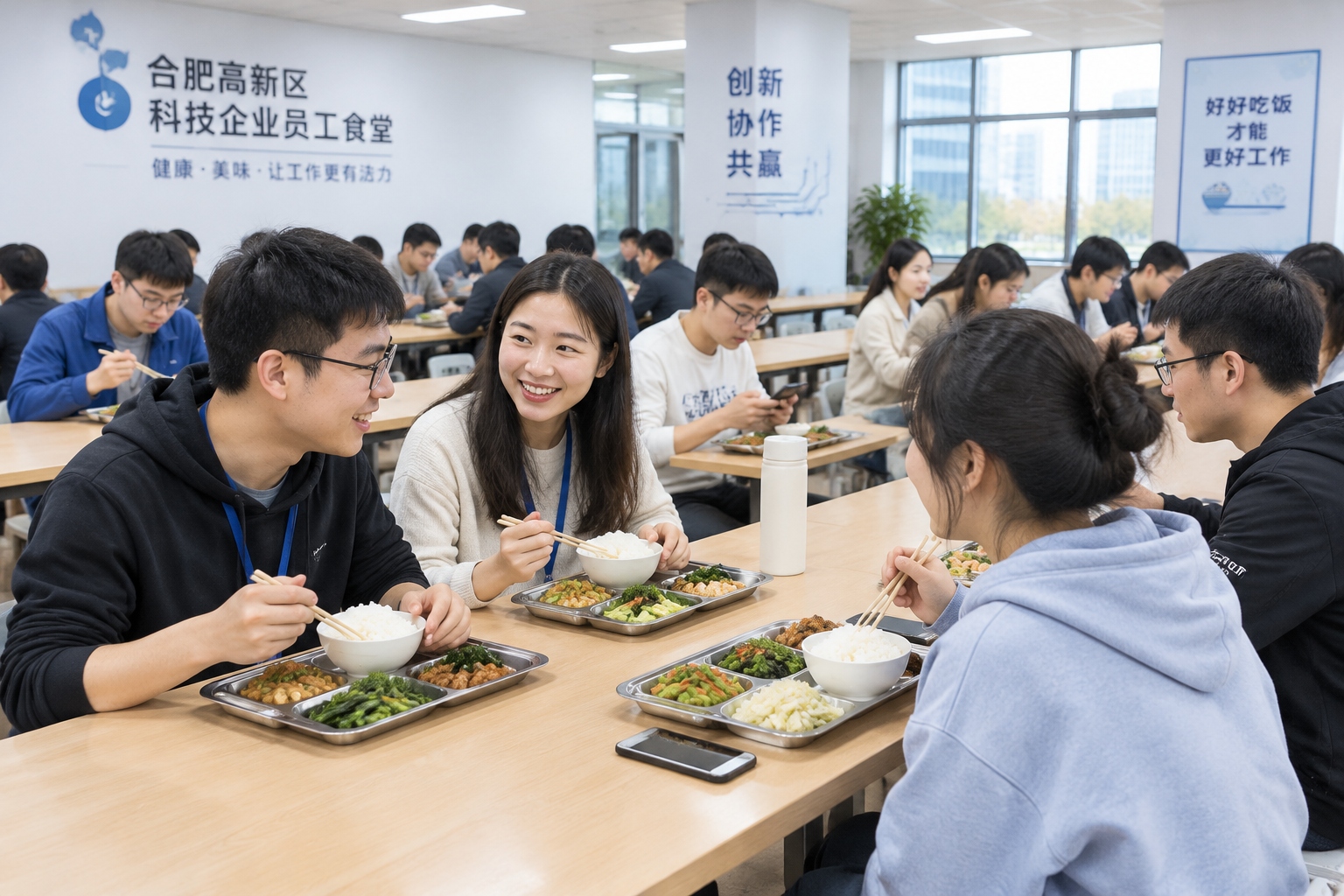
At noon, a bell rings—not from a church, but from the building’s intercom. Li Min puts down her pen and walks to the staff canteen on the second floor. The canteen is a fluorescent-lit, high-ceilinged room with long tables, some of which can seat twenty people. It serves Anhui-style dishes: braised pork, stir-fried green peppers, tofu skins, boiled fish. A meal costs around 15 to 20 yuan.
She sits down with three colleagues from a different department. The conversation is a mix of work talk, gossip, and complaints about the weather. “We’re hoping to ship the next version by June,” says a hardware engineer next to her. “But the board keeps overheating in the afternoon sun. We might have to redesign the heat sink.”
For many workers, lunch is the only time they step away from the screen. Outside the canteen, a small courtyard has a few benches under young trees. Some people eat quickly and then walk around the block. Others stay at the table to pull up code on their phones.
Afternoon: Calls, Tests, and Fixes
The afternoon starts with a video call to a supplier in Shenzhen. Li Min’s company buys camera modules from there, and the latest batch has a subtle lens distortion. She shares her screen and walks through the algorithm, pointing out where the distortion affects the depth calculation. “We can adjust in software,” she says, “but we’d rather have better hardware.” The supplier promises to send samples by Friday.
At 3 p.m., she moves to a shared lab to test an updated gaze-tracking model on an evaluation set. The room is empty except for a few workbenches and a camera stand. She runs the script, waits, and sees the accuracy has improved from 91.2% to 93.4%. That’s not enough for the client, who wants 97%. She saves the log and starts thinking about which part of the network to retrain.
In the studio next door, a designer is creating a mockup for a dashboard. She asks Li Min how to display confidence intervals without confusing users. They discuss the trade-offs between clarity and technical correctness. This kind of cross-functional collaboration is common in the zone, where the line between engineering and product is often blurred.
Evening: The Second Shift
By 6 p.m., some workers begin to leave. The bike racks outside the building slowly empty. But Li Min’s team has a weekly skills-sharing session on Fridays. She is presenting a paper on a new optimization technique she read last weekend. Around eight people gather in a meeting room, some eating takeout noodles, others taking notes. Li Min paces in front of the screen, drawing diagrams on the whiteboard.
The session lasts about an hour. When it ends, it’s nearly 7:30. Li Min checks her calendar: there’s still an unread message from a client in Germany. She types a brief reply, then shuts her laptop. The office floor quiets down. Only a few lights remain on, including the one in the hardware lab where a junior engineer is carefully soldering a small board.
She leaves the building at around 8 p.m. The sky has darkened, and the streetlights cast long shadows. The high-tech zone isn’t as dramatic at night as it is in the panoramic drone shots. It’s mostly empty sidewalks, a few delivery riders, and the soft hum of cooling systems on rooftops. She unlocks her phone to book a ride home—her apartment is about four metro stops away.
Beyond the Glass Towers: The Human Beat
What stands out about a day in Hefei High-Tech Zone is that it is both ordinary and intense. Overtime is common but not majestic. People are not driven by a vague sense of national ambition; they are driving themselves to solve a problem, ship a product, fix a bug that stood in the way of a demo.
The district’s growth is often told through statistics: output value, patent counts, or the number of unicorn startups. But for the individuals inside it, the technology park is just a place with cheap canteens, late-night buses, and a constant supply of coffee. The real rhythm is the one that plays out in the gaps between meetings, in the careful adjustment of a soldering iron, in the silent nod when a test finally passes.
As Li Min walks to the metro station, she scrolls through her phone and sees a raw photo from a team member in the lab: the robot arm, the three-dimensional point cloud, and a sticky note taped to the monitor that simply says, “Almost there.” Tomorrow, they will try again.
Start the discussion at forum.chinacomes.com