

Morning on the New Taiyuan
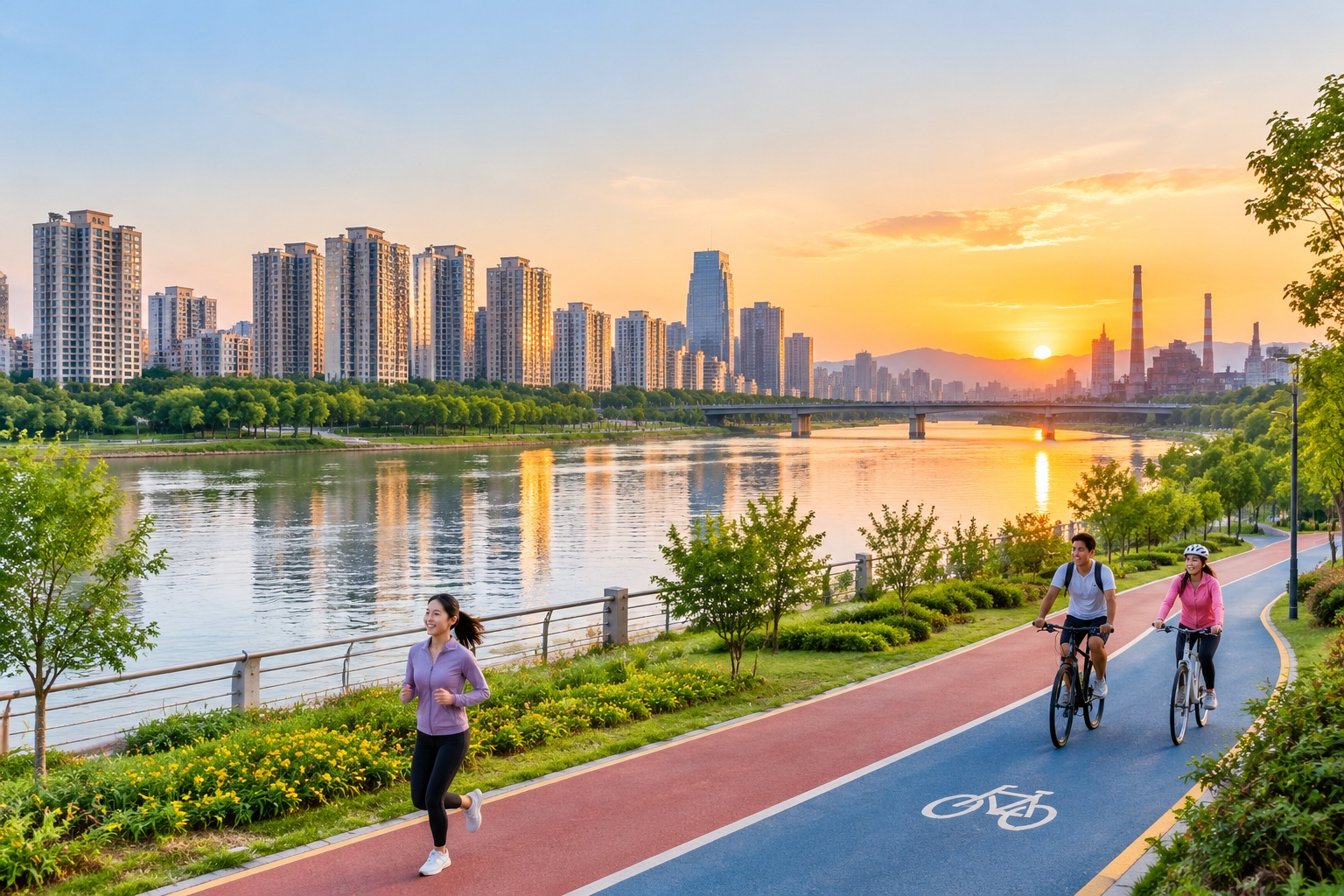
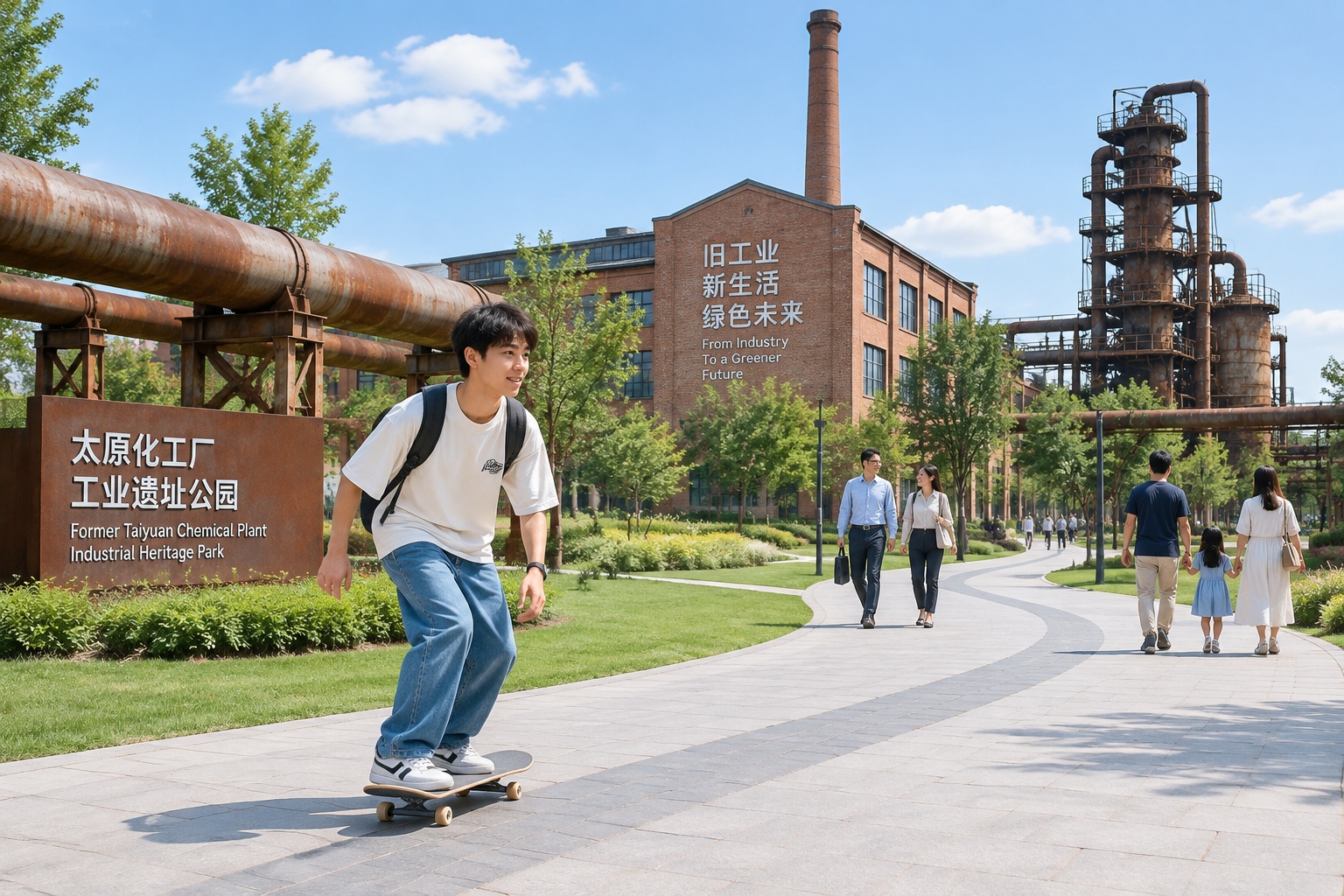
The first light catches the steel frame of a retired industrial boiler building at the former Taiyuan Chemical Plant, a complex built in the 1950s on the western shore of Jinyang Lake. For decades, it ranked among the city’s biggest producers of caustic soda and other heavy chemicals. The plant stopped production in the early 2010s. Now its red-brick office building and concrete reactor towers stand as quiet monuments among grass and young trees. A woman in her forties jogs past them on a path that didn’t exist before, headed toward the bright blue line of the lake. “I used to avoid this whole area,” she says, pausing to adjust her phone. “Even the air felt heavy. Now I come every morning.”
That transformation—from a heavy-industry stronghold to a place people actually want to live, walk and stay in—is not a slogan. It is a street-level, block-by-block process that has been playing out here for years. The city and its residents have become used to construction fences, fresh layers of dark asphalt and the occasional sound of demolition.
A City That Used to Smell Like Grief
Taiyuan once looked like the price of China’s industrialization, not the benefit. Located on the Loess Plateau and rich in coal and iron, it was a production machine for steel, machinery, chemicals and electricity. For much of the 20th century, the city was one of the country’s most important industrial bases. But that output also came with smoke, dust and pollution so thick that windowsills turned black within days.
When heavy industry began to slow, many workers felt a new kind of grief. Entire neighborhoods depended on a single factory; when work stopped, so did their rhythm. The empty lots left behind were not just eyesores—they were reminders of a social world that had unraveled.
Old Factories Became Parks and Studios
But the city has not tried to erase that past. Instead, it is turning industrial remnants into something new. At the former Taiyuan Chemical Plant, cranes no longer unload chemicals, but artists do move canvases and visitors snap photos. One warehouse has become a community basketball court; another hosts weekend craft markets. Young people film short videos against the backdrop of massive pipes and corroded valves. Old steel ingots have been turned into seating and playground equipment.
Similar projects are appearing in former machine shops and textile mills. Instead of tearing down all structures and selling the land to developers, local authorities now preserve some buildings for cultural use. Architects are borrowing techniques from cities like Pittsburgh or Essen, where industrial heritage is part of the urban fabric. In Taiyuan, the phrase is “adaptive reuse.”
Upgrading Old Homes Without Moving People
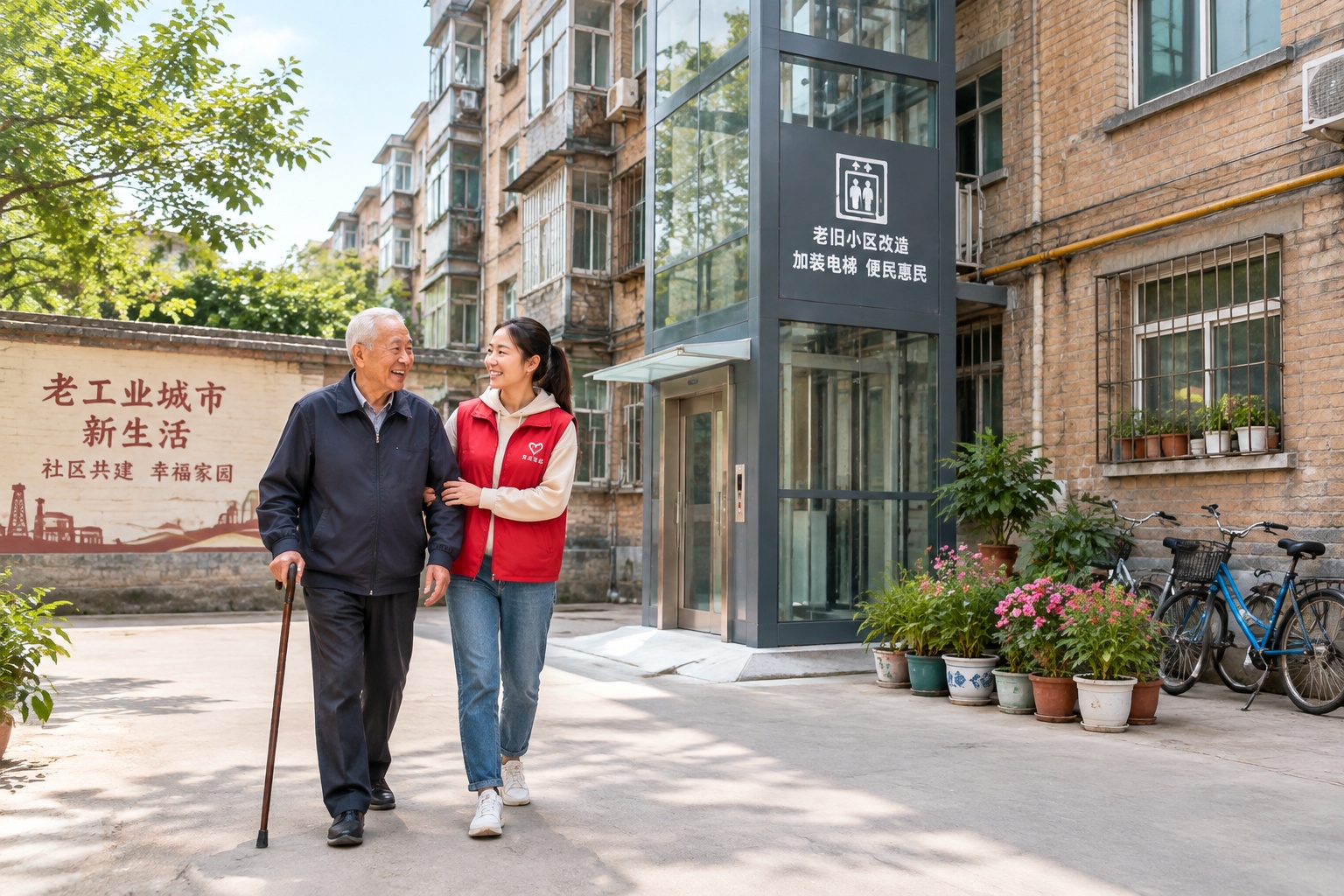
Not every change involves photogenic architecture. Some of it happens behind the walls of old apartment blocks built in the 1990s for factory families. Walk into an older residential courtyard in Yingze District and you may see something unusual: a new, boxy elevator sticking out of the front of a six-story building, retrofitted after years of negotiation among residents.
“My father is 86 years old,” a man in his fifties tells us, guiding an elderly relative slowly out of the elevator. “For years he didn’t dare go out because five flights were too much. Now he goes down to play cards every afternoon.” The elevator is not a luxury; it is a necessity for a city with many older residents.
Community centers are appearing where there used to be empty commercial spaces. Some offer free healthcare checkups, chess tables and kindergartens. At lunchtime, an affordable canteen opens its doors—one dish with rice is about five yuan, a price made possible by a municipal subsidy. “We didn’t need a big redesign,” one resident says. “We needed someone to take care of the little things.”
The Fen River Is a Living Room Again
Taiyuan’s most obvious transformation might be the Fen River. As a child, the river sometimes disappeared in summer; later, it was polluted. For decades, the river was a gray strip that cut the city in halves, mostly ignored.
Now it’s a wide, green corridor with pedestrian bridges, bike paths, sports fields and several spacious parks. On weekends, families picnic, elderly men practice tai chi, teenagers play badminton on free courts. The water is clear enough that visitors watch ducks swim between the bridges. The air has improved too—annual readings of PM2.5 in the city have fallen by more than a third compared with 2017, according to local environmental bulletins.
The City Center Strikes a Balance
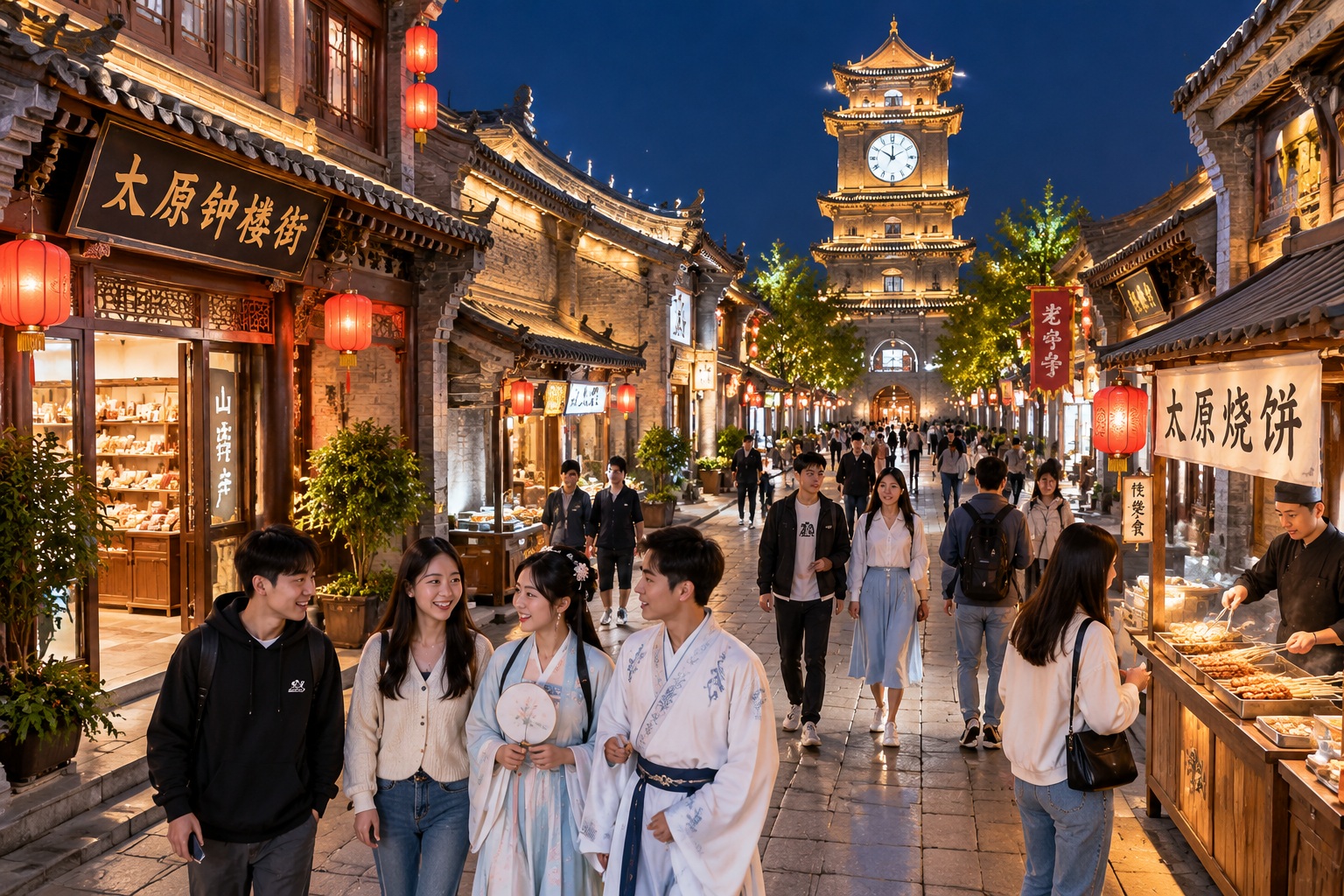
In the old commercial heart, the changes feel more personal. Taiyuan’s Clock Tower Street, a shopping district that had lost its appeal, was rebuilt and reopened in 2021. The project kept the historical building fronts—ornate wooden galleries, old store signs—and pushed the rest inward, creating narrow alleys for restaurants and teahouses. On a Friday night, it’s packed with people in their early twenties, some wearing traditional hanfu dresses, taking photos next to old clocks and paper lanterns.
The return of the old town has also brought back regional specialties. One shop sells vinegar ice cream—a surprisingly good local invention. Another sells fried pork and flat noodles, a recipe unchanged since the 1970s. The shopkeeper says: “We don’t have to sell the past as a museum. We just want people to taste what the city really is.”
Not Everything Is Smooth
The process has not been perfect. Remaining older areas still need basic infrastructure—leaky pipes, cracked sidewalks, inadequate drainage. Some residents complain about the noise of construction and the dust. And for all the new parks, the city has not yet solved its long-term economic transition. Many young people still leave for Beijing or Shanghai; the population has not grown as fast as cities on the coast.
Urban renewal is not a single event. It is hundreds of small negotiations—what to demolish, what to save, who pays. In Taiyuan, these negotiations continue in district offices and community meetings. The result is visible, but a work still in progress.
Opening the Door to a New Life
By mid-evening, the same lakefront path where we began is now alive with families. A food truck sells simple snacks; a group of retired men sit on a stainless steel bench, playing a slow card game without words. Next to them, a child runs with a balloon shaped like a factory chimney. It is a small irony, but a hopeful one. The old chimneys that once shaped Taiyuan now stand silent while the city learns to breathe around them.
Start the discussion at forum.chinacomes.com