
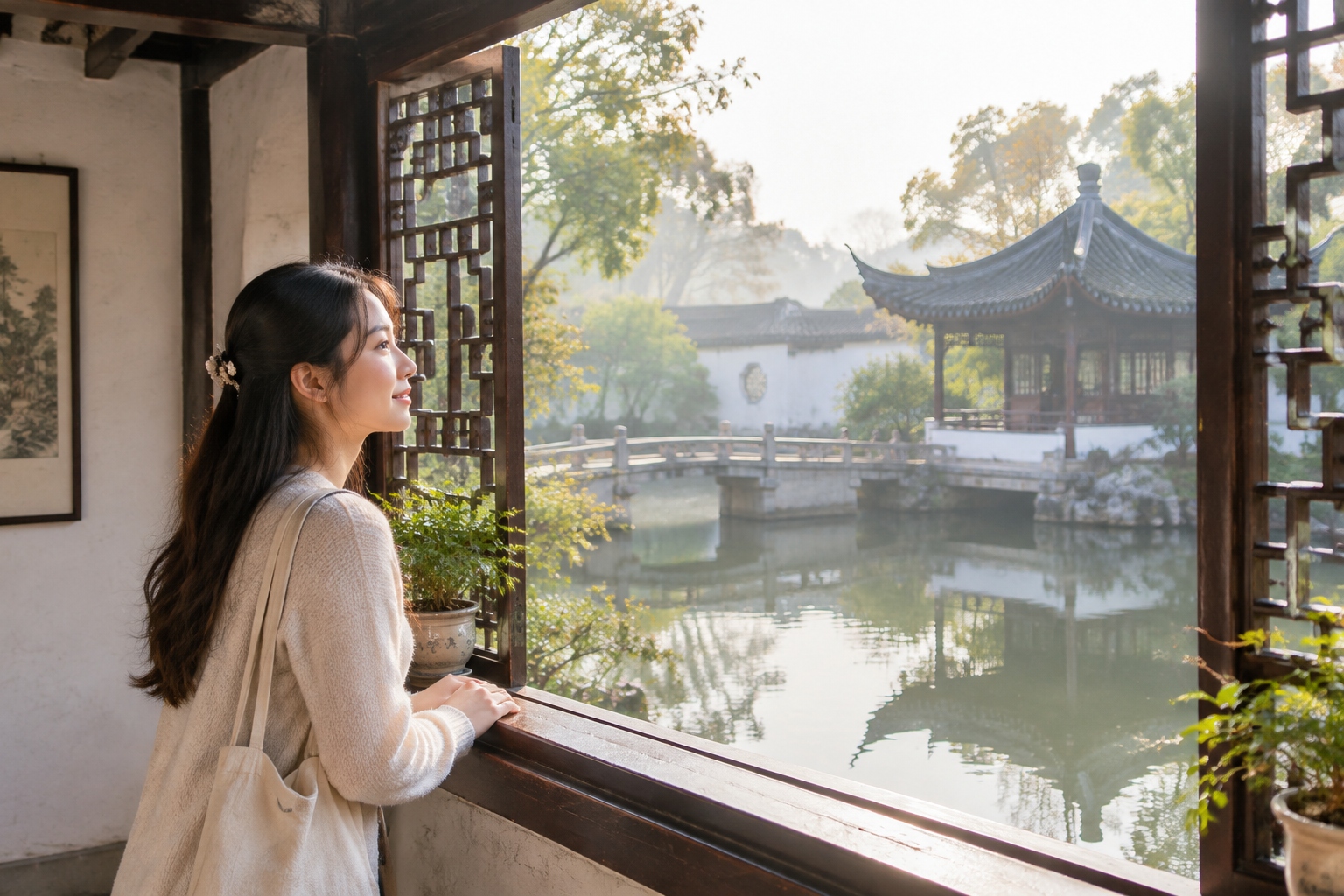

Two versions of the same gate
At 7:35 on a Tuesday morning, the entrance to Suzhou’s Humble Administrator’s Garden is almost empty. A woman in a puffer jacket walks laps along the white wall with a thermos in one hand. A photographer sets up a tripod. A retired man scrolls his phone by the ticket window.
Two hours later, the same gate is a different place. A row of tour buses idles in the lot. Guides hold up little flags. The line for the security check bends around the corner, and inside, corridors built for two or three people at a time are carrying fifty.
That 90-minute gap is the single most useful thing to know about visiting Suzhou. Nothing else — not which garden you pick, not which ticket you buy — changes your experience as much.
First, what Suzhou actually is
Suzhou is a city of about 13 million people, 25 minutes from Shanghai by high-speed train. It has been wealthy for a thousand years, mostly because of silk and canals. Between the 11th and 19th centuries, retired officials and rich merchants built themselves private gardens: walled worlds with ponds, rockeries, pavilions and, crucially, windows.
Nine of those gardens are on the UNESCO World Heritage list, added in 1997 and 2000. They are not parks. Most are the size of a couple of tennis courts. That is the root of the crowd problem: the gardens were designed for a family and a few guests, and now several thousand people a day walk through the biggest ones.
One more thing worth knowing before you go. If you have been to the Metropolitan Museum of Art in New York, you have already stood inside a Suzhou garden. The Met’s Astor Court, opened in 1981, is a copy of a courtyard from the Master of the Nets Garden. Western museums spent decades trying to reproduce this. You can see the original for the price of a coffee.
The rule: first hour, last hour
Most Suzhou gardens open at 7:30 and close between 17:00 and 17:30, with some summer night sessions running later. Tour groups move in two waves, roughly 9:30–11:30 and 13:30–15:30. Everything between those windows is a queue.
So:
- Be at the gate 15 minutes before opening. On a weekday if you can.
- Or arrive after 15:30 and stay until staff start asking people to leave.
- Avoid 10:00–15:00 completely. Use it for lunch, a museum, a nap, or a canal walk.
- Pick a rainy day over a sunny one. Rain scares off bus groups, and the gardens — wet stone, mist, dripping eaves — were literally designed for this weather.
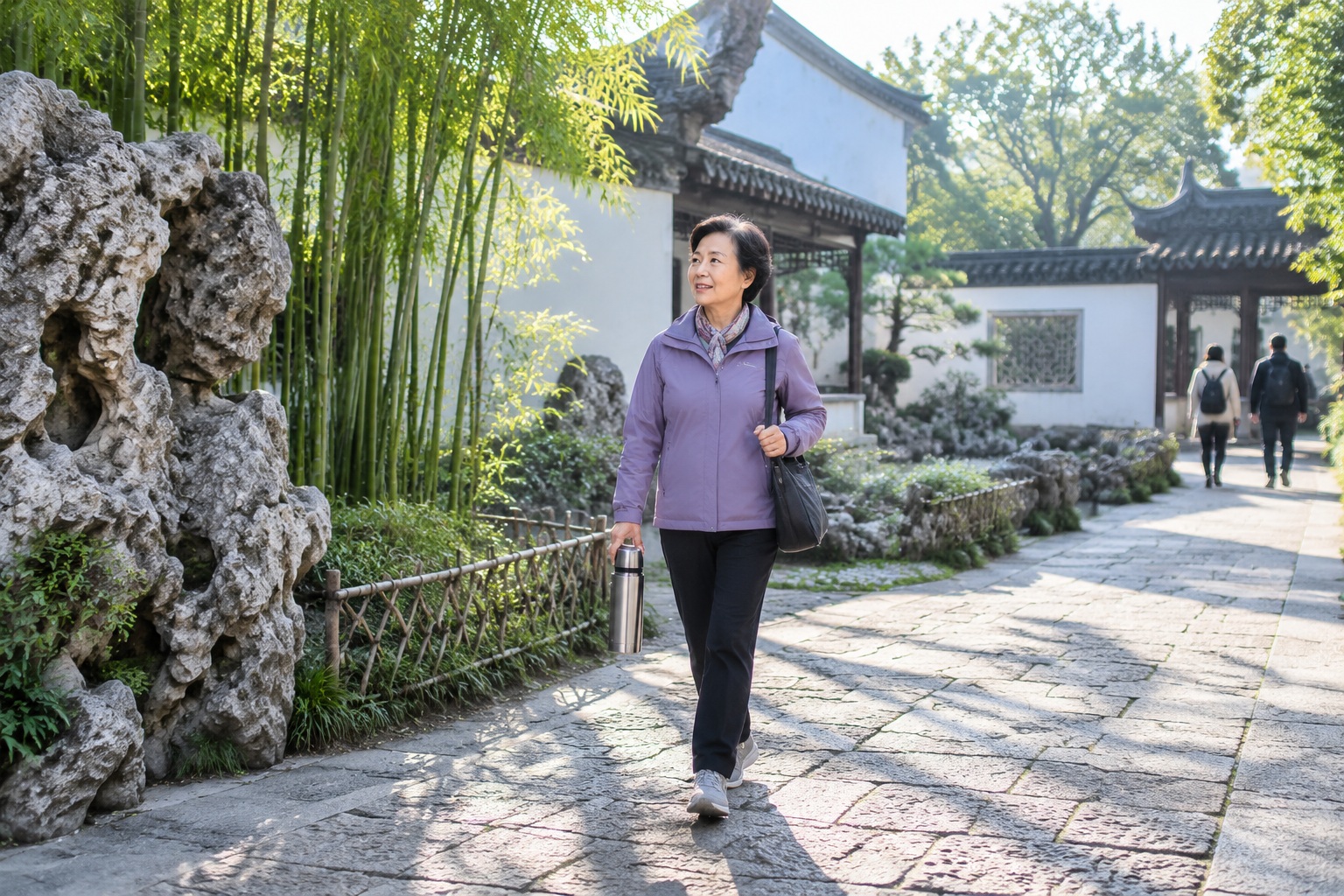
Which garden, depending on what you want
Humble Administrator’s Garden (拙政园) — the big one
The largest and most famous, about 5 hectares, roughly 80 yuan in peak season and 70 off-peak. It uses timed-entry reservations and a daily visitor cap; on national holidays, slots disappear days in advance. It is genuinely beautiful, and it is also where everyone goes. If you go, go at 7:30 and leave by 9:30. The wisteria near the main hall is said to have been planted by the Ming dynasty painter Wen Zhengming, which would make it roughly 500 years old.
Lion Grove Garden (狮子林) — the maze
Small, and it contains a rockery maze that children treat as a playground. It is fun, and it jams up almost immediately. Around 40 yuan. Go at opening or after 15:30, and let your kids run the maze while you stand still and look at the windows.
Canglang Pavilion (沧浪亭) — the windows
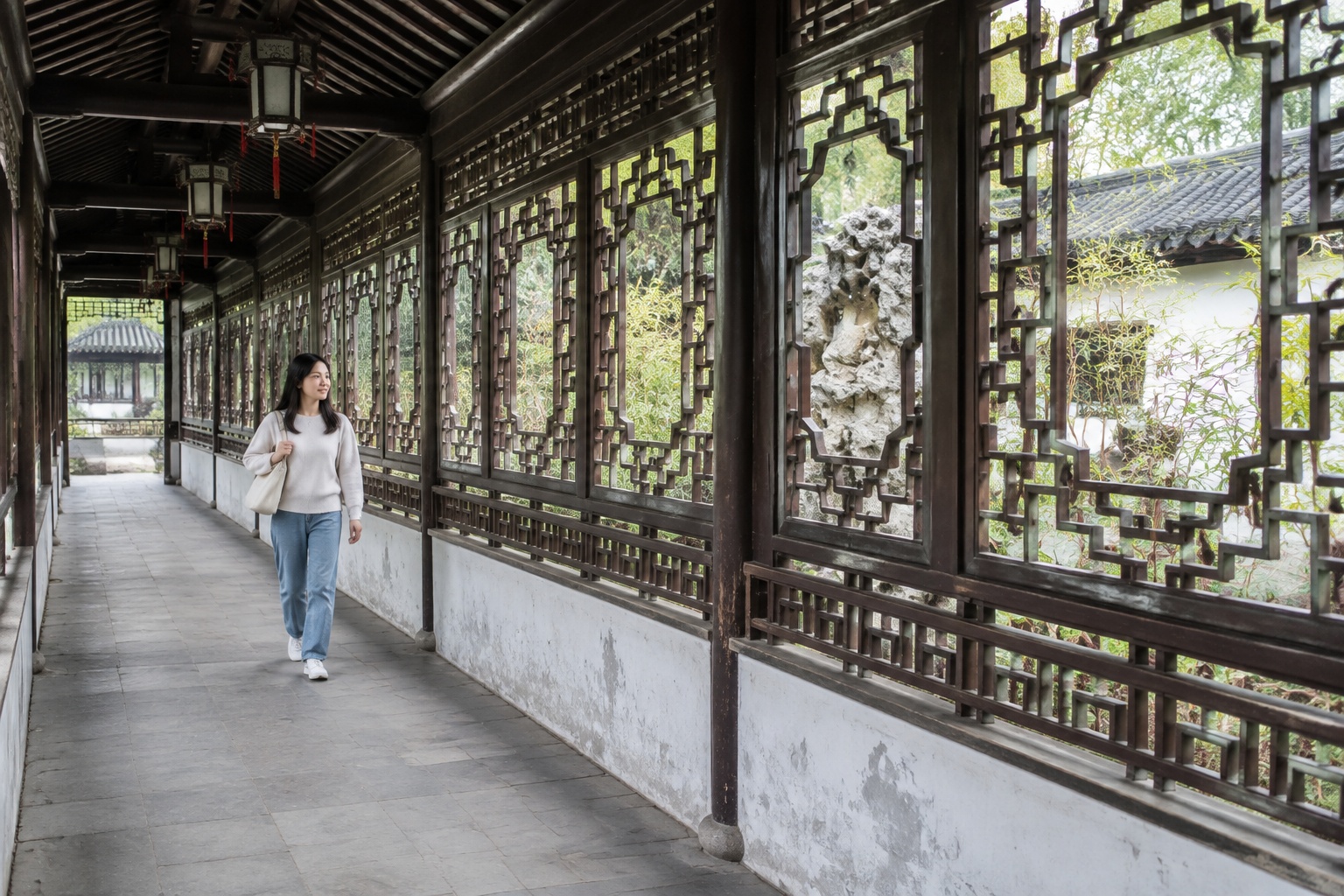
The oldest of the nine, built in the 11th century. What makes it worth the trip is a covered walkway circling a rockery, holding 108 lattice windows, no two patterns alike. Each one frames a different slice of bamboo, rock or water. Around 20 yuan, and usually calm, because it is not on most bus routes.
Garden of Cultivation (艺圃) — the one locals use
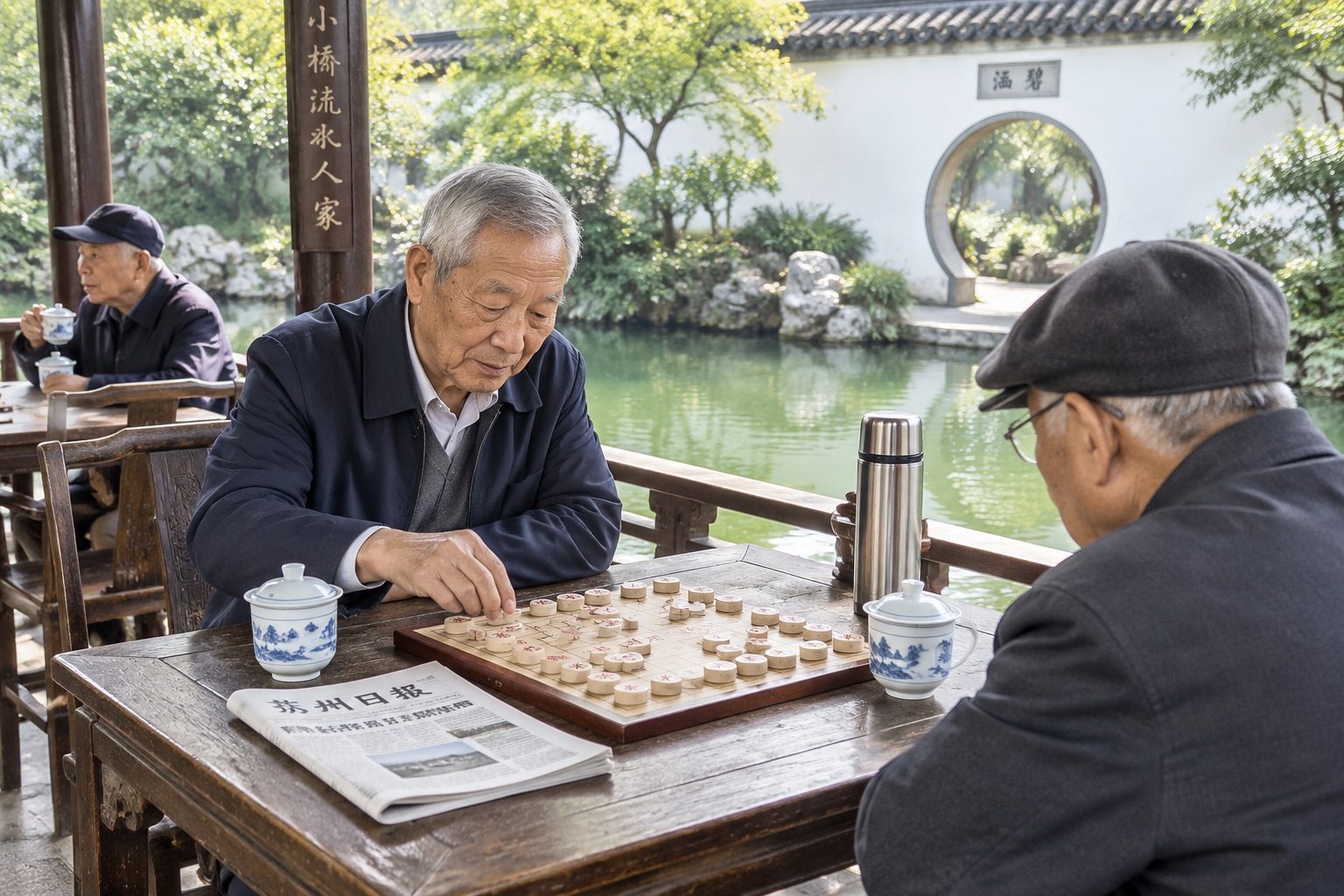
Hidden down a residential lane in the old town. Ten yuan. Tiny. And there is a teahouse by the pond where people in their sixties and seventies sit for hours over a 20-yuan cup of green tea, playing cards and arguing about the news. This is what the gardens were for. Come here to sit down rather than to take photos, and you will understand the whole idea in an hour.
Master of the Nets Garden (网师园) — the night visit
Small, perfect, and the one with the Met connection. From spring to autumn it runs limited evening sessions: a few dozen people, with traditional music and opera performed in different courtyards as you walk through. It costs more than a day ticket, and it is the closest thing to having a classical garden to yourself.
Seasons: one window, four pictures
Suzhou gardens are built as a series of framed views. That is what the windows are for — they are not decoration, they are the screen. The same window, from the same spot, shows you something different every few months.
- Late February to March: plum blossom, cold air, thin crowds on weekdays.
- April to May: the best light and the worst crowds. Wisteria and peonies.
- June to August: 35°C and humid, lotus opening on the ponds. Miserable at noon, gorgeous at seven in the morning.
- Late September to October: osmanthus, and the whole city smells of it — then National Day (1–7 October), when you should not be anywhere near a famous garden.
- November: maple leaves at the Lingering Garden, crisp air, manageable crowds.
- December to February: bare branches against white walls. The quietest months, and the ones that show you the structure of the design.
Which means the honest answer to “when should I go” is: any month, at 7:30.
Practical stuff nobody tells you
Book ahead, bring your passport. Most gardens now use real-name reservations through official WeChat mini-programs. Outside peak times you can often buy at the window with a passport, but on holidays and weekends, book. Your passport is your ticket — you scan it at the gate.
Getting there. Suzhou Station is on Metro Lines 2 and 4; the old town is compact and a taxi across it is usually under 25 yuan. From Shanghai Hongqiao, the high-speed train takes 23 to 35 minutes.
Prices. Tickets run from 10 yuan (Garden of Cultivation) to about 80 (Humble Administrator’s Garden in peak season). Students and seniors get discounts. Prices and hours change, so check the garden’s official account the day before.
Free options. The Suzhou Museum, designed by I.M. Pei, sits next to the Humble Administrator’s Garden and is free with a reservation (closed Mondays). Several small gardens, including Wu Feng Yuan and Qu Yuan, cost nothing and are nearly empty on weekday mornings.
What to wear. Stone paths, uneven steps, slippery rockeries. Flat shoes. And do not climb the rockeries in the rain; people sprain ankles doing this every year.
Small manners. Keep your voice low, don’t feed the koi, and skip the drone.
A two-day plan that works
Day one: 7:30 at the Humble Administrator’s Garden, out by 9:30. A 10:00 slot at the Suzhou Museum next door. A long lunch, then a slow walk along the canals at Pingjiang Road. 16:00 at the Lingering Garden.
Day two: 7:30 at Lion Grove if you have kids, or Canglang Pavilion if you don’t. Late morning on foot through the old town. Afternoon tea at the Garden of Cultivation. Evening: the Master of the Nets night session, booked in advance.
The point of the windows
The men who built these gardens had usually just left government jobs they found exhausting. They built small walled worlds where the view was controlled, where you could see water, rock and bamboo without the mess of the outside. Windows let them choose what to look at.
That is also the practical lesson for a visitor. You cannot see all nine gardens in three days without starting to hate them. Pick two. Stand still at one window for ten minutes. Then come back in a different season and watch it change.
Start the discussion at forum.chinacomes.com